Because even if you find yourself in a really difficult situation,
A very distorted kind of set of relationships,
The interior response is this is an opportunity to do deeper spiritual practice.
This is an opportunity to kind of have a more kind of cultivated way of life,
Even if it's really difficult.
Hello everybody and welcome back to episode 11 of Contemplate This,
Conversations on Contemplation and Compassion.
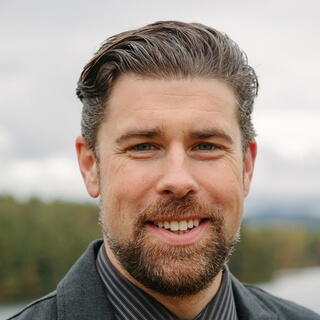
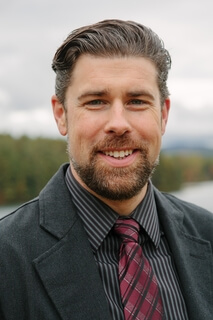
I'm Tom Buschlach and my guest this time is Dr.
Louis Komyathe.
I learned about his work as he wrote the very first introductory book to this exciting new emerging interdisciplinary field called Contemplative Studies,
Which has proven to be very helpful for me in my own teaching and research and writing.
Louis is an associate professor of Chinese religion and comparative religious studies at the University of San Diego and a research fellow of the Mind and Life Institute.
He's also a leading teacher scholar of Taoism and in the field of contemplative studies.
And here's how he describes contemplative studies in his book.
Contemplative studies is an emerging interdisciplinary field dedicated to research and education on contemplative practice and contemplative experience.
So there you go,
Bringing together people of lots of different backgrounds and trainings to study this contemplative experience.
I think listeners are going to find a really fresh and unique perspective from Louis in this interview,
Especially since Taoism is probably not as well known in the West as other traditions that we might be familiar with.
Louis likes to cut right to the point,
And as you'll hear in this interview,
The point for him is to move into silence in the encounter with the transcendent that is always and everywhere around us and flowing through everything that exists.
There were some interesting moments in this interview where I found myself struggling for words,
And I think it's because Louis embodies this very Taoist insight that whatever we think of as ultimate reality can't be named or described in human terms and categories.
At one point he quotes a line from the Tao Te Ching which goes like this,
Forced to give it a name,
I call it the Tao.
So that right there tells you that words are going to be used loosely in the contemplative experience.
This is sage advice for those of us from any background and especially for those like myself trained in predominantly Western and Judeo Christian traditions where we've gotten pretty comfortable using words that we think are accurately describing this something we call God.
But at the end of the day,
That is something ineffable beyond words,
Beyond description.
So I think it helps to keep us all humble with our language.
So hang on there for the ride and enjoy having your view of reality poked at a little bit.
I know I did,
Even if it's a bit unsettling at times,
It's definitely worth it.
You can find the show notes for this show and more about Dr.
Komyatthi,
His books and his teachings at thomasjbushlack.
Com forward slash episode 11.
That's the word episode followed by 11,
No spaces.
As always,
Your support through donations or reviews of the show online are extremely helpful and deeply appreciated.
Okay,
Let's get right into my interview with Dr.
Lewis Komyatthi.
Okay,
Lewis,
Thanks for being here on contemplate this.
Great to have you with us.
And I'll just start by asking you to introduce yourself to listeners.
If you want to start with where you are in the world right now,
What you do,
And then any background that you want to lead with,
And we'll go from there.
Great.
Well,
Thanks so much for having me.
My name is Lewis Komyatthi.
I'm currently an associate professor of Chinese religions and comparative religious studies in the Department of Theology and Religious Studies at the University of San Diego.
I'm a specialist on Taoism.
I consider myself to be a Taoist scholar practitioner.
So I have about 20 plus years of experience with Taoist practice.
I'm in San Diego,
Obviously talking to my PhD is from Boston University,
Where I trained under Livia Kohn,
Another specialist of Taoism.
So I'm really interested in Taoism primarily,
But also contemplative practice more generally,
Embodiment and mystical experience.
So those are three of the kind of primary areas of research,
But also personal interest to me as well.
Oh,
Yeah,
Well,
There should be some interesting stuff to to unpack there in those three.
So you said Taoism,
Embodiment and mystical experience,
Cool.
And contemplative practice.
Yeah,
Well,
And that's how I first learned about you was through your,
When you wrote the very first,
You know,
Full book length treatment of this emerging interdisciplinary field of contemplative studies,
Right?
Which I've read and thoroughly enjoyed.
And that was first,
Thanks so much.
Yeah,
Yeah.
So I think honestly,
I mean,
Even though I consider myself to be a Taoist scholar practitioner,
I've got a lot more involved in this emerging field,
As you said,
Of contemplative studies.
And through that,
I've found that there's a lot more,
In a way,
Like connection with contemplatives from other traditions.
Yeah.
And so that's kind of opened up into increasing what I'm calling what I'm calling intercontemplative dialogue,
And figuring out ways to kind of,
So I mean,
So this is a great conversation along those lines,
But to facilitate and be involved with a broader set of conversations,
More from a contemplative perspective,
Than explicitly or like religiously committed perspective.
Yeah.
And so about that as maybe a form of interreligious dialogue,
But even beyond that,
Where people who don't consider themselves to be religious,
Can participate,
If they really do have this kind of contemplative commitment.
Yeah.
Now,
I'm trying to remember,
Because that sounds very similar to like,
Interspirituality,
Which is a term that I think you cited Wayne Teasdale in your book.
And yeah.
So would you,
Would you differentiate between intercontemplative dialogue and interspirituality?
Um,
Not necessarily.
I think that what I'm trying to kind of imagine,
And there is,
I think that connection I in the book,
I do talk about the new monasticism.
And in fact,
I just gave a lecture at USD on the kind of question of the new monasticism as a kind of ecumenical movement,
And like what you're saying,
Kind of interspirituality.
I think one question that I want to explore with people without a kind of set agenda or specific answer is,
Where are the places of overlap?
So rather than starting out with,
And I've had this conversation a lot with senior colleagues in spirituality as an academic discipline,
Which is,
Well,
What makes contemplative studies different than spirituality as an academic discipline,
Or spirituality or the new monasticism?
And to me,
There's a lot of overlap,
But it's a kind of question to be explored through dialogue,
To see,
Do we find differences?
So I think for me personally,
One thing that I would say is,
In my understanding,
Especially of the new monasticism,
Which the inner spirituality feeds into,
Is that there tends to be this kind of emphasis on sacred activism.
And that's a kind of open question in a contemplative approach is,
To what extent does one have to be socially engaged or even having a form of social activism?
I think because I'm more on the kind of tradition based side of things and the religiously committed side of things,
I see a contemplative approach that's more of a kind of renunciant approach,
Or,
I guess,
A form of kind of interiority and seclusion that doesn't necessarily manifest as social engagement to be viable.
So I think that's a really interesting question that comes up across these different areas,
Which is,
To what extent does a deep contemplative practice naturally become manifest in social engagement,
Even social activism?
But I think one of the things I want to hold out is the possibility of contemplative studies and intercontemplative dialogue of being almost like a sanctuary from a lot of mainstream society,
So that we have more of a space to explore our deeper sense of meaning and purpose.
And if I'm going to speak theologically,
A kind of deeper connection with the sacred and something beyond the human.
And I see that as kind of being necessary,
Not just for human flourishing,
But as a way to kind of communicate on a deeper level.
Yeah.
Well,
And you note in your book,
Too,
That contemplative studies has the capacity to be subversive,
Culturally subversive.
And would you define that subversiveness,
Like,
Even if it's not tethered to that kind of sacred activism,
Which I like that term,
I've never heard it before,
That just carving out those spaces,
Apart from the mainstream for interiority,
And connection to the sacred in and of itself is already subversive,
Even if it's not tethered to the social activism part?
Right.
And as you pointed out in the book,
Introducing contemplative studies,
This is one of the things I suggest is,
I get very worried about the domestication and co-optation of contemplative practice,
Where it becomes kind of incorporated into mainstream society,
And then just comes a way to perpetuate these dominant value systems that I think are inherently anti or uncontemplative.
So if we really,
And this is again,
Where I think,
Not just what I'm calling inner contemplative dialogue,
But the new monasticism,
Spiritualism,
And academic discipline,
Provides these kinds of venues or opportunities for exchange,
Where we have these exact same conversations,
Right,
Where we imagine,
Well,
What are we as full human beings?
And if we're kind of exploring what I,
There,
As you've seen in the book,
I talk a lot about different defining characteristics.
But when I gave this lecture on the new monasticism and contemplative living,
I said,
What I do see,
As a kind of shared set of commitments are interiority and silence.
Interior and silence are two of the kinds of key pieces that unite this kind of inquiry,
Then how do we cultivate that?
What are the applications of that?
As you said,
I think there is revolutionary potential in that,
Because just stilling down and gaining some kind of spiritual clarity leads to,
I would say,
A form of social engagement.
But it isn't necessarily social engagement in an explicitly social activist sense.
That's all I'm trying to get to.
Not that I'm against social activism,
In fact,
I consider some of the things that I do forms of social activism.
But how does that fit into a broader kind of contemplative approach?
And I think what concerns me is that narrowing it down to one,
Any one particular thing,
Like,
If you're contemplative,
You must be a sacred activist,
Or sacred activism is the true application of contemplative practice.
Whereas I think part of what contemplative practice does is it clarifies our own meaning and purpose,
And how we're kind of called to do specific things in our own lives that may or may not make sense to people on the outside looking in.
There's a great line from Thomas Merton,
The Trappist monk,
And he says something to the effect of,
You know,
Contemplation is the ultimate countercultural move.
It's to swim against the current of culture.
And just doing that and embodying that can be a radical act.
Yeah,
And I think that's also where I've seen a lot more overlap between my own study and practice of Taoism and kind of contemplative traditions more broadly is that I see Taoism as a kind of countercultural or subculture in terms of the dominant kind of Confucian tradition of China.
So there are these kinds of overlaps of how do these alternative value systems or approaches to being subvert the kind of dominant culture.
Yeah,
Yeah.
And we've just jumped right into contemplative studies.
And I'm glad you brought up Taoism,
Because,
I mean,
I'll admit,
I mean,
I'll admit my own ignorance of the kind of core beliefs and traditions,
Even the history that you just talked about in relation to Taoism.
So,
And I would imagine that's probably true of many listeners.
So can you give us like your crash course intro to Taoism?
To enroll and pay tuition at USD?
Another set of books,
Right?
Yeah.
So,
On the most basic level,
Taoism is the tradition of the Tao.
It's an indigenous Chinese religion,
Deeply rooted in traditional Chinese culture.
The Tao is also written as T-A-O,
But still pronounced Tao,
Because it's still the same Chinese character,
But different romanizations.
So the Tao is the sacred or ultimate concern of Taoists.
To be a Taoist is to be oriented toward the Tao,
To try to cultivate the Tao,
To aspire to embody and transmit the Tao in the world.
The Tao from a Taoist perspective,
And this is where it's a little different,
Maybe in terms of comparative theology,
Is there are four primary characteristics of the Tao.
The source of everything,
An unnameable mystery,
An all-pervading sacred presence,
And the universe as a transformative process.
So on the most basic level,
From a Taoist perspective,
We live in an impersonal amoral universe.
But there is this kind of sacred presence moving through the universe,
And as the universe.
So on some level,
The universe or nature,
Our bodies are the Tao manifesting.
So one thing that you find in Taoism that I think is also parallel to some other traditions,
But it tends to be more esoteric or hidden in some of those traditions,
Like Eastern Orthodox Christianity,
Even sometimes Roman Catholicism,
But definitely Hindu traditions,
Is the idea that the nature of reality is energetic.
So this is fundamental with Taoism,
Because it's not simply body and mind.
There's not just a mind-body dualism,
But the whole thing is seen to be a spectrum of energy.
And so that means our experience of ourselves,
The world,
The sacred,
Is energetic in nature.
It's through practice and experience and the cultivation of these particular types of qualities that we deepen our experience with that larger context of being.
Wow.
So can you say a little bit about the.
.
.
Well,
Okay,
Another thought that just jumped into my head is that seems very congruent with kind of a quantum physics,
Quantum mechanic view of reality.
And I think that's,
It's been interesting for me in my own studies to see how that scientific development that's completely independent of religious traditions has almost reignited an awareness of that as,
Like you said,
Almost esoteric or latent in certain strands of Christian and other traditions.
Right.
Hellenistic traditions.
Yeah.
And certainly Hindu.
Right.
And a lot of what I hear,
You know,
As a critique is,
Oh,
Vitalism was rejected so long ago in the Western philosophical tradition and such a well,
And maybe now we're returning to it because like you're saying,
The new physics are starting to show that there's a lot of evidence for this kind of viewpoint.
I think I don't know a lot about this,
But there's also,
This is,
I think partly what explains the interest in Daoism,
You know,
So there is a lot of interest in Daoism,
At least in an informal way,
About its potential overlap with some of these modern scientific views.
Yeah.
I think for me,
One of the really interesting parts of it,
And this is a lot of what overlaps with contemplative studies is this idea of our lives being more practice-based,
Embodied and experiential.
And so,
And then it's like,
Well,
What does it mean to say it's experiential?
And from this perspective,
It's,
There's a deeper kind of energetic dimension that if we listen to that,
That if we listen to that,
I think our lives become clearer.
Wow.
Okay.
I'm making all these notes that I want to come back to,
But I don't want to lose this thread.
So from a,
Just like a historical perspective,
Can you say just a little bit about that relationship between Daoism and Confucianism in Chinese culture?
Yeah.
So this is a little complicated.
And so I think your listeners should know that I'm located in a very particular kind of revisionist historical framework.
There are a number of scholars of Daoism who disagree with me,
But my view of Daoism is that it begins as a religious community in the fourth century BCE.
So that would be the Warring States period moving into the early Han,
So like the second century BCE.
If your listeners are really interested,
One of the major scholars in this area,
Especially of a revisionist view of what I call classical Daoism,
Who focuses on Daoism is Harold Roth at Brown University.
Oh yeah.
Where that there are other scholars around the country that,
You know,
Don't agree with Harold Roth,
But it's to say,
I'm coming at it from a particular viewpoint rooted in,
I think,
A close reading of both the text and what I would say is the historical context.
So all that's to say is most of those,
The kind of seminal ideas and the emerging kind of communities that we call Confucianism Daoism emerge around the same time.
But texts of classical Daoism,
The primary historical layers do not really engage Confucianism as a separate tradition.
So for all intents and purposes,
What it looks like was happening is that these were developing a semi-independent traditions or communities,
Like basically the Warring States period.
So let's,
For the purposes of this,
Just let's just say the fourth century BCE.
What starts to happen though is as China becomes more and more unified,
There's more interaction between these various groups.
And so over time,
Especially in the early Han,
Confucianism eventually becomes basically the state orthodoxy incorporated into the dominant kind of governance system and largely becomes synonymous with traditional Chinese culture.
As you were saying in the earlier part of our conversation,
Daoism becomes more of like a subculture or counterculture,
Part of which involves a critique of Confucianism.
So one thing I think that's very interesting about Daoism in that context of dialogue,
And of course,
Confucianism has its own response,
But I'm less interested in that.
And that to say this particular strain of Daoism engaged,
You know,
What we call legalism,
Fa Jia and Confucianism or so-called Confucianism Ru Jia.
In English,
It should really be Ruism,
But that's a different story.
And legalism emphasizes strong laws and harsh punishments.
Confucianism tends to emphasize moral cultivation,
Cultural refinement.
And Daoism has a critique of both of those,
Which says,
These are basically forms of the devolution of humanity.
When humans are connected to the Dao,
They are connected to their own innate nature,
Which is innately good.
So they already are virtuous.
So if you have to start talking about virtue and ethics,
It's already a sign of fearful disorientation.
And if you then have to start talking about strong laws and harsh punishments,
People have become even more spiritually disoriented.
So when you think about this as completely contemporary,
Because you think about contemporary United States with so many laws,
Nobody even knows what the laws are.
And Daoist would say,
This shows you how far away from the Dao human beings are.
So the ultimate purpose from a Daoist perspective is to return to our innate nature,
Which is the Dao.
So we have this kind of innate sacred connection.
And when I said that we live earlier,
When I said that we live in an impersonal amoral universe,
That's just ultimately the case from a Daoist perspective.
But we also live in a personal universe of interactions,
Not just interhuman,
But interspecies,
Right,
Inter-animal.
And those are,
That's a personal expression of the Dao.
And their means in their expression of their connection to the Dao are virtuous.
So there is a moral manifestation of the Dao.
But I think from a Daoist perspective,
If you start projecting or superimposing human morality onto,
For example,
Hawks killing rabbits,
This is a fundamental mistake.
Because that's not what hawks,
Hawks are not engaging in a moral dilemma.
Hawks are in a symbiotic,
Ecosystemic relationship with rabbits.
And so what does the world look like from the hawks perspective?
We have no idea,
Because all we do is tell ourselves human stories.
Wow.
So Daoism tends to be one of the least anthropocentric traditions.
Yeah,
That is very interesting.
Yeah.
So I know that,
Again,
I know very little about any of this from a historical or academic perspective.
But that Confucius was a teacher.
And I,
It's been a long time,
I read the Dao a long time ago.
But from like a historical critical perspective,
Was there a teacher from which it originated?
Do we have any knowledge of who wrote it or its origin?
So this is again,
You know,
I'm not trying to plug books,
But I mean,
I've written,
I've written,
I've written two introductions to Daoism.
These are some of the things I go over,
Which is the common misconception about Daoism is that there's a founder,
And there's a kind of central text,
Right?
There is no founder,
And there's no central text.
Okay.
There are key figures,
And there are key texts.
So what you're referring to is the Dao Te Ching,
The scripture on the Dao and inner power,
Or the classic on the way in virtue,
However people want to translate these terms.
And that text is one of the earliest texts of classical Daoism.
The common misconception about that text is that it was written by a person named Lao Zi,
Master Lao.
But that person was pseudo historical.
He may not have existed at all.
If he did exist,
He definitely is not the author of the Dao Te Ching.
The Dao Te Ching is a multi vocal anthology consisting of historical and textual layers from the fourth to the second century BCE.
Okay.
So in fact,
When you read that text,
What you're reading is multiple voices from multiple historical periods,
Probably from different lines of what we usually talk about as the inner cultivation lineages of classical Daoism.
So this is why the text is so confusing,
Because people assume that it's a single author saying contradictory or intentionally confusing things,
Rather than that you're hearing different voices,
Emphasizing different things,
Probably talking to different students in different contexts.
So it's interesting that you bring this up,
Because Harold Roth and I are currently working on a new translation of the Dao Te Ching.
And this is what it's about,
Is how do you go about re-engaging this text from a kind of text critical,
Historically accurate perspective?
It's interesting.
I mean,
It's obviously a very different cultural situation,
But the same thing is often a challenge for people when they start studying the Hebrew or the Christian scriptures,
To say there are multiple authors,
Some of which we know who they were,
And most of which we don't,
And differing perspectives,
And that there's not one coherent view.
And that can be really challenging for people to make sense of.
Right.
And biblical studies and kind of text criticism has had major influences across the academic study of religion.
Yeah.
So in fact,
One of the most influential books in Daoist studies on this,
Using actually explicitly biblical hermeneutics,
Is a book called The Dao of the Dao Te Ching by Michael LaFarr.
And he explicitly talks about biblical hermeneutics as the methodology that he's applying to the Dao Te Ching.
Yeah.
Huh.
Okay.
So let's go.
That's all good historical and theological stuff.
And we've put some of your listeners to sleep.
No,
Well,
I doubt it.
If they're like me,
They're fascinated,
And they probably wouldn't be listening if they weren't.
But for you personally,
Did you grow up with this as part of a family tradition?
No.
So what did you kind of grow up with?
What were those?
And then how did you find your way into being a committed practitioner and scholar in this tradition?
Yeah.
So this is a very complicated long story.
So I'll try to just make it relatively short.
So I was born in Detroit,
Michigan.
My mother was Roman Catholic,
And her side of the family was Catholic.
My dad was an atheist.
His side of the family was Presbyterian,
But mainly I was brought up Catholic with this kind of atheist kind of critique.
Atheist Presbyterian critique.
Exactly.
So needless to say,
It was a kind of complicated situation.
But I think it did help me both develop a sense of faith in something larger,
But also a kind of critical view of certain kinds of accounts of what that is.
And to fast forward a bit,
So when I was in high school,
Probably around 15,
16,
I started having these experiences that now I would call something like recollection.
At the time,
I didn't know anything about this stuff,
Because it was a Catholic school,
And I was brought up Catholic.
But there was always some part of me that didn't really feel that that was my tradition.
And in this process,
I started having this kind of sense that there was a larger purpose to human existence that wasn't the purpose that was kind of being told to me.
And I also started feeling like I was remembering certain kinds of insights or wisdom that I wasn't sure where it was coming from.
So I usually talk about this as kind of like becoming conscious.
So there was some part of me that was becoming conscious,
And I'm not sure how or why.
But that led to me trying to explore all these different traditions.
And fortunately,
In my high school,
My Catholic high school,
I had a world religions class taught by a priest.
So that added a level of complexity to it the way it was presented.
But that was where I was introduced to what I now would call Advaita Vedanta for certain form of like monistic Hinduism,
And then also Zen Buddhism.
So there was no Taoism at that point.
But I would say that was closest to what I felt like was my own at least glimpse or insight into how I felt like what reality was,
Or what human beings were.
And in the meantime,
Along,
Or I should say,
Along around the same time,
Parallel to this,
I was doing a lot of solitary backpacking.
So I was kind of like wilderness seclusion,
And taking these books and reading these books and doing kind of meditation,
Even though I didn't know what meditation was.
And this kind of kept deepening.
And then when I was 19,
I went on a,
I think it was 19,
I went on an exchange program to Dartmouth.
And so between 19 and 20,
And I met a Buddha Taoist teacher there who started gave me my first copy of the data,
Jing introduced me to Taiji Chen.
And I think it was right,
It was then when I started reading the data,
Jing,
Where I felt like,
Oh,
Someone has actually described reality as I've experienced it.
So coming more from,
I think,
An experiential perspective,
But also a kind of longing for,
I didn't have the language at the time,
But something like cultivation and practice.
And he gave me my first set of practices.
So along that,
I think I kept exploring,
And then eventually ended up at a Taoist school in San Diego after I graduated from college as an undergraduate,
Did some training there,
Ended up kind of clarifying what I really wanted to do,
Which I thought I wanted to be a translator of classical Taoist text.
So that took me to Boston University specifically to study with Libya Cone,
With the intention to get a PhD and just basically be a translator.
I didn't necessarily aspire to being a professor.
And after I finished that,
I was fortunate to get an associate,
Not associate,
But a visiting professorship at Shandong University.
And the year prior,
I had met a Taoist in China,
Who was the vice abbot of Yu Chen Yuan,
The temple of the Jade Spring at Hua Shan,
Mount Hua in Shaanxi province.
And when I went back,
I started training with him.
And this eventually led to ordination in the Hua Shan lineage of Chen Zhen or complete perfection Taoism.
So that's the kind of concise life story.
Yeah,
That was very,
That's good.
You hit the highlights.
So,
Ordination,
And then what does that look like in terms of like,
Do you,
Do you lead a particular temple or,
I don't know,
This is a very ignorant question,
But.
No,
No,
No,
I think it's a natural question because I think there are a lot,
And I'm not saying you believe this,
But I think there are a lot of assumptions about Taoism.
So one is Taoism isn't a religion.
So then when people hear ordination,
They're like,
What is ordination doing in something that's not a religion?
I think the other legitimate thing is,
Is ordination the right term?
And I would say,
Yes,
It is.
It's a kind of formal process that you go through to become what's called a Tao shi,
A Taoist priest.
So Tao shi literally means like an adept of the Tao,
But the,
I think the formal sense is you're a monastic or you're a priest.
Okay.
You could be both.
So in this case,
So it can be many things because they're informal and they're formal ordination processes.
So this is another kind of common misconception because the thing that people know about ordination in Taoism,
They think of large scale public rituals,
Where you go through this ritual and then you become a priest.
But what happened in my case was training under my shirfu,
My master father.
And after some period of time,
He and I started talking about this and it came up with,
Well,
Ordination is possible,
But you need to kind of discern.
It's like charism,
Right?
In Catholic religious orders or monastic orders.
What is the kind of quality or affinity that you have?
And came through this kind of process of conversation and discernment that it was the Hua Shan lineage.
And so fortunate for me,
He was ordained in the Hua Shan lineage.
So it was natural for him to become what's called my shirfu,
My master father.
And then to basically put me in this lineage.
So what that means is technically there's like Taoism as the tradition,
Then there are movements within Taoism.
So inside of Taoism,
I'm in what's called Chenzhen or complete perfection,
Which is technically a monastic order.
And then inside of complete perfection,
There's technically seven lineages.
And this is one of the lineages.
And this particular lineage is explicitly connected to that mountain that I mentioned earlier,
Hua Shan or Mount Hua.
Cool.
So you're completely perfect is what you're saying.
Absolutely not.
I think so.
I think that the other issue involved in all of this is,
And some of your listeners might've heard,
There are a lot of people that are using Taoist ordination or lineage as a form of legitimation.
And so what that does is that obscures the fact that there's no requirement of people to be a Taoist.
Ultimately,
This is about having a commitment to something,
An orientation towards something and cultivating something.
That's it.
So anyone could be a Taoist.
There's no entry requirement.
But then what you get is people conflating being a Taoist with being an ordained Taoist priest,
Which is a whole different matter.
Being a Taoist priest,
As you know,
From the traditions that you study,
Is not about personal identity per se.
It's about a particular functional role inside of a community and a set of higher level responsibilities about what the community needs from you.
So for most people,
It would be inappropriate or irrelevant to be ordained.
It's unnecessary.
Or I think from my perspective,
Where it came from was a sense of vocation of really wanting not just to deepen my study,
Practice and experience,
But to embrace that role of helping people.
Yeah.
Wow.
So I actually want to ask you about these experiences that you had in high school.
Because you mentioned at the very beginning that you're interested in mystical experience.
Yeah,
This is what I'm talking about.
Okay,
Yeah.
So how would you describe those?
I mean,
You talked about it as awakening consciousness.
I mean,
When I think of like mystical experience,
There's often like a personal dimension to that,
Right?
Not just like kind of a pure consciousness.
So right,
But I don't want to impose my understanding upon your experience.
So I'm just curious for you to explain that a little bit.
What was that?
Yeah.
So this is,
Again,
I think where you get into my position as a scholar practitioner,
Because I'm kind of trying to think through multiple perspectives simultaneously.
So the way I define mysticism is direct experiences of the sacred.
With holding open what the sacred is.
Right.
So it could be personal,
Like you're describing,
It could be impersonal,
Depends on the tradition,
Depends on the person,
Depends on the community.
But in my case,
I think there are a few things.
The first thing is,
I wouldn't call that kind of becoming conscious necessarily mystical.
I think what was happening is some part of me was starting to become really dissatisfied with mainstream culture and mainstream values.
And I kept I started questioning the whole indoctrination or enculturation that was happening about how you have to become successful,
How you have to make money,
How you have to like become more and more materialistic in nature.
And then something and it was not like me philosophizing that it was like something started to emerge in me that was basically starting to direct me towards something else.
So I'll go back to this in a minute.
But what then started happening is the kind of spiritual search.
And the spiritual search started to be,
Well,
What are these like things like the Upanishads,
Or the Dhammapada,
Or the Bhagavad Gita,
Or other texts,
But those were the ones that started speaking to me at that moment,
You know,
Going out into nature,
Going backpacking,
And starting to read these,
And then starting to kind of see,
Oh,
There's this form of consciousness from this perspective,
That's beyond our ordinary or our mundane kind of consciousness.
From being out in nature,
And quite honestly,
For fasting for long periods of time,
Without knowing what I was doing,
But I was fasting,
I thought that was a good idea,
That I started having these unitive mystical experiences.
So some of that was what you mentioned,
Like pure consciousness,
Where my mind like literally expanded to infinite space.
Some of it was being completely merged into the landscape,
Where I was seeing how things were emerging in the landscape before they were emerging.
And so there was some sense,
Oh,
There's a larger kind of field.
And now I would call that the energetic field of the Tao,
But I didn't have that language at the time.
I think the other part,
And this is part of what I'm talking about with eventually getting to ordination,
Finding my teacher,
Talking to my teacher about these things,
And that is my primary teacher,
I've had other teachers,
But you know,
Now what's technically my master father is that there,
My sense was,
There was something else moving through me.
So whether that's something like reincarnation,
Or whether that's some kind of energetic direction that comes into us,
I don't know,
Right?
But there was something beyond me that wasn't just of this historical moment or cultural moment.
So one of my Chinese friends when I was,
Because my Chinese is very odd,
My modern Chinese,
Because a lot of times I can't understand mundane conversations,
Because I don't really have that vocabulary.
You have like,
Yeah,
This is like biblical scholars.
Yeah,
Yeah.
Yeah,
I have like,
Lots of words about,
Like,
Ancient Christianity,
But nothing,
You know,
Right.
So so like,
I'll be in a modern conversation in Mandarin,
Somebody will start talking about video games or something.
And I have no idea what they're talking about.
I have to ask them,
Like,
What are you talking about?
But if people are talking about Taoism,
Then it's very easy,
Right?
But also,
Like you're saying,
It's like,
My language is both a kind of modern language and a classical language partly rooted in the text.
And the reason I brought this up is because that was a lot of the inspiration behind learning all of this.
And when I was talking to one of my friends in China,
A Taoist friend,
He said,
Oh,
You have an ancient mind.
And I thought that might be a good explanation for those experiences.
The aspect of antiquity came in and said,
Here you go,
Like,
We can use this mind to do something.
That's interesting.
I like that way of putting it because I've,
I've often thought that I have,
I mean,
The more common phrase of like an old soul,
Right,
You know,
Like,
Why was I drawn to monasticism as a teenager like that?
That isn't normal.
Or,
You know,
For you going backpacking,
Are you familiar with the work of Belden Lane,
His writings on?
He,
He's a Christian theologian.
And he's written though,
Like on backpacking,
Right?
He's got a couple books where he talks about backpacking and the sacredness of place.
Yeah,
I haven't read him yet.
But I have one of his books on my bookshelf.
Yeah,
It's good.
He's good.
I'm looking forward to it.
I brought I had his book with me on us on a solo backpacking trip I did in Colorado,
And it was amazing.
Right.
But anyway,
Son of a tangent.
So no,
No,
I mean,
This is actually part of what I'm interested in is yeah,
I'm calling contemplative hiking contemplative backpacking.
So yeah.
I want to I guess I'd like to hear about,
Like,
What does practice look like?
From the Taoist perspective?
And I mean,
There's probably specifics that are deeper that are between you and your teacher.
But you know,
What what does your day to day practice look like in terms of how you tune into that energetic field or to the Tao?
Yeah,
So,
Um,
In general,
What I,
The way I present things is what I call more of like a holistic and integrated approach to Taoist practice.
So that means it's basically your life as your practice.
So I don't necessarily differentiate all of those different things.
But you're right,
There are dimensions to it.
So I mean,
On the most basic level,
In terms of the tradition that I'm part of,
They're like three monastic cows,
Right,
Or monastic principles.
So celibacy,
So I'm not celibate,
But I'm basically following more of a kind of sexual purity form of life.
Also,
I don't have children.
So I'm not following a householder path.
So that and I think that's where the new monasticism folds over into it,
Where I see this is kind of like a new monastic approach to this particular thing.
But sobriety,
So no intoxicants,
Vegetarianism.
So these are the kind of three basic pieces.
So on a on a kind of general level,
But what's interesting about this is I,
I stopped taking intoxicants and I became vegetarian before I became a Taoist.
So this is always funny to me,
Because people will be like,
Oh,
You're like a rule following Taoist monastic.
This came out of my own practice and experience unrelated to Taoism,
It came out of a set of insights and inquiries into the function of intoxicants and eating animal like eating animals,
Basically,
That I decided early on that I didn't want to be part of those things.
But then what I would say is on a kind of deeper level of practice.
Most basically,
There's Yangsheng practice,
Which is nourishing life practice,
Health and longevity practice.
So that includes a form of emptiness based standing meditation,
But then particular forms of practice that involve basically Qigong,
I don't know if you've heard of Qigong,
But Qigong exercises.
So doing certain kinds of practices that activate the Qigong or the energy,
Actively cultivating those things.
And then seated meditation.
So the type of seated meditation I primarily do and primarily teach is called Jin Suo or quiet sitting,
Which is an emptiness based practice,
Basically just involves sitting in stillness,
Sitting in silence.
And then there are other pieces,
You know,
There's dietetics,
There's paying attention to,
Like what we eat and the energetic effects of food.
There's an ethical component that involves precept study and application.
I don't do a lot of ritual,
But I mean,
There is a ritual component when I lead retreats.
So there are a lot of layers to it.
But on the most basic level,
You know,
Whenever people ask me,
I always say standing and sitting in silence is the primary practice,
Because that's returning to our innate nature,
And that's returning to the Tao from a Taoist.
Yeah.
Well,
And I can appreciate that as sort of at the heart of many contemplative traditions and practices to lead one into a space of interior stillness.
Right.
And then it's what emerges out of that.
But I also just want to highlight and what I appreciated about the way you answered my question was you started with,
It's all one,
Right?
It's the seamless,
All of life is a practice,
If you're really deeply committed to that.
And then the things like the standing and sitting in silence are ways of kind of how I look at it in terms of like my own practice,
Ways of intensifying that focus and for periods of time,
So that I can then bring that into everything else that I'm doing.
Right.
So that I think this is where contemplative practice extends out into a general approach,
Right,
Or expressed as one's life.
And so of course,
That takes time to develop.
I mean,
The idea that you skip formal practice and go into that mode is highly problematic,
Because you end up with a lot of confusion and I think distortion.
So it's just saying,
I mean,
That's a kind of more intensive kind of experience or practice.
It's also foundational.
It's also deepens the kind of attunement and orientation that as you go out into your daily life,
Especially in terms of ordinary social interactions,
That you have more discernment and insight about the nature of those interactions and what is the appropriate response,
And how those situations,
Even if they're challenging,
How that becomes part of your contemplative practice.
Yeah.
You're talking about formal contemplative practice is necessary to develop that route.
Otherwise,
It's very difficult to kind of,
I mean,
One of the things I always say is ordinary mind can't rectify ordinary mind.
So if you spend all your time thinking about how you're going to change your life based upon all the things that you've acquired and done up until that point,
You're probably just going to end up with more of the same.
Yeah.
You're touching on something that is actually very dear to me and my own,
Both in,
Again,
Similar to you,
Both in my practice and as a scholar,
Because I'm trained in ethics,
I have experienced that qualitative difference that you talked about as the capacity to kind of bring discernment into situations and maybe a particular difficult situations,
Where there's almost an intuitive knowing about what the right thing to do is because you're in touch with something through your practice.
Right.
Sorry.
No,
I just,
I wanted to ask you to unpack that a little bit.
This is the tragedy of being a contemplative in the modern world.
Yeah.
So what I always talk about is how,
As your practice,
And again,
I'm speaking more from a Taoist perspective,
But I mean,
I've studied contemplative practice and experience cross-cultural and comparatively,
And I think it is applicable to other traditions,
Which is you start to see through things and it becomes very clear what's going on in most situations,
But you're also surrounded by people that don't see what you see.
So then you have a double difficulty because you're seeing something other people aren't seeing,
And then they're doing things based upon their own habituation that are perpetuating the things that you see and that they don't see.
And so then what is the appropriate response from a kind of contemplative perspective?
And I think one of the things that you constantly find if you're doing authentic contemplative practice is that you're misunderstood or you're the one who's marginalized or vilified because the dominant story has to go on from a kind of delusional perspective.
And if you bring in the insight perspective,
The whole system starts to unravel and that means the people who are benefiting from the delusion and the distortion will lose their livelihood.
And that's a difficult situation to be in.
But I think for me,
What has been helpful,
And I do feel like this is true of other traditions,
But Taoism has this very strong emphasis on self-cultivation.
And that's where the interiority piece comes in,
Because even if you find yourself in a really difficult situation,
A very distorted kind of set of relationships,
The interior response is this is an opportunity to do deeper spiritual practice.
This is an opportunity to kind of have a more kind of cultivated way of life,
Even if it's really difficult.
So in Taoist terms,
One of the very interesting things is we have this old tradition called external alchemy and a newer tradition called internal alchemy.
And by new,
I mean medieval.
Yeah,
Like,
Well,
That is that is relatively new.
Yeah,
Eighth and ninth century.
Yeah,
The present.
But there's a very interesting idea and internal alchemy of,
You know,
You've been given the ingredients that you need to form the elixir.
So you don't get other ingredients,
You get the ingredients you need.
So you have to work with those ingredients to refine them and transmute them in your own elixir of realization or in Taoist terms,
Immortality.
And everything is an ingredient for the elixir.
Which is not an easy practice.
No,
I always tell my students,
You know,
If self-cultivation is the primary approach,
Then that's it.
You don't get to keep looking outside yourself and saying,
But nobody else is doing cultivation.
It's like,
Yes,
I'm sorry to tell you.
A lot of people that are fairly uncultivated,
But do you want to become less cultivated or do you want to become more cultivated?
That's that's your decision.
That's your choice.
You said something a while back about,
I can't remember the language that you use,
But it's a it was about your own discernment of vocation,
And then bringing that to others.
And is there kind of an ethical dimension of compassion or the desire to,
You know,
Because you talked about being in those difficult situations and engaging that for yourself,
But in terms of like,
How is the Taoist response to others who are struggling or suffering?
It's complicated.
It's not a kind of,
I think,
Universal love model like you get in some forms of Christianity or universal salvation model like you get in Mahayana Buddhism.
Like,
Yeah,
Let's alleviate the suffering of all beings.
You have Taoist ascetic responses.
You have Taoist,
I think,
More like influenced by Buddhism of compassion responses.
You even have exorcistic responses that it might very well be demonological.
And whether you believe that literally or symbolically,
Some people sure behave like they're possessed.
So I think what I'm trying to get to is there's a whole spectrum of Taoist approaches and responses.
There isn't necessarily the moral imperative to rescue people from their own insanity,
Which is a lot of what it is.
I think it's different if what you're talking about is people are honestly suffering,
And they recognize their suffering,
And they have an aspiration to be free of that suffering.
That's a different situation.
But a lot of people are in the mode of injuring others and being unaware of injuring others and refusing to rectify their own behavior and take responsibility for that injury.
And for that,
I don't think the Taoist response is not a kind of universal compassion model.
It's,
Okay,
What are you going to do with these people who don't know what they're doing?
And so one of the responses that I'm trying to get to is one of the responses is self-cultivation.
Another response is being aware of the patterns and tending to the people that are being negatively impacted by those other people.
Some of the responses can be interventionist.
It can be trying to help those people,
But not being naive to think if they don't want to change on their own that they're going to change and these kinds of things.
So I think it gets into very complicated kind of social interactions and psychological dimensions or even psychospeiritual dimensions of the way people interact with each other.
The general Taoist view is you constantly maintain your own self-cultivation with the intent of maintaining a connection with the sacred,
With something larger than yourself.
And then that directs you.
And then what that allows you to do is see through all of the distortion into the innate nature of all beings that has this sacred connection.
So there are times when,
Again,
And this again relates to each person's individual practice and kind of realization,
There are times when that kind of connection is so strong in you and that ability to see so clearly into other people changes them and awakens that thing inside of themselves and then alters the overall situation or the dynamics.
There are times when,
For whatever reason,
Even recognizing the innate nature beneath the distortion does not lead to them coming back to that kind of connection.
And so that's a different kind of dilemma,
I think,
About how to respond to that.
Yeah.
But it's almost like you're bringing that energetic presence into the situation.
But then the outcome of that is sort of.
.
.
Yes.
I think like in a technical kind of Taoist clerical sense,
You're always performing the ritual.
You're just not sure who's watching it and who's participating in it.
Yeah.
So the ritual goes on regardless of who's there.
Yeah.
And so that means it could have some kind of transformative effect.
It could have a transformative effect on a very small group of people.
But I do,
I mean,
This is one thing I do really value about Taoism.
There's an idea inside of Taoism,
You also find it a little bit in Chinese medicine,
But it's a different idea,
Which is called zhan qi,
True or perfect or real energy.
And there's a view inside of Taoism that that's really this kind of sacred presence.
That's this kind of innate connection that we have that's energetic.
And if you cultivate that,
And if you maintain that connection,
That actually is the true energy.
It doesn't matter how much distortion there is,
Over time,
The false energy cannot maintain itself.
So like,
Immorality is a kind of form of false energy,
And it exhausts people,
And over time,
It reveals itself,
Right.
And over time,
This kind of energetic presence or connection starts to alter that and people start to say,
Oh,
That's where the real quote unquote energy is,
Because when I'm around it,
I feel nervous.
I feel supported,
Instead of I feel dissipated,
Right?
I feel like I'm being kind of like worn down by the situation.
So in risk,
Going back to your kind of earlier question,
It's ultimately what we're trying to do.
And I don't just mean we in the Dallas sense,
I think any human being that's like has this theological orientation,
Is trying to maintain that connection.
And listening to that connection,
No matter what we're doing,
And remembering that,
So that we feel that deeper support in our lives,
Regardless of how difficult the external circumstances may be.
Yeah.
As you were talking,
This sense came back to me that has been sort of pervasive in the last week or so.
Are you familiar?
Well,
Yeah,
I think you cite him in the book,
Thomas Keating and his work.
And have you ever met him?
No,
I haven't met him.
I've met William Menninger a few times.
Okay.
Well,
Thomas passed away a week ago yesterday.
And I've had in the last week or so,
This sense of like,
He's present.
But and not just like to me,
But like,
Present in the,
You know,
Cosmos.
And so it just as you were talking about that,
Connecting to that energy,
I don't know.
And you think,
I mean,
I don't I know his work.
I know Beverly Lanzetta really well.
She was one of my friends who was connected to him.
And I know William Menninger pretty well.
But I mean,
Even if you just think about it in simple terms,
The amount of people he introduced silence to,
And it's not silence in some kind of empty abstract sense,
Right?
Silence as the ground of your being that prepares the way for divine presence.
Well,
Then just imagine all of those connections.
So it makes perfect sense that as he stepped out of his like physical manifestation,
He was in that deeper ground of connection that he was trying to communicate and teach to people.
Yeah.
And is still communicating and teaching that.
Yeah,
We were just reading Pilgrim's Tale,
This Eastern Orthodox text in meditation traditions class,
And the teacher comes back after he dies in that book.
So you know,
The pilgrim is basically learning from his elder,
And then eventually the elder dies,
And the pilgrim starting to be going into despair because he's lost his spiritual father,
Again,
An interesting parallel with Taoism.
And then in this dream,
Right,
The elder comes back and starts teaching him deeper parts of the practice.
And then he wakes up,
And it's like the book has been marked up,
Where,
Based on what he was being taught in his dreams.
Yeah.
And so from a Taoist perspective,
You'd say,
Of course,
Because they're immortal.
Yeah.
But they didn't just like take off.
They said,
That's okay.
You don't need a physically embodied human being to teach you.
I can teach you as a spirit being too.
Yeah.
Yeah.
There's a phrase that some of my colleagues use,
Which is the veil is thin.
The veil between,
You know,
What we are sort of can see through our empirical methods that in the modern world,
We sort of think is all there is.
Right.
And those and the energies and connections that go beyond that.
And this goes back to your earlier point about contemplative practice being subversive.
Yeah.
Because people like to believe not only that there is like,
The veil doesn't exist,
But there is nothing beyond the veil.
And it's like,
Well,
If you start doing contemplative practice,
And the veil becomes thinner and thinner and thinner and thinner,
And then you start to have certain kinds of experiences that can't be explained by especially secular materialists and these kinds of things,
Then it's like,
Well,
You don't fit into our paradigm.
So therefore,
You must be insert whatever category they want to use to dismiss you.
And I was hardy playing like the politics of experience,
Right,
Where he talks about how different psychological patterns get categorized to basically create a certain kind of social control over individuals.
So when you start having these,
I think more spiritual or theological or however you want to describe it,
Conversations in a secular materialist context,
It's like you have to be categorized somehow.
And so my own experience,
It's,
He's a Taoist adherent,
He can't be trusted as a scholar,
Because of this kind of nonsense.
Yeah,
Which is interesting,
Because you're probably more in a religious studies kind of paradigm,
Right?
Whereas I'm in a theology paradigm where it's a little more acceptable,
Right?
But I've heard that about people who have trained more in the religious studies that yeah,
Yeah,
People always called me a theologian.
And sometimes it was to kind of disparage me.
And sometimes it will compliment,
You know,
Dependent on the context of the theology,
You know,
Dependent on the context.
Yeah,
It's like,
Well,
If I mean,
And it's also weird in religious studies,
I'm not saying people have to believe any of these kinds of things or be theological.
But the idea that you wouldn't consider,
Like,
I don't know if you know,
Jeff Kripal's work,
But a very prominent influential scholar theorist in religious studies.
And one of the things he's been working a lot on is this idea that,
You know,
You have to take the extraordinary seriously.
So if you're going to study religion,
What are all the things that you can't make sense of,
And that has to be the basis of your theory of religion,
Take the easy route,
Route and say,
These are all the things we can make sense of.
So therefore,
This is a viable theory of religion.
It's like all the weird stuff.
That's literally the language he uses.
Like,
So all the stuff that got excluded from the dominant account,
Like,
How do you make sense of that?
And that's all I'm kind of saying is,
Regardless of what people think about a Taoist perspective on reality,
It's the kind of to understand,
Especially I think deeper contemplative traditions is to see that they're about something more than the human.
You don't have to even answer that question.
You can just hold open that possibility.
Is there something more?
That's it.
And this is what I say in the book.
That's all I want to do with contemplative practice is say,
What if contemplative practice is about something more?
And then explore that question.
Wow.
Wow.
That is cool.
Yeah,
I do it in your own way.
You do it in your own tradition or your non-tradition.
I know I use the language of tradition a lot.
Yeah.
Not getting into that.
Like,
I think that was a major kind of development of the contemplative studies book is I started taking seriously,
You know,
What I,
You know,
Whatever you want to call it,
Like,
You know,
Alternative spirituality or spiritual,
But not religious,
Or however you want to frame that.
It's like taking that approach or that experience like seriously.
And then how do you also explore that?
You know,
And that's all I'm saying is not restricting it in any way.
I mean,
Taoist wouldn't do that either.
Right.
From a kind of comparative perspective,
Or even like a personal search perspective,
Just holding open that question,
Like,
As you go through this process or explore that practice,
What is,
Is there something else that's going on?
Is it for something more?
Is it for something beyond?
Yeah.
And my answer,
As you know,
Is yes.
But that's irrelevant.
I have a vivid memory of a rabbi that taught a class in undergraduate,
Who explained how the Hebrew characters for the afterlife in their most ancient form,
Were also the Hebrew characters for a question mark.
Like,
It's so one of my favorites about Taoism is there's this famous Taoist line that says,
Forced to name it,
We call it Tao.
Yeah.
And so it's like,
You people want to name,
So here you go.
And then it's like,
Well,
Then it's the Taoists like,
No,
No,
No,
We already told you.
You made us do it.
We didn't want to do it.
We didn't want to give it a name.
So another really interesting part about this that I think,
Again,
Resonates with other traditions is another name that's used for the Tao is mystery.
And so it's like,
Okay,
Well,
That might be better or the one.
There are a lot of different names that Taoists have used to talk about it.
It's just that the Tao is the one most often associated with the tradition.
But the idea that,
And this goes back to the kind of unnameable mystery part,
This is usually when students minds get turned inside out.
Yeah.
Now I'm opting out of Taoism because you just said it has a name,
But now you're saying it's not a name.
And then it's like,
Ultimately mysterious.
So we can't understand.
It's like,
Exactly.
We didn't say we couldn't get you to an experience of it.
That's not what we said.
Yeah,
We just said you can't capture it in human language.
Yeah.
And you can't know it.
Yeah.
Knowing is your problem.
Or why don't you tell me if this is a fair way to say it.
But another way to put it would be,
You can't know it left my mind.
You can know it,
But you can't you can't capture it in human categories of knowledge that we typically think of.
But Taoists will say you can't know it either.
Okay,
Well,
That's what I wanted.
That was the question I wanted to push.
Okay.
So when you get into the kind of,
Like more,
What I would say is like the kind of contemplative map of Taoism,
It's wu zhi non knowing is the state you have to be in.
And that also is the expression of being connected to it.
So that doesn't mean you don't know some things,
But it means ultimately,
You don't know.
So even if like,
And I think this is really interesting from a comparative theological perspective,
Because that means Taoists themselves might be wrong about what the Taoists.
Right.
Right.
So Taoists could be theologically mistaken about their ideas of the Tao.
It's like spiritual humility.
Yeah,
Yeah.
And open receptivity.
So that so the non knowing is really intended for that.
There's a famous Taoist phrase of guarding the feminine,
Also misunderstood as being about women.
It's not about women.
In this case,
Means a female animal.
So this is also when you can see why you need to be bilingual.
Because whenever people hear guarding the feminine or guarding the female,
They think,
Oh,
It's like proto feminism.
And it's like,
Well,
They're talking about animals.
Yeah,
So maybe it's even more radical than that animal feminist interested in is liberation of animals.
But that's a different story.
What I'm trying to get to is in this case,
Um,
So the feminine is mean.
So what are the qualities of mean,
And in this case,
What they're really talking about is being in a state of open receptivity,
For that sacred to kind of manifest as it is beyond you restricting it to not just your names,
But what you think it should be,
How you think it should function,
How you think it should move through you,
How you think it should manifest in your life.
And this is also why you get and this is kind of similar to some aspects of Hinduism,
Where Taoists tend to be pretty open about the way it becomes expressed in the human condition.
Not like it will become this like and that goes back to our conversation about social activism versus disengagement,
That you can't predict the kind of authentic expression of that connection,
You know,
A given individual's life.
Yeah,
Only explore it in your own and then find affinities or parallels with other people.
Yeah.
Huh?
Yeah,
I mean,
The parallel that I think of,
In my own study in tradition is that cloud of unknowing that anonymous text from the 14th century of,
In order to encounter God,
Whatever that is,
Everything known has to be surrendered.
Right.
And then you can't control what happens.
Right.
And there's,
I mean,
The there's this one,
The character that I mentioned before,
She went,
Like,
Oftentimes gets mistranslated,
Often gets translated as mystery,
Or mysterious can also mean dark.
So the last line of the Dao de Jang Mo,
Last two lines is,
Shuàn zhè rìyù shuàn zhōng mǎo zhè mán.
So usually gets translated something like mysterious,
Again,
More mysterious,
The gateway to all wonders,
But it could also be darkness,
Even darker.
Could be that.
So,
Oh,
You've gone into the darkness,
No,
You have to go even further into the darkness to find out what it is.
Yeah.
Wow.
And so again,
For some people,
This is jarring,
Because they're so used to light,
Dark,
Good,
Evil kinds of constructs.
But in Daoism,
Darkness is positive.
So,
So one,
You know,
I oftentimes think there's a famous poem by this German poet,
Rainer Maria Rilke,
That says,
You darkness that I come from,
I love you more than all the fires that fence in the world.
For a fire makes a circle of light,
And then no one outside learns of you.
But the darkness takes in everything,
Animals,
People's fires and myself.
And I think that's exactly it.
Like,
Anyone who's actually been around a fire knows exactly what he's describing,
Which is you have such limited sight and vision,
And the dark out there.
So what you have to do,
And again,
This goes back to kind of sensory perception in religion,
And Daoism in particular,
Which is listening,
Is the primary,
Like perception.
So the ability to listen to that larger reality,
That's partly energetic.
So it's not just physical listening.
It's a kind of more subtle listening to these deeper patterns of our lives.
Yeah,
Wow.
So as an oblate of St.
Benedict,
I often,
When I'm teaching or doing workshops,
Like,
Start with silence is always the beginning of the contemplative life.
Right.
It's the first word of the rule of Benedict.
Listen is the first word.
Yeah.
And then you start to learn that there's listening,
And then there's listening.
Right.
Like,
I'm listening to you speak words.
But there's also a listening underneath that that can also be at the same time.
Right.
And I think going back to that early part of the conversation from a Daoist perspective,
That's ideally,
You know,
My innate nature speaking to your innate nature,
And then us mutually participating in this kind of larger connection that is manifesting in that and through that.
That's the deeper listening.
Yeah.
Wow,
That's really cool.
Okay,
Before I give you these rapid fire questions that I have,
That I have,
Is there,
Is there anything that you wanted to say or that I didn't ask you that you want to get out there?
No,
I hope it's,
You know,
I hope it's interesting your listeners,
I hope there's been some insight or,
You know,
Assistance that comes from it.
That's all.
Yeah.
And I well,
I think one thing that,
You know,
It's just,
There's a lot of,
I think,
People,
Whether they're right or not,
Think,
We think we know something in our culture about Buddhism and about maybe Hindu or yoga traditions or things like that.
But there's not as much just general knowledge about Taoism and its traditions.
And so I think that even just talking about it and hearing more about it.
And in some ways,
Like you talk about it in your book as like,
Deconditioning,
I think was the word you use.
And I've experienced that in my own practice.
But there's something about this conversation that I'm having with you right now,
Where I'm feeling that deconditioning more intensely than I normally do.
And I think it's partly because it's a it's a bit of like a foreign language to me.
And I say this in a good way,
In the same way that you said before,
Like darkness is a good thing,
Right?
It's,
It's kind of like,
Oh,
It's it's causing me to let unravel some of the things that maybe I'm too certain about.
Right.
And this is this was my point at the beginning about intercontemplative dialogue,
Right?
Yeah,
This is the promise of intercontemplative dialogue,
Which is,
I don't go into intercontemplative dialogue,
Like now the realized being has showed up.
That's not intercontemplative dialogue.
That's called your contemplative monologue.
Yeah,
A lot of what you get.
But it's like when you get people who have an affinity and a resonance with each other,
And you go into that open space of sharing and exploring,
Then everyone ends up with that,
Right?
Like,
You find new insights,
You find new perspectives,
Unexpected things that kind of help you become more connected.
So I agree.
I mean,
This is a lot of what I'm trying to do now is imagining,
Like,
Not just with Daoism,
Because Daoism is simply my like,
Kind of home tradition now,
But with the inner contemplative,
Or if you want to call it interspiritual,
You kind of new monasticism,
I don't really care what we call it,
Although people are located in different places.
But that,
You know,
Figuring out spaces where we can come together and explore these questions,
And I think on a deeper level,
Provide almost like a sanctuary for us to be who we really are,
And just say whatever we need to say,
Because that's those are the questions that are guiding us at the moment that a lot of times are denied in mainstream society.
So it's interesting,
I told you before we got on the air that I'm up for promotion,
A full professor.
And this is part of what I'm like,
Oh,
Well,
Does this just mean that I'm completely free as an academic to be as crazy as I want?
Right?
But you already have tenure.
I know.
But I'm saying,
Like,
Maybe that's what that is,
Where you just go,
I've already done all this.
Why am I doing the same thing?
Like,
Why don't I just do inner contemplative dialogue meetings for the next 20 years,
Assuming I live that long,
And just go,
Yeah,
What is it that's kind of speaking to you?
What is it you really want to do?
Yeah.
So that's a lot of what I've been looking at recently.
So I hear you.
And I think this is part of the potential of the fine people that have similar interests,
And to kind of explore that through dialogue.
Well,
If you do that,
And you have some gatherings in San Diego or anywhere else,
Please,
Please drop me a line.
Okay.
Yeah.
But thank you.
I know.
It's kind of been an unexpected fruit.
I don't find myself speechless in these interviews very often,
But it's happened to me multiple times.
Well,
Sorry.
No,
I don't.
I'm grateful for it.
Right?
Because I'm like,
I'm the host.
I'm supposed to be right.
That's why I'm apologizing to you.
No,
But that but you're,
It's embodying exactly what you're teaching in our interaction.
And that's what I love about it.
So that's,
That's the gift in it.
Yeah.
Cool.
Okay.
So a couple of questions that I like to ask everybody.
How would you fill in the following phrase?
Contemplation is being rooted in silence and listening to something beyond ourselves.
The purpose of contemplation is all about sacred connection.
There a word or a phrase that captures the heart of your contemplative experience?
Probably aliveness or presence.
Do you have a hope that you would give for the next generation of contemplative practitioners?
Remember the animals?
Hmm.
Cool.
Thanks so much.
Yeah,
Thanks for having me.
Yeah,
I'm gonna be chewing on this in silence for a while.
Great.
All right.
Take care.
I appreciate it.
Okay.
You too.
Have a good day.
You too.
Bye.
Bye.
Thanks again,
Everybody,
For listening.
And I hope that Lewis Komjathy has helped you to expand your mind in general and your view of what contemplation is,
What it means to live a contemplative life,
Keeping in mind the animals and the full range of expression of life and being that flows around us.
You can check out the show notes at thomasjbushlack.
Com forward slash episode 11.
That's the word episode followed by one one.
And your contributions or support are always appreciated at thomasjbushlack.
Com forward slash donate.
This interview has certainly opened me up to deeper perspectives on life and energy that flows around us and you and me at all times.
We just get to take it in and appreciate it.
And that's really the heart of contemplation,
Regardless of your background or where you come from.
It's something that we can all connect with,
And that helps us to connect with each other,
With our shared humanity,
And with our shared existence on this planet and in nature and creation.
As our world seems to be increasingly full of division and stress and even violence,
I sincerely hope that you find inspiration for deepening your commitment to living a contemplative life with an open and compassionate heart.
Thanks again for joining me on the podcast.
And even though I will probably never get to meet most of you out there listening in person,
Please know that I am grateful for you and your presence.
Peace.