And if our whole definition of health is based around this perfect state of physical,
Psychological and social wellbeing,
Well then we're going to be frustrated.
And it's,
It's a dimensionally opposed to our life trajectory.
But more importantly,
It may distract us from something which is more fundamental,
Which is our capacity to experience healing or how even healing or what we might call health and a different concept when we are well,
When we are sick and getting treatment that's working,
When we're sick and getting treatment that doesn't work,
And even when there's no further treatment available to us up to the point we're dying.
So if it's true that we can experience healing in that environment,
Well then that is very important and very fundamental part of both our lives and of healthcare.
Hey there everybody and welcome to episode 16 of Contemplate This,
Conversations on contemplation and compassion.
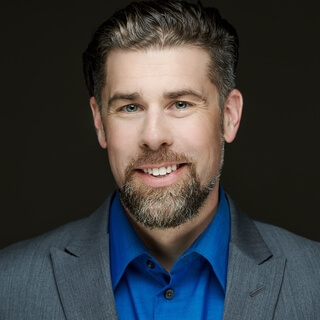
I am your host,
Tom Bushlach,
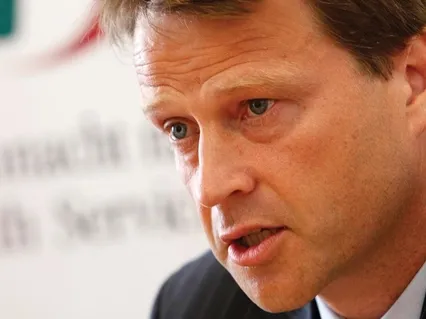
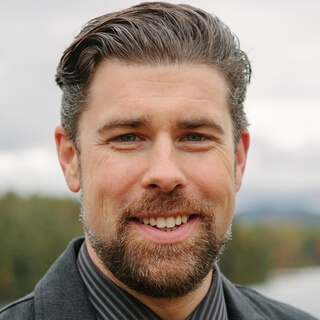
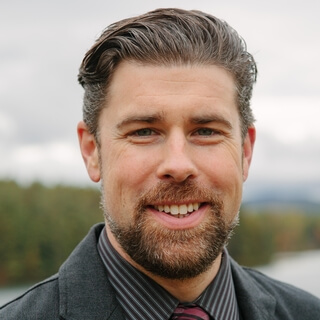
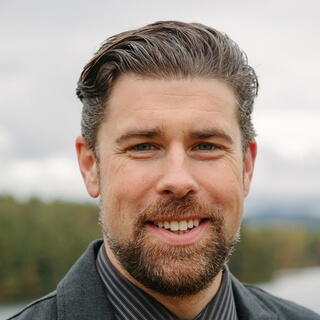
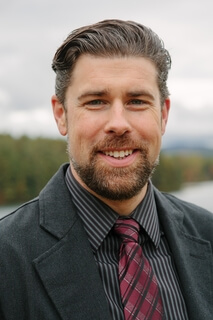
And this episode is an interview with Dr.
Barry White,
MD.
Dr.
White is a medical doctor and a hematologist by training.
He's also the executive board member of VHI Health and Wellbeing,
Which is a part of VHI and is the largest health insurance provider in Ireland.
Now as some of you know,
I recently began a new position as regional director of mission integration with SSM Health here in St.
Louis,
Missouri.
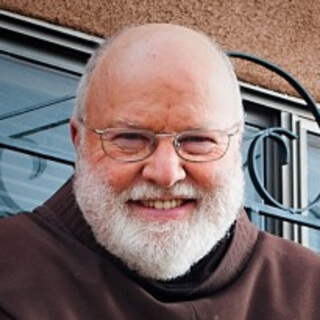
When I mentioned this to Father Lawrence Freeman,
Whom I interviewed in episode 14,
He immediately sent an email introducing me to Dr.
Barry White.
Dr.
White was a keynote speaker at the John Main Seminar in 2018,
Which is hosted every year by the World Community for Christian Meditation,
Of which Father Lawrence is the executive director.
I watched his talk,
Which is available on Vimeo,
And I'll put a link to it in the show notes.
And his talk is all about a contemplative approach to medicine and also includes a study that he did of teaching doctors and nurses and other providers in a really stressful,
Busy emergency department in Ireland.
So Barry has this contemplative understanding of health and healthcare that is subtle and could radically transform how we think about the practice of medicine,
Especially in modern society.
So whether you're a practitioner of medicine,
A healthcare provider,
Someone who works in healthcare,
Or just a patient of modern healthcare,
Which is just about everybody,
You are going to find this interview powerful and thought-provoking.
So you can find the show notes for this episode at thomasjbushlack.
Com forward slash episode 16.
That's episode 1-6 with no spaces.
You can also link there to Barry's talk at the John Main Seminar,
And you can make a free will donation to support the podcast as you are able.
If you would take a minute to subscribe to the podcast wherever you get your podcasts on iTunes,
Stitcher,
Google Play,
Or Spotify.
I'd also be really grateful if you take a moment to share the podcast on social media,
Leave reviews,
Or make a donation as you are moved and so able.
These small contributions make a huge difference in my ability to keep producing more shows and spread it to more people,
So thank you for doing that.
All right,
With that introduction,
Let's jump right into my interview with Dr.
Barry White.
All right,
It's my pleasure to welcome you,
Dr.
Barry White,
To contemplate this.
Thanks for finding the time and appreciate you being on the show.
You're welcome,
Tom.
Nice to meet you.
Yeah,
You too,
Virtually.
So as I've said in the introduction,
You're both a medical doctor,
But also a devoted practitioner of Christian meditation and contemplative prayer.
So why don't you start by just telling people a little bit about who you are and where you are in the world and how you brought together medicine with your contemplative practice.
So I'm a hematologist,
And I have practiced as a specialist for approximately 20 years.
And my interest in contemplative practice was that I was introduced to meditation by Lawrence Freeman,
Who's a Benedictine monk,
Up to about 17 years ago.
And I practiced it intermittently for a period of about 10 years,
Understood the benefit from it,
But wasn't a consistent practitioner.
And then about 10 years ago,
I went on a further retreat with Lawrence Freeman and embedded that practice then thereafter,
On a sort of a permanent basis.
And found it really very beneficial.
I'll talk to you in a moment as to why I found such a convergence between the practice of meditation and practice of medicine.
So I,
For the last sort of 10 years,
Then I've been more active practitioner of meditation.
So what interests me about that,
Then I should say,
We,
After a few years of after really embedding the practice on a regular basis,
I was then asked,
Would we run a program for doctors and nurses to teach them meditation?
So we started teaching doctors and nurses meditation.
And again,
I identified that there was a real benefit,
A real gap and a need for a contemplative practice in modern medicine.
And the reason for this is that if we look and see what health is,
There's two different ways of looking at it.
We can look at health as a state where we are physically healthy and have no psychological or social distress.
And that's all well and good,
But it's not very often that we're in that perfect state.
And the trajectory of our life is very much the opposite of that.
So we're going to get older,
We're going to get illnesses.
And if our whole definition of health is based around this perfect state of physical,
Psychological and social well-being,
Well,
Then we're going to be frustrated.
And it's,
It's,
I'm actually opposed to our life trajectory.
But more importantly,
It may distract us from something which is more fundamental,
Which is our capacity to experience healing or how even healing or what we might call health in a different concept.
When we are well,
When we are sick and getting treatment that's working,
When we're sick and getting treatment that doesn't work,
And even when there's no further treatment available to us up to the point we're dying.
So if it's true that we can experience healing in that environment,
Well,
Then that is very important and very fundamental part of both our lives and of healthcare.
And of course,
That's true and anybody who practices any of the different disciplines within medicine has seen that or even people who haven't practiced medicine at all,
But have experienced loved ones dying,
That while it's not a universal practice,
Some people do experience this sense of healing.
So perhaps a broader definition of health should include that experience of healing.
The challenge for us is how do we both facilitate our patients to experience that healing and how do we experience it ourselves?
And I think there's the tradition,
Both within Christian meditation outside of Christian meditation,
But the practice of meditation goes back thousands of years.
And I suppose the teachings are not dissimilar in this area,
Which is that we are full of distractions and we need to be still.
And when we're still,
We are become more aware.
And when we become more aware,
We're more likely to experience healing.
And when we're distracted and caught up with our worries,
We're less likely to.
So what I was very interested in in meditation is that it is a practice which teaches us to be still so that we can see not just the technical things that we need to do right,
But also we can facilitate and give the quality of attention that will facilitate healing in patients and facilitate healing in ourselves.
So there is this important relationship between the purity of our attention,
Our capacity to experience a more enhanced level of awareness,
The more meaningful nature of our relationships that occur as a result,
And our experience of healing.
So you could say we need a contemplative practice for two reasons.
One is so that we're more still so that we can be more better clinicians.
And also from a technical perspective,
Less distracted,
More present.
But also so that we can become,
We can experience something deeper about our own lives in the form of what we might call healing.
And we can facilitate the quality of attention that we're giving can facilitate that to occur in the people we're looking after.
So that is really where I think meditation has a lot to offer to medicine and health in its broader context.
We did do a study where we looked at,
After a number of years,
We're running this program and we did a study within the emergency department where we looked at teaching the practice of meditation to doctors and nurses.
And the outcome of that study was that the doctors and nurses who practice meditation had much less levels of burnout.
They were less anxious,
They were less stressed,
And they had some physiological benefits such as they slept better and had other positive changes in their immune system and cardiovascular system.
So that's not the reason to meditate,
But it is an interesting finding.
And we would never say to people meditate to improve your sleep.
It just happens to be a positive benefit.
I don't think that's the reason to do it.
I think the reason to do it is something deeper.
So that really is the background to my own experience with meditation and with teaching meditation in a healthcare environment.
Wow,
That was incredible.
We could stop there and this would be a powerful interview,
But fortunately we have some time.
So I've watched the video that you gave at the John Main Center and I'll put a link to it in the show notes for this.
But one of the things that I really wanted to draw out from that was the way you discuss a definition of health and you just went right there.
And boy,
There's so many things I want to follow up on what you just said.
I guess one that I think is an important link that one recognizes in a contemplative practice is that especially being in a healing profession such as you are,
And I work with a lot of doctors and nurses and other healthcare providers right now,
The healing,
There's a direct relationship between the kind of internal healing that one experiences and even welcomes and the ability to connect and share that with patients.
And I wonder if you could say more about how you've experienced that yourself as a physician.
So I think,
And I would say a number of the other physicians that were part of the program and nurses that were part of the program where they learned the practice of meditation.
I think that you could say that your ability to pay attention to a patient is significantly improved and your ability to be aware of all the factors that are at play is significantly improved.
And that's a hard thing to measure.
But I think that it is,
You could say it's a consistent qualitative finding that we have had from people who've learned the practice who are practicing nurses,
Doctors and other healthcare professionals.
I suppose the interesting point is what,
And maybe this is what you're asking,
Do you go on then and say to patients,
Well,
I want to teach you how to meditate as part of the treatment that I'm going to give you.
And I haven't,
That's not something I do.
Maybe it's something I should do.
I think that the point is that,
And certainly I wouldn't refuse to discuss it with patients,
But I haven't actually said to patients,
Oh,
I think you should meditate.
Other people do that and have done it and have found it very beneficial.
So I think it's an interesting point.
I feel that in a sense that the most important thing is that I am centered myself first and that is the first step on me helping my patients experience healing.
In other words,
That I,
The quality of attention and awareness that I have is first and foremost the most important thing that I can do.
And yeah,
So I haven't,
I don't actually teach about how to meditate.
Yeah.
And that wasn't necessarily what I was going for,
But it's an interesting question because of course you have examples like Jon Kabat-Zinn,
Who I'm sure you're familiar with his work,
Though not in the Christian contemplative tradition,
More of a,
I guess,
A secularized form of Buddhist meditation that he teaches as a doctor.
But what I think you're highlighting,
And I might even after listening to you and reflecting,
I might even rephrase it because I had put it more in terms of sort of the quality of the being of the physician or the healer.
But I think if I keep peeling that onion,
The healing is actually a function of the quality of the relationship.
And one could say that in a contemplative practice as a quality of relationship with God that facilitates healing.
And then that experience becomes so deeply embedded in the,
In the person after practice and consistency that then that sort of just naturally spills over into all relationships.
So you focused in particular on the healing relationship that a physician or a nurse has with a patient.
So in some ways it shifts it from the actual healer to the quality of the relationship and attentiveness that's brought.
So it's kind of a de-centering from the self.
Does that make sense?
Yeah.
With your experience,
I guess.
Yeah,
No,
I think it's up to perfectly there.
So I think there's two points you've made.
I think one is that the capacity to heal and the capacity to experience health in that context is something that at some level you could say we've medicalized when in fact this is part of the human experience.
And you could also argue that in fact other aspects of human experience have articulated this to a much better degree than we have in medicine.
And we see it from the mystics of the different traditions have articulated very clearly.
You know,
The poets talk about it.
So I do agree with you that this is something that is beyond medicine.
And it's something which defines our capacity to our human existence is this capacity to experience something deeper,
To be more aware,
To a deeper meaning to life.
And that brings us to a point where we experience healing,
Healing which is not transient in the sense of our,
Because our technical cures are the treatments that we might receive,
Which are great and we definitely want them,
But they ultimately run out on us in life.
So I suppose another way of looking at this is in a sense to say that it is the relationship between being and doing,
Which is that you could argue that health and healing is a place where being and doing are in harmony and where doing is resting in being and being is primary in that relationship.
And when we're unhealthy,
Our doing is separated from pure being.
And we are not going to be satisfied in that space.
We can endlessly exercise ourself.
And I'm talking about doing is not just the doing activities,
I'm talking about the doing of our mind as well,
Which is primarily where we spend a lot of energy,
Which is our thoughts and are looking at what has gone before us and what's going into the future and planning and all sorts of intellectual constructs.
They are doing and when they get disconnected from our source of being,
Say that is a state of ill health and on health.
And we know that we are conditioned so that we keep drifting into that space.
And that's why we need a contemplative practice to bring us back.
And again,
If you look at all the different traditions,
You can't do that once a week,
You can't do that twice a week.
You need to have a practice that's regular and is embedded and that that practice is at least a twice daily practice.
And that separation from being is also what causes us to be distracted and unaware.
And perhaps you could argue is the root of some of our challenges in all areas of life,
Including in medicine.
So do I want to see somebody who's distracted?
I think that person is going to be a doctor that gives me good quality of care that in an experience that I really appreciate in a meaningful relationship,
Or do I think,
Or who would I prefer to see somebody who is sort of more peaceful,
Less distracted,
Fully aware,
Giving me good attention?
What type of quality of care do I get?
And what is the nature of that relationship likely to be?
Well,
Clearly it's going to be more,
I want to see the person who's aware and is paying attention.
I wonder what you think of this statement as a physician,
That perhaps that separation between being and doing that is particularly driven,
I think,
In late modern culture is even a source,
Not the only source,
But a source of physical manifestations of illness.
I suppose two things on it.
I would say is the fact that I would suggest that if you read back,
We noticed that this challenge of being distracted and being separated from a point of being or where our being and doing is not in harmony,
Seems to be a challenge for us going way back in time,
Even before you have all the modern distractions.
And I think that's a really interesting point,
An important point.
It's almost,
It's our state that we need to be aware of.
It's our predisposition.
And it seems that that challenge was really strong even to the early contemplative.
This is what they were struggling with.
This was their big challenge,
Their big struggle to be still,
To be still in their minds,
To deal with the endless distractions,
Which are primarily driven by their ego.
So I think that clearly modern society brings with it a whole host of distractions.
And you could argue they're much greater than they were 2,
000 years ago or 3,
000 years ago,
4,
000 years ago.
But you could also argue that the big distractions are inside us and we're coded to deliver such a level of distraction that whatever happens outside,
There's still buckets inside to keep us distracted and challenged.
So that's the,
That was one point.
The other question you raise is the relationship between our,
This state of being are also linked to our,
You could argue our psychological state and the manifestations of physical illness.
That's what you're asking,
Is there a relationship?
In other words,
Can we not just have a,
Want a better word,
A deeper personal experience of healing?
What's the relationship between that and our capacity to physically heal from the more technical aspect of healthcare?
And my own perspective on that is I originally would have been very skeptical to it,
But there isn't much of a connection.
I think that as time goes by,
We often talk about evidence,
Conventional medicine being a space where there's a great evidence base and anything outside of that in the areas that we might talk about of contemplative practice are evidence free and there's no evidence to support them.
But I think that's,
There's an increasing recognition that's not true,
That a lot of conventional medical practice is not evidence based and a lot,
And there is a lot of qualitative evidence and an increasing amount of quantitative evidence,
Even though the research methodologies are hard to apply to this environment,
That contemplative practices can have impacts on our body,
Our physical state,
Whether it's our sleep,
And we know that there's increasing evidence that sleep is really important.
So if there's a relationship between our ability to practice meditation and sleep,
Well then clearly there would be an argument that that is having an impact on the health impacts of poor sleep.
So I do think that it's an area that requires just purely from a scientific perspective,
It requires additional study because it's a very interesting area,
Probably a very rich area.
And it's something that has been neglected at least up until recently.
There were two quotes that came to my mind as you were responding to that question.
One was from Gregory of Nyssa,
Who was I think fourth century early theologian,
Who went to a monastery and then wrote that,
I left the world to go to the monastery,
But I found that I couldn't leave myself behind,
That his mind was still full.
That was paraphrase,
But in general what he said.
But the other one that stood out to me comes from Daniel Siegel,
Who's a psychiatrist,
An MD in the United States.
And there's a quote from him that I use in a lot of workshops where he talks about integration and linking together differentiated and separated parts into a coherent whole is how he defines integration.
And then he says that integration is the basis of all health.
And so my question about the mind-body connection or the mind-body-spirit connection and its relationship to physical health was exploring that insight that he has.
And it's interesting because he draws it out of neuroscience and neurological connections that are strengthened and enhanced by meditation and contemplative prayer,
But also in relationships and other realms.
So it seems like there's some sort of universal truth that contemplative traditions view in one way and modern scientific empirical research views in another way,
But I don't think that they have to be so radically separate as they tend to be sometimes in our culture.
Yes,
And I think it's perhaps an unfolding,
You could say.
In other words,
It's because modern science is so young and it's gone off in a certain direction and has had such success that it hasn't needed to really come back and explore this.
But I think in time we'll see that there is,
You're absolutely right,
That there is a lot to be learned from the past in respect to this.
And perhaps meditation is the most ancient healing practice that we have.
Absolutely.
Yeah.
Huh.
And I think sometimes,
How should I put this?
In my own approach,
And I'm not a physician,
But I do work in healthcare now more in mission integration,
I think sometimes there might be a fear that bringing in more ancient classical,
Spiritual,
Theological,
Or philosophical traditions is going to sort of,
We're going to go back in time and get rid of all the advances in modern medicine.
As opposed to how can we,
And you did this really well,
I think,
In your John Mayne talk,
Sort of honor the absolutely incredible,
Mind-blowing advances in modern science and take what's good from that method and integrate it with the broader human tradition,
Humanistic tradition,
Perhaps.
Am I putting words in your mouth to say that that's sort of part of what you're striving for in your recent work?
Yeah.
So I think if you look at our healthcare systems and look at the challenges they face,
They face challenges across areas of quality,
Patient experience,
Cost effectiveness,
And sort of burn out your working with other people,
The whole people elements.
In very simplistic terms,
You just look across with those four domains.
Others we'll talk about up to eight domains,
But let's just look at it from those four domains.
So we have technical solutions to try and enhance serious failings in each of those areas.
But it's sometimes very hard to,
There's a missing link,
It's sometimes very hard to actually make improvements.
So we've identified major safety concerns in the way medicine is practiced.
Sometimes we've got programs of teaching people how to practice safer medicine.
But perhaps the missing ingredient in this is a level of enhanced level of awareness.
So if I have somebody who is more aware,
It's much easier for them to be practice safe for medicine.
They're more likely to have a meaningful relationship with their patients,
Or even more likely to be more cost effective,
And they're a much better person to work with.
So you're absolutely right.
I think you could say that if we were to rest all the advances of modern medicine on a bed of enhanced awareness,
We would see very significant improvements in how not just the capacity to experience healing or to facilitate people to experience healing,
But also in how we're technically doing health care.
So they're not mutually exclusive.
In fact,
They're mutually beneficial,
Mutually reinforce their contemplative practices,
The capacity to enhance the great advances of medicine as opposed to throw it out.
As you talk about that,
I'm thinking of a conversation that I just had yesterday with three of our doctors in the health care system that I work in.
And they were talking about training residents early in their career to see and even ask questions of their patients that go beyond the acute presenting symptoms.
And they were pediatricians,
So they were working with children and then families to ask questions about social determinants of health.
And so they were bringing a broader awareness that health has to do more with just the sort of acute symptom,
Though that's where it starts,
And that we get better outcomes if we can integrate those people into healthy communities and networks of human relationship.
So that seems like there's an interesting additional layer there of when we bring that awareness into a care setting,
That we see the wholeness of the patient beyond just the symptom.
One of the doctors that I have worked with always says,
We don't treat diseases,
We treat people,
And people are whole.
I don't know what the differences are.
I know you're in Ireland and it's a different health care system,
But is that a piece that you see from a contemplative perspective as well as some of those social determinants of health and how those affect our health outcomes as well?
Yeah,
So that challenge that you're referring to,
Which is that we just focus on the acute episode is a universal problem in all health care systems.
So it does reflect something fundamental about how medicine has evolved.
And perhaps it is just due to the pressure that people feel they're under,
That there's an increasing volume of medical activity and work that clinicians have to do.
And again,
Let's just say in a more distracted,
That is superimposed on our baseline predisposition to be distracted,
Creates a challenging environment.
And the response very often in that situation is just to deal with things in a less aware way that we're just trying to cope with the problem that presents us.
I just don't have time to focus on other things.
I've got to see so many patients in a clinic.
And I think that when you practice,
If you're going to practice meditation,
It's not going to increase the number of doctors.
It's not going to increase the number of hours in your day,
But does have the opportunity to increase the quality of your attention and your awareness as I was describing earlier on.
And I think in that context,
It opens our mind to the psychological social factors at play,
And not just the physiological factors at play in the acute presentation.
And it also,
Even if the duration of time we have available to us is still as constrained,
It will allow us to use that time better.
So even just that,
I may not have an hour to sit down and talk to a patient about all the other aspects of their life that may be relevant.
But I'm,
At the very least,
For that period of time that I'm with them,
I'm alert and aware and awake to the other dimensions of the person.
And even if it's only for 30 seconds or a minute,
I'm touching on those components which I have the time and it's appropriate to deal with at that moment.
Clearly,
If I've got a patient whose blood pressure is dropping and they're bleeding,
That's not the time to have a discussion about the wider social issues in their life.
That's a time for something else.
But that level of awareness allows you to be aware of that.
You might see other factors which are relevant,
Like that there's a child in the room or when this deterioration is occurring and you're aware of those issues.
And you might have a limited amount of time but a need to make adjustments or make decisions that are outside of your core focus,
Which is to sort of institute the necessary medical procedures.
But it does give you the perspective of the other dimensions,
Even if you're not choosing to engage in all the areas that,
Oh,
You don't have time to do it.
So I do think that fundamentally it opens up that dimension that you can see the other things that you should be addressing.
And assuming you have time,
It allows you in a very time efficient way to seek to address them.
So I agree with you totally.
I think that that dimension of looking at a whole person is really missing.
And it may not just be missing because we don't have time.
It also may be missing because the time that we have,
We're not using it and we're not being as attentive as we could be.
And what a contemplative practice allows us to do is at least fix one of those,
Which is to be as attentive and as aware as possible to address those issues that we're allowed to,
The time allows us to address.
Yeah.
Well,
I'm recognizing that we have just a short amount of time,
Ironically left.
So I guess there's two things that I really wanted to ask you left anyways.
I could keep going for hours,
But one is if you could speak a little bit about how you integrate your own personal practice into the challenges and stresses of being a practicing physician.
Actually,
Let me just ask that one and pause and then I'll do the second one.
So my own practice is the practice of meditation twice a day.
And I try as much as possible to do that.
There obviously are times where I don't get to do it.
Obviously there are the times where I need it most.
One of the things that in terms of the actual practice that I found and it's true with me as well as a lot of other doctors is that we are constantly in evaluation mode.
One of our first distractions that doctors encounter,
I think quite a lot is evaluating am I any good at this?
Am I doing it right?
Other people seem to be much better at this,
They're more contemplative,
They're sitting there,
They're not even thinking of anything and my head is just full of this stuff.
So I think that I have that practice,
I've moved beyond that phase to realize there's no such thing as good or bad meditation.
And I do find it very beneficial,
I find it perhaps more beneficial when I need it most and occasionally that's the time where I massage on it.
So I suppose the first challenge I faced was the scale of distraction.
The second challenge was the embedding the practice into my daily life,
So getting it in as a twice daily practice.
I felt that for me it took about three or four months really of just practicing it twice a day before.
Almost the third challenge is in a sense that if I don't meditate then I'm very conscious of it,
I'm aware of it.
I'm aware that I'm not attentive enough,
That I'm more likely to be distracted.
So that's my own journey and my own practice.
As I said,
I spent a lot of time not meditating,
Having been aware of the benefits of meditation but not meditating for a number of years before I locked down a regular practice.
Yeah,
I love that part of how you started your story because I think a lot of people relate to that.
They might learn a practice and then practice intermittently and then get caught up in feeling like they're a failure for not doing it or not doing it right and I'm doing air quotes but you can't see me.
But then it's like the seed has been planted,
The spirit is doing that work and then it sort of begins to take on a life of its own that only I think in retrospect becomes visible.
Oh,
That's what's been going on and that God is sort of leading one into deeper and deeper practice.
Do you have any practical wisdom from that,
Say that three month period where you were really dedicated to integrating it into a busy schedule?
Like how did you do that?
Did you learn anything that might be helpful for others working to do that?
So I do think it's easier to practice twice a day than once a day or intermittently.
I think that's the first thing I learned.
So it's very hard to be an irregular practitioner,
To have meaningfully engage in it and to be irregular and it's much easier when you lock it down as a twice a day practice.
So I'm not sure if that's true for everybody but that's my own experience was to practice twice a day.
Which is very consistent with not only what you've learned from Lawrence Freeman and what I learned from Thomas Keating but even most traditions that I've studied.
I think that's a fairly standard approach with some variation.
Anyway,
Sorry I cut you off.
Please keep going.
I suppose the other thing is the time of the day.
So first thing in the morning,
I would meditate and I did notice that when I started meditating that I tended to wake up earlier and be fresher actually and felt like I slept better.
But I used that opportunity then to meditate and I found that a really great experience to meditate at the start of the day before the day has begun,
Before the world is awake.
And then the second time of the day was more like about six o'clock or seven o'clock and not immediately before going to sleep.
So those were the two times a day that I found most effective and gave me a sense of balance during the day as well.
I'm trying to think is there anything else over that period of time that I found helpful.
I also think you need a real sense of commitment over that period of time to just really stay with it.
And I think that if you go in,
If you try to embed that practice half-hearted without a real intention,
Then I think it's hard to sustain it.
So I was very committed to the idea that I'm going to do this for this period of time.
And I also think the reason I was continuing to do is I was feeling a manifestation of or feeling the benefits,
Starting to feel the benefits,
But not trying to analyze them.
That's significant because it seems like you were learning to disengage from that critical mind that is so beneficial in some contexts and so not helpful in others.
I think the best description of it is meditation is an evaluation for it.
For me,
It's an evaluation-free zone.
Now that is ironic given the fact that I just talked about what we're doing now,
Which is evaluating it.
And I did the study to evaluate it.
So perhaps I'm not fully living that,
But I believe it.
I would make a distinction between evaluation and wisdom.
And I think what you just shared is wisdom born from your experience that you've reflected on.
So there's a sort of evaluation,
But it's more of like,
Here's how the Spirit has been at work for me.
And I always encourage people in workshops and talking with them that there isn't a right way to do it.
And it even changes at different stages in life.
Right now I've got young kids,
And so my practice looks very different from when I was in my twenties and single and underemployed and had all kinds of free time.
And it will look different when my kids are older.
And that's okay.
There's an ebb and flow to the contemplative life and the practice.
And the one other thing that I would say to people who are busy in busy lives,
And it's my own experience,
And it's the experience that I've heard a lot of other people speak to is that the time you spend in meditation,
You get back many-fold.
So if I meditate,
I'm so much more productive during my working hours of the day.
So that many people say,
I would love to be able to do that,
But I don't have the time to do it.
Then if we truly reflected on how much time we spent in distracted thought or distracted discussion,
We could perhaps free some of that time for contemplative practice.
And if we do that,
The rest of the day becomes much more,
You could say,
Justified or meaningful or unproductive.
Well,
Do you have time for one more question or do you need to go?
Yeah,
Yeah,
No,
I have one more question.
It'll be fine,
Yeah.
So I want to go from that was more focused on your personal experience,
But then you've taught this to physicians in what you described as a pretty stressful emergency department.
And I myself am working with people in my own system to develop some similar programs.
So how did you transfer from your own experience to teaching your colleagues and sort of helping them move into that space?
Do you have any wisdom to share from that experience?
I suppose I moved into it with reluctance because I felt that I was really,
You know,
I'd be struggling to practice it myself.
So who am I to sort of tell other people what the truth of the world is and how to embed such a personal practice as this.
So I was reluctant to do it.
And one of the things I have done is that Lawrence Freeman has taught on it with me.
So for the most part,
I've been with him.
That helped quite a lot.
I suppose that was that's the first thing.
The other thing I did learn was instead of saying,
Look,
This is the right or the wrong way of meditating or understanding meditation.
It was just easier just to say,
Look,
This is my experience.
And this is a practice.
One of the questions that very often comes up is people say,
Well,
Are there other practices?
And I tried this and a bit of that and mindfulness or other contemplative practices.
And I suppose I don't really get involved in saying one is better than the other.
All I can say is this is a practice that will greatly benefit you.
And in my experience,
Greatly benefits me,
I should say.
And I do think it's important to not to jump from one area to another.
I think that's a very important.
Not that I did that myself.
In fact,
I only learned one way and just stuck with it.
But I do think some people get challenged from my own experience of talking to them,
That they're jumping from one practice to another.
And I don't see that that can help.
So our approach has been very much here's a practice.
It's one of the most ancient healing practice.
It goes back a few thousand years.
And here is a teaching in it.
And it's simple,
But it's hard.
And this is sort of a gift that's been shared with people.
So you have to make your own decision as to whether you want to go down that journey.
My own experience again is that people are very open to it.
They have a need for it.
And it does surprise me that different types of people that you would never imagine that would be interested in this whole area who immerse themselves in it and get great benefit from it.
And I also think that we were teaching it in a secular environment.
We weren't teaching it in a religious environment.
And I think that's another interesting point,
Which is it is a universal practice.
It brings people together.
It helps them on their own journey.
And I think that is that it is a soft and very gentle guide.
Your comment about just sharing from personal experience with truth about what works and in offering that not as the one right way or the only right way or even the perfect or whatever,
But saying this is what works for me and I'll share that with you.
That does tend to draw people in,
Even if they come from different spiritual or faith backgrounds.
Yes.
And our own experiences,
The people who engaged in this came from different backgrounds,
Different spiritual traditions,
And some people who had a very negative view of religious traditions are and what surprised me is how they embraced it.
I know you're an expert in theology,
But I get involved in any theology.
This was just experience.
I think that's much easier to relate to.
And the programs that I'll be working with are going to be done in a Catholic health care system.
But even then,
I think our approach will be very similar to what you've described because our employees aren't,
You know,
It's not like we have to hire all Catholics.
We've got people from all different kinds of faith traditions.
In fact,
Some of our most devout employees are Muslim doctors who use our chapel to do their zakat,
Their five prayers a day.
But I think that a contemplative practice is something that people of all,
Because it's a universal experience,
People can come together around.
The other final point to say at the end is that we also felt that we,
While we were,
We did not engage them in a discussion necessarily around belief systems,
We felt that it would be remiss and not complete for them for us to ignore what the wisdom traditions and the faith traditions had brought to this whole practice.
So I'm not sure you can just talk about meditation.
We can introduce meditation into a secular environment.
We can introduce it into an environment where people of different faiths and no faith can engage in it.
I think that's very much what we were interested in.
But that doesn't mean that you ignore half or more,
Well,
The majority of the knowledge in this area and presume it doesn't exist.
So one of the things that we were very interested in doing just purely from the,
You could say the intellectual integrity of it is to ensure that people were exposed to the texts that speak about contemplative practice and a contemplative way of life.
And those texts are,
You know,
Some of them are from poets,
Some of them are philosophers,
But it's very hard to beat the contemplative texts from the wisdom traditions.
So even in a that secular environment,
We did speak to them about texts from the different traditions.
So they would be from the das-pals,
From the Upanishads,
From Lao-Tzu.
And I think that that really resonated with them.
And I saw this as something which was universal,
Meaningful,
And that helped them,
Well,
Helped me anyway,
On our sort of,
You know,
Experiencing this at a deeper level and understanding what it means.
And I see that there's a deep respect for people in doing that to say,
These are the integrity of the traditions from which these come.
And I'm going to offer that to you and give you the space to respond to that in whatever way that you want.
And that then when people are given that freedom,
They tend to respond pretty positively or find what they need in it.
Yes,
And very often they go back to areas that they're more comfortable in that they may have sort of left behind or not fully appreciated.
Yeah.
Because even,
You know,
That they may have been aware of religious texts in their own tradition,
They may have been aware of the words,
But not of the deeper meaning that they were getting to understand when they came out of from a contemplative perspective.
Yeah,
That's one of the things I love about the story of John Mayne,
Which Father Lawrence shared in the two podcasts ago now,
Which is,
You know,
His going to India and finding a teacher and the teacher saying,
You know,
I'll teach you,
But I want you to practice in your tradition,
Your Christian tradition,
That you hear that a lot,
That we sort of have a native tradition or perspective that we come back to that we interpret through.
Yes,
And that's my experience.
And mine as well.
Wow.
Do you have,
Well,
Do you need to go?
I probably should.
I do need to move on.
Sorry.
You probably have patience.
There's people waiting for me.
Yes.
I speak about how I've managed time.
I don't want to cut it off,
But I also want to honor your other commitments.
But thank you so much.
This is so rich and I feel like there's more.
So if you're open to it,
Maybe we can do a follow up at some point.
Yeah,
Absolutely.
I'd be delighted to.
Thank you very much,
Tom.
Thank you so much and hope the rest of your day you are present.
You too,
Tom.
Great talking.
Thank you.
Bye bye.
Bye bye.
Bye bye.
Thanks again,
Everyone,
For listening.
I am so grateful that you're here.
I recently heard from a listener who told me that she started hosting listening sessions for the episodes at her house with friends and then having discussions afterwards,
Kind of like a prayer or a study group.
I was so gratified to know that people are finding these conversations meaningful and transformative.
Again,
You can find the show notes for this episode at thomasjbushlack.
Com forward slash episode 16.
That's episode 1-6 with no spaces.
Please take a moment to support the show right now,
However you are so moved by sharing it on social media,
Leaving a review wherever you download your podcast or making a free will donation to support the production of the show on the show notes page.
Until next time,
I hope that you're finding encouragement and inspiration to learn or deepen your own daily contemplative practice.
And most importantly,
I truly hope that you're finding some of that kind of deep healing that Dr.
White talks about in this episode.
When we are transformed by grace,
We can't help but transform others and maybe even our little corner of the world wherever you are.
Thank you and be well.