It's been so incredible to see,
To just kind of try and partner and cooperate with God in this thing that is bigger than us and is bigger than my language,
My framework,
My container,
All of that and just learn.
It's just like,
It's kind of a dance with spirit and being a part of watching the divine really draw people to itself.
Hello everybody,
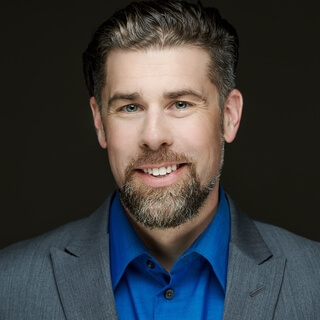
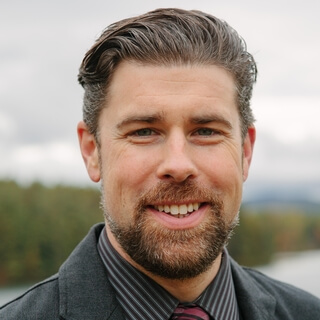
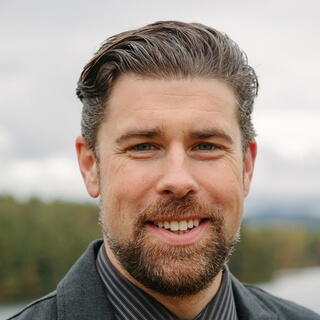
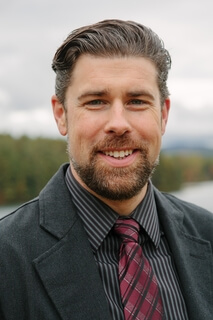
I'm Tom Buschlak and welcome to episode four of Contemplate This,
Conversations on contemplation and compassion.
The idea with these interviews is to hear from leaders in the world of contemplative prayer and meditation who enact and embody compassion in the world.
My hope is that all of us can learn from their journey,
Hear about how they move into the depths of contemplative practice and transformation and how that transformation informs their way of living and being in the world.
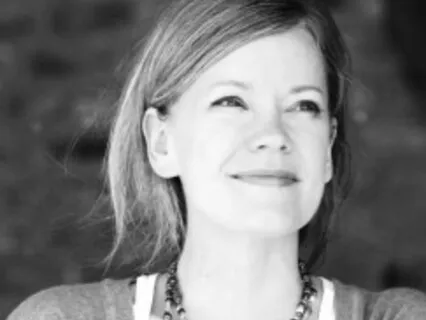
This interview is with Filina Huertz.
I met Filina at the New Contemplative Exchange,
A gathering of youngish leaders of contemplative Christianity at St.
Benedict's Monastery in Snowmass,
Colorado in August of 2017.
She's one of those people whose depth of presence just draws people to her.
People intuitively trust her and are drawn into the warmth and beauty of her presence.
I experienced this myself and I saw it at Snowmass with the other participants there.
I think much of that warmth is conveyed in this interview and I felt for myself almost a feeling of catharsis after this dialogue with her.
Somehow it felt cleansing to hear her story told with such truth and clarity and she captures the essence of why hearing another's stories is so important for the contemplative journey.
In fact,
It's the whole point of the Contemplate This podcast.
Filina is fearless and her willingness to go right into the heart of suffering.
In fact,
It was her encounter with suffering caused by the blood diamond wars in Sierra Leone that she experienced firsthand that led her into a brokenness such that her old ways of praying and living could no longer provide an answer that was adequate.
That's when she first met Father Thomas Keating and was introduced to Centering Prayer and the Contemplative Dimension of the Christian tradition.
We go right into the heart of this darkness in this interview,
Following her through the transformation that ensued which eventually led her and her husband,
Chris,
To founding Gravity Center,
A center for contemplative activism in Omaha,
Nebraska.
At several moments in our discussion of the challenges of violence and oppression facing us as a world and a people today,
There were tears in Filina's eyes.
Not tears of despair,
But tears born of her ability to be with others in their suffering.
Perhaps we could all use some of that capacity,
Some of those healing,
Cleansing tears right now.
Perhaps it seems to me that's the only sane response to the divisions and angers that we see and feel all around us in our world today.
So with that,
Let's jump right into this interview with Filina Huertz.
All right,
Well,
Thanks Filina for being here and looking forward to our interview together.
And I'll just start by asking you to introduce people listening to who you are,
Maybe say a bit about Gravity Center and the work that you're doing now,
And then we'll go back from there.
Sounds good.
Thanks,
Tom,
For inviting me to be a part of the podcast.
It's a pleasure to visit with you as always.
Yeah,
So my name is Filina and that is,
I'm told,
Is Greek for lover of humanity.
It's quite a name to live into and it's interesting because for 20 years of my adult life,
I served the most vulnerable of the world's poor.
So working with survivors of trafficking,
Sex trafficking,
Labor trafficking,
Children with HIV and AIDS,
Former child soldiers and war brides,
Children living on the streets and abandoned widows.
So I kind of was plunged into learning how to love my brothers and sisters around the world,
Especially those in great need.
And I currently run the Gravity Center in Omaha,
Nebraska.
My husband and I co-founded this while we just celebrated our fifth anniversary in the fall.
So we're into our sixth year now.
So we're quite happy about that.
Yeah.
Do you want to say a little bit more just about Gravity Center,
If folks that might not know what exactly you do?
Yeah,
Yeah.
So at the Gravity Center,
We are offering spiritual direction,
Contemplative retreats and Enneagram consultations and workshops.
So we have a little office here in Omaha,
Nebraska,
Where we meet with clients and we hold small workshops and that kind of thing.
And we actually meet with clients one-on-one for spiritual direction,
Enneagram consultations from all over the world.
So I have clients that I meet with by phone and Skype as well as clients that come in person here in my office.
And then we give a couple of retreats a year at the Benedictine Monastery near Omaha out in Schuyler,
Nebraska.
And then from there,
We're contracted to give those retreats around the country and around the world.
And in addition to that work,
I do a little public speaking and universities and conferences and churches and do some writing as well.
Yeah,
Well,
Do you want to say,
Well,
I had a couple of questions.
If you want to say a little bit more about the writing that's available.
And then you've mentioned the Enneagram and when I interviewed Richard Rohr,
He mentioned the Enneagram.
And I've been working with it for a while.
Maybe you have a good elevator pitch for people who might be listening who don't know what the Enneagram is.
Yeah.
Or not a pitch,
But a description.
Sure.
I can certainly try.
My husband is the expert on the Enneagram around here.
Yeah,
And I think I'm going to try to get him in on a podcast too.
Yes,
That would be great.
His recent book that was just published in the fall,
The Sacred Enneagram is just blowing up,
Tom.
I mean,
People are just loving it.
And I can't tell you how many people will say I couldn't put it down and how thankful they were for the groundbreaking aspects of it in the world of Enneagram.
But for those of you who are listening who have no idea what we're talking about,
The Enneagram is a psychospiritual tool.
It's ancient and really originally was an oral tradition that in more modern times has been put to print.
And what it is,
It's more than a personality assessment,
Although you can kind of limit it to that,
But that's not its original intent.
Well,
The way my husband describes it is it's like nine paths to God.
And he might have learned that from one of his teachers,
Russ Hudson as well.
But at any rate,
I think that's a good way to describe it,
Nine paths to God.
And we each kind of land on one of those nine types.
So it's a numbered system,
So one through nine.
And we're dominant in one of the numbers.
And what it does is it reveals our essence and how we kind of lost touch with that essence.
And then it helps us to get back to that original state of being.
Some of the listeners might be familiar with true self,
False self language.
And I think that's really helpful with the Enneagram.
The Enneagram helps reveal our true self and also shows us the images of our false self.
So it really empowers us to be more self-aware and then to live more often from our true self.
Yeah.
I found it really powerful for becoming aware of those patterns that I get stuck in where I get in my own way,
Get in God's way,
And to work to let go of those a little bit so they don't have so much power.
Yes.
So I'm a one.
What are you?
Two.
Ash,
I would have guessed it too.
Yeah.
And so I wish it wasn't so obvious.
Well,
I mean,
I've hung out with you a little bit in Colorado.
Yeah.
Yeah.
That's cool.
Yeah.
So let's go back a little bit then.
I'd love to hear about your,
Like,
You know,
The central core of the podcast is conversations on contemplation and compassionate social action.
Are you still there?
I am.
Sorry.
I just wanted to check on my Wi-Fi.
That's okay.
I'm just checking if it's operating properly.
Go ahead.
Oh,
I lost you.
So and I've read your book,
Pilgrimage of a Soul.
That's a bit of a spiritual autobiography.
And so I've heard some of that story.
But yeah,
Can you tell us a little bit about,
Like,
Early experiences around spirituality and practices and faith and then where that took you?
How early?
Well,
I mean,
If you want to go all the way back to,
I think family,
We get our notion of what spirituality is or whether we even think about spirituality or concept of God or the transcendent from,
You know,
That's where we get it first.
We might be,
I think a lot of us who keep with it are find other fonts and resources to draw from.
But yeah,
Well,
Purifying what you grew up with has been a part of your journey from what I've read.
So yeah,
That's true.
So my father was a pastor and evangelical pastor.
And so my container for my spiritual formation was in that kind of tradition.
What that meant for me was there's a lot of emphasis on a personal relationship with God.
And I,
To this day,
Really treasure that upbringing,
That God,
A sense in which God was accessible in a very personal way through Holy Scripture and through,
Well,
What I would refer to now as the sacraments,
But we didn't call them that then.
Yeah,
A little hint for the Catholic coming later.
Yeah.
So yeah,
So I grew up attending church three times a week,
Sunday morning,
Sunday night,
Wednesday evening.
And those practices were really important.
I grew up,
I don't even remember not praying in a conversational way with God.
So would you say that you had like a felt sense of God's presence at that early age?
Yeah.
I mean,
People have the experience of a lot of church,
But not much felt experience or presence.
That's right.
Yeah.
So there was a lot of felt,
Always there was felt experience of God.
I can remember my father had a ritual of tucking me in at night and praying with me before I'd go to sleep.
And I treasure that.
You know,
That he really helped give me that sense of connection to God.
So yeah,
I was very,
I was a student of the scriptures.
My Bible as a teenager was just all marked up,
You know,
All kinds of connections that I was trying to make with the divine.
So that was the early formation.
And then as time went on,
I had to find my own way.
I was just speaking at a university yesterday and I said,
I was reflecting on my college days.
And I used the term,
I think,
I was having to find my own faith instead of like an heirloom that I inherited from my family.
And I think as time goes on,
That's true for a lot of us that we inherit something from our family around faith and spirituality.
And then along the way we have to,
You know,
Has to really become our own,
Not just something we inherited,
But something that we discover for ourselves.
So that has been a huge path of becoming and trying to understand God.
So I'm curious,
Because I think a lot of people struggle with where to find that support when you're looking to move into the heirloom,
Into ownership.
I think a lot of people fall away at that point,
Not necessarily through any fault of their own,
But just so were there people or experiences or encounters that helped you through that process?
Support through the process of my faith becoming my own.
Yeah.
I mean,
I just think of my own college experience.
Like I went to a Benedictine college and it's hard for me to even imagine what my faith or spiritual practice would be like had I not encountered that because it broke open the steps that I didn't even know was possible.
So.
Yeah.
I mean,
Yeah,
What comes to mind immediately is maybe a little unusual.
Sorry,
I'm going to try to set this phone up so I don't have to keep moving it.
I know that must be so … Oh,
You're kind.
I think it would be terribly distracting for you.
Let's see here.
Well,
What comes to mind is my very first experience out of the country in India.
That was the beginning,
I think the real beginning of it.
And certainly in college there was some of that because even though I attended an evangelical kind of liberal arts university,
I mean,
It was pretty steeped in evangelicalism.
So there were similarities to how I grew up,
But my upbringing was even more fundamentalist than the university that I was at.
So there's a lot of … My world was opening up quite a bit when I left home.
So what brought you to India?
So yeah,
So I had a sense of call to mission from the time I was very young.
I remember in grade school the teacher asking what we wanted to be when we grew up and I was embarrassed to say missionary because all my friends were like,
Doctor,
Lawyer,
Fighter,
You know,
I was like,
Missionary.
It didn't seem like any of my classmates could understand that.
But I had that call and so in college I was discerning that call and things came together and I visited India for the first time and simultaneous to falling in love with my husband and then we ended up doing that work for almost 20 years.
But you know,
Being brought,
I think anything that kind of takes us out of our safe and secure container of what we've always known,
Whether that's a move to a university that's different from how we grew up or maybe traveling and getting away from home and seeing the world from a different perspective,
I think all of those things have a way of forcing us to examine what we've known and what we don't know.
Yeah.
Huh.
So,
What,
Do you want to say a little bit about the work that you did with Chris and the before Gravity world?
The pre-Spain?
Yeah,
Yeah,
Yeah.
So we got our start really with Mother Teresa and the Missionaries of Charity so she was incredibly formative for me as a young adult and we helped establish homes and drop-in centers for,
Primarily for children in need but we also did work with some adults,
As I mentioned,
The people who were struggling with incredible poverty and injustice.
So we opened up children's homes and day centers and we did this work with other young adults from the United States and Eastern Europe and South America and West Africa and South and Southeast Asia and we built,
Well,
I guess at our peak there were about 300 of us working in 13 cities in the majority world.
And my husband and I were charged with overseeing all of that work so we,
Yeah.
You didn't start that organization,
Did you?
No.
Okay.
So you kind of stepped into a leadership role but it wasn't something you created from scratch.
Not exactly.
But you felt it.
Yeah,
There was a founding director that we all went to the same university and he and my husband really helped,
Really founded the organization and then when I came on scene,
That founding director resigned and my husband and I inherited it and then from there built it out from what,
At that time it was just a couple of children's homes in India.
So from there we were able to,
Yeah,
Grow it up and grow it out and it was intense and rewarding in a lot of ways.
And most of what you described has been what we might think of as direct service kind of work.
I think when some people listening hear the word missionary,
That can conjure up a lot of different things,
Right?
Anywhere from going and I just heard,
Actually it was a talk by Richard Rohr that we watched in class about converting the pagan babies,
Right?
Which versus going to be present with people and I'm guessing that what you did was more of the latter.
Yeah,
Yeah.
But I can see that people listening might bristle at that a little bit.
So I don't know if you want to explain your philosophy there.
Of mission.
Yeah,
Like what missionary work meant to you.
Yeah,
So that work really,
I mean we hardly ever used the word missionary in that work.
So as a child that's all I knew.
As a child it was the influence of a traditional missionary in Africa.
I really as a kid didn't know what he did other than the fact that he worked with people of another culture and I was really drawn to that.
And so then my work ended up,
We kind of would refer to it more as like social justice work or like what you're saying direct service work.
Where yeah,
Where we,
I mean really for us it was about compassion and the essence of the word compassion is to suffer with.
And so it was about being with people in suffering and together trying to find a way to alleviate that suffering.
Yeah,
Yeah,
That makes sense.
So then what was your,
I don't know where contemplative prayer came in more explicitly.
So what was your prayer life like to support that work?
Because I know in other conversations we've had that that was really intense and difficult and there was a,
Sounds like an incredible kind of asceticism that you and Chris practice living on very little and traveling and being available to others.
So I'm curious to hear how the contemplative component supported you in that or didn't as the case may be.
Yeah,
So in the beginning of that work,
You're right,
There was an aesthetic element to it.
We had very high ideals.
We wanted to reject the American dream in favor of a dream for the world,
Something that would be more sustainable for everyone.
And so in that way,
We rejected a cushy,
Well-paying job and opted to be on traditional missionary support to do the work.
So that meant we had to raise the money from individuals and churches to make a living,
Basically just to sustain our living.
And we lived on very,
Very little.
So we had in our organization,
We have what was called a needs-based salary.
And we tried to just look at our basic needs.
What do we need to live on that way?
And we were right out of college.
So few of us were even married in the beginning.
And then we ended up getting married and some of those couples ended up having children and some of our ideals got a little more complicated then.
Yeah,
Yeah.
I'm clear with that.
But yeah,
We just tried to live very simply and only take what was needed.
And that was noble,
But it also has had some drawbacks.
So at any rate,
We did our best to try to live in solidarity with the people that we were serving.
So then at what point,
I can't remember,
Did you end up going to the Center for Action and Contemplation?
I forgot how that piece came into it.
Oh yeah,
And you were asking how.
.
.
You know you've told me.
Yeah.
Yeah,
You were asking how my prayer life sustained that work too.
So for about eight years into that work,
It was still very much an evangelical kind of a faith that was supporting the work.
Although we always kind of considered ourselves pretty prophetic to the evangelical church.
In those days,
There wasn't really an understanding for social justice or compassionate work within the evangelical church.
It was all about church planting.
So what we were doing was really radical and we had to defend it and explain it and teach it and now it's more mainstream.
But the evangelical faith in terms of conversational prayer and really leaning heavily into the scriptures for the call to be with people in poverty and to be of service,
That was all there.
But what happened was in terms of launching into the contemplative was about eight years into the work,
I was in Freetown,
Sierra Leone at the peak of the war over blood diamonds and the UN peacekeeping troops were there and refugees were flooding into the capital city.
The troops were fighting still in the rural areas.
Freetown had just been taken by the UN so it was a safe haven for people.
But the country is very much in turmoil and it was just horrible.
If anyone's ever watched the film Blood Diamonds,
That film did a good job of explaining the complexities of that war and the brutalities of it.
So up to that point I had been exposed to a lot of poverty and suffering in the world but in Freetown I was faced with human brutality in a way that I had not seen and witnessed to that scale.
So both the government and rebel soldiers would use amputation as a tactic for fear and control of the population.
So when people were coming into the city with stumps raised to try to keep from bleeding to death,
It was just horrible.
There was even a small toddler that we met.
She was just two years old and the soldiers had amputated one of her arms.
The stories are horrific and I really don't want to go into many more details because that could be all sensationalized.
But the point is that the real point of turmoil came when I visited a camp for young girls who had been inscripted into the war as brides.
So they were subject to domestic and sexual slavery.
And many of these girls had babies from the violence that they had endured and they were just traumatized as you can imagine.
And they wanted to tell their story.
So I listened to story after story and in that way of compassion just really suffered with them and what they had been through.
And I found myself incredibly angry toward the soldiers who had done these unspeakable things.
And the next day our guide took us to a camp for the soldiers who had recently been disarmed.
And I found myself in the company of young boys who had been inscripted into war as soldiers who watched the brutal murders of their parents and family members and were given drugs and told to take up guns that were too heavy for them to carry and eventually were given girls.
And they also were traumatized and wanted to tell their story.
And suddenly I was meeting this paradox of who is the victim and who is the oppressor.
It seemed like everywhere I turned everyone was a victim of this horrible reality and came home from that and thus began my crisis of faith.
And my practices as Thomas Keating says,
The practices that sustained us at some point fall short.
They don't work anymore.
Church made no sense to me.
The United Church service did not address the layers of human suffering that I had been exposed to over those years.
Reading my Bible meant nothing.
Prayers were just like bouncing off the walls.
I had no felt sense of God.
And so then we can go from there.
But that was the beginning of those faith practices falling short and realizing I needed a deeper spirituality.
Well,
I just have two things that strike me in that unbelievable story that I haven't really quite heard you telling that way before.
But I often think of the beginning of the contemplative life or maybe not just the beginning,
All of it is about listening.
And you were trying to listen to two different sides of the face of violence at a scale that probably most of the people that listen to this will never even comprehend,
Myself included.
And then what you described as that crisis is like fits to a T all of the signs of entering into the dark night that John of the Cross talks about,
Where all the old ways of making sense of not just God,
But of life,
Of yourself,
Just they're broken.
And I think a lot of people hit that in our culture and don't know it's a spiritual moment.
That it's actually a call to be broken open to something deeper.
Because it feels like death.
It feels like the end.
So how did you keep going in that?
Yeah.
So yeah,
I remember when I got back from that initial visit to Freetown,
I was sharing about all of this with a friend.
And she listened to the stories and she looked at me and asked,
Do you ever doubt the goodness of God?
And I just broke down.
It was like a dam let loose.
And I wept and wept.
And I said,
You bet I doubt the goodness of God.
And it was like a confession for me because here I'd grown up in the church.
I was like really devoted to God.
You're not supposed to believe that that's possible.
But reality is a way of… Yeah.
Challenging all of that.
So I did go into a real darkness.
And it wasn't long after that,
Maybe a year or two,
That I met Thomas Keating.
And he introduced me to Centering Prayer and the Contemplative Tradition.
Did you go to Snowmass?
Where were you?
No,
Actually my husband,
Spiritual director here in Omaha,
Nebraska was quite close with Thomas and invited Chris and I to hear him speak at Creighton University in Omaha.
So Thomas came here.
And yeah,
I mean,
I knew nothing about this dimension of our faith,
But it was like I was so ready for it.
You know,
Finally there was a practice that could hold me with all my doubts and questions and anger and everything.
All of that could be held within the embrace of prayer.
And it was like,
You know,
Much of my prayer life and spirituality up to that point had been very active.
It was all about,
It was very much about doing.
And here I had a way of being with reality as it is and not having to do anything.
And I think in the beginning,
Centering Prayer was just a really good resting place.
You know,
Thomas says that for the first 1200 years or so,
Contemplative prayer was understood as resting in God.
And in the beginning,
You know,
That was very much how it was for me.
I took the Centering Prayer like a bee to honey.
It was,
You know,
My lifeline.
I had felt so cut off.
Yeah,
Very similar experience.
Yeah.
Yeah,
It felt so cut off from the presence of God and I didn't know how to reconnect with God.
And that was a lifeline for me.
And so I haven't looked back.
I don't know if this will resonate with you,
But that distinction between doing and being – I think oftentimes the doing – it's important,
Right,
To express our love and compassion obviously.
But the doing,
At least initially,
Can be a way to like control or combat the suffering.
And then – but you reached a point,
In your case,
A very extreme experience that that didn't work.
And that resting in God in a contemplative prayer is a way of no longer trying to control or do something about my own suffering and that of the world,
But to be in a space where God holds that.
And I'm held in that.
And we need a bigger space to open to that because it's too much for us individually.
That's right.
Or even collectively,
Frankly.
That's right.
Yeah.
And so in that resting place,
Clarity begins to come in terms of this is what I can do.
I can't do all of this.
It's too much for me.
It's overwhelming.
I can't make sense of it.
But then a freer response to the suffering is possible.
I don't have to look away.
And I don't have to try to – like you say,
Control or combat it or try to fix it.
But I can,
From that resting place,
Really partner with the divine in the particular response that is mine to offer.
Yeah.
And that's all I can do.
Yeah.
And I think of it too as being present in that suffering.
Oftentimes moments will arise that demand action and response.
But that's not the first stance and that the healing comes in being present.
Yes.
Yeah.
And then as you know,
With Centering Prayer and any serious meditation practice,
We begin to discover all the interior barriers that have to be dealt with so that we can be freed up to be of greater service in the world.
And that prior to really being on the contemplative path,
I was working so much out of my own unconscious motivations for trying to be what other people needed me to be.
And it kind of boils down to that.
And through the contemplative path,
A lot of divine therapy has taken place to free me of those compulsions that just are driven to meet the needs of other people to my own neglect.
And there's just a warped sense of loving to get love in a way.
All that stuff just came to consciousness and I began to see just how unfree I was and how many of my good intentions were cloaked with something that I was unconsciously trying to get.
And that's exploitation.
It's a sickness.
And through contemplation,
God began to heal me of a lot of that,
Free me of a lot of that,
Gave me more awareness of all that,
And then in that freeing up,
Then there are all these untapped reservoirs of energy to be of real service that isn't self-interested or self-centered in any kind of way.
And it's just such a better way to live.
Yeah.
It's hard to explain if you haven't tasted it,
But once you have,
There's no going back.
So I know in your book,
You write about certain elements of that that are bound up in expectations placed upon you and that you yourself probably accepted for a time about what it means to be a woman.
So to the extent that you want to be vulnerable about that,
Can you talk a little bit about that transformation?
Yeah,
I'm happy to.
So I grew up in a patriarchal system,
In my family and my church and in my society.
So interestingly enough,
This need to be needed that is in my false self,
The drive to meet others' needs as kind of this unconscious way of getting some semblance of my own needs met or some semblance of love,
Is kind of caught up in that patriarchal system where women are really raised to meet the needs of men.
And so I got this honestly,
Part of it is in my false nature,
But part of it is from the environment in which I grew up.
And so as I began waking up through contemplation,
I began not only waking up to my own stuff,
But waking up to stuff within my family and my religion and my society.
And then just came to realize the ways in which I had been repressed by a system that favored men and belittled women.
And my father would never see that,
He wouldn't see that the system was that way.
And so it sounds like really harsh language.
And I think in a lot of patriarchal systems,
A lot of churches,
I mean,
They're always backpedaling out of that harsh perspective of like,
No,
We don't belittle women.
And this isn't about favoring men.
And they really don't see it.
They're not intending to harm women or repress them.
It's a system that we're unconscious to.
And anyway,
I had to begin to wake up to that and reckon with all of that.
Yeah,
So that's,
I don't even know where to go with that.
If you want to ask some other questions,
Maybe you can guide me.
Well,
I got a couple of thoughts.
Yeah.
Okay.
I mean,
In relation to what you were talking about earlier of what Keating calls that divine therapy of coming to awareness of the things within myself that are an obstacle to moving more towards union.
One of the things that I love about Keating's work too is that he talks about,
It's not just me individually that that happens to.
It's also my culture that I've inherited starts to be somewhat deconstructed,
But not in like a postmodern deconstruction into meaninglessness kind of way,
But a deconstruction into something deeper and more true.
Yes.
And when it comes to gender or sex,
There's an awakening to the roles.
I mean,
I found reading your narrative as a man to be also liberating because I can see how I'm also struggling to get out of things about patriarchy that limit my manhood.
Yeah.
Not in the same way,
Right?
It's not a moral equality.
And I think our culture in some ways,
The two places,
And this is really the heart of what I like to get at in these podcasts and in a lot of my work.
I think the two places where we're really wrestling with this is both with sex and gender and with race.
And we don't know where to go.
It's kind of an impasse.
And the contemplative path,
I think,
Is not the first place we think of,
Right?
Our social activist background or tradition says one thing,
And there's a truth in that about taking it to the streets and policy and all of that.
But there's a deeper transformation in our hearts or in our souls maybe and in culture that's much harder to do.
So I would love to hear your thoughts on how the power of the contemplative practice and the allowing oneself to enter into that resting in God can also be really necessary for these bigger questions we're asking about sex and about race and about who we are as a people.
It's an easy question.
You should just ask me now.
Yeah.
I know.
I'm such an internal processor,
Too.
Let's see.
That is such an important question.
It's huge.
I mean,
I think that's the question of our time,
The question of our time.
Yeah,
Because somehow we have to find new eyes to see one another where,
As St.
Paul says,
There is no Jew,
No Greek,
No male,
No female in Christ Jesus.
Yet,
So there's that truth,
And yet there is the particularities of one another that we have to have eyes to see and receive the gifts from.
So it's not as if we become colorblind or whatever,
And yet both things are true,
Like having eyes to see that we are one,
And I think is what St.
Paul was getting at,
No divisions among us.
But certainly there are particular gifts that we bring to the table that need to be recognized.
But those gifts don't necessarily fall on the dichotomies that we've created for sex or race in those areas that you've brought up.
A man,
A male could have a similar gift to a female at the table,
And I think that's the violence that we do to one another is when we generalize and prescribe,
Like in my case,
That women have this gift,
And this is their place.
Sexism is similar in racism too,
Right?
I see you as this particular color of person,
But you have this place.
So we generally put people in certain categories.
So yeah,
This is a big topic.
I don't know if I can say much more about it at this time.
Well,
No,
I think that was profound.
I had a conversation with Kirsten Oates from Center for Action and Contemplation after our meeting,
And she used this word or phrase that I found helpful,
And I think it gets at what you're talking about,
That in our practice,
We drop into that infinite rest,
That presence of God.
We experience a certain amount of healing there,
And some of those pieces of identity that we thought were so important,
Like our sexuality,
Our biological sex,
Our gender,
Professional roles,
Even race,
Culture,
All that,
Kind of melts for a time.
But the phrase that she used is,
But then we have to come back up through the ego,
Because there's nowhere else to come back to the present moment,
To the world as it is,
And all of its suffering and beauty.
And so part of what I think you were articulating in your response is recognizing the inequality that St.
Paul was pointing out,
But then also recognizing that we have to try to find that amidst genuine inequality and ongoing oppression and injustice.
And that's why the contemplative and the prophetic have to go together.
So maybe,
Well,
Not maybe,
Neither one of us has the answer right now,
But maybe you could say a little bit about what you're doing at Gravity Center,
Because what's your tagline again?
It's contemplation and social action or something?
Yeah,
I think we've boiled it just down to contemplation and action,
Or mysticism and activism or contemplative activism.
We also use that language.
So say a little bit about the work that you're doing and the people you're encountering.
I know you told me at one point that you were having people,
Muslim women,
Come for contemplative prayer.
And that seems,
So just like what's going on there?
That's at least right where you are in Omaha,
Nebraska,
Kind of chipping away at those realities.
Yeah.
So when we launched Gravity,
We had come out of predominantly Protestant and evangelical settings.
And I had along the way converted to Catholicism,
Which is so ironic given my awakening to patriarchy.
But that's another story.
And there really wasn't another tradition to support my contemplative path as well as the Catholic tradition.
So that's why I ended up there.
But when we launched Gravity,
We quickly found ourselves in interspiritual spaces where people were drawn to our work who didn't necessarily ascribe to a Christian faith.
And we work,
Because of our former work,
We currently are still connected to a lot of survivors of trafficking.
Many of them are not from a Christian tradition.
So Muslim and Buddhist women have been a part of our retreats and such.
And so then other people just of different walks of life have joined us.
We've even had atheists retreat with us.
So we've had to stumble our way forward to figure that out,
How to accommodate seekers who have really different spiritual containers and different language and all that.
But it's been so incredible to see,
To just kind of try and partner and cooperate with God in this thing that is bigger than us and is bigger than my language,
My framework,
My container,
All of that.
And just learn.
It's just like,
It's kind of a dance with spirit and being a part of watching the divine really draw people to itself.
So when people come in the door,
Are you teaching them particular kinds of practices?
Yeah.
So when people come in our door here at Gravity,
They're coming for a weekly meditation sit,
And that's in silence.
And that's one of the gifts of the contemplative tradition and practice.
When we can meet in silence,
Then all of those things that threaten to divide us and separate us really don't matter.
And they don't really come on the scene.
And we can find that people who wouldn't normally sit together or talk with one another or be in the same room with one another can dwell together in unity in the silence.
And so during that weekly sit,
We don't get into any kind of formal instruction.
We do have Centering Prayer cards.
So if someone is new,
We will offer them that as one meditation practice if they don't have one.
Because most people who come,
They have no idea how to meditate or pray in silence.
But we encourage people to use any silent meditation practice that they're comfortable with.
Then when we do our retreats,
That is within the Christian contemplative tradition.
And so we use that kind of framework.
But it's very,
Within the contemplative vein,
It ends up being a very universal kind of framework for people.
And we find that people are not threatened by that particular framework.
They can work with that and they find,
In fact,
Some commonalities.
Yeah.
Well,
In my understanding of the history of how the present day manifestation of Centering Prayer came about was simply trying to provide a simple method and a container for people to enter who aren't living in monasteries where it's done for you by the routine of the community and daily life.
Right.
What do you think,
You said a lot of people that come in the door don't have a practice.
So what are you hearing from them?
Why are they there?
Yeah,
That's a good question.
What's driving them?
Because that's,
I think,
An interesting question.
So people come for different reasons.
One guy who started coming recently,
He came because he read Chris's book on the Enneagram and that opened up a whole new way of understanding his Christian faith.
And there was nowhere else for him to go to nurture that dimension,
Nowhere else to go to learn about how to meditate.
So that's why he came.
My battery power is getting low.
Here,
Let me move.
And other people come because they heard from their friend that this was a good thing to do and that their friend has benefited from taking the time to meditate.
And so they find that it offers some kind of peace and solace in their day and they want that.
Yeah.
And I feel like 15 years ago,
People were more afraid of the silence and they didn't want to stop and do that.
And now I find that more and more,
Especially young people,
Are really starving for it.
And they're just really finding it to be something that they look forward to,
That they want.
Now establishing a practice and a discipline with it is something else.
Yes it is.
Somewhere,
Right?
Right,
Right.
So what's your approach then at Gravity to support people in that,
In moving from curiosity to practice?
Yeah.
Well that's where our retreats come in or spiritual direction.
So when I can meet with people one on one,
Then that becomes a real obvious way to support them and guide them and direct them on their path and help them understand the gifts of the contemplative practice.
The retreats also then give me more time with people to offer that kind of support.
But honestly,
The trust for meditation,
The trust for meditation process,
The plug for them,
They're… I did not put you up to this.
I just wanted to do that.
Well thanks to this generous foundation,
We're going to launch a couple of meditation workshops,
Which by the way,
Sold out within a couple of days.
Oh that's so awesome.
And so that just tells me that people,
They need it so badly,
Like they want to spend a whole day learning about meditation.
And so we're going to be able to do that and hopefully that'll be the beginning of many of those.
Cool.
Yeah.
So I've been asking you about Gravity,
But what's your day to day practice look like?
Like really not like very practical.
Yep.
Okay,
So here it goes.
Yeah.
I wake up and I sit for usually 25 minutes.
Do you just like sit up in your bed and… No.
So normally I get up and out of my bed and sit either in a chair… No,
You're a mate.
I can't meditate without coffee.
I go,
I pee and I do a tongue scraper on my tongue,
But I don't even brush my teeth yet.
Those are the first two things I do and then I go sit either in a chair or meditation cushion.
And then I sit for at least 25 minutes.
It depends on the day,
The week,
The season.
Sometimes I need more.
But then I get up from that and I do my exercises because my chiropractor has given me three different exercises I have to do every day.
So I do push ups and squats and lunges.
Nice.
That gets me going.
And then sometimes I'll take time for some study or reflection.
Right now I'm in a season of writing,
Getting my second book finished,
So my time has been very much devoted to that,
Not so much reading and reflecting as composing and writing.
And then I find time in the afternoon for a second sit.
And again,
It depends on the day,
Week,
Season,
If it's one sit of 25 minutes or if it's longer.
Or sometimes I'll do a sit at midday at lunch and then another sit in the late afternoon.
And then I'm.
.
.
I mean that post lunch,
Yeah,
Sometimes just 10 minutes has been really helpful recently.
And I never used to do that.
But oftentimes I don't end up getting a second sit in,
Which is the recommended daily allowance is to do twice.
And sometimes I don't get that afternoon in because it's just crazy.
Yeah,
I know.
It's hard.
Yeah.
Anyways,
Keep going.
Yeah.
So I'm actually,
I'm going through a fairly difficult personal season in my life.
And so I have been drawn to do more guided meditations.
I never really,
Hardly ever did those,
But that Insight Timer is so helpful.
Oh yeah,
I've heard of Insight Timer.
Yeah.
And I've done some wonderful guided meditations,
So I found those to be really helpful too.
Sometimes I'll do that first thing in the morning before I get out of bed.
So I should mention that.
And I've been encouraging people with those because for folks who find it hard to sit in complete silence,
Those guided meditations are really helpful in helping you get there.
That's how I look at it.
Yeah.
Yeah.
So.
.
.
Yeah.
None of us are really born knowing.
I mean,
There is something natural about it once we start into it,
But there's,
Especially at the beginning,
It takes some discipline.
Yes.
Yeah.
And then I practice yoga,
So I try to do that a few times a week.
Yeah.
And I guess,
You know,
That's.
.
.
You know,
Do you.
.
.
Yeah.
Do you do it like in your office?
No,
Granted,
You work at a meditation center.
Yeah.
And I always.
.
.
And I have a chapel upstairs where I work,
But I'm always curious for tips that people can take about,
You know,
Creative ways to integrate a practice into daily life.
Are you talking about the yoga in particular?
Well,
Maybe,
But no,
I was thinking more of like a sitting practice.
Yeah.
Yeah,
Yeah,
Yeah.
So,
I mean,
I sit in my office.
But I know people that don't have the luxury of an office,
And during their lunch break,
You know,
They'll sit in their car or they'll find creative ways.
You know,
It's interesting.
One of my friends is a Syrian refugee.
She just moved here last year,
And she's teaching at a Montessori school,
And she's a very devout Muslim.
She prays five times a day,
And the school has totally accommodated her to do her prayers.
And it's like,
I think we will find,
You know,
In a lot of our professional settings,
There will be more accommodation for meditation where everybody's waking up to the need for this in our life.
Yeah,
Yeah.
Okay.
Well,
I have a couple,
Like,
Fill-in-the-blank questions that I like to give to just pick your brain.
Okay.
So,
How would you finish this sentence?
Contemplation is.
.
.
Hmm.
Learning to see.
The purpose of contemplation is all about.
.
.
Freedom.
Is there a word or a phrase that captures the heart of your contemplative experience?
Liberating.
Do you have any hopes for the next generation of contemplative practitioners of all stripes?
Yeah.
I mean,
I hope that we can keep finding one another,
Because I think we are the future.
I think the wisdom that we've fallen into is the future and holds the hope for the wisdom.
I think that's the world.
Glad I found you,
Tom.
Yeah.
And so am I.
I'm glad that we met.
That was fortuitous.
Okay.
Last one.
Then,
What's your hope for the future of the church or the Christian contemplative tradition,
More specifically?
Oh,
Man.
Okay.
What comes to mind is.
.
.
My hope is liberation from fear for people in the contemplative movement and for the church.
That if we could overcome our fears,
Then we will find a way to respond to the most pressing needs of our time.
Okay.
I'm going to have to listen to this one again on my own.
Thank you so much.
You're welcome.
Thank you.
I feel badly because I'm quite tired today,
But I.
.
.
I don't think that really showed.
Good.
Good.
I hope that I was able to communicate all right.
It's a pleasure.
I didn't want to put this off any longer.
I'm really glad we worked it in.
Yeah.
Cool.
Well,
I'm going to get Chris's contact from you so I can.
.
.
Yeah.
And probably his book.
That would be great.
I'd love for him to meet you.
Yeah.
That'd be fun and do an interview on the Enneagram for people,
Especially for folks who don't know much about it.
Yeah.
Chris is a fantastic interviewer,
So.
.
.
Cool.
.
.
.
Or interviewee,
However you put that.
Yeah.
I guess give me the UE.
Yeah.
But,
I mean.
.
.
Yeah.
.
.
.
You're not so bad yourself,
So give yourself a minute.
Thanks.
All right.
Thanks.
We will be in touch.
Appreciate it.
Sounds good.
Have a good afternoon.
Thanks.
You too.
Bye.
Until next time,
I hope you're finding peace and serenity amid your practice and in compassionate connection with others and those you love.