Contemplation is?
Not for sissies.
So I didn't see that coming.
The purpose of contemplation is in the presence of a loving and compassionate and coherent divine presence,
To patiently and humbly strip away the veils that hide us from ourselves and hide the world from our sight.
Music Hello everybody,
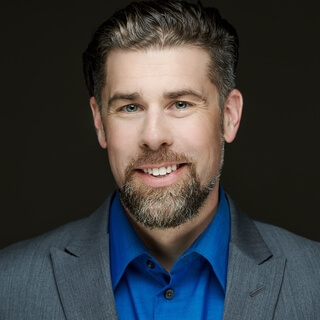
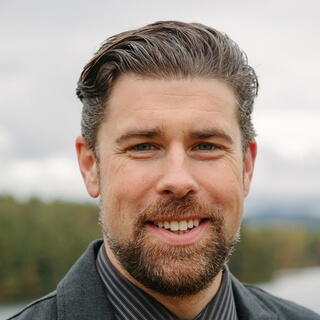
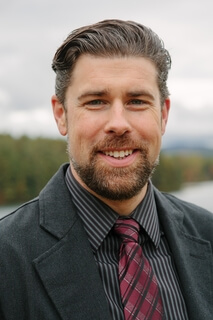
I'm Tom Buschlak and welcome to the second episode of Contemplate This,
A new podcast with a focus on conversations on contemplation and compassionate social action.
The idea for this podcast is for us to learn and gain inspiration from those who have committed to the contemplative life,
In the many forms and expressions that that can take,
And to living compassionately toward others and towards their communities out of that commitment.
We can learn a lot through books on contemplative practices and compassionate living,
But I find that we're often moved by personal stories.
So one of my goals here is to capture and share those personal stories that can inspire and guide us on our own contemplative journeys of transformation,
Growth,
And compassionate living.
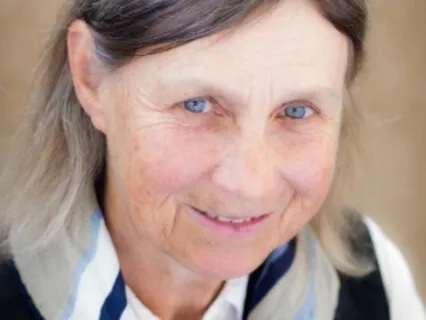
This interview is with Cynthia Berjolt.
She's an ordained Episcopalian priest and beloved teacher of contemplative forms of practice in the Christian tradition.
She's a founder of the Wisdom Way of Knowing,
Teacher in the Wisdom School,
And now a core teacher at the Center for Action and Contemplation in Albuquerque,
New Mexico.
She's been a prolific author of nine books,
Notably her intro to Centering Prayer called Centering Prayer and Inner Awakening,
And her more recent Heart of Centering Prayer,
Non-Dual Christianity in Theory and in Practice.
Cynthia is considered by many,
Myself included,
To be one of the central teachers in the renewal of Christian contemplative prayer in general,
And Centering Prayer in particular.
I think it's safe to say that her work is so interesting because it is deeply rooted in her knowledge and study of the tradition,
While also being highly original.
She discusses in this interview how she brings her unique blend of experiences from her time with Quakers and Benedictines to her study of Gurjeef,
Who I'll mention more in a second,
And then her eventual introduction to and contribution to the growth of Centering Prayer in the last four decades or so.
There's a lot of wisdom to chew on in this interview,
And one that has stuck with me in particular is her use of the phrase,
Where are your feet?
She notes that her early teachers asked her this question in order to remind her that contemplation is not about flights of mystical fancy,
So much as it is about awakening to the present moment in the physical body.
And I think one of the things that those of us committed to the renewal of contemplative prayer in the Christian tradition are highly attuned to is this need to be grounded in and in tune with our bodies in order to awaken to the presence of God and to the infinite divine compassion that's available in every moment.
So I found this very simple question,
Where are your feet,
To be very helpful for keeping me grounded,
Literally,
Where my feet and my body meet the ground and the earth.
Let me add a quick note about Gurjeef,
Whom Cynthia mentions and some of our listeners might not be familiar with.
From Cynthia's website,
She describes Gurjeef,
Who lived in the late 19th and early 20th century as,
Quote,
A visionary Armenian born spiritual teacher who became convinced that there were ancient schools of wisdom,
Still in existence that preserved the true roadmap to our purpose as human beings and our responsibilities in the greater web of planetary life.
His teaching might be characterized as an early run up on what would be nowadays called mindfulness training attached to a highly original cosmology.
Finally,
The feedback and response to the first podcast,
The interview with Father Richard Rohr,
Has been very positive and supportive.
So thank you for that.
And I'd like to ask you for your support for the growth of this podcast.
First,
If you are enjoying it,
I would appreciate your help in sharing it with others,
Word of mouth,
Social media,
Other avenues that come to mind for you.
And second,
I'm committed to keeping this podcast and some of the other media on my website at thomasjbushlack.
Com available for free.
I don't want to require anyone to pay for some of this basic content or to hide some of it behind a paywall.
And so I'm offering these podcasts freely.
There are,
However,
Costs associated with creating and hosting these media where they can be accessed easily by everyone.
And so I'd like to ask that if you are enjoying this podcast and if you're willing and able to contribute to consider making a free will offering.
And you can do this totally secure on my website at thomasjbushlack.
Com and Bush lack is spelled B-U-S-H-L-A-C-K.
So thomasjbushlack.
Com at the main page or thomasjbushlack.
Com forward slash donate.
And I leave it to you to consider what this media is worth to you.
And if everyone just contributed even a dollar or two or more,
This will allow me to keep all of this media up and running.
So thanks again,
Considering what this might be worth to you or even thinking about paying it forward to others who might enjoy it in the future.
All right.
With that in mind,
Let's get right to my interview with Cynthia Berjolt.
First of all,
Thank you,
Cynthia,
For agreeing to be here with us with me right now,
But with others later.
Really appreciate your time and generosity.
And what I'd like to do is start by I think some listeners will probably be familiar with your work through writings or workshops or things like that.
Others might not.
So do you want to just sort of introduce yourself to start and tell us where you are in the world?
And then we'll go backwards from there.
OK,
Well,
Physically,
I'm in the world.
I'm in a remote corner of Maine,
The beautiful lobster fishing village of Stonington,
Maine,
Where it's blowing through something like 40 knots today as fall gives when gives rise to winter.
In terms of what you might call the kind of professional and journey track,
I'm an Episcopal priest.
I've been an Episcopal priest since 1979 and was brought up in a Quaker and then Benedictine monastic stream.
Oh,
Wow.
So I had a good gravitation towards what I would call the best in the contemplative tradition.
And eventually found my way to a few streams.
Thomas Keating,
Where I learned Centering Prayer.
That was back in the late 80s,
Early 90s.
The Gurdjieff work or the fourth way,
The sort of early mindfulness work that's left such an imprint on the American spiritual scene.
I associate Gurdjieff with the Enneagram.
Is that?
Yep,
Yep,
Yep.
Not in exactly the way that the Enneagram uses the Enneagram,
But he was the one who launched it in the West.
He was the first one to bring the symbol of the West in the 1920s.
Right.
OK,
That's the part I remember,
Sort of.
His teaching,
Which is called,
Familiarly,
The work for about 10 years,
Along with Christian contemplative practice,
And that formed the sort of brew,
The weaving that my kind of,
I don't know whether it would be called distinctive angle on things,
But it's a little bit different from either camp.
But it's where a lot of the elements that enter my own contemplative teaching that are not classically there in the Christian mystical tradition come from.
It veers in the direction of consciousness and mindfulness a lot more than much of the contemplative teaching.
So that's that,
And I had the great fortune of working for about three and a half years with a monk,
A hermit monk at the monastery at Stomas,
Who had done this synthesis himself,
Sort of on his own,
And taught it to me and formed me in it.
And after he died in the end of 95,
I sort of got spat out of the nest to teach and to begin writing.
So I've got about nine books now,
I think it's eight or nine or nine or ten somewhere in there.
Nothing like what Richard's been doing,
But a little substantial pile.
Well,
I don't think eight to ten books is anything to scoff at.
Well,
And it's exploring always the Christian contemplative tradition from the perspective of Inner Awakening.
Wow.
Okay,
So you kind of already went where I wanted to go,
But something that I know in the way you're weaving your story,
And maybe this is why your teaching appeals to people,
Is I think a lot of people,
Even who might really identify strongly with a tradition like Christian,
Find themselves drawn to other contemplative traditions and the wisdom that they find in it.
And I mean that resonates with my own experience of feeling like my own practice has become a little idiosyncratic,
But not in a not in a kind of self serving way but more in terms of what we've been exposed to forms our practice.
And that sounds like it's part of your own experience.
Yeah,
I mean,
One of the big things that sort of parted the water for me was all the way back in the 1980s when Jacob Needleman wrote a book called Lost Christianity.
And he said at one point in that book that you can no more ask Christians to follow the teachings of Jesus reliably,
Than you could ask stones to sprout wings and fly to the sea.
And that corresponded so much with what I'd actually observed at that point having worked in churches,
That this teaching that encamps around a radical transmission of love at the core from its master,
Jesus,
Tends to express itself over and over again in very rigid institutional structures that have an exclusivistic and monological basis to them.
And I said,
What went wrong with it?
And Needleman put me on for the first time that there was a certain power of attention that had to be wielded and had to be brought into play before you could stop living in fantasy and daydreams and mystical language and theological castles.
Actually being able to move from thinking your way out of a paper bag to seeing what needed to be done was a huge step.
And I could see the truth in that,
That with a sort of scattered and distracted and narrative driven sense of identity,
The rhetoric,
Emotional manipulation saturated theological language of Christianity,
That it was a set up for exactly what you were getting.
And so it was my interest in what is attention,
How does it come under voluntary control,
How does a different state of consciousness actually get stabilized in a person.
It was those kinds of questions that sent me searching for supplementary paths,
Because they're questions that are almost never directly addressed in Christianity.
Yeah,
You happen to be exposed to it for some reason,
Like coming to your workshop or something like that.
Yeah.
In a book on a shelf somewhere.
And that I think that also speaks to another piece of what appeals to this contemplative tradition to people today is that there is a lot of,
You know,
They talk about millennials are very sensitive to authenticity and any sense of agenda being imposed.
Yeah,
I think a lot of people feel that in their experience of Christianity,
But they,
They love a certain element of their faith and that tradition that they want.
And I think this,
The contemplative path provides a way to,
To stay in that in that more grounded sort of situation of faith,
Without having to kind of just give your will over to authority in a negative way.
I mean,
I'm not opposed to authority entirely but Yeah.
Well,
The one thing that the contemplative thing does straight up is that it cuts through language.
Yeah.
And it's in,
It's in the languaging that Christianity gets into trouble.
It's not only because of what it says and the way it says it,
But by reason of the kind of brain structures and tracking systems that get called into being when language becomes your basis for exploring reality.
Yeah,
And that gets into kind of our left brain language systems,
Right brain,
Symbolic kind of deeper levels.
But even beyond that,
Beyond both parts of the brain into a direct seeing.
Yeah.
That's not language based but,
But is really operates on a different wiring of consciousness that,
That allows you not to have to split up the playing field and tell stories and do endless narratives to,
To get your way there.
Yeah,
Wow.
Okay,
Well,
We're only a couple minutes in and we're like really deep already.
This is awesome.
But I so I want to back up.
Speaking of narratives to capture a little bit.
I mean,
So you outline three or four things that have come together the Quaker Benedictine,
The,
The work with Gurdjieff your relationship with Thomas Keating and another hermit from snowmass.
Can we actually go.
So I'm curious to start sort of at the beginning,
Like,
Where,
Where did you grow up.
How were you exposed to Quakers and Benedictines.
And I come out of the Benedictine exposure as well I'm an oblate up at St.
John's Abbey.
But so can you tell us a little bit about that like where you grew up and then how was it was there a lot of spirituality and your upbringing or did you kind of gravitate towards it.
I was raised in the in the Philadelphia area,
Which is sort of the seedbed of Quakerism.
And although I wasn't raised to Quaker,
I was sent to Quaker schools.
There from the very,
Very early days I was exposed to Quaker meeting for worship and in the,
And in the classic Philadelphia tradition that's unprogrammed meetings.
In other words,
You just gather in silence until the spirit starts moving in people and inspires them to get up and offer something in words or occasionally a song.
So it was in the school and we had meeting once a week for we had a whole bunch of about sixty five kids ranging at age from five to twelve.
They came in the meeting and just the first very,
Very deep and dazzling experiences of of the divine presence and silence.
So how old were you?
You were in grade school like early.
Yeah,
That was basically five to twelve.
So it was very,
Very formative and it it cut through and established a lot of things for me like that.
First of all,
That contemplation isn't anything fancy.
It's utterly primordial that nobody ever taught us how to be silent.
It was just assumed that this was this was people's native grounds.
And so rather than we've forgotten about exactly,
Exactly.
And and the way it wound up in the religious and traditions,
Contemplation became the highest kind of apex of a tower that was almost impossible to ascend.
So evil Western paradigm.
Yes.
Yeah,
For sure.
So the simple ground of silence and the sense of you could always find God by just sort of moving into the silence of your heart was very,
Very important clues to me.
So I I was always interested in religion.
We when I by the time I got to high school,
We were in a wonderful school that had required religion courses,
Not not sort of catechism.
It was a non denominational high school,
But they thought that religion was part of the cultural legacy of humankind and that we needed to know something about it.
Wow.
That's rare.
It's very rare.
So we studied the Bible as literature in grades nine and ten.
And then in grades eleven and twelve,
A gifted religious teacher exposed us to all of what was the new religious new the best of religious thought of the day.
We read Bonhoeffer,
We read Paul Tillich,
We read the Niebers,
Ian Barber,
We read lots of,
You know,
The real Simone Vey.
We were reading really,
Really good stuff that was right at the time when those that those final receptors in the brain are opening up to the infinite anyway.
So I love that stuff.
And I really plunge full into the metaphysical rabbit hole.
But then when I went to college by a weird set of circumstances,
The school I went to didn't have a religious studies program.
The closest they could come was philosophy and I had detested philosophy from the start.
So I wound up as a literature major.
And long story short,
It was through literature that I got into medieval literature.
Through medieval literature,
I got into medieval liturgy.
Through medieval liturgy,
Which I encountered through medieval drama,
I got more interested in the great monastic traditions that that the liturgy and the drama was spawned in.
Which is that tracks Thomas Merton's early story in some interesting ways.
Yeah,
Very interesting ways.
We were doing parallel things.
Except I don't think he ever got into medieval drama.
Maybe not drama,
But certainly philosophy and literature and then and then into the mystics.
Yeah.
Yeah.
And I had the great luck of having a a mentor when I was in graduate school who was the director of the Episcopal parish at the University of Pennsylvania where I went,
Who was both a third order Franciscan and a political activist.
Okay.
So he lined up the package in a wonderful way.
We had our first experiences with monastic preaching.
He would bring down his cohorts from the Little Portion Priory in Long Island to give us,
I guess,
Sunday to talk.
He introduced us to retreats.
I went to my first monastery,
Again,
The Franciscan Priory in New York,
At his auspices.
So that's how I began to get into it.
And then,
Of course,
When I was doing medieval drama and the liturgical studies,
That landed me knee deep in the Benedictine tradition.
Because the Benedictine monastery in France,
Seine-Mont-Benoît-sur-Loire,
Is actually the home of where medieval drama was born right out of the liturgy on the Easter Vigil in about the 9th century.
So I began to know the Benedictine monasteries through this tie-in.
I was at St.
John's.
I was an ecumenical fellow there in 1981.
I thought,
Yeah.
I couldn't remember the name.
Cataloging the manuscripts in their monastic manuscript library.
So the Benedictine tradition sort of percolated in.
And that brought me to the Episcopal priesthood.
You were doing some kind of graduate work before seminary,
Is that right?
Yeah.
And that was in literature or in drama?
What was that in?
By that time it was medieval literature and drama.
So then,
Yeah,
Can you walk us through,
How did you move from the graduate studies to thinking,
All right,
I'm going to be called to some kind of an ordained ministry?
Well,
During the time in graduate school,
I'd always been interested in performance.
And I didn't seem right that these beautiful pieces of medieval music drama should just be left in scholarly libraries to study.
I said,
Well,
What if we get together a medieval drama troupe and actually perform them?
The New York Pro Musica had already broken ground with that back at that time.
And so we went looking for a place that would be suitable to form a troupe and perform these plays.
And right down the street from the University of Pennsylvania was at the time the Philadelphia Divinity School.
And it had this gorgeous chapel,
About 90 feet long and 100 feet high,
Just spires.
It was one of those ultimately Episcopal Gothic buildings that got built just before the Depression.
And I went in and said,
Oh my goodness,
This is so gorgeous that I,
Motivated by some fire,
I walked right into the dean's office and told them that what a seminary really needed was a workshop in medieval drama.
And that if they gave us the church and let me take one course a semester,
I would work for free teaching them the liturgical arts.
So they said,
Well,
What do we have to lose?
So that's how I got started.
And so I was taking one course a semester as a sort of additional extra seminarian in lieu of getting a salary.
And that was just about the time that all the kind of heady stuff was really coming to the floor in the Episcopal Church with the ordination of women.
And basically if you could chew gum and shoot straight back in those eras and you were a woman,
They'd ordain you.
It's tough enough a lot now.
I don't think I'd ever be accepted for ordination in my present state of being.
But back in those days,
They said,
Oh,
She's literate.
She can speak in sentences.
She doesn't get stage fright in the pulpit.
Let's ordain her.
So that's how it happened.
Well,
And you so there's a three.
Well,
There's a lot of friends to pick up there.
But one that stood out to me was the importance of beauty in being drawn into the contemplative experience.
It sounds like that was a real part of it for you.
Can you know,
Is there a way you can articulate the importance of that?
I mean,
I mean that Wilke has this wonderful line in the Duino Elegy somewhere.
He says that beauty is only the beginning of a terror we can just scarcely bear.
And it always seemed to me that the place where the mystical burns with the real blue of the flame is right at that place where form is straining to contain the formless.
And the two are in a deep and rapturous and intense embrace that expresses itself in a beauty that just sears the soul.
And so I always gravitated to that edge where the deepest things that were about in creation are really unarticulatable.
But it's in beauty that mysticism,
I think,
Finds its legs and its wings.
So that was always a very,
Very compelling ground for me.
Even in literature,
I wasn't particularly interested in documentaries or biographies or anything.
I went right to the poetry,
The mystical poet,
And it was George Manley Hopkins and Dylan Thomas and John Donne and all those guys,
God knows Blake,
That just blew my hair back.
Yeah.
Well,
When you can quote Wilke from memory,
It's clearly soaked in there.
One line,
Come on,
Donne.
But man,
He's got some one liners that you can pull out.
Wow.
So,
Okay,
So that,
Just to kind of keep going back to these threads,
Because I think it's interesting.
So you've got the Quaker and the Benedictine.
Now,
Where did your work with Grgif and his tradition kind of come in there?
Was that?
Well,
Actually,
I was introduced to it at St.
John's Abbey.
By whom?
Well,
By one of my professors,
One of my colleagues who was teaching in the theology department,
A good friend of mine,
She's not there anymore,
And she's not a monk.
And she tossed this into my car one day saying,
Well,
I saw the word miraculous in the title of the book and I thought you might be interested.
It was In Search of the Miraculous,
Which is the starting book for the Grgif work by P.
D.
Ospinski.
Okay.
I had already read Needleman at that point.
I referred to that a little bit earlier and his Last Christianity.
So Grgif was already on my radar screen.
And when I sat down and read this book,
It was like being struck by thunderbolts.
It was like Josiah finding the scroll in the Old Testament,
The scroll of the prophets.
Everything rang so manifestly true.
So I thought,
You know,
I need to find a group and work with this stuff.
And they made it very hard because they're a classic esoteric school where you don't make it easy access.
Yeah.
Not because the teaching is secretive,
But because the student has to get beyond the client mentality.
Yeah.
You know,
It's like unless the chicken can peck itself out of the egg,
It doesn't have the strength to live as a bird.
Yeah.
Well,
As Benedict,
You know,
Put it in the original rule,
You know,
Make them wait at the door for a couple days to see if they're really serious.
That's exactly how it was.
And I literally waited at doors for several days before they decided I was serious enough and scooted me in.
Yeah.
That grew up largely out of the frustration with what Arthur Lovejoy had once beautifully named in his book,
The Great Chain of Being.
He talked about the emotional pathos of Christianity,
Which is a particular way of working language and working theology so that it hits emotional buttons rather than strictly rational ones.
And he said that with this kind of an approach and an attitude,
You're going to find a hard time,
You know,
Not getting slightly overwrought and non-impartial portraits.
And that rang so true to me that the skills being offered in three centered awareness and bringing all centers of perception online,
Of noticing when you were stuck in your heads,
Of noticing when you were stuck in commentary,
One of the one liners from the work,
Behind personality stands essence,
Behind essence stands real I,
And behind real I stands God.
That core work axiom really spoke to me about the whole journey I had explored up to this point,
That so much of life went on at the level of the personality,
The artificial and conditioned personality at that.
Yeah.
Some might call that the false self or the ego self,
The constructed social self.
Yeah.
And it varies a little bit more because it's all self is actually constructed.
Well,
Yeah.
Really,
Really,
Really down.
And not all constructions are false.
And so I think it's a little bit simplistic to divide it into true self and false self when they're still at the same level.
And equating true self with essence or more authenticity,
But they're both kind of derived from running the same program.
And so it's where this real I stands,
Or what a lot of the tradition would call witnessing self,
That I could see was the beginning of freedom and truth and impartiality and Christianity.
And I was dying to find it.
So the work gave me a good strong boot camp in that and allowed me to see with grilling clarity how stuck I was in my narrative,
In my stories,
In my drama,
In my elaborate,
Sort of Prospero's castles of construction,
That they just love to manipulate,
Manipulate,
Manipulate in the name of piety and sanctimony.
Yeah.
Reminds me a little bit of that emphasis on kind of radical honesty and 12 step programs.
But you're not going to get any freedom unless you're really willing to kind of step back from the meta narrative that's running all the time and realize that that's not real with a capital R.
Exactly.
Yeah.
So I began to get some real tools in my toolkit to begin to confront that,
To begin to notice when I was lost in my Blarney again,
Wandering around,
In a kind of incestuous feedback loop where your narrative creates your sense of selfhood and your sense of selfhood creates your narrative.
And they just fit in each other and you don't even see the whole thing as a construction running in your brain.
Yeah.
That's a powerful moment.
So I'm also interested in kind of the practical tidbits about how you start seeing that narrative happening or that feedback loop.
There's one,
There's a,
I think you said somewhere in there,
Something about a three centered awareness.
Yeah.
I'm curious.
I think I could project what I think that is,
But I'd rather hear you talk about it.
Well,
This is one of the fundamental kind of axioms of the Gurjeev teaching that says that we have three complete discrete meaning separate,
But hopefully interrelated systems.
One being the intellectual center of the mind,
Which runs its own operating system at its own vibrational speed according to its own algorithms.
And then the perception of the emotional center,
Which for him is not identical to the heart.
They overlap,
But he uses the term emotional center,
Which is the perception through empathetic resonance that's carried basically in your neurons in your nervous system.
Kind of if anywhere in the solar plexus.
And then finally the moving center,
Which for him is not the gut like it is in any of Graham teaching and in modern parlance today,
But is the intelligence of movement.
It's the thing that allows you to mimic an accent or walk down a set of stairs without having to look at where each step is or to ride a bicycle or ski down a hill.
Okay,
Yeah,
It's very,
Very important,
Particularly in gesture because it's the language of prostration.
It's the language of movement.
It's the whole kind of symbolic embodied language where much of the inner meaning of the hardest concepts of Christianity actually lie like what oblation is what adoration is sure.
You can't get these in the mind because the mind is running the wrong program to understand them.
That's interesting that speaks to the importance of will you gesture or the way we move in energy as well why that's.
I remember it was a monk at St.
John's who first kind of turned me on to that idea that that that in and of itself is formative in a different way than,
You know,
The courts in the West were were focused almost exclusively on the intellectual text kind of learning.
Yeah,
One of my favorite stories about that was in Anthony Bloom's,
One of his books,
You know,
The great Russian archbishop,
And he tells a story of a young man coming to visit him saying I have this problem I have no faith.
How can anybody believe this stuff?
The Nicene Creed is ridiculous.
It's an insult.
So the abbot looks at him in his eyes,
Abba Anthony,
And sees that he's yearning for something to happen.
He's not just coming in to do that.
So he says,
Go home and do a hundred full prostrations for a day and come back and see me.
So the guy did it and a month later he came back and he really had found his faith.
Because the actual act of taking your position on the floor as is required in an orthodox prostration,
Putting your head down,
Sensing the earth beneath you holding,
Sensing the comfort in that position of humility.
All those things had allowed him to understand in a way that you just can't understand with the mind which runs the program of perception through differentiation.
So the idea is that all these systems need to be present.
I would say that I explain Centering Prayer to people.
One of the things that makes the way I teach it a little bit different is that I explain it in the language of gesture.
Before we talk about consenting to the presence and action of God or any of the sort of languaging that goes with it,
We study the gesture of letting go.
We study the gesture of release and we practice the difference between the gesture of release,
The gesture of clinging or hanging on,
And the gesture of renouncing or pushing away.
We practice these so that people can begin to find their way by gesture to what they're doing in Centering Prayer which is not renouncing thoughts.
Yeah,
That is the biggest struggle I think when you're first introduced to it.
It's only when you're following your mind you can't get it.
It's only when you're introduced to it and you're moving center that you get it.
So when you do an introduction,
Do you physically have people do these kind of movements?
We practice with the gestures because I think it's only at the level of gesture that they get what Centering Prayer is all about.
And the language pretty much gets in the way.
It overcomplicates and it winds up with people getting stuck in their heads sometimes for years wondering if it's okay now to drop their sacred word.
Right.
Yeah,
No,
I'm familiar with that.
I'm about two decades into a practice myself where I was introduced in college,
Luckily.
And it's emerged and evolved in ways,
But I can see how,
Yeah,
Especially as a guy who,
You know,
Kind of heady intellectual interests,
It's easy to get stuck there.
Yeah.
So for me it was interesting.
I really experienced something very powerful in terms of body energy when I encountered yoga.
And I had been doing Centering Prayer for probably 12,
13,
14 years and then wandered into a yoga studio because I was into rock climbing and I wanted to be more flexible.
And then all of a sudden I was like,
Oh my goodness,
What's happening here?
The wisdom of moving center.
And I think that what Gurdjieff brought up,
It was so powerful,
As he says the language of religious transcendence and transformation is conveyed in the moving center,
Primarily.
And you know Christianity doesn't even talk about the moving center to this day.
They don't know what the moving center is.
Yeah.
When you work with a class of monastic tradition,
The teaching is still about disembodiment and the idea is you go to spirit as you go away from the body without realizing what a dreadful mistake that is.
Yeah.
Well,
And I've become more sympathetic probably because of my practice to the argument that certain expressions of the Christian tradition have become more platonic than genuinely incarnational.
Yeah.
In any kind of way that Jesus himself would have embodied some of the practices.
Exactly.
I mean,
It's the story of how the whole thing rolled through history,
But it leaves us with Richard Rohr's marvelous final comment that his theological professor told him,
Gentlemen,
You must always remember that Christianity has been far more influenced by Plato than by Jesus Christ.
Yeah,
Well that's the art.
Yep.
That's kind of what I was saying.
Yeah.
And that's the wretched thing and I still find teaching around the point of meditation is to make the body neutral and not an adequate understanding that it's only in the moving center that the heart of what's being conveyed in religious transmission really touches home.
Yeah,
I mean,
If we take the teaching of the incarnation seriously then God certainly didn't find the body neutral.
But quite good.
And maybe that's the way I'll express one of the ways I'll express in the world.
Yeah,
But I think it still is only Jesus,
It's only Gurdjieff who's actually seen the real implication of this.
That so often we use yoga or Tai Chi or Taekwondo or any of the great arts,
Qigong,
As essentially auxiliary or complementary practices to our Christian life for more embodying.
Gurdjieff took it one step closer and said that this is a system of intelligence and this system of intelligence most closely approximates and provides the skills needed for real transformative understanding of the great mysteries of our being,
Such as contemplation,
Adoration,
Surrender,
You know,
Well those are the biggies.
And even to a sense radical compassion.
Yeah.
And that you can't even carry compassion in the emotional center because until it's grounded in the body it's too airy.
It just gets bubbly and dissipates.
Okay,
Good.
I was already thinking about going in that direction because I want to hear more about how you think about the relationship between the contemplative transformation and compassion.
I think I'll admit even for myself,
I'm a little stuck in those as almost binaries.
This came up in our gathering with the contemplative exchange and snowmass a little bit.
If there was some resistance like well if you're moving too much into action,
Even if it's compassionate action,
You're not being contemplative enough.
You're out here getting trapped in the in the need to become an activist or something.
And I have this sense about that as a false dichotomy,
But I'm,
I'm still myself kind of searching for a language to articulate that so it sounds like you have given this some thought.
I think it's a totally false dichotomy that that that grows out of really regarding contemplation as a quiet lifestyle and and and confusing equanimity with non involvement.
But what really happens,
I believe,
Is that when you sit in the depth of your heart,
That the experiences you're sitting there,
The vibrational field that is encountered is intimacy,
And it becomes very,
Very amazing.
I'm sure it's happened to you if you've been at Centering Prayer for 20 years,
That sometimes you sit there in the midst of it and you sense that you're in this almost warm golden tenderness that you can't explain what it is.
Yeah,
And when you learn to move into the region of the chest by sensation,
Not by story or emotion,
But by just concentrating your attention and bringing it into the region of the heart,
Which is how the Orthodox masters used to talk about it very specific.
What you find is this fire of intimacy that begins to burn there.
And the experience of intimacy is the inner dimension of what turned outward is compassion.
So it's the inner and they're unbroken.
You can't have one without another.
That the intimacy of the Divine Presence is the compassion as it extends out into the world.
And it is impartial.
It's very,
Very,
Very different from social action that's based on sort of Old Testament judgmental models that say these people are wrong.
Because it doesn't form polarizations.
It's just like Jesus saying,
Father,
Forgive them for they know not what they do.
It senses the radical tragedy created by our short-sightedness and misperception of scarcity.
So it sees the violence,
It holds the violence,
But it's not trying to counter things with a different position.
It acts because that's what compassion does.
So I think the fact that the unbreakable connection between intimacy and compassion has not been seen is a pretty strong sign that there's something significantly flawed in our understanding of contemplation today.
And are trying to recapture it and package it in the world.
And I see so much of it being in a pious,
Quiet lifestyle.
I have lots of people who in the living school,
When we ask them to read a text that's got any bite in it,
We say,
Well,
You're destroying my contemplation.
Yeah,
Well that's kind of what we experienced in Claretta a little bit.
That's not contemplation.
That's self-calming.
They're a whole different thing,
But we let people get away with that nonsense.
And until we do,
We're doing the planet no service.
There's a radical difference between contemplative engagement and activism from other points of view.
Yeah.
Wow,
That's just,
I'm going to be chewing on this for a long time.
That speaks to a lot of the questions that I'm just wrestling with right now.
It strikes me as potentially helpful to,
I like how you talked about it as intimacy expressing itself,
As opposed to maybe getting stuck in what's become a dichotomy of contemplation and action.
Yeah.
It's the flow of the same energy.
The same dynamism.
It's just one is from the inside and the other is from the outside.
Yeah.
Yeah.
Wow.
Okay.
I wanted to ask you,
So you talked about both being exposed to Centering Prayer through Thomas Keating and then spending time studying with a hermit at Snowmass.
Which of those was first?
Temporarily,
Anyways.
Centering Prayer came first.
I went out there like many,
Many people to take the 10-day Formation retreat.
In May of 1990,
I took my first 10-day intensive and then I came back the following December to take what was then called presenters training.
And it was at that second meeting that I met the monk who was the monastery hermit and hermit plumber because the shower drain froze in the quarters we were staying in in December and he came out to thaw it out.
I cottoned on pretty fast to the fact that he actually knew something.
Those years and the work hadn't been misspent because you could pick right up when somebody had being.
Did you ever spend time as a priest in a parish before some of this?
Yeah,
I never had my own parish.
I was always an associate where I was doing the educational programs and things like that.
On and off I've had probably about a decade of experience in parish priesthood.
Okay.
I was just curious about that.
But to go back to your exposure to Centering Prayer.
Now were you,
I don't know,
There's folklore out there that I've picked up on.
Were you at one of the kind of early retreats where the practice was sort of being rediscovered and in its contemporary form out of the cloud of unknowing and cash in and those other texts?
I was not at the earliest level.
Okay.
The earliest people who came were really the lava crew.
Okay.
And there's some of,
Pat Johnson and some of the people that are still around formed their bonds and I was in considerably after that first bit where they already pretty much had the system.
Thomas was pretty much putting the fine touches on his human condition teaching by then.
Okay.
So I was a little further along in the pipeline.
Okay.
So what was that experience like for you in terms of informing your day to day practice?
The experience of being at the intensive at Snowmass.
Yeah.
And maybe,
You know,
The particular method as Thomas teaches it.
Because I'm assuming,
Well,
Maybe a better question to start would be,
What was your practice like on kind of a day to day level,
Maybe before that exposure and what's it like now,
Kind of post.
It was,
I would say that learning the non conceptual or the non non directed attention method of centering prayer was quite a contrast after having worked in the,
In the Gurdjieff work so long where everything was about holding attention under voluntary control.
Yeah.
And I spent a lot of time trying to figure out what do you do with your attention.
Yeah.
And at one point Thomas even said to me,
Well,
Maybe you should give up and go to go to Christian meditation where they'll help you with your attention more,
You know,
And so he was paradox because it sounds like the earlier work you were doing was focused on attention and trying to direct it.
And then the entering prayer is more of an open awareness,
Kind of,
Or not even an open awareness because when you're aware you're already moving too slow.
I mean,
You're,
It's a,
It's a sort of open surrender.
Yeah.
And when I finally recognized what they were trying to do,
It was Bruno Barnhart,
The abbot at Big Sur,
The Knaublius Hermitage,
It absolutely helped me over that hurdle.
And of course,
I,
I already had the reason centering prayer was co congenial from the first place was it took me back to that,
That sort of effortless silence I knew from Quaker days.
Oh,
Interesting.
Where I had automatically as a kid drifted into that zone that,
That one of my buddies nowadays calls mindlessness.
In other words,
That simple presence without the interference of the mind.
And I already knew that the problem I had in centering prayer was just trying to get the language that it was using to explain itself hooked up with the data bank that I already had in my life from childhood.
And once that hookup happened,
Then it was fine because centering prayer has been always totally congruent to me.
Yeah.
The sense that you don't,
There's nothing to do in there.
You just sit down and you give it away repeatedly over and over and over that practicing that gesture of release has been second nature.
So,
So I think like everybody who came there when you do a 10 day retreat,
At least for some,
Some time,
It sharpens up your daily practice.
You really do get a little bit more serious about sitting in the morning and the evening.
Yeah.
But I was,
I was already sitting in the morning and the evening because I'd been by then be been a,
An oblate at New Cabal,
Camadali for several years.
And so I followed their practice of chatting the office with them and then sitting in silence.
So centering prayer just put a little bit more of an intentional methodology into what I was doing anyway.
Okay.
Wow.
So now today,
You know,
What's your kind of daily,
I know,
So right now you're at your Hermitage in Maine.
And then you spend some time in New Mexico at the Center for Action and Contemplation.
I don't know how much it's divided at this point.
But what's,
What's your daily practice?
Are you sticking to that 20 minutes twice a day?
Are there other aspects of it that?
Well,
You know that as you go on and as you get formed in things,
Time more and more exposes itself for the artificial construct it is.
And so the idea of sitting down with a timer for 20 minutes twice a day just seems anathema to me.
But because God isn't measured out in those kind of doses.
Yeah.
But it takes a while to get to that.
So my day,
My day begins with coffee and prayer.
And I sit down and it's a time of,
You know,
Chanting the Psalms,
Some sort of formal centering prayer that gives way to kind of more open minded reflection.
What my teacher,
Rafe,
At the monastery I used to call the morning set.
And then the evening is basically the same way that,
You know,
There comes a time in the day when the computer goes off and there's never any TV in the evening.
It's,
You know,
These are the ends of the day and you give yourself back into it with the centering prayer transitioning.
But I don't even consider it practice.
It's at this point not practice,
But the concert.
Oh,
I like that.
I like that a lot.
It's part of the tapestry of the day.
Yeah.
Yeah.
So it's very freeform.
And then the days themselves can go as they do.
There are some periods where I'm sitting around tormenting myself by running around all over the planet.
And there are some days when I'm sitting around and tormenting myself by trying to write three paragraphs in a book.
The torment has exactly the same feel and it all has to do with my restless nature.
Right.
Yeah.
So that my real practice is just to try to stay present to what is on the plate,
Taking what I've contracted to do and trying to do it with a certain degree of actually showing up.
And without judging and without saying,
Well,
This is better than that or this is taking me away from contemplative.
Only if contemplative is a bitsy bitsy lifestyle as Thomas Merton once called it.
Yeah.
Yeah.
So you've been,
You're fortunate to be in almost a kind of quasi-monastic setting.
And I'm curious how,
Like when you're working with,
Say,
People at the living school or doing a workshop where,
You know,
Like right now I'm in the midst,
I've got three young kids and a dog that has to be walked and a job that has to get done.
So and I totally agree with everything you said about,
I particularly like the movement towards the symphony versus the practice or whatever.
But,
You know,
What kind of advice do you give to people who,
You know,
Are really in the thick of it?
And yet,
I think really want to cultivate a depth to their prayer life in a contemplative way.
How do you kind of work with that when you do have alarms that are going to go off or jobs that you have to be at or practice to get your kids up?
I think a lot of this has to do with,
We really have to rely on the communion of saints that at the stage you're at at your life,
Certain things have to happen.
And,
You know,
In the Gurdjieff work,
One of the documents that I've most loved over the years is what he's called the five Obligolnian strivings or the five fundamental goals that distinguish a worthy human being,
A human being who's really in the ballpark growing.
And the first is essentially to be a good steward,
To be able to have everything you have to provide for your family and your being,
Well-being.
And that people were not permitted into the work who weren't responsible householders.
Because if you're a leech in the physical life,
You're going to be a leech in the spiritual life.
Yeah,
Yeah,
Yeah.
And so the idea is that as you're at a certain phase in your life doing the tasks which are primordially appointed,
That you can draw strength,
Particularly from the prayer of people like Thomas and others out of the monastery who have made the grand sacrifice of wives,
Children,
Lives,
Livelihood,
And are bearing the weight of loneliness because of that at a certain level.
And that your work feeds into them and their work feeds into you.
And as we move along the pipeline of life,
We're pouring from full to full collectively at all times.
So my sense is that with that is a general picture,
So you don't get feeling envious and frustrated.
Yeah.
That if we can then break down this completely superficial and I think destructive idea that contemplation is a lifestyle,
Founded on gobs of silence and remote gorgeous places,
If we can get beyond that and say that contemplation is really a moment to moment awareness and surrender at a deeper level,
Then the amount of practice you do is the amount of practice that can maintain you at the minimum that allows you to be present.
And alertly looking for the points that will provide a little bit more spaciousness in your schedule,
But not thinking that they're going to be filling up your barrel that life is going to drain down.
Yeah.
Because mindfulness is what keeps the barrel from draining down,
Not contemplation.
At least contemplation understood it.
And so that present yielded alert flexible willingness to engage your life where it is,
Is the contemplative attitude.
Wow.
And I would say just treasure it at every age of your life that you're at.
Realizing it's manifesting as differently as the leaves on the tree in each season.
But it's the same tree and the same leaves ultimately.
Wow.
Yeah,
Well,
I mean,
You're providing a lot of helpful ways of thinking about this that I think are shattering a lot of the dichotomies that even as somebody who tries to live and teach this,
I feel like I get stuck in.
Well,
You know,
Jim Finley,
Our wonderful third person on our living school faculty,
Took up this very issue with Bree Stoner,
Who I'm sure you know from the.
Yeah.
And she was complaining about how do I meditate when my one year old and my four year old are bouncing into my lap.
And Jim responds in Jim's way,
Well,
God loves you so much and so much wants to send you his love that he sends your children flying into your lap.
Well,
You're you're echoing something almost verbatim that Richard said to me last week too,
Which is,
You know,
We were well we couched it more in terms of Enneagram language.
But yeah,
That's beautiful.
Just live every moment in every station of your life with confidence and plenitude and curiosity about what it unfolds and it'll be fine.
I mean,
It sounds so easy when you say it.
Go back to.
Yeah.
I really think seriously,
Tom,
That the that the first generation of the contemplative tradition is about at end,
That it came to us via the monastic tradition.
Yeah,
Which is celibate,
Which is enclosed,
Which is separatist in some deep way,
And which is fundamentally and I think terminally disembodied.
And that's the mission that we've received.
Yeah.
And and these courageous people that you sat with,
Like Lawrence and Thomas and Richard and Tilden,
Had the guts to take it out into the world and offer it not just as a top down training,
But as a dialogical training.
Yeah.
I think it's in the second generation that's going to be really important for the lay people to take it and tease it gently away from its monastic underpinnings,
Being able to sort out with just extreme delicacy what is foundational and what is merely part of the monastic style.
And and bring in a truly engaged and embodied contemplation with radical new definitions that has some interest beyond the white European cultural ghetto.
Yeah,
This is another piece that I think a lot of us are wrestling with.
Well,
And with good reason,
Because the reason that you only see old white people at contemplative gatherings is because we've really set up an old white cultural art form.
Yeah.
And until we really learn to move beyond that,
Thinking that it's not just about communications,
How do we get the word out to the people of color?
You know,
It's not about that at all.
It's the thought structures are ethnocentric,
Eurocentric,
Platonic at the moment.
And until those thought structures are shifted to a deeper understanding of what contemplation is,
We're just going to continue to be attracting the same dying gene pool.
And then,
Well,
So you're tying together two threads that I've been wanting to come back to right in one thought there.
And one of them has to do with that question about,
I think,
Broadening our perspective of what counts as contemplation and then who's engaged in it.
And it touches on the solidarity that emerges out of the experience with,
You know,
The human condition and all of its expressions.
So I don't know if that idea strikes any chords with you and then I'll come back to the other one that I've still got in mind.
Well,
Yeah,
Because you see,
As I've shifted the center to contemplation being something that grows out as an actual change in the operating system of perception,
That gradually pulls in on a person as we manage to shift to a kind of three centered embodied perception with all three centers working.
And as we begin to realize the essence of contemplation is an open,
Alert,
Supple,
Flexible,
Present to the now in all its unimaginable horror and holiness.
And as we begin to realize that contemplation is about bringing some sort of a lightning rod that allows the damn thing to strike the ground right through us.
And then,
And as we get it away from sitting for so long in absolute silence,
So you can't even flush a toilet while the meditation is going on,
That it has to be absolutely still,
That there have to be mountains,
That there has to be Gregorian chant in the background,
And that contemplatives don't have any social activism and don't sully their feet.
As we move beyond that,
Then we're going to actually see that the whole world has been contemplated for a lot longer.
The black slaves in this country would not have survived without contemplation.
And you find the contemplation,
You have only to turn on any of the spirituals and listen to the music and watch the liturgies of the church,
And you'll discover that they were crossing the bridge back and forth between the finite and the infinite as a matter of survival.
And we simply don't recognize these as contemplative traditions because you don't see people sitting there in their slave shackles on meditation cookers with a bone belt on.
Right.
Yeah,
And then once you have that awareness,
Kind of maybe more historically,
I think more and more people are waking up to the fact that that's also today,
That it's not just the people sitting on the cushion at the yoga studio or even the Christians doing centering prayer in that particular form where it's occurring.
Yeah.
And often it seems it's at those liminal places of survival that contemplation emerges.
It can emerge.
Yeah,
Yeah.
It can emerge.
Total trauma can also emerge.
A lot depends on whether something has already been planted.
The seed was planted by God,
But if the first sparks of it that allow the people to move beyond their complete identification with their psychological self,
I.
E.
Their narrative and their victimhood,
Into understanding that there's something in each one of us that already lives beyond death and is already totally free and virgin and unviolent.
And if we can touch that in ourselves,
That was the great gift to me when I was a child at Quaker Meeting because I learned to touch that repeatedly as a child.
And nobody instructed me in it,
But I just knew it.
I mean,
It's self-instructing actually.
And because I could always make a distinction between myself with all its wants and needs and tragedies and hopes and this witnessing thing that was just quietly there but always alive and free,
And because I knew how to get to it,
Then I could kind of wriggle out a lot of stuff that would really have toppled the oak tree if it had been more solidly rooted in the narrative self.
Wow.
Yeah,
What an amazing gift at such a young age.
I think it's given to each child,
But we don't really in our religious education create the spaces where the children can nurture it themselves.
We think we have to educate them.
We think that they have no previous experience with God.
So we fill up their space with words and noise and ideas and concepts and don't show the simple self-writing that goes on deep in the soul when there's freedom and respect surrounding the encounter.
Wow.
Kind of one of those moments where the meaning of Jesus' teaching about becoming like little children is kind of in human form.
That's nice.
Yep.
Wow.
Yeah.
Yeah,
I mean that's something that we're asking my wife and I about,
You know,
How do we cultivate that religious experience or spiritual attentiveness within our own kids.
And I mean,
What I take from what you just said is that we actually don't.
We just have to kind of get out of the way and allow it to sprout and maybe nurture certain things.
Yeah.
Expose them to what you love.
Expose them to beauty and mystery.
I took my little daughter,
She was 10 and she was with me the year that we were at the Ecumenical Fellowship at St.
John's.
And she still remembers the luminaria bags on Christmas Eve,
The light lighting the way up to the Abbey Church,
And the great thunderous German singing and the spell of the incense.
All those things are just a lifetime of experiences.
And because nobody tried to interpret it out to her at a simplistic level,
She just has them as mystery.
Yeah.
And to be able to go back to that.
Oh,
Wow.
Okay.
So the other thread that I was wanting to come back to,
And you've touched on it a bunch of different times in slightly different ways,
But I've also heard or read things you've talked about in terms of non-duality.
Even early on,
I kind of mentioned right brain,
Left brain,
And you quickly move to something less dichotomous.
So I don't know,
How do you experience or work with that kind of different way of being present to your experience?
How would you teach that or talk about it?
Well,
I come back to three-brained awareness,
First of all,
And the big sort of boot camp training I got in the Gurdjieff work was I kept saying,
Where are your feet?
And I would be flying away on some great metaphysical jag,
And they say,
And where are your feet right now?
And little by little I had to learn to pay attention.
I had to learn the whole art of sensing.
I didn't even know what sensing was.
I thought it was a synonym for feeling.
And so the whole art of sensation I had to learn.
And then gradually,
Too,
The Eastern Orthodox have been insistent from the start that it's not about right brain,
Left brain.
It's about the mind and the heart.
Or in other words,
The whole intellectual system of the brain,
Both right brain and left brain,
Folding in and coming into embodied entrainment with the system of perception centered in heart,
Chest,
Solar plexus.
So that you really,
It's like sort of getting a complete and total upgrade of your computer,
Like jumping five operating systems.
With brain and heart,
You're able to run a program of perception that doesn't perceive by differentiation.
It perceives like a symphonic conductor who can hear the whole orchestra with every one of the instruments and all its particularity,
But making a single sonic texture.
And it's a very,
Very different operating system from the one of the mind.
And most of our maps of levels of consciousness still sort of assume that it's the mind that's climbing the levels without realizing that the Christian Orthodox,
Particularly tradition,
Has been very explicit that until the mind is in the heart,
The ceiling that you can get to really is what Ken Wilbur would call the integral states.
That you can't do non-dual until the mind is in the heart,
Because you're running an operating system that makes the goal you're aiming at physically impossible.
If you're perceiving by differentiating,
You're going to be running a dualistic program.
And your sense of self is going to be the finite self.
And so it's only as you begin to steal the attention or plug the energy links that things are running out into story,
Into gossip,
Into reactions,
And gather the attentiveness of the being in the region of the chest,
Grounded in sensation and the deepening sense of the whole bodily structure holding you up,
That then you sort of effortlessly step forward into seeing in a whole different way.
And for me that's the non-dual awakening,
But it's very different from the mystical moment.
It's not about all of a sudden seeing,
Oh,
It's all one!
You see from ones.
And it's not all one.
It's a thousand colors in a myriad different shapes and a billion particularities,
But it's all held in a deeper transfiguring union.
And that you see with the mind in the heart.
And until you put the mind in the heart,
You don't see it.
So yeah,
End of lecture.
Oh,
No.
So do you see that awakening from one as distinct from sort of the maybe the classic mystical descriptions of awakening to divine presence or however you want to put it?
Well,
I think the mystical experiences are trailers for sure.
And they are very strong forte of what will happen.
But I think the awakening is gradual and incremental in most people and often very non-dramatic.
You know,
You just gradually see from a different way.
Helen Luke talks about this brilliantly in her book Old Age,
Where a lot of this stuff just sort of life does it to you anyway.
But if you kind of get with the program earlier on,
You can cooperate with it and lead into it a little bit.
And if you're exposed to some great teachers like you were,
That helps along the way.
I was pretty lucky that,
You know,
I've had a handful,
Like maybe four or five just really stunning teachers that helped me see this.
Rafe being the,
You know,
The master of all masters in my case,
The hermit monk.
But there have been several others,
Bruno Barnhart at the monastery,
Beatrice Brutto,
And a couple of teachers in the work in Toronto who just took time with me and just sort of patiently knocked the rough edges off me,
You know,
Lovingly and firmly so that I finally got what I was doing wrong.
I never got what was wrong,
Why people weren't liking me,
Why I was my own worst enemy,
And they let me see why.
So that's interesting.
Hard to imagine.
I don't think of you as a non-likable person.
Have you softened a little bit or on the edges perhaps?
Well,
It was basically that,
You know,
I can still get into a damn good metaphysical rant,
But it was the sort of tunnel vision nature of the attention that's offensive much more than just the fact that I was not,
When I was doing my idea,
I was not globally present to everything else that was going on with me in the field,
Including people's responses,
The birds building a nest,
The sun gradually sinking over the horizon as it is now,
All of this stuff because my mind just went like,
Boom,
You know,
Like blinders on.
And in that state,
The mind is always going to be offensive to other minds because it feels like it's trying to push an agenda.
Wow.
That reminds me of there's a Yoga Sutra,
And I don't know if I can do it verbatim from memory,
But when a person is practicing dwelling in ahimsa or non-violence,
That all violence in that person's presence falls away.
Yeah,
That's exactly right.
And that was the problem I was stuck in,
That I had been sending out mixed messages because I was passionate and brilliant and,
You know,
Obviously hot on the trail or something,
But my methods of orienting and perceiving and wielding attention were frankly violent.
And so they left other people feeling silenced and diminished.
Interesting.
Wow.
I can see that in my own work right now.
It's interesting.
It took me ten years to learn that you are responsible for your own manifestations,
Not what you think you're putting out,
But actually putting out.
Yeah.
And if you want the change in your life,
You have to have the courage and the training to be able to see in stomach what you're actually putting out.
Yeah,
Absolutely.
Wow.
Huh.
All right.
Well,
I have a few more kind of like short fill-in-the-blank questions that are.
.
.
Okay,
Well,
That would be great because we are getting down to the end of the day.
Yeah,
Exactly.
We're probably setting early.
It's already the afternoon and we're already getting towards sunset.
I know.
It's that time of year.
So how would you finish the sentence,
Contemplation is?
Not for sissies.
I didn't see that coming.
So the purpose of contemplation is all about?
The purpose of contemplation is in the presence of a loving and compassionate and coherent divine presence to patiently and humbly strip away the veils that hide us from ourselves and hide the world from our sight.
All right.
Is there a word or a phrase that sort of captures the heart of your own contemplative experience?
I was going to say wonder,
First off,
That in a sense,
Irony in a kind of funny way.
If you can take the meaning,
Meaning that it's a really deeply pointed awareness of the every which wayness of everything and that joy is in sadness,
Sadness is in joy,
That everything is filled to bursting.
That would be my kind of ballpark of contemplation.
Wow.
Would you.
.
.
I don't want to put a word in your mouth.
But is that irony different from paradox?
Well,
Paradoxes do fine.
I mean,
It is a paradox of a metaphor,
I think.
I was thinking of,
Is it Nicholas of Cuse's coincidencia positorum,
The holding together of opposites?
Exactly.
Well,
That would be a very good way of looking at it.
That's certainly how it is for me.
And the biggest coincidence of opposites being the coincidence of the finite and the infinite.
One of my favorite phrases is from Helen Luke's Old Age where she says,
Holiness is born out of accepting the struggle between the infinite and the finite in the human soul.
And that speaks to me really.
And contemplation,
One of the words I guess that would really come to me is honesty.
That was really important for Rafe,
That it's about being able to unveil and to move out from beyond the things,
The stories,
The narratives,
The delusions we usually clunk ourselves in,
In order not to be enlightened just as a state,
But in order to better serve by better seeing.
Yeah,
It's that touching that freedom that's possible when you.
.
.
Because remember,
There's no free lunch.
A lot of the stuff is we think that we meditate,
We get enlightenment,
And then we live happily ever after.
But the very thing that allows the compassionate heart to open,
That whole intimacy,
Compassion thing,
Compels you by its same opening to be on the Bodhisattva path.
You have to be attuned to,
And alert to,
And finally at the service of the pain body of the planet.
Yeah,
Wow.
And if you're not willing to buy that,
Enlightenment is a paid vacation in the Caribbean,
It's not got much future in it.
Yeah,
Well it looks good on your Facebook account,
But it doesn't really stick.
Right.
Remember,
The eye with which you see God is the eye with which God says,
You said Meister Eckhart or something,
And the eye which opens into the universal heart feels at the same time the universal compassion.
Wow.
Wow.
What is your hope or hopes for the next generation of contemplative practitioners?
Somewhere along the lines of,
If you meet the Buddha,
Kill him.
I've heard that so many times,
And how would you interpret that?
I mean,
I think the next generation,
Really,
I hope they will,
And I'm already seeing in the next generation that I love,
Will fully embrace the freedom and the responsibility to wade through,
To do the sifting that really separates the trappings of the contemplative lifestyle from the foundation of a transmission of a seeing heart,
And to boldly create the delivery systems that speak to a world which is obviously hovering on the brink of some abyss,
And some would say we have abysses every hundred years or so,
But obviously we are at some sort of a crisis point.
And for me,
The synergy of contemplation is a powerful gift and an essential gift to the whole chemical and alchemical well-being of the world.
We need contemplative energy,
We need contemplative spaciousness,
We need vision,
We need impartiality,
We need passion,
We need all of the above grounded in the contemplative witnessing presence.
And if this new generation can separate form from substance in an intelligent and faithful way,
And discover what really is essential,
And convey it with the same sort of fidelity that it's been received from,
You know,
A two thousand year lineage,
At least in Christianity before it,
Then I think we're good to go.
Wow.
Huh.
Alright.
Okay,
So one more.
That was a kind of open-ended question to contemplative practitioners.
Do you have any hopes for the future of the Christian tradition or Christian contemplative tradition?
Oh,
Yeah.
I mean,
I think that the religions,
The great axial religions,
Are like colors in a rainbow,
And it's not a survival of the fittest thing.
They all sink together or they all swim together.
And I think that Christianity contributes an essential,
Irreplaceable,
Valid perspective into the whole,
And that it will continue again and again and again to reinvent and reform itself because it's central light-holder,
Jesus is alive and well,
And continuing to reach out to the hearts of many,
At least,
You know,
When they least expect it,
And create out of these shards the living vessel of his presence.
So I have no doubt it will continue as long as axial religion is in this way.
I mean,
We may at some point come to the end of all religions,
And then it's a whole new ballpark.
Yeah.
But I don't think that the secular defection of the Church of the Millennials is the same thing as the end of religion.
I think it's just an appropriate response to the death of dinosaur art forms.
But the passion I find flowing through the heart of the Millennial contemplatives,
You know,
Expressed a lot in the love for Teilhard and for music and for art and for.
.
.
I think it's the real deal flowing again.
So I just say have at it.
Take us,
Your seniors,
As faithful missionaries and legates from the past,
And carry it on toward the future.
Well,
It's certainly not the past right now as you're sharing from your own wisdom and experience.
So I am just eternally grateful.
I think I myself am going to have to digest this a few times,
And I think that many listeners will as well.
So just incredibly grateful for the time.
Thank you so much.
Terrific.
And good luck with getting this thing posted wherever you're going to be posting it.
Yeah.
It'll get out there for sure.
Well,
Let us know where it goes.
And the wisdom way of knowing site would be delighted to pick it up if you want to just post it up there.
I definitely can send it.
Maybe you can,
After we sign off,
Give me a.
.
.
I'll send it to those.
Yeah.
Okay.
Terrific.
Well,
Enjoy your sunset contemplative evening.
I can see it in the background there coming across.
It's quite striking.
Yeah.
It's tap time.
Yeah.
So we'll see you.
All right.
Thank you so much.
Great interview.
Talk to you soon.
Thank you.
Bye.
Bye.
Bye.
Thanks again,
Everybody,
For tuning in.
I hope you're enjoying listening as much as I am in recording and putting these together and finding some good inspiration for your own practice and deepening of living with compassion and intention in the world.
Once again,
A reminder that if you are willing and able,
Please consider making a small donation at thomasjbushlack.
Com forward slash donate to help pay for the cost of these podcasts and appreciate your help in spreading the word.
Stay tuned for more interviews coming in the near future.
And in the meantime,
May you be well and enjoy.
Peace of mind.