Hello,
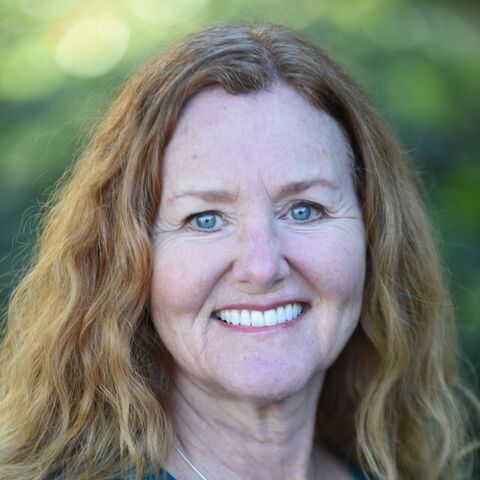
My name is Tina Rasmussen and I'm now going to give you some instructions for the Samatha meditation.
So just to give you a little context on the meditation,
The word Samatha means both concentration and serenity.
Oftentimes people focus on the concentration aspect and they forget the serenity aspect.
And really it's an important aspect of this practice to understand that this is a practice that can give us a lot of peace if we aren't striving,
Over striving to stay concentrated.
So there's really this balance that's inherent in the Samatha practice.
This practice also is known in brain research as focused attention meditation because it's a concentration practice.
It's in that category.
And this particular practice in Buddhism is mindfulness of breathing.
And the Pali term for that is Anapanasati.
So just to give you some background into what meditation I'm actually talking about.
The simplest instruction for this meditation is simply to breathe,
Which you're already doing so no effort required there,
And to know that you're breathing.
That's it.
That's really what you're doing.
So let's just for a moment to anchor you in the simplicity and the beauty of this practice,
Which is using as an object something that is ever present with us,
That's always here,
That's keeping us alive in a certain way,
Our breath.
So go ahead and just for a few moments,
Just breathe and know you're breathing.
You can do this at any time throughout the day.
At a traffic stoplight,
In an elevator,
In a grocery line,
You can always just come back to the breath and feel a little bit of that serenity and focus as you go about your day,
Which is really wonderful.
So the next level of instruction then for this practice is to know the breath in what is called the anapan region,
Anapana just meaning breathing region.
So this is the area between the upper lip and the nostril.
So we don't want to go into the body with this practice or notice the breath going out too far,
But the region really can be sort of the size of maybe like a baseball or maybe a softball,
A grapefruit,
Something like that,
An orange in front of that area that I just said between the upper lip and the nostril,
Or it can be a spot that is within that area,
More specific spot.
And if it moves or changes,
That's fine.
It doesn't need to stay the same.
Really the main thing is to use whatever is predominant to you.
And it can be on the rim of the nostril.
Sometimes people have,
They're congested,
So this can be done through the mouth,
But it's much easier to do through the nose if possible.
So we're just knowing the breath as it's crossing the anapana spot or region.
That's it.
That is the meditation,
Breathing in,
Breathing out,
Having your practice and your breath be as natural as possible.
And if you haven't listened to the posture instructions that I've done,
You might want to listen to those because it can really support your practice.
And then when the mind wanders,
Which it is going to do,
And you're not doing it wrong if the mind wanders,
This is guaranteed,
This is part of the practice,
Then you notice the mind's wandered whenever you notice that,
And you come back to bringing your attention at the breath in the anapana spot or region.
That's it.
And it's important to bring your awareness back with as much kindness and gentleness towards yourself as possible.
It's very easy to judge ourselves or blame ourselves,
Oh,
I was off the meditation object,
Kind of beat ourselves up.
That's not helping.
It's really not.
So one way to think of it is just to be glad that you noticed.
And in this practice,
This is what we are cultivating among other things is we're building the muscle of concentration.
We're building that muscle every time we go off and we come back.
It's like a repetition with a weight that you might do at the gym.
And you're building your capacity.
Concentration is an inherent faculty of the mind.
You don't need to get it just like you don't need to get your arm muscle.
You already have that.
It's just a question of how much you've developed it.
And that's what we're doing in this practice is developing that muscle.
Sometimes people will say,
Well,
I can't feel my breath.
What do I do?
Well,
This is part of the practice is that it's a little bit harder of an object to use than say noticing the breath of the belly.
And in the Samatha practice,
As I teach it,
Which is described in the book that I've written with Stephen Snyder,
Practicing the Jhanas,
It is important to notice the breath in this area for reasons I won't get into,
But that are all explained there,
As well as in free talks on Dharmasiddh.
And in other practices,
It's absolutely fine to notice the breath at the belly or in the chest.
So it's not to say those are bad,
It's just a different way of noticing the breath in this practice.
And it can be a little bit harder,
And that's why it develops a concentration faster.
So I can say in all of the years I've been teaching,
Which is a long time,
That with enough practice,
Everybody that I've known has been able to notice the breath in the on upon a region over time.
If you can't feel your breath and this applies to you,
Just take heart that if you stay with it,
The chances are very high that your concentration will develop and you will be able to notice the breath in this region.
There's also the method where the pause in between the in-breath and the out-breath,
So we breathe in,
We breathe out,
And usually the pause between the out-breath and the in-breath is a little bit longer.
Not for everybody,
It doesn't need to be,
But it's an easy place for the mind to wander.
So when you're noticing the breath there,
You might also just notice the serenity if nothing's happening.
And if you can't feel the breath at all,
Then you just wait.
You notice that you have serenity,
That you're waiting for the breath,
And you wait there somewhat like a toll-taker on a bridge.
Those are going away now with our electronic transponders that we use,
But in the old days there used to be someone sitting there collecting the money for the toll bridge,
And they didn't—they waited.
They didn't get out of the toll booth to go look around and chase down cars.
They waited.
And that's what you're doing with the breath,
Is you're waiting to notice the breath as it's going in and out,
Just feeling yourself sitting there,
Really not having to do anything,
And being alert but relaxed.
With this practice,
It's very easy to get tight,
And that doesn't help.
It really helps to have this balance between being alert and just returning every single time we go off,
When we notice we just come back as many times as it takes,
But also feeling the serenity of not having to do anything else except just sit there and have this time to really be present.
And it's important to remember that this is a present-moment practice.
Any meditation that's really orienting us towards our deeper nature,
As this is,
The present moment is what we are landing in,
And the breath is one tool to help us land and be in the present moment.
So it's important to remember that.
One last tool that you can use to support the deepening of the concentration is counting.
And it's recommended that you count from one to eight,
And then back down from eight to one.
So in this,
It's inherent that you're not counting how many breaths in a row you can do,
Because that just leads to a lot of thinking about,
Well,
Today I did more than yesterday,
Or beating myself up.
I went up to 37.
I lost track.
So well,
That's it with the counting,
Going back to eight to one and one to eight.
But you get the point.
We aren't just counting to see how many we can do.
It's like doing walking meditation where we're just going back and forth and back and forth.
So the way this is done is there's the in-breath,
There's the out-breath,
And then at the pause,
There's just very,
Very lightly the number,
One,
In,
Out,
Two.
And then you go up to eight,
And then you go back down to one,
And you just keep going.
And if you do notice that you're on 37,
Again,
You don't need to be critical of yourself.
You just notice,
Well,
I wasn't paying full attention here,
And just start over.
Start again with one.
And this will often accelerate the deepening of our concentration.
When I'm on retreat,
I use the counting because I find that it helps me build in a rigor into my practice that can be helpful.
Now,
Some people don't like the counting,
And if that applies to you,
That's absolutely fine.
You don't need to use it.
It's really there as a support.
And for everybody,
At some point,
The counting is going to start feeling clunky and like too much.
And at that point,
You drop the counting,
And you're with the breath.
And this is why it's very important not to have the number become your object.
So this is why we don't,
And the beginning of the in,
Start with one,
And out,
One.
We don't want the number during the breathing.
We only want the number there at the pause so that the breath remains as our object of meditation.
And then,
When the counting is no longer needed,
We can drop it easily,
And we're still in contact with the breath.
So those are the overview instructions for the Samatha meditation practice.
And I wish you wonderful joy as you come to know the beautiful breath that is animating you and all living beings.
That is the mystery that we turn towards in this practice.