On this Indigenous Peoples' Day,
I thought that we could begin by locating ourselves on this land where we're now seated,
Where we live and work,
Which was the land of the Nacotchtank people who were here for hundreds of years before white Europeans arrived.
And this was a very fertile land between the two rivers,
The Anacostia and the Potomac.
We'll incorporate a Native American expression of gratitude at the end of each part of the meditation that was used at the beginning and ending of gatherings,
Which is,
Now our minds are one.
So you can begin by just getting comfortable,
Finding a way to sit that is both relaxed and alert.
You might check your posture,
The alignment of your spine,
Just in a way that's both open and relaxed.
You can feel the body at rest,
Feet on the floor,
Hands resting gently at your sides or in your lap,
And you're closing your eyes if you're comfortable doing so.
And attention first to the body as you're sitting in your chair,
Feeling the weight of the body,
The points of contact between the body and the chair,
Conscious of the legs as they make contact with the chair,
Following them down to the feet,
A sense of pressure of the feet inside the shoes or on the floor,
And the contact between the feet and the floor.
And then tracing down from the floor through this building down to its foundation that is surrounded by the earth,
And even the tallest building,
You can trace that solidity that you feel under your feet down to the building's foundation,
Resting in the soil,
Stabilized,
Held in place by the earth.
And see whether you can feel into that connection between where the body ends and the earth is supporting you.
The earth being our stability,
Holding us in place,
Grounded in this earth.
Now our minds are one.
And feel how the earth comes to meet you.
You are made of the same elements,
The carbon,
The oxygen,
The nitrogen atoms that you draw in in each breath and release into the air,
The air that gives our body life and nourishes us with each in-breath.
And pausing with each breath to offer gratitude for this air that sustains us,
Gives us life.
Notice how the air as it enters the body,
The points of contact sensitive to where it moves through the nose with each breath,
How it moves down the lungs as the chest rises,
As the air is released,
Sending that carbon dioxide back to the plants and trees which they need to live and to grow.
And all day long completing this exchange with the plants and trees sustaining each other.
Now our minds are one.
Imagining standing by the side of a cool,
Clear lake,
The water softly lapping on our feet and giving thanks for the water that refreshes us,
Quenches our thirst,
Washes us clean,
That nourishes the earth and everything that grows,
That sustains all life.
Now our minds are one.
And around about us the trees,
That the earth gives us many families of trees,
Each with its own uses,
Giving us shelter and shade,
Fruit and nourishment.
And many peoples recognize a tree as a symbol of strength,
Of peace.
We recognize and thank the trees.
Now our minds are one.
And we turn towards the vast fields of plant life.
As far as the eye can see,
Plants grow,
Working many wonders,
Sustaining life.
When we look about us,
We see all the delicious foods that every day provide for us.
With our minds gathered together,
We give thanks and look forward to enjoying these earth's plants all the days of our life.
Now our minds are one.
And we gather our minds together to extend greetings and thanks to all animal life around us,
Our friends and companions,
The animals,
Those that live in the deep forests,
On the plains,
That teach us many things,
That share this life on earth.
Now our minds are one.
And everything that we need to live a good life provided by this earth.
And for all the love that is around us,
We gather our minds together.
Now our minds are one.
We turn to the ancestors,
To all generations,
Going back in time,
The bearers of this human life.
For thousands of years,
This unbroken chain,
All of us dependent on the generation before that passed this human life to the following generation and then the next counting back 12,
000 generations to the beginning of our species.
Each generation nurturing,
Protecting,
Passing this beautiful gift of human life.
The miracle of being able to stand here because of the love and the care that each generation gave to its newborns,
Protecting them,
Nurturing them as they grew and passing this blessing of human life to us.
Now our minds are one.
Today,
We are given this duty to live in balance and harmony with each other and all living things.
So now,
Let our minds be brought together as one as we give greetings and thanks to all created things,
To each other,
As one living whole.
Now,
Our minds are one.
And we have arrived at the place where we end our words.
Of all the things that we have named is our intention to leave nothing out and our minds to be one.
We hold all these blessings together in this space,
Pausing between each in-breath and each out-breath.
In this open,
Free space,
Which holds all things.
Fully awake to the life within us,
The richness of this human life,
Revealed in each pause between the in-breath and the out-breath.
Now our minds are one.
And gently,
In your own time,
You can come back,
Opening the eyes,
Welcoming the whole visual field,
Welcoming the aliveness in the body.
There's enormous richness in the,
All of the tools that are available in meditation,
About how to establish and deepen our practice.
There is the very simple attention to the body,
To the breath,
That helps to directly calm the body and mind.
There's mindfulness of emotions and feelings,
And really all of human experience that provides direct insight into the body and mind.
Direct insight into the nature of experience itself.
And there are the beautiful heart practices that cultivate these wholesome states of heart and mind.
And behind all of the practices and the techniques we learn,
There is the question of why we practice.
And maybe the answer is a little bit different for everyone.
I know for myself that I began practice because I sensed that there was,
In this practice,
A path towards greater freedom,
Or somehow a resolving of the tensions that surrounded life,
Or this kind of baseline uneasiness or unsatisfactoriness or suffering.
That surrounds life,
Even life when going well,
And everything is as you would want it,
This sense that there's something more.
And so feeling like in these practices,
At least for me,
That there was this possibility of balance or resolution of these fundamental tensions that you can awaken in this very life,
In your individual experience,
To this sense of freedom,
This sense of openness.
Tonight,
I want to pose a second question of who it is that we practice for.
And I think there's a very simple answer,
Which is that we do it for ourselves,
For our own well-being,
For our wholeness,
Our happiness.
But tonight,
I'd like to introduce this notion,
Which runs very deeply through this practice,
That fundamentally,
That we practice for others,
For all beings everywhere.
And you may be accustomed,
At the end of our sits,
That we often conclude with what's usually called the dedication of merit,
Where we take all of the merit of our practice together,
And we direct it out towards all beings everywhere.
Not just for our individual awakening or liberation,
But for the liberation of all beings.
And I think on one level,
You can understand that as a moral imperative,
As a concern for others,
Or a desire to wish this same happiness for all beings.
And for a long time,
This struck me as something quite beautiful,
But also just a little bit abstract.
And I think for me,
More recently,
I've really actually begun to feel like this is at the heart of a fundamental truth in this practice,
Which is that we do not exist in this world as these little autonomous beings that are each trying to awaken itself,
That that being sort of the ultimate goal of practice,
Or like each one of us is a self-driving car that's just set out with the only instruction of not to bump into any other car.
Like there's something actually more to this practice than that.
That there is this realization that you are,
With these practices,
Releasing yourself from this very small sense of who you are,
This little self who's just trying to get somewhere in life,
Including trying to get awakened or enlightened through these practices,
That the point of the practices,
Ultimately,
Is to have you come into contact with this sense of interconnectedness,
Or the basic realization that the essence of human experience is this sense of interconnectedness.
That the notion of consciousness itself is something that we don't generate ourselves,
That is part of the human experience given to us and not our possession.
And this radical understanding of who we are in this world then completely changes our perspective.
And so the practice no longer belongs to me or to you,
But it is our practice that we do together for our benefit,
But for the benefit of all.
Tonight we'll explore a little bit a manifestation of some of these ideas in what is called the bodhisattva path.
Now bodhisattva is a word from Sanskrit that means simply bodhi,
Awakened,
And sattva means being.
So an awakened being.
But in the tradition it is associated with this notion of waking up with everyone else.
And that the essence of waking up is that no one gets left behind.
It's a really rich concept,
So we'll just touch on it a little bit tonight.
Bhikkhu Bodhi,
Who's an American monk,
And really the foremost translator of the Buddhist text into English,
He's a renowned scholar,
And he said this recently.
He said,
There is a danger in practice in the West of placing so much emphasis on the awakening that is possible through meditation practices,
That practice can be a private matter only.
It seems Buddhism itself was being taken up as a path to personal fulfillment rather than a means of tackling the deepest roots of suffering,
Both for ourselves and for others.
It is only when wisdom and love inspire and drive social conscience,
And when social conscience draws its guidelines from timeless sources of truth,
That we can shape our institutions and policies in the ways necessary to continue the human adventure on this fragile but beautiful planet.
Bhikkhu Bodhi.
I myself came to this practice from years of intense social activism.
In my 20s I engaged in lots of forms of social activism,
Demonstrations,
Non-violent direct actions,
Anti-apartheid,
Anti-nuke,
U.
S.
Out of El Salvador,
U.
S.
Out of Guatemala,
U.
S.
Out of Nicaragua.
I had a friend who had a button that said,
U.
S.
Out of North America,
I remember.
I used to support a button that said,
Wearing buttons is not enough.
And at the time,
For myself,
The most important thing was identifying the right side to be on and to let other people know about that and to act as forcefully,
Strongly,
In a non-violent manner as I could.
And I recall very well that on a weekly basis,
I was living in New York City,
A group of us would go to a place called the Riverside Research Institute,
Which was a nuclear war think tank located in midtown Manhattan,
And we would stand at the doors and hand out leaflets to people going in,
Urging them to quit their jobs.
And one day,
One of these workers actually stopped to talk to me,
And I was so worked up,
I could barely speak,
Trying to express my anger and my frustration at this person,
Trying to impress upon him that the survival of our planet depended on him not going to work that day.
I was enraged.
I was stammering.
And later,
I started to think to myself,
How was it that I hoped to change this man's heart when I could barely speak to him?
And so I think I identified,
Starting back then,
That I had a problem.
I had a problem.
And I needed to offer more than my right opinion about what to do.
And at the time,
I must say,
I was deeply suspicious of people who engaged in intense spiritual practice.
I felt like I wanted to go up and shake them and say,
Like,
Get off your cushion and do something.
There is this old saying,
I don't know if you've heard it,
About meditation,
Which is,
Don't just do something,
Sit there.
Or also this quote from Blaise Pascal,
That all of humanity's problems stem from our inability to sit quietly in a room alone.
And one of the things that I love so much about this practice is that it really tries to bring these two things together.
That you need to make sense and reconcile what's going on inside,
But you do that for the benefit,
Ultimately,
Not of yourself,
But of everything,
Everyone,
All beings,
Everywhere.
And there's also,
I think,
Having come to know now much more clearly over many years,
These practices,
I think there can also be sort of a loneliness and a fragility to practice in and of itself.
I mean,
This can be this intense desire or yearning for awakening or for enlightenment,
For resolving that interior conflict and being able to live this much more centered,
Balanced life.
And in that,
I think,
Certainly it's been my experience and the experience of many others,
That then there can be set up a dichotomy between these states,
These meditative states,
Which can be very pleasant and enriching and wholesome,
And then leaving those meditative states and trying to engage with the world.
So there is,
I think,
This necessary paradigm shift between,
You know,
We think of spiritual practice perhaps as the isolated individual,
You know,
Who's on the mountaintop in a distant place,
Trying to get to a certain state,
A meditative state.
And I think the bodhisattva path,
And really the deepest realizations that are possible through these practices,
Is that we do practice for others and with others.
And so you just might consider tonight,
As we're practicing together,
That question of,
Can we be practicing,
Even now in this moment,
For others?
Can we imagine that we're practicing right now for the whales in the ocean or the undocumented workers who are getting ready to go home,
Not far from here where they work?
So maybe just pause for a moment,
Just think of that practice tonight.
Can it be a practice for all of them?
Thich Nhat Hanh,
The Vietnamese Zen master,
Grew up during the Vietnam War in his country,
Once explained,
When I was in Vietnam,
So many of our villages were being bombed,
And along with them,
My monastic brothers and sisters,
I had to decide what to do.
Should we continue to practice in our monasteries,
Or should we leave the meditation halls in order to help the people who were suffering under the bombs?
And after careful reflection,
We decided to do both.
To go out and help people,
And do so in mindfulness.
It's a beautiful facet of Buddhist traditions that recognize reincarnation,
Not that you have to recognize reincarnation to practice with us,
But for many Buddhists around the world,
They do recognize reincarnation,
And it allows to this very different sort of relationship to the world,
That you can imagine the mother bird who's feeding a baby bird,
Perhaps is the descendant of the same mother who fed you as a baby bird,
Many,
Many incarnations ago on this earth.
But even if you don't believe in reincarnation,
The reality of this interdependence on earth of all living beings,
That obviously we cannot be here without other living beings,
In that very simple way of the exchange of breath between the plants and humans.
So,
The Bodhisattva path,
This is a deep tradition within this practice,
And one of the great things,
Too,
About this practice is that for any of these things,
There's not a sense that you have to figure it all out by yourself,
That for generations,
Millennia,
People have been practicing,
And there is this path,
And with regard to the Bodhisattva,
There are what are called the six perfections,
Or the paramitas,
That help to train us to understand exactly what that path is,
And how to follow it.
So I'll just mention these for you,
The six of them.
The first is generosity.
So how do you loosen this sense of this small self who's just trying to get somewhere in life,
Or this self-driving car,
And open to something wider?
Well,
One way is to try to thin the barrier between ourselves and other persons,
Other beings,
And naturally start to wonder,
Is it better that I have something rather than someone else,
Any other being?
And from the Christian tradition,
St.
Basil the Great said,
The coat unused in your closet belongs to the one who needs it,
That this sense of things actually already belong to another person and not to you.
Or the next being the ethical precepts.
In Buddhist ethics,
The foundation is not harming,
Not harming in action and in speech and in thought,
All three dimensions.
And the recognition that these things are helped by establishing norms or boundaries,
That you can look to your life and actually ask that question about,
Is there a challenge for myself in setting an intention to actually commit to certain wholesome actions,
Or refrain from certain unwholesome actions?
There's patience,
The ability to remain centered and balanced even in very difficult situations,
Diligence for dedication to the path.
I think that for me,
Experience with these practices over the years have little by little just convinced me of the ability of these practices really just to make a fundamental change in the way I understand myself and the world.
And I think there's a degree of confidence that comes when you see that in your own life,
And then there's a sense that actually fires that diligence.
Meditation,
Developing of concentration,
Stability in meditation,
And finally wisdom.
And the wisdom is a particular sort of wisdom.
It is really this understanding of the insubstantial nature of this small sense of self,
And the recognition of who we are as being something that is just vast and interconnected,
And is a reality which is a shared reality rather than individual.
And the last aspect of the bodhisattva path that I'll mention,
The last support,
Are vows.
And this is a beautiful practice of the bodhisattva,
And it's really an expression of commitment,
Or a reminder of what's truly important to you.
There's an old saying that the most important thing is the most important thing,
Which is to say that the most important thing is to remember for yourself what is most important.
If you can remember what that is,
Then that has a way of directing action that's very profound.
So it's,
I think,
Best to be thought of as not a restriction but an aspiration,
Your highest and best self.
Shantideva,
The 8th century monk and poet,
Composed what are still known as the Vows of the Bodhisattva,
Which I put in the email and I'll read here for you just a portion.
May I be a guard for those who need protection,
A guide for those on the path,
A boat,
A raft,
A bridge for those who wish to cross the flood.
May I be a lamp in the darkness,
A resting place for the weary,
A healing medicine for all who are sick,
A vase of plenty,
A tree of miracles,
And for the boundless multitudes of living beings,
May I bring sustenance and awakening,
Enduring like the earth and sky until all beings are freed from sorrow and all are awakened.
There's also,
From the Christian tradition,
The prayer of St.
Francis,
Grant that I may not so much seek to be consoled as to console,
To be understood as to understand,
To be loved as to love.
Or,
Toni Morrison,
You free yourself by freeing others.
Or finally,
Superman,
From the recent movie,
Who believed that he was sent from Krypton to Earth because it was there he could do the most good.
So finally I would say about the Bodhisattva path,
That I would say if you aren't feeling the joy of it,
Then you might have gotten off the track.
Howard Thurman,
The great civil rights leader and theologian,
Used to tell his students,
There's something in every one of you that waits and listens for the sound of the genuine in yourself.
It is the only true guide you will ever have.
And in the 1960s,
A young activist came to Dr.
Thurman and asked for advice about how he could be most useful in the movement.
And I think he was expecting that Dr.
Thurman was going to say,
Well,
Go to Mississippi and register voters,
Or why don't you go join the sit-ins in Memphis.
But instead he said this,
Don't ask yourself what the world needs.
Ask yourself what makes you come alive.
And go do that.
Because what the world needs is people who have come alive.
So for myself,
There are many Bodhisattvas out there.
And actually Thich Nhat Hanh himself,
When he came to the United States,
He was exiled from Vietnam during the war,
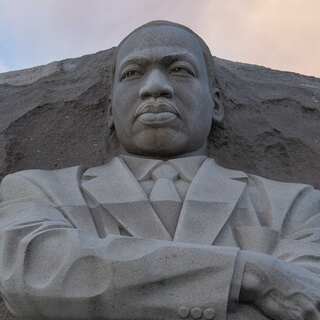
And met Martin Luther King Jr.
For the first time,
And nominated him,
And Martin Luther King nominated Thich Nhat Hanh for the Nobel Peace Prize after he had won it himself.
And Thich Nhat Hanh said of Martin Luther King,
That you are a Bodhisattva.
So for myself,
I have a whole bunch of them.
But I'll highlight one for you tonight,
Before we close.
She was,
In the 1940s,
A young girl growing up in England,
Who had always wanted to go to Africa.
And when she was 23,
She went to visit a family friend in Kenya,
And by chance met the anthropologist Louis Leakey.
I think some of you may know who this is.
So she was hired as his assistant,
And curiously,
She explained to him that she had no scientific training whatsoever.
In fact,
I don't think she even had a university degree at that point.
But he said he was looking for somebody who was curious,
And somebody with an open mind.
So he sent her to the jungle in Tanzania to study chimpanzees.
And they were frightened of humans.
They would not get near humans.
So she spent months gently walking among them,
Trying to get closer and closer,
Until one older adult male paused as she walked towards him,
And allowed her to sit nearby and take notes.
And then soon another and another followed them.
And what she found was that they had personalities,
And they had emotions,
And they held hands,
And they comforted each other,
And they communicated.
And until then,
Humans had thought that they were the only ones who used tools,
Until she saw a chimpanzee take a stick and punch through the top of a mound so she could pull out the ants that were inside.
And her discoveries shook the scientific world,
Redefined the relationship really between humans and other animals.
And she said,
Everything is interconnected.
The spark that's inside us,
They have it as well.
If we have a soul,
So do they.
And later she said,
I hope we are going to learn a new relationship with the natural world,
Of which we are just a part,
And on which we depend for our very existence.
So as I think you have guessed,
This is Jane Goodall,
Who died at 91,
Just a few days ago.
So why don't we do a short meditation together before the discussion?
So again,
I would just invite you to find a comfortable way to sit.
A way that's relaxed,
But alert.
And again,
You can go back inside,
You can close your eyes,
If you feel comfortable doing so.
And you can take a few deep,
Cleansing breaths to settle the heart and mind.
And you can just let go of all these words.
And just think for a moment of what would this ideal,
This bodhisattva life,
This awakened life,
Look like for you.
You can imagine your higher self speaking with you and reminding you of what's the most important thing.
What's the most important thing for you right now?
What's that thing or things that will guide you right now?
You might recall these perfections,
Paramitas,
The generosity,
Non-harming,
Patience,
Diligence,
Meditation,
Wisdom.
And maybe it's less about doing certain things.
Maybe it's about who you are.
And in a moment,
We'll have a few minutes of quiet reflection to think for yourself what these intentions are for yourself.
And if you wish,
You could express them as a vow to yourself to remember these most important things.
And here are some questions that will guide us.
What is most important for me right now?
And what do I need to truly nourish myself?
And what promises might I make to myself in order to live life to the fullest?
What contribution could I make to the world around me?
And in responding,
You can think of a vow for yourself,
Or maybe it's just a word or phrase or a narrative,
Whatever comes to you as most sincere.
So maybe just starting to pause and ponder these questions.
And as you're ready,
You can come gently back.