Start by just settling into your posture,
In your head,
Resting gently,
At your sides or in your lap,
Closing your eyes.
It can help to relax the mind and the body with a few full deep breaths,
Inhaling deeply on the in-breath,
Filling the lungs,
Releasing on the out-breath.
Again,
Inhaling deeply,
Again filling the lungs and on the out-breath,
Releasing and relaxing.
And one last long full in-breath as you feel the chest expanding,
Holding that breath at the top of the in-breath,
Feeling the contraction inside the body,
Around the lungs,
Through the chest,
And then releasing again,
Letting the breath return to its normal rhythm.
For this meditation we will focus on what's going on when we don't apply much effort.
We'll be experimenting with just being here,
Being present,
Aware,
Without trying to make anything happen,
Wanting anything to happen,
Just trying to be here with anything that is occurring.
And if there's something here,
We just see it and recognize it,
Continue on.
It's a feeling of non-interference,
Of allowing,
Trying to adjust or modify anything.
And without trying to look for anything,
Finding anything,
There is a natural quiet.
There's simply awareness,
Seeing everything without you trying to be aware.
The stillness and quiet and the calm that you might seek in meditation is already here,
In being aware before we seek anything.
You may even disturb it if you start looking around,
Because it's already here.
When you're not trying to create anything or trying to get rid of anything,
You feel perfectly still,
Actually wanting everything just to remain as it is,
Preferring things that way,
Opting for not changing anything,
In the sense that this is the natural state of simple awareness.
It's just being here,
Not wanting to change things or make them better.
You might notice it's only the mind that can suddenly arrive with an idea of what might be better,
And asking you to leave this calm and the stillness to go someplace else.
You can just set aside that invitation,
Set aside that pressure.
It feels far less comfortable or easeful than what's right here.
Instead,
You can get lost in what's here without parting in one direction or another.
The mind tries to conjure some dream about what could be here,
Some false here,
Rather than what's effortlessly present,
Available,
Naturally at ease,
Because there's nothing to change.
Simply relax into the experience itself.
Let your only intention be to be awake for what's here.
Lost and forget where you are.
The breath can bring you back.
Flow of the breath.
Recall the stillness of the sensations of what's around you.
Sense of quiet.
You feel and sense the quiet.
All experiences naturally quiet.
The breath and the body quiet.
Just simple awareness,
Things known in awareness.
Awareness not changing anything,
Opposed to anything.
Quiet.
Time.
Gently back.
Ready.
You can open your eyes,
Welcoming the brightness of the day.
Comfortable.
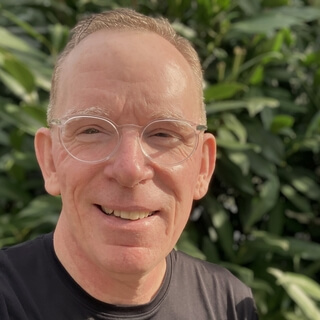
You turn your camera on for the talk.
It's nice to see you.
Do you ever feel like an explorer in meditation?
You experience something,
Maybe just a glimpse of something,
And it makes you want to explore,
To try to figure out what's there,
What more might be there,
What are the possibilities?
I know,
But I want that.
Yes?
I said,
I know,
But I want that.
You want that.
Okay.
All right.
Well,
Pay attention then.
We're gonna do this,
Okay?
For me,
In meditation,
I so often have this experience that,
And even sometimes for the five-minute meditations during the week with Lorelei and Yuan,
Amanda and Kirsten,
And Alex,
And Betsy,
You know,
I come with a lot going on in my day,
In my mind,
And then I find with,
You know,
A few breaths or reconnecting to the body,
That there is this opening to something that's much more spacious.
And this question does persist for me,
Like,
Well,
What is this thing?
Or it feels like more of who I am most deeply,
But like,
What is that thing exactly?
Like,
What is it?
And I'll offer a couple thoughts here,
But they're just pointers,
Because as explorers,
I think everybody finds their own way.
There's a famous saying from the naturalist and illustrator James Audubon,
Who published the famous bird book,
The Birds of America,
Which Bill probably knows about,
Who commented on what to do when you have this book that's supposed to be the catalog of birds,
And you see a bird that does not match the book.
And so he commented that when the bird and the book disagree,
Believe the bird.
By which I think he meant that,
You know,
Experience ultimately is the test,
Or the saying about,
You know,
The finger pointing to the moon can help you find the moon,
And maybe you wouldn't see the moon unless somebody pointed,
But at the same time you should never mistake the finger for the moon itself.
So these are just a few pointers.
And I'll begin with a story a few years ago.
I attended my 40th high school reunion,
And it's the first reunion I ever attended at the high school,
And I had not been back there in 40 years,
And I hadn't,
With a couple exceptions,
Kept up with people,
But I thought this would be kind of fun.
So I went,
And it's a small school,
So I remembered just about everybody,
And so I went around and I reintroduced myself to a whole bunch of people,
And the first question you inevitably comes up is,
Well,
What have you been up to?
Which for me has been,
What have you been up to in the last 40 years?
So I decided to experiment with telling something close to the truth,
Because I couldn't figure out what story to tell about myself otherwise.
And so I would start,
You're saying,
I went to college to study music,
And I graduated,
And then I went to work with homeless people.
I entered a Catholic religious order,
And then I left,
And then I went to work in a refugee camp in Mexico,
And law school,
And sometimes I would pause after one of them,
And you know,
The person would be very interested,
And would say,
Oh,
That's fascinating,
That's really fascinating,
And then we'd be about to discuss that,
And then I would go on to the next one.
I think I did it in part because I wasn't quite sure what I'm up to or who I am,
But I knew that it,
Like,
This was in some way a summation of my life,
But it really wasn't a summation of anything except for a whole bunch of things that I had done.
But I do know that I strongly identified with all of those things while they were going on,
And in fact,
That's often I felt like that's all I was with,
Until I became,
And I recall in college,
I used to have this big,
Bushy,
Red beard.
I remember one day I passed myself,
And in the mirror I looked,
And didn't recognize myself because I thought to myself,
This looks like a grown-up when I saw myself.
And then for those who are a little bit older,
You may identify with this one.
These days sometimes when I pass myself in the mirror,
I look and I think,
Who is that old guy?
You know,
So who's the real me?
I guess this leads me to this question,
You know,
And particularly if I understand that it's not what I'm doing,
And it's not what I believe,
Because that's certainly changed.
So what's the thing about me that has not changed?
The word mindfulness that we use so often is a translation of the word sati,
S-A-T-I,
From the Pali language,
P-A-L-I,
Which was an ancient Indian language in which the discourses of the Buddha were written.
The Buddha used the word sati.
The word mindfulness was coined in English by a British civil servant more than a hundred years ago,
Who was posted in Sri Lanka and started to read these texts and try to figure out how to translate it.
Today most translators agree that a closer translation would be awareness or presence.
The contemporary teacher Eckhart Tolle uses the word presence,
And he does so because he says he does not want to be full of mind,
Mindfulness.
He doesn't want to be full of mind.
He wants to be full of presence.
So presence or awareness is the space in which everything happens,
And every morning when we wake up,
Awareness is always there throughout our life.
It doesn't change.
There's an experiment you can do.
I can do it with you right now,
Where for 10 seconds I want you to try not to be aware.
Okay,
You can start now.
All right,
There you go.
Did anyone succeed in not being aware?
Awareness is what your life is most fundamentally.
There's a story of the fish that hears that there is something called the source of life that fulfills all desires.
So the fish starts searching for it,
Traveling the seven seas,
Never finding it,
Continuing to search farther and deeper,
And finally exhausted,
The fish returns back to where it started,
To its home waters,
And encounters an old fish who asks why it is so dispirited.
And the young fish said,
I spent years looking for the source of life.
I've looked everywhere and tried everything to find it without success.
And the old fish smiled and replied,
I've heard many names for the source of life,
But one you might recognize.
It's called water.
So the fish has been swimming in the water its entire life and doesn't recognize it.
Or this.
This is going to be a visual.
This is.
.
.
So this is an old Zen picture,
A picture of birds,
Supposed to be a picture of birds.
And you can look at this picture and as the birds pass through the sky,
And you can focus on the birds,
But also you can do this little experiment where you can take the attention off the birds and put your attention into the space around the birds.
And how do you compare the experience of the two things,
The shift that you feel when you move from attention to the birds to attention to the space?
It's a Tibetan teacher that says of awareness,
So close you can't see it,
So subtle your mind can't understand it,
So simple you can't believe it,
So good you can't accept it.
So things come and go through this space,
Through this awareness.
They rise and pass away.
The awareness remains,
Holding everything open to everything and accepting everything.
Dan Siegel,
The teacher,
The author,
Psychiatrist,
Suggests this exercise.
You can think of awareness as being directed from a hub out in different directions to a rim that's like a wheel,
And each spoke is awareness being directed out to,
Let's say,
The birds or to the breath or to the body or to any object.
And in meditation what you can do is see what happens if you take one of those spokes and you actually turn it 180 degrees back on itself.
So awareness aware of itself.
Directed awareness being the awareness itself and how you can let the awareness come back and rest there.
Or finally there's the story of the police catching a bank robber and asking him,
Why did you rob the bank?
And the bank robber answering,
Because that's where the money is.
And so awareness,
So awareness I would like to suggest that that's where the money is.
So why don't we just go back inside for a moment before we conclude to a little brief meditation here.
Close your eyes if you wish,
But you don't need to.
And you can imagine that you're sitting on top of a mountain and looking out over a clear blue sky that you can see off in all directions across open horizon.
You can imagine a clear sky and then your awareness starting to mingle with that vastness,
With that boundless space.
Just let your mind be opened and relaxed and might be aware of the sounds around you.
Different sounds close by or far away.
You can feel the open space that receives the sounds and see if you can let that open space fill your mind.
Rest for a moment in that undistracted awareness that receives the sounds,
Receives the sensations,
The feelings,
Receives the thoughts.
When you're ready you can come gently back.