Hi,
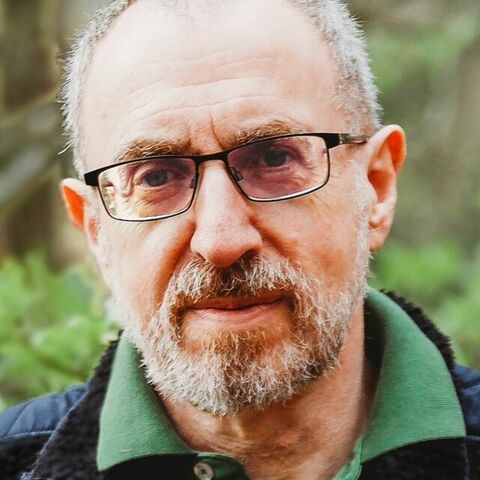
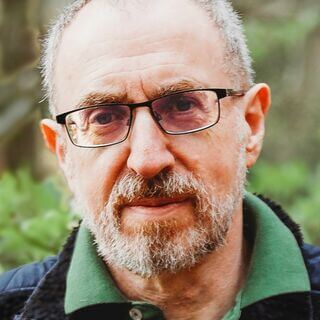
I'm Trevor Lewis and I'm here with Chris Largent,
The founder of the Seventh Academy.
So Chris,
Welcome.
Can you tell us something about what a classical academy is and what will I learn from studying in a classical academy?
Thanks very much Trevor.
Well,
One of the things that always grabbed me when I was working in universities and doing consulting and other things is that the assumption in education is always based on this line that went from Greek philosopher Aristotle through Thomas Aquinas for the church and then John Locke in modern times in England is people have these blank minds and until authorities put something into them they're not intelligent.
And while there are some advantages to that idea,
In fact,
Classical academies had exactly the opposite idea.
The idea was everybody's brilliant,
Everybody's a genius and everybody's creative and the job of an academy is to draw that out to say,
Okay,
Let's use whatever tools are necessary.
So when we're talking about self-awareness,
What we're talking about is saying if you start in an academy,
Especially focused on things like dialogue and discussion,
You start talking about that.
You get more aware of the kind of creative abilities that you have and each individual does that and then that participates in a larger sense when you have groups in an overview of culture transformation.
And the trick about classical and this is east and west,
This is anybody,
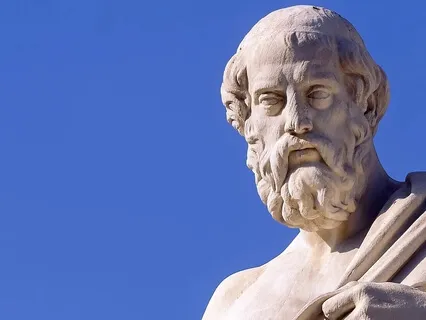
This is from the Buddha to Plato,
They would have no fixed anything,
No fixed doctrines,
No absolute truths,
No dogma.
In fact,
The idea of belief as a fixed thing as opposed to just a general,
I think that's the case.
Belief is kind of held in contempt from everybody from the Buddha to Socrates and Plato because they said,
Look,
If you're going to draw out everybody's wisdom and creativity,
That's a big adventure,
That's a life adventure.
We got born to do that.
If we act as if as you're walking along the path,
You just need to stop and find your rock and stay there,
Then the adventure is over and you're not really learning anything,
Especially if the rock is somebody else's rock.
That is to say,
Some authority says you need to believe this because this is what's true.
Okay,
It might or might not be,
But that's not going to help me on my path.
So the classical academies say we don't do the fixed business,
We'll leave that to the religions or what anybody else wants to be dogmatic and really just focus on the tools that help people understand their own wisdom,
Their own brilliance,
Their own genius,
Their own creativity.
And because that focus on tools,
It's a how rather than a what,
It's a method rather than content.
And the easy version of that is the Chinese saying,
Give a man a fish,
Feed him for a day,
Teach him how to fish and feed him for a lifetime.
So academies are saying,
If we give people tools,
Then you have this sense that each person will develop his or her own sense of self-mastery and self-awareness and start appreciating the creativity and wisdom that each individual has.
The Buddha's raft parable is always a good analogy because to paraphrase the Buddha,
He said,
If you need a raft to get across the river,
He said,
A teaching is like a raft.
If you have your own,
You don't need mine.
You don't need the tools I've got.
In his case,
Of course,
That would be things like the Four Noble Truths and the Eightfold Path.
Those are the two basic tools that he had.
But he said,
On the other hand,
If you don't have a raft and these are going to get you across the river,
Great.
But once you get across the river,
Put them down.
Other tools will come along.
You don't have to carry them along to say,
Wow,
This raft got me across the river,
So I'm just going to carry it the rest of my life.
No,
You need to stay in the adventure,
In the path.
And so the raft simply is part of the tool approach that classical academies have.
So that's generally the difference between a classical academy and say modern progressive education that is trying to put stuff into kids' heads that they can get tested on.
And so it has this very rigid but divided curriculum,
Mostly from Henry Ford schools,
Because he was trying to train factory workers to do one specific job in building cars,
Not whole people.
And a classical academy says it's the whole person that has that creativity,
Wisdom,
Intelligence.
And so the job of an academy in drawing that out is just offering discussions,
Dialogues,
And so on about lots of things that are really just taken as tools for that individual to say,
OK,
We just had this chat about whatever,
History or philosophy or science or body language,
All those things we've talked about in the academy and more.
These are tools that if they can help me understand more about my own creativity and intelligence and brilliance,
Great.
If I don't need them,
I don't need them.
They're not mine.
Or if I might circle back and get them later.
So academies have that big open approach.
So the tools that awaken individuals.
So if I'm waking up to my own creativity and intelligence and so on,
Every time I'm involved in a discussion or a dialogue,
Even if it's an inner dialogue,
I'm realizing more and more who I am and what I have to offer.
So therefore,
I'm going to,
In a classical academy,
I'm going to expect everything that's taught to be just some tool to wake me up.
It doesn't have to be something that I agree with or disagree with.
That's another modern education idea.
In fact,
In the classical academy after Plato,
The head of the academy or some speak,
Which give up,
Stand up one day and give a position and people then talk about it.
Next,
They give the opposite position and people talk about that.
And then the debates would create this clarity in the individual.
They're not looking for a consensus.
This isn't that's something I do in my consulting work.
I look for general consensus for a group.
But this says,
No,
You're awakening individuals.
And therefore,
There's this looking at tools and any topics or issues that people want to.
And it's raising consciousness,
Waking people up,
Helping them discover who they are.
And so it's in the words of Eric Garland,
The famous futurist,
It's the world's best alternative education,
A classical academy,
Because it allows that to be drawn out from individuals.
Education is based from a Latin root that means to draw out from each individual.
And so that becomes the goal for the individual to say it's drawing out more of who I am.
But then in doing that,
Especially in dialogues and debates and discussions,
Especially if they're big,
Like discussions of history or the philosophy of science or the history of art or music or whatever,
The world is bigger.
We're looking at the forest rather than just the trees.
And so you have what we refer to usually as a holistic worldview.
And that creates,
When you have especially individuals together,
It creates this big impact in collective consciousness in the world.
Because one of the things that happened with,
If you remember with physics,
When physics was transforming in the early 1900s,
The model that we had of the world was it was a big machine from the industrial age.
But those new physicists,
Einstein and Heisenberg and Bohr and that crowd started realizing that the universe doesn't behave that way with new physics.
It behaves more like a mind,
A big mind.
So the idea was this is big consciousness field that we all participate in.
So if I have a big insight or if a group I'm discussing something with has a big insight,
Even if we don't agree,
We get this spike,
This energy spike in worldwide consciousness.
One of the analogies we always use is it's as if the universe is this big pond and you have an insight,
It's like throwing a stone or a boulder into that pond,
It ripples out and changes the lives of people you'll never meet.
I was struck by that because when I was in high school,
The physics teacher decided he experiment with advanced physics,
Knowing it was way over all of our heads.
But one of the things he did is he had this great big round pool and he had these metal rods that would go into it and create ripples so that we could see how fluid dynamics work.
And you have this ripple creation that always stayed with me as an image.
So that's what culture pioneers are really doing,
Because what they're doing is those are the people who by nature are drawn to the cutting edge.
And because they're drawn to the cutting edge when they have big insights,
It not only spikes worldwide consciousness to wake up,
But to move forward in some general sense of transforming the culture and making it more positive,
More beautiful,
More harmonious,
Whatever.
We'll talk about the golden proportion later that's underlying a lot of this.
And for culture pioneers,
Because it's a pain in the neck job,
Let's face it,
If you're going to be on the cutting edge,
You're there by yourself.
Remember the old series that we had,
All clear paths are behind you.
This is not the world's happiest job and you're usually marginalized and people think,
Well,
What's wrong with you?
You're some kind of crazy person.
So think,
All right,
What gives the sense of fulfillment here is that activating this brilliance of the culture pioneers along with other people's brilliance,
But then saying that's changing the culture.
And that gives me that big sense of fulfillment.
And there's this natural joy and enthusiasm and elation that goes with that.
And then we will talk briefly later about what ancient cultures thought of the earth history as a great transformation.
What they taught at that had to do with a change from a more violent mentality,
Which the anthropologist,
Which we are,
And I refer to a dominator controlling mentality to more of a partnership mentality,
Which is more natural for humans.
And so when that culture is moving forward,
It reduces suffering.
And that's part of what classical academies have been involved with,
With that pioneering work that moves the transformation along more rapidly.
Because if you slow it down,
You potential for more suffering and screwiness and so on.
Thank you,
Chris.
Thank you,
Everyone for joining us today.
If you'd like to hear more talks,
Please join us in the group,
Ancient World Wisdom.
And if you have any questions,
Comments,
Please feel free to post them in that group.
Again,
Ancient World Wisdom,
You can do a search for that group.
Thank you.