Hello and welcome.
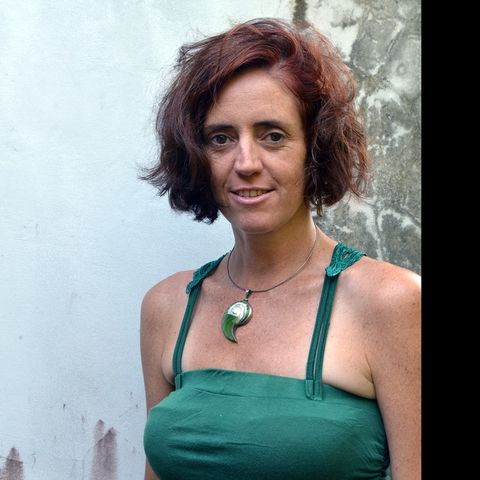
This is Akasha Love.
I am a soul alchemist helping you to birth your true self in this lifetime.
Guided by my own soul,
Each week I bring you talks,
Music,
Meditations and downloads designed to support you in connecting deeply in with the truth of who you are so that you can express this authentically out in the world.
So hello and welcome to the Universe podcast.
This is the very first edition which is also being filmed.
I am coming at you live from this beautiful garden hideaway in Ubud,
Bali.
So very exciting to be doing this very first video edition and it's an auspicious day for this because it's the New Moon.
So it's December 15th,
Just a week before the solstice and it's been a day of ceremonies all over Bali today.
They traditionally hold the ceremony on the New Moon and also on the Full Moon.
So the New Moon this month is as always it's the beginning of a new cycle,
A time for opening up to new possibilities,
A regeneration,
New beginnings,
A clean slate.
Every month we have this on our New Moon.
I'm not an astrologist so I won't go any further into the astrological set up at the moment.
I know it's quite interesting.
So today I wanted to speak to you about toxic shame,
What it is,
How to recognize it in yourself and some steps to healing including a guide of meditation that I will take you through at the end where we will connect with your inner child and hold a dialogue with them around this topic.
So what is toxic shame?
It is basically a generalized underlying feeling of being bad.
So as Brene Brown very clearly explains in many of her talks and videos,
The difference between guilt and shame is that guilt is a feeling of I have done something bad,
I have said something wrong,
Some act of mine was not good and I feel guilt for this.
Shame is I am bad,
There is something wrong with me.
This is very much the typical statement of someone who is shaming you.
They will say something like this,
There's something wrong with you,
This is shame,
This is giving you shame.
So the idea that you are somehow inherently bad,
Unworthy,
Unlovable,
Defective in some way,
Unworthy of love and attention.
It's a pervasive sense and toxic shame.
So this is shame but if we get into toxic shame it's really a pervasive feeling that's kind of underlying,
That's present in you in some way all of the time.
It's in the background of your consciousness,
A feeling of just being not good and will manifest as ideas of I am not good enough,
I'll never make it,
I'm afraid I can't show myself,
I can't be fully present in the world and I'm afraid of people too.
This is quite a prominent symptom of this underlying feeling of shame and it will manifest in a whole host of different personal challenges in the world.
So these include such things as low self-esteem,
It's clearly low self-esteem if you feel that there is something wrong with you,
That you are bad,
Not good enough,
Obviously your self-esteem is not good.
Social anxiety because if you're not feeling good about yourself,
Proud of yourself,
Strong in who you are,
It's difficult to be in social settings,
To be talking about yourself,
Your work,
Whatever it is that you do,
Your life,
Your family,
All of that will be affected by this underlying feeling of shame,
Of not good enough.
Indecisiveness is another symptom of a toxic shame if you have problems making decisions in general,
If this is a general issue in your life then you may be carrying some level of toxic shame.
So indecisiveness can be anything from what do I eat today to bigger things like where am I going to live,
What work will I do,
What should I do next,
Are my friends good for me,
Am I on the right path in life.
So as you can imagine if you have a generalized underlying level of indecisiveness this causes big chaos in your life because you can't actually take any decisions,
You can't move forward,
You can't make choices because you're afraid of making the wrong choice.
So this also leads to anxiety,
Obviously if you're not making choices,
You're not moving forward,
You're much more likely to be suffering from also a underlying sense of anxiety because this is anxiety producing.
We need to be making decisions all the time pretty much in our daily lives and if our decision making capabilities are blocked by this underlying toxic shame then anxiety is going to be a regular occurrence in our life as well.
And the other symptom of toxic shame is we are going to be prone to be in abusive relationships so you'll be prone to attracting abusive people into your life particularly in intimate relationships who will treat you as less than and who will treat you badly and who will treat you like you really don't matter all that much.
And this essentially is reflection,
A reflection back of your idea about yourself coming from the external world in the shape of this person that you might have attracted or that you might be in relationship with.
So where does it come from?
Why do we have this underlying sense of unworthiness,
Of not good enough,
Of I am bad or there's something wrong with me,
I'm defective,
I'm a defective model of human.
Where does this come from?
Obviously as you can see from small babies when we are born we don't have any ideas like this,
We don't have any ideas at all,
We don't even know that we're a self,
We don't even know that we're a person,
We're just pure consciousness in a soft mushy baby form and we're just a person.
We're just a person.
And we are just experiencing the world through our baby eyes,
Fascinated by everything,
Loving everything,
Following our instincts,
Following our feelings,
Doing whatever we like and generally we're pretty happy with that.
So what happens along the path of our life to give us this feeling of toxic shame,
Of there's something wrong with me,
I'm not good enough,
I'm bad.
Basically,
Generally someone will have told us that in childhood often or early adulthood or in adulthood and especially if this has been told to us in childhood then we believe it especially by our parents or caregivers or important people in our lives who we respect,
Whose authority we respect then we naturally believe this from them because a child does not have the faculty or the capacity to question these kind of statements from authority figures.
You will just internalize this and especially if it's been repeated to you,
This phrase or these underlying messages might be subliminal,
It might not be overt,
Hey there's something wrong with you,
You're a bad child,
You'll never be good enough,
It might be more covert,
There's a whole lot of different ways to give this message without actually saying this.
So this can also,
These messages of toxic shame can also come from peers,
Can come from teachers,
Anyone who really we respect in our early lives and usually it will be because they are trying to control us in some way or they are trying to avoid these people who are shaming us or trying to avoid their own feelings,
Their own perhaps emotions of shame by projecting this out onto us,
Maybe it's them that feels not good enough and instead of owning that and investigating that for themselves they just easily throw that on to a child in their care and thus starts a,
Basically is planted a seed of shame in that child and that seed can grow and can grow and grow and grow over the whole of childhood until you enter your early adulthood and this is your belief about yourself,
You just feel you're not quite enough,
You're not quite good enough and you're maybe underlying everything,
You're actually a shit person or a bad person.
So what to do about this if you discover this within yourself?
So the important thing to notice first is that it doesn't really matter in the end where this came from although of course there's a whole process of healing that we will most likely need to do with our original abusive people in our lives who might have given us these messages.
That's another separate issue and it's work that's probably quite important to do if you recognize that you have these symptoms,
That you do carry some toxic shame.
But aside from that I'm not going to talk about that today but what we have to recognize is that the shamer,
So the person who is now shaming us has been internalized,
It's now within ourselves.
So we no longer need that external person or people who originally shamed us,
They might have been out of our lives for years but because it went so deep,
This seed,
It's sunk into the depth of ourselves and it's been growing there.
So we now have an internalized inner voice of toxic shame which actually then continues to shame us without the need of any other people,
Without the need of any other people who are shaming us anymore.
So what to do about it?
So I think an interesting first approach to this is the Buddhist approach.
So Buddhism understands the self as a fiction.
So this idea,
Even just the concept of me,
Me as a me being,
In Buddhism this is seen as not true.
So if we can look from the Buddhist perspective which looks at anatta,
Anatta means no self,
Understands that there is actually no self and then we look at this statement,
There's something wrong with me,
I am bad and we take out the me,
Then we can just see,
We take out the me from that statement,
So instead of there's something wrong with me,
There's something wrong.
Just even that will probably give you a feeling of liberation when you realize,
Okay I recognize an underlying feeling of shame,
Toxic shame,
But there is nothing wrong with me because there is no me here.
This idea of me is a fiction.
Me is as a person,
I am different every single day,
I'm growing,
Developing,
Expanding,
Changing,
Changing,
Changing,
Changing,
Every day.
Who I am is basically consciousness in motion.
I have this form,
I have this body,
I have this mind,
I have these emotions,
I have these feelings,
All of these things are constantly changing.
My body is constantly changing,
My emotions are constantly changing,
My thoughts are constantly changing.
So what am I?
I am consciousness,
I am the screen of consciousness,
Being projected out through my eyes.
There is no me here.
So if there's no me,
There cannot be something wrong with me.
I cannot,
I cannot be inherently bad or unworthy or wrong or defective because there is no I here.
This may be a bit hard for you to grasp at first,
But it's,
I find it to be a really,
Sorry,
It's a motorbike in the background,
Motorbikes everywhere here in the wood.
I find this to be a really useful concept,
It really can help to liberate yourself when doing this deep personal work.
So second step after the not-self is just feeling the arising of compassion,
Feeling arising of big compassion for yourself.
How painful it is to walk around feeling like there's,
I'm defective,
There's something wrong with me,
I'm not good enough.
If this is a background state for you,
Which is there maybe all of the time,
Then this is,
It's really painful.
So just,
If this is you right now,
Just sit with that for a minute,
Feel the arising of compassion for this,
For this pervasive state of feeling of unworthiness or not good enough.
This is very,
Very difficult to deal with on a daily basis.
This is the first step to healing.
And the next step is an ongoing work of self-inquiry,
So an ongoing conversation with your inner child.
So this is the first step after the not-self,
The next step after the not-self is healing.
So an ongoing conversation with your inner child where you basically,
You become your parent.
So you are now as the adult self,
You become the parent of your inner child and you start to take care of them in a way that they were not taken care of originally when whoever gave them this toxic shame was doing this.
So I'm going to take you just through a short guided meditation,
Practicing this in a child dialogue to help you to have a model for this,
To do this work yourself.
It also helps a lot to get a therapist.
This can greatly also facilitate this work,
So that's also a really worthwhile option to consider.
But for now,
Let's go through this in a child dialogue.
So just coming into meditative state,
Taking a deep breath in,
Putting your hands on your heart and feeling in and feeling in to your inner child.
So connecting in with your inner child who is always present with you.
Asking them to be present for this meditation,
Asking them to share with you.
So just start by asking your inner child,
Are you there?
Can you hear me?
Wait for the answer to them,
From them.
And then tell them I want to have a conversation with you about this feeling of being not good enough or about this feeling of being bad or about this feeling of that there being something wrong with you.
So just start by asking them to be present for this meditation.
Ask them if they feel good enough or about this feeling of being bad or about this feeling of that there being something wrong with you.
So ask your inner child if this feeling is present in them,
Do they feel it in their body?
Where is this feeling lodged?
Again,
Wait for the answer.
And when you hear the answer,
I want you to just place your hand wherever on your body that your child has identified as being the location of this feeling.
And then ask your child to describe the sensation of this feeling.
What's it like?
Is it heavy?
Is it light?
Does it have a colour?
Does it have a shape?
Does it have a form?
Does it have a smell?
Is it always in this place or does it move around?
How big is it?
How big is it?
And wait for the answers from your inner child.
And then ask how does it make you feel this feeling,
This idea,
This sensation of being bad,
Not good enough,
Something wrong with you.
What happens when you feel that feeling?
What happens inside of you?
And wait for the answer.
Your inner child might say,
I feel afraid.
I want to hide.
I'm scared.
I want to run away.
I want to run away.
Just listen,
Whatever they say.
And then respond to that,
Whatever they have said.
And just be with that child,
Self,
Which is still present inside of you.
Feel with them.
Be with them.
Stay with them.
And then ask yourself,
What is it that you feel?
Feel with them.
Be with them.
Stay with them.
And then let that little child know that this person,
Whoever it was,
That told them that there was something wrong with them,
That they were bad,
That they were not good enough,
That they were unworthy,
That they were unlovable,
Whether that person told them directly or indirectly,
They were wrong about this.
They were wrong.
And I'm here to say I'm really sorry that you had to go through that.
It was not true.
Sometimes as children we might do naughty things.
We might behave in ways that our parents are not happy with or displeased with.
But this never makes us a bad person.
This never means there's something wrong with us.
And if we were told that this is incorrect and we're sorry.
So just say you're sorry to that small child that was you that had to experience that very painful feeling as a result of that wrong statement.
Wrong statement.
And listen to how they feel when you tell them that.
Ask them how they feel when you tell them that.
They might come back and say I feel so much better.
Oh I feel safe.
Oh I feel peaceful.
Oh thank you.
Thank you for telling me that.
I feel relieved.
I don't want to run anymore.
I just want to hug.
And if they ask you this you can imagine yourself giving your small child self a big warm hug.
Telling them how much you love them.
Telling them how beautiful they are.
How lovely they are.
And that this is what their caregivers should have been telling them instead of what they told them.
I'm here for you.
I love you.
I hold you and I'm open to all of your feelings.
I'm open to hold all of the feelings that you have inside and I love you.
I love all of the feelings that you have inside and I will never ever shame you for any of them.
This was very bad behavior on the part of whoever did this.
And then ask your inner child to put their hand back in this place where that feeling has been lodged.
That feeling of not good enough.
Unworthiness.
Being bad.
And ask them if maybe this has this feeling changed at all.
Does it have a different shape now?
Does it have a different weight?
Does it feel different?
Is it lighter?
Has it moved somewhere else?
What's it like now?
And listen to their answer.
Lots of things might have happened just with that small interaction with your inner child.
Things may have changed and shifted and just listen and be curious as to what they say.
As to what they say.
It's nice we have the birds in the backgrounds now.
So finish this meditation by thanking your inner child for being present with you.
Thank you my love for being here.
For being open with me.
For sharing your feelings with me.
For trusting in me.
Thank you for being here.
Thank you for being open with me.
For sharing your trusting in me.
For showing up.
For receiving this interaction.
Thank you.
Know that I love you.
That I'm here for you.
At any time you wish to speak with me.
You need my attention.
Know that I'm here.
I will always be here for you and know that I am the adult now who's taking care of you.
Who loves you.
Who adores you.
Who thinks you're amazing.
Who has always thought this and who will always think this.
I am here for you.
You may want to just place your hands at heart center.
Take a deep breath in.
Hold your breath in your heart center for one,
Two,
Three,
Four,
Five.
Exhale and release the hands.
So I hope that has been useful for you and helpful for you and I would suggest if that you do suffer from this underlying feeling of toxic shame that you might want to look at this inner child connection practice as an ongoing work and every day or in every week work that you check in and have these kinds of conversations with your inner child.
It's really powerful healing work.
Thank you for listening.
Keep following the wisdom of your heart and the whisperings of your soul because these will always lead you in the right direction.