Hello,
Welcome to another episode of the Flow Artist podcast.
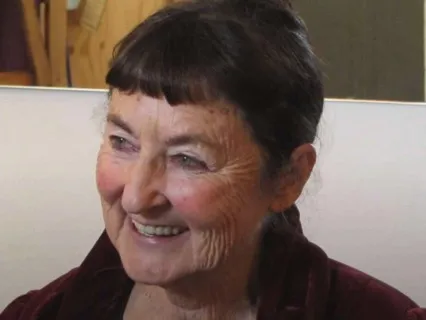
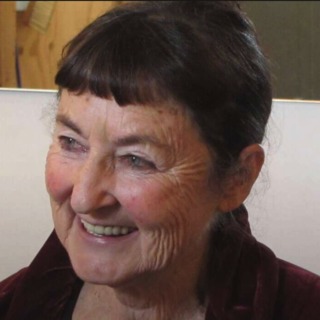
This episode is the first part of a two-part conversation with Eugenie Knox,
Founder of Dance of Life Yoga.
Eugenie is a sprightly 75 years old and is like a force of nature.
As you'll soon hear,
She's an amazing storyteller.
It's just a shame this isn't a video podcast because as a lifelong student and teacher of dance,
Clowning and mime,
Eugenie communicates with her entire body.
It really was a pleasure to record this conversation.
There's so much here that we just had to split this interview into two episodes.
In this episode,
We talk about Eugenie's early life,
How she started her own dance studio at the age of 12,
And the tragic circumstances that led to that.
How she initially thought yoga was for wimps,
How yoga was perceived by herself and the greater community back in the 70s and 80s,
And the transformative experiences that led to her pursuing yoga in her own life and in helping others.
We really enjoyed having this conversation and I hope you'll enjoy listening.
Thanks for joining us,
Eugenie.
Wow,
It's my big pleasure to be in a beginning process.
Very happy to be part of it.
Thank you so much for inviting me.
Oh,
You're so welcome.
I guess we should start with your own beginnings.
Could you tell us a little bit about where you grew up?
Well,
Certainly.
I grew up in Heidelberg,
Which was a very early painters,
You know,
The Heidelberg School of Painters.
And back then I was born in 1942,
Which makes me 75,
But feels 15.
We lived in a beautiful little cottage my father built.
He was an architect,
Alistair Knox,
And he ended up as a mud brick fellow.
You might've heard of him.
And my mother was a dancer,
A contemporary modern dancer.
So that's what began my whole journey was to become also a dancer.
So from the very earliest days,
We did dance classes with my mum.
There were three of us,
Three kids.
I was the youngest and she gave us a piece of music that she felt signified our presence,
Our being.
My brother Tony had Catchetrurian Saber Dance,
Which is wild,
Smashing,
Leaping thing.
My sister Gabriel had Ave Maria,
A very soulful song,
Sung by Maria Callas probably.
And I had the Barker Roll,
The Tales of Hoffman.
And we'd start one at a time coming across the room,
Doing our thing and everyone else had watched.
And I was probably three and I was told that probably I could be a boat on the water.
So I came across as a boat on the water.
And that was my earliest happiest memories,
Actually.
Beautiful.
And I had 30 kids coming up to school.
Of course,
There was no money involved.
There was passion and only passion.
Kids all had to be there.
If they didn't come on time,
They were kicked out.
So you're a strong teacher from the very early days.
I didn't really know anything.
But I knew what I knew and they all believed in me.
And away it went,
You know,
For many years we performed and people would come and watch and Kreutzberg was an absolute tyrant.
You might say,
Why Kreutzberg?
Well,
My mother had a really very precious book of dances.
And all the kids in this ballet company of mine had to have a name from one of these great dancers like Nijinsky,
Pavlova,
Duncan.
And Kreutzberg interested me because there was a man.
I don't know,
I was a man.
He was so weird.
He was bald.
He had a flower in his hand and he was like a mime.
And also he did a few beautiful poses in the photographs that just sort of triggered something within me.
And so there we go.
And from there I became a dancer by going to ballet schools.
I met the great modern dancer,
Ruth Burgner,
Who inspired me because it was inverted feet.
It was ripple through wave-like motions.
It was natural positions.
It was expressive stuff as against the ballet,
Which was this rigid sort of,
You know,
Who wanted to be one of them?
Not me.
I could not bear to be one of the corps de ballet,
I tell you.
Just all identical.
No,
I know I had to express myself.
Whether that's just a massive ego,
Who cares?
All I know is I had to express myself.
Well,
It sounds like from the beginning it was like a real healing process.
Oh,
It was.
Yep.
It was.
That's what it was.
Yep.
I guess that leads us to ask,
Where did you discover yoga?
Ooh.
Well,
Interestingly,
My sister became a yoga teacher via the Geeta School of Yoga.
And I used to think yoga was for wimps.
And I was so sort of,
Oh,
So donic,
Sarcastic.
And the lipid curl,
When I'd see my sister,
You know,
She'd be sort of sitting there on a cushion,
You know,
With her eyes closed.
And then I had a friend who would lie down and cover herself with a blanket.
I'd think,
This is unbelievably,
Unbelievably weird.
Because I was the opposite,
Active,
Leaping,
Spinning,
You know,
All of that sort of stuff.
And here these people were,
You know,
Emptying out and becoming still.
It's like,
Ah.
Anyway,
After that,
I met up with a wonderful man called Baba Muktananda.
That's where it started.
Baba Muktananda,
The guru,
Do you have heard of him?
Yeah.
Yeah.
But maybe explain.
Yes.
He came to Melbourne three times in 1970.
And I was living with my two daughters in Hurstbridge at the time.
And I couldn't leave my kids to go and hear him speak.
He was giving a talk at the Pram Factory in Carlton,
Which is now the Nova Cinema.
But back then,
It was a marvelous series of theaters.
And he was giving a talk.
And I heard about that from one of the friends that was going.
She said,
Come,
Come.
And I sort of wanted to go and hear a yogi speak because it all sounded sort of mystical,
Mystical.
And I must have been teetering on a bit of an edge there,
Wanting to know more.
And but I couldn't go because I couldn't leave my kids.
And they wouldn't want to go.
So she came home and told us about it.
Baba Muktananda and the talk that he gave.
And then he came again in in 74 and my sister went.
And she has a story to recall,
Which was she went and sat in a room.
It was in queue.
And then probably about 20 people sitting there.
And Muktananda was sitting at the front.
And it was early morning meditation.
And my sister is a person who needs to eat.
I'm also one of those people.
Right,
So you appreciate it.
She had to eat,
But she didn't want to get up in front of everybody and creep out.
But it overcame her.
So she had to finally.
She got up and creeped out to get her shoes and go and eat something.
And what do you think she found on her sandals?
Some food?
A big bunch of grapes.
So she sat down.
She didn't think anything of that.
And ate the grapes.
She hated the grapes and thought,
Well,
I'm not hungry anymore.
I'll go back in.
And she got a mantra card from him.
It is a little square card with his face on it.
And when I visited her,
I saw it on the mantelpiece and my eyes kept being drawn to it because it had an energy.
And his face was sort of pulsing a bit.
And I thought,
This is very odd.
He's such an ugly critter.
You know,
I mean,
There's nothing to really,
You know,
It's not a gorgeous,
Gorgeous girl or,
You know,
It's not a pretty flower.
It's this old man with a written orange hat on and a beard.
And I'm being pulled to the picture.
Anyway,
I said to my sister,
What is it?
She said,
Oh,
It's a mantra card.
And that was the last of it.
It had omnima,
Shivaaya written underneath,
Which didn't mean anything to me at the time.
Anyway,
He came to Melbourne in 78.
So that was three visits.
I'm sort of obviously maturing like a ripening fruit,
I suppose.
So when I heard about him coming from 78,
I was adamant I would not go and see him,
But I was very interested.
So my daughters and I,
I had a studio in Carlton at this point.
I used to teach dance there.
We would drive the combi and park in the street in,
It's just off Gore Street.
And we'd sit in the combi and watch the people renovating the property because it was down and out,
But he was coming soon.
And we'd see people scaling letters in the evening,
Like they'd been to work all day.
And yet here they are,
Pots of paint,
Happy,
Smiling.
Everybody's in great mood,
But they're doing all this for free.
This is all favor.
And I'm thinking,
These people are crazy.
And we'd watch them coming up the street and we'd say,
There's one going in.
That one,
That one's definitely going to go in.
Oh no,
That one's not.
We could tell the type of person that we thought would go in.
And we were pretty right,
Actually.
We think,
Aren't they,
You know,
Oh God.
And we'd drive back to our place,
People calling with children's masks.
We had a beautiful little house there for 17 years.
A miracle.
We can go into that if you like later.
But anyway,
There's been miracles after miracles after miracles in my life.
That's what I can say.
Well life is a miracle.
Let's begin there.
Start with that,
Let's put miracles all the way.
Yeah,
Anyway,
So then Saturday after here,
No,
On the day he arrived,
I came down the same route again to watch the crazies.
And I knew he'd arrived that day and I saw at the front petals on the floor,
On the ground.
And I thought he's here.
Then next morning,
It was a Saturday,
Double page,
Bread on the Age,
All about Swami Muktananda and the programs and everyone's welcome and blah,
Blah,
Blah,
And photos of him.
And there was an introductory talk on the Sunday and I thought,
Well,
Maybe I can just go to the introductory talk and get out.
You know,
So I did that.
Walked in and then I was told to leave my shoes in the shoe rack and I didn't,
I thought that's weird.
Why can't I wear my shoes?
You know,
This is how green I was.
Green.
Anyway,
Put the shoes in the rack,
Trolled up the part of the passageway and into the hall.
And there's these pictures on the wall,
Big photographs of weird looking men,
Toothless,
Hairless,
Beards,
Sitting in lotus poses,
You know,
Twisting up and all sorts of postures.
But the pièce de résistance was the one at the top above the big blue chair that Muktananda obviously sits on,
Was a pot-bellied,
Golden-bellied,
Bare-bellied,
Big smiling face.
You know,
Unbelievable.
I now know that was Swami Bhagavan Nityananda.
And that was obviously Muktananda's guru,
So the lineage.
Anyway,
I sat there.
There were about maybe,
You know,
50 people in the room.
Lovely woman spoke,
You know,
How Muktananda's here to give talks and programs and something called Shaktipat,
Which is,
You know,
Transmission of energy and you know,
Blah,
Blah.
And all of this is completely foreign to this new person.
And I thought,
I'm getting out of here.
The minute this is over,
I'm getting out.
This is not for me?
This is no,
No,
No.
But no,
I'm not.
So as soon as it was over,
I started to get up and somebody came and hugged me like a bear hug.
And I look around,
It's one of the people.
I knew a few people there.
She said,
Great to see you.
Here's a chai.
And,
Oh,
Thank you.
And then someone else said,
Here.
And they put in my hand a meal ticket for the dinner.
And then it was like someone said,
Come and sit down on this chair here and drink a chai.
I said,
All right,
Here,
I'll have my chai.
Then I'll go.
Then I'll put the meal ticket,
Well,
Maybe I'll have the meal.
So anyway,
They ended up staying.
Staying in this talkie we're never going to go to.
Exactly.
And I stayed for the program.
And I was so frightened,
But very excited,
Excited on a different level than anything I've ever felt before.
And in he came,
Sat at the dinner.
And I said,
Oh,
What am I worrying about?
He's just a little Indian man with an orange cap on and orange loony.
Nice friendly person.
And he had a lovely girl interpreting for him.
She was gorgeous Indian girl.
Beautiful black hair swept up on her head like a serpent.
And she was beautiful.
Her name was Malty.
She's now,
A guru won't go there.
But she was simply his interpreter then,
Indian girl.
And the talk was funny,
Had a few laughs because they used metaphors to teach.
Then the lights went down from meditation and somebody started to play an instrument.
And I now know it was the harmonium.
And they all started to chant Om Namasivaya.
And it hit me like a tsunami.
My God,
I started weeping.
Just the power of it.
I'd never heard anything so sublime.
Truly.
And I was weeping,
Weeping.
And then I opened my eyes and I looked at Muktananda on the chair and his head had come off his body and was sitting next to his body.
Sort of shimmering in space.
And I thought,
That's peculiar.
But I was in such a state.
I closed my eyes thinking it's probably just tears.
So I wiped them out.
And I looked again and his head's back on.
But as I'm watching,
Because he had a slight,
Just a light on him,
Very darkened room.
And this beautiful chant,
He began to dissolve.
He dissolved.
And from the head,
It just exactly like sugar crystals in hot water.
Bit by bit,
He dissolved in front of my eyes.
And I went,
I seriously did,
I pinched myself to see if I was awake.
And I looked around and I saw that the hall was full of people.
So I tested it because I couldn't understand it.
I mean,
Here is,
And the chair's sort of pulsing blue.
And I'm thinking,
You know,
Where the hell?
But because I come from a theatrical background,
I thought it's a trick.
I've heard of Indian fake ears.
Fakers,
Fake ears,
Whatever.
So I thought,
Okay,
I'll go and check how he did it after he,
After the end of the program.
So I closed my eyes with that decision.
And then I heard a little bump and opened my eyes.
And there he is getting up.
He's there fully fledged,
Up off the chair and walking out.
And I watched him go out through the door.
Lights come up.
Everybody's hugging everybody else.
There's all this laughter,
Talking,
People drinking chai and cakes.
All,
Everybody's very happy.
And I thought,
Get out of here quick smart.
Get your shoes.
And I went out into the street and I met one of my very good friends.
In fact,
The one who went to see him in the pram factory.
Her name's Claire.
And I said,
Claire,
Claire,
He disappeared off the chair.
Did he,
You know,
How did he do that?
And she started buckling up and down like silent,
You know,
She couldn't get the laughter out.
She's bending.
She said he disappeared for me too,
But only a part of him.
And I forgot to tell you that at the end of the program,
I got up and went over and checked the chair,
The wall,
The curtain,
The ceiling,
The floor,
Nothing weird.
So I decided to come back tomorrow.
There wasn't enough there to intrigue you to come back.
So he hooked me in that way.
There's no other way he could have done it that I can imagine.
But when it came to omnimascia vire,
I was dry eyed.
Nothing happened at all.
And he did not move a muscle.
He had a scratch,
A yawn,
Undid his legs and got up and went out.
I was disgusted.
Came back the next night,
The next night to watch him disappear again.
And then there was a question and answer session.
There always was,
But this one interested me because the question was,
And I didn't write it,
Dear Bubba,
Why is it that in chanting and meditation,
Sometimes part of you or all of you disappears?
And I thought,
That's my question.
Somebody's asked this question.
And he laughed and he said,
Well,
You must have been having very good meditations because in meditation there is no form.
And I realized that if you're in a good state that happens and if you're just in an average state it doesn't.
And it didn't happen for me ever again.
So I was average from then on.
That first one I was not.
But then I got to the point when I could actually go up and kneel down.
All the other programs that I went to,
I watched people going up,
Taking coconut or flowers or something.
And he had a wand of peacock feathers and he would bop them on the head when they came and they'd give their thing.
And that was a blessing.
And I would think these people going up like this and getting on their knees and bowing their head seemed totally wrong.
I thought it's fine for people in that culture.
But here we are,
We're Westerners for goodness sake.
What are we doing doing this?
It's ridiculous.
But anyway,
That's how I was thinking then.
And then eventually I got to stand up with the others and start to go down.
And I did that a couple of times.
And then one day he gave it to me.
He gave me his transmission of energy and I couldn't get up.
He bop me with the feathers,
Bop me and kept boping me and boping me.
And I felt exactly like a bee drowning in honey.
I was a bee drowning in honey and I couldn't move.
And I could hear activity.
And then people start giggling.
I could hear sort of a bit of a giggle going on.
But I couldn't help it.
And normally I'm very sort of shyish,
Or I used to be.
That's not how I think of you.
No,
No,
Back then I wouldn't want people to see a more vulnerable side of myself.
But anyway,
I couldn't help it.
And people were starting to draw me off to the side because I was stopping them.
You're holding up the line.
And then I found myself locked in a meditational posture.
Couldn't lock,
Locked out the world.
And I was in something else here.
And I could see the root of my,
Down at the very root of this thing I thought was me,
Something was bursting through.
It was like concrete.
Do you know how the roots of a tree push through the concrete?
And it was cracking.
And something started to pull up.
And I thought,
Oh my goodness,
It's a root.
And then it sort of sprung up.
And it came up level with my eyes.
But I'm inside,
So forget it.
I don't really have eyes.
But anyway.
And this thing was on a long stalk and it had a big bud,
A big moron bud.
It was a lotus bud.
It communicated to me,
This is your potential.
And then that faded.
And in its place,
I found myself rising into a higher part of myself,
Which was iridescent blue.
Like when you look at the sea and you see shiny blue.
I mean,
It's such a color.
Can't describe it.
It's indescribable.
And it was energy really.
And it said to me,
Because in the middle of this blue was a blue lotus.
And it was open and it had 12 petals.
And it was unbelievably gorgeous.
It was wide open.
It was flat.
And it's just the ends of its tips have curled up a little.
And it was just beautiful.
And it was blue.
The same blue.
Made of the same substance.
And the message that came through is,
This is your heart.
It has to be open.
And all of everything is consciousness.
Everything is made of consciousness.
And then that faded and I found myself flying up to the roof of this thing called a body or whatever it was,
A temple,
If you like.
And up there at the top was this magnificent,
Something white was hanging over my eyes.
And I thought,
Oh,
It's a swan.
And then,
No,
It's not.
It's a white lotus.
And it was,
Oh my God,
It had so many petals.
Look,
They're sweaty.
This is God's honest truth.
Every petal had a gold tip.
And they're resonating.
They're sort of vibrating.
And it's roaring,
Kind of.
And I'm inside the center.
In it.
In the pericarp of it.
And I'm lost,
Of course,
In this place,
Bliss.
And after some time,
I don't know how long,
I started to come down.
Something was starting to drip down,
Drip.
And I thought to myself,
It's nectar.
And it was coming down.
And I was sort of beginning to return in a sense.
And I could see I was made of like glass,
Not glass,
But see-through stuff.
And this was dripping on it.
And I thought,
Is it honey?
Is it nectar?
And a voice came from somewhere and it said,
No,
This is grace.
And I opened my eyes.
And I'm in the room.
And everything's going on as normal.
They're all going up to Meekmuktananda.
I don't know how long that took.
I have no idea.
You're in a realm beyond time.
Beyond anything.
Beyond my understanding,
I had never been into yoga to that point.
Didn't have the reference of the Sathras system and the lotuses.
I did not know,
None of it.
Didn't know lotuses,
Didn't know grace,
Didn't know Kundalini,
Didn't know anything.
How about that?
Wow.
That's amazing.
How about it?
It's a bookcase.
A real,
You can,
Apparently you can,
Because many years later at Meekmuktananda Sathram,
We were all asked anybody who would like to relate their Shaktipat experience,
Write it down.
I wrote mine down and gave it to the Swami,
Not to Meekmuktananda,
One of the Swami's.
And she thought I'd just copied it out of a book because it was too.
.
.
The thousand-pedaled lotus,
The roan,
Rising up from your bass line.
Oh my God.
And you know,
I realized later the roaring sound,
Of course,
Is on.
It's just compact.
And so what happened to me?
Of course,
I spun 360 degrees around and ended up in his ashram taking my daughters with me.
I was in a relationship.
The fellow said it's either him or me.
I said,
I'm sorry,
I can't help it.
We're dealing with transcendent rooms here.
I couldn't help it.
How could I stay?
No.
So that was that story.
And that's where it began really,
Isn't it?
That was the yoga.
And I did my teacher training in the city yoga in Ganeshpuri.
And I met some fabulous yoga teachers here,
Chandorimati,
Taught me the Ayanga method,
Which I love,
And so on and so forth.
That birth was there.
And that's how it all began.
How interesting that the state of mind that many people practice their entire lives to work towards was your introduction.
I know,
But you see,
I was very spiritually oriented.
I was doing these dance works.
In fact,
When Muktananda came in 78,
I was doing a dance.
I had a dance company called the Dance of Life.
And we were doing a dance work called Poem Eternal.
And it was actually about the restoration of man's true nature.
Those are the words I had on the program.
Now when I told my sister about it,
She looked very funny.
And she said,
But that's Muktananda's teaching.
Wow.
So goosebumps.
Because it was all about a descent from a higher realm coming down,
Being human,
Going through duality and ego and all of the things that we have to pass through these until we finally evolve.
I guess what I'm really curious about,
And you've sort of gone into it a little bit,
Is what the actual really early days of Western yoga were like.
And perhaps you sort of showed us what your perception of it was before you came into it.
And I'm wondering what the world at large thought.
The world at large thought if you did yoga,
You were weird.
You know,
You didn't really boast about it.
Because there were only a couple of yoga places around.
And they were sort of out of sight.
And people who did it,
Well,
There was not like now.
I mean,
This is crazy the way it's gone now.
But yeah,
There were just a few genuine places and long term places like Mr.
Gessman,
Who ran the Gita school.
She began her process in a very interesting way.
Because she was a young woman who had the use of one third of one lung.
And she thought,
Well,
I'm either going to die or I better do something about it.
So she off her own back went all the way to India.
This is a long time ago because she lived to 90.
So she would have been,
This would have to be back,
I don't know,
30s,
20s.
I'm not sure when.
And she went to India and she found a teacher who taught her how to breathe.
And she came back and opened the school.
And her methodology was,
You know,
You work through the chakras through different movements.
You start at the root,
You know,
Muladhara,
You go up there through the.
.
.
So that was one of the very first schools.
And she did her teacher training sessions with many teachers.
She taught many teachers.
But it was kind of,
There were a couple of Indians.
I don't really know how many places they were,
But not a lot.
But the Iyengar method,
Which was just,
Well,
Valda Moore was teaching the Iyengar method at the CAE.
And I went along to one of her classes.
And she was kind of domineering and aggressive.
And I said to her,
No,
My daughter Jasmine came with me.
And because we were dancers,
We could move.
We'd spend our life moving.
So when it came to doing Trikonasana,
Which is the triangle posture,
We went bingo into it easy.
And the other people in the class were people who hadn't danced.
So they can't go into it in the same manner.
And she said,
Thank you,
Hold it,
Everybody.
You too,
Please just demonstrate that again.
So we went bing into the Trikonasana.
And she said,
Now this is what Mr.
Iyengar calls yoga princesses.
Oh.
Now we're brand new.
You know,
She didn't know.
What a welcome to her class.
Yes.
I went back.
I kept going and then came to doing shoulder stand.
And I said to her one day,
She was towering over me.
She had a beehive.
I wonder if she's still alive.
Anyway,
She had a beehive and long legs.
And she's pretty old.
I mean,
I say pretty old.
She'd have to have been my age then.
And I would have been 45,
I suppose.
So I'm looking up at this sort of monumental woman.
And she's peering down her nose at me.
And I'm in shoulder span.
And I said,
Velda,
I find this pose quite difficult.
And she said,
Of course you do.
With an ego like that.
Oh,
Wow.
So I couldn't understand.
I didn't understand what was wrong.
Anyway,
Not long after that,
I found a little piece of paper with a series of classes that were going to be held.
It was a three week workshop at the university with a fellow called Shandor.
And somehow that simple little piece of paper got me and my daughter Jasmine along to the class.
Brimming with people.
Everyone was really gung ho excited.
And in he comes.
And he's a beaut person.
Really beaut person.
Smiling eyes.
Easy body.
And got us all lined up against the walls.
And we're doing trick on us.
And easy,
Here we go.
Everybody,
The more flexible you are and the stronger you are,
The happier he is.
And we just hit the jackpot with him.
And we had a fabulous time and learned a lot from Shandor.
The class that was 30 at the start,
Peter down to about 10.
And that became the group that he stayed from Adelaide.
He stayed and worked with us.
And he got a studio.
We'd go there at five o'clock every morning.
Do a workout with the group.
And then a class at 10.
And then another class at six.
And then there's a sort of a therapy class in the middle.
So a lot of working with Shandor.
And it was heaven.
Heaven,
Heaven,
Heaven,
Heaven,
Heaven.
And so mixing and matching the guru Muktananda and the yoga and all that.
And then you know things happen.
And you develop,
You grow.
And more yoga was starting to happen.
And I had yoga going.
I had a beautiful studio in Smith Street.
Right up in beautiful place.
And right opposite eye level,
Glen Thomas.
Sarah Solly began his yoga school.
And we're looking at each other.
Hi there.
We're both all trick or lashing.
We can see each other.
But my classes also,
I used to teach dance,
Clowning,
The Martha Graham technique,
Which is another whole ball game.
That's that beautiful technique.
So I'd learned,
I'd been teaching it.
I'd been to America twice,
Going to her school,
Learning that marvelous technique.
Beautiful.
It's all done.
The technique,
The Graham technique is done seated on the floor.
A dance technique,
Sitting on the ground.
Gorgeous.
And it's all about the breath and contraction,
Which is death and release,
Which is life.
Breath out,
Breath in,
Breath out,
Death,
Breath in,
Life,
Built on that Kundalini turning around,
The energy coursing through.
All of this is in the Graham technique.
So she says,
If you can dance sitting on the ground,
You're certainly going to be able to dance if you get up.
And that was the sort of philosophy behind it.
So the technique was like about a 45 minute technique.
And it was lovely,
Lovely technique.
And then you get up and you do basic things,
Just the strength pliés and things like that.
And then you do leaps and jumps and other things.
So yeah,
What brings us to this point?
Well actually I was about to segue into asking you what it was like,
It sounds like Dance of Life really started as a dance company and evolved into yoga and the other things.
So you must have had to be quite the businesswoman as well as the yoga visionary.
Money has been the list of my thoughts.
I've never ever,
Ever seen my classes and my teaching ever as a money making proposition.
It's only a side to the joy of the teaching.
And if I didn't have the passion,
I couldn't do the class.
But even beyond financial remuneration,
There's a lot of organisation that goes into running a studio or you just let it all flow.
Oh,
It was totally evolution.
No planning whatsoever.
You see,
I always had a studio.
And then when Baba Muktananda died,
Just before he died,
I loaned my beautiful studio to a woman called Mary Good who did playback theatre.
And we left for six weeks to go to Muktananda's ashram in,
Or whenever it was,
In 1980.
We'd be back because we had a house with dogs and cats.
So we got some friends in,
Hippie kind of people who lived there,
Had a ball with dogs and animals.
Mary Good took over the studio rental and looked after the studio.
She was happy.
We ended up staying for 16 months because when it was time to come back,
I went up to Baba and said,
We have to leave.
And he just did a sort of a backhanded wave as though he lost interest entirely.
And I stood my ground and said,
But we don't want to go.
And he turned around and he said,
Well,
Because we'd done a couple of shows for him.
If I get you an agent,
You can get some work and you can stay.
We said yes.
So that's what happened.
Mary So you ended up touring and performing in the studio.
Mary Yeah,
Yeah,
Yeah.
We did.
Unbelievable.
Excuse me.
Unbelievable.
So what was the question again?
Mary I think I was asking you what your experiences were like,
Starting a studio.
Mary Financially,
Just how do you find a space?
How do you find your teachers?
Mary Oh,
Okay,
Let me tell you.
Oh,
This is so good.
This place that I was going to tell you about in Smith Street.
I was over at Soul Foods used to be,
You know,
Well still is,
But it was different than you could eat there and sit down and so on.
I looked at that building opposite and I said to the person who ran Soul Foods,
What goes on in that building upstairs?
And he said,
I don't know,
There used to be students,
But I'm not really sure.
Why don't you go downstairs and ask?
So I did.
And they said,
Oh,
We don't know.
And they're not sure.
We think there's students there.
So I went up to the Peter Smyth's real estate who used to be in Smith Street and I said,
If you ever find a studio or a space,
I'm ready for it again,
Because I've had four years of no studio after Bubba died.
I came back to Melbourne.
I left Mary because we were away for 16 months.
So I let her take it over.
The young people stayed in our house.
They left.
That was good.
The animals are still there.
So we just picked up our life.
But my daughters had grown.
They were sort of ready to leave the nest,
Which they did.
So here I am alone.
Alone.
Absolutely alone.
The guru's gone.
My daughters have gone.
My hormones have gone because I'm 40 something.
The whole thing's gone.
It's an empty,
Empty scene.
I'm on the dole.
But nothing.
Nothing.
Except the experiences of the past,
Right?
And this beautiful old wonderful house right at the river.
And then one day I get a call from Peter Smyth and he said,
I might have found you a space.
So shall we go and see it?
And I said,
Yes,
Please.
Let's go and see it.
And he took me to that building.
And I saw it had a basement before we went inside.
And I said,
What goes on in the basement?
He said,
Oh,
Mietas keep their wines there.
Now my brother and Mieta had been together for 30 years.
You know who Mieta,
You know,
Maybe you don't know Mieta.
Doesn't matter.
Restaurant,
Her parents,
Ex-felons.
And so their wines were stored.
And I,
Well,
I just knew because also the day I met this agent was the day after my father had died.
And my mother and father both left us nothing except creativity and the knowledge that you can achieve anything you want to.
This is the best legacy.
I much way better than any money.
And so as we're mounting the stairs to go upstairs,
I knew.
I had to take this place no matter what because it was my legacy.
And if I didn't take it,
I was finished.
And so we come up and there it is.
It was pretty grotty.
It had dirty,
Filthy old green carpet.
It was skinny.
It was painted pink and it was long.
It was 120 feet long and 18 feet wide and a very high ceiling painted charcoal gray and nothing there.
There was a sink at one end with a little sort of hot water thing.
That's it.
And,
And benches all up and then upstairs again.
And there's a turret and the roof's all sort of falling in.
When you open the door and there's a sheer drop down three stories and you look out over the mountains and you know the Dandenongs and Smith Street's there and another turret up the other end.
So extraordinary building.
And I said,
Cause I knew I had to take it,
But I didn't think I could.
I didn't think I had the guts,
The strength,
The capacity or any of it.
I hadn't taught for four years.
You know,
And I said,
All right,
Look,
I'll take it if I can have it rent free for a month.
I can change it any way I like.
What was the third thing?
I've forgotten the third thing.
And I thought,
Hey,
The owner won't say I can have it.
Anyway,
I waited a month and the phone call came and the agent said,
He's agreed to your conditions.
So I thought,
Oh shivers,
Here we go.
First thing I did was get on the phone and rang up the,
To get a skip in there and started the work.
And a couple of good old friends from Eltham came to help me and ripped up the carpet.
And I was so excited because I thought there's going to be a great floor underneath this carpet.
There's got to be cause it's an old building and horror upon horrors,
The floor was shocking.
It was shocking.
It was all bits and pieces tacked together because I found out later there had been a fire in that building.
The floor was a nightmare and I didn't know what to do because you've got to have a good floor.
You have to,
In my opinion,
I needed a good floor.
I had to have a beautiful floor.
So I just filthy dirty or dust went staggering downstairs and I went over to the Greek,
Italian Greek,
I'm not sure if it's Greek or Italian,
Anyway,
And sat down and had a coffee with my head in my hands,
Dusty,
Dirty,
Depressed.
It's like,
What am I can't use this room?
And in walks a man,
Nothing unusual about that.
But I look at him and I thought,
I think I know him.
And he said,
Don't know you.
And I said,
Yeah,
He said,
I'm Michael Field.
He said,
I used to work for your father.
Okay.
I said,
Sit down.
And he said,
What's up?
And I said,
Well,
You know,
I told him,
He said,
I can do that.
I can fix that for you.
He said,
Probably cost about 2000.
I can do it in a couple of days.
So I took him over and said,
No problem.
I'll get Masonite underlay.
They come in tiles and I'll staple them down and you've got a floor.
And I saw,
I somehow,
I don't know how I got the 2000 bucks.
I've no idea,
But I got it.
I didn't have to prostitute myself in any way.
I made it a bank.
I've got no idea how I got the money.
He did it.
And then I said,
No,
I've got to do something about it.
Cause it's brown,
You know?
So to make the room look bigger,
I painted it with gloss,
High gloss black and took the paint up to the squirt,
Skirting board.
So it made it look bigger and painted the walls white and red around the windows.
So it sort of had that Chinesey sort of look.
Boy,
It became magnificent.
It ended up with a potbelly stove down one end.
It had big red curtains so that you could have a sort of a kitchen area.
And then the students started coming.
Cause I started with,
I put an ad in the paper,
Dance of life studio opening and the date and wine and cheese.
So I went to the market,
Single handed,
Did all of this,
Got some wine and got some cheese and bought it and laid it all out and you know,
Had a few people who were going to perform.
I was going to perform,
Had a young girl called Freya.
She was nine.
She was going to do a dance.
She was up the top of the turret,
Excited,
Madly excited,
Upstairs with her doing something.
And the audience is downstairs drinking their wine and this suddenly there's this crash,
Terrible sound and then deadly silence.
Freya had slipped down the staircase,
Which is almost,
You know,
What sort of degree is that?
On the little slippery shoes and lay on the ground in a tutu fluff and this gasp from the audience.
Cause I was trying to say,
I was advertising is going to be placed for children to come to clowning,
Dance,
Et cetera,
Et cetera.
And the audience slowly,
We got the ambulance to come,
Carried her off.
No one knew what was wrong.
It ended up with broken wrist.
We thought it might be anything.
So that was the end of that opening.
Well,
I'm sorry to leave it on such a cliffhanger note,
But we've reached the halfway mark of our chat and that seemed like a good place to stop.
In the next episode,
We'll hear more from Eugenie.
We'll find out what happened after the fateful grand opening of the new dance of life studio on Smith Street.
And we'll also talk a little about the upcoming yoga fest retreat in summers.
And we'll also talk about Eugenie's work with Ama.
As always,
If you've got any questions or suggestions,
Feel free to reach out to us at podcast.
Flowartist.
Com or email us at podcast at flowartist.
Com.
We are flow artist podcast on Facebook or at flow artists on Twitter.
If you did enjoy this podcast and you'd like to hear more,
Please consider leaving us a review on iTunes to help us get the word out.
The theme song in this podcast is baby robots by go soul and used with permission.
Do yourself a favor and get us music from go soul.
Bandcamp.
Com.
Thank you.
Make big love.