Hey what's up guys thanks for joining me once again I'm The Down With Doug and this is Getting Down With Doug.
Now I've made some changes and that's why I've been away for so long is I've been trying to think of ways I can better do this and I thought there's two possible changes I could make and I've done both.
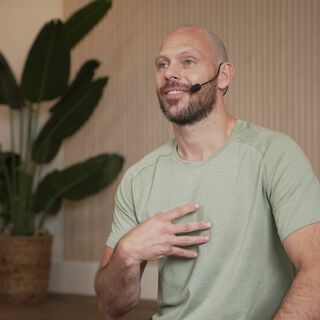
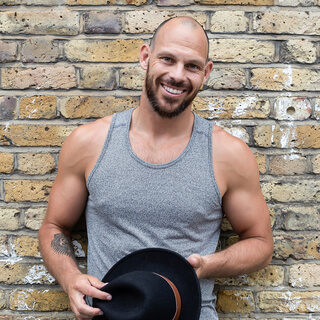
One if you're listening to this you can now listen and watch it if you want on YouTube it'll be a video on there under the same now and Getting Down With Doug so go check it out if you want to see what I look like and what the recording area is like for me.
If you'd like to watch things like me then that's the place to catch me from now on.
The second change is probably more notable and that's that I want to change the type of content I want to do.
I want to streamline things so it serves a community better.
I've been listening to a lot of Seth Godin and he's talking consistently about doing things that matter to people who care so it's all about finding community.
Now I'm already lucky enough to be part of several communities but one I'm quite keen on one that's been a big part of my life is the film and TV industry and I want to serve that community as best I can.
How best I can do it in my understanding of things is through health and well-being.
It's a service that I feel like is totally underserviced we spend millions on COVID zero on mental health the 0.
1 cases of COVID there's one in four cases mental health.
It doesn't make any sense to me but I'm gonna do what I can through this platform to try improve that and give you some better understanding of mental health things that you can do for yourself on set or off that can enrich your life hopefully.
Currently I feel like the health and well-being part of TV and film is given less respect than an extra cutting the cured craft and ordering like 57 lattes three of them being oats two of them being soy and the rest being whatever you get the point that's also some of the film like humor you can come to expect on this channel don't leave just yet please.
So that is where I'm coming from to do these videos and these podcasts from now on however if there is a subject that you think needs to be covered then hit me up I'm available on yoga at the downwarddug.
Com and also on Instagram at the downwarddug so let me know what you think we should be covering.
There's a cat really misbehaving one second.
Alright so let's dive in to this week's episode with this new format.
Let's turn that on silent first.
So with this new format let's get into this week's episode.
Now you know as well as I do if you work in the industry that the hours can be brutal.
You know when you start which is pretty early but you don't always know when you finish and those hours can really drag it also leads to you missing a lot of dinners dates weddings even delivery services whatever the case may be.
Now those things get a lot worse when you get charged with the task of having to do a night shoot.
That really changes everything and if you're anything like me after the night shoot I feel really weird kind of like in Fight Club he describes how you know never quite asleep or awake and you don't know which one you are at any given time.
I kind of feel a little bit dissociated from myself it's like I've got a really bad come down or being horrendously jet lagged.
Now that's just my experience if you feel the same then this is gonna be a great podcast slash video for you.
However if you feel like you do these night shoots and it's no big deal when you don't sleep and the full eight hours as recommended then have I got news for you.
In this episode we're going to talk about why we sleep the dangers of not sleeping enough and what you can do when you are charged with the task of doing a night shoot to prepare for that night shoot to get through it as healthily as possible.
Now that's not about always feeling the best as possible although those two things should be linked but quite often we can feel fine but be doing some pretty bad damage for our future selves.
So that's what we're going to cover in today's episode.
Let's start with why sleep is so important.
Now this is a field that has blown up recently mainly because of the popularity of a book called Why We Sleep by Matthew Walker which is a great read and it's where I get a lot of the information from so if you want to check it out check it out yourself have a read of it and enjoy.
There's some great tips in there which I'm going to try cover but if I miss anything it's all in there.
This whole field is really erupted and we know a lot more about sleep because of the work of people like Matthew Walker.
It may be attractive to think that you just go unconscious when you sleep but that is not the case.
You go through some very specific processes both in your body and in your brain and without sleep you get into all sorts of sticky situations where things are malfunctioning because those parts aren't getting the repair that they need from these processes.
So what are some of those ways that the body and mind react to sleep?
Well first you need to understand that there is four stages to sleep numbered one to four not very imaginative I know.
The first three stages are non REM sleep the last stage is called REM sleep and that's your deepest sleep which you only get into in the second half of your sleep and that's why sleeping eight hours is so important if you only sleep four or five you never really get to that good REM sleep.
Let's try understand what happens in those stages in a bit more detail.
In stages one to three your heart rate drops right down your breathing slows down your blood pressure goes down your muscles all relax.
The result is that things can now start to get repaired much like a highway can only get repaired when cars stop actually going on it your muscles can only repair when they are stopped being used by you.
Your muscles are hard just like the rest of your muscles and it needs that break especially if you're someone who has chronic or intense levels of stress in your life your heartbeat is probably at a much higher rate than normal and then it should be and sleep is one of the only times everything calms down.
You can think of sleep like a really good blood pressure drug it brings everything down but you don't have any of the side effects.
Now what happens if we don't get that rest well what you see during daylight savings is that there's a 24% increase in heart attacks on the first day that we lose an hour of sleep.
We then see a 21% decrease of heart attacks when we get that hour of sleep back.
It's found now that in the most recent studies that there's a 200% increase of heart attacks and strokes if you don't get enough sleep if you get less than five hours sleep you increase your chance of heart attack or stroke by 200%.
While in these stages one to three the brain is also slowing down and we see a real dip in the brain wave function in between stages one and three.
However stage number four your REM sleep which is rapid eye movement that's what REM sleep is it's the name of a great band but also the fact that your eyes twitch while you're dreaming.
A lot of great things happen during this time and we want to get as much time in this REM sleep as we can.
One of those things that happens is memory consolidation and memory priming.
You can understand it like this when your brain starts to emit these brain waves the hippocampus which is a part of your brain that looks a little bit like a seahorse not as much as neuroscientists like you to believe but this part vibrates every time you remember or put something to long-term memory.
The brain waves elicit this vibration of the hippocampus which I think has to be at like 15 to 20 Hertz that takes these memories that you had during the day and puts them into long-term memory.
If you're someone who works in the film industry then you may need working memory I would hope so.
You may have to remember what to do where you put things what needs to be done when and where and this is all down to working memory.
If you don't get enough sleep just one night of not enough sleep you have a reduction of 40% of your working memory that's a hell of a lot that's almost half of your working memory it's gone when you don't have one good night's sleep.
When you do a night shoot often that first night you don't get a good night's sleep you don't get much sleep if any so you're reducing your capacity for working memory by 40% that is massive.
If you are someone who thinks well I don't care because I don't need much working memory I'm just the stunt guy I'm just a rigger I just need to do physical things well you're wrong because muscle memory is included in that memory so when we learn for instance a choreo is a stunt guy your ability to remember that comes down to how good night's sleep you had before you load the choreo and what a good night's sleep you had after learning the choreo.
Since I have your stunt guys attention well hopefully and I know a lot of you guys struggle with the tension and it's something maybe we can deal with at a later stage but keep in mind that you're also more susceptible to feeling pain after you've had a disrupted night's sleep.
If you don't get your full complement of sleep you actually increase your susceptibility to pain by 126% that means on a night shoot you're more likely to forget your choreo but also to feel it when you hit the ground and be less likely to hit the ground than you would be on a normal day shoot.
Sleep plays an important role in our emotions too and there's a couple of processes that facilitate that.
While we sleep in this REM sleep cycle which is our rapid eye movement you can kind of see the twitching behind the eyes when we sleep you see it in dogs and cats too but when we get into the section of our sleep what we're doing is having these vivid memories and emotions come up that's because the limbic system really fires up and the prefrontal cortex which we'll talk about later quietens down it allows the limbic system the emotional part of your brain to really erupt what we get is all these visions in our brain that somehow describe emotional states we're in and help us process them you can think about it as threatening things coming about in non-threatening ways so that's why you have like an elephant with a bow and arrow or a dog riding a skateboard maybe that's just me however all of those visions help us and deal with these emotions in a way that's a lot more palatable so instead of just storing them away in places that we never deal with during our sleep when the prefrontal cortex is quiet but the limbic system is loud we get to actually go through these things that have happened in our day and get through this process it's the same concept behind why we use hallucinogens for depression and anxiety for people that don't react to the normal SSRIs or antidepressants it's because when they can go through these things when they're able to confront their fears anxieties and demons they come out a lot better and that's what you're having every night you go to sleep you're going through that process it's like very cheap therapy so keep that in mind emotionally when we're asleep we're having to deal with these things and we're coming out better for it sleep plays an important role not just in our emotional function while we sleep but also when we're awake and to understand this you may need to understand a little bit in neuroscience but I'm gonna film and TV industry it up so you can understand better we already discussed that there's this prefrontal cortex now this part of your brain is like the command center it's in psychology what they call the executive function it takes in all the information from all the different places your body your organs your sensations you're hearing your vision all of it and then decides what's important and what's not all of these things are always shouting at it but it is deciding what to listen to and that's an important key feature of the prefrontal cortex you can think about it like a great first ad the first ad has his earpiece in and he's listening to every department demanding things from him all the time but he has to decide which ones to listen to which ones to suppress and where to allocate resources to best serve the needs of the production now that's a great first ad on the other hand we have this other part of the brain called amygdala the amygdala function is to just tell us that there's threat there's threat here there's threat there you need to worry about this worry about that and that's his function it does a great job of doing that the prefrontal cortex has to suppress that it has to know when to listen to it and when to ignore it you can think about the amygdala as a really bad director someone who's shouting all the time demanding things to happen not non-stop and not letting their crew sleep and just being a outright terror on set the first ad has to manage that director in the same way the prefrontal cortex has to manage and suppress the amygdala when you sleep we've discussed the prefrontal cortex goes offline and that way the amygdala and the limbic system all the emotions can pour out in these visions and in these hallucinations that we call dreams when we wake up the prefrontal cortex is now recharged and it can start to suppress the amygdala again what we find is that when we don't sleep the prefrontal cortex doesn't get its rest in the same way if a first ad doesn't get its rest it can't control the director the prefrontal cortex can't control the amygdala so the amygdala just fires and we feel like there's more threat than there really is we feel more emotionally reactive than we should be because we have this amygdala or this director shouting out so that's why the prefrontal cortex is important and why it's important that you sleep to give it a rest so that you don't get the amygdala firing all the time it's probably quite unsurprising then that we find that insomniacs are ten times more likely to be depressives and that depressives are 75% more likely not to get a good night's sleep compared to the average Joe it's also probably the reason you or your colleagues are jerks on or during night sheets we already said sleeping is a great time to repair and recuperate but one way in which we do that is by getting rid of harmful things that accumulate while awake one such thing is called beta amyloids and these are sticky toxic proteins despite sounding like something on a bad catering menu these are in fact the things that cause Alzheimer's and dementia why should you worry if you're a young fit person well the fact is you get the onset of Alzheimer's and dementia in your 20s and 30s it shows up much later in cognitive decline and repeating yourself but in fact you start making the headway into this disease when you're much younger so if you don't want to start forgetting things later you need to remember to sleep if COVID has taught us anything is the fact that our immune system is all important to our health and safety as well as our ability to work it may be interesting to note then that if you sleep four to five hours you reduce your natural killer cells by 70% now what the hell are natural killer cells well they are basically the special forces of your immune system think about a little Ross Upton cells they go around your system looking for cancer cells and they kill them on contact now if you don't sleep enough you don't have many of these which increases your ability and your chances of getting cancer so much so that the World Health Organization the WHO have decided that night shoots or night shifts are probably carcinogenic what types of cancers may you get into bowel cancer prostate cancer and breast cancer so that means regardless of how you identify you're in trouble if you don't sleep enough men in particular you should listen up if you're only sleeping five hours then you have smaller testicles than those people that sleep seven hours if you think size to the matter no judgment then it may be interesting to note too that you have the testosterone levels of someone 10 years older than you if you only sleep five hours a night so men make sure you're getting your sleep but hey maybe you've listened to all this and you're like I don't care I feel fine when I go to work I'm just gonna drive do my night sheet and drive home well keep this in mind if you sleep less than five to six hours then you are 4.
5 more times likely to have a car crash if you sleep less but hey maybe you've listened to us and thought I feel fine I'm driving at work I'm gonna do that night sheet and I'm gonna drive home everything's gonna be fine well you may be interested to hear that if you sleep less than five to six hours you're 4.
5 times more likely to have a car crash and if you sleep less than four hours which is most of us on a night shoot on the first night then you are eleven point five times more likely to have a crash so as you can see not getting enough sleep affects pretty much every part of your life as well as every part of your body from your cells all the way to how your brain works and how your body works so that's the bad news so what do we do about it well when we work in night shoot we have a real problem we're not gonna get a good night's sleep and by the time we adjust the new schedule we have to shift back on today's so what are we gonna do about it well I'm glad you asked because there's a solution and there's in fact two solutions the first way we can tackle this is by adjusting our circadian clock now what is this scaling clock it's basically the thing that tells us when to be awake and when to be asleep it is independent of the world around us it's endogenous it comes from within it comes from a pretty cool cell in the top of your mouth called your super kismatic nucleus which is a great name and it tells us that we should be sleeping or we should be awake regardless of what is happening around us and we know this because we put people in caves or a lot of them chose to go in caves be in complete darkness and they still followed a wake sleep cycle in what is known as the diurnal pattern we are diurnal because we're not nocturnal we live during the day we like to be out during the day but literally we're awake and asleep in a pattern the problem with the circadian pattern is that circadian by definition means approximate day that's because our circadian pattern when we go into these caves is 24.
2 hours not 24 hours that means every five days we are out by an hour how do we adjust and how do we make sure that we don't go out by now well inbuilt into us are these simple that the site guidance which is another great name so I got is all these exogenous things that correct our time they're the things that tell us when it is time to sleep and when it is time to be awake that are outside of us there are things like eating exercise and light that's probably the most important thing light and temperature which is another very important thing this is a great news so between our super chiasmatic nucleus and the site covers we can actually change our circadian pattern and we can change being from day night people to night day people if we do the right things importantly at the right times so listen up so on a night sure what we're looking to do is called phase delay that basically means we want to delay when we go to bed and we want to delay when we want to wake up the same can be done to phase advance which means we wake up earlier and go to bed earlier all it matters is that we do certain things at certain times those certain things are called zeitgeivers as we described before things you can do that can change your circadian pattern and the other point thing is knowing when to do them which relates to something called your temperature minimum what the hell is your temperature minimum I'm glad you asked the temperature minimum is just when you are coldest in your day turns out temperature is the thing that regulates when we're awake and when we are asleep what we find is that we are usually our coldest two hours before we wake up so if your general waking up time is 6 a.
M.
Like it is for a lot of people that do work in film and TV then your temperature minimum is going to be at 4 a.
M.
Now the period that we're worried about is 4 to 6 hours after that temperature minimum and the 4 to 6 hours before the temperature minimum if we do things in those 4 to 6 hours just after our temperature minimum we tend to phase advance we wake up earlier and we want to go to bed area if we do things that we've described and we will go into detail for 6 hours before our temperature minimum we will face delay we'll want to go to bed later and we want to wake up later now what are those things well there are things like eating there are things like ice bars things about intensely exercising and things like light and light is probably the most potent of all of those the only thing they all have in common is they increase our body temperature which means our temperature minimum will shift in accordance so let's go through an example together but keep in mind light is going to be the most important thing here for that reason I would suggest getting yourself a bright lux light so just a quick bit about how much light we should be expecting to get the laptop you may be watching this on gives off roughly about 10 lux if you go outside on a cloudy day it's about 50,
000 lux and if you go outside on a sunny day it's a hundred thousand lux so that gives you an idea of the variety since you're gonna want a phase delay I would suggest getting a handheld light that can be sold on Amazon there's tons and the link will be in the bio for some options and this thing is just handheld you can put it next to you and you can get that lux whether it's 10,
000 which is the recommended amount that we're looking at to shift house by putting it on just for a few minutes follow the directions and any product you have and I'll tell you exactly how to do that but that's the thing I suggest doing you can also do the other things intense exercise ice bars and eating will also do a similar thing but light is really the potent thing that we're looking at using so let's go through example together so in this example I'm going to show you how you can if you know you have a night shoot on the Monday can shift your skating pattern from day to night over the weekend in 36 hours you can pretty much change yourself for waking up at 6 a.
M.
To now waking up at 3 p.
M.
Which is gonna be a lot more handy for you since that's usually the periods in which we're gonna work these are examples approximation so if you have earlier start time or later start time you can build it in to this too so let's check out how this works so temperature minimum what the hell is it we already described it's the coldest you're gonna be during the day and it's usually two hours before you wake up you can work that out by just averaging over the last three four or five days what time you normally wake up even if that's within a long clock so we've said before the example we're going to use is that you wake up most days at around 6 a.
M.
Your temperature minimum two hours before that 4 a.
M.
So you go about your day on that Friday you go to work you come back from work now this is important that first Friday what you need to do is start your phase delay you'll get home and usually about 10 o'clock you'll start to get sleepy because the average time of being awake to feeling sleepy is 14 hours and that's 10 a.
M.
10 a.
M.
Is also 4 to 6 hours before your temperature minimum which is 4 a.
M.
So we want to look at this time ago right normally I'm getting ready for sleep and normally they're telling me not to view light or blue light on your phone all the things that tell you not to do before you go to bed you can do them it's kind of like this secret naughty habit that you can have in play it's kind of like you get to be a teenager whose parents are away for that night so I need you to stay awake till about 1 o'clock in order to help phase delay what I want you to do is start to view light as I said those handheld lights of 10,
000 lux are the best if you can get ones with lower lux that's fine you just may have to go up a little bit longer follow the instruction will tell you how to get your 10,
000 lux that's just a measurement of how much light you're receiving in your eyes now if you can view that light as the 10 11 12 o'clock comes by then great you're gonna start to delay your sleep time already you would have gone to bed normally at 10 now you're gonna try to go to bed at 1 o'clock having viewed light done exercise had an ice bath or maybe gone just for a meal you can do a combination of these things or you can just do one but I suggest the light one because it's the easiest do that and you're gonna phase delay nicely you're gonna go to bed at 1 you're gonna sleep for 8 hours you're gonna wake up at 9 now your temperature minimum don't forget is 2 hours before you woke up if you woke up at 9 2 hours before is 7 a.
M.
That's Saturday morning now go about your day normally it's the weekend maybe you want to go out a little bit later than normal go do it 14 hours after that you're gonna start to feel a bit sleepy but that's a little bit later because yesterday you woke up at 6 today you woke up at 9 so 3 hours later you'll feel a bit sleepier so this is now 1 a.
M.
You'll start to get a little bit drowsy you can now take the same protocol view light eat a meal intense exercise something like that that'll keep you up a little bit later you want to try get to bed now at around 3 o'clock so before it was 1 o'clock 3 o'clock you start to get ready for bed 4 o'clock you're going to sleep 4 o'clock you sleep your 8 hours guess what now it's 12 p.
M.
On Sunday you wake up 12 p.
M.
Sunday let's do it again 2 hours before that is your temperature minimum that makes it 10 a.
M.
10 a.
M.
Is your temperature minimum so 4 to 6 hours before that tonight you want to start doing your phase delay protocol the night before you started that at 1 a.
M.
And you slept at 4 a.
M.
This time you're gonna start it at 4 a.
M.
And you're gonna work all the way through guess what to 7 a.
M.
Okay so now you've pretty much shifted I would say every time you do this protocol try and leave the last hour to get ready for bed so stay awake that whole time but you can start to get ready for bed an hour before otherwise you may struggle to sleep altogether and you don't want that all right so usually in that first two hours in your phase delays when you want to be doing this protocol intense exercise ice bath light exposure which I suggest is the easiest thing to do I would do that so here we go Monday morning you've gone to bed at 7 a.
M.
Your sleep 8 hours which takes you in to 3 p.
M.
You can then leave for work and you can start your night shoots because you are ready not haggard not risking any heart disease not risk any cancers not risking any car crashes going to work ready for the day go to work now you want to stay on this schedule that's the important part here stay on the schedule that you've just created for yourself get home try go to bed at the same time every night that you're on the night shoot which is normally 7 a.
M.
Maybe a little bit earlier if you have to start earlier stay on that schedule consistency is key when you're at work if you need to stay awake during the time you're at work you can use that handheld light because that's going to tell your eyes to increase your temperature which is going to keep you awake now that's pretty incredible there is a schedule you can follow in three days you can go from days to nights it's amazing of course you can alter it as you need to but the important thing is 46 hours before your temperature minimum you're doing these zeitgeiber protocols they're gonna keep you awake again I suggest using the luxe handheld devices because I think they're very useful and very easy to let you even take an ice bath a little bit more enjoyable so when you finish your night shoots now you need to go back to days you can use the same protocol this time using your phase advance remember now it means when you wake up as soon as you wake up as soon as you can view light do intense exercise eat or have an ice bath because that's all going to increase your temperature and make you wake up later and wake up earlier excuse me the next day so yeah so there you have it in just 36 hours you've changed from day to night you can use the same protocol when you want to go back to days don't forget this time instead of doing it 46 hours before your temperature minimum you're gonna do it 46 hours after your temperature minimum which means as soon as you wake up much easier to remember as soon as you wake up start to view the light you can do the intense exercise you do the ice bath you can eat a meal all of those things are gonna increase your temperature and phase advance you which means you're gonna wake up earlier and go to bed area that's important thing you're gonna try to get back to days by Monday so you can use the same protocol just don't forget if you want to advance and wake up earlier you do it 46 hours after your temperature minimum if you want to do it to delay things 46 hours before your temperature minimum so that was the first way we're gonna deal with doing night shoots by getting ready before we even go there the second thing I want you to do to make sure your night shoots don't disrupt you any more than they already have is by doing a few tips to make you sleep better so let's check out those tips now considering everything we've spoken about it should come as no surprise that temperature and light are big factors when it comes to getting a good night's sleep so let's deal with the first thing temperature the recommended temperature of a room is roughly 18.
5 degrees that is Celsius what is in Fahrenheit I have no idea I don't know why anyone uses Fahrenheit for that matter but you want to get it to 18.
5 it feels cold but as we discussed you're coldest when you're asleep so you can facilitate that by getting cold before you go to sleep if you're in a hotel room then get that set before you even come back if you're at home and you have an air con get that set so when you come home you straight into bed straight to sleep you can also do this by having a hot shower or a hot bath it seems paradoxical but actually having a hot shower hot bath reduces your body temperature and having ice bath increases your temperature remember before bed we're trying to get cold as possible the next thing you should do is get your room dark I suggest blackout blinds eye masks and the next thing I suggest is actually taping over all your standby lights on all your electronic devices the reason for this is that although you need 10,
000 lux to wake up and shift your circadian rhythm you actually only need 8 lux to wake you up from your slumber now keep in mind your laptop is already 10 lux so if that laptop comes on that's how dim the light has to be to wake up from your slumber so take the time get prepped make sure your room is cold make sure your room is dark if you need an eye mask the link is also in the bio now another sense that's very important is the sense of sound now if production have given you a hotel then do your best go to the front desk ask them really nicely put you in the quietest room away from the bar away from the lobby away from the car park those sounds can absolutely kill a good night's sleep if you're staying at home then maybe you consider using the second bedroom the garden office or the lounge or wherever you can get a good night's rest maybe even now is the time to get a hotel and treat it like a little holiday away I say this because already we know that you're more emotionally reactive when you haven't had a good night's sleep so two people that are not sleeping well or likely to have big fights you don't want that keep in mind too that you're more susceptible to pain so when your partner throws the alarm clock at you you're gonna feel a lot more now all the research says that once you go on tonight you should really stay on nights for the next 14 days now of course that's not really in our remit or our ability to control but if you're someone who's listening to this or watching this and I do have some sway with producers then I concentrate enough try get them to put people on 14 days and do all the nights in one go and then flip because the flipping from day to night and night to day can be harmful to the body even if you use these protocols so do your best if you can if you're someone who has that power put people on blocks of night shoots instead of in and out in and out right now we spoken about what you should do to get a good night's sleep what shouldn't you do to get a good night's sleep well you shouldn't use alcohol weed or medication to get your sleep why well we've already discussed that sleeping is a very specific set of processes now those things will all put you to bed they will get you to be unconscious but you're sedated you're not dreaming you're not going through these beautiful processes that repair the body repair the heart repair the mind you just lying there unconscious and you may think that's a great thing but if you get used to that type of sleep you're actually not resting you're not recuperating you're not getting on any of the goodness that you get from getting a good night's sleep in the sleep pattern that we've described as non REM and REM sleep another thing not to do is stay in bed if you're not sleeping so if you've tried this protocol you're not quite sleepy yet and you lie in bed get out of bed when you notice it come to another room do something else for a while as long as it's not too stimulating so you don't disrupt your sleep pattern too much and keep it nice and dark do something and then when you feel sleepy go back to bed that's because we're more like animals than we like to admit but just like Pavlov's dog got used to a bell representing food we can get used to associating our bed with not sleeping and once that association is formed going to bed is no longer the sleepy thing it's an awake thing so don't do that and there you go you are ready for a night shoot snobs you can use the protocol to get ready for the night shoot and you can use the other protocols that get you to bed and keep your sleep for longer remember light temperature very important things to use them to your advantage if you enjoyed this leave a comment like the video if you want to reach out to me and have any questions don't forget yoga at the downward dog calm or check me out at Instagram at the downward dog I hope you enjoyed this and I'll see you soon hopefully not on a night shoot