Hey what's up guys,
I'm The Downward Doug and this is another mental health video for people in the TV and film industry.
If you didn't check out my video before then do check it out,
Especially if you have some night shoots coming up because that video is all about how to survive and thrive when doing night shoots.
It's full of tips and hints on how you can actually change your circadian rhythm from night to day or day to night as well as letting you know just how harmful doing nights is,
Especially if you're not getting enough sleep.
So go check it out if those things are of interest to you.
Today though we are talking all about stress.
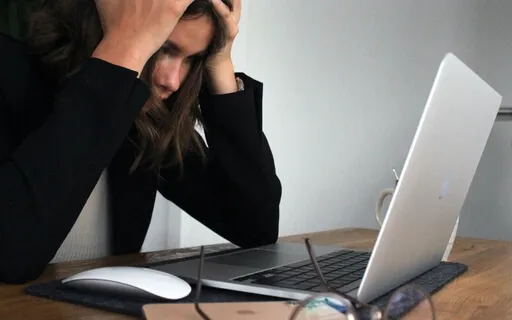
We're talking about stress because April is stress awareness month and it is important to talk about it because it is such a killer.
It has such an impact on our physical and mental health.
So in today's session I want to talk to you about exactly how the stress response works and what it does to you and lastly of course what you can do in our industry to protect yourself from the harmful effects of stress.
Firstly it's important to note that stress is an important part of being alive.
It's an important part of keeping you alive.
It's in fact the thing that helps you respond to any threat to your livelihood.
It's the thing that helps you hightail it out of there if you come across a snake,
A bear or a mugger.
So in that sense it's very important and very necessary.
It's also the thing that at low levels will help you exceed and meet your goals.
So if you're going to the gym that's a good example.
That has a low level stress and in fact being in that stress environment will actually make you stronger.
So stress itself is not a problem.
However chronic stress is a problem.
Now to understand the stress response you just need to understand there are two components.
They are the SAM axis and they are the HPA axis.
Now it's not important what those are.
It's probably easier to conceptualize them as the fast loop and the slow loop.
So how do they work?
Well you're walking along you see something that looks like a snake.
Your body doesn't have time for you to work out whether that actually is a snake or not.
It needs to prepare you for the worst case scenario.
So it bypasses the part of your brain that thinks about things contextually and instead hits the amygdala which is your flight or fight response.
You release adrenaline which increases your heart rate,
Increases your breathing,
Dilates your pupils,
Takes blood away from certain areas,
Puts them into your muscles so you can fight the danger off or run away from it.
This is the fast loop and it's very important to keep you alive.
If you ever had a near miss in a car you feel all those responses straight away.
It's immediate.
You quickly avoid whatever is on the road and you start to feel that increase of heart rate,
Pain in your stomach as blood comes away from your stomach and into your muscles.
It's very visceral that feeling of adrenaline.
Now the slow loop kicks in a little bit later.
It takes in all information and then decides if it was in fact a snake or if it was in fact a branch.
If it was a snake then it wants to keep the flight or fight response on and it does that by releasing cortisol.
If it doesn't want to keep the flight or fight response on then it tells the amygdala to shut down that system and we return to normal.
As discussed before,
The type of stress that is damaging is called chronic stress and that's because the flight or fight response is kept on too long or it's activated too often.
The problem with that is that that cortisol that is so useful for keeping flight or fight response on and getting us out of danger is actually toxic to the body in the long term.
So we want to be very sparing about when we use it.
Now it's very useful if we're coming across a lion,
A tiger or a bear and if you said oh my I swear to God.
But it's not so useful if we are asking our boss for the afternoon off or if we're answering an email or if we're just driving in traffic.
As it happens,
Physical stresses tend to release more adrenaline via the fast loop and psychosocial events and stresses tend to release cortisol via the slow loop.
Stress itself doesn't cause problems but this steroid hormone cortisol causes a lot of problems in the body and in the mind.
So how do you protect against those things?
Well I'm glad you asked because we're about to get into it.
So without further ado,
Here are my top 10 tips on how to bust stress.
Tip number one,
Increase control and predictability.
It's well known in animal studies that animals prefer more shocks when they're predictable than less shocks when they're unpredictable.
The same goes for when they have an element of control.
There's something about predictability and control that allow us to mitigate the effects of stress.
Now unfortunately our industry has both problems.
It's highly uncontrollable and highly unpredictable.
We don't know when we're going to be working day to day,
Week to week.
We don't know when we're going to be finishing day to day and week to week.
That means we are subjected to a lot of unpredictability and a lot of uncontrollability.
Often we don't know where we're going to be week to week or day to day.
Often we don't know what time we're going to be finishing day to day or week to week.
We don't know when the job itself is going to finish as an end date since those change all the time.
Schedule changes happen on a weekly basis nowadays.
Overtime happens all the time too.
And furthermore we are contractors so we don't always know when the next job is coming in.
As a result we are forever faced with unpredictability and uncontrollability.
Now we can't change things in the industry for now.
But you can change the things that are happening in your life.
So what I suggest doing is getting a diary firstly.
Of course that doesn't always work for your work schedule.
However it does work if you're working multiple jobs.
It also helps with the social events that you'll hopefully be going to outside of work.
Things you have to do in terms of things with your kids or with your family.
Important dates in the year.
Get a diary that works so that you know what's going on.
That way you can have some sort of control about what's going on and also know what's coming up over what weekends.
So if,
God forbid,
You have to cancel something you know way ahead of time.
The next thing I would suggest is keeping a routine even when you're not at work.
Try to wake up at the same time for reasons I've already explained in the last video regarding sleep which we'll get into here too.
But waking up at the same time will make it less jarring when you have to go back to work.
So getting up at the same time is going to help you with that.
My next tip is something I suggest to all the people I talk to.
Do the activities that you hold dear to you before you get to work.
That way work no longer dictates whether you get to do those things or not.
You're no longer held to ransom by work.
You get your things ticked off for the day before you get to work.
That way their time is theirs and your time is yours.
Now I'd suggest doing things like exercise,
Meditation,
Journaling or anything else you'd like to do.
Get it done before you go to work.
I've said this before and often it means you have to get up a little bit earlier but trust me it's well worth it.
That way you have more control and more predictability of your life.
And as you'll find out later all those things I've just mentioned will also protect you from stress and make you less stressed out.
So why not do them before you get to work rather than stressing about whether you can do them after work.
Now my last tip on this will be be strong about saying no.
When it comes to weddings,
Holidays and to a degree weekends be strong about that.
If that is something that you feel strongly about and it's something that is important with important people then go to that thing.
Say no to work,
Go to that thing,
Get it booked in to that diary that you've already set up and go to that event.
You can always make more money,
You cannot make more time and you particularly can't make more time with those that you love.
Now at first this may be a little bit hard but as you do it more I think you'll get more used to it and you'll also feel the rewards of it.
As you'll find out later being part of community whether that's with family or friends is also a big part of busting stress,
Depression and anxiety.
So it is worthwhile getting into the habit of prioritizing community over work.
Tip number two,
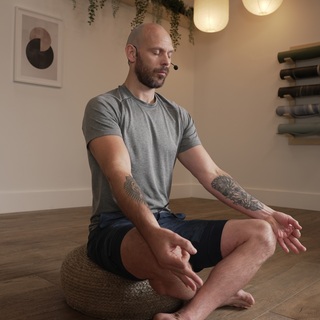
Mindfulness and meditation.
Now there are literally a plethora of studies telling us that mindfulness and meditation are so good for your health.
They are particularly good when it comes to cortisol release and stress.
It lowers your heart rate,
Increases your heart rate and variability,
Lowers your blood pressure,
Increases your immune function and increases your telomere length and production.
These things are all things that are damaged by stress so we can counteract the effects of stress simply by meditating 10 to 20 minutes a day.
There are literally so many videos on YouTube and apps like Insight Timer.
I put links below so feel free to click on them.
It's not only mystical and chakras and spiritual.
There's lots of just practical tips on how to meditate without it being religious in any way,
Shape or form.
I know work doesn't really facilitate the time to meditate so I'd suggest doing this in your car before you get to work because you want a nice calm environment.
It's not ideal to be doing on set.
However,
If you don't think you do have time,
Which you do,
And if you don't think you have time then check your iPhone right now.
Open it up,
Show me how much time you've spent on Instagram,
Facebook,
Candy Crush or fill in the blank.
You've definitely got time.
Maybe not for full meditation practice using one of the links.
However,
Practicing mindfulness is not the same as that.
Practicing mindfulness is just about being aware of your experience.
Your experience of having your coffee in the morning on the way to work.
You're experiencing talking to someone,
Your experience of being in the sun,
Your experience of walking without distraction,
Without watching YouTube at the same time.
Another great way is experiencing eating.
So enjoy the process of eating.
Don't just think about what you have to do.
The whole thing is just be engaged with whatever single activity you're doing.
Don't think about what you have to do later.
And with your ADs,
I'm particularly worried because you've got that earpiece in all the time with someone speaking,
Not necessarily to you,
But you have this low level of anticipation all the time.
And I don't think it's good for you.
So if you guys can,
Get your time in to be mindful wherever you can.
Get to a point where you're doing one single task well instead of trying to multitask many things badly.
That would be my top tip.
If you can't do the full session of meditation,
Do mindfulness,
But then you've really got to be on it.
When you're driving to work,
Be mindful while you're driving.
Experience the moment.
Get out of your head and into your body and experience what's happening right now.
Tip number three,
Exercise 30 minutes a day.
Exercise has a huge capacity to release feel good neurotransmitters,
Which will counteract the feeling of being stressed.
But also it has the capacity to dilute the cortisol already in your system if you are stressed.
Please note,
Though,
That too much exercise will actually release even more cortisol.
So you don't want to be doing so much exercise that you're releasing cortisol in your workouts as well as when you're at work.
So for that reason,
I would suggest doing a different type of training if you really feel a bit stressed.
Something a bit more relaxing like yoga or walking.
Now,
Again,
Work isn't really designed to help you work out.
They don't often give you a space or even showers.
So for that reason,
I would suggest doing it when you're at home before you get to work.
If you're at Warner Brothers,
However,
You do have access to that amazing gym that's there.
Pinewood,
That gym is almost never open to the public,
So I wouldn't bother with that one.
If you can do a workout at home,
Do it at home before you get to work.
Now,
If you're not sure what to do,
Then please check out the links below.
I've got lots of workouts for you to do that are free on YouTube.
And keep in mind,
This isn't training to be on the men's health cover.
This is training to bust stress.
So what we're looking to do is elevate your heart rate for 30 minutes.
This includes walking,
Yoga,
Riding a bike or skateboard between stages.
So look for opportunities throughout the day to do the exercise.
It doesn't have to be 30 minutes back to back.
You could take the stairs in the car park,
You could walk between the stages,
You could walk to set and walk back from set.
You could start to accumulate at those minutes throughout the day.
So be on the lookout for those opportunities.
If you're stuck on set and you're an AD or someone who just doesn't get the opportunity to leave set,
Then think about doing sets of push-ups,
Squats or pull-ups on the Scaff polls.
That's a great way to get workouts.
And again,
You can do it as a challenge between your friends getting that advantage of connection which we're going to talk about later.
You can challenge them to see how many squats,
Push-ups or pull-ups they can do within the day.
And that way you can have a little challenge,
Keep yourself occupied and also get the effects of stress busting exercise in your day.
Tip number four,
Connection.
Now a lesser known stress response is not the fly to fight but the tend or befriend.
This happens as a result of another hormone that you release called oxytocin.
This is known as a cuddle drug because it's released when we share our love for someone or we receive love.
It also happens if we ask for help or we give help to someone else.
It's very much this community bonding hormone that helps us connect with others.
It makes us feel good when we either ask for help from others or we receive help from others.
Now the wonder of this neuropeptide is that it actually counteracts the effects of stress in a very physical way.
It repairs the heart and the cells that are affected by stress.
So releasing more oxytocin is going to help you counteract the effects of stress.
This can totally be done at work but you're going to have to look for opportunities just like you did with exercise.
Whether you're giving help or receiving help,
Your brain receives it in the same way.
So be on the lookout for both opportunities.
You can give a compliment to someone,
You can lend a hand in the department that isn't yours,
You can help move things around.
You can just be helpful around set or be helpful to someone in particular.
The result is you're going to release oxytocin and you're going to help them release oxytocin.
Now connections outside of work are just as important and quite often we neglect people that don't work directly with us.
And that often means that family or friends fall by the wayside until we're done with the job after six months and would you know it?
They don't really care for us much anymore or at least we don't have that same connection that we used to have.
What I would suggest is make a list of the people that are important in your life.
Keep it on your phone,
Keep it in your diary,
Whatever you want to do.
But make that list and make sure that you make time every week to text them,
Call them or even see them in real life.
You'll keep that connection alive and you'll feel better for it.
Those connections will not only give you perspective about work but also protect you from the harmful effects of stress at work.
Tip number five,
Journaling.
Now remember the two parts of the stress response,
The fast loop and the slow loop.
The fast loop comes as the activation of the amygdala happens and that is all emotion.
It is pure emotion.
It's our most archaic part of our brain.
Now the slow loop will use another part of the brain called the prefrontal cortex.
The prefrontal cortex is the part of the brain that is the higher order functioning.
It's the last part of the brain that developed and as a result it has all the things that are uniquely human.
One of which being language.
We use that language to reappraise situations.
So that's when we see the branch that may be a snake.
We were able to take lots of information in and literally tell ourselves,
Oh it's just a branch.
That's us reappraising the situation and that reappraisal will turn off the flight or fight response.
So to put it another way,
To feel something emotionally you just need your ancient brain,
The amygdala.
But to verbalize something or better yet put it into words you need the prefrontal cortex.
You have to activate this more human brain in order to put something into language.
And because of that when you write down your worries you filter all of these emotions,
These fears.
And you filter it through the part of the brain that is far more rational.
There's no other way to do it.
To put that fear into language you have to filter it through the prefrontal cortex.
Now it has several advantages.
Like I've described it can rationalize the situation.
Two,
It offloads the fear from your brain and onto page.
And three,
It allows you to see what those worries are.
Quite often we have a few worries and they just come around over and over again in our head.
And it makes it feel like there's lots of worries when in fact we just have the same worry over and over again.
The advantage of seeing it written down means you can now address these things from a more rational standpoint.
From a more objective standpoint.
When you're in your head it's quite hard to get perspective.
But when you see these worries written out you can see them more objectively and you can also start to make a plan.
I would suggest writing those worries down and then also looking at ways that you can solve those problems.
As if you were someone who is helping a friend.
So imagine those worries written down on that page are a friend of yours.
And then see how you would apply any sort of rational to them.
Quite often when it's us we're quite harsh and critical on ourselves.
But if we imagine it being someone else or someone that is separate from us we will give better advice and more rational advice and often much kinder advice.
Tip number six.
Build in breaks.
Use your weekends wisely as well as the end of the job.
There seems to be some sort of weird addiction in our industry that you want to jump from job to job to job.
Even though while you're on the job you're complaining about being on the job and that you have no time.
I understand that this industry is ripe for never knowing when you'll work again.
But you're also aware that this is the busiest time it's ever been in the UK.
So have some self-confidence and have some self-care.
This industry is a marathon not a sprint.
Longevity is what will really matter if you're thinking about building a career.
Not intensity.
Do something relaxing on the weekends so you feel refreshed by the time you come in on Monday.
Same goes for when the job ends.
You'll end up feeling much better if you can take a little break.
It doesn't have to be elaborate.
It doesn't have to be abroad.
But do something that you love.
Connect with those that you love in that time that you have.
That time is so precious.
I'll say it again.
You can make more money.
You can't make more time.
Have the confidence that another job will come up and have the self-belief that you don't have to be available all the time to work.
You're good enough to get a job even if it doesn't fit in exactly with when someone else wants you to work.
And plus there's a lot more to life than work.
Tip number seven.
Get enough sleep.
Now sleep is such an important part of health and that's why I did that other video first all about it.
It's what so much of our biology is based on.
It is particularly important to reduce blood pressure,
Heart rate and cortisol which are all things that come along with chronic stress.
Of course the terrible irony is that when you're stressed the last thing you can do is sleep.
And of course not sleeping leads to more stress and we see this vicious cycle.
Now if you saw the last video you know all these tips already but I'm going to breeze through them now quickly just in case you didn't.
Get your house dark 90 minutes before you want to go to bed because that's going to help you wind down.
Make sure there's no overhead lights on particularly in the bathroom that's a very light place.
You can get those motion sensor lights which are a lot lower light in terms of intensity.
And I'd like you to put them low in terms of physical orientation to the room.
Low lights tend to not make you wake up as much as overhead lights.
So keep that in mind.
You want to keep the lights low in terms of intensity and also in terms of physical orientation to the room.
When it gets to your bedroom make sure it's also dark in there.
Use blackout blinds,
Use an eye mask and use gaffa tape or any sort of duct tape over your LED lights on electronic devices.
It takes very little light to wake you up once you're asleep.
You also want to make sure your room is cool.
18.
5 degrees Celsius is the recommended temperature for room for optimal sleep.
You can make the room that temperature with the aircon but you can also get your body temperature down by having a hot bath or hot shower.
That sounds counterintuitive but the reality is when you have hot baths or hot showers your body tends to dump heat out because it's trying to cool you down.
So you can speed up the process of cooling down by doing that.
Of course you also want to keep it quiet so you can use earplugs if you want but try to facilitate as best you can a quiet environment before you go to bed.
If anything is on your mind you can use that journal that we've spoken about already and you can start to write down some of the worries on your mind.
That way you can offload them,
Your body doesn't think that it needs to retain those things to deal with.
You put them down,
You can deal with them in the morning.
Lastly,
Don't use drugs or alcohol to help you sleep.
They don't help you sleep,
They help put you unconscious and that is a very different process to actually being asleep.
You don't get any of the benefits and especially the stress busting benefits of sleep if you're using drugs or alcohol to facilitate that sleep.
Now in terms of during the day,
The tips you can use to help you sleep are actually already covered in what we've done today.
Meditation helps you sleep,
Exercise helps you sleep and so does journaling.
So use those not just to stress bust but also to help you sleep which also helps you stress bust.
Avoid caffeine in the afternoon.
Caffeine is a 12 hour half-life so you want to avoid your intake after 12 noon.
Of course you can have cheeky craft but it means you can just take a herbal tea in the afternoon instead of tea or coffee.
Now the big one for us is get enough sunlight during the day.
If you're working on stages,
You're probably in the dark all day particularly in winter and that's why we get Seasonal Affective Disorder which is facilitated by not getting enough sunlight.
But it can happen in summer too with people like us because we're on those dark stages with artificial light which are never as strong as the light outside.
So do yourself a favor every hour,
Get outside for at least 10 minutes.
You can go for a walk,
Get that exercise routine in,
Cycle,
Whatever it's going to be but just get outside,
Get that light exposure and that's going to help you sleep when it comes to sleep.
Tip number 8,
Use your eyes,
Use your breath.
Now the stress response has a direct impact on what the eyes do.
The eyes will dilate in presence of fear or stressful stimulus.
It will focus in on that thing because it's worried about that thing as it is a threatening object to our survival.
We focus so hard on it that everything else blurs in the background.
Now this is direct but also bilateral relation between the eyes and the stress response and the stress response and the eyes.
What we can do is actually open up our field of vision and reduce the stress response.
So we have this threatening device or object that makes us turn on a flight or fight response which makes us dilate our pupils.
We can do that all in reverse.
We can open up our field of vision by not dilating our pupils and then we can turn off that stress response and reduce the amount of cortisol we're releasing.
How you do this?
Very simple,
You open your field of vision with your eyes.
You look as far up as you can,
Look as far down as you can,
Look as far left and right.
If you can do this outside it's even better and if you can do it moving through an environment it's even better.
They call it optic flow and this is based on the work of Andrew Huberman who is an amazing neuroscientist who's got a great podcast.
So if any of this interests you,
He covers a lot of this in a lot more detail.
But the point being you can use your eyes to reduce the stress response.
Get outside or open your field of vision as much as possible so that you're not fixated on one thing.
You're taking in the whole picture not just one tiny speck of the picture.
It'll also help you get perspective both literally and figuratively.
Now the same can be said for the breath.
As before,
Stress response,
Flight or fight,
Increased breathing pattern.
We can do the opposite,
We can prolong the breathing pattern and turn off the flight or fight response and the stress response in turn.
This is often done in meditation and that's one of the reasons meditation is so useful for counteracting stress.
But if you don't have time to meditate,
Again we've discussed that,
You probably do.
But anyway if you think you still don't then you can just take a few breaths.
In fact we can do it right now.
So wherever you are,
Whatever you're doing,
Take a moment,
Take a nice deep breath in through the nostrils.
Pause and breathe out.
Breathe out.
Now let's do each one of those things for four.
Inhale for one,
Two,
Three,
Four.
Pause,
Two,
Three,
Four.
Exhale,
Two,
Three,
Four.
Pause,
Two,
Three,
Four.
Inhale,
Two,
Three,
Four.
Pause,
Two,
Three,
Four.
Exhale,
Two,
Three,
Four.
Pause,
Two,
Three,
Four.
Do you feel better?
I hope so.
But it's a very short practice.
But even those short moments where you're breathing in a controlled fashion,
Where you're taking your time with your breath,
That can help turn off the stress response.
So particularly when we're in places or situations where we feel stressed,
We can do that breathing exercise which is called box breathing to counteract the feeling of stress.
Again,
Those links are below if you want more breathing exercises.
Wim Hof is another man you want to follow.
His breathing stuff is on YouTube.
Again,
Link is in there.
Check it out and that can help you.
Although his type of breathing may get you some looks if you do it in public.
Box breathing you can do kind of incognito.
Tip number nine,
Don't sweat the small stuff.
One of the best things I've heard said is by Riley Earlham which is that,
Don't forget guys,
This movie you're working on that is so important right now will be in a bargain bucket in a Tesco on a motorway in at least a year and a half time.
And that's the reality.
The work we do is very good and it's good to have pride in the work we do.
But never forget perspective,
Alright?
This job you're doing is someone else's dream and it's just a movie.
It's not worth your health or the health of others so don't sweat it too much.
If it's all getting too much,
Walk away from it.
Don't let the stress of work get into your life and impact your relationship with your friends,
Family or with yourself.
Don't sweat the small stuff.
Tip number ten,
Know how you're doing.
An easy way to do this of course is taking the survey I've put in the link below.
Burnout is something that affects a lot of people and it can be really harmful not only for your health but also for your career because it's very hard to come back after that because your body has learned to associate the work environment that you're in with being stressed out and being too much and of course it'll resist it as much as possible.
Know how you're doing earlier of course with everything.
The earlier you know of something,
The easier it is to respond to it and the easier it is to recover from it.
So take the quiz below.
It's very quick and you'll know how you're doing.
It'll tell you if you need to take a break,
If you're fast approaching,
Needing to take a break or if you're okay which is great too.
That means you're following all the steps and you're doing just fine.
If you enjoyed this,
Please like,
Subscribe and of course share it with anyone that you know needs it.
You can either share them in this video or talk about it at work.
Until such time as productions are willing to look after our mental health through procedures or protocols,
We're going to have to look after ourselves as well as those around us.
And of course you release oxytocin as we discussed in this video.
So do it.
It's going to be good for you.
It's going to be good for others.
And if you are someone of influence and you can stop putting procedures in place,
Please do.
The industry needs it.
But until next time,
I'll be looking at doing another video just like this.
So we'll see you then.