Hey there everybody,
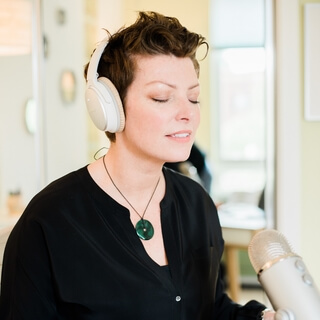
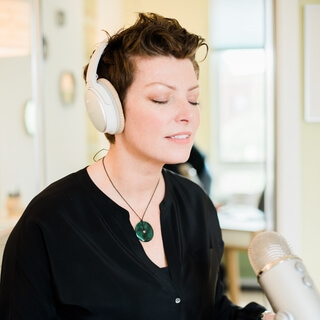
This is Kristen from Teaching Balance and I am here with you with this week's mindfulness meditation practice and we are in the month of self-acceptance.
It's a great theme.
There's a lot of value in it and we've talked about it from a few different angles already.
We've explored just self-acceptance when we talked about your practice.
We talked a little bit about how,
You know,
Self-acceptance is actually supportive in your growth.
It isn't about ceasing growth or anything along those lines.
And so I thought for this week that we would take it a little bit out of like the literal,
Literal piece around self-acceptance and do something that's a little more tangential,
But I think has so much value.
Now,
It's a big topic,
Honestly,
So I'm gonna do my best to try to express it succinctly,
But probably the best place to start is to assume that you have probably had the experience where at some point in your life,
You know,
You're just doing what you do.
You're going to work,
You're living life,
All of that kind of stuff,
But you're finding yourself much more focused on a theoretical future when the verbiage that typically comes up,
Whether it's in your mind or you actually say it out loud,
Is well,
It'll be okay when,
And then you fill in the blank of whenever,
Whatever the when that particular qualifier occurs.
So for example,
You know,
I'll be happy when vacation arrives,
You know,
Not happy right now,
But I'll be happy when when that happens,
Or I'll be happy when I get to,
You know,
Move into my own home,
Or you know,
I think I'll be happy when I'm finally making X amount of money,
Or I think I'll be happy when I am in this,
Whatever,
X level of fitness or whatever.
I mean,
You know what I'm talking about.
We've all been there,
Of course.
And there's a big,
Really deep conversation,
I think,
About this in mindfulness circles,
And of course because of their origin in Buddhist types of conversations,
Regarding the fact that if you live your whole life always anticipating this,
Like I said,
This theoretical future where you think things will be okay,
Then you get to that spot,
But what happens,
You know,
In some cases you don't,
Of course,
But like,
Let's say you do get to summer vacation or whatever it might be.
A,
It either,
You know,
Is ephemeral,
It doesn't last forever,
So you can't put all your hopes and dreams on being in vacation all the time and therefore being happy,
And then the other thing is sometimes when we attain certain goals,
They no longer hold the allure and the quality of satisfaction that we thought that they might,
Like,
You know,
Once I hit a certain,
You know,
Amount of,
You know,
Salary,
Whatever it might be,
You know,
There's always more expenses,
There's always more money that you can make,
There's always more whatever that you can want,
And so I've always talked about this this way,
But in the past couple of years,
I heard it described with a phrase that I really like,
And I feel it's just so crystalline and,
Like,
To the point,
And the phrase that describes what I'm trying to convey is the arrival fallacy.
So the idea is that,
Oh,
I will be happy,
I will be content,
I will,
You know,
Whatever,
Something that is desirable,
When I've arrived at this point,
Whether it's something that is destined to occur or maybe is very much probably beyond our reach,
Either way,
And the fallacy,
Of course,
Is just as I explained,
You get there,
It's not necessarily going to last,
Or you get there,
And then there's always more,
There's always other things that we desire that we think are going to,
You know,
Feed the hole,
If you will.
It's actually a film reference,
Very obscure,
But,
Um,
You know,
Whatever it is that's going to make us feel okay,
That's gonna make us feel calm and happy,
Etc.
So what does this have to do with self-acceptance?
I think that we can have this quality of arrival fallacy when it comes to just living our lives,
And of course,
You know,
The conditions of our life can impact our level of contentedness and peacefulness and joy and happiness,
And there's also a measure of what we bring to the table regarding our perceptions.
And so,
When you put forth the intention and the effort to be willing to be accepting of how things are,
Whether it's on the small scale of your meditation practice or something bigger,
That can really allow you to have more of a quality of peace and contentedness,
Contented contentment,
And happiness in this moment.
Because,
As the mindfulness folks would say,
And as the Buddhists would say,
That future doesn't exist.
You know,
All that exists is now,
This moment,
And now this moment,
And now this moment.
And so,
Not being present to,
It's like you're living in this fantasy world that doesn't exist yet,
And hinging your quality of life on this potential future,
When in fact,
It would behoove you in many cases to spend a little bit more energy on working on this moment,
And contentment,
And acceptance,
And compassion,
And all of those things.
So,
A really big concept and very difficult to summarize in this short little mini talk before our practice,
But I wanted to put it out there.
Now,
I don't think that phrase,
The arrival fallacy,
Has been adopted as universally as I think it eventually will be,
But you can sort of,
If you were to look into doing more reading on that,
I would say,
You know,
You could probably come up with some phrasings that would find some interesting articles,
And books,
And all of that regarding the value of seeking contentment in the now,
Even if it's not ideal,
Which of course,
It's incredibly rare that it is.
Also,
Not very ideal,
But still worthwhile,
Is our meditation practice.
So,
Let's go ahead and get started.
I'm going to set my timer for 10 minutes.
I feel like I did a lot of talking there,
So I think I'd like for us to do a more silent practice.
You know the drill by now.
I'm just going to invite you to go ahead and do what feels right to you.
Let's go ahead and just very quickly settle in,
And it doesn't have to be quick.
I'm just saying that for myself.
Either closing your eyes or lowering your gaze,
Taking a few deep breaths,
And I'm not going to be completely silent.
I am going to check in a couple of times,
But it's going to be pretty minimal.
So,
If you're the person that likes a little less guidance,
I hope this one will be satisfying for you.
Noticing where the mind is right now.
It's wandered into thoughts,
And plans,
And ideas.
Remembering that's not a problem.
And I also find it helpful before I turn my attention back to my anchor,
To actually label the thought.
Almost categorize it.
It can be something as general as,
You know,
A worry,
Or you could be very specific like,
A worry about my brother,
Or you know,
Whatever that might be.
Because it's not about pushing the thoughts away.
It's about being very aware of the thought,
And then choosing not to follow it anymore,
And then just bringing your attention back,
Pivoting back to the present moment.
So,
Let's sit together in silence for a bit longer.
Final check-in.
If your mind is still resting on your anchor,
The breath,
The body sounds,
Keeping it there.
And if it wandered,
Just bringing it back for these final teeny-tiny moments until you hear the final bell.
That's our ten minutes.
So,
I feel like that was enough explanation.
Thank you so much for taking this time for yourself.
Thank you for allowing me to accompany you on this journey.
I will see you next week.
Take care.
Bye.