All right,
Welcome to the Teaching a Rockstar podcast.
And on this episode,
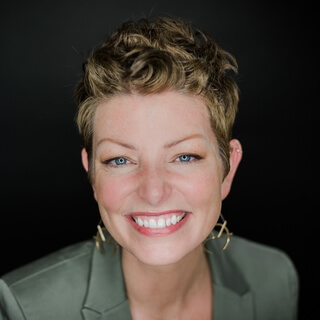
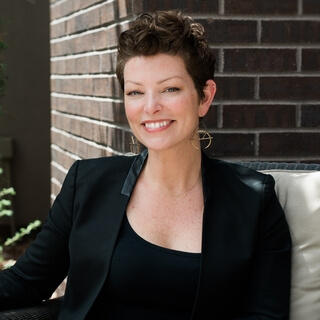
We have Kristen McCown.
I was so worried about saying that properly,
And I know I nailed it.
She is a coach and consultant.
She helps educators integrate meditation and mindfulness into their daily lives so they can be at their best for their kids,
Man,
For their families,
For the community.
She's amazing.
Here's what I love.
All right,
Let me just,
Here's what I love about it.
I love that we talk so much about self-care.
And there's so many,
I see so many quotes and so many memes,
And here's what we need to do.
Here's what we should do.
But I just don't find a lot of real practical,
Real life strategies that are out there that work.
And so what I love about her work is she offers up solutions.
And yeah,
I mean,
There's some great ideas.
But I mean,
Ideas are everywhere.
But I want some actual strategies and solutions that I can do,
People can do,
And it works,
And it changes lives.
All right,
Here we go.
Kristen McCown,
Teaching a Rockstar podcast.
Let's do this.
This is the Teach Like a Rockstar podcast with Hal Bowman.
All right,
Before we get into our hippie zone and talk about meditation and mindfulness,
A quick word from our sponsor,
The Boston Scally Company.
I have found the absolute best caps on the internet at bostonscally.
Com.
The Boston Scally Company is the online purveyor of caps with the most attitude.
Some people refer to them as a flat cap or a Gatsby or an Ivy cap.
But the cap everyone is really looking for is the traditional Boston Scally cap.
Founded by the son of a lifelong educator,
The Boston Scally Company designs and sells caps that capture the unique culture of the Boston people with an authentic style that is filled with blue collar sarcasm,
Rugged integrity,
And a truckload of attitude.
Pick up the authentic Boston Scally cap at bostonscally.
Com.
The Teach Like a Rockstar podcast with Hal Bowman.
All right,
Kristen,
Here's what I know.
Is I know that of all the places to live in the country,
You might be in the perfect place to do the work that you do.
There is truth to that,
Actually.
There is a lot of mindfulness work.
I would say it's a close neck and neck with California,
Though.
There's a lot going on in California,
For sure.
Yeah,
But for me,
California's a whole different country.
You know what I mean?
I'm talking like in the continental 47 states.
Essentially located,
Yeah.
They're another country.
We got the continental 47.
We eliminate them.
And then we have the other two that are out there.
But Colorado,
Man,
That is the place.
It's kind of like a hub for just so much personal work and mindfulness and self-care.
I mean,
You're at the epicenter.
Yes,
That's very true.
It's funny when I go back to New York,
Which is where I'm originally from,
Or I go to other places,
You don't see quite as much of people in their outdoorsy clothes and their fitness wear and their yoga pants.
And although those are pretty ubiquitous these days.
But yeah,
It's interesting.
There's definitely something about Denver and especially Boulder also where it's all about that fitness,
Wellness,
All of those types of things,
For sure.
Sitting around drinking your tea and your Lululemon outfits.
Yeah.
I get it,
Man.
Yeah.
A little bit.
Yeah.
Hey,
Let me go back.
So when you were,
I know you were a teacher for years,
Which is also cool.
Because for me,
Anytime we're looking for solutions for teachers,
I know it's wrong.
I know there's people out there who have great ideas,
But they haven't been a teacher.
But for some reason,
If they haven't been a teacher,
In my mind,
It's hard.
Not that I don't trust them.
It's just hard to get my head around them understanding what we've done and been through and do.
Yeah,
I agree.
I mean,
I even say that when I go and do workshops with teachers.
I had just done one recently with my former school districts,
All the brand new first-year teachers.
And I just try to name that.
No one gets it unless you're an educator or maybe if you're married to an educator.
People just don't understand how incredibly rewarding,
Of course,
But also incredibly demanding it is.
So yeah,
You have to live it to really know what that's like.
And what is that?
Actually,
I talk about that in my workshop too.
And maybe I'm stealing your stuff.
I didn't know.
I thought it was original.
But it's true,
Man.
The people that love you the most and know you the best,
If they haven't done it,
They have no idea.
Like,
How could they?
If your spouse doesn't teach,
They know of your kids,
But you love your kids.
Those are two very different things.
Absolutely.
They're not necessarily in your head where you're worrying about a student or you're thinking about that conversation that you had with someone earlier that day.
No one can really know except the teacher,
Him or herself.
So yeah.
Yeah.
You know what it also reminds me of is those god-awful parties where it's a bunch of teachers and their spouses.
And the teachers all sit around and chat about school life and school jokes and inside stuff.
And the spouse is just sitting on the perimeter looking at each other like,
What are they talking about?
It's so true.
And then you go down that rabbit hole of talking about a particular student and,
Oh,
I had him last year and all.
And you're like,
Oh,
We've got to stop people.
We've got to stop.
Yeah.
Yeah.
And it's got to be funny for them because they're thinking,
You're talking about a 12-year-old.
That kid doesn't even care.
No.
Yeah.
He ain't sitting around talking about you.
Yeah.
Yeah.
It is funny.
And I think once everybody realizes that they're doing it,
And if somebody nudges the conversation into another direction,
I think everybody's really relieved more than anything else.
Yeah.
When you,
At the beginning,
Did you know that you were going to be a teacher?
Was that like your thing?
You're like,
You're one of those kids that were holding this classroom when you're eight and making your teddy bears and studying and all that?
Oh,
Gosh.
No.
Actually,
So I went to school in upstate New York,
The State University in New York at Binghamton.
And I just took classes that I loved.
I always did love English classes and reading and all that sort of stuff.
So I became an English literature and rhetoric,
Which sounds very fancy.
But basically,
It just means communications.
And I just majored in that in this very sweet,
Idealistic way.
And then I came to my senior year like so many people.
And I'm like,
Oh,
So what am I going to do?
And so at the time,
My husband and I had met in college.
And he had already graduated a year ahead of me and went out west to University of Arizona for his graduate work.
So I was like,
Well,
Maybe I'll get a teaching certificate.
I'll go out there.
I'll give it a try.
So I did some grad work at University of Arizona,
Go Wildcats.
And you get into that part of the course where they tell you,
Whatever it is,
60% of you are not going to do this,
Or you're not going to make it through the first year,
Whatever they say.
And I'm thinking to myself,
That's probably going to be me.
Why wouldn't it be?
Here I am.
I'm not exactly sure I want to do this.
And then for me,
It was all about student teaching.
I just got up in front of the kids.
And I've always done secondary,
So middle school and high school.
And it was just right.
You just have that feeling,
Even though it's hard and all of the things that were relating to that.
I just knew,
Wow,
I'm good at this,
And I like it.
So I was an English teacher for the next 10 years.
Yeah,
For me,
I had that.
I remember first starting out and staying.
So I was a band director at first start.
I was really into this Texas football marching band competition thing and staying crazy late.
I mean,
In the parking lot talking about all that at midnight and then showing up at 6 AM the next morning and just day after day after day.
And I wasn't even working,
Man.
It was just what we were doing.
It was a blast.
And then I would have some friends I would meet that had normal jobs with adults.
And they were just miserable.
And they were talking,
I can't wait to get out of there.
I can't believe I have to go in this morning.
I can't wait to get out of here this afternoon.
And I never even had that thought.
Like,
Get out of here.
We got stuff to do,
Man.
Yeah,
Absolutely.
You know?
Yeah.
And that passion.
I was never watching the clock.
The only thing you're watching the clock for is,
Oh my god,
Am I going to be able to squeeze this in before the bell rings?
Yeah.
Should I start this next part or not?
Right,
Right.
For sure.
I was the worst about that,
Because I'd be thinking,
OK,
If I start this,
We're not going to have time for cleanup.
I'll have you stuck clean up.
All right,
Fine.
Let's just start it.
Right,
Right.
Stuck with a classroom that's a wreck.
And so you did it for 10 years?
I was an English teacher for 10 years.
And then I transitioned into being a high school librarian.
The best job in any high school,
If there is a certified librarian.
And I did that for 15 years,
Which was amazing.
Yeah.
Yeah.
I know some cool ones,
Man.
And you're right.
The ones that figure out how to do it,
Man,
It's amazing.
Yeah.
Yeah.
They love it.
It was really cool.
And the other thing that probably the high point for that was back in 2014,
I just sort of,
I don't know exactly what it was that inspired me to do it.
But I was,
Oh gosh,
I can't even remember now,
Several years into being at that school.
And we had a new team.
It was just me and another teacher librarian and our clerks.
And I decided to apply.
Have I told you this?
I applied for the National School Library Program of the Year award.
Uh-uh.
Yeah.
So here's the connection between that and actually what I do now.
That was shortly after I started getting into the whole meditation and mindfulness stuff.
And a big part of meditation and mindfulness is you become very self-aware and very well acquainted with what's going on in your head,
Including your inner critic.
And one of the immediate things,
Once I made this decision to try to apply,
Was immediately the critic or whomever kicks in in your head.
And it was this like,
Well,
Who are you to do this?
And why do you think your library is so special?
And all of that kind of stuff.
And it was because of my mindfulness work that I was able to realize that's just this inner critic.
I'm not going to,
It's trying to keep me safe.
I didn't realize this at the time.
Now I do.
But it's trying to keep me safe by not taking a risk or going outside of my comfort zone.
But I'm not going to listen to it.
And so we went through the whole process.
It was very rigorous.
It was an award,
A national award from the American Association of School Librarians.
And we were named a finalist.
And then we had a visitation from the committee.
And it was crazy.
And the happy ending is that we did win the 2014 program.
So yeah,
It was really awesome.
This is crazy.
I had no idea I was in the midst of a celebrity.
Oh.
And so let me ask you this.
So this changes everything.
So what do you think it was that got you into the finals and kind of pushed it over the edge?
Like what was special?
Or because like my thing I'm always talking about,
If you're going to make a difference,
You've got to be different.
And I think it's true in your world too.
Like if you are going to make a difference in this,
However they,
I know some of it is silly and subjective.
I get it.
But like how are we going to set ourselves apart and be different so we can be recognized for this award?
Like what was it about your place?
It's a good question.
I would say there's a few ways to go at it.
But the one that's sort of coming up for me most readily is I think it was because we gave ourselves permission to focus on the things that we enjoyed the most.
So in a typical library program at the high school level,
There's often a lot of research,
Obviously,
Because we're getting students ready for secondary,
You know,
Higher ed research types of things.
And I think a lot of librarians really love that.
And I like it.
It's fine.
But I don't love that as much as I love the whole idea of literacy and inclusive library collections and getting kids pumped to read.
I mean,
The students that I really got the most satisfaction from working with were the kids that were like,
No,
I don't like to read.
I'm like,
You're going to like this book.
Trust me.
So we gave ourselves permission to focus on reading and literacy and getting excited about it.
And because both I and my colleague at the time that we were both so passionate about it,
It just came through.
And so that was really one of the things that they don't really do.
You have parameters,
And you have to write all the things and do all the stuff and meet all the criteria.
But it's really very open in terms of what you want to articulate about your program beyond the specifics of what the standards they're looking for.
And so what I liked was that for us,
It was really about reading.
That was kind of our main thing.
Research,
Which of course is a big part of information literacy.
And then the third piece was this idea of leadership and who we are with our colleagues in the building and really just being a unifying force,
Which is a really cool thing to be if you have that opportunity.
Yeah.
You know what?
It really,
All that you're talking about,
If you think about the traditional scholastic academic instructional model,
It really,
What you're doing,
Kind of flies in the face of that.
Because here's what I mean.
When we're talking about teaching kids and working with kids,
What we're mostly focused on is helping kids identify their weaknesses and then go all in on focusing on their weaknesses.
And then what happens is we ignore what they love and what they're passionate about and what gets them excited.
And as a result,
What they love and what we're not nurturing,
So that declines in their ability.
And then we bring this weakness up to average and everything else decline.
So we have kind of mediocre everything.
But what I love about what you're doing is to find what you love,
See what we're passionate about,
And let's go all in on that.
And not just academically for kids,
But also in terms of initiatives.
What I always say is,
For me,
The best schools I have found and the best programs,
Whether that's athletics or library,
The best ones are those people that give up the quickest.
And what I mean by that is they give up on the stuff that isn't working.
Like maybe they start,
Here's a new idea.
We're going to do this.
And then they don't like it and it doesn't work.
So what most places do,
They double down.
And they try harder to do what doesn't work.
And they try harder on what they don't like.
But the best places give up.
Like,
All right,
This ain't us.
It's not working.
Let's find something else that does work.
And we do love and we are excited about.
I think the whole project is amazing.
Yeah.
And I'd say the only thing that,
As you're saying that,
That I think about is,
You know,
You got the training.
You know,
You've got the learning.
You're aware of whatever this initiative that,
You know,
You're being invited or,
You know,
Encouraged or told to do.
It's not like,
Yeah,
Instructed.
It's not like you didn't learn it and you don't know it.
You're just kind of almost like putting it on the back burner when you choose to not pursue it and focus on what you know.
So there's still a benefit,
I think,
From the exposure to it because there might be another way that it fits into your thing so that it's not like you're just trying to jam,
You know,
Like a square peg into a round hole kind of thing.
So that's the thing that came up for me as you said that.
Yeah.
You know what?
For the book that was it for me,
Like,
I wasn't a reader.
I wasn't interested.
I didn't like it.
Here's how much I didn't like reading.
We were one of my,
Maybe it was our junior year we had,
Maybe it was a book every three weeks.
We had to get a book and fill out this stupid book report form.
Yeah.
I hated reading so much I would come up with a title.
I'd fake an author.
I'd come up with a plot I made up.
I made up characters.
I made up the whole thing just so I'd have to read a book.
That was easier and more fun for me.
Yeah.
So I was at the library and my mother,
The summer before my senior year,
Was going to make me read.
And she said,
Pick a book.
And I'm like,
I'm not picking,
I don't want to do this.
It's stupid.
Pick a book.
So I just grabbed,
I wasn't even looking.
I just grabbed a book and took it home.
And she made me sit down and read.
And I was hooked.
You know what it was?
No.
It was the story,
I can't remember the guy's name,
But the movie is with Leonardo DiCaprio,
Catch Me If You Can.
And it was about this guy that lived his life as an imposter.
Yeah,
I think it is called Catch Me If You Can.
Yeah.
Yeah.
And like he becomes a pilot.
He's never flown a plane to become the doctor.
He has no degree.
I mean,
Like all this stuff.
And I was just fascinated with who can communicate in such a way that they convince other people that they have these abilities.
It's fascinating.
Yeah.
We actually had that book in my library.
And it's funny because as you're describing your experience and your feeling of reluctance and all of that,
I mean,
So many people really are the same way.
And one of the things that I think is so important,
And I also feel like library programs and a lot of English departments across the country are just making so much progress with this where it's,
Yes,
We might have the canon per se.
But then there's this giving people choice.
And I really do think that one of the things that we've learned,
And I think it's more or less knowledge out there now,
Is that particularly for guys,
That they don't necessarily see value in reading about this made up story that doesn't have any relevance to them.
However,
If you give a guy a really engaging narrative nonfiction,
Which is exactly what that book was,
Kind of a memoir,
It's going to have a lot more resonance because it's true and it's real.
Or any other,
Whether it's a memoir or any other kind of nonfiction where you feel like you're learning something.
And so in the library program that we had whenever we did summer reading and that sort of thing,
We generated a list every year,
We always made sure to include some nonfiction.
And also graphic novels.
I really feel like graphic novels are the gateway drug for reluctant readers.
There's some good ones out there.
You're a dealer,
Man.
Like a literacy dealer.
Yes,
That's right.
You know you want to read.
You know,
That nonfiction thing,
I think what it was for me is it was too far of a stretch,
Like all the other stuff I was presented with.
Where like this,
It was real.
And like little boys do,
You want to transport yourself into that role.
And like imagine yourself.
And like any other scenario,
Like I don't want to imagine myself an animal farm.
I can't.
You know what I mean?
Whatever else was nonsense,
I was forced upon me.
But in that world,
Like I could picture myself.
Hey,
Let me ask you a question.
So when you were,
How deep into your career was it when you came across really focusing on meditation and mindfulness and taking care of yourself?
Well,
I wish it was earlier.
Because I probably would have done a better job as a classroom teacher and been calmer and happier if I had discovered it earlier.
But it really wasn't until the sort of second half of my career as a librarian.
I really sort of feel like as over,
You know,
There's an interesting arc to teaching.
At first,
It's just survival mode,
As we all know.
Like crying every night.
At least that's what I've been told.
And so this idea of survival mode,
And then you get a couple of years in and you've got your groove and you can reuse things and all of that,
It's just glorious.
And then there's also a point where,
You know,
I don't know if you just want to do something different or whatever it is.
And that's when things worked out for me,
Where I started to feel a little less excited about being in the classroom.
So I was able to go into library,
Which worked out really well.
But the thing about being in the library is that it's just,
And props to all my library folks out there,
But it's just not as hard.
It's just,
It's harder in different ways.
But it's just not as incredibly draining as being a classroom teacher.
There is nothing like that.
And so in spite of the fact that I had found this new career that was also really jamming in and loving,
I still was feeling this sense of like personal unrest and just knowing,
You know,
I have a good life.
I have a job I love.
You know,
Things are good.
Why am I still putting all this pressure on myself?
Why am I still so stressed?
Why am I not as happy as I know I could be?
And so that was really what sort of nudged me to look into meditation.
And like a good English teacher slash librarian,
I started with reading a book.
And I read Meditation for Dummies,
Which I still have.
I haven't picked it up in a long time.
But that didn't work.
I had to actually,
For me at least,
I had to go to just like a weekend workshop.
And then that was,
It was it after that.
I was like,
This has made a huge difference in my life.
And I need to keep going.
Was it like a TM focused workshop?
You know,
I've never done TM.
I've heard good things.
But for me,
It's always just been that sort of the thing that's most popular right now,
The classic mindfulness meditation,
Where you essentially rest your awareness on an anchor,
So like your breath or your body or sounds.
And that's really just how I've been introduced to it.
And it's funny.
I was just having an email exchange with one of my members earlier today.
And he was asking me a little more about my background.
And I was telling him,
You know,
I came in very much through the secular door.
Not everyone does.
Some people do it through more of a spiritual tradition.
But really,
Almost exclusively,
My trainings have all been more like mindfulness-based stress reduction and things where the spiritual tradition isn't really a part of it.
And I think eventually I'd like to pursue that more.
But being a public educator and wanting to bring this to education,
It just makes a lot of sense for me to keep it much more psychological and wellness and self-care-based.
Yeah.
If you can put like two videos next to each other,
Side by side.
And one video is you at the peak of your classroom teaching year and who you were frantically running around and all that stuff.
And side by side is you at the peak of years into your mindfulness and meditation.
And you've been to the workshop,
And you're practicing,
And you're learning and growing.
How big of a difference is it between those two lives?
That's a great question.
I would say the big difference is probably the one that would be most noticeable on the surface is just being a lot more calm and grounded.
And I'm a relatively calm,
Grounded person,
As it is.
But not having,
I mean,
We all know what it's like to have that day where something goes wrong in the morning.
And then you get to work.
And then this thing happens.
And it's just this pile on where by the end of the day,
You're crawling to the finish line.
And that's just the reality of how things are,
Because there are so many variables over the course of any given work day for a teacher.
And so what I would say is just rolling with things.
There's this sort of saying in the mindfulness world,
Which is you can't stop the waves,
But you can learn how to surf.
And so you just start to not,
The things just kind of roll off you,
Because one of the things is that,
Again,
That self-awareness that I told you a little bit about,
Where you're just sort of noticing like,
Wow,
This student is really triggering me right now.
There's a space between the stimulus and how I might choose to respond,
As opposed to actually having my buttons be pushed.
It's just it's like,
I see what he's doing.
He's obviously uncomfortable with what we're doing.
What I'm going to do is I'm not going to react in the way that I typically would.
I'm going to try to come at this from a different angle.
So it almost kind of creates more spaciousness between how I interact with things.
I don't personalize things.
It's not like this kid hates me and wants to make my life miserable.
It's not about me.
And just things like that,
You just,
You don't,
You have more calm,
More groundedness.
And then the beauty of that too is because you don't get triggered as much and you don't get as emotionally escalated as you might otherwise,
You have some energy at the end of the day.
You know what I mean?
You can go home and actually go do something with like your family or your friends.
And you're not just exhausted Netflixing until you can just crash and start it all over again.
So that's sort of my,
In a nutshell,
Way that I would describe the difference.
You left out drinking.
There's that too.
Yeah.
Yeah.
Absolutely.
Yeah.
I don't know why,
Man.
For whatever reason,
I was able,
Like really,
Really early in my career,
I was able to compartmentalize taking things personally.
For some reason,
Even when I was really young,
Like I was just looking at teachers doing that thing in the hallway where they yanked a kid out of class and now they're bent over screaming at a 10-year-old in his face and pointing his finger at him.
And I was like,
Hey,
Brother,
That kid's 10.
Relax,
Man.
Right.
Yeah.
He's supposed to act like that.
He's 10.
Just like I did.
You did.
Right.
But I get it though.
I'm not saying I don't understand.
Because I've been there.
I mean,
I just figured it out early.
But I was totally there like screaming,
Like you're out of your mind.
And here's the other thing about creating space.
I think,
Like,
You know what I was thinking about the other day?
Actually,
I heard Sam Harris talk about it.
And he was talking about how it's not very far between what is considered normal and what is considered out of your mind crazy.
Like he was talking about if you think just about the conversations in your head on a daily basis and the noise and the stuff you say to yourself,
The stuff you think about,
And all that craziness,
It's a constant conversation happening.
And you can't say it's part of life.
That's what happens in your head.
The only difference is between you and that homeless guy in the corner is he's vocalizing it.
Like that's the only thing.
It's coming out of his mouth rather than keeping it in his head.
You know what I mean?
Absolutely.
I think somewhere there's a correlation between that and mindfulness in that creating space in the moments of where you normally would be triggered and take things personally and get emotional.
Like it's just one step further away,
Hopefully further away than being crazy.
Because I mean,
That does.
If you can't separate the emotion.
The big difference is that you begin to cultivate this,
What they call the witness perspective or the observer perspective.
And the way that I often describe it both to students and to educators is being able to put yourself up in the balcony and then watch what's happening on the stage.
So let's say,
For example,
Some event happens.
Like you get criticized by someone,
Whatever it might be.
It could be a parent,
An administrator.
It could be a student.
But something bad goes wrong.
And what you can do is instead of having it be right here for you like,
Oh my god,
I can't believe they said that.
I'm so offended.
And they're right.
You can actually like put it out here and put it on a stage and put yourself up in the balcony and observe it.
Because when you think about it,
The other example I often give is like when we've all had that experience where you have a friend who's complaining about something and your friend says something like,
Oh,
They did this thing and whatever it was.
And you're nodding because you're a good friend.
You're like,
Yeah,
You're right because you're supportive.
And there might be a point where we've all had the experience where you realize that your friend is totally overreacting.
But you're not going to say that because you're supportive,
Right?
But for you,
You have perspective.
You have space between,
You know,
The experience and hearing about it,
Observing it.
But for them,
It's right there.
And so what we can try to do is when it's happening to us and not someone else,
Cultivate that sense of perspective even though it is happening to us.
And so you're up in there and you're instead of saying I am angry,
You can hopefully notice like,
Wow,
My heart is really pounding.
I'm noticing that my fist is clenched.
Anger is present.
I mean,
It sounds dorky to say,
But like there's just this tiny shift where you notice what's happening.
And that's more like that space that I was describing earlier.
And it happens when you notice that you've started spiraling mentally,
Like you were saying,
You know,
The person who's just sort of wandering around muttering to themselves.
I mean,
We are doing that internally,
But the more aware you become of your internal dialogue,
The more you can get back into the driver's seat of it and be like,
This isn't helpful.
Why am I thinking about this thing that happened 10 years ago?
Yeah,
You know,
For me,
I think in my world,
You know,
The saying we always use off the saying or metaphor and analogy,
I never know the difference,
But we always say,
Man,
You can't read the label from inside the bottle.
Oh,
I like that.
Yeah,
And so,
And that's why it's so obvious.
You know,
It's with personal relationships and somebody is telling you what's wrong with their whatever marriage or personal life or work life.
And you know the answer,
You're thinking,
I cannot believe they're going on and on about this when it's so clear,
Here's the solution.
Or like,
Even when you walk by a classroom and the teacher's out of her mind,
She has no idea how to fix it and the solution is so easy.
Hey,
Move that kid over here.
First of all,
Greet everybody at the door.
You're not,
You know,
Your tone,
Your vibe is really hostile,
You know,
But when you're caught up in the emotion of it all and you're in the bottle,
You can't read the label on the outside,
Which is where the answer is.
Yeah,
That's so true.
That's a really good point.
You can use it.
Thank you,
I appreciate that.
Hey,
Here's the other thing I was thinking,
The other thing I love about you is,
This how you're describing all this,
And you know you're talking to like regular,
Normal,
Everyday teachers and you're so willing to say,
I know it sounds dorky,
But.
Like we're all thinking it.
Yeah,
Absolutely.
And even you think it,
You know,
Yeah,
Of course it sounds dorky,
But it's effective and it works.
Yes,
Well it's funny because I have,
I don't know if it's just this deeply ingrained sort of automatic cynicism.
I'm also incredibly optimistic,
But there's something where if anything comes across as sort of smarmy or like too whatever,
I'm like,
Please,
It's like the immediate internal eye roll.
So doing all the things that I do now,
I really do wanna acknowledge,
You know,
Like even when I was doing a training and they would say,
Okay,
We're gonna teach this course and we close every session with a poem.
And I'm like,
Oh yeah.
But you know,
I'm not anti-poetry and now I teach that class and I close with a poem and people love it.
So it's just,
I understand and I get that,
You know,
The perception of all of these types of things could be very eye-rolling and I've been there as well.
I cannot get into any of that.
You know,
It drives me,
That's why my thing is so,
There's no,
We're not playing games,
We're not coming up with team names,
We're not doing,
What flower are you?
And okay,
But one time,
I'll tell you a quick story,
One time we got caught up in it.
I wanna say this is called the calling of the angels,
Maybe?
I don't know,
It's something,
If that ain't it,
It's close.
And what it is,
We end our training.
It was pretty,
You know,
It was talked about emotional stuff in kids a whole bit.
And so,
And I'm,
You know,
I'm teaching,
I'm learning and we all get in a circle and every other person stands up behind the circle.
Our desks are in a circle,
Our chairs at this workshop.
So every other person gets up and gets outside the circle.
And the presenter does this whole thing about,
You know,
Close your eyes,
Everybody's seated in the circle,
Hands on the shoulders behind you,
Person's on the back,
You have your hands on your shoulders and I'm sitting in the circle,
Close your eyes,
And all right,
Let me just go out and do it so I can get out of here.
And think about what you needed to hear when you were a child.
What was that?
What did you need to hear?
Say that to yourself.
And like,
I'm like all in now and I'm going deep,
Right?
And the people on the outside are doing the same thing.
What did you need to hear?
And then what the people on the outside are gonna do,
They're gonna come around the circle to every person and whisper whatever it was that they needed to hear into your ear.
So now everybody's coming around.
I love you.
I'm proud of you.
I believe in you.
I appreciate you.
I'm getting emotional and I'm crying,
You know,
The whole thing.
Now my buddy's there with me and he was right next to me.
So now he's going around the circle and he's going around and he has no idea I'm deep.
He knows I'm laughing.
He assumes I'm just rolling my eyes and he comes up.
I cannot remember what he said.
I know it was a line from Seinfeld and I can't remember which one it was.
And I got my emotional and he says this thing and I look up like,
What?
And he sees it and I'm crying.
He's like,
Dude,
I thought you were gonna make fun of this.
I'm sorry.
That's funny.
Oh my God.
Yeah,
That's a good one.
Was there a moment for you where it was like,
Oh my God,
This works.
Or was it like a gradual thing?
Like it kind of seeped into your life or did you start it and then have a moment where like,
Wow,
I really handled that differently than I normally would have.
You know,
I do actually have a Jedi moment.
Hey,
By the way,
I'm keeping a list of stuff I wanna include in my vocabulary.
I got Jedi moment and I've got smarmy.
I'm adding that.
Nice.
So it was recent,
Actually.
It was only probably about three or four years ago.
And I was called into the office of a very important,
Powerful person in our school community.
And I thought we were just gonna talk about,
You know,
The library and all good things,
Like things always are.
And you know,
Woo hoo,
Let's collaborate.
And I proceeded to get a very unexpected dressing down like none I had ever experienced in my professional life.
And it's funny,
Even my heart is pounding right now thinking about it.
Go up to the balcony,
You're on the stage,
Observe it.
It was the second floor.
No,
I did not go.
Well,
Actually I did kind of go.
So let me tell you the story.
Okay.
This is happening and I'm getting ripped a new one and I'm just really in shock and my heart is pounding so hard.
It's one of those things where you think the person might actually be able to see motion because you feel like your heart is pounding so hard out of your chest.
And I notice it.
And this is a big thing about escalated emotions and mindful awareness is that when you notice how your body has shifted,
It brings you back.
So instead of thinking about like,
What am I gonna say and what does this mean?
And how does this affect my work and all of that?
All I thought to myself was,
Wow,
My heart is pounding really hard.
I'm gonna take some deep breaths.
And this was all in my head.
This other person is continuing on their diatribe.
And I started taking some really deep,
Calming breaths which is honestly,
If there's one takeaway from our chat today,
Deep breaths are magic because they do actually,
They just hack your relaxation response in your body and your heart rate will go down.
You just have to keep doing it.
So slow,
Deep breaths.
So I'm doing this and it was so empowering that when I had,
I don't know how much time passed in reality,
But it certainly felt like a long time in my mind when it was my time to say something in response to this particular dressing down,
I was very calm,
Like uncharacteristically,
Like I said,
Almost like Jedi,
Like,
I'm sorry you feel that way.
You know,
And I didn't realize that this is how you perceive that.
And it was just this,
How am I possibly being this skillful in the way that I'm handling this exchange that I really feel like that it was very unexpected on that person's end.
Like they were like,
This is the part where people cry.
You know,
Why aren't you crying?
And I did,
And maybe I did later just to get out of there.
But the point is,
Like that was incredibly,
Incredibly empowering.
And I often really use that as a touchstone because how many of us have not been in incredibly demanding,
You know,
Heart pounding,
Scary situations,
Whether it's an exchange with a kid that feels very high stakes or with this person in power or,
You know,
And somebody else on the street.
I mean,
These things happen.
And so in many ways,
When we talk about meditation,
You know,
They use the phrase meditation practice.
It really is practice.
Like you would do athletic practice for like the big game of challenging circumstances that will inevitably arise.
And it just completely supported me in a way that I would not have possibly expected.
So yeah,
That's my story.
That's way healthier than my routine.
You know,
Like my back,
You know,
I mean,
I'm still immature,
But when I was even more immature,
I mean,
I was just,
You just wait,
You just wait.
Soon as I mean,
I was in that world.
And then like,
When I thought I was at the yogi master level,
What I was doing is as they would start with that,
I would start thinking about who this person was.
And I would think,
I'm thinking about all the stuff they've ever done.
And I would be asking myself in the middle of whatever they're saying,
Like,
Do I really respect this person's opinion?
I don't care.
Say whatever you want,
Man.
It doesn't matter to me.
Which is not healthy or respectful or mature,
But like your approach is way better.
Right.
I think we all have to do whatever we can when we can.
And that was just my example of how I was very much up in the balcony watching and feeling.
And it just grounded me in a way that was just,
Yeah.
Amazing,
Really amazing.
Hey,
On the breathing thing,
Is there some tempo,
Like I'm trying to think back,
Remember,
All that stuff.
Isn't there like a,
Breathe in for how many seconds,
Hold it and then breathe out for how many seconds.
There is a whole world to breathing.
And I'm just,
I know just what's on the surface.
But the thing I've heard is the forebreath,
Because if you think about it,
It's kind of like,
You breathe in for four,
Almost like a square,
Go up and then to the side,
Hold it for four,
And then down for four,
Out,
And then hold it.
And then up.
Yeah.
But I think it's really whatever works for anyone in particular.
Like one of the things that I've come to realize after teaching so many classes relating to mindfulness and meditation,
Some people can't take a deep breath.
Like they are so,
This emotional escalation,
This kind of fight,
Flight,
Freeze quality is with them and it's their new normal.
So the idea of being able to take a deep belly breath is beyond their scope at this point in time.
But it's baby steps.
And so that's like,
We'll just take a slightly deeper breath and that's okay.
And it varies,
But if you can,
It's just a matter of doing whatever feels appropriate to you,
But the idea is that you're not in this shallow kind of like,
Kind of breathing,
But you're just deep belly,
Let your abdomen expand,
All of that kind of stuff.
Yeah.
Yeah.
No,
I like to do,
I like to,
When we go shopping here at the grocery store,
Buy over the pharmacy,
They have one of those chairs you sit in and you put your arm in the cuff and it does your heart rate,
Your pulse,
A whole bit.
What I like to do is I go immediately over there,
I rush over there,
I take it,
And then I sit there,
I close my eyes,
I try to shut it down and like see how slow I can get this thing.
That's cool.
And then even when I'm at the doctor,
You know,
They're for checkup or if I'm sick or something,
They always take your blood pressure and your heart rate and all that stuff and I do it and they say,
All right,
All right,
Now give me a second,
Let me lower that thing just to freak him out,
Just show him I can do it.
Nice,
So you know,
You know what's up.
Right.
Hey,
Here's it,
So at what point did you start thinking,
You know what,
More people need to know,
But especially teachers,
Like more teachers,
More educators need to know about this,
I'm doing it,
I'm seeing results,
Maybe this is a thing where I can have an exponential impact on the lives of kids and teachers by sharing this with educators everywhere.
Like when did that come across?
You know,
It's interesting,
I initially thought that I was,
As a secondary teacher,
I thought I was gonna bring it to teenagers because then I think back when I was a teenager and how much I would have benefited from having this practice for my own sort of mental health.
But there's so many people doing such amazing work with that there's all sorts of curriculums,
There's programs,
It's happening all over the country and it's awesome.
And while I could do that too,
What I see there is a greater need for,
At least there's fewer people working on,
Is focusing on the teachers themselves.
Because even I was telling you about that first year teacher session that I did a while ago,
What they do and what everybody does is they immediately think,
Okay,
So I just learned this practice,
I'm gonna bring it back to my kids.
And I'll put that tool in my toolkit and this is something that I'm gonna start doing.
And that's fine.
And I love that people think that way because that's how we think as teachers.
It's like,
How can I bring this to my students?
And one of the things that I think is really important is that teachers allow themselves to suspend that impulse and to instead just think about themselves.
Because what we're doing is we are giving kids these tools,
But we're not necessarily using them ourselves in any real kind of integrated way.
So a lot of the people who will take classes that I give will actually be teaching mindfulness to their students,
Particularly at the elementary level,
But they don't have any kind of real meditation practice.
And then once they take the class and they start sitting regularly themselves,
They realize that it's just so much more meaningful,
Not only when they lead the kids in the actual exercises or practices,
But it's also just how they are.
The things that I hear from people that just blow my mind are,
Not only do I feel like it's relaxed me,
But I feel like I'm a better teacher and a better parent because I'm so much more present with anyone who I have an interaction with because I'm more calm,
I'm more grounded,
And I'm more mindful.
I mean,
This is the word that's everywhere.
And to me,
That's really what it's all about.
Even if an educator doesn't necessarily bring anything mindfulness-related in terms of content or strategies directly to their students,
Just practicing themselves will have a profound impact on their students.
I'm not sure anything is more effective in having impact on the lives of kids than being a model for what we want for them.
Absolutely.
Like we can talk about it all day long and you need to do this and you should do this and here's what I want you to do next,
But unless we're not doing it and living it and being it,
It's never gonna happen.
I say it every episode and I don't care if people get mad.
Like,
Oh my God,
He said it again.
Yeah,
This should just be like a drinking game.
I'm gonna say it again.
So like,
You've got to show it if you're gonna grow it.
They have to see it if they're gonna be it.
It is so true.
Like we talk about in every way,
Even in something as small as,
You know,
You need to listen to what I'm saying.
Well,
Listen,
Man,
If I'm not leaning forward,
Eyebrows up,
Mouth open,
Like they don't know what a listener,
They don't know what that is or what that looks like or who that is,
They have to see if they're gonna be it.
I have to show everything if I wanna grow all that in the kid.
Well,
And the thing that that brings up for me is,
Again,
Trying to convince people,
That self-care teachers,
Honestly,
That self-care isn't selfish and I basically,
You know,
When I give this talk and I've written,
You know,
Articles and blog posts about it but the main reasons are,
One,
Because you need to make sure that you are at your best and taking care of yourself and sharpening your own saw keeps you at your best.
The second one is so that you can keep going because we have amazing teachers who are doing incredible work but then they just can't keep going.
It's not sustainable the way things are and so we need great teachers to keep going and you have to prioritize your self-care and that's the second one.
But the third one,
Which directly relates to what you were just describing is,
We're modeling this for our kids and I don't know when it happened,
When it became standard operating procedure that to have a career that is a calling where you wanna be of service to young people,
That you have to actually sacrifice your health and your sense of work-life balance,
When did that happen?
And the problem is that we're modeling,
So many people are modeling that to kids.
Like,
Yes,
You wanna be a teacher?
Here's what it looks like.
It looks like being burnt out,
Overworked,
Not physically not taking care of yourself and all of these types of things and I don't think we should be modeling that to our students or our own kids.
So I feel very strongly about that.
It's more than that.
Like all those qualities you talk about,
I mean,
It's celebrated.
Like,
Oh my gosh,
She's amazing.
She's up here all night.
She adopted seven of them this year.
Like,
Oh my God,
She had a heart attack and she was back the next week,
She's phenomenal.
Of course I'm exaggerating,
But not much.
And you're right,
I was talking to my pal,
Dr.
Adam Saenz and he recently,
I've been digging through this book,
Man.
He wrote this book called The EQ Intervention and it's all about a self-aware generation,
Creating and shaping a self-aware generation through a social,
Emotional learning for teachers.
Like it's like our work with ourselves and there's some kids stuff in here for sure.
But you know what we're talking about is like this,
The sustainability of kind of what we do,
Like celebrate all those qualities and like that's what we do,
That's expected,
That's part of it.
And we talk about the dropout,
The washout rate of teachers.
It's such a small percentage of people that are born with a DNA that they can do this for 30,
35,
40 years.
It's tiny.
And if they are in the business,
Doesn't mean they're doing it effectively.
I mean,
They're still showing up,
But they're not as good as what they could be if they had some real concrete techniques and strategies for taking care of themselves and keeping their mind clean and healthy.
And I almost said supple,
I think that works.
So like for your online stuff and like people that join and they become members and they have this whole community of support and they're learning and growing,
Like what are the initial things that you ask people to do like as they're getting started with this?
Yeah,
I would say the big resistance point for people,
Because thankfully mindfulness is so much more commonplace.
It's not like people don't see it as being so odd or fringe or whatever.
So there's value in that.
I mean,
As we know,
Google is embracing it and professional athletes,
It's one of those things that it's become so much more mainstream that I don't have to do much to convince people that there's value to it.
But the really big stopping point,
And it was this for me too when I began was I just don't have the time.
Like I don't have the time.
That's just the way it is.
And so I get that completely.
And so one of the things that I try to do to help people to,
First of all,
Get a taste of it in a way that's very straightforward and not high pressure.
I mean,
One of the things that I think right out of the gate is you need to tell people like,
Listen,
It doesn't have to like look a certain way or you don't have to get the chimes and incense.
And you're just taking five minutes,
Which is what I think is a perfectly adequate starting point and you just take five minutes to just ground yourself in the present moment.
And so what most people will concede is that they do have five minutes.
I mean,
You could spend five minutes like scrolling through some sort of social media feed or five minutes you're playing some sort of Candy Crush or whatever.
And not that there's anything wrong with those things,
But doing those things while they will perhaps help you to like relax and tune out,
They don't actually have the long-term benefits that something along the lines of like actually grounding yourself and being present and mindful and meditating for five minutes will do.
So my big thing is just try it for five minutes.
Don't put all this pressure on yourself to have it look a certain way and just be chill.
We put so much efforting on all the things.
It's just,
It's fine.
Just sit and listen to the meditation and do your best.
I need my meditation robe.
Where's my meditation?
My special,
I need my meditation slippers.
Exactly,
Yeah.
And I'm very comfortable with that.
Admittedly.
Right.
But that's really it.
Just like,
It doesn't have to be a certain way.
It's kind of the whole,
We're on the cusp and the tail end of the whole New Year's resolution thing.
And people say,
I'm gonna drink 20 glasses of water a day and I'm gonna work out six days a week.
And all of these things are unrealistic,
But you know what?
You could probably sit for five minutes.
And if you can't meditate or sit for five minutes,
You could sit for two.
And so that's really my big thing.
So one of the things that I would like to just offer to your listeners is some five minute audios that are recordings that they can download.
And so there's one where you're just focusing on your breath.
There's one where you focus on a part of the body and there's one where you just listen to sounds.
And the thing that I hear from people,
I'm in the middle of a challenge right now as we're recording this,
And I've gotten feedback people saying,
It's over before I know it.
And I could sit for longer.
And if you want to,
You can,
But five minutes is very accessible.
And the way that we do it is just very straightforward and anyone can do it,
Honestly.
You know,
When you're talking about just a different attitudes towards meditation,
Here's what's interesting to me.
You know,
In people's mind,
They'll think about some dude with his gown on and he's sitting on one of those little weird pillow things that my wife bought for some reason.
And they have- Oh,
You're queued up,
You're ready.
Yeah.
All right,
And he's sitting there and he's got his long beard and his palms toward upwards.
And they have that,
But here's the crazy part.
If you look into like tomorrow night is a,
You know,
There's this big giant,
You won't know anything about it cause you're mindful,
But there's a big UFC fight.
And Conor McGregor,
He's this famous UFC guy in MMA.
And before he goes out there,
You know what he's doing?
He's sitting on cross-legged on the ground,
Palms up.
He's about to get into a cage with a trained killer and he's mindful and he's centering himself.
And like,
They wouldn't say anything about it being hippie there.
It's just,
You know,
It's so interesting.
He's doing the same thing.
Yeah.
Well,
And it's so true.
And like I said,
I mean,
So many people now it's become more mainstream,
That being a fantastic example.
But one of the other things actually,
In addition to the recordings that I'm gonna offer if anybody is interested in downloading those is I'm also gonna give this like little guide that I made where it's basically the four best times and places to meditate,
It's a guide for busy teachers.
And so I'll just kind of give you like the teaser.
The first one,
Not surprisingly is as soon as you wake up.
And you know,
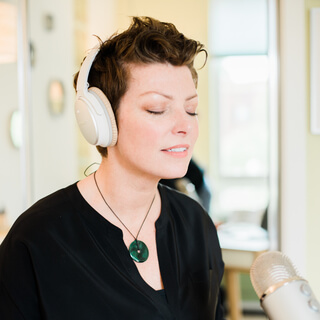
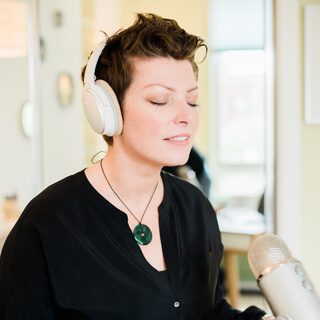
I have these pictures all over my website of me meditating,
It's all very nicely lit and all of that.
That's not what it looks like first thing in the morning.
I just like get up,
I have my little like old decommissioned iPhone next to me that does a little timer.
And then I just take my pillow that I just had on my head.
I tuck it under me.
You don't even wanna know what's going on up here cause it's dark.
I think it's dark.
You know,
I throw on a hoodie or my robe or you know,
Whatever I've got because it's warm in my bed.
I wanna stay there for as long as humanly possible.
And I just sit there and do it then before I even get out of bed to do anything else.
It doesn't have to be this ideal kind of circumstance.
And so that's really what it's about.
It's just about,
And I'm,
You know,
There are a few times like I said in the guide that I'll make suggestions for people,
But my favorite is always still gonna be first thing and I don't always do it first thing but I have a little bit more of a flexible schedule now not being in schools.
So I can circle back to it a little bit later in the day.
But a lot of people,
I mean,
As soon as you hit the ground running,
It's over,
You know,
You've lost any opportunity.
Yeah,
And what we'll do is we'll put that link in the notes on your,
So if you have your,
Whatever your podcast player is,
If you slide over and look in the notes,
We'll have that link on there.
And we'll put it on my social media.
So if you're listening to this late,
Just kind of look back and there's that function on Facebook or Twitter or whatever,
You can look back at certain dates and then look at the date on the podcast and I'll post it,
When we post the podcast,
We'll post a link to that as well.
And then,
Hey,
Here's real quick,
Think about all those members you have and don't tell us anybody's personal business but have you come across like a big success story where,
You know,
Something,
Because here's like what I know whether it's mindfulness or fitness or whatever,
Like that's just,
I mean,
It's just a small representation of the rest of your life and when you make big changes in one area,
There's gonna be big changes in other areas.
Have you had any of those experiences?
Absolutely,
Well,
I mentioned the one a while ago that someone said to me,
You know,
Not only does she feel like she's a better teacher but she's a better parent.
I mean,
Just being more present and patient with her kids,
That was pretty huge but then I had someone come back and say after meditating,
I think it was something like six or seven weeks,
They had gone to the doctor and she had high blood pressure and hypertension and all of it had gone down dramatically because she was not only calming herself down and emotionally deregulating and getting back into her homeostatic state more often by meditating but she was aware of when she was starting to get emotionally escalated and triggered and therefore was able to kind of nip it before it really kind of like,
You know,
Topped out and so that has been really huge,
Just the physical repercussions.
It's funny,
Like one of the things that I talk about,
You know,
My big like four elements of a balanced teacher are like self-awareness,
Self-compassion because you have to start to realize once you know what's going on in your head,
You have to give yourself a lot of compassion and then self-advocacy which is the whole thing about boundaries and healthy boundaries and that sort of thing and then the fourth thing is the self-embodiment which is about the physical health which so many teachers think that because our work is a calling and it's so important that their physical health and wellness is less important and so they don't take the time to take care of themselves and I mean that goes in a lot of directions.
It could be some kind of a physical movement exercise thing,
It could be nutrition,
It could be getting enough sleep and we just tend to think well what my work is more important but as we know,
As you and I know,
It's just you're not gonna be able to do this important work if you're not well and so I really think that while some people can jump into a healthy exercise lifestyle change,
If you actually get into the whole meditation and mindfulness first,
I think that supports it because then you're really aware of I don't wanna go to the gym because it's cold and it's raining and whatever your reasons are and you just sort of notice that resistance that's come up and you are having this awareness in your mind of this internal dialogue and you're like that's true but I know that it's good for me so I'm gonna go anyway as opposed to just sort of believing everything you think as we know,
You shouldn't believe everything you think,
Who knows sometimes how these various thoughts get in there and so you're just a little bit more,
Like I said before,
In the driver's seat of your experience and of your mind and that's pretty powerful.
You know,
Just listening to you talk,
It reminded me,
Years ago I was super fascinated with hypnosis and I went and studied for a couple of weeks out in Vegas with a famous hypnotist and I've never practiced it with other,
Just because it was terrifying to see the impact that can happen in someone's life and I thought that could happen positive or negative,
I'm looking at a positive result in this training but this could go horribly wrong and I don't know what to do so I'm not gonna use that tool but just looking at the research and seeing him work with clients and just what they have been telling themselves unknowingly in their subconscious for years because they didn't know any better when they were eight and they got this message and now it's in their brain forever and it's so far from the truth.
It's really interesting.
Yeah and you just,
You start to realize it and then the other thing you have to come to terms with is if you find yourself having that inner critic voice kick in which just as like a funny aside,
One of the things I love to tell people,
Including teachers but it works really well with kids too is once you notice your inner critic,
That voice,
Give it a name,
Like give it a silly name.
Like with Harry Potter,
There's that whole thing with the,
I forget what they're called,
The Bob Boggarts or something where they turn into your most terrifying fear and you have to say ridiculous and you make them silly and it takes their fear,
Their power away.
It's the same idea and so if you can think of,
What is the silly name that you can give your voice and because I do presentations,
I can't pick a name that could possibly be anybody's name so I've named mine Maleficent.
Although maybe in a few years,
We'll get some students named Maleficent.
I'm pretty sure I had a couple.
But anyway,
Long story short,
Just name it to tame it.
Like see it for what it is and then give yourself some compassion,
Don't beat yourself up because you're beating yourself up.
It's not helpful in any way.
I don't know if you've ever done any research or looked in years ago as big,
This whole NLP thing from Grinder and Bandler,
The neuro-linguistic programming and there's a technique that they use where you really get a detailed video image in your mind of that experience and then over time,
You go through this repetition of it and you play it and then you make it a little fuzzy in your mind.
Then you morph it into more of a cartoon and then you put cartoon music behind that and you'll see it and then over time,
It does become silly and you realize,
Wait a minute,
This is just nonsense.
I've been,
This movie I've been playing in my head all these years.
Yeah,
Yeah.
It's the same thing,
Going back to the whole award thing,
It would have been so easy to not apply and to not put in all that work and it could have been embarrassing,
Like put in all this work and nothing happened and whatever but I would not listen to that voice in my head that was like,
Who are you two,
Or who am I two?
And I'm really glad that I didn't,
So yeah.
Hey,
Listen,
Man,
I really,
Really just,
I'm just visually all these teachers are still out there in the trenches and I can picture them,
I just love that they have now,
They're possible,
They have an opportunity to find some balance and some emotional and spiritual in a way,
Health and I just love that you're doing the work that you do.
Thank you,
Yeah,
It's really,
It's incredibly meaningful and I love doing what I can to help support teachers because we need them.
Hey,
When you were a teacher,
Think back,
Did you ever give bonus points for kids?
Yes,
Totally.
Okay,
Perfect,
Perfect,
Perfect.
Okay,
So let's say I get into this meditation thing,
I wanna say some things and you tell me how many bonus points it's worth.
Okay,
Are we working on 100 point scale?
Listen,
Whatever scale,
This is your world,
Man.
Whatever you think this is worth,
You tell me.
All right,
So you know,
So picture me,
I'm waking up in the morning and you know,
I've already had this pillow for 20 years because we went to Austin,
When you go to Austin,
You buy stuff like this.
So it's a little like maybe one foot tall,
Solid round pillow,
How many points do I get for the pillow?
The one that you have already?
Yeah.
I would say owning the pillow is three points.
Okay,
Using it?
Using the pillow is definitely,
I would say 10 points for sure.
You know what you have to do?
You have to put it in your bedroom next to your bed so it's the first thing you see.
All right,
All right,
Here we go,
I'm not done.
What if I get like a meditation robe?
Like a specific,
I've donned my robe on my pillow.
You know,
That doesn't really resonate for me.
Zero,
God dang it.
All right,
Zero points,
How about the slippers?
What if I get like satin slippers?
You know,
I don't think that.
No,
No,
No,
No,
Beaded,
Moroccan beaded slippers.
Zero,
I get another zero?
All right,
All right,
I know you be honest.
I'm gonna go big,
I need to make up for them.
What if I get one of those soundscapes,
Like a babbling brook?
Oh,
That might be nice,
Actually.
Okay,
What do I get,
What do I get?
I'm at 13.
I would say five,
Five points,
Five points.
Five points,
Okay.
Chimes.
You could start with chimes.
You could see I have some chimes behind me on my shelf there.
Chimes are cool,
Yeah.
How many points?
Five points.
Okay,
Good.
What if I kick it off a little kombucha?
Well,
You know,
You could.
However,
If you get up and go downstairs,
It's going to decrease the likelihood that you actually are gonna sit.
I recommend doing it as first thing.
Yeah,
First thing,
No kombucha for you.
All right,
That's an X.
All right,
Incense.
Yeah,
That could be fun.
I mean,
Here's the thing.
Here's the thing,
All of these things,
I know you're going here,
All of these things are not necessary.
You know what you get the points for?
What do you think you get the points for?
Actually doing it.
Doing the meditation.
I don't care about that,
Give me the points.
All right,
So I'm gonna get something for,
I'm giving myself two points for the incense,
Because that's easy,
All right?
All right.
I'll save the biggest one for last.
Okay.
Because they're already there.
I don't have to go downstairs.
I got the crystals.
I got the crystals right here.
How many points do I get for that one?
Because I am a fan,
I think I have to give you at least 15 points for that one.
15,
All right.
I got 20,
I got 38 extra.
I got 40 extra points.
I love it,
I'm gonna get 140 on this test.
I'm bringing up my average.
All right,
Man,
You're awesome.
Thank you so much.
My pleasure,
So good to talk to you Hal,
I appreciate it.
Good chatting again.
This has been the Teach Like a Rockstar podcast with Hal Bowman.
Subscribe,
Rate and share from halboman.
Com forward slash podcast.
This has been the Teach Like a Rockstar podcast you

![Teach Like A Rockstar [Interview]](https://libraryitems.insighttimer.com/slugs/teach-like-a-rockstar-interview/pictures/tiny_rectangle_medium.webp)