Hey there everybody,
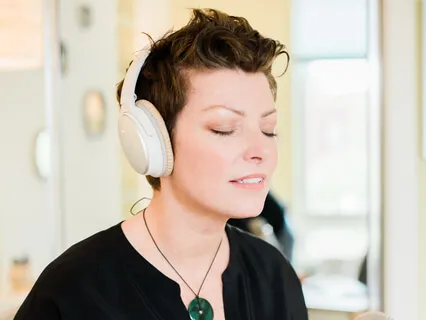
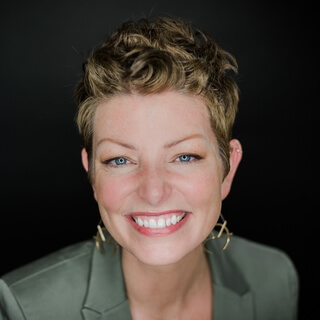
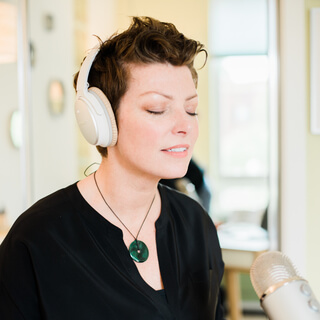
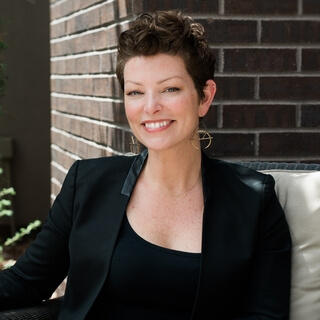
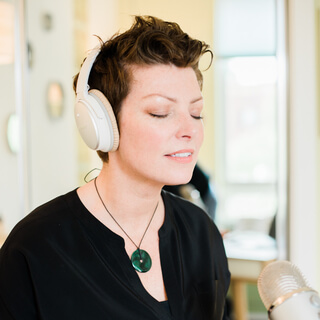
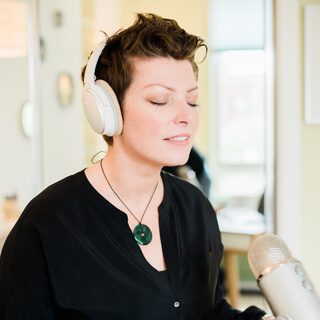
It's Kristen from Teaching Balance and I am here with you for this week's mindfulness meditation practice.
And we are in the month of mindful boundaries.
And mindful boundaries being an extension of self-advocacy and all of the things that we need to do to basically take care of ourselves and to prioritize our self-care.
These are the types of things that,
While there's nothing wrong with a bubble bath and a glass of Prino Grigio,
These are the kind of things that are a little bit more systemic and don't necessarily need to be strategies that you employ when you are already stressed out.
But I'm a really big fan of setting healthy boundaries,
Mindfully setting boundaries,
In such a way that it prevents you from getting to the point where you're desperate for a bubble bath or a glass of Prino Grigio.
So this week our theme is just a reminder of something that I say quite a bit and feel like in many ways I kind of can't say it enough.
And that is the idea of self-care not being selfish.
So as just a reminder,
Because I don't know if I've really talked about this recently,
Remember that the reason it's actually not selfish is because when you prioritize your own self-care,
You're actually doing it for other people.
And what I mean by that is when you think about all the people that you care for,
Certainly your students,
But also your colleagues at work,
And if you have children,
And if you have partner or extended family,
Siblings,
Friends,
All of those people who to some degree depend on you,
When you take care of yourself and you prioritize your own self-care,
You're really doing it for all of them.
The reason being that if you can take care of yourself and of course setting healthy boundaries and being able to say no and not overextending yourself is a big part of this,
What it allows you to do first of all is just to be more effective.
So you'll feel better rested,
You'll feel more present,
You'll feel like you have more energy.
And so everything that you do from something as mundane as answering a question from a student or a colleague or whatever it might be to something more complex like coming up with lesson plans or collaborating with your colleagues,
You will just be better at it I think if you are committed to prioritizing your self-care.
So that's one important component.
And a second important component to prioritizing your self-care is the fact that it'll allow you to be more resilient.
I think that every one of us has had at least one of those moments,
If not probably multiple moments where you are just going and doing and giving to the point where you either burn out mentally or physically or in many cases it occurs simultaneously and then you can't actually be of help to anyone.
And so what you did was you just kind of went too far,
Did too much,
Exhausted yourself because of the fact that there's always so much to do and there's always more to give.
And the problem is we all know that when you're down for the count,
Whether it's because of illness or because you're just emotionally exhausted and perhaps even dealing with mild depression or other types of issues,
Then you can't be of help and support to any of the people in our lives that we want to be of help and support to.
And then the last piece that I want to just put out there,
Again all of these are just reminders of other things that I've written about and said in other videos,
Is you're also,
If you prioritize your self-care,
You're really modeling that for the people in your life.
You're modeling it certainly for your friends and your family members.
You're modeling it for your colleagues who probably need to really have that example for them.
But honestly,
In many ways,
The thing that I think is almost even more powerful is the fact that you're modeling it for the young people that you work with.
So whether you work with teenagers or whether you work with elementary school kids or even early childhood education,
Whatever it is,
And of course having your own kids as well,
These are people,
Young minds that are developing,
That are making their way in the world,
Learning how the world works.
And I believe that they should not only have a model of educators or teachers or adults that essentially martyr themselves to the point where they sacrifice their health and their happiness.
I feel very strongly about the fact that I don't know when it occurred that someone needs to sacrifice some part of themselves in order to have a rewarding and fulfilling career of service.
I don't think it should have to be that way.
And so even though it's a constant battle,
Honestly,
To set up those boundaries and to say no and structure things in such a way so that you can prevent burnout and be effective and all of that sort of thing,
It's extremely important and we're modeling that for all the young people who are watching and learning for every action that we take.
So that's my kind of thoughts for this week regarding this overarching theme of maintaining mindful boundaries or healthy boundaries.
We're going to do our practice,
Not necessarily talking about boundaries during the practice,
But just some food for thought for this week and this month of this boundary conversation.
So let's go ahead and get started.
I'm going to set my timer for 10 minutes.
So just allowing yourself to settle in and checking in with your posture.
If you're feeling a little slumpy today,
That's okay.
But I would encourage you just to remember that we want to be sitting in a posture that's upright but not rigid.
And one of the things I've spoken about before is think of your vertebrae as being like coins stacked one upon the other.
If there's too much of a curve,
The whole stack goes down.
So not tight,
But upright.
Sitting in that posture that exemplifies your inherent dignity.
And if you find that you,
Over the course of the 10 minutes,
Do slump a little bit,
Don't beat yourself up about it.
It's not a problem.
Just shift back,
Roll those shoulders back and do whatever you need to do to get back into that more mindful posture.
Eyes closed or gaze lowered.
If you haven't already,
Let's take some of those deeper breaths.
I find that I always do it a little differently.
If you're stuffy and you can only breathe through your mouth,
It's not a problem.
Or if you prefer to exclusively breathe through your nose,
That's okay too.
Today I'm doing a little combo in through the nose and out through the mouth.
And as you allow that deep breathing to settle you in,
Allowing your physical presence to drop below the chin in particular and feel what it feels like to be in your body.
Feeling gravity.
Now you know you have options when it comes to what you want to rest your awareness on.
So allow yourself just to go with whatever feels right for you right now,
Whether it's the breath or the body or sounds.
Remembering that even though relaxing is a pleasant benefit of sitting in meditation,
Sometimes meditation is not relaxing at all.
Sometimes it feels like it's a swirl of thoughts and emotions and nonstop mental activity.
And remembering that you do not have to change that.
That's just how it is right now.
It's just how your internal mental state is for this particular moment.
And you're going to accept that and be present to that in the same way you would to a more theoretically calm or peaceful mental state.
There's no right or wrong way to feel.
No right or wrong mood.
No right or wrong mental state.
Just allowing yourself to be curious and interested and be willing,
Kind of radically willing just to be with what is.
It's okay if you prefer to be different,
But for these 10 minutes,
It's an exercise in accepting things as they are.
Okay?
.
.
.
.
.
.
.
.
.
.
.
.
.
.
.