Hey there everybody,
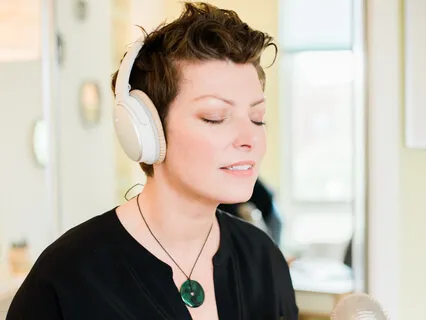
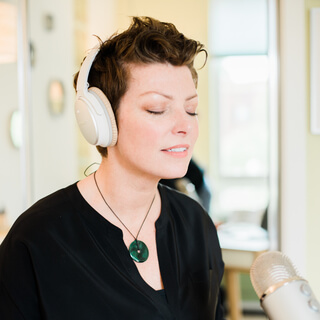
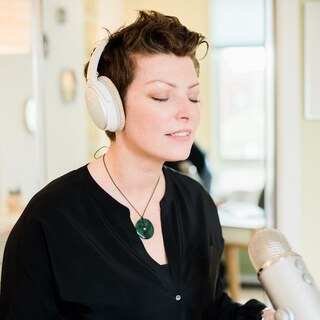
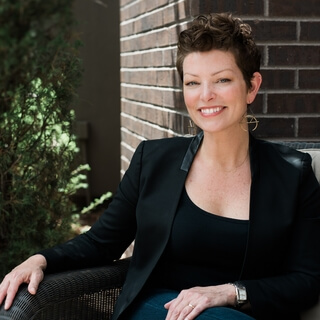
This is Kristen from Teaching Balance and I am here with you with this week's mindfulness meditation practice.
And it is August,
We are in the month of August and the theme for August for Teaching Balance is self-care.
And now that we are continuing forward in the back to school season,
I know some of you are already actually back to school and teaching,
Either in person or hybrid or virtually.
And some of you are,
It's still unclear how that's going to look,
But it's coming.
And it's on the horizon and here we go.
Either way,
This back to school season in this very strange 2020 season is incredibly difficult and as we know,
Teaching normally is incredibly difficult,
But now it's extra.
It's extra because of the fact that everyone is being asked to do so many new,
Unfamiliar things and it's extra because of all of the concerns regarding health and safety and the pandemic.
And I know you don't need me to give you the laundry list of all the reasons why it's hard.
What I would like to do instead is talk to you a little bit about my invitation to you this week around the idea of noticing and questioning your internal dialogue.
So here's what I mean by that.
As you know,
We are all constantly thinking all the time and one of the beauties of meditation,
Which we will get to shortly,
Is that you're actually just making a choice for a prescribed amount of time to cease following your thoughts as they pull you hither and thither and instead you just rest.
But most of the time the discursive mind is thinking and reflecting and coming up with ideas and there's a lot of self-talk and all of that.
You all know very,
Very well what that can look like.
And so the point that I wanted to make around this idea of questioning your self-talk is this.
In these incredibly challenging and stressful times,
It might be very easy for us to,
In the midst of all of these stresses,
Fall back into questioning our abilities.
Am I good at this new hybrid COVID world of whatever teaching looks like?
Or am I not doing as good of a job as my colleague?
Or am I not handling everything as well as I think I should be able to?
Or whatever.
Again,
All of these things go on and on.
And so the point I want to make is I would like for you to notice when these thoughts,
This self-talk or this internal dialogue occurs,
And when these things that you are thinking about,
When the voice in your head is saying something that just isn't helpful or productive,
I would like for you to pose a question to yourself.
And that question very simply is,
Is this true?
Now this question is not something of my creation.
It goes back to the work of Byron Katie.
And she would probably say that it comes from other sort of older,
Ancient systems of self-inquiry.
But nonetheless,
The question is just,
Is this true?
So when you're asking yourself or you're telling yourself something like,
I should be handling this better,
You can just simply say,
Is that true?
And then you can let the answer arise.
Because who's to say what handling a COVID 2020 back to school season well should look like?
And who does do that?
And you can go from there.
And so as you begin to drill down through the various thoughts and beliefs,
Just continuing to play with and introducing this idea of is it true can really be empowering.
Because as you can imagine,
So much of what we are hearing in our mind is not true.
And it's self-created and we could spend a long time talking about where it comes from culturally,
From our childhoods,
Whatever it might be.
But the point is just being very in tune with and aware of what's going on in your mind when it comes to that voice in your head and being willing to question it by asking yourself for whatever the belief or the thought is,
Is this true?
Now I'm going to have us transition into our meditation.
I can hear a power tool going outside of the room.
I don't know if you can hear that or not.
But I'm just going to ignore it.
But if it is something that you notice,
I think it's some sort of like a power tool of some kind,
Maybe a router.
I don't know.
Nonetheless,
Let's go ahead and get started.
I'm going to set my timer for 10 minutes.
You can think of this as advanced meditation with the distraction of the power tools.
Allowing yourself just to settle in.
Taking those deep,
Slow breaths.
Allowing that deep breathing to settle you.
Last week,
We did a whole deep dive on allowing yourself to feel very settled and grounded.
So if that appealed to you,
I'm going to invite you to invoke that now as well.
Really feeling the connection to the ground and whatever contact you're making with whatever is supporting you,
The chair,
The cushion,
The bed.
And as we settle in,
Remembering that you can rest your attention on either the breath sensations associated with the breath or the body.
Holding your body in its entirety in your awareness or perhaps choosing one part like the hands or the feet or the face.
Or resting your awareness on sounds,
Which for me and my power tool outside is going to be my choice for the day.
And just take advantage of this opportunity briefly,
Whether it's sensations or sounds.
Something catches your awareness and there's a temptation to judge it or to deem it as something you don't like or it's unpleasant.
I'm going to invite you just to let go of that judgment.
In this case,
Not saying that the sound is pleasant or unpleasant,
But it's just something generating sound waves that are making contact with my eardrum.
And I might notice elements of it that have a quality of constancy,
Elements of it that change like a volume or the tonality.
You get the idea.
And you can do that with an area of physical discomfort if you have that,
What might be perceived as unpleasant or unwelcome.
And in that case,
Perhaps noticing the boundaries of the discomfort or the quality of it.
Is it a tightness or is it an ache?
Is it warm or cool?
Let's go ahead and just sit in silence for a little bit and I'll check in in a while.
Letting go of any expectations about this practice,
This meditation,
And allowing yourself just to rest.
Rest in knowing that you don't have to follow any of those thoughts.
You can just rest your attention on the noticing of how things are for you right now.
So let's do that for a little bit.
Let's go ahead and let's do that for a little bit.
All right.
.
.
.
.
.
.
.
.
.
.
.
.
.
.