Leading a school district is a unique responsibility,
And it's clearly not getting any easier.
People rely on you for answers to complicated problems,
Which feels isolating and sometimes unrealistic.
Conferences or webinars,
Even good ones,
Don't solve problems when you need it.
And sitting and staring at slides with someone talking at you doesn't help either.
What if there was a better way?
What if you belonged to a national,
Hand-picked community of job-alike school leaders who could circle up to strategize and solve your most challenging problems when you need it?
What if you had access to ongoing content that helped you solve problems and lead every day?
There is a better way.
When you join LeadingEd Solutions,
You'll join a carefully selected,
Highly committed group of job-alike peers from across the country,
A support system beyond your backyard,
School leaders helping other school leaders,
Real people tracking real issues in real time.
Simply submit your challenge.
We'll circle you up with your peers to provide solutions.
Our content works because it's accessible,
Practical,
And created by proven leaders just like you.
You don't have to lead alone.
Apply to LeadingEd today and discover why circles are better than rows.
Ladies and gentlemen,
Members,
How are you?
Jeff Rose,
As you know,
And I want to say welcome to today.
Welcome to this content.
I'm really looking forward to this leader chat that we're about to engage in.
And just in case we have some new members or some people viewing this that are not members,
The reminder is this.
As you just saw in our explainer video,
We are a community of leaders.
When I left the superintendency,
The concept is that our leaders need each other and they need each other and access to one another in a different and unique way,
One that truly really pushes the concept of collaboration.
We are better together than we are alone.
And sometimes that's really difficult to do as you are sitting in a very isolated seat.
And I understand that from experience.
So the concept here is to bring just very focused and pragmatic content based upon your needs.
How do we know your needs?
Well,
It's because we listen and we talk and we engage.
I can notice in our solution circles or in our one-on-ones that there are some very specific needs.
And this month,
We're really focusing on the concept of leadership self-care as well as state of mind.
And how do you support so many people amidst the pressure that you're feeling unless you're taking care of yourself?
And I actually think that is easier said than done often.
So the concept is let's get some help with that.
So today,
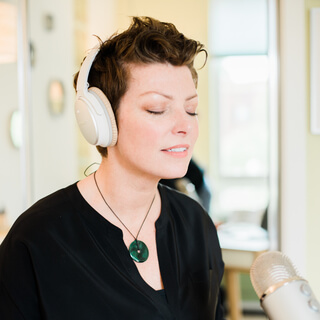
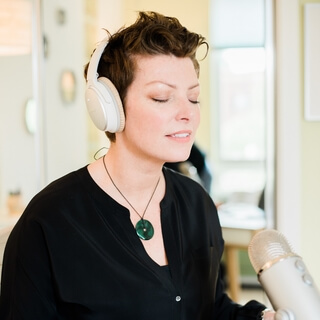
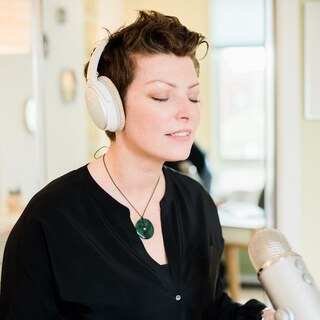
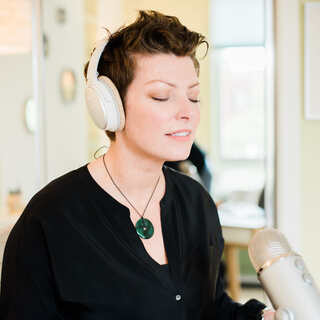
What we're going to do is I'm going to be bringing in Kristen McKeown.
And I'm hoping I said her name,
Her last name correctly.
It's not as easy as I just made it look.
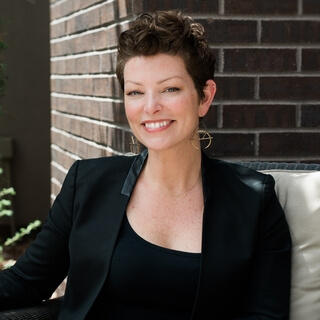
So I will tell you that she is the founder and CEO of Teaching Balance.
And I found Kristen actually just by researching.
It was not stalking.
It was researching.
And I came across her content and I started watching it.
I started listening and visiting her website until I invited her and I asked,
Based upon her expertise,
Whether she would talk to our members.
She was definitely kind enough to do that.
And before I bring her on,
I want to talk to you about some of the language that really impressed me.
If you were to look her up,
You would notice when she describes what she does,
She says,
I help hardworking teachers manage their stress and integrate mindfulness and meditation into their lives by providing online meditation instruction and teachings in person and in virtual workshops and in one-on-one coaching.
Who she works with,
She partners with educators,
Including classroom teachers,
Counselors,
Mental health staff,
Administrators,
And school support staff.
And in my conversations with her,
I let her know who we support.
And I promise you this,
Her content and expertise aligns precisely to what I believe we need.
So without further ado,
Let me invite Kristen.
Kristen,
I really appreciate you being here.
Thank you so much.
It's my pleasure,
Jeff.
Thanks for having me.
Absolutely.
So maybe we're looking to support superintendents and their executive teams,
Which is the academic as well as operational side of the house.
And you just heard me mention our theme for this month.
And before we kind of get into that,
Maybe just tell us about yourself.
What is your narrative,
Your why?
I know you're an educator and so forth.
I didn't want to give your resume because you can do it much more efficiently and elegantly than I can.
So just tell us about yourself and what you're up to.
Sure.
So I just recently retired from education in the formal sense.
I was a secondary educator for 25 years.
The first 10 years I was a high school English teacher.
And then the last part of my career,
The last 15 years,
I was a high school librarian,
Which in my humble opinion is the best job that anyone can have in a school.
And throughout those 25 years,
I had the good fortune to work with some amazing colleagues.
But of course,
As is the case in education,
It can be extremely stressful at times.
Even when I left the classroom and became a librarian,
I'm a relatively driven and hardworking person.
So it was to me about not just being a librarian,
Although that would be perfectly fantastic,
But I had to be a nationally award-winning librarian,
Which we were.
And all of that is wonderful and achievement is fantastic,
But with it can come the toll of a lot of pressure and stress that can be associated with all of that hard work.
And so what I found in my seeking to try to work with that was to look into the idea of meditation and of course,
Like a good English teacher slash librarian,
I read books first,
But it wasn't until I actually went to a workshop and had someone teaching me directly that I realized how profoundly impactful it could be.
And so while I originally thought that I would be bringing that work to teens,
Because of course that was always the students that I worked with,
There were actually a lot of people doing amazing work on the national level there.
And so my path actually found me really spending more time working with supporting my colleagues in education because I could see,
Like me,
That it was wearing on them and just trying to help people not only integrate mindfulness as a tool and as a practice,
But also just having more candid and honest conversations about self-care beyond the bubble bath and into other types of what it really means to prioritize your self-care.
So you mentioned being a driven person.
You might imagine that leaders,
At least the leaders that we support,
I can promise you as being a past one myself,
Being very type A,
Very driven,
Almost prides themselves on caring for loads of stress.
And almost we wear it like a badge of honor and yet that's not necessarily healthy.
So from a perspective as a driven person yourself,
What would you say educational leaders should be considering right now?
Right now in this pandemic world that we're dealing with where I,
Not surprisingly,
Follow a lot of teachers,
Social media,
And see a lot of education memes.
And you probably,
If you do as well,
Seen the ones where it talks about regular tired versus teacher tired.
And now it is teacher tired versus teacher tired 2020.
It's just a completely another level that nobody could ever anticipate.
And so I think the way that I was just reflecting on this past calendar year and everything that we've been through is that it really is and has been a crucible in the sense that it has burned away everything that it could and that is non-essential.
And so I feel if I can speak for myself and my friends and colleagues,
And this may be the case for your folks as well,
There's been a shift and it really is about what is most important.
And so one of the things that I think many of us realize when we get to a certain point,
Whether it's in these extreme times or not,
Is ultimately something brings us to that point of reckoning where we need to realize what is it that's going to give so that we continue to go farther.
And so I think this idea of wearing your overwork as a badge of honor,
Which I know I'm so familiar with and still see to this day,
The good news is I think that that is falling out of fashion.
I think that in the culture at large and in education,
What I'm happy to see is that the conversation around self-care is becoming more common,
More embraced,
And I think that that's a good thing.
So if anything,
Like with so many elements of our world and of course education,
What this pandemic has done is it's really exposed the cracks and it's allowed us to really come back to what is most important.
And I think most of us have come to the realization is our families,
Our health,
Our work,
But not to the point where we're sacrificing our wellness and our relationships to still be able to do the important work that we do.
So I suppose that's kind of my summary of what's going on at this point.
So you said at this point,
So let's face it,
This time of COVID created incredible anxiety.
You started what you do teaching balance prior to COVID,
Right?
And so you already recognize the need in yourself and you found this kind of niche and this need with educators for the reason.
And now COVID,
Which has created an incredible,
Like I said,
Anxiety and for educators specifically,
We know from data points,
Even our kids,
Very,
Very scary that we were walking into COVID at one of the most stressful,
The most stressful times our kids have ever faced in the country,
Not beyond.
And that's only increased and it's done so also with adults.
So that being the case,
What have you noticed amongst educators in the last maybe eight to nine months?
I think that one of the things that I've observed is a willingness for people to express a little bit more vulnerability and in a very healthy and still professional way where I think previously there was this more common conception is you always want to appear like you have it together.
You do that for your students,
You do that as administrators for your staff and your faculty.
And so we all go around just trying to continue to appear as though we have it together and we're doing our best.
And what I have seen is we've hit a wall.
There's a point where that just doesn't work anymore and we need to ask for help.
And asking for help might look like establishing some kind of a boundary between your work and your non-work life.
Establishing a boundary can also be interpersonal and we can talk more about that.
But asking for help can also be literal in the sense of like,
I need to talk to someone and that could be a mental health professional,
Which I think the stigma around that has shifted also in the last year,
Certainly.
But even in your community,
Being able to reach out to your peers in other parts of the country just to ask for help and to be willing to drop that veneer of having it all together and share your experience.
Because I think there really is a lot of healing in sharing and storytelling and community.
And I think that that is one of the primary things that I've come to realize.
And the last thing I'll say about that is when you're looking for or asking for help,
It could be any of the things that I mentioned and it could also be things like something you might not have been willing to try before,
Like mindfulness meditation,
Which of course is my thing.
So yeah,
That really is what I'm seeing the most and I really feel like it's a very positive thing.
Okay,
So before,
I know I have some other questions,
But let's pause based upon what you just said.
Maybe you can help us by breaking down mindfulness meditation.
Maybe you can just share a little bit more about that in whatever is the most clean and efficient way.
I mean,
I can say,
I've even mentioned this to our members and we have our own communication channel online that we can talk.
I have mentioned to them that over the past year,
I've started to meditate myself and I can promise you years ago,
As I was also wearing that badge of honor,
Like I can take this,
I'm a leader,
This is my job.
I do this on behalf of the people I support.
I never would have thought of meditating.
I would have struggled with it.
I would have said,
Listen,
I don't have time for that.
And that doesn't seem necessarily productive.
That seems like 10 more minutes I could be doing something else,
Such as answering emails in the morning and it's already before 5 AM.
But if only I knew then what I know now,
But that's on my just dipping my toe in.
You have some extra experience.
So maybe just help us understand a little bit more.
Sure.
Well,
I'd love to,
I'll explain the kind of what it does and how it works and hopefully just debunk some common misconceptions.
But before I do,
In terms of just the reason why,
The thing I think about is it's not as fashionable as it once was Stephen Covey and the highly effective people.
One of the metaphors that he uses,
Which I feel is so poignant and so powerful is this idea of sharpening your saw.
And so for anyone not familiar with that,
The idea behind it is,
If you're looking at this,
Cops of trees that you have to cut down with your saw,
You're just going to take your tool and you're going to go for it.
You're going to start cutting those trees down and there's going to come a point where your blade will begin to dull because that's just what's going to happen.
It's just the nature of things.
And so what many people will do is they'll say,
Well,
All right,
Well,
I'm just going to keep going.
I'll just saw a little harder or I'll just,
It'll take a little longer,
But that's okay.
I'll,
You know,
If it takes more time,
I'll put the time in,
You know,
I know I'll do what I got to do.
And it goes on and on to the point where people are expending an inordinate amount of unnecessarily excessive energy time if instead they could have chosen to pause and sharpen the saw and then get back to the task at hand.
And so I find that to be very powerful because it's not about like so many people,
I could tell you that,
You know,
You should consider mindfulness meditation or other self care practices for the purpose of your own health and wellbeing.
And that might resonate with some people,
But really what I have found with my colleagues in education is that honestly,
One of the more persuasive points that I might make is you'll be better at what you do and you'll be able to do it more if you actually consider integrating some of these pausing practices,
These sharpening your saw practices into your life.
And that can look a lot of different ways.
Covey talks about just quiet time,
Solitude,
You know,
Engaging in some sort of a hobby that really nourishes you.
So it's not just mindfulness,
But I feel like that's a particularly powerful component to it.
And so I think that's just one component to begin as to why it might be worthwhile.
Because I understand when I work with people either in person or online,
And I felt the same way even when I went to that first workshop,
You know,
Oh,
10 minutes a day and I'm like,
No,
I don't have 10 minutes.
And of course,
Now as I look back and see how profoundly impactful it can be,
It's not a wasted 10 minutes,
You are actually sharpening your saw,
Not only in the sense of the restfulness of it.
But the other metaphor that I like to describe in terms of the value of meditation in particular is if you think of like a snow globe.
And so many of us with this,
You know,
Snow globe,
It's shaken all the time,
There's always things going on,
Your thoughts being like the little particles of snow,
Swirling and swirling because you're so busy and there's so much going on.
And because of that,
You lack the ability to see what needs to be seen through the water.
Let's say it's,
You know,
The Statue of Liberty in your snow globe or whatever it might be.
But once you actually allow that to have stillness,
All of those particles begin to settle and you have more clarity through the water.
We love our metaphors,
By the way,
In the mindfulness world.
But I think it's a pretty helpful one because,
And by the way,
That is used even when we teach mindfulness to young children.
They do some sort of like a jar with glitter and water in it and the kids get it right away.
It really allows all the glitter or the snow to settle and then you get more clarity.
And sometimes it happens on the cushion as we say,
And sometimes it happens later.
But that is also extremely important because when we talk about how much responsibility that we are dealing with as leaders in education,
You want to have that clarity.
And then another big component to it,
And there's just so many,
There's a laundry list,
Honestly,
But that emotional self-regulation of not being as reactive or just not allowing your emotions to escalate to quite the same degree.
And that's talked about a lot when we teach it to young children,
Having some emotional self-regulation,
But it absolutely applies to adults as well.
And so regular practice,
Even when things are going smoothly and things are fine,
Can actually really prepare you,
The impact of it,
The results of the effort that you're putting in by choosing to sit for 10 minutes or however long.
It does impact you in your day to day.
And so when you think about the advantage of having your saw sharpened and you think about having more clarity and having a little bit more emotional regulation,
Being more responsive than reactive,
I think that's pretty compelling as an argument as to why that 10 minutes is worth it.
Okay.
So I'm going to keep,
Because this is so important,
I'm going to push you a little bit more because we're kind of at a really important time in this discussion.
I mean,
Over the past couple of months,
I've talked with Tim Elmore and Tim does an amazing job breaking down the needs of people that we serve based upon their generations.
He's kind of an expert in generation Y and Z and that's kind of his lock and he really,
Really helps us with that.
And Adam Sun,
Who wrote the EQ intervention,
A psychologist at Texas did a really good job and he's kind of an SEL expert for us and he did a great job.
But Clayton Wilcox last week,
I talked with him,
An ex-superintendent,
But here's what I,
This is what I know.
Even if,
Even,
And I believe that our members,
You may have their head shaking up and down,
Right,
Which is good,
But the problem,
If that's it,
If they think,
I need to go research how,
Done,
It's not going to happen.
Right.
Because it's one thing convincing somebody that,
You know,
They need to,
It's another thing they show them how to do it because somebody says,
It's really kind of refreshing and I can,
I can feel the need relative to the caring of my own anxieties and pressure,
But I don't know what that means or what that looks like,
What that's like,
Or definitely what that sounds like.
So maybe help us with that.
Let's get really kind of pragmatic and,
You know,
Digestible for a minute.
So how would you describe what that is?
Help us a little bit more.
Well,
Probably the best way to describe it,
I think would be if we just give it a go.
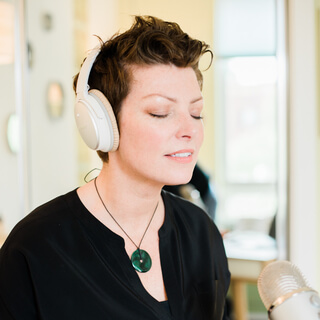
Do you feel comfortable just having us do a very short mini practice?
What do you think?
Yeah,
I mean,
We can do that as long as my worry in that is,
What is,
What is my expectation during that?
I mean,
I don't know if my performance as a listener,
But so I,
You just take over,
How's that just kind of follow and listen and,
You know,
Assume that what we're going to jump into kind of paints that picture.
Does that make sense?
Yeah.
Okay.
All right.
Absolutely.
Thank you.
I'll give it to you.
So my timer here for,
For when we're,
We're done.
So first thing I would invite everyone to do is first of all just let go of any expectations.
It's so easy for us to immediately shift into,
Okay,
I'm going to,
I'm going to nail this.
I'm going to stick the meditation landing.
Yeah,
I do that every day.
Yeah,
Exactly.
Oh yes,
I'm going to do this.
No,
Just,
Just let go of that for the time being.
I'm not going to front load it too much.
I think I'd almost rather do some talking while we're in the practice.
So first I'm just going to invite you to notice how you're seated.
I'm assuming most of you at the moment are seated in a chair.
If you're listening to this while you're doing something else,
Driving would be one thing,
But even if you're just,
You know,
Doing some other activity,
I'll just invite you to pause for a moment.
You don't even have to sit down if you don't need to.
And just noticing the position of your body and feeling gravity for a moment.
We usually don't think too much about our bodies unless we are hungry or we hit our hand or something that calls our attention to it.
So I just want you to check in with your body.
And as you are pausing for this short practice,
The first thing I'm going to have you do now that you're a little more settled into your physical body is I'd love for you to just take a few deeper breaths.
And I'm just going to ask you to trust yourself regarding what that looks like.
And if for some reason you're finding that it's challenging for you to take a deeper breath right now,
Which can be the case in many circumstances,
Just doing the best you can just to make it a little slower,
Maybe a little deeper.
Doing that a few more times.
And those deeper breaths activate your body's relaxation response,
Which is also helpful in terms of being more physically present.
And one of the reasons that we do this is just to allow you to feel a little bit more grounded.
We go through our day,
In many cases,
As this floating thought bubble above our head.
So there's something rather grounding,
And in some cases comforting,
About occupying our bodies.
And so as you're settling in,
The classic anchor for your attention is to rest your attention on the breath.
But if you prefer,
You can also rest your attention on body sensations,
Or even the sounds that you're hearing.
The sound of my voice,
Sounds outside the room.
And of course,
Resting your awareness on any of these anchors,
The breath or the body or sounds,
None of it is particularly riveting,
And so your mind is automatically going to start to drift off into something more interesting,
Like a list of things you need to do,
Or ideas that you're having,
Or how you can bring this to your staff,
Or whatever it is,
And all of that is just fine.
That's expected.
It's a very common misconception that we're trying to cease thinking or quiet our mind.
Instead,
It's really just about over and over again,
Noticing that your mind has wandered,
And then just bringing it back to whatever is the easiest for you to rest your awareness on,
The breath or the body or sounds.
Letting go of any pressure that you might be putting on yourself to get this right,
And instead just knowing that if you just keep coming back to the present moment,
You can't do this wrong.
Noticing where the mind is now,
And if it's wandered off,
Remembering that's not a problem.
It's actually the noticing that your mind has wandered when you're doing that metaphoric bicep curl of mindfulness,
So it's never something to beat yourself up about or feel bad about.
Each time you notice is that opportunity to then realize thinking,
And then bring your attention back,
And we do this again and again and again.
For the last minute or so,
The other thought that I'll leave you with is to,
Even though it requires energy to keep coming back,
Effort,
It's actually very deeply restful because you're giving yourself a break from all of that assessing and evaluating and adjusting and fixing.
And instead,
You're just allowing yourself to be very deeply present to,
And at least for these few moments,
Accepting of how things are right now.
So let's just sit in silence for a little bit longer until you hear the bell.
And when you're ready,
Just coming back.
That was awesome.
You know,
It was awesome.
I'll tell you why,
Because every,
I told you,
Every morning is a little,
I have to put effort towards this.
It's always easy.
But I have learned that scoring myself on a rubric relative to performing and meditation is also not needed.
It's truly not needed,
And as soon as I got to the place,
You know,
As an ex-athlete and ex-leader,
Et cetera,
That's not what this is about.
And then learn to really look forward to this daily discipline of trying to put my mind to coming back because it does naturally work,
But I've gotten into it just with that muscle of bringing it back.
And then when I'm done,
I feel more refreshed.
But the cool thing is I also look forward to it the next time because I feel like I need it.
And that's been interesting.
And so I appreciate that.
And the reason why that was kind of neat,
That kind of impromptu process,
It shows our members like that's what it is,
Right?
And so,
And I know you have more resources and we'll get to that here in a second,
But I thank you.
That was awesome.
Good.
I'm so glad you enjoyed it.
And the one thing I'll say in response to your point about how you feel after or even how you feel during it,
One of the important things,
And I really try to emphasize this,
At least with the folks that I work with is it's not about achieving a certain level of experience either in the practice itself or after,
Believe it or not.
I mean,
That's nice when it occurs,
But it's actually much more about cultivating the quality of presence and acceptance of how things are.
So if you're feeling very agitated and you're sitting,
You don't need to get up because you're not like all zenned out or anything.
That is what you want to be present to in that moment.
Your leg is moving.
Okay,
My leg is moving and you're just accepting of it and you're present to it.
You're not trying to change it or fix it.
And that in and of itself is really what I think leads to kind of the superpower of being able to be present to and work with whatever arises,
Whether it's internally or in the world around us.
And so that's the important thing.
Not every practice or every sit is going to be necessarily calming or feel good,
But you're still going to reap the benefits from having done it nonetheless.
Yeah.
Well,
What's intriguing about you,
Kristen,
Is that what kind of drew me to wanting to talk to you wasn't just the fact that you have this expertise in meditation and mindfulness,
But you work with educators.
You're an educator,
Right?
It's just an awesome cross kind of section.
So you gave our leader some advice on supporting themselves and the importance of that and some really important analogies along the way.
What do you say to them relative to how they can support other people?
Because I am pushing them a little bit like,
Hey,
Just like you said,
You have to take care of yourself in order to be good for other people,
Which is very strategic on your part,
Right?
It's a great flip of the narrative to get them to focus on themselves.
So it's done.
Because now as their job is,
As their calling is to support educators and of course communities,
But most importantly,
Kids,
You know what a superintendent is and does as well as their team,
Whether that be a CFO or an assistant superintendent of instruction,
You get the structure.
What advice do you have for them on how they can take care of others at a time like this?
I would say the thing that's coming up for me is that I don't think it's all,
Excuse me,
All,
One size fits all.
I think everyone is different.
And so that's an important thing to acknowledge and be aware of.
I think knowing yourself is extremely helpful.
Knowing what your strengths are as a leader,
What one superintendent might do could be very different than the style of another.
And I think that there's something very valuable in honoring who you are when it comes to how to go about such an important task of supporting your teachers.
And so even though that seems incredibly obvious,
I think it's really true.
Know what your strengths are,
Know maybe where your blind spots are,
And you don't want to necessarily try to fake something that isn't really sincere and genuine,
Which really brings me to my point,
Which is to be yourself,
To be very authentic,
To be willing to have that quality of vulnerability to whatever degree it feels comfortable to you and also appropriate.
I just feel that it's so important for us to see leaders sharing their challenges.
Again,
It's all,
You don't want to overshare with your students.
It's the same kind of thing.
You don't want to overshare to the point where it feels like,
Is this person the one we really want to be leading us right now or whatever it might be.
And I'm not concerned about that,
But I really do think that honoring who you are and your uniqueness,
Your strengths and weaknesses ultimately really does translate to your school communities because you are being yourself,
Honoring who you are and what you need,
Sharing to whatever degree feels appropriate and expecting the same thing of the people who you serve.
And I think that can then can give people permission,
Your teachers and all the school district staff to begin to feel that they can start to,
Again,
To an appropriate level,
Show that level of vulnerability and that sort of thing.
We have,
I have a member,
One of our assistant superintendents and I had a one-on-one a couple of weeks ago and he writes,
He does a blog every week to his community.
And at the time he was focusing on them.
He was talking about how hard it must be for them and how his heart with them,
Et cetera.
And people really appreciated it.
However,
He once wrote just recently,
A few weeks ago in his blog,
How he was struggling.
He just said,
I got to tell you,
Let me tell you what's hard.
And he kind of was transparent to them about himself.
And then that's when people really responded to him.
They were already engaged and thankful,
But when he came clean on,
Man,
This is hard for me and this is why,
And it was very heartfelt.
It was believable to see the response that he got in return because people appreciated him just being real about his issues.
It was authentic.
And anyway,
It's a good reminder based upon what you just described.
So tell me this,
Tell me about how do our people,
Whether they're our members or other people who see this,
How do they get in touch with you?
What should they know about you and what you do and where you're going?
Sure.
Well,
I would say I'm certainly out there on the interweb.
So my website is called teachingbalance.
Com.
I'm also probably most active,
I'm active on LinkedIn,
But also on Instagram.
I've been having a lot of fun with that to circle back to this idea of knowing your strengths.
Another thing that I have found for myself,
Particularly in this last year with all the challenges that I've faced and of course so many others is allowing yourself to follow the direction of what feels easy.
And what I mean by that is,
Oh,
This is supposed to be the new thing,
But if it doesn't really resonate with you and it doesn't feel easy,
For lack of a better word,
You're probably not going to necessarily be what you,
Or it's not going to serve you in the way that you might've hoped.
And so Instagram has always just enchanted me with it's very visual.
I tried to do Twitter,
Especially back when I was a librarian.
It's just a bit too much for me.
And so I'm on Instagram,
It's at teaching balance.
But probably I would say to be even more connected,
I would invite people to consider signing up for my newsletter,
Which you can just access by going to teachingbalance.
Com slash community.
And if people are interested in dipping a toe into mindfulness and meditation,
You've already gotten a sense for my tone.
I'm very down to earth,
Very laid back.
This is pretty about as chill as it's going to get when it comes to this approach,
Because I get it.
I mean,
I understand squeezing it in is difficult and I understand and empathize and really try to tailor what I offer within that context of just being very,
Very realistic.
So if someone were to sign up there,
Then you'll have access to some free practices and most of which are actually exceedingly short.
So really only five minutes,
Which I do actually believe that five minutes a day can make a difference and it's a very strong start,
Which you could always build upon.
So yeah.
Well,
I,
Like I said,
I'm competitive.
So the fact that I do 10 makes me kind of good at it.
Nice.
Yeah.
And so,
Kristen,
I really,
Really appreciate you.
And I'm really thankful that we had this conversation.
I followed you on Instagram today and only because I am working on figuring out the Instagram strategy.
So I'm going to pick your brain on that later too,
Because I've been a Twitter guy for a long time,
But it has some things about it that aren't as efficient as Instagram is.
So I see,
I've seen you on Instagram and some others,
And I just,
I need to dive into that too.
And I'll be very willing to admit all the things I don't know because I'm a humble man and I'm an idiot when it comes to Instagram.
So Kristen,
This is great.
And I will make sure that as we push this out to our members,
The information you just described,
We also include that.
I have been on your website a number of times and there are a lot of pieces there that people can get a flavor of what you do,
As well as resources that they could just pull right now.
So I have explored that.
So thank you for what you do and thank you for this time.
I think our members are really,
Really going to appreciate it.
I know I have.
So thanks.
It was my pleasure.
And I just hope if this plants one small seed in at least one person in terms of their self care,
I think that's a wonderful thing.
And I appreciate you allowing me to do that.
Awesome.
Awesome.
Okay.
So you know,
Ladies and gentlemen,
Once again,
I'm Jeff Rose and I will make sure this information becomes available to you.
This will be posted on our site.
We will create the necessary links so that you have it.
And you can also share this accordingly with your staffs as well.
So leaders of Leading Ed,
Hope you have a wonderful day and be well.