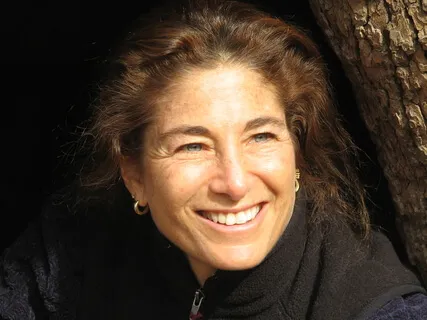
The following talk is given by Tara Brach,
Meditation teacher,
Psychologist and author.
So namaste.
So Sunday at BuddhaFest the program we had was called Beloved Community and it's a phrase from Martin Luther King and it really speaks to this aspiration that we wake up from that which separates us and in particular wake up from the suffering of racism and live together in a way that's truly respectful and loving,
Equitable.
So the conference organizer set the stage by introducing those of us who are part of this group and the panel and introducing the topic at which point you could hear Siri's voice saying very loudly,
I'm sorry I didn't quite catch that.
And it was an amazing beginning to a program.
And I think you can understand why.
I mean here we were exploring what so many of us,
You know,
This exploration of how we create separation and we get a glance at it,
You know,
We get a glimmer of ways we create distance with each other and in our world and then we glance and turn away,
We don't quite get it,
We don't stay,
We go back to automatic,
Back to our old habits and identification so we don't quite catch it.
So one way that I understand beloved community is as our evolutionary potential,
That it's the inclusive heart and if we look at brain development over the eons we see that the most recently emerged part of our brain,
This frontal cortex,
Has this deep capacity,
It has the whole neural net for empathy and for compassion and for what we might describe as an inclusive heart,
That that's our potential.
And you can see that there is a growing sense of interdependence in our world,
That we get it whether it's through the internet and information or whether it's through a global economy where we really are interdependent or climate,
We get it more and more,
This interdependency.
And so there is a growing view amongst psychologists and evolutionary biologists that actually says even though it might not look that way to us that violence is decreasing over time on planet earth,
Human violence,
That our brain is developing – Pinker is one of the great ones that has been voicing this in his book Better Angels – but that there is more cooperation,
Less violence.
So inclusive loving community is an intrinsic,
Archetypal part of the spiritual path,
That vision,
That aspiration moving towards that.
And it was so for Martin Luther King and for Nelson Mandela.
It was in the Buddhist tradition it's called sangha.
And sangha means that we truly get our relatedness,
We live from that deep respect and appreciation of this beingness that shines through each of us.
So in the Buddhist teachings there is no freedom possible unless we really get that interdependence and we live in that sense of true belonging.
That it's not like you can go off into a cave and get very,
Very still and have these wild experiences and realizations.
If you don't have that sense of being with others and sensing these beings are part of my web of belonging,
There is not a real freedom.
You can't be compartmentalized like that.
Which goes to one of my favorite personals which was in Tricycle magazine,
Tall,
Dark,
Handsome Buddhist,
Looking for himself.
So you get it.
I know.
So I often refer to a verse from Rumi which really says that our path isn't to seek for love but to seek and find the barriers that we have erected against it.
And it's really a very deep theme in spiritual life that the loving and the awareness is already here but we have conditioning that's both individual conditioning and our collective conditioning that stops us from inhabiting it.
So that's what we are going to look at together.
What is that conditioning?
And we are going to look at it again not just individually but what is it in our collective psyches that stops us from really feeling beloved community.
And I would like to in this class shine a particular lens on the separation we create through racism.
It's for me this inquiry with you is deeply personal and alive and immediate.
It's not something like,
Oh yeah,
I looked at that and worked through that one.
It's very,
Very alive for me.
And I am very aware of the depth of the challenge,
How much reactivity and different views come up.
And I am also aware that I can say in a real simple way it's not even a choice to hang out in this inquiry for me.
It's like there is no way to keep on waking up unless I examine within myself.
And again I said both my own personal condition but also who I am in that collective identity as a white person.
There is no way for me to… Whatever is unseen controls and limits us.
And if I don't see it,
It keeps me separate.
So it's very personal in that way,
The passion for it.
So I would like to start in a broad way about creating separation and then kind of narrow the lens some.
And the broadest way that is described is kind of that existential sense of separation that every living organism has,
That every living organism has some perception of in here is self and out there is universe,
Other,
And that there is a need to protect and further self.
And Einstein calls it an optical delusion of separateness.
Most of you are familiar with that,
The way he describes it.
It's very,
Very useful.
And yet it's universal.
It's not like it's a mistake.
It's just all creatures have it.
And he describes it as a prison because the primal mood of the separate self is fear.
To the degree that you feel separate there is fear.
There is also craving.
It's the flip side of that.
So I often describe it as a trance in the sense that when we are in that sense of self in here and other out there,
We are organized around defending and getting.
We are organized around viewing other in a way that I call unreal other.
You can't see the reality of another person when you are feeling separate.
You can't sense the subjectiveness or the sentience of who is really there.
So what happens is when another is unreal – and this happens the more stressed we are the more others are just like two-dimensional figures out there – and the more that another is unreal the more we can violate them,
The more we can just add stereotypes for our descriptions and not really look at who is there.
And my favorite current example of that is this little story of a guy who is sitting at home and he hears a knock at the door and he opens the door and sees a snail on the porch.
So he picks up the snail and he throws the snail as far as he possibly can and then three years later there is another knock at the door.
And it is the same snail.
And the snail says,
What the hell was that all about?
So I love that one.
But that is unreal other.
It is like,
You know… And then of course part of unreal others that we don't take it personally if we are the victim.
So okay,
So we are talking about the existential grounds right now that we all have this sense of self and other and we make others unreal.
And then in an evolutionary way,
You know,
Up until ten thousand years ago humans ran around these small bands,
I think it was like eight to fifteen people,
In hunter-gatherer time.
And it was life or death to recognize who is in your in-group and who is in the out-group.
So that was like… You know,
And we lived in these little bands that were surviving by having in-group and out-group for ten thousand times as long as we have been in more current forms of community,
Okay?
Deep,
Deep impression on our psyches.
There is an in-group and there is an out-group.
And we are trained like this to look for differences.
And we look for differences obviously in appearance.
And then over time we have,
You know,
Looked for differences in terms of different views that people have.
I mean,
It is a really big one.
Most of you are familiar with the feeling of when someone doesn't agree with you they become a very bad unreal other.
I mean,
We really,
Really feel offended when people don't agree with us.
Which brings me to my next example of a little girl asking her mother how the human race appeared and the mother's response was,
Well,
God made Adam and Eve and they had children and so all mankind was made.
Two days later the little girl asked her father the same question.
His response was,
Many years ago there were monkeys from which the human race evolved.
So she is a little confused and she goes back to her mother and says,
Mom,
You said the human race was created by God and dad said they were developed by monkeys.
What is the deal?
And the mother answered,
Well,
It is very simple,
Dear.
I told you about my side of the family and he told you about his.
Okay,
So we are just planning this,
You know,
How do we create separation.
So through evolution we snap reaction,
Look for difference,
We are very much into in-group and out-group and then if we come back to human history the last few hundred years who dominated the earth was… it was a pretty Euro-centric world,
Other was non-white,
So with colonization and you are just dominating the globe,
You had a white-centered world for the in-group,
Okay,
And white Euro-centrism was combined with this growing individualism in the ego which… and what individualism does is this,
Is it makes us even have fewer sense of belonging,
More… we have this self-reflexive awareness that is aware of mortality,
So we feel endangered and it creates even more of an aggravated sense of needing to dominate,
Needing to be the one,
There is more violence.
So one of the things that I found really interesting was… this is Carl Jung,
Let's see if I have… yeah.
Carl Jung describes a very interesting dialogue he had with a… in 1924 with a Native American chief and this was… this was kind of the back-forth.
The chief told Carl Jung,
He was describing white men,
He said,
Their eyes have a staring expression,
They are always seeking something,
What are they seeking?
The whites always want something,
They are always uneasy and restless,
We don't know what they want,
We don't understand them,
We think they are mad.
And then Carl Jung says,
Asks why he thought that white men were mad.
And the response was,
They say they think with their heads.
And so Jung is surprised and says,
Well,
What do you think with?
And the response is,
We think here.
And he pointed to his heart.
And this profoundly affected Carl Jung and affected his writings,
This sense that… this truth that when we think with our heads and we are not connected to our hearts,
We are dominated by fear,
By a sense of separateness and having to get something and having to violate and dominate.
And it is not until we evolve to use these good minds but have them informed by our hearts that we then,
As I was talking about earlier,
Have access… we evolve,
We then have access to relatedness and beloved community.
So in a way this… Chief was pointing to in the Western white mentality – and this is a collective identity,
I just want to keep naming that – that there is a certain madness,
Is the way he put it,
But there is a certain tendency to violate and dominate.
And how else can we understand first the violation of planet earth?
I mean,
How could it have happened?
If we were connected to our hearts,
How could it have happened that we would have been destroying the earth the way we have been destroying the earth?
But more to the theme of tonight,
How could it have happened?
How else could we understand it?
And now I want to talk about the United States that in just a very short time,
In just a few hundred years,
That this madness translated to not only did we decimate the indigenous people in this country but we kidnapped and enslaved people from another continent and then created this ongoing system of oppressing these people on the basis of a distinction of skin color,
All in just a few hundred years.
That's that madness,
That's that collective psyche that thinks that in some way white is the in-group and justifies other because… and just to say again,
When those little bands of humans were roaming around,
The way they would name themselves,
They would have names for their group that had to do with being human or people,
And the names for other,
For the other groups,
Always were something like epithets that were demeaning,
Non-human.
How else could we go around killing others if they were real others?
We couldn't,
Right?
Okay.
So we are narrowing down the lens to look at what is the particular conditioning in the United States right now of what happens when you have two hundred years of this kind of violence and oppression where white people are dominating,
What happens to the psyche.
And this represents trauma.
And most of us can get it if we look in an individual way of the effect of trauma.
We get it.
We even get it generationally that if somebody has been traumatized that is going to affect other generations.
Well,
If we look at it in terms of what happens,
The experience of being perpetrators and the experience of being dominated or oppressed continues over the generations and it affects everybody involved.
So one of the things I have noticed when the subject of racism comes up,
People,
Especially liberal people,
Say,
Oh yeah,
This is an important thing,
But it's a sense like,
But this doesn't really involve me or my life or my spiritual path.
And yet you can't be in a field of humans where there has been trauma and not be involved.
We are all involved.
So slavery in its formal expression doesn't exist.
But there is new versions now.
And there have been new versions over time.
So the language is it's been institutionalized.
And we can see it in education and the access to resources.
Education,
Not so good.
We can see it for the white identity is just assuming access to jobs,
Not so for African Americans.
There is twice as many blacks as whites that are unemployed.
Twice as many.
And then we can see in terms of mass incarceration what's happening.
So Oscar Wilde said it best.
He said,
The past is not dead.
It is not even past.
And that's one of the things I keep hearing.
It's like,
Well,
That was then.
But it's not then.
It's now.
Not only does the legacy of slavery go on in terms of how much currently do different humans on the basis of skin color have access to the resources of our culture,
But it goes on in our psyches,
In our very deep sense of identity.
So what that means is if you are the one that doesn't have access,
There is a sense of inferior,
Disempowered,
Threatened.
What happens if you are the one that has access?
Now here is what is interesting.
The identity gets more unconscious.
And the identity is a kind of unconscious sense of privilege and of superiority and of deserving and of taking what's due.
And so it is very interesting with whiteness is that you might be in a group of people and describe one person and say,
Oh,
Yeah,
That's an African American,
That's an Asian person.
But if you are describing a white person you don't say,
Oh,
That's a white person.
Because it is given that white is how it is and everything else is different.
I like the way… Let's see if I can find this.
She said it so well.
Oh,
Toni Morrison,
She says,
In this country,
American means white.
Everybody else has to hyphenate.
Isn't that true?
This is another quote from you on how white… we are so used to white being… and I am thinking again as you know from the view of a white person.
So these are the messages that we get in this country that we don't always notice.
Living in a white dominant context we get these constant messages.
For example,
These are again whites,
Our centrality in history textbooks,
Our centrality in media and advertising,
Our teachers,
Role models,
Heroes,
Heroines,
Everyday discord on good neighborhoods and schools and who is in them,
Popular TV shows centered around friendship circles that are all white,
Religious iconography that depicts God,
Adam and Eve and other key figures as white.
What happens?
If you are white you don't really notice it.
But you do if you are not white.
So I am going to make it a little more personal now and say that especially in the last eight years I feel like I have been on a very humbling and very amazing spiritual journey around kind of peeling the onion on all this and getting again not just my own conditioning and lens but really kind of as a white person conditioning.
And I often think of it as… and I often speak of that we have spacesuit selves,
That each of us has a spacesuit self.
And what I mean by that is this.
We all come into a world that is challenging.
And most of us have,
You know,
A difficulty feeling really loved or really seen to some degree or other.
So what we do is we develop strategies to get what we need and to protect ourselves,
To prove ourselves,
To cover ourselves.
That is the spacesuit.
The spacesuit is all the beliefs and behaviors and so on that we use to make it through a difficult environment.
Okay?
Now here is what happens is that… and some people call them just defenses and egoic strategies.
That is kind of… this is basic psychology.
Now what happens is the more fear and unmet needs the more we get identified with our spacesuit.
We get identified with our spacesuit and we forget who is looking through.
We forget the awareness and the heart that is there.
We get identified.
Our spacesuit separates us.
Now,
Not only does this happen in an individual way like,
Oh,
In my family I was neglected and somebody else might say,
Oh,
In my family… It was just a whole lot of criticism or whatever.
We have our individual shapes of our spacesuit the way we then try to work with that.
But we have collective spacesuits.
And it is much easier to recognize our collective spacesuit when we are talking about being oppressed or excluded in some way.
So if you are Jewish or Muslim or feminine or female or gay then often your identity will be with a spacesuit… you will be conscious of being identified and that will be part of your spacesuit in your… the way you are organized including if you are African-American.
It is much more invisible what your spacesuit identity is when you are white and yet it has an effect.
And that is because we fixate on where we feel oppressed but we don't always realize when our spacesuit has privilege to it,
Our dominance.
Does that make sense?
So we have a collective identity we are not seeing,
Those of us that are white,
That has to do with dominance.
And when we have that the others perceive… this is the way we are again,
The lens,
There is still a perception of difference,
There is an assumption of dominance,
In other words we take it for granted that whites are in charge often,
Are leaders often,
Are the decision makers,
Are the ones that are wealthy,
That the ones that are set the norms.
It is like we don't think twice about it.
One friend of mine just recently described a vacation that she had in Jamaica.
And she described the resort.
And of course most of the people in the resort,
Most of the tourists were white.
And pretty much everyone that was a service person in the stores,
In the shops,
Driving them,
Restaurant,
Everything,
Were Jamaicans.
And she said she went through this mental exercise of imagining if it was flipped and imagining what it would be like to be at a resort where it was all people of color and those that were serving were all white.
Take a moment with that.
That the wealthy tourists are all people of color and those that are making the beds and making the meals,
Driving the buses,
In the shops,
Are all white.
It is a double-take.
We don't recognize the benefits and the positioning.
After starting to watch my own,
You know,
Assumptions for a while,
I was with my husband and it was in the summer and we were doing a swim and we were trying to get to this island.
And I hadn't… it was the first swim of the season.
I hadn't been swimming.
And I was a little nervous about how well my body would do.
And I was amazed that I got in that water and I got into this rhythm and I could… I felt strong and I was moving and I… you know,
I felt athletic and balanced and good,
Got to the island,
Took a little rest,
Enough of a rest to really have strength,
Came back and,
Oh my God,
I was like winded and off balance and so on.
I realized I had been going with the current out to the island.
But I didn't know it.
That is an incredible… to me was like,
Oh,
That's white privilege,
That's white dominance.
You don't notice how many doors open in this life for you.
So part of it,
A deep part of it in terms of the current is the feeling of fitting in,
The feeling of being part of the culture that's on top.
And it isn't just in society out there.
It plays out in spiritual communities every bit as much.
And I wanted to share with you… this is a blog post that a man that had come to this class – this is about four years ago – wrote after his first time in this class.
So that's what I want to share with you.
This is written by an African-American man and he called it The Color of the Buddha Heart.
When I arrived I was a little early so I sat down at the end of the second row and began to read a book I had purchased,
Awaiting for the meditation.
The building slowly filled the capacity and it seemed by the time the meditation began every seat in the house was filled except one,
The one next to me.
I became a little set off by this until the ghost of racist past sat down next to me.
He said,
Empty seats are devoured in this hall so why am I sitting next to you?
His wrap filled my mind with anger and frustration.
I ignored him and tried to focus on the meditation but I couldn't.
He said,
Why am I the only person to sit next to you?
Do they think you'd rob them?
He asked.
No,
That's absurd,
I replied.
I don't think they felt that way.
The ghost responds,
Well maybe you have an awful smell.
No,
I am clean.
You look intimidating.
I don't believe a forty-one year old black man in dress pants and buttoned down creates fear and intimidation.
Is it because you are new?
I don't know.
This situation bothered me for the rest of the evening to the point I didn't and couldn't follow the rest of the Dharma talk and I remember the teacher announcing that volunteers were needed with the tea and snack table.
It was my intention to help out but I thought to myself,
They don't want a black man to help.
So right after the service was over the ghost of racist past escorted me out.
" So that was here and that was about four years ago.
The unusual and kind of beautiful end of the story is that he and I became friends and he is now serving on IMCW's board so he didn't go away.
But that's not what would usually happen.
And I can understand why it wouldn't happen.
It's painful to know that for all our best intentions we are missing an awareness of what it really means to carry a certain identity and how to be really sensitive to the impact of that.
So I want to spend the rest of our time with the inquiry of,
Okay,
So what heals us?
What helps to awaken us to that space of beloved community?
Because I have been watching how the Dharma,
The teachings,
The ways of paying attention will do it.
They will do it.
The more we pay attention the more we are going to really want to feel what is creating separation and we will start examining.
But it needs to then at some point become very intentional.
So we are examining it because we really want to learn and understand.
So we are examining because we really want to get the landscape of what actually has happened in this country and what is actually shaping my identity.
What is it that I am not seeing?
That's been my biggest question.
What is it I am not seeing?
So as a collective we are beginning to wake up.
This last year was extraordinarily painful in its wake-up potential as many of you know that in a sense whites are forced to bear witness to what happens in a daily way to African-Americans but seems to be a rare occasion because of the way it is presented in the media with Michael Brown,
With Freddie Gray,
With the others that were highlighted.
And the hope is that the disturbance and the pain and the horror of that can lead to the beginning of reparative response.
But it is beginning to happen that there is more attention.
So it is up to us that feel it and to let the shake-up really have us pay deeper attention.
I will say on a personal level that up until about eight or nine years ago if you had asked me I would have said that I had probably had some unconscious biases but I was not prejudiced.
And I would have said that I would have assumed that the Buddha-Sanghas were pretty welcoming.
And my background is that my father was an attorney,
Did a lot of civil rights law,
He had… his friends were very,
Very mixed,
It was very unusual for that time.
But that is just the way I grew up.
When I was in grammar school I would be one out of five white kids in an all-African-American school.
So I had an unusual flip on that one.
And I have also lived a number of seasons of my life being an outsider in the sense of wearing garb for ten years where anybody who looked at me would have seen a person in garb and thought me as different.
So I thought… so because of those things I just assumed,
You know,
That I was somewhat awake to this stuff.
But I got… I got the rug pulled out from under me and it happened because of certain friendships that got really deep with a handful of people of color in this area,
In the DC area,
That started letting me know what life was like beyond my bubble,
Really letting me know.
And I want to just give you a couple of examples because it happened through these friendships,
It happened through a diversity community,
A sangha that about twelve of us formed that… where we really had the intention of,
I want to know what life is like for you.
That was the inquiry.
What is life like for you?
And how does the way I am impact that life?
You know,
How does… how do my unconscious beliefs and actions impact you?
So I want to give you just a couple of examples of my wake-ups.
One of them was one friend in this… this sangha,
This diversity community,
African-American woman describes driving around with her father when she was growing up and how periodically he would be pulled over by the police for nothing just because he was a black man because that is what happened.
And she described how painful it was to see his humiliation at her watching it happen.
And it hit me what that was like,
That his dignity was taken away,
He felt in her eyes,
And the profound impact of that.
And because my white spacesuit self,
My… out of my collective white identity expects respectful treatment if my father… if that happened to my father that would shake my world as a young person.
Does that make sense?
I just… it just… it got to me.
It was the same thing.
It was something like kind of a simple example that went,
Oh.
Another one again happened in this room where a friend of mine from that… that diversity community came to the class here.
We were talking about… I was talking about being able to mirror when we are bringing up our children,
Being able to mirror their goodness and give them a sense of confidence in themselves and like,
You know,
The… the unlimited capacity that they have to really make it and be all they can be in the world,
That kind of a talk.
And she came back and raised her hand and said… and this is a good one,
She said,
Well,
I will tell you,
I want to give my son fear.
I want him to be afraid because I am scared to death every time he leaves the house that he is going to get either arrested or killed.
Because as many of you know,
One out of three African-American males spends time in jail in their lifetime.
Well,
She had a right to be afraid.
And she didn't want her son being,
You know,
Cocky or oblivious or whatever because she would rather him scared but alive.
And again,
That started making this dent in terms of my,
You know,
White space suit that basically assumed that doors would open for my son,
That… that he would go into the world and have opportunities and if he was there and trusted who he was he would take advantage of those opportunities.
That was just an assumption.
That is white privilege.
So what I am really getting at is what has come up in these last years is that becoming aware of my space suit self and my… the collective white space suit,
It is not just a useful thing,
It has become a central part of spiritual awakening.
I can't be whole without including those I have excluded in my heart.
And my friends… I have one friend that right after Michael Brown was killed,
You know,
The Buddhist voices were quiet after Ferguson.
All the other religions,
Even if it was just pro forma,
At least they said something,
But the Buddhists were really quiet.
And I want to read you something she wrote.
It is an African-American friend who is a teacher also.
She says,
Well,
I wish there wasn't so much silence if you are an indifference among white sangha siblings on the issue of race and racism.
This is not an indictment.
I want you to know that as a black woman in this community that I am dealing with frightened boys and angry men in my family.
I want you to know that what you see on the news could well be my grandson or son or our… in our communities.
I want you to know that your collective hearts and wisdom are missed in this struggle which belongs to all of us.
And I want you to know that this walk is difficult and perhaps endless and that writing to you is not easy but rather heart-wrenching.
So she was writing to that collective white identity that was kind of asleep a bit.
When we don't pay attention others are still unreal others.
We have to get close in to feel this isn't just something out there going on in the world,
This is something in here that wants attention.
I remember after Ferguson because something in me said,
I just want to be like… I really want to get it.
I went into Washington when there was the vigil of grieving mothers.
Does anybody here go to that?
This is a group of about fifteen grieving mothers.
These are women whose sons had been killed by the police from all over the country.
They got together and they were telling their stories.
And you know one of them told her son got shot the day before her birthday,
He had been planning her party.
And another was described that when after her son was shot he said to the police,
I wasn't doing anything wrong,
Why did you shoot me?
Another one was about to get married.
Another one was shot about yards from a hospital but the police refused to take him to the emergency room.
These are mothers telling their stories.
That broke my heart and would break any heart of anybody here who would get close enough.
And we have to let our hearts be broken otherwise we are going to stay in a very insulated identity because you can live for decades and not get exposed and then not care enough to be part of the healing.
We have to pay attention.
We have to pay attention.
From a genocide memorial center,
Rwanda,
There is a quote that really struck me on a plaque.
And this is what was written,
If you knew me and you really knew yourself you would not have killed me.
So I am going to just jump a little and say in a very kind of a different tone that I am actually hopeful.
I am hopeful.
It is like part of me wants to cry and part of me wants to say to you I am hopeful right now.
I am hopeful about beloved community.
I actually feel like we are evolving and that it is incredibly slow and incredibly painful and we are evolving and that the way we keep evolving – and this is what the Dharma or these teachings offer us – is a way to pay attention.
And that means that the more we get touched the more we want to really get it.
You know,
And for those that are listening and are from this country,
United States,
There is a very particular history we have.
This legacy of slavery is very particular and the ways that being in a place of privilege and dominance that we are blind to it is very particular.
It takes effort to get to know what happened and to get to know our part in it.
It is not about making anybody wrong.
In fact one of the things I love most about there is some very beautiful movements that have been emerging especially among the black front-line communities and one of the main teachings in them – Black Life Matters – one of the main teachings is love.
It is basically we got to love ourselves and each other through this.
It is really true.
If we are going to have the courage and honesty to look at where we are blind or where we have been holding on to dominance and not even knowing it and enjoying our privilege or whatever it is,
We have to be able to see that and be incredibly forgiving because it is not a personal bad personhood thing.
It is just a collective conditioning.
It is not our faults.
And yet we can be responsible.
We can respond.
So we have to learn about the particulars,
The realness of what has emerged.
And we need to engage with others.
In Washington,
D.
C.
We have affinity communities,
We have people of color groups where it is safe enough to really begin to process,
We actually have a part of a year-long white awareness group.
We need to be in situations that are safe enough to speak what is true and examine the identities that are collected.
And we need to be similarly with each other in mixed situations,
Mixed racial situations as we get a little more mature and able to speak from wisdom and be able to name where the hurts are,
Be able to name our sorrows,
Be able to name our fears,
Not to be afraid of anger.
So easily in Buddhist communities anger is described as bad and so there is no room for anger when anger is part of the weather systems that are moving through.
We have got to make room for them.
And there are wise ways to do that.
So we need to be with each other,
Engage with each other,
And we need to be in solidarity,
In helpfulness,
Aligning ourselves with those that have been suffering from white dominance,
We need to get on their team.
And it is not so that we are helping out the other,
It is because it frees us,
It frees us all.
Maybe I will close by saying that then I would like to do a brief meditation with you that I think will help us in a little bit of our processing.
Last month I went to a retreat.
I was part of a teaching team that was a historic retreat in the Buddhist community because we had a very mixed race teaching team and on opening night I looked out at the group of people that had gathered and forty-five percent of the people in the group were people of color.
And I started crying when I… just to have the realness of it because everything in me went,
This is the community I want to belong to.
This richness of being in our togetherness,
You know,
Not to be in little bubbles,
To be in our togetherness with this shared intention to wake up.
So Einstein I mentioned writes this optical delusion of consciousness that keeps us separate and he ends that quote by saying,
Our task must be to free ourselves from the prison by widening our circle of compassion to embrace all living creatures and the whole of nature in its beauty.
Beloved community.
So let's practice together a bit.
Let's just take a few moments to give ourselves that gift of deepening attention.
In the starting place with deepening attention notice what's going on inside you right now and see if it's possible to just recognizing whatever you're feeling right now and allowing it to be as it is.
Just allow it to be as it is.
If we want to wake up from limiting identities that separate us we have two tools.
One is to notice what's happening.
Notice what's happening in our own bodies and minds.
Notice what's happening in the collective.
And the other is to regard that with deep compassion.
No blame,
Just compassion.
So we begin right now in our own individual body and heart.
What is happening?
What's the feeling-tone in the body,
The heart?
If you'd like you can put your hand on your heart and just offer a very kind presence with however it is.
If in listening tonight you've had reactivity of any sort,
Feelings of anger or hurt or confusion or overwhelm,
Aversion,
Just to agree to let those weather systems move through,
It's okay.
It's part of it.
You might widen your attention just to sense… We've been talking about the spacesuit or collective identity.
You might sense not as much personally but just as a… whatever your identity is,
Whatever your identity of race is,
Is a person of color,
Is a white person,
Just to notice what the attitude or what the beliefs,
Assumptions… Again,
Just noticing and holding with kindness.
If you have felt oppressed,
If you felt treated unjustly,
Then to just let that be there as part of this collective identity.
And if you've been in the dominant culture,
Just to notice what is the spacesuit identity with that.
Just noticing it with honesty and curiosity and kindness.
You might notice if there have been assumptions of superiority or inferiority in terms of color skin.
Just to have the inquiry here.
You might bring to mind one particular place with a person of difference where you feel separation and where you are aware of it.
Just look honestly at whatever assumptions,
Whatever biases.
Maybe the bias that you feel inferior and look down upon,
That you are looked down on,
That you are pushed out,
Or it may be one of in some way feeling superior,
In charge.
But just take one example in your life with a person of difference.
And again,
Just let yourself be aware of with honesty.
Seeing if it can be not so personal,
More just sensing,
Okay,
So this is a spacesuit identity,
A collective identity that has this kind of built-in conditioning.
Honest and accepting.
And I wonder if you can look at that person who,
When that person is of difference and seems unreal,
See the possibility of looking more deeply at who that person really is right now,
Whoever you have in mind,
Whether it is a person that is dominant or a person that has been oppressing or a person who you are feeling superior to.
Just look more closely.
And see if you can see into that person's humanity and goodness.
This is closing words from Nelson Mandela.
He says,
No one is born hating another person because of the color of his skin or his background or his religion.
People must learn to hate and if they can learn to hate they can be taught to love,
For love comes more naturally to the human heart than its opposite.
Even in the grimest times in prison when my comrades and I were pushed to our limits I would see a glimmer of humanity in one of the guards,
Perhaps just for a second.
But it was enough to reassure me and keep me going.
Man's goodness is a flame that can be hidden but never extinguished.
As we close may we feel that longing of our hearts for beloved community.
May we feel our potential to wake up from that which separates and to hold hands with the depth of loving,
The depth of respect and in that can we find our freedom together.
Namaste and thank you for your attention.
The teaching you have received has been freely offered.
If you would like to make a donation,
Learn more about my schedule or programs offered by the Insight Meditation Community of Washington,
Please visit tarahbrock.
Com and our IMCW.
Org.