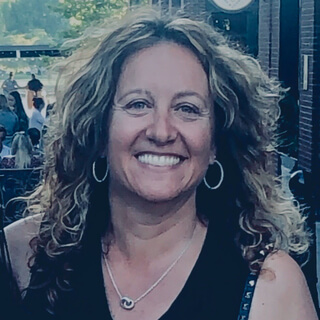
Welcome to the Stuck Stops Here,
A podcast devoted to cycle breakers.
We want to celebrate and empower those who have woken up and decided that toxic,
Generational dysfunction can end with you.
My name is Tammy Atman and I hit rock bottom in 2014.
And during those moments of despair,
I decided change was my only option.
Emotional abuse,
Both covert and overt,
Is contagious and leaves invisible scars.
The next generation deserves better than what we got.
Join me and my amazing co-host and producer,
LW,
As we have raw and real conversations infused with bad words and humor,
Designed to inspire awareness,
Acceptance and strength.
We are not therapists and have no clinical training.
You are not alone.
Healing does not happen in isolation.
Together,
All of us can break the familial chains of shame,
Guilt,
Fear and blame.
Our Stuck can stop you.
Perfectionism Perfectionism is the unparalleled defense for emotionally abandoned children.
Perfectionism also provides a sense of meaning and direction for the powerless and unsupported child.
Quote by Pete Walker Object constancy is a cognitive skill we acquired around two years old and is defined as the ability to maintain an emotional bond with others,
Even where there is distance and conflict.
It is the understanding that objects continue to exist even when they cannot be seen,
Touched or sensed in some way.
This is why babies love peekaboo.
When you hide your face,
They think it has ceased to exist.
According to psychologist Jean Piaget,
Yes,
I practiced hard at saying this name correctly,
Who founded this concept,
Achieving object constancy is a critical developmental milestone.
Rather than needing to be with our parents all the time,
We have an internalized image of them and their love and care.
So even when they are temporarily out of sight,
We still know we are loved and supported.
In other words,
We are able to experience and believe that things and people are reliable and constant.
In adulthood,
Object constancy allows us to trust that our bond with those who are close to us remain constant and whole,
Even when they are not physically present.
We understand that absence and conflict does not mean disappearance or abandonment,
Only temporary distance.
Babies that are instilled with object constancy develop secure attachment and cultivate a sense of trust deep inside themselves,
Rather than relying on reassurances from external resources.
Children with no object constancy are plagued with an intense fear of abandonment.
If we experience severe early pre-verbal attachment trauma and have extremely distracted,
Chaotic and emotionally unavailable parents,
Our emotional development is stunted because we never had the opportunity to develop object constancy and this leads to a fear of abandonment.
Adult behaviors resulting from a fear of abandonment can include people pleasing,
Being overly demanding,
Feeling insecure and worthless,
Deeply mistrusting of people,
Jealous and resentful,
General anxiety and depression,
Overthinking everything,
Hyper sensitivity to criticism,
Repressed anger and rage,
Engaging in self-blame,
Shutting completely down and being emotionally numb and perfectionism.
Where does fear of abandonment come from?
If our early childhood was unstable,
We will have fear of abandonment in all of our relationships.
If our parents were controlling or we grew up in an enmeshed household,
We fear that when people come too close,
We will drown.
My entire childhood was filled with both physical and emotional abandonment and my parents suffered from the same thing from their parents.
No one going back a hundred years had any idea that the family patterns were wrong and were unhealthy,
Dysfunctional and destructive.
I experienced over and subtle losses,
Rejections and traumas that made me feel very insecure and distrusting of the entire world.
Up until my late 40s,
I was a helpless victim of my past.
Once I faced the pain and shame of toxic parenting,
I was able to create a better future.
I told my story and developed a coherent narrative and discovered a new kind of strength.
I identified patterns and triggers and became less defensive and overreactive.
The ability to see people as whole and constant develops by the time we are around two or three.
When toxic parenting destroys that ability,
The fear of abandonment can plague us our entire lives.
The feeling of being alone and vulnerable can be so powerful and overwhelming that it evokes raw,
Intense,
Childlike reactions.
When our fear of abandonment is triggered,
Shame and self-blame come right after,
Further traumatizing us over and over again.
Because these strong overreactions are subconscious and chronic,
We come across as unreasonable,
Hostile and immature.
I was all of those things.
As adults,
Severely affected by abandonment,
We act from a place of repressed and denied trauma.
Ask yourself the question,
What is it like for a two-year-old to be left alone with emotionally abusive and unreliable parents who are repeating the toxic family patterns that they learned and never healed from?
The pervasive feelings of intense and confusing fear,
Rage and despair that influence everything we think,
Do and say,
As well as the choices we make,
Is not surprising.
Ways we can start healing.
Acknowledge the depth of your hurt.
Stop beating yourself up.
You didn't cause it.
Reading up on attachment theory and learning what attachment style you have developed.
Give yourself unconditional compassion instead of judging yourself as weak.
No one can fix this.
Only you can.
Take a hundred percent responsibility when you are triggered.
And last but not least,
Therapy.
I have enclosed two links in the show notes.
One is a great article that explains abandonment fears in detail and also has an abandonment issues test at the end.
And the other article connects fear abandonment with attachment styles.
I hope they help.
I'm going to end with a quote from Susan Forward.
Trust is like the runt of our emotional litter under harsh conditions.
It's usually the first to die.
It's all right.
We got to leave that path where we started from.
No more should.
We got to burn that bridge where we started from.
You remember the way when you first felt the shame all alone and out of place.
We had that hurt.
And then we lost our way.
What could have been is hard to face.
Oh,
It's all right.
We get it.
We started from no more should like that.
We got to burn that bridge where we started from.
So we fade away.
You know,
We've only just begun.
We're not alone.
We've got to have our say.
You are not the only one.
It's all right.
We started from no more should like that.
We got to burn that bridge where we started from.
Oh,
Yeah.
Healing is hard.
We want to run away.
You know,
We've only just begun.
Oh,
It's all right.
We get it.
We got to leave that path where we started from.
No more should.
Right.
We got to burn that bridge where we started from.
Oh,
Right.
And we get it.
No more should like that.
We got to burn that bridge where we started from.
You have been listening to the Stuck Stops here.
This is LW no lie.
Join us again next time where we continue to dig deep and dive in so we can stop the stuck.