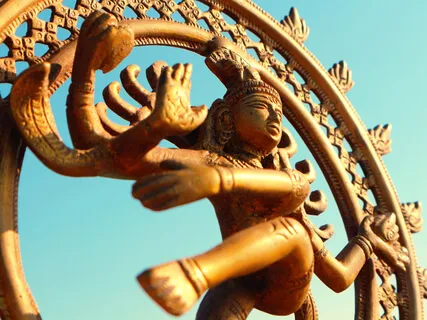
Om Namah Shivaya,
Om Namah Shivaya.
Om Namah Shivaya,
Om Namah Shivaya.
Om Namah Shivaya,
Om Namah Shivaya.
Om Namah Shivaya,
Om Namah Shivaya.
Om Namah Shivaya,
Om Namah Shivaya.
Om Namah Shivaya,
Om Namah Shivaya.
Om Namah Shivaya,
Om Namah Shivaya.
Om Namah Shivaya,
Om Namah Shivaya.
Om Namah Shivaya,
Om Namah Shivaya.
Om Namah Shivaya,
Om Namah Shivaya.
Om Namah Shivaya,
Om Namah Shivaya.
Om Namah Shivaya,
Om Namah Shivaya.
Om Namah Shivaya,
Om Namah Shivaya.
Om Namah Shivaya,
Om Namah Shivaya.
Om Namah Shivaya,
Om Namah Shivaya.
Om Namah Shivaya,
Om Namah Shivaya.
Om Namah Shivaya,
Om Namah Shivaya.
Om Namah Shivaya,
Om Namah Shivaya.
Om Namah Shivaya,
Om Namah Shivaya.
Om Namah Shivaya,
Om Namah Shivaya.
Om Namah Shivaya,
Om Namah Shivaya.
Om Namah Shivaya,
Om Namah Shivaya.
Om Namah Shivaya,
Om Namah Shivaya.
Om Namah Shivaya,
Om Namah Shivaya.
That means surrender.
Om Namah Shivaya,
I surrender myself to Lord Shiva.
I take his refuge.
Not out of helplessness.
Surrender is not out of helplessness.
It is out of an understanding of what Shiva is,
What Ishvara is.
Ishvara means knowledge,
Infinite knowledge.
Satyam jnanam anandam brahma.
Brahma or Ishvara is Satyam,
Is truth.
Jnanam is knowledge.
Anandam,
Infinite.
One way of looking at Ishvara is that Ishvara is infinite knowledge.
And therefore,
What is,
Whatever is,
Is the manifestation of infinite wisdom.
Whatever is,
Is the manifestation of infinite wisdom.
Meaning that there is a reason why whatever is,
What it is.
Not only is Ishvara infinite wisdom,
Ishvara is also infinite compassion.
Ishvara is benevolent.
Ishvara is a manifestation of infinite wisdom out of infinite compassion.
This is the scriptural view of Ishvara.
Pitta hamasti jagata hai.
Mata dhata pithama.
Lord Krishna says in the Gita,
I am the father of this universe and also I am the mother and I am the nourisher.
Ishvara is infinite and therefore has no agenda for himself.
Ishvara is only for the well-being of all the creatures.
And therefore,
Ishvara is my well-wisher also.
He is everyone's well-wisher and therefore my well-wisher also.
That is the scriptural view of Ishvara.
And we have to see that in our life.
We can see the infinite wisdom and the infinite compassion.
When we have the shraddha,
The trust in the veracity of the scriptures.
With that shraddha,
Born of understanding,
Not a blind face,
But the face born of understanding.
That Ishvara cannot be otherwise.
Ishvara cannot be limited in any way.
And therefore,
He cannot be limited in his compassion.
He has no agenda for himself and therefore he cannot wish ill of anybody.
He is the well-wisher of all.
And therefore,
Whatever is in the present,
Whether I call it favorable or unfavorable,
It is I who judges the situations and brands them as success and failure.
Favorable and unfavorable.
What is meant by namah,
Surrender,
Is that there is no favorable or unfavorable,
No success or failure.
What is,
Is right.
What is,
Is an order,
A benevolent order.
If that is my understanding,
Then I can accept everything gracefully,
Without any resistance.
Because of my limited understanding.
Very often I do not understand the reasons behind what is happening.
But because of Shraddha,
The faith,
I gracefully accept everything as the prasada,
As the grace of Ishvara.
Prasada bhunti.
A graceful acceptance of what is,
Is the meaning of namah,
Namaskar.
Om namashivaya.
I gracefully,
Livingly accept Ishvara in my life.
And therefore I have no resistance to the realities of life.
No complaint,
No blaming.
Graceful acceptance or prasada bhunti is when my mind is free from resistance,
Free from complaint,
Free from blaming.
A mind that is free from complaint,
Free from blaming,
Free from resistance,
Is also free from frustration.
Then the mind is cheerful,
Is silent,
Tranquil.
Tranquility is the natural state of the mind.
Joy is the natural state of the mind.
It is the resistance or complaint or blaming or frustration.
These reactions,
Born of lack of surrender,
They make the mind agitated,
Unhappy,
Sorrowful.
More Ishvara in my life.
More acceptance of Ishvara.
More acceptance of his will.
And therefore letting go of my will or resistance is what makes my mind tranquil.
There is tranquility,
Serenity in namah,
In namaskar.
I accept my life as prasada of Ishvara.
I accept myself as the prasada of Ishvara.
In namah there is graceful acceptance.
Graceful acceptance of the world.
Graceful acceptance of myself.
Because I'm assured that I enjoy the protection of the Lord.
I am in the lap of the Lord.
Then the mind is free from any worries,
Any anxieties.
In that silent or tranquil mind,
I can see that whatever is,
Is in aura.
Whatever is,
Is Ishvara.
My mind also displays the same compassion,
Same acceptance,
Same embracing of everyone and everything.
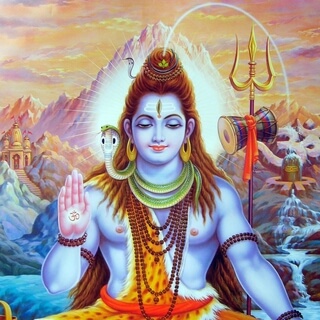
What is then is Shiva.
Ishvara auspicious.
And namah finally culminates into seeing the fact that Ishvara or Shiva is my own self.
I am Shiva.
Everything is Shiva.
I am Shiva.
Om Namah Shivaya.
Om Namah Shivaya.
Om Namah Shivaya.
Om Namah Shivaya.
Om Namah Shivaya.
Om Namah Shivaya.
Om Namah Shivaya.
Om Namah Shivaya.
Om Namah Shivaya.
Om Namah Shivaya.
Om Namah Shivaya.
Om Namah Shivaya.
Om Namah Shivaya.
Om Namah Shivaya.
Om Namah Shivaya.
Om Pura Mada.
Pura Midham.
Pura Pura Mudachate.
Pura Sipura Madaya.
Pura Meva Vasishya Dev.
Om Shanti.
Shanti.
Shanti.
Shanti.