So everyone,
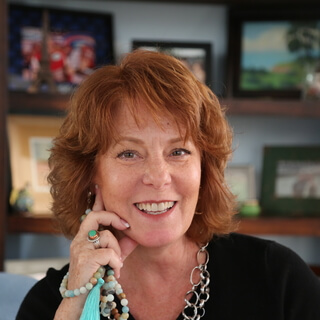
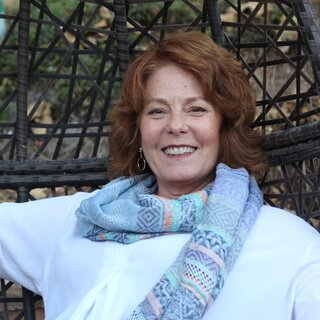
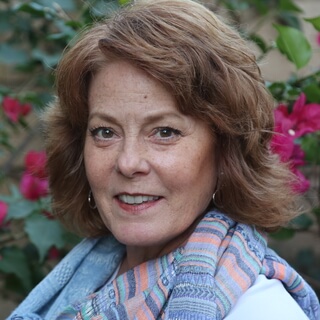
I have a beautiful soul who I had a conversation with a couple of years ago about her life journey and she's rejoining me because she's written a memoir of her of her life and her existence and her the beautiful essence of who she is is in her book.
It's called Coloring Outside the Lines,
Surviving and Thriving with Cancer for 30 plus years.
Jan,
Thank you for joining me.
Jan,
Adrienne,
Thank you for joining me.
Thank you,
Susan,
So much for inviting me.
It's a pleasure to be back.
And I got to say I have chills.
We just started and I have chills.
It's like,
Oh my goodness,
There's going to be information just absolutely flowing.
So before we get into the book itself,
Please explain to everybody that the subheading,
Surviving and Thriving with Cancer for 30 plus years.
Now,
That is you.
That's been part of your life.
It's been part of my life,
Yes.
And people have been telling me for years that I should write a book.
And I didn't because I thought I needed to be cancer free before I could be inspirational.
And I was not ever cancer free.
And I also thought there were too many cancer books on the market because so many people have written a book about their experience of cancer and I didn't want to add to that glut of books.
And then someone convinced me that living with cancer for 30,
More than 30 years was inspirational.
And,
And there's not a book like that on the market that it doesn't exist.
And I looked for it and I found it didn't exist.
So I was convinced that that it would be inspirational.
So that's how it started.
And if I could read just a little bit of the introduction.
Yes,
Please.
Then then that will explain why I wrote the book and what it's about.
So this is a cancer memoir.
But it's not a story of how I became cancer free,
Because I didn't.
My first cancer diagnosis was in 1989.
I've had three primary cancers,
Breast cancer in both breasts,
And ocular melanoma,
And more recurrences than I can count.
I've had breast cancer metastasized to my lungs since 2011.
Essentially,
Cancer has been a chronic illness for me for over 30 years.
My story is about living fully and thriving with cancer.
Most people see cancer as a death sentence.
And the primary reaction is fear.
Yes,
Once they receive a diagnosis,
They want to eradicate every cancer cell from their body.
And they live in constant fear of a recurrence.
And I know because I started out that way.
And their focus is on fighting the cancer,
Attacking the tumor,
Trying to kill the intruder.
And my experience in the 30 years is that there's another way to address cancer that may involve curiosity and fear.
We all have cancer cells in our bodies at some time,
Our immune systems are meant to eliminate them.
We don't need to get rid of every cancer cell to live a happy full life.
But we do need to keep cancer from progressing.
My focus has been on creating a terrain in the body that isn't conducive to the growth of cancer.
And that also stimulates the self healing mechanism of the body as it was designed.
These two methods of dealing with cancer don't pose an either or question.
It's both and there is both fear and curiosity.
And there is both fighting the tumor and supporting the self healing abilities of the body.
And I think that's really important that it's both and so so many people fight against whether you should do conventional treatment or alternative treatment.
And I even hate the word alternative because it should be integrative.
It's both and why would you have to choose one or the other?
Yes,
It's so funny because it what you just explained is kind of the human mindset right now of either or and the fighting,
You know,
Us versus them and and all of that so that and then you bring and then when someone brings that philosophy,
Ideology,
Belief system into their body,
It's got to be close to impossible to cure unless you're doing both.
And unless you're inclusive,
Unless you're,
You know,
You're actually your life is an example of how to thrive with without picking sides.
Right?
Yeah,
It was including both sides.
Both ends.
Yes.
Yeah.
And to create a self healing stimulus within the body.
I there's a lot of old school doctors who don't even understand that they haven't been trained to understand that I think possibly that's changing now.
I mean,
I'm,
I'm of a certain age now,
Jan,
Too.
And I've always gravitated to alternative,
A integrative healing modalities,
And not just the,
The doctor is the authority,
And I've got to do what they say.
So there are different kinds of medicine.
And in our culture,
Right now,
When we say doctor,
We mean medical doctor allopathic medicine.
But if you go over time,
There's Ayurvedic medicine,
There's Chinese medicine.
And there's chiropractic,
I mean,
There's so many different medicines.
And they all have something to contribute.
And medical doctors now are really trained in the pharmaceutical world.
I mean,
They're trained of you get a diagnosis.
And this is the medicine that you use.
This is the pill.
And that's just one way of looking at medicine,
Right?
Chiropractic medicine,
Which some people say it's not real medicine,
But it it's a different kind of medicine.
And then the chiropractic belief is that our bodies have self healing mechanisms,
And that you need to stimulate the body to do its own self healing.
Yes.
And I've always I,
Since my 20s,
I've always gone to a chiropractor.
Because of that,
What you just described,
And I find that most of the chiro,
If they're good at what they do,
They are intuitively led,
Which I appreciate.
So there isn't a,
They don't look at me and go,
Oh,
Your elbow hurts,
I'll adjust it this way.
And you need a,
You know,
A Bengay on it,
You know,
They look at the whole person.
And that's true in Chinese medicine and Ayurvedic medicine.
And,
And that there is this whole human being.
And in your book,
You talk about going to a doctor,
When you first were diagnosed with breast cancer,
And he wanted you to do all the pharmaceutical things.
And you asked,
Well,
What about the emotional and he thought you he and he said,
Your emotions have nothing to do with it.
Right?
Hello.
Hello.
I really know from my personal experience that my emotions affect my body and I get sick.
Yes.
And we know that.
I mean,
There's a book now called the body keeps the score,
Which is how the body reacts to emotional stuff.
Yeah.
Yeah,
I,
I just I'm just gonna.
So I just had ingrown toenails,
And I had to have some surgical stuff.
But I immediately went to Okay,
So where where am I not listening to myself?
Where am I feeling anger or fear or and what is it you know,
That the thing that shows up in the physical body is,
Is the end result of when we hadn't been,
We haven't been listening to ourselves,
And allowing ourselves to express our emotions.
And,
And,
And I think that's always part of any illness,
But it's never all of it.
I mean,
Whatever we're talking about,
It's a part of it.
Yeah,
But can't focus on only one thing when it's not only emotions.
And when when I was first diagnosed,
And in the recommendation was chemotherapy.
Yeah,
I'd like to tell a story and then maybe read a part of it in the book that I think has been so important in informing what I did when I was when I was diagnosed.
So this happened when I was 16.
And I was,
I was running a fever and being fatigued all the time,
So much so that I couldn't go to school.
This was my junior year in high school.
And I missed a whole semester,
I was homeschooled for a whole semester of school.
Wow.
My parents took me to medical doctors,
And they couldn't figure out what was wrong.
It was a time when when mononucleosis was very trendy.
But I didn't have one.
I didn't think so they couldn't diagnosis diagnosis.
And without a name,
They couldn't treat it.
So gosh,
On time.
And my parents finally took me in desperation to a chiropractor.
We were talking about chiropractors.
This was an older gentleman.
And I just want to read a bit about my experience with him.
His name was Dr.
Friesen.
And Dr.
Friesen said it did not matter what the name of my illness was,
We didn't have to name it.
He said,
Obviously something was wrong.
But our bodies are meant to heal themselves.
We needed to give my body the nutrients it needed for self healing.
He rubbed minerals into my body,
Gave me some Chinese herbs to make a foul tasting tea.
And he pendulum to determine what I shouldn't eat what I should and shouldn't eat to strengthen my immune system.
His dietary recommendations were challenging for a 16 year old.
But my motivation was strong enough to persevere.
I couldn't eat anything white,
Including sugar and white flour.
No birthday cake,
Twinkies,
Or Wonder Bread,
All of which I love.
That's an indication of how bad my diet was before Dr.
Friesen's intervention.
I used to love Twinkies.
I ate them all the time.
I did too.
I felt deprived as I watched everyone else enjoy carrot cake at a birthday party.
There were also some recommendations of what to eat in addition of what I should avoid.
He instructed me to eat lots of red meat,
Have some vinegar and nutmeg every day.
And he gave me a list of which vegetables were healthiest for me.
After six months on his white free diet,
I was healthier than I had ever been.
My temperature was normal and I was no longer fatigued all the time.
Prior to that,
I used to have the flu every winter and had even had pneumonia.
Following my diet change,
I didn't have the flu for at least 20 years.
My straight hair that my mom curled with home permanence every year suddenly became naturally curly.
Life didn't just get back to normal.
It got better than anything I'd ever known.
That experience had a profound and lasting impact on me.
I learned there was another way of approaching illness that doesn't depend on the pharmaceutical industry.
This was my first exposure to the age-old controversy of the germ theory versus the terrain theory.
The germ theory argues that germs are what we need to worry about and we need to keep finding ways to kill them off.
The medical doctor I saw at 16 needed to know what germ was attacking me before he could treat me.
The terrain theory argues that if the body is well and balanced,
The germs that are a natural part of life and the environment will be dealt with by the body.
When an illness occurs,
The body needs to be balanced and or fortified so it can deal effectively with the germs.
This is not a new idea,
But I hadn't been so personally and intimately introduced to it before.
The experience stimulated my belief in the terrain theory.
We never named whatever was making me sick,
Yet by fortifying my immune system,
My symptoms were eliminated.
This gave me a strong belief in the self-healing ability of the body.
This experience was a profound lesson for me that what we eat matters.
For the self-healing mechanism to be effective,
The body needs appropriate fuel.
When I was diagnosed with cancer many years later,
The first recommendation from the doctor was to depend on the pharmaceutical industry to attack the cancer.
In this case,
The treatment was called chemotherapy.
Of course,
There is no germ that we know of that causes cancer,
But the principle is the same.
Attacking the cancer is similar to attacking the germ,
But this ignores the terrain and the self-healing ability of the body.
It destroys the very immune system that I depended on for my body to eliminate the cancer.
My earlier lessons were so strong that I couldn't follow that recommendation.
I did one infusion of chemotherapy out of fear and quit when I experienced the destruction it was doing to my immune system.
The lessons I learned through this experience about how to maintain health and support the self-healing ability of the body may have extended my life for many years.
Through the conferences I created,
These lessons were passed on to thousands of others.
What felt like a tragedy when I was 16 now feels like one of the most profound experiences of my life.
I so appreciate you sharing that because your journey and what I heard as you were saying that,
You at a young age,
16,
Began listening to yourself,
To your body,
And not necessarily following all the rules.
Right.
What I learned is that there are different rules.
The rule that we mostly hear in our society,
That medical doctors have the answers,
Is not the only rule.
It's one of the rules.
I did many conventional treatments over the 30 years,
But there were other rules to follow also.
Jan,
Let me ask you because during the course of your life,
You were a mental health counselor.
Our mental health also,
I tend to talk a lot about the beliefs,
An old belief that maybe comes from my family of origin or ancestors that gets handed down,
Affects my physical body as well.
Can you speak a little bit about that?
Yes.
My brain goes to so many places.
There's a lot to say about that.
One of my beliefs that came from when I was young,
We had a plaque in the kitchen in our house because I was raised in a very fundamental Christian church.
I was raised as a Mennonite.
It was a Bible verse on the wall that said,
All things work together for good to those that love God.
Oh,
Wow.
I get chills.
Wow.
Even though I left the Mennonite church and I did not stay in that fundamental Christian belief,
I still believed that verse.
I still believe that all things work together for good.
Instead of spending time in a pity party when I was diagnosed with cancer,
I always start out with a new diagnosis with an,
Oh,
Shit reaction.
It's not everything that I want.
It's not like I prayed,
Oh,
Please let me have cancer if it's going to help other people.
Never did I ask for it.
But I learned eventually that what happens to me also happens for me.
If I look for the silver lining,
If I look for what benefit could come from this,
That I always find something.
One of the books that was very influential for me in the first years of my cancer is Cancer as a Turning Point by Lawrence LeChan.
He was a psychologist who who did research probably 50 years ago is when he started.
I mean,
He was doing research in New York City where he wanted to know if if therapy would make a difference in cancer and with cancer patients.
And at the time,
He was only allowed to work with patients that were called terminal because they said if if he if what he was going to do was strong enough to make a difference,
It could also be harmful.
So they didn't want him to harm somebody who wasn't already terminal.
So in that situation,
He was working in a hospital in New York City with patients that were that the medical profession had said,
We have nothing,
Nothing more to offer.
You're going to die.
So he was doing therapy.
And when he started out,
He did traditional psychotherapy.
And he said they all died as expected,
But they might have died feeling better,
But they still all died.
And then he changed the way he did therapy.
And he started working with,
Instead of going through their past and doing traditional Freudian psychotherapy.
Yeah,
He talked about what made them excited to get up in the morning,
What were dreams they had,
What was what was blissful,
What would give meaning to their life,
What would bring them joy.
And when he worked in that way,
50% of those terminal patients went into remission.
Look at that.
So that has to do with,
With emotions,
For sure.
What brings you joy in your life.
And for some people,
For some of the patients he worked with,
His book is full of stories.
And for some of the people,
It was a huge change,
Like they had to change a career or leave a marriage.
But for some,
It was really tiny things.
And he talks about one woman who had always wanted to play the piano and had never been able to.
And she started taking piano lessons.
And then her husband bought her a piano.
And,
And her cancer went into remission.
I mean,
That was the change she made is her joy was was music and playing the piano.
He said she would never play for him.
She wouldn't play for anybody else.
It was the joy of playing.
So you never know.
So I thought a lot about that when I was reading that book about what brought me joy,
And what would give me meaning in my life.
And I did have a master's degree in social work,
Psychiatric social worker.
And I had worked in that field for many years.
But at the time I was diagnosed with cancer.
I was married and my husband's dream had been to own a furniture store.
And so I was we started a furniture store together,
We were working together.
I was not living my dream.
I was living his dream.
I was participating in what he wanted to do.
And it was not feeding my soul.
Yeah,
It was a major wake up call for me to to find out what was my dream and what would give my life meaning.
Yeah,
I totally hear you.
Because so many of us follow someone else's dream path,
Whatever.
And,
And we forget that we are here.
We are souls incarnated to grow and evolve and follow our own individual purpose and path and journey.
Not it's not.
It's like you said,
It's the both and it's not a one size fits all.
Life,
Life isn't a one size fits all.
And I think that's especially true of women.
I know,
In,
In,
In the world that I grew up in women were there to support their husbands.
And my my goal when I was young,
When I thought what do I want to be when I grew up?
I thought,
I want to be a preacher's wife.
Oh,
Wow.
I couldn't be a preacher as a woman.
But I thought I could support a man.
And I think so many women are think they have to be submission,
Submissive somehow to a husband and do well.
It's been culturally trained for centuries.
Yeah.
Yeah.
But I,
So I just want to point out to you,
Jan,
You wanted to be a preacher's wife,
And you said you couldn't be a preacher.
And yet later in your life,
You,
You developed a nonprofit organization called healing journeys,
Which is in essence,
Not necessarily preaching,
But you were creating conferences and symposiums for people experiencing cancer or supporting somebody going through cancer,
To really learn how to heal mentally,
Emotionally,
Physically,
To me,
That's being the preacher that's leading that's leading the band there,
Jan.
It was being a teacher for sure.
Yeah.
But when I was diagnosed,
I knew that there was more to healing than surgery,
Chemotherapy and radiation.
I mean,
I knew there was more.
And you already mentioned when I said that to my doctor,
He said emotions,
He yelled at me,
He said,
Emotions have nothing to do with this.
Oh,
Hello.
But I knew that wasn't true.
And I looked for resources to heal the whole person.
And this was in 1989,
When I was first diagnosed in and those resources weren't available.
We didn't know as much as we know now.
I mean,
Some people did,
But most of us didn't.
So that's when I started healing journeys,
And I created the conference called cancer as a turning point from surviving to thriving.
And sometimes I think that that my cancer diagnosis was almost an answer to prayer,
Because I used to prayer,
Pray the prayer of St.
Francis,
Lord,
Make me an instrument.
Oh,
Yeah.
And because I got diagnosed with cancer,
And I couldn't find the resources I needed,
I created them.
And then it helped 1000s of people.
I mean,
Over 25 years,
We did that conference 37 times around the country,
More than 25,
000 people attended.
And many of those people said that the conference saved their life.
It was a turning point for them.
It was a turning point.
Yes.
Yeah.
So in essence,
Jan,
You were more a pioneer in a time where it other were people really needed to know that they could participate in their own healing and not just be a victim and at the effect of,
Right?
Yeah.
Yes.
And the conference was not about curing.
I mean,
It wasn't about treatments.
I would always have at least one speaker who had written a book who was famous,
And many of them would be doctors.
But then I also always included music,
And poetry and humor,
And the languages of the spirit.
And I always included healing stories like people who had had cancer and how they dealt with it.
And people would come to the conference because of the famous person.
But on the evaluations,
When I asked what made the most difference for you in the conference,
What helped you the most,
They almost never mentioned that famous person,
They would they would talk about healing stories,
Or even one of them that I remember so clearly,
Because it was so profound for me.
One woman said,
What helped her most was a conversation she overheard in the bathroom line.
Wow,
Yes.
Of course,
So many times,
There were so many more women than men at the conference.
And,
And there would be only one woman's bathroom,
And there would be a long line.
And this woman had recently had,
Excuse me,
She'd recently been diagnosed.
And in the surgery,
They had taken out a bunch of lymph nodes,
And I think maybe 12 of them were cancerous.
And she thought that was a death sentence.
And then she overheard a conversation of someone else talking about how she had had 26 lymph nodes that were cancerous.
And that had been five years ago.
So she said she was so inspired by hearing that.
And she knew if somebody else had done that,
That she could do it too.
So you never I never knew what was going to be inspirational to somebody.
Right?
And it is.
And there would often be 1000 people at a conference.
And I would ask in the beginning,
Just to know who was there.
I would ask how many were cancer patients or survivors and have them stand.
And then family members or support people and then health professionals.
And then I would always ask how many of you have outlived a prognosis.
And there would be always at least 100 people that would stand.
And so many people told me afterwards that just that moment alone,
Gave them a new direction in their life gave them Yeah,
I think I think the mindset in the medical community,
And this is maybe sounding like a judgment is really about when you get the diagnosis,
You've got to do all the protocols.
And you were saying the fighting and,
And kill this,
The,
You know,
It's all that's,
That's all negative stuff.
So to be inspired by people that have gone through,
However,
They go through it,
And are living and thriving is huge,
Because they don't diagnose a diagnosis.
Now,
I've been a type one diabetic for 30 years.
And the diagnosis at the beginning was you,
You know,
You're going to you,
You have a possibility of losing limbs,
Right?
If you don't,
If you don't take care of yourself,
And blah,
Blah,
Blah.
So,
Um,
So it always wants to plant a fear factor.
This is this is how bad it's going to get.
If you don't do what I say.
And yet to be in a situation where you're connecting with other individuals going through similar,
Different,
Because we're all unique,
But similar,
A similar journey gives hope and hope is really,
I mean,
Jan,
I'm looking for hope,
I want hope,
Hope,
Hope,
Right now with the way the world is in everything.
And I think your book,
Coloring outside the lines,
Gives hope.
Whether you know whether or not you have cancer,
Everybody,
Jan's book,
There's a lot of hopeful pieces,
As you tell the story of your life journey,
That,
That,
First of all,
They're fun.
And second of all,
It,
It just gives me,
It inspires me,
Jan,
To say,
Okay,
I don't have to,
I don't have to believe everything that my doctor tells me.
That doesn't mean I may,
I won't do what my doctor says,
But I augment so I go,
I do the both and both and,
Because,
Because there isn't just one size fits all in healing,
Because we all come in just uniquely programmed to be whatever this sole purpose is,
We agreed to,
To follow that.
And I do talk a lot in my book about intuition,
Too.
Because I think we have knowledge that,
That we may not even be aware of.
And often when we hear other people's stories,
It doesn't mean we have to do what they did.
Because what each person is so unique.
And somehow I think one of the gifts of cancer for me was that it forced me to learn to trust my intuition and to find ways of accessing it more.
Because I had to know what was right for me.
And I,
For so many people,
When they're diagnosed,
A million friends will give you do this,
Do this.
And they'll tell you,
Somebody did that.
And,
Oh,
You have to do that.
And you,
It's not possible to do all of it.
You cannot do everything that everybody is going to recommend.
And somehow we have to figure out what do we need?
What's best for us,
Right?
We just haven't gone through the pandemic.
And everybody's telling you what to do and how to do it and when and how to show up in the outside world was,
For me,
Just a huge pivot point,
Yet again,
Yet again,
To trusting my intuition,
Trusting my truth,
Trusting what I knew was right for me.
And I,
It wasn't me telling everybody else what to do.
I just knew I didn't want them telling me what to do.
Do you know what I mean?
I,
Cause I knew for me,
I knew for me that what everybody was saying we should do wasn't right for me.
And it's still not right for me.
And it will never be right for me.
It wasn't when I was a kid,
Right for me.
So,
So I don't,
I don't push my opinion on others about that,
But I do honor and respect the inner wisdom that guides me.
And I rely on trusting my intuition now when as a little kid,
I wasn't,
I wasn't allowed to do that.
I wasn't allowed to trust myself.
Right.
You know,
And it's important for you,
Susan.
So it was a lot.
Well,
Don't know that yet.
It's I know.
And that I was,
As you were talking about trusting your intuition and knowing,
Choosing what works for you,
I heard very loudly that the prayer now is that people wake up enough to trust themselves because as we learn to trust ourselves individually,
Then we can trust others who are also listening to themselves.
And we don't have to be in this battle war zone,
Mentally,
Emotionally,
And physically.
And it's,
It is happening all over the planet and trusting ourselves instead of a human authority.
It just doesn't,
It does not work for me.
I'll tell you that.
Yes,
I'm,
I'm with you.
Yeah.
So Jan,
I just want to say thank you again.
Okay.
Hold on,
Jan.
I want to say thank you again for you being you and you following your path and doing your work that inspires others to follow their own path.
Thank you so much for you being who you are.
And,
And I know it wasn't easy,
But I really,
Really appreciate it.
And,
And you guys,
The book is called Coloring Outside the Lines,
Surviving and Thriving with Cancer for 30 plus years by Jan Adrian.
Jan,
Thanks for joining me today.
And,
And thanks for,
Thanks for writing the darn book and listening to people and doing it.
It was,
It was,
Um,
A long process took me about three years and it was very healing for me.
Yeah.
To,
To really put my life.
I mean,
I,
I only included stuff that was related to cancer because it's a cancer memoir.
So I have a lot of other stories that didn't get in the book because they're not related to cancer,
But,
Um,
But it was a very healing process.
I would encourage anyone.
I think we all have stories in us and whether you're going to publish it or not,
Just writing your stories and thinking about them and reflecting and thinking,
How did I learn this?
How did I become who I am?
It's a very healing process.
So I would encourage all of your listeners to just write.
Yep.
Yep.
I agree.
Thank you.
Thank you.
Thank you again.
And,
Um,
I'm just going to end with,
And so it is namaste.
Namaste.