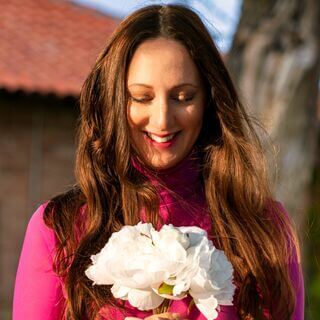
Hello everyone,
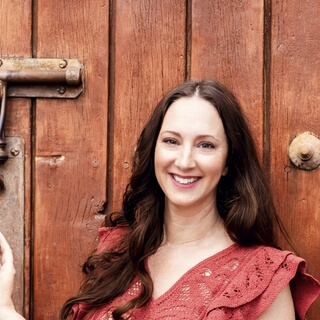
My name is Geri Lee and I'm happy to welcome you to this beginners meditation workshop that we'll share together for about 15 minutes.
I want to begin by telling you a bit about myself and what brings me here to guide this meditation workshop with and for you.
I have a fairly long history,
About 20 years or so,
In the education and counseling field,
A combo of which can at times be quite stressful.
I've moved geographically frequently in my adult life,
Chasing adventures or greener grass or seeking occupational challenge.
So I've lived and worked in four countries,
Including my own home country of the United States.
The travel and cultural exposures have helped me,
I believe,
Keep a more open mind toward different types of healing modalities.
These are just a couple of the life experiences that brings me to the reason I'm here,
Guiding this workshop.
In more recent years,
I encountered health issues after multiple grief experiences and some personal traumas.
In seeking different treatments for healing,
I tapped into something I had dabbled in on and off for years,
Meditation,
Particularly Vipassana and MBSR.
As an educator,
The natural inclination for me was to then engage in a guided teacher training.
Meditation has been a central part of my healing and recovery path,
And I'm happy to share it with others.
I happen to believe that we're all healing from something,
And so that being said,
I invite us to come together here in a healing circle.
There are multiple benefits to practicing mindfulness regularly.
A couple of the more well-known benefits to meditation is a reduction of cortisol,
The stress hormone.
Also,
When we're learning to be present in awareness,
Signals are sent to our brain to relax and to become aware of our thoughts,
Emotions,
Breathing,
And our reactions,
Not just during the meditation,
But also to carry this awareness into our daily life.
I also believe that practicing meditation fosters more genuine and authentic relationship with self and others.
Mindfulness doesn't start and end at the bells.
It's about mindful living.
At this time,
I'm going to go ahead and move us into the guided meditation today,
And we'll begin with Anapadasati,
Which is the breath awareness practice,
And then from there,
We'll transition into mindfulness of thoughts and emotions.
When we sit for meditation,
We can sit on a cushion or on the floor,
Sitting as forward as possible on the cushion to alleviate strain or pain on the body,
And as you progress your practice,
Your sits will become longer,
And it's important to treat the body with care,
Which is another reason why it's really good to invest in a cushion if possible.
You can cross your legs in one of many ways,
Or you can choose to keep them straight out.
Place your hands,
One on your lap,
Facing up,
And the other one lying gently on top of that hand.
Now,
You can keep your hands anywhere on or around your lap,
As long as they're comfortable and relaxed.
Align your head parallel to the floor,
And keep your back erect,
Straight up,
But not rigid.
If you choose to meditate today on a chair,
Again,
Sit as forward on the chair as possible,
With your legs hip-distance apart,
And feet preferably barefooted on the ground below.
Again,
Lie hands comfortably somewhere on the lap.
Now,
There might be times when you lay down for meditation,
So if this is one of those times,
You're more than welcome.
If you choose to do this,
It may be best to lie on the back with palms of hands facing upwards.
You may have heard or seen meditators placing their fingers or hands in various ways.
These postures are called mudras,
And are believed by many to be powerful avenues for energy balance.
Mudras deserve a deeper explanation than what I'm providing for this beginning meditation workshop,
So for now,
Just allow your hands to relax.
You're doing great.
Because I've had my own experiences and worked with clients in recovery with trauma or other conditions,
It's important to me that I inject trauma-sensitive practices into my guides.
There are times when engaging in meditation at all is already a huge win,
And so asking in a situation like this to sit or lie in a certain way just may be a bit more than one's able to handle at that moment,
And I understand this,
So please lie or sit in a way that feels safe to you.
You are so welcome here,
No matter how you show up.
Now let's go ahead and lay our eyelids down,
Or all the way to closed.
If you keep your eyes partially opened,
Use a softer gaze,
Not an intense focus in other words.
Noticing of the Breath.
Anapanasati.
Begin by noticing your breath.
We start here with the breath.
Bring mindful observation to the quality of the breath,
The pace,
How deep or shallow,
Maybe even the sound.
Observing the quality is not the same thing as judging it.
We are not judging the breath,
We're just simply observing it.
Breathe.
This breath is unregulated breath.
Sometimes this is referred to as the natural breath,
But I tend to think that all breathing is natural,
So I prefer to use the term unregulated.
Allow your body to breathe in the way that it wants to,
Without attempting to control it or change it in any way.
During breath awareness practice,
Our minds often get distracted by thoughts,
And this is very normal,
And it's what our brains are meant to do.
Thinking.
Part of this practice is being aware of when this is happening,
And then returning to our anchor.
And our anchor for this practice is our breath.
Return to the breath.
When thoughts have entered your mind,
Observe them,
No judgment,
But then return to the breath awareness.
Your breath is the anchor.
Thoughts,
There you are again,
I see you,
But we won't engage.
Back to the breath.
Present awareness.
We'll transition now to mindfulness of thoughts and emotions.
As we continue with unregulated breath,
I invite you to become aware of any thoughts that you have.
Notice the thought.
I am thinking.
Notice it,
But then return to breath awareness.
Recognize the thought,
But as with breath awareness,
We notice,
But choose not to engage or to allow to continue down that path of thought.
Essentially,
We usher the thought away,
And then return to breath.
All thoughts are impermanent.
And the impermanence of all things is called anicca.
Often our thoughts in daily life can overwhelm or alarm us.
And we foster this practice of recognition of thoughts,
Their impermanence,
And then we become empowered to usher the thoughts away and return to breath.
To our center.
Return to your breath.
Notice it.
Your breath is here now.
Transitioning now to mindfulness of emotion.
Go ahead and observe how you feel right now.
Hold this noticing and awareness.
Meditation helps us identify without judgment,
Our emotional state.
Honor the emotion without necessarily fully engaging with it.
In meditation,
There is enough space for all of your emotions,
Whether pleasant,
Or uncomfortable,
Or even neutral.
When we practice,
We are growing the art of non attachment.
Notice what you feel right now.
Then return to your breath.
Emotion I notice you and you are impermanent.
Moving now toward the closure of this meditation.
I invite you to make a little movement in your hands and your toes.
Bring your shoulders up to your ears and then release them down.
Stretch and move your body in the ways that you feel compelled to right now.
If your eyes were closed,
Find your way back to opening them.
Taking in the sights around you,
The colors.
You can even touch something near you noticing how it feels.
Notice any smells or feel the air.
Moving out of a sit is a personal pace.
So find what works for you.
Thank you for allowing me to guide you on this meditation today.
It's an honor to sit with you.
As you continue your meditation practice,
There are different avenues to explore.
Some people choose to meditate early in the morning,
Others at night.
I encourage you to try different ways and see what resonates with you.
I'm happy to take questions and if I don't have the answers,
I'll do my best to find the resource that may have the answer.
If you feel so inclined,
Please leave a note here on Insight Timer sharing your experience,
Feedback of this session or any questions.
Again,
Thank you so much.
The energy we share is precious and I wish you all the best as you move on with your day or your evening and peace on your beautiful path.