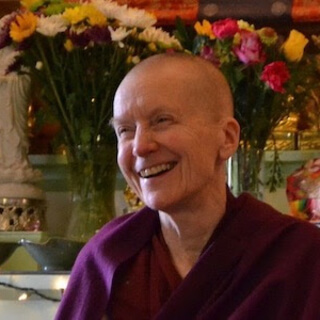
I'll be leading a meditation,
Guided meditation,
For about 40 minutes,
But it will have different parts to it.
I'll lead a motivation to,
You know,
Just generate a good state of mind as to why we're here today,
And then we'll spend the first 10 or 15 minutes doing mostly silent meditation on the breath.
I'll give some instructions on that to start with.
And then after about another 10,
15 minutes of that,
I'll lead a guided,
What we call analytical meditation.
So this is like a contemplation,
Thinking about certain ideas related to the book that Venerable Chodron will be reading from and talking about afterwards,
Which is Working with Anger.
It's a very useful,
Relevant topic,
How to work with our anger.
Because anger doesn't only include like,
You know,
Rage and that kind of thing,
Even low-level feelings of aversion,
Dislike,
Disgust,
Impatience.
So there's like,
You know,
Low-level forms of anger that we probably experience many times each day.
And so,
Yeah,
It's really useful to pay more attention to that state of mind and recognize how it's not very helpful for anybody,
And then learn ways of working on it.
So we'll do a short meditation on that theme.
And yeah.
So one of the prayers that was just recited is called the Four Immeasurables.
And these are four really positive,
Beautiful thoughts that we try to generate in our mind,
Basically wishing all sentient beings to be happy,
And for all of them to be free of all suffering,
All problems,
All bad experiences,
And for them to have the most perfect happiness that is without any suffering,
And for them to have an unbiased attitude towards others so that they don't have strong clinging and craving,
Grasping at some people,
And then aversion and hatred towards other people,
Have an even,
Balanced state of mind that's open to everybody.
So see if you can feel how wonderful it would be if all of those things could come about for yourself and for everyone else.
Then connect that with what we're doing here today in this series of activities.
See if you can wish that you will learn things here today that will help you to make those things possible for yourself and others,
To bring about genuine peace and happiness,
Freedom from suffering,
Freedom from hatred and strong grasping,
Self-centered grasping,
For yourself,
For all other people and all other beings.
Now,
Let's take a few minutes to make sure we're really settled down in the present.
So first,
Pay attention to your body,
How your body feels,
And see if you notice any tightness or tension anywhere in your body,
Maybe in your back or in your stomach.
If you do notice any tension,
Just lightly,
Gently focus on that place and tell yourself to relax,
To let go of that tension.
And imagine it melting and flowing away and disappearing.
And in case that doesn't work,
Another thing you can try is to imagine breathing into that place in your body,
Imagine the air you're breathing in going to that place and then loosening up,
Letting go of that tension.
And then,
It's also good to relax the mind.
That means putting aside any thoughts,
Busy activity in the mind,
Like thinking about something you did earlier today,
Or thinking about something you're going to do later today or tomorrow,
Next week,
And so on.
Put aside all those thoughts of other times,
Other places,
And just let your mind,
Your awareness be right here,
In this moment,
In this place.
And that's not so easy to do because our mind has the tendency to be running here and there,
But a helpful way to settle down the mind is to watch the breath,
Be aware of the breath.
So we'll do that for about 10 minutes.
So just breathe normally,
Don't change your rate of breathing or control your breathing,
Just let your body breathe as it normally does.
And then,
With your mind,
Be aware of the breath coming in and going out,
With each breath,
One breath after another.
And you can,
You know,
Different people have different ways of watching the breath,
Some do it with the nostrils,
Where you can feel a slight sensation of the air coming in and going out of your nostrils,
Or on your upper lip,
You might be able to feel the breath there.
Another possibility is watching your abdomen,
Just feeling your abdomen going in and out with each breath.
But you can also find your own way of paying attention to the breath,
Wherever you're able to feel it most clearly,
And you're able to keep your mind focused on it.
So find a place where you can feel your breath,
Be aware of your breath,
And then just try to keep your awareness at that place,
And just observe the breath coming in and then going out.
And it can be helpful to verbalize mentally this process,
Like saying to yourself,
Breathing in,
Breathing out,
And then count your breaths.
So breathing in,
Breathing out one,
And then breathing in,
Breathing out two,
And so on.
And if you're new to this practice,
Just count up to five,
And then when you get to five,
Go back to one,
Start again at one,
So just count in rounds of five breaths.
If you're more experienced,
You can try going up to ten breaths,
And really see if you can keep your mind focused on your breathing for that many breaths.
But the point isn't counting,
The point is to be aware of the breath,
So that should be the main thing,
And the counting is just an aid to help us stay focused,
And you don't have to do it,
It's optional,
But it can be helpful to just keep the focus,
Keep the concentration.
And any time you notice your mind has wandered away,
Which will probably happen,
So don't be surprised or upset,
But when you do notice your mind has wandered away,
And is thinking about something else,
Or paying attention to some sound in the room,
Or outside,
Or whatever,
Anything other than the breath,
As soon as you realize that's happened,
Then disengage your mind from that other object,
And bring it back to the breath.
And don't worry if you have to do this again and again,
It's just part of the practice,
And it's helping you to become more aware of your mind,
Your thoughts,
And helping you develop a bit more concentration.
So,
Now we'll move on to the analytical,
Or contemplative meditation.
And here we're going to be using thought,
Thinking,
But we still want to try to keep our minds focused on this topic that we're meditating on,
And not wandering away to other things.
So if you start thinking about what's for lunch,
Or the movie you saw last night,
Then expect to let go of those thoughts,
Put those thoughts aside and come back to what we're supposed to be meditating on here.
So,
In last month's Sharing the Dharma Day,
We explored some of the problems that are caused by anger.
For example,
It affects us physically.
We immediately feel tense,
On edge.
And also,
Research shows that long-term anger can lead to serious illness,
Even life-threatening illnesses,
So it's bad for our body to get angry.
And it also disturbs our mind.
We may be feeling peaceful and happy,
But when anger bursts into our mind,
It makes our mind agitated.
Anything but peaceful and happy.
Anger can also incite us to do harmful things,
Even to those who are close to us.
So it can damage relationships with our family members,
Friends,
Neighbors,
Coworkers.
And in extreme cases,
Anger can lead to breaking the law and having to go to prison.
So check to see if these things are true in your experience.
And then,
Another problematic thing about anger is that it causes us to see things like people and situations in distorted ways,
Unrealistic ways,
Much worse than they really are.
And to get a sense of this,
Bring to mind an incident where you got angry at someone who was an important person in your life,
Like a parent or another family member or teacher.
But since this is Mother's Day,
You might want to think of your mother.
This is the day when we remember and feel grateful for all the kind things our mothers have done for us.
But we can also get angry at our mother.
So you might want to recall an experience of being angry at your mother,
But it should be your choice.
Feel free to think of someone else from whom you received help and kindness,
But toward whom you sometimes got angry.
So when you have thought of such an experience of being angry at this other person,
See if you can remember your thoughts at that time.
And see if you can notice if your mind focused on things about the person that you didn't like,
Or things that they did that you didn't like.
So you just focused on these things you didn't like about the person.
And it was as if you forgot or ignored any good things that the person did,
Things that were helpful to you.
And at the time when you were angry at that person,
Did it seem as if they were 100% bad or negative,
As if there was nothing good or worthwhile about them?
And if you recognize that that was how your mind was operating at that time,
Seeing them as 100% bad,
Nothing good,
Ask yourself if that's true.
Are you seeing that person in a realistic way,
Or in a distorted,
One-sided way?
And to counteract this way of thinking,
It's good to bring to mind things that that person did that were kind and helpful to you,
And also good qualities that they have.
Spend some time bringing to mind those things,
Positive things about the person,
But also kindnesses that they showed to you,
Things they did that were helpful for you.
And finally,
Check to see if this contemplation has had an effect on your mind,
On the way you see that person or think about that person.
So if you find that helpful,
You could use it with other people as well,
Even people you don't know very well,
Like public figures,
Who think,
Oh,
They have some good qualities too,
They do some helpful things too,
Even if it's not to you yourself,
But to others.
And doing this meditation isn't denying that the person has done harmful things,
Or they do have some not-so-good qualities,
But it's just to see them in a more balanced way,
Instead of only focusing on the bad.
That can really help to open up our mind and our heart.
So let's dedicate the merit,
The positive energy of doing this meditation.
We can just do it mentally,
Sharing the merit with others.
So just in your mind,
Think that the positive energy we've created so far today,
During this session of meditation,
May it bring peace,
Happiness,
Well-being to all living beings and help them all have more positive states of mind,
Less anger and more love and compassion.