Hello,
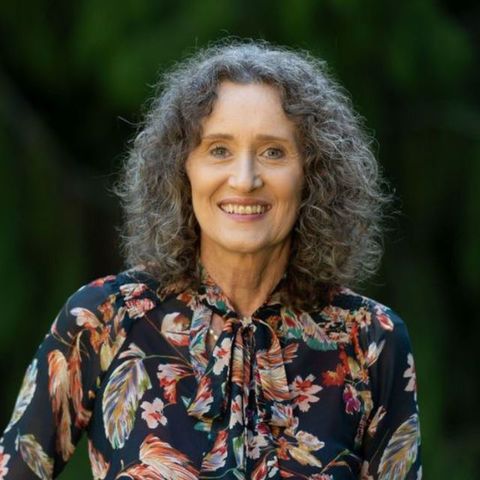
My name is Lani Pudity.
I am a Sophrologist trained at the Energy Centre in Geneva,
Switzerland.
To put the term Sophrology and Sophrologist into perspective,
A Sophrologist is a specialist who studies the mind,
Body,
Spirit,
Breath and consciousness to understand human behaviour.
In contrast,
Webster defines a psychologist as a specialist who studies the mind to understand human behaviour.
Sophrology is a fairly new practice,
Especially in the English-speaking world.
This lecture is meant to give a brief introduction to the practice and to help you understand a bit more about the dynamic experience you can enjoy during each session.
Imagine a simple routine that can start your day and your evening or basically be practiced whenever and wherever you feel a need to ground,
Connect and find peace.
Not a rigorous routine and not a routine that requires special clothing or equipment.
Simply a routine you can find right here on Insight Timer and one that can provide immediate balance.
You can create a routine that can build fresh neural pathways in the brain so that you can recall the techniques anytime and anywhere.
That's Sophrology,
A mind-body training that is easy to learn and can radically alter your quality of life.
A consistent practice of Sophrology can be a pathway to development and a therapy to address certain difficulties caused by stress and anxiety.
So where did it come from and how long has it been around?
The founder of Sophrology is a man by the name of Professor Alfonso Quesado.
He was a doctor of medicine and surgery specializing in psychiatry and neurology.
Treatment strategies for his patients did not seem effective so he went in search of something better.
In conversations with colleagues and while traveling throughout Asia,
He gathered bits and pieces of Western science and Eastern philosophies and he created Sophrology.
It became an official form of practice and treatment throughout continental Europe in 1960.
Sophrology has been proven to reduce the intake of pharmaceuticals by 30% and is now covered by the Swiss National Health Insurance.
It's used in hospitals,
In schools,
By corporate organizations and by the Swiss Olympic team.
It's only been since 2006 when Sophrology started being taught and practiced in English but you can find it very active in France and Switzerland and actually it's growing quite strongly in the UK now.
The word Sophrology comes from ancient Greek terminology.
Sos is harmony.
Fren is friend.
P-h-r-e-n is mind.
Logos is to study.
Sophrosene is another Greek word which describes excellence of character and a well-balanced person of sound mind.
You might know that the word Soph means wisdom.
So with all of that as the background,
Alfonso Quesado coined the term Sophrology,
The study of conscious harmony.
Working with his colleagues and his wife,
He combined Western science strategies like anatomy and physiology,
Psychiatry,
Phenomenology,
Breath work and neuroscience and then because his wife was a yoga instructor,
They went on a sabbatical across Asia and discovered Eastern strategies and applied those to Sophologies.
So it also includes Zen,
Buddhism and yoga.
A sensible strategy when you consider the scientific machine that is our body and the spiritual aspect of our minds.
The practice of Sophrology is a true mind-body connection which can create authentic awareness.
So that's enough for a brief intro.
Let's do a mind practice session.
Each exercise of Sophrology generally includes two or three key techniques.
A body scan,
A tension release and a desophonization.
In this lecture,
We'll only do two parts of that including the body scan and the tension release which you can find as one of my practice sessions all on its own.
So if you enjoy this body scan,
Then please practice it regularly to carve out that narrow pathway in the plasticity of your brain.
More advanced Sophrology sessions include balanced breathing,
Gentle movement and creative visualizations and I hope that you'll join me for those in the future.
So for now,
Let's settle into our bodies.
We'll start this exercise standing and then part way through I'll invite you to sit.
So it's important to have a chair on hand.
The best chair for that is a dining room or an office chair.
Just place it behind you so you can sit down without much interruption.
We spend much of our life standing,
Walking and sitting so we use these positions during Sophrology exercise to create those neural pathways in the brain that remind you that you can be at peace in any position.
During this exercise,
I'll speak in first person so it's as if you were speaking to yourself.
Let's begin.
For this exercise,
I stand in front of my chair,
Feet shoulder distance apart.
I become aware of the vertical body between the earth and the sky.
I become aware of my breathing as if the whole body is breathing and renewing.
I become aware of sounds far away,
Sounds near at hand and just sounds from my own body,
My breathing,
My heartbeat.
I welcome those sounds as being part of life without trying to determine what they are.
Now concentrating on my body,
I become aware of my head.
I become aware of my forehead,
My eyes and all the tiny muscles around my eyes,
My nose,
The air going in and the air coming out,
My mouth and jaw,
My cheekbones.
I become aware of my ears and all the space around my ears,
My brain,
The back of my head.
This is my first system.
Now I become aware of the neck and throat,
My shoulders,
Back of the arms,
The back of the hands,
My second system.
And then becoming aware of the chest area,
The heart and lungs,
The upper back,
The underside of my arms,
The palms of my hands,
Fingers,
All of my third system.
And then the area between the rib cage and the navel,
The internal organs,
Stomach,
Liver,
Brain,
Nose,
Kidneys,
The middle part of my back.
This is my fourth system.
I become aware of everything below the navel,
The lower abdomen,
My lower back,
The internal organs of the fifth system,
The hip and pelvic area,
The upper legs,
The knees,
The lower legs,
The ankles,
The top of my feet,
My toes and the soles of my feet,
All of my fifth system.
Now focusing on the whole of my body,
I become aware of the weight of my body,
The temperature of my body and the size of my body.
I breathe out fully to empty the stomach and lungs.
I breathe in fully through the nose.
I hold my breath.
I lift my arms above my head and I tense,
Tense,
Tense the whole of my body,
The top of my head,
The tips of my toes,
Tensing all of my muscles,
Tensing a bit more and then release.
Relax and letting go.
I bring my hands down and I feel for the chair behind,
Sitting down in the integration position,
Sitting with my back straight in the back of the chair,
The soles of my feet on the floor and my hands placed palm down gently on my thighs.
I take an integration pause,
Becoming aware of all the physical and mental sensations that are happening in my body now.
Just becoming aware of your breathing as if your whole body is breathing and renewing.
Becoming aware of the space around you.
Feel the energy of the room without opening your eyes,
Feeling above the walls surrounding the floor beneath your feet,
The way your body is supported by the chair.
Becoming fully aware of the present moment and how your body interacts with the space around you.
Now as this exercise comes to a close,
Begin to move your body starting with your feet.
You allow that movement to come up through your body,
Stretching your arms,
Movement of your head and shoulders and when you're ready,
Opening your eyes.
You may want to write this experience in your mind practice journal so that you can refer to it again later.
Thank you for joining me in this session today.
I hope you discovered a little bit more about Sophrology and I look forward to guiding you in another session of Sophrology.
Thank you.