Embracing the One,
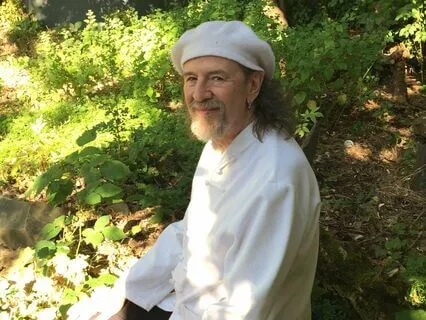
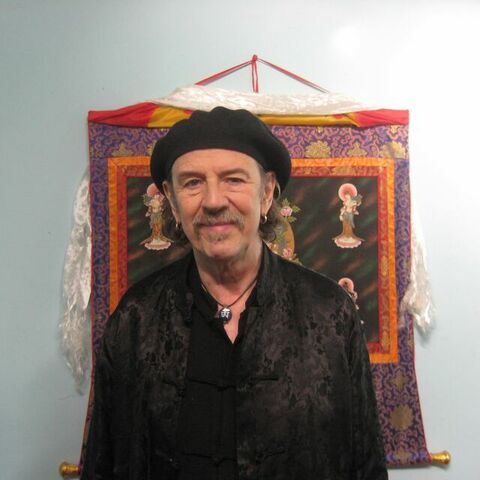
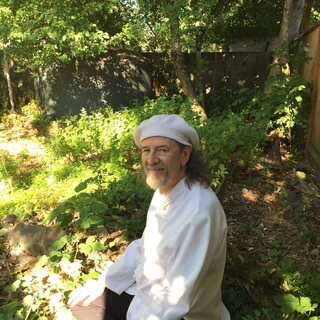
Taoist Meditation with Solala Tawlar,
Part 2 By learning how to harmonize and strengthen the physical,
Mental,
And energetic layers of one's body,
We can not only revitalize our system,
But gain deeper spiritual awareness and understanding that will,
In turn,
Allow us to be examples to others.
Taoists do not proselytize,
They do not sermonize,
And they do not seek to convert others.
Instead,
They believe that to be a good example of a healthy,
Spiritually realized person is the best way to help the world.
We all learn at our own pace,
In our own time,
And in our own fashion.
That is why there are so many different types of practices in Taoism,
And why there is no one practice that is right for everyone.
Zhuangzi says,
We cannot see our reflection in running water,
Only in still water.
Only a person who has attained inner stillness is able to still the minds of others.
There are many reasons to begin a meditation practice,
From cutting down stress in your life to seeking immortality.
Human beings have always meditated.
The oldest cultures,
Including those from India as well as China,
Have utilized various meditation practices to maintain health,
Stamina,
And vitality,
As well as to commune with the source of all life,
Or what the Chinese call Tao.
All these reasons are valid to begin or maintain a meditation practice.
The trick,
Of course,
Is to be able to bring the meditative state,
Or the fruits thereof,
Into the rest of your life.
The more you can erase the line between your meditation or spiritual practices and the rest of your life,
The better.
The more you integrate meditation into your life,
The more whole,
Balanced,
Harmonious,
Healthy,
Insightful,
And spiritually aware you will be.
Of course,
Taoists,
Being Chinese,
Are also very practical about their practice.
If one is sick,
Unbalanced,
Ungrounded,
Or emotionally confused,
It is very difficult to enter the deep spiritual realms of immortality practices.
Thus,
They developed health practices like Tai Chi,
Tao Yin,
Sometimes called Taoist Yoga,
And Qi Gong,
Practices to help the student of the way stay as strong,
Healthy,
And clear as possible.
In this way,
They were better able to keep up with life's demands,
As well as delve deeply into the meditation practices that were necessary for the Taoist adept.
But if one is interested in spiritually evolving or attaining Tao,
One must pay attention to the internal cultivation practices,
As well as the movement forms.
We must remember that the Qi Gong or movement forms are there to support our spiritual practice,
Much of which consists of stillness or meditation practice.
Lao Tzu gives us this advice on meditation.
In understanding all things,
Can you remain apart from them?
Can you bear the fruit without taking possession of it?
Can you do the work without taking credit?
Can you act without taking control?
Can you lead without dominating?
Can you speak without speaking?
Can you sit without moving?
This is called the profound and secret virtue.
Taoists believe in learning from nature,
Both external and internal.
Ancient Taoists spent a lot of time studying nature around them.
They watched how animals comported themselves when they rested,
By turning themselves in circles before laying down,
How certain birds stand on one leg with the other sealing up the lower opening,
And how other animals curl up to close off various openings,
Thereby stopping any energy leakage.
They noticed which plants animals ate when they were sick or injured.
They observed the slow passing of each season,
Of day into night,
And the interplay between light and dark.
They experimented on themselves with various breathing practices,
Sitting and even lying down meditation postures.
Over thousands of years of experimentation,
They came up with various practices that have stood the test of time.
They found ways to open the doorways between worlds,
To extend life,
And to heal the deep layers of trauma that we as humans have accumulated through lifetimes.
As in ancient days,
The best teacher is still nature,
If one has the eyes to see.
But even that can take training and practice.
The next best teacher is life itself,
But one must be able to look with a gaze of objectivity and introspection,
Something not all of us have been trained to do.
The best teacher after that is another person,
A teacher of meditation or qigong.
There are some things that you can receive from another person you can never get from a book or a video,
Especially if that person is a gifted teacher.
After that,
Knowledge can come from books,
Tapes,
And videos.
Laozi says,
Allow yourself to become empty.
Abide in stillness.
The ten thousand beings rise and flourish while the sage watches their return.
Though all things exist in profusion,
They all end up returning to their source.
Returning to their source is called tranquility.
This is called returning to their original nature.
Original nature is called constant renewal.
To understand constant renewal is called illumination.
To not understand constant renewal is to invite disaster.
Depending on how much you put into it,
Taoist meditation can effectively change or at very least enhance your life.
For those with experience in other forms of meditation,
It can open new areas of experience and vision.
Taoist meditation can give you greater clarity both emotionally and mentally,
A stronger sense of groundedness in your energy body,
And some valuable tools for exploring the inner space of your psyche,
Spirit,
And energetic being.
Last of all,
Taoist meditation is not necessarily connected to a religious format.
In other words,
It's not necessary to convert to Taoism to practice Taoist meditation.
The benefits of Taoist meditation can be experienced by anyone regardless of religious persuasion.
All it takes is the willing to relax,
To be open to change,
And to experience oneself as an energetic as well as a spiritual being.
Originally,
Most of what we know today as Qigong practices were developed as aids to meditation.
The earliest form of Qigong that we know of is Daoing.
These Daoing practices,
Which date back to the Han Dynasty,
2006 BCE to 220 CE,
Were created in order to lead the qi into its proper channels by utilizing various stretching,
Twisting,
And self-massage movements.
The ancient Taoist sages saw our body as the storehouse of our inner nature.
They taught that we must take care of our body for us to have a place for our spirit to dwell.
In this way,
Our practice provides a foundation for our spiritual cultivation.
It is important not to neglect our stillness practice if we are to truly enjoy the benefits of our movement practice.
Like yin and yang,
Both stillness and movement are important to our overall function.
Taoists believe that it is important to keep a balance between movement and stillness.
Too much movement will exhaust one's qi,
While excessive sitting will cause stagnation in the body.
The key here is not to abandon one for the other,
But to experiment and see what the proper balance is for your own cultivation.
Like yin within yang or stillness within movement,
That place of serene stillness within our movement gives birth to that subtle and mysterious movement within the stillness of our meditation.
That movement brings us into greater harmony,
Greater awareness,
And greater experience of the eternal and ever-evolving Tao.
So I have some courses on Insight,
And I have some other tracks that teach various meditation practices.
So if you are interested in learning more about Taoist meditation practices,
I encourage you to look up some of my courses and other tracks here on Insight Timer.