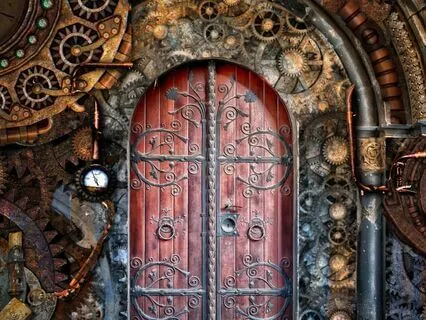
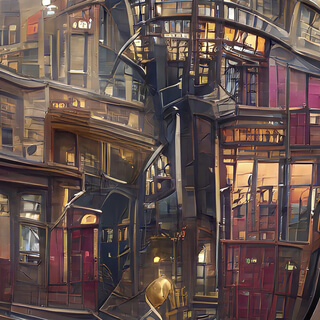
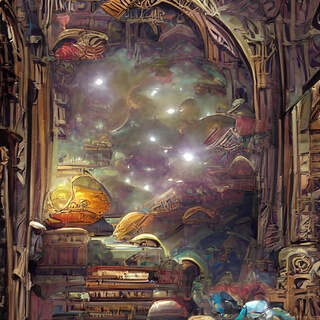
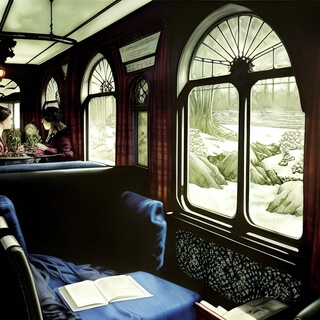
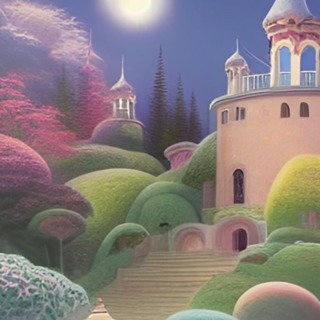
Uncover secrets etched in clockwork in tonight's steampunk-inspired sleep story.
Sleep and Sorcery is a folklore and fantasy-inspired sleep series.
My name is Laurel and I'll be your guide on tonight's fantastical journey.
Sleep and Sorcery is one part bedtime story,
One part guided meditation,
And one part dreamy adventure.
Listen to my voice for as long as you like,
And when you're ready,
Feel free to let go of the story and make your way into sleep.
If you're still awake as the story concludes,
I'll guide you through a relaxing visualization.
In tonight's story,
You seek repairs for a broken clock you found at an antique sale.
Returning to the workshop where the clock was made,
You meet the mysterious and kindly clockmaker.
He recalls fashioning your clock himself,
And he agrees to repair it.
With nothing else to do,
You sit and watch him work,
But as he works,
Enchanting visions form before you.
You begin to suspect that the clockmaker is more than he appears,
Having uncanny power over the very workings of time.
Old time,
That great and longest established spinner of all.
His factory is a secret place,
His work is noiseless,
And his hands are mutes.
Charles Dickens,
Hard Times.
When rain falls in the city,
The cobblestones become like little mirrors,
Slippery beneath your feet and gathering puddles in the joints between.
In those micro pools reflect the flights of airships overhead.
Those great zeppelins built for luxurious escape.
Sometimes,
When life down here seems glum,
You lose your head in fantasies of boarding one of those magnificent machines and never touching down till you've had your fill of excess and entertainment.
They say the champagne flows unending in the skies,
That the food is all you can eat,
And there are dancers and singers of the highest caliber on board.
And they say time doesn't touch the airships,
But carries on below.
Yes,
Sometimes that fantasy takes hold of your mind,
But then your feet fall on slick cobblestone,
Your senses fill of the many delights available here in the city.
And most of all,
You remember the warm embrace of those you love,
And in an instant,
Having your feet on the ground doesn't seem so bad.
Especially not today,
When you are drawn through the winding streets of this city with a purpose.
It's tucked beneath your raincoat,
Out of sight,
Warm and safe there,
Like a secret.
Today you're going somewhere you've never been before.
It's strange,
Realizing that there's a place in this city unknown to you.
You've spent your whole life here,
Learned all its hidden haunts and concealed passages,
Studied it like an ancient text,
Mapping it onto your mind,
So navigation of the city becomes muscle memory,
Such intimate knowledge of place is all but required for someone in your line of work.
For years now,
You've made your living by moving people from place to place in your bicycle carriage.
Today,
However,
You're on foot,
Slipping through the rain toward a curious destination,
Hidden in the labyrinthine corridors of the city's heart.
As for why you should make such a trek?
It all began a few days ago,
The twisted tale that brings you here,
Under heavy rain clouds and the hiss of steam.
The neighborhood in which you grew up is marked by row homes,
Dark brick townhouses squeezed together along the narrow streets,
Their modest gardens backed against each other.
It's a place of calculated closeness,
Where you never step out your front door without meeting a neighbor or two on the step.
People look out for each other,
And homes tend to pass from generation to generation within families,
Weaving decades of history between tenants,
Owners,
And neighbors.
You know every face on your street,
Every name.
Respect and mutual care runs deep,
But so does gossip.
So when a long-time neighbor,
Known for being a prolific collector of antiques and rare objects,
Held a sale of her belongings,
The neighborhood came out in force to finally discover what she'd been hoarding in that house all these years.
The neighbor in question,
Cornelia Moore,
Lives alone and values a bit of privacy,
Though she's been known to invite friends and neighbors from time to time for tea.
Those who've been inside her stately home,
Even having seen only the entryway and sitting room,
Swear it to be filled from top to bottom with the most intriguing artifacts and collector's items.
Ships in bottles,
Antique lamps,
Porcelain figurines,
And lesser-known works of master painters,
Well-known traders,
And antiques dealers pay regular visits to Cornelia,
Bringing packages aplenty each time.
How she's accumulated such wealth as to obtain the collection remains a mystery.
But what was,
At first,
An even bigger mystery was this,
That after years of amassing rare and expensive objects from all over the world,
One day this week,
Cornelia awoke and decided to sell it all,
And for a price even you and your humble neighbors might afford.
On a gray and misty morning,
You stepped out your front door with a handful of notes in your pocket,
Earned the night before by transporting passengers to the opera and back.
And you join a rapidly forming queue of familiar faces waiting for Cornelia's front door to swing open.
There were whispers among you as to the nature of the sale,
What treasures you might discover inside,
And what the venerable lady's motives might be.
When at last the great clock in the square began to chime its tinny chime,
There came the creak of door hinges.
Cornelia,
Stout and smiling,
Stood in the doorway,
Beckoning you inside.
Behind the walls of the house,
Only three doors down from yours,
Was a veritable treasure trove for anyone with a discerning eye.
Certainly,
Among the bounty there were less than valuable trinkets,
Dishes filled with costume jewelry,
Yellowed lace doilies,
And the like.
But even these,
To some seeker,
Might have proven a prize.
You confess yourself more interested in picking up theories as to Cornelia's plans than obtaining any great boon.
Though,
You did line your pockets in case something struck your eye.
It seemed everything in the house,
At a sticker price,
Even the furniture,
Cornelia milled about,
Talking to people,
Emphasizing that everything must go.
Then,
As you examined a pearl-encrusted music box which opened to a mermaid twirling with a clockwork tune,
You got an answer to your curiosity.
Airship,
Departing Saturday next,
Came Cornelia's voice from the next room in half-heard sentences.
Finally,
Going to see the world.
No,
I never intend to come back.
So that was it,
You thought.
Cornelia Moore,
A fixture on this cramped little street for the last half-century or more,
Was taking to the skies in one of the luxury airships.
You gaze on with such fascination,
Giving up her worldly possessions,
The things that tether her to the solid earth,
And taking flight with no intention of returning.
Things really would begin to change around here,
You thought.
But then,
That's time for you.
Everything changes with time.
With your questions answered,
You began to observe the objects more keenly,
Actually looking for something to take off Cornelia's hands.
It was after combing nearly every object in the sitting room and following a train of visitors up the first flight of stairs that something finally caught your eye and held your attention.
A clock,
Hanging on the wall just above the stairs.
You weren't sure what captivated you so about it,
But there you stood,
Transfixed by the design and workings of the thing.
It should be said that though the gear work,
Impeccably maintained and well-ordered,
Was visible from the front face,
The clock did not tick.
The pendulum beneath did not swing.
It was still,
Motionless and soundless there,
Yet enthralling all the same.
The clock,
With intricate adornments of hexagonal honeycomb design,
Was shaped in wood and metal work,
Like a honeybee.
Wings spread,
The ornate hands met at the center of the clock,
At a ruby point.
It was old,
Easily antique,
But in beautiful shape for the age.
Your eyes glittered.
This was something special,
Surely.
Though you still couldn't put your finger on what it was that so inspired you.
It hasn't worked in years,
I'm afraid,
Came a voice from just behind you.
Cornelia had evidently made her way up the stairs to check on her guests,
But it's a pretty thing,
Isn't it?
Very pretty,
You said.
Marvelous.
If you really like it,
She said sweetly,
I'd happily cut you a deal,
And I can even recommend a place to take it for fixing,
If you get round to it,
As I never did.
The same shop that made this lovely piece is still open,
In fact.
I'll rustle up their card.
After a swift negotiation,
Within five minutes,
You had paid the kindly woman destined for the airship and been on your way.
You brought the honeybee clock home.
You kept the card for the clock shop given to you by Cornelia,
But as someone with cursory experience,
With mechanics and gears,
You've had to fix up your bicycle more than a few times,
After all.
You thought you might be able to start the clock working again on your own.
This proved a more acute challenge than expected,
While certainly some of your skill and dexterity came in handy for dismantling the case.
Once you got inside the antique clock,
You found yourself at a loss for what to do next.
You tried hanging it on the kitchen wall purely for decoration,
Something pretty to look at in the mornings.
But day after day,
As you passed by the honeybee clock,
You absentmindedly looked for the time,
Half expecting the pendulum to begin to swing.
At last,
Today,
You fished the clockmaker's card from your coat pocket and gathered up the antique piece.
Today,
You would bring it in for repair.
So,
You splash now through the shallow puddles of Beekman Street,
Consulting here and there with your map of the area.
Carriages and sputtering motor cars whiz by,
Spraying muddied water across the sidewalks.
The rain lingers more in a timid,
Sparkling mist than anything else,
And the tops of bell towers and skyscrapers disappear in a blanket of fog.
The occasional airship is reduced to a vague,
Looming mass above the whiteness of sky.
Deeper,
You travel into the city's narrow alleyways under laundry lines and fire escapes.
The infinite paths you know swiftly disappear into heretofore hidden passages,
Corridors,
And courtyards until it's as if the city yields.
It unfolds,
Allowing you into the impenetrable heart as if you've cracked a code.
And there,
At the end of a mellow lane is a structure,
A building very like the row homes of your neighborhood or the connected businesses of the main shopping districts.
But it stands alone,
With bare walls on either side,
Leaning with the slightest,
Uneasy angle,
Like its cohorts were knocked down a century ago,
Leaving it to find its footing in the world.
The funniest thing about the building is that somehow,
In its shape and curve and appointment,
It resembles a grandfather clock in itself.
The tall glass windows of the ground floor and the rounded bay window on the next,
The flourished pediment and darkened facade.
The stately sign above the entrance reads,
Horace Templeton's Gallery of Time.
This,
Then,
Is the place.
But how on earth does a shop like this do business,
You wonder?
Hidden so deeply within the labyrinth of lilting streets,
It can hardly experience much foot traffic from the looks of it,
With curtains drawn and little light penetrating beyond them.
It may not even be open.
Cornelia described the shop's proprietor as the most well-respected horologist and craftsman this side of the Atlantic Ocean.
Perhaps he gets his customers by word of mouth and reputation alone.
Well,
Eager to get out of the ever-present drizzle and discover whether your new acquisition might be mended,
You try the front door.
Locked,
But before you lose hope,
You notice a pull string by the side of the door,
One that resembles a classic doorbell ringer.
With a casting off of reservations,
You yank at the rope,
Expecting to hear the clamor of a bell behind the door.
Instead,
However,
You hear faint clicks,
Dings,
Whistles,
And strikes.
Like the workings of a complex machine,
Powering up for the first time.
The noises grow and develop into a clanging crescendo for a full minute before coming to a winding halt.
Then,
In the silence,
You hear the single clear click of a latch disengaging.
Then the door,
Once locked,
Squeaks open toward you of its own accord.
You can see that just ahead through the doorway is a narrow staircase draped with a frayed runner.
Cautiously,
You step inside,
Finding signs along the wall of the stair that point to the shop's main show floor being up the stairs.
You take the steps carefully,
Noticing that also along the edge of the staircase runs a series of gadgets,
Gears,
And gaskets.
This,
You infer,
Is the complex machine that was triggered to unlock the front door.
What an elaborate process,
You think,
Given that one might simply have walked down the steps to greet you,
Clutching the honeybee clock.
Beneath your coat,
You ascend to the top of the stair,
Where the landing leads to yet another door.
On a gilded plaque is etched the words,
Come in.
You open the door and at once are greeted by a silvery sonic landscape of ticks,
Tocks,
And the occasional chime.
Gears click,
And cuckoos call.
On every inch of every wall hangs a timepiece of varied size,
Shape,
Design,
And function.
Slender grandfather clocks stand mighty,
While still more ornamental clocks adorn tables and pedestals,
And each and every one displays,
Even to your untrained eye,
The most exquisite craftsmanship,
The same that drew you helpless to the honeybee clock.
It's amid all these wondrous devices that at last you find the face of the clockmaker,
He is seated at a work table,
Winding a pocket watch,
And eyeing you with interest.
His eyes,
Behind thick spectacles,
Betray a certain whimsical benevolence.
His hair is graying,
And close-trimmed beard flecked through with white,
But he strikes you as seeming altogether youthful.
Certainly if,
As the business card suggests,
The shop was really opened more than a hundred years ago,
He would have to be the second or third Horace Templeton to sit in that chair.
And what brings you in today,
My friend?
Asks the clockmaker,
Eyebrows genially raised.
Oh,
You say,
Pulling the honeybee clock from the folds of your coat.
It's this.
It doesn't work,
You see,
But I was told.
Ah,
The clockmaker says,
With a hint of fascination in his voice.
He stands,
Gliding toward you through the sea of clocks.
On approach,
He sees your wet coat and dripping umbrella.
Oh,
Do forgive my manners,
He says.
Allow me.
Allow me.
He takes your coat and opens a cabinet of a nearby grandfather clock,
Which proves entirely hollow and repurposed as a miniature wardrobe.
He hangs the coat there and deposits your umbrella in a bin by the door.
Then,
With his arms outstretched,
He gestures for your approval to take the clock from your hands.
You pass it to him,
And he seems to feast upon it with his eyes,
Delight overtaking him.
I remember this one,
He says.
Well,
I remember every clock I've ever made,
But this one.
This was a special clock,
Indeed.
You made it,
You ask,
Masking the surprise in your voice.
I thought it was much older.
The clockmaker winks.
Oh,
I'm spry,
He laughs,
But not so young as I look.
Come on over,
Then.
You follow him back to the work table,
Where he gingerly lays your clock upon the surface.
I'm Horace Templeton,
He says,
And you are?
He responds with your name.
Pleased to meet you,
Templeton responds.
How did you come to possess this fine piece?
He recounts the events of recent days and your connection to Cornelia Moore.
Templeton's eyes light up at the sound of her name,
Cornelia Moore.
Now,
That's a name I haven't heard in some time,
He says.
Yes,
I do recall selling her this fairy clock and some other pieces over the years,
And you say she's selling every one of her possessions.
Yes,
You reply.
She's off on one of the airships any day now.
Hmm,
Templeton scratches his beard.
I can understand it.
A life that long,
It becomes easy to get bogged down by possessions.
But then,
As they say,
Tempus fugit,
Time flies.
And before you know it,
You've spent all your time in the same house,
Surrounded by things.
It sounds like it was time for her to take wing as well.
As he talks,
Templeton is beginning to fiddle with the clock,
Unearthing tools from a box on the table and starting to unwind the screws in the back.
Now,
He says,
Let's see what's wrong with you.
After a brief examination of the inner workings of the movement,
He concludes.
Yes,
It's what I thought.
This won't take long.
You're welcome to stay,
Or if you've somewhere to be,
I can arrange for you to come back for it tomorrow.
You glance out the oversized,
Rounded bay window.
From here on the upper floor,
You have a surprisingly complete view of the city skyline.
There's such a hidden part of town.
The rain has picked up and is falling now in sheets over the rooftops.
With weather like this,
You might as well stay here.
Horace Templeton indicates a chair you can sit in if you like.
It's as old as anything in the shop,
Made of polished mahogany and upholstered in pink and green.
But for the moment,
You've no inclination to sit.
You're too intrigued by the multitude of time-keeping machines about the place.
Templeton dons a pair of curious spectacles,
Outfitted with multiple layers of magnifying glasses that flip down over the lens.
He adjusts them to his liking,
Then continues to fiddle with the clock.
You take the time to wander the perimeter of the shop,
Taking in all the wondrous devices that line the walls.
The constant tick-tock of the clocks,
Mixed with the muffled sounds of rain outside,
Creates a low curtain of white noise,
Which softens your mind considerably.
Your gaze lingers on an elaborate,
Gilded wall clock with rococo flourishes.
The most exquisite piece rests upon a small table.
The actual timepiece is only a small round face,
Almost obscured in the design,
Which takes after a bird's nest filled with all sorts of small,
Shiny objects.
Spectacles,
Brooches,
And rings.
At the top of the sculpture,
A magpie drops yet another treasure into the pile.
The whole effect is delicate,
Colorful,
And tells a story.
Every single clock is finer,
More captivating than the last.
The grandfather clocks boast more and more intricate detailing on the cases and mother-of-pearl inlays.
Timepieces vacillate between highly decorative sculpture and minimalist charm.
How long have you been making these?
You ask the studious Templeton.
Oh,
It's long since I stopped counting the years,
The clockmaker says dismissively,
Then chuckles.
I know what you're thinking.
How can I stop counting when this place does nothing but count the time?
Silence follows for a little while as you continue to wind your way around the shop's edges,
Observing each and every clock in sight.
If I remember right,
Templeton says,
Never lifting his gaze from the matter at hand,
And you'll forgive me as my memory is sometimes fuzzy.
I was inspired to make this clock after I learned the way the ancient Greeks thought about bees.
Oh,
You call back,
Admittedly engrossed by a mantle clock with a mechanism to turn a tiny hourglass over and over at the center of its face.
You watch the grains of sand fall in a narrow trail,
Gathering little by little at the bottom.
They were thought to be prophets,
The bees,
Templeton continues.
Or at least,
There were three bee maidens who gave their gift of prophecy to the god Apollo.
I always liked the idea that bees might know the future.
Templeton's words wash over you,
But you don't quite take their meaning.
It's more of an impression.
You picture a honeycomb in which every single cell displays a possible future,
And honeybees buzzing from cell to cell to divine the overtures of fate,
Something about the atmosphere of the shop,
The sounds of rain and clocks ticking,
The smell of cedar and silver polish,
Of aged leather and oak,
Sends your head to swimming.
You feel immeasurably cozy,
Tucked inside this unusual oasis of time.
At last you come to sit in the antique chair,
Which sinks softly beneath your weight.
You have a good view of Templeton's work.
Masterfully,
He adjusts the gears of the movement.
Patient,
A tick at a time,
Your eyelids begin to sit quite heavy.
But just before they fall closed,
There comes a clattering and a clanging,
All at once a striking of bells,
An eruption of cuckoos,
And a chiming of chimes.
The clocks,
For a brief moment,
Come together,
All to life,
Sending their cacophonous music reverberating across the shop walls.
The building itself hums,
Nearly vibrates,
With the movement and noise.
Horace Templeton,
Meanwhile,
Plugs away at his work,
Unperturbed by the clamor.
You suppose as many hours as he's spent within these walls must have softened his awareness of the hourly strike,
And slowly then,
Tick by tick,
The noise dissipates,
And the clock's hourly show winds down.
Soon,
Even the after ring of bells hangs,
Then dissolves on the air,
Leaving only the familiar tick-tock,
Tick-tock of the minute hands and pendulums.
The faint pitter-patter of rain on the windows.
You are watching intently over Templeton's shoulder as he works with the tiny gears inside your clock.
The work is fiddly,
Intricate,
And needing nimble,
Practiced hands.
He inserts a narrow tool and gently begins to turn the interlocking lattice of gears.
They rotate counterclockwise,
Teeth clicking softly against teeth.
The most curious sensation comes over you as you watch.
The hairs on the back of your neck seem to stand on end,
And the skin of your arms tightens.
Something in the atmosphere you sense shifts.
It takes a few moments to realize that the pattern of sound has changed almost imperceptibly.
The rain doesn't strike at the window with the same force,
But plinks effervescently.
There's something uncanny about the sound.
It's the sound of rain,
Surely,
But something about it is ever so slightly off.
You go to the window to see if you can discern what's caused the change.
At first,
What you see doesn't register as in any way out of the ordinary.
There's the rain,
And the cloud of mist that it precipitates.
But as you move closer,
Yes,
There is something peculiar about the way the rain is falling,
Or rather,
Not falling.
Your mind bends around the spectacle to grasp at understanding.
You watch a single raindrop slither up the pane of the window,
Burst into a plume of droplets,
Then reassemble itself and soar upward at a diagonal into the sky.
Indeed,
Each raindrop in sight makes a similar journey.
The rain outside the clockmaker's workshop is falling up in reverse.
Your eyes follow the rain to the strangely blooming clouds and past the layers of fog up in the sky to the airships that drift now in reverse,
Nose to tail.
Everything,
It seems,
Outside this space is moving backwards in time,
Pulling your gaze from the extraordinary vision at the window.
You look back to the clockmaker,
Content on asking him if he's ever witnessed such a phenomenon.
But in his seat,
Never fiddling with the honeybee clock,
Is,
It appears,
A much younger gentleman,
No flecks of gray in his hair or white in his beard.
And yet,
Those are the same spectacles donned moments ago by the aging Horace Templeton.
And he hunches over the workbench with the same distinctive posture that this man could be no more than thirty years old.
By your estimation,
Something most unusual is afoot here,
You think.
The man at the desk slows the motions of his hands,
Inhales deeply,
And drops his shoulders.
He resumes work in a moment,
But he begins to turn the instrument the other direction,
Clockwise,
That is.
And when he does,
You experience another remarkable sensation.
It's the same kind of feeling one might have when stepping from a moving carriage,
Or,
You suppose,
An airship,
Onto solid ground for the first time in many hours.
The lurching and settling into the safety and solidity of earth.
The grounding.
And the sound is changed again.
You glance to the window to confirm that the rain,
Once more,
Falls from sky to ground,
As is natural.
You follow the patterns of raindrops,
Tracing pathways on the glass.
The airships overhead have resumed their course.
The natural flow of time,
It seems,
Has been restored.
When you look back to the clockmaker,
Though,
He looks entirely changed.
Instead of the straight-laced gentleman whose face you looked on before,
There sits,
Hunched over the honeybee clock,
A wizened,
Ancient fellow,
With beard growing long past his knees,
Blowing to the ground.
Flowers and vines bloom through his hair and beard,
Their roots curled around the legs of the work table,
And burrowing deep into the floor,
He is crowned with a wreath of holly,
With thick red berries,
Bright against deep green leaves,
At his waist hangs an hourglass.
The figure,
Marvellous and majestic,
Even as he bends over his work,
Captivates your attention,
And awe,
He is beautiful and untouchable,
Sublime.
He's like nothing you've ever seen before,
With your own two eyes,
Like a god.
You're not sure how long the image of this stately,
Godlike figure remains,
Obscuring your vision of reality,
How long it's real,
And when it fades into afterimage,
But in time,
The familiar silhouette of Horace Templeton,
Clockmaker,
Is superimposed on the ethereal creature,
And into the gentle tick,
Tick,
Tick that underscores your thoughts,
The sublime figure fades,
The rain falls,
The airships travel on,
And all is as it should be,
In this curious corner of the world,
Well,
Says Templeton,
Breaking the wonder-struck silence between you,
I do believe that should fix it,
He is fastening a metal plate to the back of the clock,
Obscuring the labyrinth of gears and mechanical pieces beneath,
He turns it over in his hands,
And smiles to see the pendulum begin to swing,
You isolate the distinct tick-tock of your honeybee clock,
It's a very pleasing sound,
The piece has come very much to life,
Templeton's eyes sparkle as he presents the repaired object to you,
You are tempted to ask about the unusual things you observed in and out of the shop while he was working,
But somehow the words won't rise to your lips,
You have a feeling he knows what you've seen,
That even if he deigned to explain it,
You might never comprehend,
Now,
He continues,
Watching you examine the repaired clock,
I want you to take good care of this clock,
Now that it's entered your possession,
That means,
Keeping the temperature indoors even,
And avoiding fluctuations in humidity,
Regular winding and oiling of course,
Here,
I've got a handy leaflet with all the reminders for maintenance and upkeep,
He fishes a pamphlet from a drawer and gives it to you,
On a casual glance it appears remarkably thorough,
But it feels strange to suddenly converse about things as mundane as maintenance and humidity with one who moments ago wore the face of something divine,
And you'll let me wrap it up for you of course,
Carrying it throughout this rain won't help matters after all,
You nod eagerly and Templeton disappears momentarily into an office,
Returning with a padded gift box and carrying tote,
He gingerly takes the clock and wraps it snugly in the packaging,
You catch a tender smile before he closes the box,
As if he's looking on a beloved child,
You'll call us for any service won't you,
The number is in the leaflet,
You agree,
And with few more words,
Horace Templeton sends you and your good as new clock on your way down the steps,
Bordered by whiz gigs and mechanisms,
And out onto the street,
Where the rain is once more fading into a subtle sparkle of mist,
The cobblestones are like mirrors,
Before departing the alley,
You turn back for one last look,
At Horace Templeton's gallery of time,
Looming like a grandfather clock,
Over this forgotten corner of the city,
All around it,
Civilization has grown,
Built upon itself,
Expanded and interpolated,
But this building,
With its light lean to the left,
Persists,
Filled with clocks and chimes and bells,
And overseen by a mythic presence,
It is at once outside time,
And ever entwined with it,
A shadow passes over what little sunlight penetrates the clouds,
You look up to see a passing airship,
Low in the sky,
And wonder if it's the one Cornelia Moore intended to board,
Is she up there now,
Cavorting with the upper crust,
Off to see the world,
You may never see much more than the winding streets of this city,
But after this afternoon's encounter,
You conclude that there are many marvels yet to witness,
Even in the familiar margins of home,
For all the slow misty walk home,
The heart of the honeybee clock beats against yours,
You cherish its steadiness,
This march of time,
Made from things that grow in the earth,
Wood and metals,
Time flies as they say,
But it is made and measured here,
On the ground,
You step over puddles,
In which the mirrored airships drift like sailboats,
And you drift,
Too,
Along the lacework of streets that trace this city,
Drifting home,
Rest,
And find stillness as your breath comes to slow down,
Feel the gentle rise and fall of your chest and belly,
And begin to empty your mind of thoughts of the past,
Or worries for the future,
Settling down here,
In the present moment,
Like a leaf falling to the surface of a pool of water,
Find yourself here,
Now,
Knowing there's nowhere else you need to be.
As you continue to breathe deeply,
Imagine that you are a drop of water,
A raindrop that falls on the surface of a pool,
And visualize the pool moving swiftly along an unseen current,
Becoming a river,
Let yourself travel downstream,
Born and buoyed by this river,
Always in motion,
And always connected to this whole body of water,
Feel how you are the greater thing through which the current moves,
Breathe,
And allow yourself to surrender to the sensation of being moved by the river,
Moved along the arrow of time,
Not controlled by it,
But immersed in it,
Entwined with it,
You are part of time's march onward.
As you drift down the river,
You might encounter treasured memories from the past,
Or dreams and aspirations for the future,
Simply acknowledge these and let them go,
Moving at their own pace down the river of time,
Cherish the impermanence of each passing moment while finding gratitude for the here and now,
The movement,
And the immersion.
In the sensation of surrender,
Notice how the movement of time through you and around you creates a kind of stillness,
This stillness can be hard to find when it feels like the world is rushing by us,
But if we pause for a moment and notice,
Observe our place and presence,
Align our pace with the earth,
The trees,
The water,
And the sky,
We can tap into the arresting magic of now.
In your mind's eye,
Allow the river to slow its course,
Bending and curving around changes in the landscape,
Softening and slowing down in rhythm with your breath,
Until,
Again,
In your mind,
It becomes a pool,
Tranquil and peaceful under the setting sun.
Breathe,
Allow your whole body to relax,
And your awareness to soften,
Your mind to slow down too,
As you inch closer to a restful sleep,
You are here,
Now,
And you are safe in this moment,
Immersed in this moment,
Here in this serene pool,
Time does not move in a straight line,
But exists more abstractly,
All at once,
Moments and eras,
Sharing the space of a raindrop,
All together,
Take comfort in the mysterious nature of time and allow yourself to completely relax into the enchantment of the present moment,
Soften,
Breathe,
Goodnight