What's up,
Everyone?
Welcome to Simulation.
I'm your host,
Alan Sakhian.
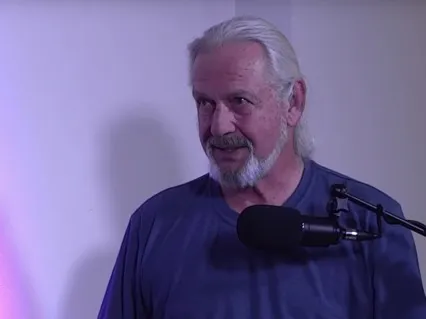
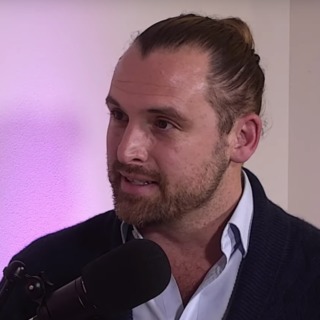
We are now following up for our second round with Dr.
Stanley Kribner,
Dr.
Jurgen Kremer.
Hello,
You two.
Hi,
Alan.
Good to be talking to you again.
Thanks for coming back on the program.
Yes,
Once again,
Into the breach.
Hey.
We're really happy that we'll have the opportunity to talk to you both at the same time.
And we wanted to start things off by talking about the importance of balance.
Who wants to kick us off?
I'll start.
Oh,
Go ahead.
Elders first.
Balance is a word that you run into time and time again in terms of indigenous and native cultures because they strive for balance between human beings and the rest of nature,
But they also strive toward internal balance.
And yet they're very,
Very wise.
They have vacations from balance.
They do very exciting things in terms of their games.
They have very orgiastic experiences.
They take chances.
They take risks.
So it's fun to depart from balance once in a while if you can come back and reestablish the balance again.
Balance often makes people think that things are bored.
No,
Far from it.
The better things are balanced,
The better equipped you are to avoid boredom by taking little adventures now and then.
Maybe two footnotes to that.
One is that balance really should be a verb because it's always balancing.
We are never in balance.
If a tightrope walker thinks,
Okay,
I have balance and stops,
They're going to fall off.
So balance is always a process and that's just one of the most important things about it.
But really the contrast that I think we're making is between striving for balance,
Working with balance,
Playing for balance versus progress and having that line up.
But really an evolution that happens by us constantly balancing ourselves with each other inside of ourselves with the world around us and changing because we're doing that kind of work.
And I think that's,
For me,
That's very,
Very important.
No,
I agree with that.
Balance does not go up or go down.
That's not the way it goes.
But it doesn't stand still either.
Dynamic balance is what keeps life interesting.
Absolutely.
Yeah.
And play is just as important as deep thought.
I really love the analogy that you're painting where you're walking on the tightrope and when you think,
I have balance,
Is when you fall off.
So it's this constant balance being a verb,
Balancing,
Always in balance,
This idea of a constant ebb and flow and that there's never a period of stopping.
It's always in ebb and flow,
Always in the progress.
This part,
I continue to have some interest in this part especially,
The idea of having deep interconnectedness with all yet also having a directional arrow towards progress.
That is the balance.
That's kind of the modernity balance that we're aiming to strike.
Maybe.
Yes.
Teach.
Yeah,
Teach.
Teach.
Maybe.
You see,
I increasingly look at progress as an ideology.
I think when we balance ourselves,
We are really working towards integration.
We're working to greater health,
To greater imagination.
You can call that evolution.
You can give that directionality.
But really,
When you look at different cultures,
They carry different imaginations.
At their root,
They have different ways of balancing themselves and different understanding of balance.
That's really the diversity of the human experience.
I think that's very,
Very important.
I don't want to presuppose that we're going in one particular direction or the other,
But when we're actually being true to the work of balancing,
Something new will emerge,
Something creative will emerge because we are in that process of right brain,
Left brain,
Communicating with each other,
The integration with our emotional brain,
Et cetera.
I sort of prefer that language because it seems like we're so invested in this notion of progress.
Progress usually is understood quantitatively.
By GDP or something like that.
Yes,
Right.
Those kinds of measures.
I think they may be important,
But I think ultimately they're misguided.
They lead us down the wrong path.
Why is it better that more people are at Disney World or Disneyland?
There's only one reason greater profits,
But really there should be more play.
There should be more imagination,
And that's really what it's about,
Which is of course what Disney taps into.
I would say that there's an interesting example regarding the human heart.
Obviously,
The heart has to be balanced in order to function,
But if you look closely at heartbeats,
You find that the healthy heart is not uniformly balanced.
The healthy heart has little jigs and jags every now and then.
This heart rate variability?
Yes.
The only time when the heart is balanced is just before death.
So a completely uniform heartbeat.
Bad news.
Bad news.
In some ways,
It's reminiscent of the Greek gods Apollo,
Who was the god of balance,
And Dionysus,
Who is the god of chaos.
And you don't want too much chaos,
But a little bit of chaos in the heartbeat and in life can be a good thing.
This is why native cultures,
Indigenous cultures usually have clowns,
Trickster,
People who stir things up,
So that something new can emerge.
They don't care about what it is,
But they want to keep the movement going.
It's part of the aliveness.
It's part of the vitality.
We need more tricksters.
The trickster in the Middle Ages was the court jester,
The court jester was the only person who could speak truth to whatever the king.
I think it's a very important role.
When the sovereign can't enjoy the joke or the tease or can't deal with it,
Then there's real trouble.
You're absolutely right about native people and how they build in this little bit of chaos with tricksters and all,
But also they do it in their calendar.
They have a regular calendar,
But there are occasional festivals that are very chaotic.
In the plane engines before the European invasions,
There was often one day in the year where people would act out their dreams.
If somebody wanted to wear a beautiful garment that a neighbor had,
Fine,
They got to wear that garment for one day.
So the world turned upside down in one day.
In some tribes,
If you wanted to run off to somebody's wife for a rendezvous,
You could do it,
But just on that one day.
I don't think they allowed women to do the same thing,
But I'm not sure.
I think that another aspect of balance to go to not American Indians,
But Asian Indians,
When I was in an Indian factory where they were making these beautiful rugs,
They pointed out that only God was perfect,
And so the weaver had to put one imperfection in the rug so that the rug would not rival God.
And sure enough,
There it was,
You could barely see it,
But finding the imperfection of the rug,
What made it available for human use?
Something perfect is only for the gods.
So this for me,
I love this conversation.
For me,
It really means that we change our perspective and our thinking and our habits of thinking,
Because when you look at something that's happening in terms of,
Okay,
We need to balance versus,
Okay,
We need to progress,
It gives you very different solutions and a very different care about the issue.
I think that kind of what we used to call paradigm shift is really important,
That kind of,
You know,
I mean,
That's,
I think,
Genuine transformation.
And it's really hard because we're habitually so into this thinking and our language gears us towards that thinking.
Is this like the balance between balance and evolution?
Possibly,
Yeah.
You see,
I think,
When your work is balancing,
Then you're actually not concerned about evolution.
Then you're concerned about the beauty that you create,
The love that you generate,
The compassion that's there,
The healing that happens,
All of that.
And when there's this wonderful ceremony that the Karuk Indians in Northern California are doing,
Which is called a world renewal ceremony.
And the world renewal happens in their territory,
In their land.
But also it's for the rest of the world.
And it's that balancing act.
And it's their responsibility,
Like when the Hopis do certain ceremonies,
They're for themselves,
But they're going out and that's their understanding.
They're for the world,
Right?
They're not just for themselves.
So that's,
You know,
Different from evolution.
Well,
You have to realize that evolution takes a long,
Long,
Long time.
And so the balance in one person's life is like a grain of sand.
I think the balance on the whole,
The balancing act or whatever,
Helps evolution consolidate and get ready for the next jump.
So I don't see the thing contradictory between balancing and evolution.
Maybe from the way that I see it right now is that this economic machinery is roaring at such unprecedented levels of sacrificing the ecology for profit that,
And there's never been a pause button.
This is another thing to keep in mind.
There's never a pause button on the machinery.
There's no such thing as globally taking a seven-day break from work,
Collectively deciding on when that is,
Happening every year at a specific time or whatever,
So that we can focus on balance,
Which has nothing to do with economic production.
Well,
It does after you kind of finish it because then people are economically producing in a more harmonious way with each other and with nature.
But it has to do with healing,
With all these other variables that you brought up about that process of balancing.
So I guess that's how I view it and how I hope to help awaken other people to seeing it as,
Albeit they are right there going with each other,
Balance and evolution,
But there is just something so deeply natural about balance and nature and the interconnectedness,
And there's something so deeply feels artificial and out of balance about metropolises and the economic machinery and sacrificing ecology.
Well,
Yes,
You can take examples like that.
The one that comes to my mind in evolution is some of the huge mammoths that grew horns so large the horns became unwieldy and started to pierce the heads of the mammoth.
And so the longer the horns grew,
The more harmful they were with the mammoths.
That and a number of other things just did the mammoths then.
So I think that the mammoths were a great evolutionary success for a while,
But eventually they took the wrong turn.
It's like the canary in the coal mine is like the mammoths.
So again,
I don't like to glorify or reify any of these terms we're working with.
And sometimes evolution does make a wrong turn or come to a blind alley.
And just in the nature of things,
Nothing works out perfectly.
Nothing in nature is like clockwork.
So there's something that's very important that you just said in terms of you don't want to essentialize or reify these terms.
And I think if,
You know,
That is a change in how we use language,
Right?
We're using labels lightly.
And that is so important.
And in so many discussions that doesn't happen.
While really there's a little signpost to understand,
You know,
Very complex issues.
And if we actually learn to use various concepts,
Whether it's evolution or balance or whichever term it is lightly,
And,
You know,
See it as something that we try to define,
That we try to understand,
But that also has a fuzziness and that is in and of itself in the process.
I think that already would be,
And I'm going to say it now,
Progress.
Well,
Good point.
Talking about words,
Again,
I think we try if we can to reify progress.
And just because something is going apparently upward doesn't mean it's getting better.
We cannot confuse progress with better and change.
Sometimes something changes for the worse.
And as I said before,
Evolution played a bad trick on the woolly mammoth,
Which eventually did itself in.
And look at even today,
Some of the elks have antlers that are so huge that they get caught in trees and they die of starvation.
Wow.
Yes,
Antlers were wonderful to use for battle,
But every once in a while,
The progress went too far.
And there was nothing to restrain,
Pull it back and refine it.
I think that might be happening in the civilization dilemma that you're talking about,
That we want to move ahead,
But what are we moving ahead for?
What's the goal of moving ahead?
And the progress,
And what you described really is a linearity that is out of balance because it doesn't take into account the other parts of ourselves,
Our intuitive parts,
Our emotional parts,
Our imaginative parts.
And so that's where I think altered states or integrative states of consciousness are important because they help us to not be stuck in that linearity,
But use other parts of our capacities to imagine,
To understand what might not be taken care of.
And that is so important because everything in education these days,
The way the educational system is changing is based on a paradigm of linearity,
Monocausality and rationality,
Where the arts and certain types of whatever,
Movement,
Et cetera,
Et cetera,
That is always the first thing that gets cut.
While in fact for balance,
All these things are just incredibly important.
STEM is important.
Yes.
And there's approximately,
I believe this is around how long ago was around the time of the Buddha's enlightenment about 2,
500 years ago.
Apparently there were somewhere around 1,
800 different schools for yoga.
And yoga meaning union in Sanskrit with the divine,
That I don't see anywhere on the planet today.
So we're looking at a,
Like you're giving these examples of arts and humanities being cut.
There's a big out of balance happened there.
Meanwhile,
Science and STEM,
Even we're still trying to punch the A in there to make it steam,
That there is something really feels out of balance about the way that we can make a nuclear bomb,
But we're not spiritually enlightened enough to talk about why the fuck are we making a nuclear bomb.
And same thing with genetic engineering.
Yes,
We want to get delete this single point mutations that cause people suffering,
But then figuring out how to augment our intelligence,
Who's getting access to the quantum computers right away,
To the general intelligences,
What happens with inequality.
Yeah,
Yeah.
And this is very important.
Balancing is not anti-technology.
Yes.
It's about how we use the technology.
It's not whether we use technology or not,
Because there is a balanced use and an imbalanced use.
And at times,
We don't know upfront,
Is it going to be balancing?
At times we get into a cul-de-sac and get stuck.
It's a dead end.
So that's very important that there are potentials there if we find a balancing way of using them.
That's fantastic.
Yeah.
And you started wandering us into altered states and integrative states of consciousness.
And you guys have both been studying this specific thing as well as how I kind of led us a little bit into this,
But just how if you look 2,
500 years ago and you see 1,
800 schools around yoga,
Union with the divine,
Where are these schools now?
What do these different subcultures of indigeneity around the planet,
What do they know about yoga,
About union with the divine,
With the nature,
With each other,
That give them altered states and that kind of can balance out the hyper-rational,
Stem-focused modernity?
Well,
Of course,
Now you have communication.
With communication,
These different schools of yoga got to know each other and just by getting to know each other,
They merged,
They joined,
They were reduced in number.
As long as you didn't have a good communication and each school of yoga was in its own little valley or mountain,
You could have hundreds of schools of yoga.
But once communication started to come into the picture,
I don't think people meditated less.
I think they meditated in fewer ways.
This is what communication does.
And sometimes the communication does surprising things.
There are something like 800 branches of Christianity right now and you'd hope that they would start to merge.
Very few of them have.
And now the Methodists are threatening to split because the main body has come out in favor of same-gender marriage,
But a very vocal minority says,
No way,
We're going to leave the main body.
Well,
There you would have two branches,
Two religions,
We used to have one.
And so communication can also work against unity because if either side didn't talk to the other side was talking about,
They could be just doing their own way,
Going their own way and never knowing what the alternative was.
So like everything,
Communication is a two-way street.
I think resolving these issues that are very profound and pertain to people's understanding or sense of identity really takes a lot of patience.
And part of what we're seeing I think today is that resolving these issues at a large scale is actually difficult.
And the speed of communication is one of the intervening things.
Because if we actually were to sit down here and give ourselves the space and the time to sit down for three,
Four,
Five days and really explore what it is about either our approval of or resistance to a particular decision or belief,
We would probably,
We might still disagree,
But we might come to an appreciation and an understanding of each other.
That's very difficult to do in social media.
That's very difficult to do in the way communication has changed,
Which allows a lot of globalization,
A lot of fast communication.
And these parts that actually,
Because when 10 people sit together and they disagree with each other,
That is also a balancing process.
How can we talk to each other?
How can we listen to each other?
Can I have empathy and compassion with somebody who says something that I find obnoxious?
How do I do that?
And I think that that's a capacity that we're less and less exercising.
Well,
Look at the boundaries of the countries of the world.
After the Second World War was over,
We thought now these boundaries are here for a while,
We'll have stability.
Didn't work that way.
There are more countries in the world than there were at the end of the Second World War.
Proliferation of new countries in Africa,
Couple of new countries in Europe.
And even though a few countries are emerging or a country is taking over from another country,
Those are counted out when you have the North and South Yemen,
The North and South Korea,
The India breaking into Pakistan and Bangladesh and even maybe Kashmir one of these days.
So it's interesting to me how things flow and change and just when you have thought you've reached some stability,
Things go up in the air again and you have something new to cope with.
We're talking about balance and I'm trying to show that yes,
It's by and large a good thing in a social situation,
But you cannot take it for granted.
And because I think a lot of the situations that you were describing,
Really it wasn't genuine balance because there were hidden issues that were not part of the.
.
.
This wasn't balanced in the first place.
Right,
Yes.
Good point.
Yes,
Yes.
And so it was a fake balance.
It was really more a stalemate rather than a balance and then eventually that broke open because the parts that had not been attended to,
Whether it was in East Germany,
Freedom of speech and freedom of religion,
Etc.
Etc.
More modern day West Bank and Gaza Strip.
Yes,
Yes.
Then it breaks loose because you can't.
.
.
This is I think something where I wish politicians would be more psychological because I think these kinds of balances or solutions you can't enforce and you need to create the space.
I mean,
That's me speaking as a psychologist for these solutions to emerge out of integrative states of consciousness.
That's how I would say it.
Right,
Out of rational thought,
Rational critical analysis,
Imagination,
Connection with the heart,
With emotions.
And if you don't do all of that,
The solution really is ultimately doomed or is temporary.
It's as though then the collective trauma that exists today has a.
.
.
There's a skillful and a tactful way to approach the healing that does not cause further symptoms down the line where it's kind of this like fake balance.
It's fine,
Buried in the subconscious is fine.
And when then two people of maybe a deferring religion live so closely together,
If there is more open hardness,
Coexisting love,
Interdependence and interconnection,
Then.
.
.
And that's truly given the time of five days or a week of just focusing on that between people or more.
Again,
The pausing of the economic machinery to do exactly that.
Then it makes it so that the healing process is just the efficacy of it is so much greater towards maximizing prosperity and harmony.
That's what Carl Rogers,
Who we both knew,
Was really a master in getting people together who were highly conflicted and persisting in a conversation that even after two days,
Well it wasn't a resolution necessarily,
But there was a movement.
There was a model of what could be done if we were to persist.
You just previously started out by talking about collective trauma,
And I'm not exactly sure what you have in mind there.
But I think it's a very important term because it goes back to what Stan said in the previous conversation because I would call the collective trauma when people settled and started to split off.
I think that's on the planetary level,
That's the collective trauma that all those people are still grappling with who have started to split off.
I call it normative dissociation,
Where we are not in touch with nature,
Where we don't know what lives around us,
Etc.
I think that's a very profound and largely unacknowledged trauma that a lot of people have experienced.
There are exceptions on the planet.
Is this fair to say that it's something like during the most primordial days of evolution a couple million years ago that there's a very collective tribal energy and then during these last couple tens of thousands of years has become more split that we move into the Fertile Crescent,
We move into Europe,
We move across the Bering Strait into North and South America.
And then we further even tribalize again,
Maybe somebody sees this plant in a specific way,
But then the other person does not,
Maybe one of them begins talking to another animal more intimately and the other one doesn't see that.
This is where these maybe differences start.
Yeah but let's not talk about the Bering Strait.
Oh is that not,
No we don't agree that that's it.
But is that really not,
Is that consensus?
Well there are all kinds of problems with it.
I mean that's the least thing I think we need to say.
Okay.
That there are a lot of problems with it.
Fair enough.
There's so much nuance there.
Yeah.
We don't even know about these old civilizations before us.
And you know it's a story with problematic evidence and there are other stories that talk about that.
But what I wanted to say is that the indigenous imagination is not collective in the sense of all over,
It's always specific,
Right?
The San people in the desert of South Africa,
They survive there and they can survive there comfortably because they understand where they are.
And they know how to get into integrative states of consciousness to do healing and all of that.
Yes.
And so you know which would be the wrong imagination if you transplant that to the Arctic,
Right?
Because it's a different,
It requires a different way of balancing,
A different imagination,
Right?
But once we get out of that process of the imagination,
You know,
We talked earlier about not idealizing or romanticizing indigenous peoples because things have gone wrong there too.
There's something about the quality of the paradigm that is so important that we can learn from.
Yeah.
Right?
Because we can't go back,
But we can learn from,
Okay,
Here may be missing parts that we have not attended to and that we should attend to.
And I think,
You know,
Whether it's humanistic psychology,
The revival of shamanism in Western countries,
Or transpersonal psychology,
Any of these are attempts to get to these places because there is a hunger for it because there is this wound.
You look at just light pollution in metropolis as children have never seen the Milky Way galaxy before versus thousands of years ago our ability to perform these incredible navigational feats across seas or across land or with our agriculture that required our understanding of the cosmos and of the way that different plants instead of are planted as a monocultures of plants are planted as with other plants that then create a more symbiotic growth paradigm from that.
I feel like it still comes back to this point of that if the economic machinery cannot be paused,
We can't create the space for a week or two or four weeks straight of these great experiments that you're talking about where two people of in the US it can be your classic liberal conservative in your Gaza Strip it can be your classic Israeli and Palestinian.
In your North and South Korea,
In your North and South Ireland.
So basically any of these points of conflict or even in the US with we were talking about this before we started how even before we started the first show how in Canada we just came back from this partnership interviews there their relationship with their First Nations albeit still colonization has a process of healing and integration that is at least it started to the degree where they start their events and say we are on the unceded territories of the Musqueam Squamish etc.
In the US there's still such a lack of even acknowledging these unceded territories of Native Americans plus acknowledging the systemic problems that have occurred from the transatlantic slave trade etc.
So we need that space you said we need space for healing.
But that's what Chris Ryan talked with you in his conversation you know because the people the hunter gatherers and the people of the horticulturalists they work much less to make a living right and well what do they do they play they do ritual and ceremony and they attend they have the space to attend to community right and we always have these really I want to call them fantasies at this point oh if we progress and if we use the computers and all of that then people will have to work less right and what has happened certainly in this country right people are working more than ever and there is more stress than ever you know it's not like suddenly you see these people you know saying okay I'll see you at the dance tomorrow right.
Median male income flatlines while GDP skyrockets 50% of all new wealth going to the 1%.
I think that all of this can be applied to the human psyche as well because if things are so well balanced why is it that a lot of healthy people have sub personalities and these sub personalities might come out during psychotherapy they might come out during imagination but many people don't want to get rid of them they like them they say oh I'd like to perform as Chloe today and at the end of the day Chloe goes to sleep and doesn't wake up again until imagination calls Chloe out but I think that there's a need for innovation that coexists with the need for balance.
We're talking about the transpacific voyages these are incredible voyages in their craft they came to South Pacific islands then the North Pacific islands from like Hawaii but then in the meantime there was a expedition coming on boats from Japan that according to the archaeological news of August of this year got as far as Idaho and now the oldest remnant of a habitable village is not in Alaska not in California but in Idaho of all places.
So there is a part of human nature that likes innovation that likes to travel that likes to see new things and this seems inconsistent with balance but to my way of thinking it's a way of maintaining the balance the healthy balance.
It's the younger brother older brother as Kogi and many other indigenous subcultures talk about this younger brother going out to explore and innovate and tinker and this older brother that understands this deep interconnectedness with all things and unity and so harmonizing those two.
Yeah I think the only problem is that the innovation and that has sort of taken off on its own without the support integration you know because we are curious animals you know and we love to imagine and we love to test ourselves right like test by okay if I go across this big ocean where do I get right yeah these challenges you know we like that that excitement and you know obviously there's nothing wrong with that it is well so what do we do with that how do we do it right and where do we put that and I think you know the technologies that you know we've mentioned earlier they are you know incredible opportunities the question for me is really can we integrate them right or you know you keep bringing us back to the economics of things right is that going to be the major driver or is there you know will we be able to connect it with who we are as human beings and what makes us humans and I think it's a real challenge because you know it's an addictive paradigm you know it's really an addictive paradigm and for me it feeds something it sort of pseudo feeds something that's not satisfied yeah it's a substitute it's a drug yeah in a way but it doesn't have to be yeah it doesn't have to be yeah right it can be that childlike play like exploration and creativity we want to get across that ocean or we want to get to the next celestial body because we're curious and because we want to do it in a way that is harmonic and at peace with each other and with nature versus that is solely on the resource extractive capabilities of us getting to that celestial body who gets there first so they can capitalize on that exact thing so there's these different ways of viewing it and also this whole notion of conspicuous consumption has gone rampantly out of control because it's just over and over again it's like tenth house is purchased tenth car is purchased tenth Rolex is purchased private jets private boats perch perch perch perch and it's what are these things filling within people that have so much that also don't realize that as they buy up these things like real estate that what happens to the artists and the entrepreneurs and other spiritual leaders in those metropolises that are trying to help catalyze the awakening are being displaced because they themselves don't get paid three or five thousand dollars a month to pay for these egregious rents so there's actually there's actually a serious economic point to conspicuous consumption that directly impacts spiritual awakening and that I'm still trying to figure out how to disseminate memes around in stories that then awaken people to figuring out how we can maybe go back to some things like Lorenzo de Medici which patron Michelangelo da Vinci Botticelli into the Italian Renaissance so that seems like a very interesting thing but it also just going back to the most first principle which is an immediate return hunter-gathering style life doesn't even have excessive wealth creation that creates these voids in people spirits where they need to fill it with addiction to conspicuous consumption and stuff like that so you mentioned that point about what we talked about with Chris Ryan on the show and what us we've talked about the program we talked to sailing about and we're talking about now just there's this this this feel we this most optimal way to progress the most optimal way to evolve and just that being this grand challenge that creation or source is channeling through us as we play the symphony is how will we figure out how to evolve and we haven't really you know I think the the the challenge is to identify what are the parameters that help in that yeah you know because whenever people say they want to limit something it's seen as okay that's taking away freedom or that's taking away this so those that are awakened don't even need to see it because awakened people don't buy 12 boats and cars and planes and stuff like that so it's not even taking away a freedom it's more like you awaken to reality oh yeah yeah yeah right but you're right that's how some people view yeah yeah but I think that that's that's the resistance because that's that's our habit that's what's it what's for real that's what's ingrained right yeah and we we need to find a way to say well here are six parameters that are actually going to be helpful for everybody to be a bit more healthy and a bit more balanced and a bit more whatever you know supported in their creativity and have a bit more time to whatever meditate pray sing yeah do whatever they they want to do because right now so much of that when you look at where it's happening it's privileged people who go right because they have the money to go right or those completely out of the economic machinery that or or or that's the other possibility yeah yeah so I think there's a lot of collective learning that we need to do and we are currently lacking the wise leaders who actually are able or seeing it and are able to formulate it let's talk about these parameters because I have a proposal that I want to see if more people will want to get behind which is why don't we take the if you look at a hierarchy of wealth around the planet there's 1500 billionaires around the planet there's all these leaders of countries there's the company's leaders of different companies major companies then there's like a spiritual hierarchy where it's people at the top are the most enlightened why don't we figure out a way to map the biometrics of states of interconnectedness and then try and see how truly enlightened awakened these billionaires and leaders of countries and corporations are and that's a top-down thing but then there's also like a bottom-up thing which is getting more people to want to play and harmonize on music and art and all these other types things but that's not funded by the economic machinery so people can't live while they do that so I like that I like the proposal and just just blatantly honestly just calling people out like no you have literal psychopathic tendencies it's viewed in all these different ways let's take a biometric state of scan of your body and see if we're right or if you are truly all love like you claim to be because I think Dalai Lama versus Jeff Bezos will have completely different biometric signatures period well I hope you're right and I assume you're right and I think you know confrontation is good and is necessary loving loving yeah yeah well actually you know when you confront someone it means you care for the person if you don't care for the person you don't confront them right confrontation means you're already engaged right because you're saying I want to talk to you because you're wrong right but I want to talk to you right that there is there is that and I think that's that's really important you know and we're not doing very well with that level of disagreement and actually talking about it I think we haven't figured out you see I mean that there are two more things that we haven't figured out you know one is you know utopian thinking is inherently is dangerous right because we could probably come up within five minutes on certain things where we all say that that would be a good utopian thing right but then what does it take to implement that right and that's where things go wrong right and because well if the three of us think it's the right idea then we're creating a dictatorship basically that doesn't you know that just never works you know so that's where many initially good ideas have gone wrong you know but the the I was gonna say oh the other thing is the second thing is really we're dealing with a scale that I'm not sure that we have yet developed the capacity to actually deal with it because when you think about it everything we have said about balancing and indigenous people well those are all relatively small scale societies right which means basically you know which I thought was very interesting when I went to my first workshops with car Rogers right there were about between 120 and 160 people there right well you don't get to know 120 or 160 people but you get familiar with their faces you walk around there's a certain comfort and you know who is part of the community and who is not right you get to that level of comfort now we are trying to deal with problems with millions of people 300 million people in this country and whatever it is right and I think we have yet to develop the capacities of how to to implement any of these and I think what we need to learn is there are certain things that maybe need maybe need to be done centrally and there are other things that need to be done very locally and we don't know which is which we haven't sort of come to that and I think that's probably a science in its own right yeah you know wow the the balance between a Dunbar number of 150 versus a country size of 300 million versus the collective size of 8 billion and figuring out what needs to be implemented at a community level of 150 versus on a 8 billion person level and how to actually do that yeah it's the skills problem yeah yeah and I think it has not received enough research and I mean attention on all levels yeah well one problem is the huge volume concern for a number of years there have been model communities both in Europe and the United States planned communities like the one in Columbia Maryland the architectural complexes where everybody lives in a huge house which each has their own section which are being built now in some parts of West Germany the people in Hong Kong mastered this ages ago they have many apartments M I N I in a huge building everybody has very little space everybody gets along fairly well together this is of course before the current unrest but that has nothing to do with these little mini villages that they have these huge apartment houses so there's ways in which community has evolved almost to the point of her but you might say there's a collective consciousness and collective consciousness is easy to spot in animals like swarms of ants for example in Africa the antelope running by the thousands even wild beasts running in tandem and I've seen this in Bali with human beings where a group of probably two or three hundred people get together and they chant is one organism and it's a beautiful thing to watch and people are absolutely in sync with each other and this is not done rationally this is where consciousness alteration comes in and they look at this as something that's a source of worship because by attaining the oneness with themselves they attain oneness with their deities and with the universe so the masses of humans do come up from time to time and I think more often than not it's an amicable group but let one thing fall out of place and you're in the risk of everything crumbling down.
So that actually kind of got us onto the collective consciousness route a little bit let's also kind of there's basically lots of places within nature that we can take how trees redistribute excess resources how the certain swarm like evolutionary behaviors operate how our symphony as humans is also being played out and how there's ways to redesign the social fabric and social contract for maximizing prosperity for all on a cosmic consciousness or planetary consciousness level actually I think you said before we started that you had some ways that you wanted to be a devil's advocate to this point?
Well I think when we talk about collective consciousness and cosmic consciousness there's a very important things and these experiences of unity that happen when people two or three hundred people chant together you know I mean that is blissful that's amazing that's wonderful and I think I mean I see anything that is a cosmic awareness or planetary awareness really as complex so as something that includes these blissful states but also that includes awareness of our humanity where there is pain where there are things that have gone wrong where there are people that are suffering and I at times do this as sort of a meditative exercise I try to be aware of all the different suffering that is in the world and it's actually really really hard it's really hard and because there is so much unnecessary suffering right I mean why do kids die so many millions of kids die you know why are there so many people who are unnecessarily sick when there is the simplest cheapest ways of treating them right etc etc so but I think that it needs to be part of the capacity of holding that you know because we so often I mean this is I guess my devil's advocate statement we try to run towards the bliss and there's nothing wrong with bliss but I think the bliss becomes richer and deeper if we also confront the shadow whether it's our own personal shadow or whether it's our cultural shadows you know whether it's the slave trade whether it's a native American genocide or as a German whether it's the Shoah the Holocaust you know or whatever it is depending on where you're from and I think or you know right now you know the incredible inequality economic inequality or the shadow of what's happening at the Mexican border right so if that is not a part of that planetary cosmic awareness I think you know I would call it ungrounded but I think that is a really important spiritual practice and ethical practice that to be aware of that and so often these are situations where we feel helpless right I mean I feel helpless about what's happening at the Mexican border you know what's happening to the kids right or what's happening in terms of the increasing inequality that doesn't seem to stop.
It's interesting how collective consciousness can be used in different purposes also you see a church choir that's certainly is collective consciousness a group of monks chanting on the other side of the world that's collective consciousness and these numbers might go into the hundreds and then you see mass warfare and you see armies storming a fort and that also looks like that looks like collective consciousness to me.
So even though we are thinking in terms of the individual and that has become more and more prominent for the rise of western culture we can still see collective consciousness all over all over the place.
You said something that was so interesting just that we if we try and go towards that that bliss without going through the process of actually healing the deepest traumas we can actually experience more bliss more play more love by doing the hard work.
I'm a huge proponent of doing that and that again just requires these shifts.
You see I think we've set up a polarity where sort of critical thinking and bliss are like they don't go together and I think what we need to do is you know we need to whatever drink ayahuasca and have critical thinking right and we are not practicing that right because we just want to go into the bliss of that experience and that's good right but it can't be to the detriment of the other side.
One of the things Stan that I've always appreciated about you is that you go into these far out places and allow yourself to just be present and in a totally non-judgmental way but it doesn't stop you from critical thinking about them right and I think that capacity is so important and it's not an either or right and that's what we need to teach in schools right that's what we need to teach in universities.
You like look at the most fundamental first principles of pedagogy and you find that currently emotional social spiritual intelligence in this current system and especially like the west and even in China going towards this gao kao they're the same style and essence that remove spiritual intelligence remove emotional and social intelligences and that's why we have that huge imbalance so when you do teach from a first principle to children that are being born into the world that your breaths of air are coming from phytoplankton and trees that your bite from the apples coming from the power of the sun that these interconnected principles are most first principled and it doesn't live exclusively from rationality and critical thinking but they harmonize.
Our task is to harmonize them and to integrate them or balance them.
Amen the purpose of this program has most recently been to harmonize balance these two.
Well it's like the little penguin said looking around and seeing hundreds of identical penguins but I've still got to be me.
We have sharing with 8 billion other humans but also 10 million other species and there's a unique instrument or puzzle piece in the big symphony that's being created and to know that we are all one but that we have our unique instrument to play in the oneness.
That's another big thing that we've been talking about in the program a lot.
Again this is another thing that seems like a paradox on close and special it really is but from the top it looks like a complete unity and then you have the outliers with the exceptions.
Well that's the exception that proves the rule.
No I think that's the exception that's a part of the rule.
You have to have the outliers.
Wow I feel really good.
Do you guys feel like we covered what we wanted to cover?
I think so.
Are there other points that we want to mention?
I feel we're complete for the moment.
I think we are too.
I think we really covered a lot of ground.
Got around the topic very well.
I think so too.
I'm so grateful.
I want to thank you both.
Wow thank you.
Thank you.
I just hope it gets you a lot of listeners and viewers.
I hope that you guys catalyze the awakening that we hope to all do from even the small little butterfly effects that go out.
I admire the way you have your little studio set up here.
It's amazing.
It's so powerful.
It's so mobily.
This is one of the things about technology and the democratization of it.
You no longer need multi-million dollar studios from a couple decades ago.
You can just take a couple tens of thousands of dollars of equipment and just make something happen.
It's so cool.
It is.
Hopefully it can light up more young people to be creative.
Thank you for all your beautiful work and all the people that you get on the show.
There are some amazing conversations.
Always free.
Never paywalled.
Always Creative Commons.
People can repurpose this content as they please.
There's never paywalls on this stuff.
So there's some main principles to our ethos that we follow.
We also highly recommend everyone to check out the links in the bio to both Stanley and Jurgens' work and their profiles and their books.
Those links are in the bio below as well.
All these concepts that we've been talking about on the program,
They both write about in depth.
So check out those links in the bio below and support them.
Support the other artists,
Entrepreneurs,
And spiritual leaders in your communities and around the world.
Help them flourish.
You can support us.
You heard the good word.
You heard us.
All those links are below so you can continue doing cool things like having these great conversations and scaling our content.
I'm really looking forward to these next couple of decades and the unfolding of the symphony.
Thank you both so much.
Thank you everyone for tuning in.
Much love.
Manifest your dreams into the world.
See you soon.