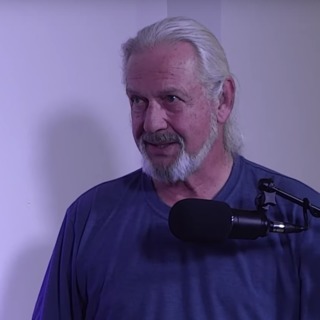
What's up everyone?
Welcome to Simulation.
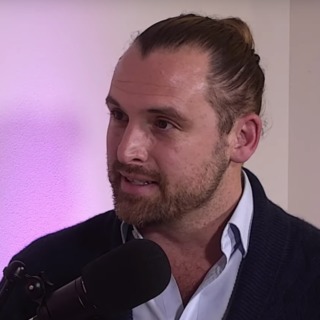
I'm your host,
Alan Sakian.
Very pumped to be talking about the outer limits of human experience.
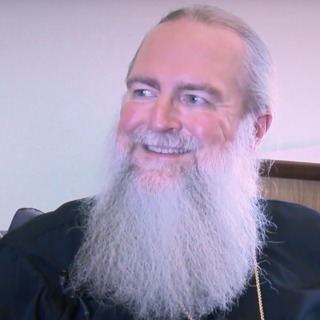
We have Dr.
Stanley Kribner joining us on the show.
Hi,
Stan.
Thank you so much for inviting me.
It's an honor to have you on the program.
Thank you.
Thank you.
And thanks to Jurgen Kremer for also making it happen.
We're very grateful for you.
All right,
For those who don't know Stanley's background.
He is a psychologist,
A parapsychologist,
A fellow in five American Psychological Association APA divisions,
Past president of two divisions,
And in 2002 won the APA Award for Distinguished Contributions to the International Advancement of Psychology.
He has authored,
Co-authored,
Edited over 1,
000 books,
Monographs,
Articles on myriad subjects including altered states of consciousness,
Parapsychology,
Hypnosis,
Shamanism,
NDEs,
Near-death experiences,
Dissociation,
PTSD,
Dreams,
Creativity,
Psychedelics,
And more.
You can find all of his links in the Bible at stanleykribner.
Weebly.
Com,
Also his parapsych.
Org profile and his Amazon Books links.
Check those books out.
All right,
Stan.
We love starting things off by asking our guests,
Are we really all one?
What is the question you ask your guests?
Are we really all one?
That's what I thought you said.
Are we really all one?
I would say it depends.
If we're really all wet,
We're also really all dry.
Life is a polarity.
This is a good example.
So of course we're all wet,
But at the same time we're all dry.
And does that have to do with us all being all one?
Yes,
Exactly.
If we're all wet,
We're all dry.
Exactly.
It doesn't come without the other,
Because I believe in the unity of all things.
And when we look at one part of the unity,
We say,
Well,
That's the wet part.
Look at another part,
That's the dry part.
Not realizing it's an interaction like the Asian yin-yang symbol that goes back and forth.
You focus on one specific item.
Don't imagine that that's the totality.
And then how about the relationship between that one and the duality of the yin and yang?
Remember that in the duality of the yin-yang,
There's always a little white spot in the black tail,
Always a little black spot in the white tail.
So there's always a little yin in a big yang,
There's always a little yang in a big yin.
So what seems to be a duality is actually a dance.
The two halves of the yin-yang dance back and forth,
And so it's not really a duality at all.
I love it.
So then the dance,
The ongoing dance,
This can be viewed as light and dark or as good and evil,
And that these archetypal forces within this one are constantly ebbing and flowing within this creation.
They're constantly ebbing and flowing,
And it's up to each of us to decide where we want to be in that dance.
Some people say there's power in the dark part of the force,
Star Wars.
Yes,
But look where that led him.
It led him ultimately into the light.
So nothing stands still.
Something is always moving.
And we do our best to keep our balance.
That's one thing I learned from Native American concepts of health,
That balance represents the ideal health,
Because then you're able to react to just about anything most effectively.
If you try to live your life off balance,
Off kilter,
That's very stressful.
That's not very balanced.
That's not going to take you very far.
On this word balance,
That could be one of the main principles of the one,
Is that word balance.
Oh yes.
There's a marvelous animated film some years ago,
Koyanasquatski,
Which showed all the parts of the world that are out of balance.
And that film keeps coming back time and time again.
You see shots of the world,
Those people are behaving crazy.
And you think,
Well this is happening in the United States.
This off of balance way of life is right here amongst us.
So to get back into balance is not to stand still and do nothing.
It's a very dynamic balance that puts you on guard to deal with adversity.
It also primes you to take advantage of the joy and happiness and love in your life.
Then the pursuit of something like a country that is maybe out of balance or a corporation that is maybe out of balance,
What does that look like?
To me it sometimes feels like that's where we're at with our modernity,
Our metropolis is being disconnected from our environment.
Oh good heavens,
You fit on one of many examples.
The metropolis is an amazing thing.
The people that run the towns,
The cities,
The villages,
The large cities are hard put.
They do a wonderful job.
I don't see how they keep things together.
Nevertheless,
These metropolises grew up really without too much regard for the environment and for nature.
And so this is being out of balance.
You have the,
Shall we say,
The civilized construct that's been ongoing now for a couple of hundred thousand years.
But then you also have the primal,
The tribal,
What it all came from originally.
And the best of the two worlds is to bring them in some sort of balance because tribal societies didn't have modern medicine.
They had their own medicine,
But current medicine of whatever variety can heal things that tribal medicine didn't.
There is a much greater scope in terms of meeting people,
Having more fun,
Having more entertainment.
You come into contact with some of the positives of civilization,
The foods of civilization,
The structures of civilization,
The games of civilization,
The interactions.
So trying to reach a balance I think is something that's possible.
Maybe not for vast numbers of people,
But maybe for us and our families and our friends.
We have to work hard to do it,
Of course.
It seems as though that that may be the most upstream issue that we face,
The most rude issue that we face as a society is we are out of balance with the interconnectedness of all things.
Well you put it very eloquently,
You should copyright that.
It's a good statement.
We all stand on the shoulders of giants.
We're all one.
The whole copyright thing has a lot to do with ego.
Yes,
I think that being out of balance is a consummation devoutly to be wished,
As they say in Shakespeare.
And again,
It's difficult to attain because there are distractions,
There are counterweights,
There are pressure groups.
What's in balance for one person might seem out of balance for another.
You have to reconcile these points of view as well.
Many people look at the Middle Ages as a time of great peace and balance in Europe.
Not at all,
There were wars going on all the time.
Also the churches in power,
Anybody who disagreed with the church was severely punished.
That's not balance.
The poor people could barely exist and eat and survive from day to day.
That's not balance.
The rich people didn't give a damn about the poor people.
Kind of reminds me a little bit about now.
Yes.
So what might seem like a period of history being in balance often isn't.
I think we often have to go back to prehistoric times to find at least groups of people who were quite balanced,
Who lived in accordance with nature,
Who had relatively few of the diseases that we have today because they didn't have a chance to spread and germinate.
Food was readily available and if it wasn't they packed up their tent and went to where food and water was available.
This was the days of the nomads,
The hunters-gatherers.
I don't want to romanticize this because obviously nothing in this world is perfect.
But when they settled down that is when the trouble started.
And that's when balance began to get lost.
You do have a few excellent pioneers today trying to do something for cities,
Trying to bring things back into balance.
I was just in Curitiba,
Brazil and for many years now they've had a very,
Very progressive government where they have a lot of greenery,
A lot of parks.
They have a lot of fresh produce,
A lot of industry outside of the city so that the atmosphere in the city is pretty good.
You have a lot of women in the government helping to run things and you have a beautiful glass opera house in the middle of the rainforest.
But this didn't come easily.
The city fathers and mothers had to fight hard because a lot of these ideas were so bizarre.
The bus stop is a very popular place but it rains a lot down there.
The mayor built a shelter over the bus stop that could connect into the bus so when the bus stops you go into the bus without getting a drop of water on you.
This type of urban transportation now has been studied all over the world but it originated in southern Brazil.
So I could give you other examples from other cities and other small locales but certainly there are attempts being made to put things back into balance at least on a small scale.
On a large scale that's pretty much beyond the ken of any group of people that I see alive today.
You can't even get the Paris Accord ratified by the United States much less other countries to try to slow down global warming.
You can't get the manufacturers of plastic for example from plasticizing the oceans,
The Atlantic and the Pacific where the whole sea is a plastic.
The good news is there has been a recent discovery that will help plastic need to deteriorate after just a few years.
So there are hopes,
There are people trying to do things.
There is of course massive inequality when it comes to food,
Who can eat,
Who cannot eat.
In the United States there are a lot of charitable organizations,
I'm a member of some of them,
That give leftover food to poor people and why not?
You know that 40% of agricultural products in the United States go to waste.
That's pretty shocking,
Pretty shocking especially when you go into a supermarket or grocery store and see all of these wonderful fresh fruits and vegetables on sale.
What happens to the ones that didn't quite make it that could have been there and what happens when the ones in the supermarket are dated?
There are organizations like Second Meal which gather this food and give it to poor people in a sanitized form so they don't get sick without impinging on their dignity but this is only touching a fraction of all of the food wastage in the United States.
Much less other countries,
The United States is not the only country that wastes tons of food and that's just one example of being out of balance.
It feels as though all of these principles,
Again like you said,
Not to over romanticize what immediate return hunter-gatherer life was like,
Nomadic hunter-gatherer life was like but the amount of interconnectedness with the other humans in the tribe as well as their environment at the level of the stars,
The plants,
The animals,
The soil,
The sunlight,
I mean it's just unparalleled compared to what feels like is lost today in the metropolises.
Is it then that level of balance with other humans,
With the environment,
Is it restoring that level of balance in modernity?
Trying to.
Some of your listeners have read Chris Ryan's book,
Civilized to Death.
Yes,
We loved having him on the show.
Glad,
I'm so glad you did.
He was a student of yours and we talked about this exact subject on the show a lot.
I'm so glad to hear it because your readers can't get enough of it.
That's one of the crucial issues,
If not the crucial issue,
Facing the planet today.
And the planet will survive,
Especially the insects,
You know the insects can go through anything.
They have built-in protection,
They mutate very quickly,
They'll be here long after human beings are dead and gone.
But to the human beings who are here now,
Let's make the most out of what we have instead of being immersed in all of the waste,
Instead of being off balance with all of the wars and the schisms and people not getting along with each other,
Religions fighting each other,
Telling other people what to do,
Big corporations trying to keep the wealth for themselves,
Terrorist groups trying to throw everything into chaos.
I mean,
It's not a very,
Very pretty picture when you look at what's happening in our globe today.
You find rays of hope here and there,
You find centers of peace,
Calmness and balance here and there,
The trick is how to make those grow,
How to expand them.
What are your thoughts about the expansion of those areas that are in balance?
What have you identified as most in balance in modernity and how do we amplify that?
Well,
For example,
Even before the Europeans invaded North America,
The Iroquois tribe had done a very complicated set of politicking and they formed a tribal unit of seven tribes.
This was so successful and it kept people from fighting,
It kept people fed,
It kept them having fun and it was Benjamin Franklin who visited the Iroquois League many times and he thought this would be a wonderful idea for the colonies when we gain our independence and this led to the Articles of Confederation,
Direct link between the Iroquois League and the Articles of Confederation,
Which then later became the Constitution.
So here's an example where something started out very,
Very small and then expanded and then with a quantum leap,
After a couple of hundred years of European settlements,
It spread to a very different civilization.
I think we can do more of that,
We can do much more with the.
.
.
What were the Iroquois doing?
What were they doing?
They were negotiating,
They had a number of outstanding leaders of the Iroquois and others who went throughout their tribe seeing how would you feel if we made an alliance with the Mesenata of the South and picking up from the people in their tribe which ones they'd be more likely to get along with,
They then sought out the leaders of these other tribes and said look at all of the advantages.
It's like in some big business mergers,
You just have one office that takes care of finances,
One that takes care of public relations,
One that takes care of advertising instead of ten and you're all working on different projects but there's a merger and you're cutting down a need for personnel,
You're amping up efficiency and you're reaching more people and hopefully you're helping more people.
So they would collaborate like that,
They would specialize and then collaborate?
That's right,
You can collaborate without uniting,
Sometimes uniting is not such a good idea,
You lead to corporations which are too big for their own good.
So I'm a big fan of collaboration,
Smaller groups collaborating and working together.
And then you were giving the other examples as well.
Well amongst the Brazilian folk religions which I visited,
I could give you a very good example,
When the Portuguese came from Portugal and invaded Brazil,
What is today Brazil,
They brought their own gods with them,
The Catholic Church.
And of course the slaves were told that they had to become Catholics and the slaves resented that but they were very,
Very clever,
Especially clever with the saints.
They brought their own saints with them from Africa and they found a Catholic saint that corresponded to one of their African saints,
Osho-si for example,
The god of the forest was very similar to John the Baptist who spent a lot of his time in the wilderness.
Oshala,
The god of purity and intelligence,
Very similar to Jesus Christ.
Interesting.
Anja,
The goddess of the salt water is one that I think they had a little sense of humor about.
She was also a mother goddess and the only young man around was her son and he chased her around the world and she became the mother of all of the planets plus the sun and the moon and all of the other gods and goddesses.
They equated her with the Virgin Mary.
So here they were,
Imagine the slave's quarters,
Hail,
Anja,
Thank you for bringing us across the waters.
We're here now in a new land.
Please help us,
Please protect us.
In comes the priest.
Hail,
Mother!
They crossed themselves and prayed to Mother Mary and the priest said,
Oh what good Catholics they've turned out to be.
They got away with this and when the slaves were finally freed,
This religion,
The combination of the African,
The Roman Catholic and the Native American spread all over Brazil in one form or another.
Umbanda,
Candomblé,
Quimada,
Many,
Many smaller religions but it's an important force in Brazil today,
An important religious force,
Especially now the groups have joined with some of the Ayahuasca groups and so in addition to the tobacco and the chanting and the drumming they use to get their consciousness altered,
Now they can have a full-blown visionary experience.
So it's interesting to see how even in the field of religion,
Nothing stands still.
There are unions,
There are collaborations in addition to all the wars that we know of all too well.
This ongoing process of realizing that there is so much wisdom in our 99.
9% of existence prior to modernity,
Prior to the Enlightenment,
The Industrial Revolution,
It seems to be the most common thing that we're starting to hear about on the show.
Over and over again,
Leaders in their fields are telling us that there is so much to understand from humans of the past and the way that they lived and how we can embed that,
Those wisdoms in today and our future to make it to decrease suffering,
To increase enlightenment and awakening around our world.
Would you say then that is the most first principle thing we need to be looking at?
It certainly is up there among them and I think that what happened is that native people had to be part of their environment,
They had to have that balance to survive,
To have places to live,
Places to sleep,
Places to play.
Play is so important in our world today and it was maybe even more important back in those days.
Well,
In order to do that,
You have to be a part of nature and then when so-called civilization came into the picture,
That was a rule unto itself and under the leadership of many of the churches,
The goal was to subjugate nature,
To conquer nature,
To use nature,
Not to blend with nature,
Not to learn from nature which was typical of the tribal groups.
So again I say I don't want to romanticize this because you take a look at the archaeological record,
There are cases of human sacrifice,
Human torture,
Cases of war,
Cases of even of plague.
So life is not a bed of roses.
What you just said is very important.
The nuance of it,
They not over romanticize only flowers but the nuance of it where there was human sacrifice and quartering of,
I mean there were so many weird things that were happening but there is,
Like you described,
Diversion of deep interconnectedness with nature versus conquering nature.
That's very very graphic,
Isn't it?
And every once in a while you see a little plant that's forced its way up through the concrete and there it is waving its banner happily that it's done a little bit to restore the balance.
It doesn't last very long.
They can just put some more concrete over it but at least it's trying.
Now again I don't hold anything against concrete.
Some beautiful buildings have been made of concrete.
Concrete is also biodegradable.
After a couple of hundred years it falls apart and so it's a very good building material and it has been for quite a while but you don't want everything concrete.
You don't want everything made out of cement and certainly you don't want everything plastic.
Arcology is a great word,
The combination of ecology and architecture.
Words like that are very inspirational.
Stan over your years what have you figured out is the purpose?
What do you think is the purpose of creation?
I don't like the word creation because it infers that there was a creator and maybe there wasn't.
Maybe things just evolved.
I think that first of all there can't be a universe that's empty.
There has to be something.
There's an old saying physics abhors a vacuum.
It's even more than that.
If there was nothing there would still be something filling in the nothing.
So this is a stupid question.
As long as there is something it doesn't stay still.
This is just the way things are.
Things contract or things expand and our universe right now is expanding.
Who knows maybe sometime in the future it will contract again but this is part of the dance.
This is one of those things that happen.
So I think that the purpose if you want to call it that,
The purpose is what each of us brings to this dance.
I don't think there's any purpose outside of the dance.
I think this is,
If I want to use an analogy,
This is the universe playing with itself,
Seeing what the possibilities are,
Doing things that are enjoyable,
Doing things that are fun.
Not like humans,
Not with a conscious mind,
But sort of with a cosmic mentality that we don't have the faintest idea about the operation thereof.
So for lack of a better word we call this God.
Fine,
But then we attribute human-like characteristics onto God.
That's not fair because then God can punish,
God can scold,
God can cause misfortune.
So that's really not the best way I think to look at this evolutionary spirit of constant flux and constant change.
That's what we're in the middle of.
And then our purpose is to find meaning in this and latch onto that part of the dance that we enjoy the most and that we can do well.
So this evolutionary force that's at play,
Whether you call it creation or God or all that is or source or the one or whatever you want to call it,
The universe,
Multiverse,
That this that's happening right now that we've all endeavored into consciousness and we're on an adventure,
That to find out what our unique puzzle piece is or what our unique instrument is or melody that we're playing in it,
That is the purpose.
Oh yes,
I like your word instrument because each of us can play our own drum or play our own flute,
Dance our own dance,
Create our own stories.
This is the element of play.
And if we carry that element of play ourselves into what we're doing in the universe we'll have a much happier life.
We won't take things so seriously.
We won't think that we won't have a second chance or that we won't be liked by other people or that we won't be admired or ignored.
What does that matter in the final analysis if you're doing something that has meaning to you,
Especially something that has joy and awe and wonder and love in it?
I love this four-letter word play and I love how you keep bringing us to it because if that is then the purpose is this continuous process of play,
Of understanding itself,
Discovering new things and having us be these adventures in consciousness.
We've lost in some ways this four-letter word of play that it's become so much about the economic machinery and about productivity and about economics and money and capitalism and consumption and GDP and it's all about these metrics that are so logical and statistically oriented that every aspect of the heart at play with another when we know deep in our core that some of the best feelings that we ever have are when we're at the deepest play with each other.
That's right.
When we're dancing,
When we're singing,
When we're doing art,
When we're laughing with others,
When we're in some sort of a collective vibratory environment that is ecstatic.
That is a main route that we need to refocus on.
Well I think you're certainly right.
I think that this is something that each of us can do on our own and we don't have absolute freedom to do this.
All of us are constrained.
Look at the people in jail,
Look at the people in the refugee camp,
Look at the people in a starving ghetto.
They don't have as much freedom as maybe other people have but still what can they do in that limited sphere to get some joy and happiness out of life?
You have to go back to the psychiatrist Victor Frankl who was in a concentration camp during the Second World War and people were dying all around him.
He was a psychiatrist and he noticed the people who survived had found some sense of meaning in their life.
Either meaning on a very small scale or meaning on a very,
Very large scale.
He translated this into existential therapy when he got out of prison and this is one of the major therapeutic thrusts in the country today.
And I can also give you an example from a very,
Very different field about the balance.
Frank Lloyd Wright who was from the state of Wisconsin so I did have a chance to meet him when he was still alive,
Had the type of architecture called organic architecture where the buildings needed to grow out of nature and he used materials from the local quarries or forests as much as he could and his buildings are so unique,
So alive that there's a sense of play about them.
And the times that I met him he was full of good humor.
He was a very,
Very cheerful man,
Always fond of surprises and wonder.
Just one of many,
Many people who saw the possibilities of humans and nature collaborating and taking it to historic heights.
The restoration of balance and play in modernity.
Well,
The restoration,
Put an emphasis on restoration because you restore something,
You're putting something back the way it was a while ago and let's face it,
We're never going to recreate the environment that existed in ancient times or in prehistoric times.
Forget that,
Too late.
We have to create our own biome,
To use a biological term,
Our own biome that allows for humans balance themselves with the rest of nature.
Yes,
Remember that humans for all of our faults we still are a part of nature and so it's connecting with the whole of nature rather than just our little tiny take on nature that we're after.
Okay.
What is going on in the deepest parts of our psyches regarding why we are so attached to conspicuous consumption rather than modeling the way that trees that are larger sequester extra carbon and then distribute them amongst their root networks and fungal networks to smaller trees and seedlings.
Why have we not modeled the same style of distribution of excess resources?
Why have we went in conspicuous consumption hoarding greed?
I think the reason is that trees evolved in a different way than humans evolved.
Humans evolved from swimming creatures,
From crawling creatures,
From four legged creatures to finally to two legged creatures and remember that the purpose of evolution is two fold.
Evolution is looking to survive and if something will not help you survive it doesn't last very long but also to reproduce.
Now to reproduce that takes two and if you are looking for a mate of some sort or another and this even goes below the animal kingdom,
Below the human kingdom into the rest of the animal kingdom you see something that looks good,
Even smells good,
Opens up your eyes,
It's desirable and so you're going to try to mate with that and I think that this,
And that goes not only for men it goes for women too.
Women evolved looking for a partner who would be strong,
Competent,
Be able to care for the children so both men and women with shall we say many exceptions because there are always exceptions in human life were both after something that was very special and very unique.
Trying to drive a big car and show off,
Trying to have beautiful jewelry and show off,
That's a hangover.
Now you no longer need that if you have everything in the world you already have your mate if you want a mate or maybe even more than one mate you don't need that anymore but now you want it just for your own good.
It's an evolutionary trait which should have been outgrown but a lot of these evolutionary traits keep going on and on and on until it becomes so dysfunctional that they are stopped and died out.
So there's a lot of evolutionary hangovers that are doing us no good today like the appendix of the human body at once it was very important.
That's not so important either but it still hangs on there.
Just like jealousy goes way out of proportion both in relationships in terms of personal goods jealousy was once very important to protect oneself and one's family and one's clan by having enough possessions that they'd be able to weather the winter.
Well that trait still lingers on but now in a very maladaptive dysfunctional way.
So evolution has taken us a long way and thank heavens for it,
It wouldn't be here,
But some of the evolutionary traits haven't quite died out and are still causing us a lot of trouble.
By the way human cooperation is adaptive.
This is something that people are born into to cooperate and Darwin in his books on evolution used words like cooperation,
Collaboration,
He even used the word love as being what keeps humans going.
Then somebody came up with the term survival of the fittest,
He didn't like that term.
No it's not that you're fit that you survive,
Survival of the wisest,
Survival of the most loving,
Survival of the most collaborative,
This is what keeps things going.
And a lot of that has been lost but it's in any Darwin book and many scholars have emphasized the importance of collaboration above and beyond the aggression.
Again that served a purpose,
You had to fight to protect your family,
To protect your lives when there were enemies,
So that had to be there too.
But you don't fight as often as you collaborate.
In fact there's a lot of evidence that even today with all of its wars and all of its bloodshed is much more peaceful by and large than the world was a hundred years ago.
And we also know this on the human scale,
Bad as bullying is,
Bad as sexual assault is,
It's much less than it was fifty years ago.
So drama highlights all of the misfortunes of the world but you take a broad point of view and you say as far as human behavior goes things are getting a little bit better.
But will they get better in time for people to raise their consciousness and realize something drastic has to be done to achieve balance with nature.
That's a critical question of our time.
And the fact that global warming is still not accepted by many important segments of society,
The fact that fuel efficient machines are not accepted by a great proportion of a society,
There are still power blocks and very important power blocks that for their own purposes are keeping a lot of these collaborative efforts from moving ahead as quickly as they might.
There are power blocks in the ways of the elevation of consciousness.
We need to both remove those power blocks as well as find ways to amplify the elevation of consciousness as quickly as possible towards those feelings of interconnectedness,
Harmony,
Peace,
Prosperity.
I like your choosing of evolutionary hangovers.
I like your words there.
These are very interesting.
Why has it been that we've continued on this path of greed and conspicuous consumption and these things could have been already evolved out?
Why is it that they are still here?
What other ones are these hangovers?
I like how you also gave the difference between humans evolving from the oceans until today versus trees just having different aspects of evolutionary trajectory over time.
To be able to bio-mimic though I think is one of the ways to maximize prosperity moving forward.
Well,
Aggression,
Fighting,
Of course that's going to survive because it's adaptive.
A lot of people who fight and kill and who are mean and nasty or who amass great fortunes because they're cruel and selfish,
They're going to survive simply because they have the power to survive.
So it's going to be a while before other traits become more powerful,
Cooperation,
Love,
Unselfishness,
Forgiveness,
Caring.
And so those show that this is a better way to live.
This will carry the day.
Yes.
And it's been said just also by the Dalai Lama and other very evolved spiritual leaders that it has been because of cooperation and collaboration that we've been able to get this far and that we need to remember that in the evolutionary trajectory and prioritize that in unconditional love and deep presence and interconnectedness and carry these things forward as our best selves as we figure out what is my unique instrument that I want to play.
Well,
What's my unique dance that I want to play?
That collectively,
That having a social fabric that's very conducive to people like figuring out what their instrument or what their dance is is going to be paramount.
Absolutely.
Right.
Yeah.
Okay.
Sam,
We have to talk about your time.
You were a former director of the Kent State University Child Study Center.
What was going on during that time of doing child studies?
Of course,
We'll get you some drink right now.
Jurgen's coming in to help.
There we go.
There you go.
Nice and hydrated.
Thanks everyone for tuning in.
Greatly appreciate it.
You can let us know your thoughts in the comments as we go or in the live chat.
Okay.
So let's jump.
Thank you Jurgen.
Let's jump to the time at the doing child study at the Child Study Center at Kent State University.
Well,
This is back in the early 1960s and I was director of the Child Study Center at Kent State University in Ohio and we trained teachers to do diagnostic work with children with learning difficulties of one sort or another.
And we also had a summer program so they could improve their reading and academic skills for children of all ages.
But even back in those days,
I took a somewhat different point of view than many of my colleagues because I thought that a lot of these problems were neurologically based.
And I think that this has been borne out.
Of course there are familial contributions,
Educational contributions,
Intelligence contributions that keep a child from reading efficiently.
But I think that the key is how the brain is connected.
And once you know how the brain is operating,
You can modify your teaching techniques to adjust to this type of mentality.
Not that one is better than the other,
They're just different from each other.
Children of what we call dyslexia have short attention spans.
Now instead of giving them drugs,
Which is the usual medical response to this,
Do something that is fast moving.
Put them on a computer game.
Do something that will increase and enhance their attention.
This is attention deficit.
Yes.
Attention deficit.
Yes.
Attention deficit disorder.
Okay.
Yes.
And the neurological term underlying this is dyslexia,
Which means problem reading.
But I like the new term better,
The attention deficit disorder.
First of all,
Because it does put it within the psychiatric framework of being a disorder and it's just what it says.
It focuses on attention.
The attention is not there.
Not there most of the time.
Some of the children with attention deficit disorder can sing a whole five stanzas of the latest popular song or can do rapping for half an hour.
Now that's not attention deficit.
The disorder is not only with the child but with the environment.
The environment hasn't found ways to engage the child and to enhance the attention.
This takes us back to that instrument that the child has already began identifying what their instrument is but the environment of the academic setting is not conducive for them to amplify their interest in that instrument.
Yes,
Exactly.
Now back in those days,
I have many poignant memories.
One mother brought her child and he was diagnosed as autistic.
Now that was back in the days when the autistic mother was called the empty fortress,
That she didn't have enough love to give the child and so there's nothing inside and so the child couldn't develop socially as well as one would think.
And I said,
No,
It's not your fault.
Your son's brain is just wired differently than that of other children.
And that just gave her such relief.
And again,
Back in those days,
Mothers were being blamed for just about everything and with a couple of exceptions,
No,
It wasn't their fault at all.
It was the poverty.
It was the poor schools.
It was the differences in the brain.
It was the social group they were with.
And so the overview is just not broad enough to do justice to some of these kids who are having trouble and having difficulties in school.
And I actually wrote several research papers on that topic.
We also had a few very,
Very bright children who came to us for diagnosis who had IQs up into the 160s,
170s,
And then we suggested home pastimes that the parents could do to occupy their time and to give them something extra that they wouldn't get in school.
So we dealt with a large number of children.
And again,
It benefited me because I could see the great variety of children with special needs and how no one size fits all about how different treatments are needed for children with different issues.
Yeah,
I appreciate how deep that your study is on the multivariability of it that we like talking about this in terms of a seed that is being this adventuring consciousness into this body that's happening is that if the seed doesn't have the right nutrients,
If it doesn't have the love,
The water,
The food,
The shelter,
The education,
Electricity,
It doesn't have the social fabric that's fostering them to identify their instrument and bring it out into the world,
That that seed is not going to have as many,
It's not going to flower and produce as many fruits for its family,
For itself,
For the world at large.
So basically,
The nutrients need to be there and the unique personalized style of identifying that instrument and then bringing that forth into the world needs to be there.
Let's also touch on the time as former director of,
How do I say this?
Myomonides.
Myomonides.
The Myomonides Medical Center in the Dream Research Laboratory.
And that was in Brooklyn,
New York,
And you were doing dream telepathy experiments with Montague Ullman.
Yes.
Yes.
Teach us about dream telepathy experiments,
Dream research.
We spend a third of our lives asleep.
Asleep,
We do,
Yes.
Yes.
So what is going on?
Well,
Again,
That's a product of evolution.
Sleep is very adaptive.
Dreams are very adaptive.
If we didn't have sleep,
We wouldn't have a chance to rest and restore.
Yes.
We wouldn't have a chance to,
Use the word again,
Balance,
Equilibrium.
Sleep helps us to gain equilibrium.
And so do dreams.
Dreams help us to work out issues,
Emotional issues that were unresolved during the day,
And we find those in dreams.
Dreams help us to remember things which are important and discard things that aren't important.
Dreams help us to problem solve.
They help us to plan for the future.
If they couldn't do any of those things,
They wouldn't have survived.
But dreams are adaptive,
And so they're built into the human brain.
And if you tamper with dreams by keeping a person awake five nights in a row,
You suffer the consequences.
Dreams are not going to be very,
Very alert because they have this whole logjam of memories and feelings and emotions to work through the system and so that you can be bright and fresh the next day.
Now,
What we introduced,
Which was novel,
Was to see if somebody could influence another person's dreams at a distance.
So we had a person at one end of our hospital who was given a sealed envelope,
And people at the other end,
A person at the other end of the hospital with electrodes on her head watching the EEG and the rapid eye movements which indicate dreaming.
And once the so-called sender got to her room,
She would wait half an hour because you don't have any dreams in the first half hour of the night,
With some exceptions,
And then we'd start to open the envelope and look at the picture.
They were always very colorful pictures filled with what we might call archetypes and vivid emotional images.
And then at the other end of the hospital,
We would be watching the electroencephalograph,
And when the eyes went back and forth,
We knew the person was dreaming.
So very gently we woke up the person and said,
What's been going through your mind?
And then they would speak the dream into the microphone.
And over the ten-year period of time that I was there,
We collected hundreds of dreams and we did an analysis of every single one of them,
Every single night.
Say that we had somebody with us for eight nights.
Well we had a collection of eight sets of dreams.
Then we'd call in a team of judges saying,
Now match the picture with these dreams.
And of course they didn't know the match,
But believe it or not,
They made the match more successfully than chance.
Especially where they looked at one picture and said,
That picture has to go with this set of dreams.
It's a group of Mexicans carrying guns and they're marching over the mountains and there are some women following after them.
And that can only pertain to those dreams that this participant had,
This dream about warfare,
Men and women both fighting where,
Mountain in the background,
Clouds in the sky.
And it was because someone else at the other side of the hospital was opening and looking.
Yes,
That person was the only one in the world who knew what the picture was because it had been taken from a large number of sealed envelopes.
The person who was receiving from the center was simply going about doing their dreams and getting their dreams recorded.
So then this speaks to the collective intelligence that we're all a part of.
I think collective consciousness would be better.
Yeah,
Collective consciousness.
Because sometimes there wasn't much intelligence needed to produce the picture.
Sometimes the picture was nonverbal or had a lot of emotion in it.
But some aspect of consciousness was there.
Now after 50 years of dream telepathy experiments all over the world,
All of the results have been tallied and the chances of these connections being made by chance is like one out of several thousands.
The odds are just incredible.
You go to Wikipedia,
Which you should never do if you want to find anything out about my research because they dislike parapsychology,
They will have statements that are not true.
They will say that the person looked at the picture before they went to the distant room.
That's not true.
And they will say that there was no replication in our experiments and that is not true.
So Wikipedia is good for many,
Many things,
But it's not good for my biography or anybody who has been engaging in any type of parapsychology.
Wikipedia thinks parapsychology is a pseudoscience.
I think they're wrong,
But you know I don't have the money to prosecute or start a lawsuit and I've written to them several times they do not make the change.
Other friends of mine have written.
They don't make the changes even though what they're printing is absolutely false.
This is one of also the biggest challenges of our time is to be able to bring together spirituality with science in a more harmonious way because parapsychology has many aspects to it that are very deeply rooted in spiritual experience and it's sometimes difficult for science to begin trying to quantify that.
Yes,
And I'm glad you used the word spiritual instead of religious because religion can be very divisive,
Can take people apart,
Keep people from collaborating,
But spirituality transcends all of that and spirituality is very much akin to the union we've been talking about for the past several minutes.
Yes.
Yes.
Yes.
Yes.
We're going to do more experiments on both people having that union but also on what's going on in the collective consciousness especially in that third of time that we're passing.
Well,
There's some excellent laboratories doing outstanding work and there are a few people that support it.
The Biall Foundation of Portugal is the largest foundation to support parapsychological research by the way and they also support research in ordinary psychology and so they're trying to bring those two fields together which is very commendable.
They have wonderful conferences once every two years and then they have a book of proceedings and so that's a very good charitable use that is trying to do what you're talking about and I think that there is no sense of saying that spirituality and science cannot coexist because you need some guidelines to use science in a way that is life enhancing.
I mean science can create a mega bomb but how can science tell you not to use that mega bomb?
Well,
That's the role of spirituality that establishes spirit,
That establishes morality and ethics and compassion and empathy.
Let's now talk about hypnosis.
So you were the past president of the Society for Psychological Hypnosis which awarded you its 2002 award for distinguished contributions to professional hypnosis.
What were you doing during that time?
I've been involved in hypnosis for a long time ever since I've been in high school and I started to study it seriously and I'm not a clinician,
I'm not a psychotherapist and so I don't use it for those purposes except once in a while I will help a friend stop smoking by hypnosis and I actually have been pretty successful along those lines.
I haven't charged them any,
They just serve service to their good health but hypnosis really I think should be used much more often.
Depression is a very serious problem in our country.
Depression often leads to suicide,
It leads to poor human relations,
It leads to work stoppage and typically Prozac or some other drug is given for depression and unfortunately it works for a while and then it has side effects and some of the side effects can be pretty gruesome.
Now a very large study was done with hypnosis,
Hypnotizing people who were depressed and having people take anti-depressants and taking people from the same walk of life,
Same gender,
Same age and the people in hypnosis did actually a little better than the people who were on medication.
And what was the procedure for the hypnosis?
The procedure for hypnosis,
Let me just spell this out because there are many,
Many procedures.
When I hypnotize somebody I get their consent and then I ask if they will mind closing their eyes and if they don't mind closing their eyes I have them hold out an arm and I tell them that the arm is getting heavier and heavier and heavier and heavier and by the time it hits their lap they'll be open to suggestion.
And of course we know that the suggestion will be because I've gotten permission to give them that suggestion.
It's how they will begin to lose interest in tobacco or any tobacco product and I have a number of exercises I go through and sometimes I can help somebody in just one weekend and after three days of work no more tobacco and certainly no more anti-depressants if they were depressed but as I say I've been using it for tobacco cessation myself.
But the people that use it for depression use a variety of ways.
There are many,
Many ways to hypnotize people.
Sometimes people have their eyes open.
Sometimes people are moving.
But what's important is the intent.
What are the people trying to do with the hypnosis?
How are they trying to self-regulate themselves so that they will not smoke,
So they will not be depressed?
And this will all come naturally because the hypnotist is actually pulling upon the resources of the person being hypnotized.
Personally I think all hypnosis is basically self-hypnosis.
The person who wants to be hypnotized knows what needs to be done,
Gets some ally to repeat the right words but the person is doing the work him or herself.
It's bringing an ally in for the process of awakening away from depression or away from addiction.
So that's so interesting.
So it's actually a self-hypnosis process,
Bringing in an ally,
Okaying them to be an ally in the assisting process.
Yes,
And of course hypnosis can be used with a variety of psychotherapies.
It works very well with what we call cognitive behavior therapy,
Psychodynamic therapy,
Humanistic psychotherapy,
Existential psychotherapy.
I know people that use hypnosis in each one of those interventions.
Maybe hypnosis can be used for awakening to feelings of interconnectedness and unity with each other and with nature.
Well actually this has been tried and it's been successful.
The question is how can you make that long lasting?
You have to build something into the system to make it long lasting.
Now the people who are in psychedelic psychotherapy like psilocybin for depression,
They're also achieving very high rates of success and the depression does tend to modify and stay away even as few as two psilocybin sessions.
And so when you're doing psychotherapy of course you're looking for something long lasting.
I have seen what we call faith healing sessions and somebody is walking in a walker and the evangelist says,
You're healed,
Puts his hands on the person,
They drop the walker,
Walk away dancing and singing,
Everybody's happy.
The next day they're back looking for their walker again.
This type of very dramatic intervention shows what the human mind and body are capable of but it can't be done in one flash drive,
One very dramatic instance.
It has to be done over a period of time to make sure that the self-control sets in and that the gains are not lost,
That the gains are kept solid.
Yes,
Yes.
Which in many ways speaks to the cycle that many people are taking with their awakening where it's just going from one awakening to the next,
To the next,
To the next rather than taking the time to also have a deep contemplative integration period that then kind of ossifies the awakening,
The previous milestones of the awakening in.
Yes,
This is so important.
Freud used this in psychoanalysis and there has to be a working through as part of psychoanalysis to make sure the person doesn't fall back into the bad habits and people who are doing psychedelic drug sessions who are therapists also talk about a period of time where the person has to maintain their gains so that they don't lose what they've gained and sometimes they come back and do not take the psychedelic but they just talk about what they have gained,
What they have learned and how they can retain this.
And any of the psychotherapies or self-help programs we're talking about,
The question I have is,
Hey,
What happened two years from now?
If something is still helping two years from now then I think it's really of attention.
I have two years as the minimum.
You've been speaking about this as we've been talking.
You're a fellow at Society for the Scientific Study of Religion,
Fellow at Society for the Scientific Study of Sexuality.
We've been talking about this a little bit throughout.
What have been the main realizations for you with those?
I think that I've had many realizations.
First of all,
People are very,
Very different.
That comes as no surprise.
Because when it comes to religion,
When it comes to therapy,
When it comes to behavior change,
One size does not fit all.
It's a wonder that people can get something out of a diet when there are so many types of diets.
Well,
One diet does not fit all.
One person will maintain a new weight indefinitely.
Another person will bounce right back after one or two months.
Same thing with addictions.
This is why I say the people who I know that I've helped stop smoking,
Two years later they all stopped smoking and to this day as far as I know they're not smoking anymore.
So I think that one thing you have to view is the difference in people,
But then there's another important thing that I've learned and that is that people are fairly fragile.
If people weren't fragile,
They wouldn't come down with post-traumatic stress disorder.
But a person has a trauma,
They're in war,
They're in combat,
Something horrible happens.
Yes,
Most people bounce back,
But 15 to 20 percent don't bounce back and they're in misery for the rest of their lives unless they get therapy.
And also people are fragile in the sense of their feelings are easily hurt,
Their egos are eagerly bruised,
They give up too easily.
And it's this fragility that needs to be strengthened and this needs to be done only in child rearing and in education,
But I think this is where spiritual discipline comes in.
A person can pray,
Can meditate,
Can do tai chi or the martial arts,
Can engage in contemplation.
A number of regular exercises can really anchor a person and keep a person resilient and help a person bounce back when there are troubled experiences.
And I think that the other,
To answer your question,
Other thing that I've learned is that people respond very well to love and people who are incapable of loving very deeply can at least be kind.
I think that kindness can be just as helpful as love for many,
Many people.
And again,
Some people,
For one reason or another,
Are afraid to love,
They're afraid of losing their autonomy,
They're afraid of boundaries.
Well,
At least they can accept kindness and don't put down kindness because I think it's something that's a very admirable human trait and something we should be developing much more of.
So those are some of the things that I have learned in these past times and activities we've been talking about.
You were leading Division 32 Society for Humanistic Psychology of the APA.
What were your takeaways as well?
Well,
The American Psychological Association has about 50 divisions and I've been president of two of them,
The Society for Humanistic Psychology and the Society for Psychological Hypnosis.
And the term is only one year,
So you can't do too much in one year,
But what I tried to do was to bring in speakers and programs that ordinarily would not be thought of in a psychological setting.
I brought in Richard D.
Mill,
For example,
Who has written several books about Carlos Castaneda showing how some of Castaneda's claims simply could not be true given the places he described in Mexico,
Describing the drugs he described in Mexico,
And the tribes he described.
And I think that this was a wonderful example of taking something legendary in the culture and just double-checking it to see if it holds up.
Now on the positive side,
Richard D.
Mill said,
A lot of the advice that Castaneda gives is very worthwhile.
And I think there's a lot that can be learned from him by focusing on the teachings of Don Juan and just take with a grain of salt some of the stories about jumping off a cliff.
That might have been either a fantasy or it might have been a person with a vivid imagination or a person on drugs.
But focus on the teachings and the meaning and what you can learn from it,
Which I thought was very good advice.
And also I brought in Eve Sizemore,
Who was the original Eve from the book The Three Faces of Eve.
And what people don't realize is that when the movie was showing,
Which won the Joanne Woodward Academy Award,
That the real Eve,
Whose name was Chris,
Was in a motel about to commit suicide because a fourth face had developed.
And she thought she had been a great failure to a psychiatrist.
Her psychiatrist,
Not only a fourth,
A fifth,
And a sixth.
She kept going to therapy.
She finally found a very sensible therapist who I think knew much more how to handle a case of dissociative identity disorder than the other ones did.
But she also had spiritual help.
And she had help from her children.
Whenever a new face came,
The children would name it.
There was one face that they called the Polka Dot Kid because this personality was nothing but polka dots.
Another one called the Chocolate Kid because she knew nothing but eat chocolates.
At the end,
There were 21 faces and they all merged into one face thanks to a very skilled psychotherapist.
And then Eve had a dream,
Chris had a dream,
That all of her identities were walking across the stage and they were all bowing and saying goodbye.
And after she woke up from that dream,
She never had other personalities again.
So it's special events like this that I brought to the Society of Humanistic Psychology.
Also we did a lot in terms of continuing education.
We collaborated with other divisions.
We brought in a lot of women for leadership roles,
Brought in people of color whenever we could to have a very diverse but very,
Very strong society.
And remember that humanistic psychology can be very easily defined.
Psychology as a whole we define as the disciplined study of behavior and experience.
Well humanistic psychology is one step further.
Behavior yes,
Experience yes,
Intention yes,
Meaning yes.
Humanistic psychology focuses on what people intend to do,
The meaning they get out of the experience.
And so in that sense it goes deeper than most other approaches to south psychology.
Thank you.
This led you to win the APA Award for Distinguished Contributions to the International Advancement of Psychology.
All of the last,
What is it,
A thousand we said?
So many.
A thousand either authoring,
Co-authoring or editing a thousand books,
Monographs,
Articles on such a wide ranging amount of subjects.
I want to bring up some of them now.
We have several that you've brought with us.
We have your,
We have your most,
We have all the way up to your most recent here which is Integrated Care for the Traumatized Whole Person Approach.
Well this is a book about how to take care of people who have post-traumatic stress disorder and other forms of trauma.
This is very common in our times and it's leading to dysfunction,
Leading to suicide,
Leading to very severe mental illness.
But these stories in this particular book are collected from different parts of the world and it shows how different communities have helped people who are traumatized and how they can use psychodrama,
How they can use psychotherapy,
How they can use service.
Even an animal can be a therapist to some traumatized people.
And so this sort of gives people sort of a variety of new ways of working with traumatized people instead of just giving them medication and forgetting about them.
Yes,
Yes.
I love the focus on a whole person approach which takes in spirituality,
Psychology,
Medicine,
Social work,
Psychiatry.
I mean here just looking through a couple of the areas,
You're already beginning to talk about creating safe spaces for the process of healing.
Also you're giving examples of when the devastating 7.
0 earthquake hit Haiti.
So how on a planetary level that there are geological shifts that happen that cause serious amounts of trauma.
Absolutely,
Yes.
It's very wide ranging and this is a very… trauma can be created in wide ranging amount of ways and then there's a multidisciplinary way for us to approach the process of healing.
That's true.
Remember that I said I become aware of how sensitive and how fragile people are.
This is why people get so easily traumatized because experiences like this are not within their everyday experience.
But especially acts of cruelty,
People for the most part are not basically cruel,
People are basically kind.
And when they are in the middle of war or if they were bullied or if they are harassed,
If they are raped,
These are deliberate acts of cruelty from other people.
Now sometimes the trauma comes from a flood or a tsunami or an earthquake.
Well that's nature.
That simply is not nature punishing us.
This is just nature reminding us that we are a part of nature and you can't boss nature around.
And nature will do its own thing whether we like it or not.
I also noticed in here you talk about indigenous psychotherapy,
You talk about the limitations of evidence based research,
Which is very interesting.
Yes,
There's a chapter in there that used some shamanic techniques for working with young people.
And we thought it was very important to get the shamans in the book one way or the other.
Yes,
Yes.
And then the limitations is very interesting.
We were talking about bringing together science and spirituality.
There are going to be interesting ways that it will be a big challenge to try and take something like subjective first person experience and try and create some sort of a biometric state that correlates with that.
Yes.
Yeah.
Well that's not impossible.
I think that might be a future goal.
I'm excited for that.
And in this actually part four here,
You do actually talk about the future of integrative care for the traumatized.
Teach us about that.
Well,
It's mainly some of the things we've been talking about today in terms of using nature more,
Putting traumatized people out in nature,
Having them do some work with animals,
Having them do in selected cases work with plant medicine like the ayahuasca and the mushrooms we were talking about earlier today,
About finding ways that they can become more resilient and can bounce back and can become stronger.
And so the trauma can actually be the gateway to a positive personality change and a person can come through stronger than they were at the beginning.
That's another very common theme with the guests that we have on the show that on the other side of the deepest traumas are actually the most brilliant treasures and that it takes a very modality of healing that is in all of these different ones that you listed that enables them to go through the process of discovering that.
So that's most recent.
And then we have next most recent,
That was 2019,
This is 2012,
The shamanic powers of rolling thunder.
What is this one about?
Well,
I think many of your listeners would like to read both of my books about rolling thunder.
I wrote them with Sidian Morningstar,
The grandson of rolling thunder.
And these are a collection of stories about this remarkable medicine man and how he actually not only was a social activist,
But he healed people.
And also it gives his principles for right living.
He is just a paragon of what we've been talking about today in terms of people being close to nature.
And how when he established a healing center called mettatati that he had bought with some friends help,
There wasn't any water.
And so he took a dowsing stick and walked up and down the land until the step went down.
And when the stick went down,
He had his graves,
His assistants,
Go and dig.
And after three weeks,
Three feet,
Nothing,
One more,
Four feet down,
They had water,
They had spring water.
Then he went to the other end of the property a few days later,
Said this one needs to have some water too.
So he took his dowsing stick and the dowsing stick went down and they dug water there.
Now I was not there to see the operation,
But I was there to see the wells and those are genuine wells,
There's no doubt about that.
But when I was with Rolling Thunder,
One night he took me off to where his property ends and the wood begins and he started to howl.
And I was used to anything from Rolling Thunder so I didn't think much of the howling,
But then some coyote came right out of the forest and they were so close I could have reached down and touched them.
But I just stayed my distance,
I was very respectful for them and the head of the pack was howling back and forth to Rolling Thunder.
Having a conversation.
I said,
Rolling Thunder,
What is that all about?
After they left back into the woods,
He said,
Well we have a contract.
A lot of farmers kill coyotes because the coyotes raid the chicken coop.
But our agreement is we will not kill the coyote if you don't kill our chickens.
And for all the years we've been here we haven't lost a single chicken to coyote.
So there I saw a.
.
.
So he's communicating?
Pardon me?
He's communicating with the coyotes.
Yes.
Speaking their language.
Very unique type of communication.
Whether it's language,
Whether it's telepathy,
Who knows.
Wow.
It's the type of thing that happens when you remain close to nature.
When you remain close to nature,
Profound things.
This also reminds me a little bit of Bryant Austin who goes out into the middle of the seas and whereas many people just try and come for a couple hours to take pictures of whales,
He would go out for weeks and weeks at a time and slowly but surely show his vulnerability and that he is trying to be friendly to the whales.
And all of a sudden the whales would come and swim so close to him and he would take these gorgeous full length photos of it and of their eyes and their whole entire bodies.
And so when we stay close to other humans,
When we stay close to the plants,
When we look at a tree for more than just its little like tree icon,
We can actually see the deep interconnectedness of the insects and the birds and the animals that are in the tree,
The way that the light engages with the tree.
And so we see more when we stay with a dog or a cat or wolves in this case or just other animals for longer periods of time we can see more and we can experience more and maybe it may seem strange at first to try and do something along the lines of communicate in some way,
Whether it's telepathically or through language,
But it sure does energetically,
We can even see it with our dogs and cats energetically that they're,
Like you were saying with therapy,
With the animals,
We have a very interconnected relationship with even the ones we've domesticated.
Right,
I recommend that people when they communicate don't think you're going to do it by talking because it's the tone of voice the animal will pick up on,
Not the words.
And sometimes just playing with them,
Being with them and not saying anything is a good way to get to know them.
Yes,
Yes,
I love that.
In here Mother Earth is our great mentor.
I love also,
I want to know,
You said that Rolling Thunder actually has the ways of good life,
Of the right life.
Yes,
This is what he taught.
What was the keys of that right life?
The key points of that right life.
The key points is just what we've been talking about.
He would say the key points are having a balance in your life,
Having a balance with nature,
And also having fun.
This is where play comes in again.
And Rolling Thunder put a very great stress upon having fun.
He had a lot of games in his spiritual community,
A lot of things that people enjoyed doing.
And he said that back in the old days people played more than they did work.
And he's right.
If you look at tribal people there is very little work that has to be done in most places.
And a lot of time to make love,
To play games,
To explore,
To do artwork,
Etc.
You're making me feel very emotional because that is the world that we want.
That's the next world that we want.
But remember this doesn't happen in all tribes,
That's what I say,
Don't over-romanticize them.
Yes,
Yes,
Yes.
They are very,
Very deadly and have very,
Very unfair rules,
Especially to women.
Native Americans before the European invasion probably had the best societies for women of any other place in the world.
With very few exceptions women held an equivalent amount of power with men,
Women could make important decisions,
Women often were in charge of the finances,
In charge of training.
There were women's councils that made decisions that could override the men's councils.
You just read,
Each tribe of course did things a little differently,
But there was a great deal of power given to women and one of the reasons that Native Americans are in such a bad shape today with a higher suicide rate of any ethnic group in the United States is that the old ways have been disregarded and women have lost their power.
Western religions that come in that demean women and don't give women enough power and that users like sin and guilt and hell and damnation that were very,
Very foreign to the Native American way of thinking.
Well you wanted me to talk some more about Rolling Thunder and I'll just tell one other story.
Yes please.
He was helping poor people in his community gather pine nuts from trees and that was a good source of protein for them and then some tractors came in and started to cut down the trees,
Sell the wood and turn the dirt into cropland.
It was against the law but they didn't care.
They either bought off the police or the police didn't know they were doing that and a lot of Rolling Thunder's people said,
Let's get out our rifles and kill them off and Rolling Thunder said,
No,
We have to find a peaceful solution.
So they did two things.
One night they went out and they videotaped the tractors so that there was proof that they were doing that and then they poured sand into the engines of the tractors.
The next day the tractors couldn't move and some of Rolling Thunder's people were on an airplane to Washington,
D.
C.
To appeal to the Department of Interior which of course saw that this was against the law and that sent the agents out to keep the trees from being plowed down again.
So Rolling Thunder was a very skilled tactician in addition to being a very skilled healer.
And then we talked a little bit about one of the 2010 books,
Haunted by Combat,
Understanding PTSD and War Veterans and the Different Modalities for Healing as well.
Talked about that a little bit.
And then we've been talking a bit about the Varieties of Anomalous Experience as well and Examining the Scientific Evidence.
Well that's my best-selling book.
That's a psychological book.
I did it with three co-authors,
Edsel Cardenas and Steven Lyon.
And what we did was to devote chapters to such unusual experiences as out-of-body experiences,
Past life experiences,
Lucid dreaming,
Anomalous healing experiences,
Synesthesia where you can smell color and taste sound.
And we devoted a chapter to each one of these experiences because these are extraordinary experiences.
And then we pointed out what science has to say about them.
In some cases science can pretty well explain what happens.
In some cases science has not really reached that point yet to do a complete explanation.
And so a lot of psychologists and other people too have bought that book now in the second edition because it sort of clears things up for them,
Especially the people who have an out-of-body experience and think they're going crazy.
No they're not going crazy.
This is one of those experiences that many people have.
It seems to me then that when you write Varieties of Anomalous Experience and hopefully other people from around the world take a look that then it's trying to showcase how these deeply profound variety of anomalous experiences,
Many times spiritual,
Can actually be somewhat seen through different scientific lenses.
Yes,
That's true.
And again we have a whole chapter on spiritual experiences.
That's the last chapter in the book.
And so many people have had these near-death experiences or have had deep feelings of ego loss or ego death or deep feelings of interconnectedness with all things or synesthesia like you were describing.
And there's ways to see these things neurologically as well where things like the default mode network get turned off and new profound ways of seeing the world interconnections between brain regions light up.
Things like that and I think that's starting to become more and more mainstream and popular which is great because then this excessive rumination that it feels like we have so much can in a sense be – we can transcend that.
Yes,
Let's hope.
Let's hope,
Yes.
So that was one of the best sellers and then Extraordinary Dreams and How to Work With Them.
I want to talk a little bit about that and Dream Telepathy.
And then this here which was one of your earlier writings.
This was 1988.
Yes.
Okay,
Personal Mythology,
The Psychology of Your Evolving Self,
Using Ritual Dreams and Imagination to Discover Your Inner Story.
Teach us about how myth takes play in psychology and parapsychology.
Well that book also goes under the name The Mythic Path.
The second edition went under the name The Mythic Path.
The third edition is back to Personal Mythology.
Still in print,
Still easy to get.
It's 22 activities.
It's a self-help book.
People can take a look at the activities and they can do whichever ones they want but we try to build the activities so that once people finish the activity they're not the same.
And the activities are things that they can do in their imagination,
Things that they can do with friends or neighbors,
Things they can do with strangers.
But it's designed to help them find their own personal mythology,
What they believe in,
What they don't believe in,
What their positive traits are,
What their negative traits are.
It's called a myth because a myth is a story but it's a special type of story.
It's a story about the most important things in life and it's more than that,
It affects your behavior.
If you really believe in a myth strong enough it's going to affect your behavior.
Like if you believe in the myth,
I can never do anything as well as my sister,
You will grow up and until you die you will be thinking I can never do anything as well as my sister and you'll never reach your full capacity.
Versus the opposite feeling which is I love what my sister has done and I am going to also strive and become even better.
That's the positive personal myth and that's what the book tries to help people to do,
Change their negative personal myths into positive personal myths and they can do that through their imagination like you just did or through dreams or by discussion,
By writing short stories,
Doing paintings,
Doing dance,
A number of ways that people can get to those very,
Very deep belief systems.
Some you want to keep,
Others you want to change.
Well so then we have 22 total ways to in a sense take us from negative myth to positive myth.
Yes,
And from negative behavior to positive behavior.
Positive behavior.
For us to really fully realize that unique instrument that we have and to bring it forth into the world.
Yeah,
I love that.
Okay.
I love it.
Personal mythology is a powerful antidote for modern lives caught in the grip of a disorienting world.
And I love how there's those experiences that you're listing in here.
It's so wide ranging.
Even something as simple as passing a couple minutes before you go to bed on just writing or getting yourself ready for your dream state with positive.
Or art or all these different other sorts of ways and then feeling what works really well for you.
Sharing that with an experience with other people.
Okay.
And so many other books.
The link is in the bio below to all of the different books to the Amazon profile of Stanley's.
Check that out.
And as you do check that out,
Make sure that you're sharing what you're learning with other people and having conversations with other people about these profound subjects.
Okay.
I do want to ask you in terms of our trajectory,
It seems as though we're here in Silicon Valley where everyone is talking about artificial intelligence.
Everyone's talking about biotechnology and genetic engineering,
About neurotechnology,
Neuroprosthetics,
Neural laces.
We're talking about augmented reality and virtual reality worlds,
Quantum computing.
Where are all of these things taking us?
Is humanity a biological bootloader for a digital super intelligence?
Well I think you've just nailed down all of the important developments that are going on here and more so in Silicon Valley than anywhere else probably.
And I think that this is a good example of where the science has gotten ahead of the spirituality.
That's right.
Because you can use all of everything that you've mentioned you can use in positive ways,
But you can also use it in negative ways.
You can use it in positive ways to diagnose disease and to find better treatments for disease.
You can also use it to augment learning in children.
Children like the ones I dealt with many decades ago who can't read very well,
Can't think very quickly.
And you can use a number of these apps,
A number of these computer games to help sharpen them up and so that they better do better in school,
Do better in life.
I think that many of the things that you've mentioned are more social.
They're helping us predict where society is going.
And this is important because what jobs are going to be available?
What jobs are going to be outdated so people know well enough what jobs to train for and what jobs to study for if that job peters out and they have to find another way of living.
It's a shame to think of the people who went to college several decades ago specializing in one particular thing and now a robot has taken over or there's a better way to do it or it's passé,
Nobody's interested in that.
So people really need something to fall back upon.
Many people think that they're set for the rest of their life and then they lose their job because a new technology has come in and they have to go back and start over again.
No,
Don't take anything for granted,
Don't make any assumptions.
Some people think now everything is all set and there's a flood like you're having now on the East Coast in the United States.
Ruins everything.
They have to start all over again.
Part of resilience is to look ahead,
Part of dreams is to look ahead.
We cannot predict the future 100% of the time but we must have something to fall back upon both in terms of our skills and in terms of our moral fiber,
Our way of deciding what is right,
What is wrong,
What people are going to help us and what people are we going to help.
What are the core basics of our identity that will be there whether we're in a concentration camp,
Whether we're lost in the mountains,
Whether we are in jail,
Whether we are crippling with illness,
But what can we hang on to that will pull us through in the long run.
It may be that that is those feelings of unity,
Those feelings of interconnectedness?
Yes,
The more interconnectedness we have,
The more we can fall back upon so this brings us full circle.
The more interconnections we have,
Not only with people but with other forces of nature and whatever is divine in our world view or spiritual in our world view,
The more resilient we will be and the better we'll be able to cope with whatever comes our way.
What do you think is most beautiful?
Most beautiful?
I would say,
And using the broad term,
I would say love is being the most beautiful thing.
Love for a family,
Love for a girlfriend or boyfriend,
Love for nature,
Love for humanity,
Love for a project,
But in love we go out of ourselves and make connection with somebody or something else.
And so I think that love can lead to the connection that we're talking about and I think that whenever I see these acts of love,
This is very inspirational to me,
It's very beautiful and of course it could be turned into a poem or a painting or a story which would be a work of art.
But even without that,
It is aesthetic in that it awakens our sense of beauty and rightness,
Harmony,
Connectedness and oneness.
So beautiful.
Thank you.
You are more than welcome.
Stan,
Thank you so much for coming on our show.
My best to all of your viewers and listeners.
We're so grateful that you joined us.
Thank you.
Thank you for all your great work over the years.
I strongly believe that this is butterfly affected into people's hearts and we'll continue doing so.
Thank you.
Thanks,
Stan.
Thank you.
Thank you,
Jurgen,
As well.
Thank you.
Thank you.
Whew.
Thanks,
Everyone,
For tuning in.
We greatly appreciate it.
We'd love to hear your thoughts in the comments below on the episode.
Let us know what you're thinking.
Have more conversations with your friends,
Families,
Coworkers,
People online about the subjects that Stan was teaching us on the show today.
Check out the links in the bio below to stanleykrippner.
Weebly.
Com,
Also his parapsyche.
Org profile page and his book profile page on Amazon where you can find all of the great books that we talked about today and more on the incredible topics that were talked about on the program.
So check that out.
Support the artists,
The entrepreneurs,
The spiritual leaders around the world that you believe in.
Support them.
Support their organizations and your communities and around the world.
Support them.
Help them grow.
You can find our links in the bio below to simulations.
We can continue doing cool things like bringing great guests like Stan onto the program.
You can find our PayPal,
Patreon,
Cryptocurrency links all in the bio below.
We can design cool merch and get paid.
And thank you again for tuning in.
We wish you the absolute best on your journeys towards awakening,
Towards enlightenment and towards building that next world.
We love you very much.
Thanks for tuning in.
We'll see you soon.
Peace!