We find it difficult to make our way back toward that communion,
But because we are designed for it,
And because God desires it for us and is working to bring it about,
Once we begin to cooperate with God in that project,
That mutual project,
We see good results and good fruits coming from that.
And that's really what the Orthodox Christian Church is all about,
Is helping that to happen in people's lives.
That's why we're here.
That's why we do what we do.
Hello everyone,
Welcome to Simulation.
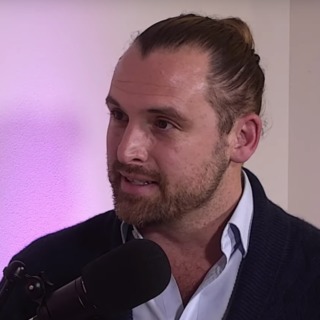
I'm your host,
Alan Sakian.
We are on site in the beautiful Sioux Falls,
South Dakota.
We are now going to be talking about Orthodox Christianity.
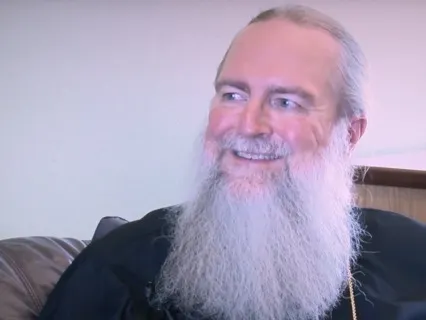
We have Father Sava joining us on the show.
Hi Father.
Hi Alan.
Good to see you again my friend.
Thank you for inviting me to your show.
It's an honor to have you on.
Thank you.
Thank you.
Thank you.
And for those who don't know,
Father Sava Lyda is a priest at the Transfiguration Greek Orthodox Church in Sioux Falls,
South Dakota.
He has been a priest for 16 years,
And you can find the links in the bio below to the TransfigurationGOC.
Org,
As well as the Facebook page.
Father Sava,
Let's start things off with one of our favorite questions to ask our guests.
What are your thoughts on the direction of our world?
I'll give a two-part answer,
Alan,
To that question,
That good question.
As an Orthodox Christian,
I'm deeply optimistic about the ultimate direction of our world,
Because it is the good creation of our God who loves us and desires that all should make their way back to Him.
And I believe that He is well able to accomplish that desire for all who are willing.
And so,
In the long run,
I'm quite optimistic about the direction of the world.
In the short run,
However,
I see that the world is in great turmoil.
There's a lot of confusion.
There's a lot of dysfunction.
People are set against one another at all levels of society.
Those who rule often take advantage of those who are ruled.
Those who have money and power often take advantage of those who don't in order to increase their wealth at the expense of the poor.
There's good indication that the natural environment is suffering because of our unwise actions in the last hundred years.
I don't know about that myself.
I'm not a scientist,
But I look around and see what's happening.
I have questions about that too.
And so I think in the short run,
I am not optimistic about the future of the world.
Our ability to re-commune with God,
With the Divine,
That can potentially heal so many of the issues that we have in our world.
Absolutely,
Yes.
We Orthodox Christians believe that we are designed by God,
Our Creator,
For communion with God and with each other,
Which means the deepest possible healthy relationship.
And that because,
Mainly because of our own pride,
But also because of the general brokenness of God's good creation,
We find it difficult to make our way back toward that communion.
But because we are designed for it,
And because God desires it for us,
And is working to bring it about,
Once we begin to cooperate with God in that project,
That mutual project,
We see good results and good fruits coming from that.
And that's really what the Orthodox Christian Church is all about,
Is helping that to happen in people's lives.
That's why we're here.
That's why we do what we do.
Could it be that the Divine creation that is our world is meant for this beautiful journey that we go through in realizing that we all come from God and re-commuting with that?
Is that the purpose of this creation?
Indeed,
Indeed.
Yes,
The Apostle Paul writes that the whole of creation is groaning with longing for the revealing of the children of God,
By which he means exactly what we're talking about,
The renewal of our God-designed communion with our Creator,
God the Holy Trinity.
Yes,
Indeed.
So we emphatically do believe that.
And we see that not only theoretically is that the case,
But in actual fact,
When we begin to live in the way that the Church teaches for us to live,
In humility,
In love,
In self-denial,
In putting others ahead of ourselves,
Considering ourselves the least of all,
Then this really starts to pick up some momentum and we see the healing of God's creation beginning with ourselves,
Because human beings are the crown of God's good creation.
And creation is broken precisely through our brokenness.
That's a result of our brokenness.
So when we begin to be healed,
Then we see parts of the world around us beginning to be healed as well.
It's not an accident,
For example,
That if you go to an Orthodox Christian monastery,
You will usually find the buildings to be surrounded by beautiful plants of various kinds,
Flowers and trees and so forth,
Resembling an earthly paradise.
And so that where prayer is active,
Where people are drawing close to God,
That has repercussions in the natural world around us.
And when we all have our unique communions with God,
There are different healing processes that occur for each of us due to what we've been dealt since we were born.
What would we say is a good healing modality,
Methodology?
The church in her wisdom offers us a variety of means of being healed,
Of the corruption,
To use a very strong word,
The corruption that leads to death and the disintegration of our being.
You know,
God took on himself our human flesh in order to overcome this corruption and in order to destroy death.
And in fact,
He gave himself over to death.
He,
The deathless one,
The one who cannot die,
Died as a man in order to destroy death and open to us the possibility of living deathlessly.
And so we Orthodox Christians say that death does not truly exist.
Yes,
We die biologically,
But a human being cannot die eternally because God who sustains us in life wills that we should live eternally,
As he is eternal.
And that in the end,
Our souls and bodies will be reunited through the resurrection.
We can't say a lot about that because we have not experienced it directly,
But that we will be reunited with our bodies,
Which will be incorruptible.
That is,
That they won't be subject to death,
Decay,
Disease,
And so forth,
All the things that afflict us now.
Now,
How do we get from here to there,
Which is really your question,
I think.
The church invites us,
First of all,
As our Lord Jesus Christ says,
If anyone would be my disciple,
If anyone wants to walk with me,
Let him deny himself,
Take up his cross and follow me.
And so a life of constant repentance,
To use a Christian word,
That is of constant turning away from the way that leads to death and turning back toward God,
Who is the creator and giver of life.
That's what repentance really means,
A life of constant repentance,
Which means self-denial,
A denial of our desire to exalt ourselves,
As the devil exalted himself and rebelled against God.
So we turn away from that desire and in repentance,
We humble ourselves and we take up our own cross and follow Jesus Christ.
Now,
What is my cross?
That can vary from person to person,
But I would say that my cross consists of the things in my life that are either sent by God or permitted by God in order to bring me to salvation,
To healing and health and communion with God.
And that's a different thing for each person because we're broken in different ways,
Aren't we?
And so our Lord in his goodness and with his comprehensive knowledge of us,
Because he knows us better than we know ourselves,
Sends just what is needed for us.
Some of those things are very hard.
That's why we call them crosses.
So the challenges are viewed as crosses.
Even the sufferings.
Yes,
Yes.
Because God sees what we need to experience and to endure in order to be fixed,
In order to be healed.
He sees precisely that and that's what he's always offering to us.
And if we're able to receive that with gratitude and humility from God,
Then it will do the intended work in us.
If we rebel against it and complain against it,
Then it will just make us bitter and angry probably and lead to more misery and brokenness and death,
You see.
So that's what our Lord is inviting us to do when he says,
Take up your cross.
That is,
Accept these things that are being offered to you for your salvation from my hand.
And you use this word rejection of the self,
The self-denial,
And meaning being selfless,
Also understanding the illusion of the self,
The unity of everything,
And the perpetual servitude that one can be in towards humanity,
Towards our world.
And then that being one of the most,
If not the most divine,
Then calling.
Yes,
We could say it this way maybe,
That each human heart has a tendency to create idols,
That is false gods,
Gods that do not exist and have no power to deliver us from anything,
But rather deliver us only into slavery,
Into servitude,
To nothingness.
And one of those false gods is our ego,
Our tendency to exalt ourselves and to set ourselves up as the criterion of everything that is real,
That is good,
And to serve ourselves alone and to organize our whole existence around serving our own ego.
So that is perhaps the first idol that has to go,
That has to be destroyed.
And after that there are many other idols that we manufacture for ourselves.
That is another aspect of the project of living as an Orthodox Christian,
Is that we seek to worship only the Creator,
Not the creature,
Not what he has created,
Including ourselves and beginning with ourselves,
You see.
Interesting.
So God is uncreated.
Uncreated,
Yes.
And we are created creatures.
Yes,
Yes.
God is the only uncreated one.
God exists eternally as one God in three persons,
One eternal being who has revealed himself to us in three persons,
Co-equal,
Co-eternal,
The Father,
The Son and the Holy Spirit.
The famous Holy Trinity.
The Holy Trinity,
Yes.
That's not something that human beings have made up.
If one was to,
I suppose,
To come up with some kind of conception of God,
I really doubt that he would come up with something like the Holy Trinity.
And I think that is,
For me at least,
An argument in favor of the accuracy and reality of this revelation of God,
His self revelation.
He has revealed himself to us as one God in three persons as an eternal uncreated communion of three persons,
The Father,
Who is the source of the divinity,
The eternal being,
The Son,
Who is co-eternal with the Father,
Who is begotten from the Father eternally,
So that there was never a time,
Never a when,
When he did not exist,
And the Holy Spirit who proceeds from the Father,
And together with the Father and the Son is eternally worshiped and glorified.
This is how we are taught to speak of God,
To name God.
And so we can say that the name of the God that Christians worship is the Father,
The Son,
And the Holy Spirit.
But we are not tri-theists,
We are monotheists.
We worship one God,
But who has revealed himself to us in this way and taught us to name him in this way.
Does that make sense?
It's always in perpetual kindergarten.
Yes,
And we're talking here about things that are at the edge of our possibility to speak of,
You understand,
You know,
Our language fails not far beyond this point.
There's nothing really more that we can say about God or know about God in his eternal being than what we've just said that he is Father,
Son and Holy Spirit.
Now as God reveals himself to us in time,
In history,
By through the incarnation,
By the second person of the Holy Trinity,
The Son of God,
The eternal Son of God,
Taking on our flesh from the Holy Virgin Mary and becoming a human being,
A real human being while at the same time being God.
We can say a lot of things about that,
That revelation of God,
Because our Lord Jesus Christ not only was born into the world as one of us and grew up as we all did,
You know,
And became a man gradually,
But he endured all the things that we endure,
All the vicissitudes of life,
The changes and chances of life,
As an old prayer says.
As we do endure,
But he was not diminished by any of it.
In becoming a man,
He certainly humbled himself.
And being God,
He humbled himself.
And this is the great paradox and beauty of the Christian faith,
Is that God is not someone far away from us,
Who in arbitrary ways exercises power over us in ways that we can't understand and that just frustrate us and make us angry.
No,
That's not who God is.
God has revealed himself to us in Jesus Christ as a man and as a God at the same time and as the God above all who loves us and who gives himself for us even unto death.
So that's the center of our Christian faith.
That's what it's all about.
And this is another reason why then this Jesus Christ is key because then it gives us a greater idea of what our divine reality is.
Yes,
Yes.
In Jesus Christ we learn who God is.
If we want to know what God is like,
We don't speculate,
We don't philosophize,
But we look at the books of the Gospels,
The four Gospels,
Matthew,
Mark,
Luke and John.
And reading those Gospels together with the letters of Apostle Paul and the other writings in the New Testament,
We see who Jesus Christ is.
We see who God is in Jesus Christ.
And so if we want to know who God is,
Everything that we need to know about God is revealed in him.
In Jesus Christ.
And what was written about Jesus Christ through the teachings?
Ah,
Well,
The Gospels are four in number and they describe the life of Jesus Christ telling pretty much the same story but from different points of view.
Saint Mark wrote the first Gospel,
It is believed,
Simply because his is the shortest.
We don't know that his was the first,
But much of his Gospel is included in the Gospels of Saint Matthew and Saint Luke.
With additional material,
For example,
All the stories that we hear at Christmas about the conception of Jesus Christ,
The birth of Jesus Christ and so forth,
Those are in the Gospels of Matthew and Luke.
My material is not in Mark's Gospel.
It's not in John's Gospel.
So each of them differs in its contents,
Even though it tells the same story.
It's like,
You know,
You have four witnesses to an event,
You know,
Something happens and four people are standing at different places and they are eyewitnesses to this event.
Do you think they will tell exactly the same story when they are interviewed later?
Well,
Only if they get together in a room and decide on the story.
Otherwise,
They are going to tell it differently from their different point of view.
And also,
We believe that each of the writers of the Gospels was writing for a particular early Christian group,
A community,
A church,
A local church,
And told the story to serve the needs of that early Christian community.
This is where the game of telephone begins.
This is where the signal is over time trying to retain as much of that initial lineage as possible.
Because 2,
000 years later,
There's a lot of the game of telephone has been played for a long time.
Yes,
It has.
Trying to get back to that initial lineage.
Yeah,
I like that metaphor very much because we've all played that game or something similar.
And we know what happens in a very short time is that the message becomes distorted,
Almost beyond recognition sometimes in a very short time.
Great care was taken by the first Christians that this should not happen.
Now,
Things weren't written down for quite a while after the Lord Jesus Christ walked the earth.
It's a fact that the Bible itself as we have it now as a collection of books of distinct writings was not really organized until maybe the end of the fourth century,
If I recall correctly,
And had the official approval of the church as a collection of books and letters to be read in the churches.
Before that,
These things circulated by word of mouth,
First of all,
These stories about the life and teachings and death and resurrection of Jesus Christ.
Among the early Christian communities,
Much of the New Testament is letters that were written,
For example,
By Apostle Paul in his apostolic work where he traveled a lot throughout the Mediterranean areas and began Christian life.
And began Christian communities in those places.
And then as he traveled on to the next place,
Sometimes he would write a letter back to the group of first Christians that he had established in another place.
And so these letters,
And many,
Many other writings too,
For that matter,
Circulated in the in the early years of Christianity.
And eventually some of them were approved by the leaders of the church,
The bishops meeting in council as being the ones that ought to be read in church.
The others maybe were good for reading,
Such as a document called the Didache,
The teaching of the 12 apostles.
It didn't make it into the New Testament,
But it's very good to read.
It's full of good wisdom and,
And also a document called the Shepherd of Hermes,
A man called Hermes.
And,
And writings like this are within the tradition of the church,
But not included in the New Testament.
That is,
They're not read in the services of the church.
And that's the distinction of what is Holy Scripture,
What is read during the service of the church.
What is read is Holy Scripture.
Now,
As we aim to then document God revealing himself through Jesus Christ,
As we try and document that,
What were some of the key things that were documented about God through being revealed through Jesus Christ?
Well,
To answer that I could simply refer you to the four gospels because it's all there.
But his conception,
His miraculous conception without human seed,
Without a human father.
It's the teaching of the church as recorded in the gospels that he was conceived of the Virgin Mary.
She was a young woman.
She had lived a very sheltered life after being born of aged parents,
Like many of the people in the Old Testament were kind of miraculously,
Well,
Absolutely miraculously,
Born of a couple that were beyond the normal time of childbearing.
That's not written in the gospel,
By the way,
That her parents were old and had her in old age.
That's part of the memory of the church that was not written down in the gospels.
But she was born in that way.
And then at a certain time,
She was taken in under the protection of an old man called Joseph,
Who was a kinsman of hers.
And they were betrothed simply because in that time,
A woman who was growing up needed to be under the protection of a man.
And indeed,
In the societies in that part of the world today,
In the Middle East,
It's still the case that each woman lives her life with a man as her point of reference.
In the Arab societies,
For example,
That's the way it is.
So she conceived,
She bore a son,
And he was called Jesus Christ,
According to the words of the angel who revealed this to her.
That's what's recorded in the New Testament.
Immediately,
When the world took notice of this,
The powers of the world and the person of the Roman governor of the area,
Tried to find the child and put him to death because he thought that he was a threat to earthly authority.
And indeed,
He was.
Later on,
His own people,
The leaders of his own people,
Would seek to put him to death and in the end,
They would succeed in handing him over to be crucified by the Roman authorities.
Because again,
He was a threat,
Perceived by them as a threat to their established authority and way of doing things.
And so this began very early on when he was still a baby and it's said that he and his mother and his guardian,
Saint Joseph,
Had to flee to Egypt,
All the way to Egypt,
To escape the threat of being done to death by the soldiers sent by King Herod.
And so his life was always lived in danger,
In danger from the beginning.
So he grew up.
And he emerged into the world into the into the public eye,
We could say,
With the event of his baptism by a man called John,
Who was baptizing people in the Jordan River,
Offering them baptism as a sign of repentance of turning back toward God.
Interesting.
And Saint John was sent by God to prepare his way,
That is to prepare the people's hearts for God's appearance in their midst.
And one day while John was baptizing people,
That is immersing them in the water of the Jordan,
Jesus Christ appeared to be baptized with the other people.
And John recognized who he was.
He knew that he was the Messiah,
The promised Savior of Israel,
Promised to the prophets,
And he said,
It's not right that I should baptize you.
No,
I'm not worthy to do this.
But Jesus Christ says,
It's okay,
You should do this.
I want you to do this in order to fulfill all righteousness,
That is,
To show people the right way to do things.
And our Lord in all things,
Is an example to us of how to do things properly.
And so even though he didn't need to be cleansed,
He didn't need to be baptized,
He didn't need to repent of anything,
Because he was perfectly sinless.
Nevertheless,
He submitted to be baptized.
And when he was baptized,
It says the heavens opened,
And the voice,
A voice came forth saying,
This is my beloved son in whom I am well pleased.
This is the voice of God the Father that everyone heard.
According to one gospel,
Everybody heard it.
According to another gospel,
Only he heard it.
But in any case,
The voice came forth.
And then the Holy Spirit,
Represented in the form of a dove,
A bird,
Came down and alighted upon him.
Now,
The Father is not a voice,
The Father is not a sound,
The Holy Spirit is not a bird.
Neither the Father nor the Holy Spirit became incarnate.
That is,
Joined themselves to our created world.
But on that occasion,
Their presence was testified to by this voice and by this bird.
And what did the voice say?
This is my beloved son,
In whom I am well pleased.
And so,
In this way,
God revealed himself right off the bat,
When our Lord Jesus Christ was baptized.
After that,
He went around doing good.
He preached to the people good news,
That the kingdom of God was very near.
That is,
God isn't far away.
He hasn't forgotten you.
He's not angry with you.
He loves you,
In fact.
And as a demonstration of that love,
Jesus Christ healed people of physical diseases.
He healed them of spiritual diseases,
In the form of being possessed by demons sometimes.
He cast the demons out.
They had no defense against him,
Because he is their creator,
And he has authority over them.
And so,
He freed people from physical illness,
From spiritual illness.
He also spoke to those in authority who were abusing their authority,
Weren't serving the people in love,
As God had appointed them to do.
People like the priests of the time,
Of the Jewish people,
The people called the Pharisees,
The Sadducees,
The scribes.
These were groups of people who were in positions of honor and authority over the people,
But they weren't doing their job properly at that time.
And so,
Our Lord Jesus Christ rebuked them,
And called them to repentance especially.
And he preached good news to the poor,
As it says,
Liberation to the captives.
And for everyone,
He had a word of salvation to speak.
And he would say the word that each person needed to hear,
In order to begin their journey back to God.
Often his teaching was in the form of stories that we call parables.
One of the most famous is the parable of the prodigal son.
A younger brother of two brothers who lived in his father's house,
But decided that he didn't want to live there anymore.
And he asked his father to divide what would be his inheritance between him and his brother,
So that he could have it now.
He was really in essence asking his father to act as though he were already dead,
And to give him the money that would come to him in that case.
The father very humbly did so,
Knowing what kind of disaster was likely to follow.
And indeed,
The younger brother,
The son,
Goes into a foreign land where nobody knows him.
And he spends all of the money on riotous living,
It says.
And we can imagine what he did with it.
He went through it very quickly,
And he finds himself destitute,
And gets a job from one of the local people feeding pigs,
Which is about the worst thing that can happen to a Jew,
You know,
Because pigs and Jews don't mix.
They don't associate with pigs,
Much less eat them.
So there he is,
And the pigs die,
Covered in mud.
He's hungry,
He's tired,
He's cold,
He's lonely.
Well,
What has happened?
Really,
He represents our human nature that has turned away from God and wandered to a distant land,
A faraway land,
And has spent its life on vanity,
On nothing,
Basically,
You know,
And finds itself destitute,
Naked,
Hungry,
Cold,
Lonely.
And not only that,
But in bondage to the demons,
You know,
Represented by the pigs.
But a miracle happens then.
In the story,
The young man says,
Why am I here?
He comes to himself,
It says,
He returns to himself.
He says,
Why am I here?
Even the servants in my father's house have enough to eat.
You know,
They have everything they need.
Why am I here?
I don't have to be here.
I can swallow my pride.
I can stand up.
And I can start the long journey back to my father's house.
And he makes a little plan.
He says,
When I get there,
I'm going to say to my father,
Father,
I've sinned against heaven and before you,
I'm not worthy anymore to be called your son.
Please make me as one of your higher servants.
And this is his plan.
And as he goes on the road toward his father's house,
He rehearses this little speech that he wants to make.
But he never gets to make it.
Because as soon as his father catches sight of his son returning,
And we get the sense that he's been watching for him ever since he left,
The father runs out to greet him.
And he embraces him.
And the son starts to make the speech,
Father,
I have sinned before heaven.
And before earth,
I'm not worthy to be called your son.
The father is immediately calling his servants to bring fine clothing for the boy,
A ring for him,
Shoes for his feet,
Clean him up,
Prepare a banquet because my son was lost.
And now he's found he was dead.
Now he's alive.
And so he makes this marvelous feast.
There's another part of the story about the older brother,
The son who stayed at home,
And his response to this event of the return of the younger brother.
Do you suppose he's happy to see his brother?
No,
Not at all.
Not at all.
He's sunken outside the house while he hears all the party going on.
And he asks one of the servants,
Well,
What's going on?
He said,
Well,
Your brother's come back.
And your dad is throwing a party.
And he goes into the father,
Or the father comes out to him,
Excuse me,
Just as he came out to the younger son.
If I remember correctly,
The father comes out and says,
What's the matter,
My son?
And he complains that this son of yours who wasted all your money on harlots and so forth.
And now he comes back and you give him this big party where I've always been here with you serving you faithfully and you never gave me even a goat so I could have a party with my friends.
He's bitter and he's angry.
And he's just,
He's so angry he can't even call this man his brother anymore.
This son of yours,
He says,
Who has wasted all your living.
And what does the father say to him?
To show his love,
Which is as great for that son as it is for the other one.
He says,
My son,
You're always with me.
All that I have is yours.
Was it not right that when your brother came back,
We should we should rejoice because he was dead.
He's,
He's resurrected from the dead,
You know,
Practically speaking.
So that's how the story ends.
And I hope I've told it accurately,
But you get the gist.
It's,
It's beautiful and simple and yet immensely powerful.
We can all relate to it,
You know,
Just on the literal level.
And also,
You know,
In the broader way of seeing how it describes our,
Our corrupted human nature and and its restoration in Christ.
So this is how the Lord taught the people.
Wow.
The amount of story that exists that has so many profound learning lessons embedded in them is just gorgeous.
And to be able to go back into and to take these stories and to find deep meaning in them in driving our own ethical and moral and spiritual evolution ourselves.
Because hearing things like that make us reflect on our own behavior and seek out a more righteous way of living.
And also coming like you look or describing as well this,
This God revealing himself through Jesus Christ and then our documenting of the way that Jesus Christ is is healing and is bringing this light to onto others and then having others be able to commune back and go through that process of,
Of realizing divinity.
So let's,
Let's explore the Holy Spirit.
What is the Holy Spirit?
We speak of our Lord,
The Holy Spirit,
As the third person of the Holy Trinity,
Along with the Father and the Son,
Coeternal,
Coequal,
Uncreated.
Who in the in the creed,
Which is this great statement of faith that was composed by the church by the fourth century was completed.
The the creed speaks of the Holy Spirit as the Lord,
The giver of life,
Who spoke by the prophets.
So the Holy Spirit speaks through the prophets of the Hebrew times,
The Old Testament times,
In order to correct the people and to recalibrate them,
We could say from time to time.
And they always needed recalibrating.
That's the work of our Lord,
The Holy Spirit,
And also to proclaim through the prophets,
The coming of God in the flesh,
Jesus Christ.
That is his job too.
Now,
After the incarnation,
In the time now of the church,
The Holy Spirit is the work of the Holy Spirit.
And the work of the Holy Spirit is the work of the Holy Spirit.
Now after the incarnation,
In the time now of the church,
The Holy Spirit empowers,
First of all,
The apostles to go out into all the world and proclaim the death of death in Jesus Christ,
To proclaim the possibility of the restoration of human nature from its corruption,
And the death of death so that we have the possibility of eternal life.
With God.
Now these apostles,
With the exception of St.
Paul,
Were not educated men.
Several of them were fishermen.
No,
They were just ordinary,
Humble people.
How did they receive the gifts that they needed to go out and do this mighty work to go out to distant lands and places where they did not even know the local language and speak to the people about these things in such a way that they received the word?
It was by the power and the gifts of the Holy Spirit.
So the Holy Spirit is his job simply is to continue to bear witness to God's revelation of himself in Jesus Christ.
Yeah,
That's that's who the Holy Spirit is.
We don't say a lot more about him than that,
Because he hasn't become incarnate,
Just as the Father hasn't become incarnate.
And so in the beautiful icon or holy picture of the three angels drawn by St.
Andrei Rublev in medieval times,
Which is the great one of the great treasures of Russia.
We see three angels.
And allegorically,
They represent the three persons of the Holy Trinity.
We don't say they are the Holy Trinity because the Father and the Holy Spirit can't be depicted because they've never taken on flesh.
But nevertheless,
The the Son,
The central angelic figure is,
Is very solid looking,
Very opaque in the way that St.
Andrei Rublev has drawn him,
Painted him.
Whereas the other two figures that may correspond,
We may say to the Father and to the Holy Spirit are more ethereal.
More translucent almost to indicate that they they never were incarnate.
And so that's kind of a way of indicating through the means of a painting the truth of who God is.
So this leads us to then asking one of,
I think,
The most important questions here,
Which is that how do we have this religious pluralism all coexist?
That we have this idea of a God or source that all of us have our own unique relationship with,
Recommuning with that.
And there's all different religions.
There's even science that says this comes from a big bang 13.
8 billion years ago.
How do you see these things coexisting?
Sure,
That's,
That's the big question.
One of the big questions of our time,
Isn't it?
When the world is,
The world's population is being stirred up,
So to speak,
And because of the the great mobility that we have had in the last century and a half,
Let's say that really did not exist before that,
At least not in the,
To the degree that we have it now.
People's are moving about and encountering one another and having to live side by side in ways that they never did before.
And so it,
It represents an immense opportunity for all of us to be enriched by the wisdom of one another.
But I'm afraid that more often,
What happens is that we,
We enter into conflict with each other,
Because of different cultural assumptions,
Different beliefs,
Different allegiances.
So for example,
One of the great forces in the world today,
Alongside Christianity is Islam,
Which is a very different way of understanding God,
The world,
Human nature,
Human destiny,
From,
From the Christian way of understanding God.
And so it's a very different way of understanding these things.
It's a different revelation,
A revelation of a very different character,
Which creates a culture of a very different character from Christian culture.
It may be that these two cultures are irreconcilable.
I personally believe that Christian culture and Muslim culture have a lot to say to each other.
And in fact,
They have lived side by side in many places in the world for centuries.
However,
It is a fact that wherever the Muslim culture is the dominant culture,
Christians are placed in a lower level.
They have great social disabilities placed on them.
Millions of them have been martyred in the Muslims,
Muslim lands.
From the time of the conquest after Muhammad until today,
It's still going on.
And we we dare not brush this under the rug or pretend that all is sweetness and light,
Because it's not.
The borders between Christianity and Islam are always almost always bloody.
However,
Christians and Muslims have succeeded in living together in peace in various places where they have a rough parity of population sizes.
And they found ways to live live together in peace.
But usually not by living next door to one another,
You know,
In the same town.
Usually by having villages that are Christians,
Ones that are Muslim,
You know,
And so forth,
Or sections of a city where the different homogenous populations will settle.
Here in America,
It's very different because anybody can buy a house next to anybody else.
You know,
It's it's very easy for a Christian to buy a house next to a Muslim and vice versa.
And so we must find a way to live together here.
I think that is a project that's worthy of our greatest effort and greatest attention.
That same analogy must be also seen at that global level.
Similarly,
Of like,
We need to learn how to live together on this planet.
Absolutely.
We do.
We do.
I'm not optimistic of our chances for doing that.
Because I think if we speak developmentally about human nature,
We are designed to live in tribes for want of a better word.
You know,
That's how we function best among people who are like ourselves who share our worldview,
Our values,
Our religious traditions,
And so forth.
That's how we function most effectively.
It seems to me anyway,
I'm just offering my own opinion here.
And so I think we have great difficulties in the modern world because we are not,
We could say designed or we're not adapted,
We could say maybe to to function alongside to live alongside people with very who have very different assumptions about reality than we do.
We're just not adapted for that,
It seems to me.
And so that's why we have such difficulty.
I think it's not that it's impossible.
We can do it.
And I think as Christians,
We are obliged to try to humble ourselves,
But and to live with others in peace as much as we can.
But at the same time,
We're not obliged to allow people who do not value what we value,
And are not interested in what we do.
And are not interested in living in peace with us to invade and our land and supplant us.
We're not obliged to do that.
And so it's finding the way between those two that I think is important for us and in the world as it is,
You bring up,
You know,
Christianity and Islam,
Which have this history that you you've described.
Very difficult history.
And what about Taoism and Buddhism and Hinduism and these others that have also had issues of always,
But also that seem to have these deep roots in just the most meditative flow driven being.
Yes.
Well,
As an Orthodox Christian,
I would say that God has revealed himself in many and various ways,
As it says in the letter to the Hebrews in the New Testament.
He has revealed himself in many and various ways throughout human history.
And including in that,
And in Hebrews,
It speaks specifically of his revelation of himself through the prophets of Israel.
But I believe that we can extend that revelation to include all of the ancient philosophical and religious traditions of mankind.
Not that any of them is complete,
But that each of us,
Each of them,
In each of them,
We can perhaps recognize foreshadowings of God's complete revelation of himself in Jesus Christ.
There are many things in those traditions that we would not recognize or accept as Orthodox Christians.
For example,
The egregious polytheism that exists in Hinduism,
You know,
Where various attributes of divinity are,
I guess we could say,
Reified or identified with a particular supposed deity,
You know,
So you have this proliferation of thousands of supposed deities.
That's a mistake,
We think.
That's not accurate to reality.
But at the same time,
You know,
For example,
The life cycle has been a long time since I studied these things,
But the idea of there being seasons in a human's life,
You know,
There's the season when you're young and you're learning to be a human being.
There's a season when you're a householder and you're preoccupied with marital life,
Maybe,
And raising children.
There's a season when you are a worker,
Primarily.
And there's a season then in old age where you're preparing yourself for death,
For your departure from this world.
And I'm sorry,
I can't remember the specifics of the terminology.
I studied these things as an undergraduate a lifetime ago,
But you understand what I'm talking about.
I think that that's a very profound and helpful way of speaking about human life,
Because we do change as we grow older and we experience different identities,
Almost you could say,
As we make our way through our life in this world.
And that idea that at the end,
We should consciously withdraw from active life and devote ourselves to the preparation for what comes next.
And we might as Christians speak differently about what comes next than Hindus would,
For example,
Or Buddhists or Taoists or whatever.
But that idea of that schema of human life,
I think,
Is something that resonates with me very strongly,
Because I'm about to,
I hope,
Retire from active human life in a few years and devote myself to getting ready for what comes next.
May God grant it.
I loved how you described God revealing himself through such a beautiful variety of potentials and how then it's in the essences and eyes and feelings of the seekers that are seeking that communion with God revealing himself,
That then are able to identify all these different potential modalities.
I want to also express how and hear how you feel about this,
That then some of the seekers are attempting to then commune with God expressing himself through science,
Through mathematics,
And attempting to do so by understanding at the most granular level,
How the even subatomic particles work,
How the inner workings of our biological mechanisms work.
And so these are kind of like the absolute,
Like diver deepers into all the mechanics and trying to understand the source code of creation.
So in a sense that's also communing with God revealing himself through math and through science.
And so that's another one of those co-exist.
Can that co-exist?
Could that potentially help bridge together all of the religious pluralism with science?
Could science and spirituality marry together?
And then how do you feel about all that?
Well,
That's a lot to try to get my arms around.
It's a big question,
Alan,
But I'll give it a shot.
You know,
I think it was Blaise Pascal,
The Renaissance philosopher and Christian believer,
Faithful Christian,
Who said that scientific investigation is thinking God's thoughts after him,
If I'm remembering correctly.
And I've always I've always kind of liked that phrase thinking God's thoughts after him,
Because God being the creator of all,
As we Christians believe him to be.
He's described in the scriptures in the Gospel of St.
John with the word logos,
The word,
Which means word or reason or speech.
This Greek word logos is often left untranslated.
And of course,
It's the word that's the review that is at the root of many of our words,
Theology,
The logos of God,
Psychology,
The logos of the human soul,
The reason or the teaching or the inner workings of the created reality of.
So God is logos,
God is the one who speaks things into existence.
God said,
Let there be light,
And there was light.
It says famously in the first chapter of the Bible in Genesis.
So I think that these things naturally,
It's natural to try to consider these things together.
However,
I would say that the things being revealed by scientific investigation are becoming so numerous that it's impossible for one person to know them.
To begin with only a very small part of them,
You know,
God's creation is so vast.
And so both at the macro and micro level,
That it's impossible for the finite human mind to grasp it.
Which I think is evidence for God's being myself.
I think the best scientist is the one who is the most humble intellectually,
Who always thinks of his or her work as being provisional,
And being susceptible to be replaced by something else that is discovered or a better understanding,
And always to need to be tested by empirical verification if it's possible.
So in all these ways,
I see that,
You know,
The pursuit of science,
Which means knowledge,
It comes from the Latin word,
Which simply means knowledge of true the truth,
The true nature of things.
If it's done honestly,
And humbly,
According to the scientific method itself,
Is in no way opposed to our view of how the world is,
Or how God is.
Truth is one,
I like to say,
Truth is one as God is one.
And any honest pursuit of truth,
Will lead to the same place to the same truth.
That's how I see these things.
I'm not sure I answered your question.
But definitely,
This is this is how I think about these things.
But I don't know anything about them.
Really,
I just I'm just one person who looks at the world and tries to make sense of things like everybody else.
Question along the way on that subject would be then how about then the story of Orthodox Christianity in terms of God's creation,
Versus what science says about the evolution of humanity from our ancestors from from the Big Bang to the to the atoms and planets and stars and then from single cell to multi cell organisms.
Yes,
Yes,
Yes,
Yes,
I'm going from a kind of an undifferentiated,
Very simple,
But highly energetic reality to a much more differentiated and complex and environment in which the energy is more dispersed than it was at the beginning.
Which if I understand correctly,
Is kind of how scientists now are looking at things.
I don't know a lot about that.
But I read a little bit.
It seems to me that that is not in any way at odds with what we believe as Orthodox Christians,
About God's creation of the world from the beginning until now.
And incidentally,
When we speak of creation,
We don't just mean of God's creating the world.
God's creating the initial conditions or the initial stuff.
But we mean a continuing process by which God's uncreated energy keeps maintains the world in existence keeps it going from moment to moment.
If it didn't,
Everything would fall apart.
We know the tendency in in the physical world is toward not toward increased complexity and differentiation.
But when the energy is drawn out of it,
It,
It collapses into dust,
Entropy,
You know,
If I understand things correctly.
And so it seems to me that in order for the world to be maintained in being this creative energy,
Uncreated energy,
Uncreated creative energy,
We can say so.
Our God's preserving energy we could we could term it maybe must continually be injected into the world,
The world has to be suffused with this energy.
Otherwise,
It would collapse back into nine being.
That's my understanding of things.
There are other Orthodox Christians who who would take issue with what I just said,
Probably,
Which doesn't bother me at all.
The church has no official teaching on these things.
We say that we believe in one God who created the heavens and the earth.
And that's,
That's all that we're obliged to believe formally about these things.
The church doesn't teach us how old the world is,
For example,
When it began.
It teaches that the world began by God's will,
And by his action,
The God that this world will as it is now will come to an end at some point,
Known only to the world.
Known only to God.
And we live in between those times,
As best we can.
And maybe even one of the recent beautiful ways of seeing what God potentially is that I've really enjoyed is that we as we evolve towards complexity that we then have the ability to then take the initial substrate that created creation and then embed that into the world.
And then embed that in our complexity to cycle another creation.
And then that is just a cyclical process.
Yes,
We were talking about that the other day,
Weren't we?
Yeah.
As Christians,
We understand history,
Pretty much linearly,
As I mentioned a minute ago,
You know,
From its beginning to its end point.
And then all of it,
Though,
Contained,
If we can put it this way within the realm of eternity,
Which is not like our existence now,
You know,
We live historically now,
Yesterday,
Today,
Tomorrow,
Maybe tomorrow,
We don't know.
All we have,
The only time we have really is now,
This moment when we're talking with each other,
We don't know whether there'll be a next moment or not.
And so that's how,
How Christians generally think of or understand reality.
However,
Within that linear span of history,
And within that eternal now of eternity,
Can there be recurring cycles?
And I would say certainly,
If we read the books of the Old Testament,
The history of old Israel,
For example,
We see cycles of flourishing of return to God and faith in God and trust in God and a reaping of the benefits of all that in the daily lives of the people.
And then we see that degenerating into times of apostasy,
Of fleeing from God,
Fleeing toward idols created by men's hands,
And so forth.
And the slavery that the people experience as the result of that not freedom,
But slavery.
And then they need to repent of that and return to God.
God sends prophets to remind them of who they are,
Who God is,
They repent,
Sometimes return to God.
So there is that cyclical action going on,
You could say,
I think in each of our lives,
Too.
You know,
We,
We often say in Orthodoxy,
That the Christian life is one of continuous repentance,
Not just initial repentance when we turn back.
But you know,
When the prodigal son has returned to his father's house,
He needs to be watchful over himself.
And make sure when he needs to repent again in small things that he does so that he's not tempted to do another big rebellion,
And find himself,
You know,
In the midst of swine,
Hungry and golden naked and so forth.
So it was just a few thoughts in response to your good question.
Yes,
Yes.
Thank you.
What about the creation having both good and evil?
And then the interplay of those two within our lives?
Yes,
That's a question that has preoccupied human beings.
Always,
I think,
Good and evil,
The mystery of good and evil.
As God has revealed himself to us,
We Orthodox Christians believe that God is good.
And that God doesn't change.
That means that if God was good,
In the beginning,
God is still good,
We can rely on God being good tomorrow.
And of God being favorably disposed toward us,
He's for us,
He's on our side,
We can say,
God does not change.
In our work of salvation,
It's not our job to change God's mind.
That doesn't mean to happen,
Because God is always for us.
And I say this because this distinguishes us as Eastern Orthodox Christians,
From some varieties of Western Christianity,
Where the project seems to be precisely to change God's mind.
Either by doing good works that he'll see and then he'll be favorably disposed toward us.
Or by interposing Jesus Christ between us and God the Father who is angry with us and wants to get us so that he will see his son.
And the goodness and beauty of his son and then change his mind about us.
This seems to be the project of certain kinds of Western Christianity.
But we don't see that in Orthodoxy at all.
If we,
If we,
In the Bible,
Or in some of the prayers and hymns of the church,
We talk about God being angry with us.
It's metaphorical.
It's to remind us that this is serious business,
You know,
That though God is for us,
We must be willing for God to do his good work of healing and recreation within our within our lives.
If we're not willing,
God being very humble and gentle will not run over us and force us.
Because if you force someone it's not love,
It's no longer love.
It's coercion or,
Or oppression,
You see.
So we,
We understand that God is always for us.
He's always making himself available to us very humbly,
But we must open the door,
We must invite him in,
You know,
To do his good work in us.
Where does evil come from then?
God does not create evil.
That's clearly the teaching of the Christian Church of the East and the West.
God does not create evil.
We create it through our ignorance.
We create it through our ignorance and through our rebellion,
Our fruitless rebellion against,
Against reality,
Really,
Against God who only wills good things for us.
Yes,
In those ways,
We create it for ourselves.
And it makes for a good story that we created it for ourselves.
It's more challenging.
Yes,
Yes.
There are there are such stories in the Bible beginning with the story of our first created man and woman,
Our first parents,
Adam and Eve,
Which is a powerful story if we understand that it is the story not just of the first humans,
But of every one of us.
You know,
It's the story of our of our willful ignorance in the face of God's gift of himself to us.
Our willful ignorance through which we are we make an idol that we prefer to God to the reality of God,
And to the reality of what he has created us to be.
So that,
Of course,
That pattern is is repeated again and again throughout history.
It's documented in the scriptures.
It's documented in history.
It's documented,
You know,
By our own consciousness of how we how we are,
Each of us.
If we come to to the knowledge of that,
Then we're not living in obliviousness,
You know,
We'll come to the knowledge of that and we'll wake up.
And we'll say,
We'll come to ourselves and we'll say,
I will arise and go to my father's house.
Yeah,
Yeah,
How gorgeous it is that we all get to experience life and consciousness and all these beautiful gifts of family and friends and food,
Water,
Air,
All these types of things.
All these things are good.
Very good.
God says he creates everything.
Wake up to how beautiful it is.
Yeah,
Yeah.
Divinely commune back with me.
What role then at all these bifurcating moments of choice?
That we have of of pursuing a certain thing or pursuing another one,
These potential choices,
Not always binary and good and evil,
But they're altering moments in our life trajectory.
What role does free will play in those choices?
And where does determinism fall into the picture?
Yes,
Well,
We understand as Orthodox Christians that we each have a choice.
Sometimes it's very difficult for us to choose God,
To choose the way that leads back to God.
It's not easy for the prodigal son to get up from the mud in the midst of the pigs and say I will arise and go to my father's house.
It's not easy.
And sometimes it's a lot harder than others in the case of someone who is enslaved,
For example,
To some kind of addiction.
It's very hard,
Very hard to break out of that slavery.
God will help,
But we have to really want it.
We have to really want it and we have to make our own feeble effort to enlist the help of others whom God sends to us.
But it is always possible for us to choose the good,
To know the good and to choose the good.
Someone asked me just yesterday,
What about in the case of a person who is a psychopath?
Is there a possibility of repentance and redemption for such a person?
In other words,
Could such a person be healed?
By having that part of the personality that is missing or is corrupted to be restored?
I said,
Theoretically,
Yes.
But how often does it happen?
You know,
Possibly yes.
We have to we have to believe that everyone is has the possibility of being restored.
Having that possibility is not possible.
The image of God in which he has created or she has created to be restored and perfected to its original beauty.
But sometimes it's very hard to see how that happens,
At least in human terms.
But with God,
Everything is possible.
Yeah.
Yeah.
Often in Orthodoxy,
We speak of the life of a human being in Christ as being cleaned or cleansed of the things that don't belong purified,
The things that don't belong on us and in us in our lives.
Just as maybe a picture,
An icon that has hung in a church for centuries,
Maybe somewhere in Eastern Europe,
Has been there for five centuries,
Let's say a holy picture.
It's not the way the artists painted it.
Well,
It is but it's all covered with soot from candles and lamps and incense and all and just dust for centuries and centuries.
And so you can hardly see what's there.
What the painter put there.
So what needs to happen to that picture?
Does it need to be taken out and chopped up and burned?
No,
No,
It needs to be purified.
It needs to be cleansed so it can shine with the light.
And that's a perfect analogy,
I think for us,
What has to happen for us,
That we must allow our Lord the Holy Spirit to do his good work in us,
Which is sometimes very painful.
The process of the restoration of a picture is fraught with many dangers.
To push the analogy maybe a little further,
It might hurt us.
To be cleansed because some of these things have become so much a part of us,
That we come to believe this is who we are.
We identify ourselves as that which we are not.
That which doesn't belong in us.
And so it can be very painful to have those things generally being removed.
But that's what must happen if we are to shine with our original beauty,
Just like the restoration of a beautiful painting.
Yeah,
Takes place with great care and gentleness and an attempt not to damage anything of the original that remains.
And when it's finished,
I saw a video on YouTube just the other day.
So I'm thinking about the painting.
After they got done cleaning the whole thing and gluing it all together again,
The restorer took a fine brush and some paints and just gently painted in those parts again.
Very,
Very respectful of the painting.
And not in any kind of ostentatious way,
But with the idea to reproduce the original,
Recreate the original.
So everything would would function harmoniously again.
It was it was a miracle to see really.
And that's the miracle of the painting.
Yes,
I really love the analogy of the painting that is very,
Very,
Very well.
You dust it off and cleansed,
Although that that process may it's a clearing our channel to anchor the divine.
There may be some some triggers or traumas in that process that we can integrate and we can repair those in order for us to heal and not repeat.
And as we do that process,
It's also a good analogy.
This like a gem.
Very similarly with the gem where we're we're we're cleaning the gem.
We're making the gem able to shine.
And the gem is like us individually being able to bring our gifts forth into the world and have the sunlight shine through.
The gem and break apart into a prism and just shine on the planet with our unique gifts.
And so I love that that analogy.
And it does not come without hard,
Sincere self work and connection to the divine.
And always with God's help.
Yes.
Jesus Christ says,
I am the light of the world.
He who believes in me will not walk in darkness,
But have the light of life.
He also says to us,
You are the light of the world,
A city set on a hill that cannot be hid.
And so we can think of the analogy,
Perhaps of the light of the world.
The Lord Jesus Christ being the sun,
The source of light and life,
And warmth and all good things.
And we being like the moon who reflect that light to the degree that we have been purified and illumined by his,
By his light,
By his,
His grace,
His,
His power to,
To illumine us.
That's gorgeous.
That's gorgeous.
And then there may even be we could say that the more that we've been purified our channel that the more we are like the full moon that can then reflect so much of that sunlight onto Earth.
And maybe the more we have oil within the water,
That the more it's like the new moon where there's less light being able to be purified.
What is it like running the church?
There's a process of going to seminary school.
There's a process of becoming a deacon,
Becoming a priest.
And then for those that would like to becoming a bishop,
Which oversees regional churches.
And priests and deacons act as helpers.
So how does this all work?
And then there's communities in the areas that are Christian that come to the churches to do the practice.
And you engage with dozens,
If not even up to hundreds of people and act as someone that's trained in the divine to help them with their communions.
This is a beautiful thing.
And it's also complex.
And I'd love for you to talk about it.
I'll try.
I'll try.
It is a beautiful thing.
And I'm thankful constantly to God for permitting me the privilege to be his representative,
So to speak to his people.
And also the intercessor for the people before God's throne.
Because I'm a Christian.
The intercessor for the people before God's throne,
Because that's the main work of the priest is to pray for the people.
Also to,
To offer sacrifices to God for the people as we say,
Which simply means to serve the services of the church in such a way that the the things of this world,
The things of God's good creation are offered up to him,
And transfigured by him and return to us as as life giving realities.
The premier example,
Of course,
Is the Divine Liturgy,
Which in the West is called the Mass.
It's the service of,
It's the premier service of the church,
The central action of the people of God,
By which we bring ourselves,
First of all,
Together into the temple of God,
Offering ourselves to him.
For him to purify us and illumine us and draw us and draw us increasingly closer to him and then send us out into the world to be his witnesses,
His hands,
So to speak.
We do this in an interesting way.
This all happens in a very interesting way,
Which was given to us by the Lord Jesus Christ on the night before he was given over to death.
He very simply called his friends together,
His 12 disciples,
And he took a bit of bread,
And he said to them,
He gave thanks and he broke it and said to them,
This is my body which is broken for you to this.
Istinamin anamnesin,
It says in Greek,
For the recollection of me.
And then the same thing with the cup of wine,
He took the cup and blessed,
Gave thanks and gave it to them saying this is the cup of my blood which is shed,
The new covenant of my blood which is shed for you and for many for the remission of sins to this for the remembrance of me.
With this command,
He inaugurated the service of the Holy Liturgy in which we do the same thing imitating and we take bread,
A little bread,
Ordinary bread that we've made for this purpose,
A cup,
Some wine in it.
And we we bless it,
We pray over it,
We ask our Lord the Holy Spirit to sanctify it,
And to change it into our Lord's body and blood according to his promise,
Which becomes our spiritual food and drink.
We receive in in a physical way,
The deathless body and blood of Jesus Christ,
Who has himself destroyed death by his death,
And risen and can never die again.
We receive that deathlessness into ourselves in this way every time we receive Holy Communion.
It's a very powerful thing.
It is as tangible and tastable as anything could be this communion we have with our God,
Who has for us,
Provided himself to us in this way physically,
Not just spiritually in some kind of ethereal way,
But very,
Very tangibly and tastibly in Holy Communion so that we become one with him.
Physically,
And also,
Of course,
In every other way.
But so this is this is the work of the priest is to sanctify these the people through these means that God has made available to us through prayer,
Through sacrifice through the holy mysteries or sacraments,
As we say,
Only baptism,
Only communion,
And the other sacraments,
All of which use some kind of tangible created physical reality as the means by which God communicates himself to us.
It's very beautiful,
And,
And powerful.
And you see that God's energies are imparted to people and their lives change as a result.
So it's it's a great privilege for a priest to have a front row seat to all of these things you can say,
And despite our own unworthiness and inadequacy,
All these things happen,
According to God's word and promise through his energy,
Not our own.
So it's a beautiful thing to be a part of.
And I'm very thankful for it.
Was there anything else in your question that I neglected to hit on?
Nope.
Touch on?
Nope.
Excellent.
Good,
Good.
And how about as we progress into this exponential technology age,
There's 8 billion humans on the planet,
The geopolitics,
Like you were describing,
People are able to fly to different places and move and live next to people that they would have potentially never had the chance to live next to before,
The power of the technologies being democratized and put in our hands at unprecedented rates.
So how do you see the,
What would be maybe like a main principle that we could embody both as children and as adults that could help us really get through the complexity of the next couple decades?
First of all,
I don't want to assume that this represents progress from one level of being to another level of being a higher or better level of being.
It may very well represent some kind of regression for human beings.
The exponential technology era could?
Yes.
That's a very interesting point.
We need to bear in mind that possibility because to my way of thinking,
It's equally possible or maybe even more possible that it is in fact a regression than any kind of progression.
The fact that we have yet to fully unleash and unlock the potential of our own biological communion with the divine and yet we're already going into the technological appendages of the genetic engineering and the neural implants and the.
.
.
Yes,
Yes.
Yeah.
And then we run a real risk of being enslaved by these things that we have created by the works of our own hands.
It's a matter of idolatry again,
In many cases,
I believe.
I know,
For example,
Quite a few young men who are addicted to video games,
And I don't use that word lightly.
They cannot break away from them.
Yes.
And it's not like these are some kind of profound means of communion with their own souls or with God.
No,
They're meaningless,
Really.
They're insipid.
And yet,
These young,
It's almost always young men cannot break away from them.
This is a real problem.
And just one example,
Among many,
Many,
I mean,
Look how we are with our cell phones.
Look how we are.
Yeah.
I mean,
We make jokes about it and draw cartoons about it.
But really,
It's very serious.
We are conducting an experiment on the whole,
Whole human race that's unprecedented.
And we have no idea the consequences of it.
So that's one thing I would want to say,
In a kind of a prophetic mode,
I would not assume that this is progress necessarily.
Another thing I would like to say,
Though,
Perhaps more gently and optimistically is that human beings remain human beings.
We are the good creation of God.
We are created according to the image of God and his likeness and in his likeness.
We were made to resemble God and we know what God is like in Jesus Christ.
We're made to be like that.
So if these very powerful tools that we create,
Are able in some ways to help us toward that,
Then thank God,
Let us use them.
I think that should be our criterion,
However,
Not to make some new technology,
Just because we can.
I think there are things that we can do that we ought not to do,
Because they may very well end up being dehumanizing.
They may enslave us.
So I don't know much about these things.
But that's what I think since you asked.
The principle of making technology that assists us with the communion with the divine.
Does the spirit come from God and meets the body for this experience of life?
How does that process work?
Does our life and consciousness just emerge from biological evolution?
Do we have a spirit or soul that sets into the body?
Yes,
Certainly we do.
Human beings are unique in all of creation.
I would maintain as an Orthodox Christian and as a priest,
We are not like the other animals,
Even though we are.
We're very much like the other animals.
We can be described,
For example,
As the greatest of the great apes.
No,
That's not an inaccurate description of a human being.
But it is an in a woefully inadequate description of a human being.
Because it doesn't speak at all to the aspect of humanity,
Which is foremost,
Which is that we are created in the image of our creator.
No other animal is.
And so while we are animals,
Obviously,
I mean,
It's obvious to anyone who studies things honestly,
We are like the other animals.
We're made of the same stuff.
We have the same physical processes.
Otherwise,
They couldn't test new pharmaceuticals on other species of animals and to find out if they'll work in us.
I mean,
It's obvious that we have biological much in common with the other animals.
However,
We are not mere animals.
We're not merely physical beings.
And I would say the other animals are not either.
But that's another discussion.
But we are unique among the other animals in that we correspond to God in our very being.
We correspond to God.
In our very being,
We correspond to God in our very being.
We are made to live to be like him to become more and more like him,
And to live in communion with him eternally.
And we cannot say that with any certainty about any other animal.
So,
Yes,
We are unique.
How that uniqueness came about is to me a bit of a mystery.
It is described in the book of Genesis,
Using different images or different pictures of different stories.
For example,
In one place,
It says that God formed Adam,
Min ha-adama from the earth,
Adam min ha-adama,
So that it emphasizes how Adam,
The man,
Corresponds to ha-adama,
Which means the soil,
The earth.
In the Hebrew,
It's very clear that correspondence.
It shows that we are made of the same stuff and experience the same physical processes as all the rest of creation.
But God creates us with his hands.
With the other things he speaks,
And it is.
With us,
He creates us.
He forms us out of the ground.
I think that's really significant.
And the soul or the spirit?
The soul and the spirit,
That's described as coming into the first created man by God breathing into his nostrils,
The breath of life.
The soul is the spirit of God.
That's the enlivening energy of God that that enters into us.
And we take our first breath and for every succeeding breath,
That breath of God,
That created and sustaining energy of God,
Which is itself uncreated.
It comes from God.
It keeps us going.
It's such an interesting fact that you're saying this because so many of the other,
Especially like Buddhism,
Are so adamant about one's ability to train their focus on the breath.
And that is God.
Every breath is God.
It's a divine gift.
Yes,
Every breath is a divine gift.
And what would you say is the most beautiful thing in the world?
The most beautiful thing in the world.
Undoubtedly,
It is,
In my view,
Our Lord Jesus Christ,
The God-man,
And his holy bride,
The Church.
That is the most beautiful thing in the world that I know of.
Yes.
This has been such a good conversation,
Father Solid.
It's been such a pleasure.
Thank you.
Thank you so much for coming on the show.
I'd love to,
Before we close,
I'd love to have you take us through a prayer.
Sure.
I think a good prayer for us to offer at this point is a very simple prayer that Orthodox Christians say several times a day when we pause to pray.
It's a prayer that is addressed to our Lord the Holy Spirit,
Whom we have spoken of today.
Usually our prayers are addressed to God the Father or God the Son.
It really doesn't matter to whom we address them because they are all one,
As we've said.
But this prayer is addressed to our Lord the Holy Spirit,
And it goes like this.
O Heavenly King,
Comforter,
The Spirit of Truth,
Who are in all places filling all things,
Treasury of good things and Giver of life,
Come and abide in us and cleanse us from every stain and save our souls,
O Good One.
In the name of the Father and of the Son and of the Holy Spirit,
One God.
Amen.
Thank you so much,
Father Salvo.
This has been a big honor and pleasure for me to be able to bring you on the show and have you share who you are and the teachings of Orthodox Christianity and so many of the other aspects of your world view.
It's been a great honor and pleasure for me too,
My friend.
Thank you for inviting me.
It was good to share this time with you.
Thank you.
Thank you.
And thank you everyone for tuning in.
We really appreciate it.
We'd love to hear your thoughts in the comments below on the episode.
Let us know what you're thinking.
We would also love for you to have more conversations with your friends,
Your families,
Coworkers,
People online on social media about Orthodox Christianity and about the Holy Trinity,
About all of the things that we talked about today on the show,
What the future of all of this is going to be like.
And also support the artists,
The entrepreneurs,
The organizations,
The spiritual leaders around the world that you believe in,
Support them and help them grow.
You can find all of the links below as well,
Again,
To the Transfiguration Greek Orthodox Church.
You can find simulations links below,
Our Patreon,
Our PayPal,
Our cryptocurrency link.
You can design cool merch and get paid.
All those links are below.
Support the ones in your communities as well,
Everyone.
And go and build the future,
Everyone.
Commune with the divine and manifest your dreams into the world.
We love you very much.
Thank you for tuning in and we will see you soon.
Thank you.