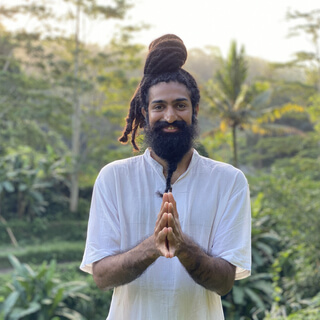
Namaste dear friends,
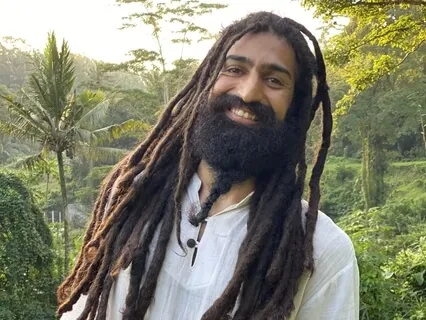
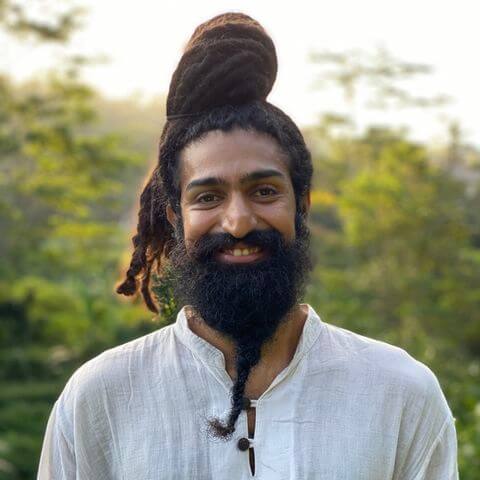
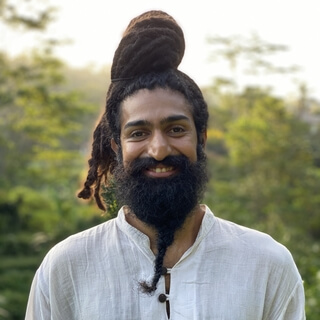
My name is Rohil and in today's talk I am going to be speaking about what stress exactly is and how it affects our nervous system,
Our endocrine system which is the system of our hormones and what we can do to overcome stress and become in that sense more stress proof.
So most of us nowadays tend to externalize stress.
We see stress as something that exists outside of us.
For instance,
It is very common to say that was a stressful situation or this event is going to be stressful.
Stress is first and foremost a physiological reaction to external stimulus.
Stress does not exist in the situation or circumstance that is outside of us.
Stress lies in the patterns of behavior developed over a lifetime to certain situations and circumstances.
Stress is also a result of a lifestyle that is unplanned.
To explain stress as a physiological reaction,
I will have to begin by explaining the nervous system.
Please bear with me here,
There might be terms that are more difficult to understand or very technical but I hope to tie it together in the end into a comprehensive understanding of what stress exactly is.
So the nervous system is comprised of two main branches.
These are the central nervous system and the peripheral nervous system.
The central nervous system resides in the brain and the spinal cord.
The peripheral nervous system is composed of the nerves that extend to all the parts of our body,
So the nerves going from our brain all the way to the tips of our fingers,
To the ends of our limbs,
To our organs etc.
Also the nerves that are connecting back,
Sending signals from our organs and our limbs back to the center of the brain.
The peripheral nervous system is then further divided into the somatic and the autonomic branches.
The somatic branch is responsible for all the sensory motor functions,
The five senses as well as any movement that we might perform with our body.
The autonomic branch of the peripheral system as the name suggests is responsible for all the so called automatic processes within the body which is for instance the pumping of your heart,
Your breath rate,
The functioning of the organs,
The production of hormones and so on and so forth.
The autonomic system is further divided into two branches.
These are the sympathetic fight-off-flight response and the parasympathetic rest and digest response.
I will now go on to explain these two branches in detail as they form the crux of our understanding of stress.
The sympathetic fight-off-flight and the parasympathetic rest and digest branches are meant to work in a cyclical fashion.
This means that a fight-off-flight activation of the nervous system must be followed by a period of rest and digest.
This is so that the nervous system can function at its optimum.
Let's think of this in context of the lifestyle that our hunter-gatherer ancestors had.
This is important because their lifestyle is the reason our nervous system is the way it is today.
Leveraging an understanding of the evolutionary process of the nervous system,
I believe,
Can help us live more fulfilling lives.
Our ancestors lived in a world fraught with danger.
They could be attacked and killed by other wild animals and had to often protect themselves from neighboring tribes as well.
In these situations of danger,
The sympathetic fight-off-flight branch of the nervous system is activated.
This in turn activates the endocrine system,
The system of our hormones,
In numerous ways.
When we are in a state of danger,
The body limits the energy being used for digestion and instead diverts this energy to the muscles and brain.
This is so that we can either fight or run.
The thyroid gland in this process is suppressed and the production of the thyroid hormones is paused.
The adrenal gland is stimulated and the hormones adenine and cortisol,
Which is the stress hormone,
Are produced.
These hormones bring us into a state of high alertness so that we can act quickly to ensure our survival.
Once these dangers have passed,
And if we have managed to survive them,
The tribe,
The humans at that time,
Would take time to relax,
To recuperate.
This would allow for the parasympathetic response,
The rest and digest response,
To take over,
Diverting energy back towards our digestion and other physiological processes that are required for recovery and balancing the internal and external systems of the body.
In our modern lifestyles,
We are constantly,
Chronically,
Activating a sympathetic fight-off-flight response.
If we feel tired or groggy,
We drink a coffee,
Smoke a cigarette or resort to any other kinds of stimulants.
These stimulants,
As the name suggests,
Are stimulating the nervous system.
When this happens constantly,
For hours in a day,
Days in a row,
Without any respite,
We commonly call it chronic stress.
Watching a movie,
Or watching the news,
Or playing video games after a long day at work are all stimulating activities that don't allow our nervous system to truly calm down.
When this happens for weeks,
Months and years,
We eventually face what is known as adenyl fatigue.
Our adenyl glands become tired from being constantly put to work.
This might be experienced as us reaching out for our third cup of coffee at 11.
30 am in the morning and we are still feeling groggy and tired after that cup of coffee.
The stimulants that we consume in this chronic state of fatigue or stress is simply pushing our adenyls to borrow energy from our future.
We are literally reducing the years of our life in this way.
Additionally,
Adding fuel to this fire,
Most of us in this state of chronic stress,
Live sedentary lifestyles.
All these moments that elicit a stress response within us divert energy to our muscles even when those muscles are never really used.
Usually it is the spine that suffers the most because of this.
When the fight-or-flight response builds up in the spine,
It needs to be released.
We have evolved to release this in the past by running or fighting our adversaries.
Today,
Most of us are keeping this pent-up energy released by stress and this energy is getting stuck in our necks or our lower back.
The spine is designed to move when it is in a state of stress.
This is how we have evolved.
There is no way around it.
Next time you feel stressed,
Make sure you do a small dance or any movement practice to release that energy from your system.
This is why yoga and movement practices are amazing stress busters.
Additionally,
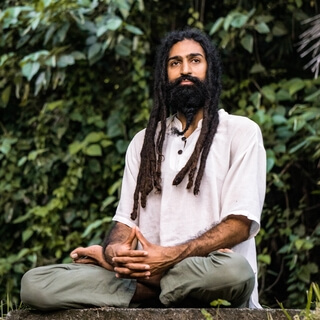
Meditation or pranayama,
Breath work,
Are great ways to activate the parasympathetic rest and digest response to counter the fight-or-flight dominated lives that we find ourselves living.
Even doing art,
Playing music or anything that allows us to relax while going into a state of flow are invaluable tools that we must make a part of our daily routine.
One of the main purposes,
According to me,
Of any spiritual practice is to become a master of the nervous system.
Once we can control its workings,
We can control whether or not we elicit a stress response to certain situations.
We might still live the same lives with the same conditions and situations,
But the stress response elicited by our nervous system is reduced.
We are more in control of our reactions to the world around us.
There is a space between us and the stories of our life.
Stress doesn't go away by changing the circumstances of our life.
It goes away when we learn to control how our nervous system reacts to situations that we find ourselves in.
Thank you dear friends for joining me for this talk.
I know it was a lot of information condensed very quickly,
But do revisit this same talk later again to imbibe and integrate these learnings better.
I wish you with all my heart to embark upon a journey where you can become stress-proof by controlling the way your nervous system responds to situations around you.
Best of luck on this journey and I wish you an amazing day.
Namaste.