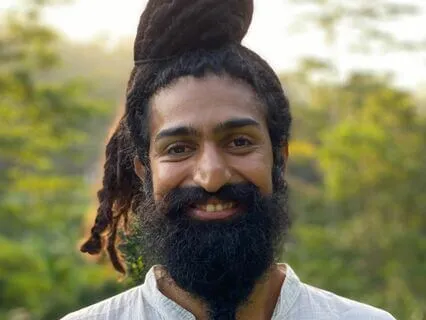
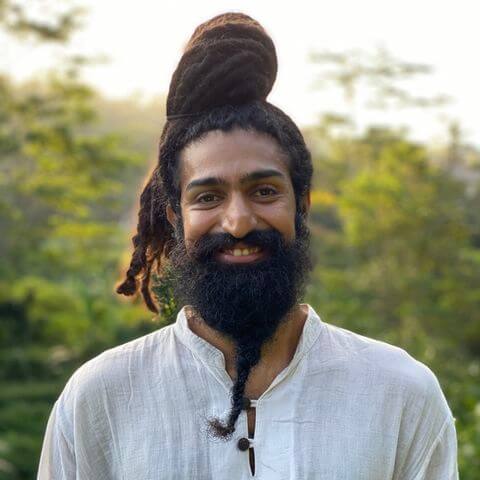
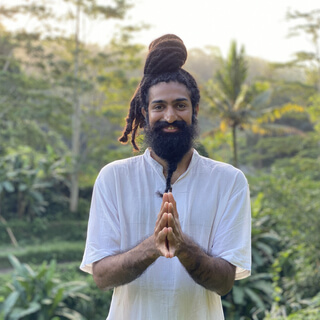
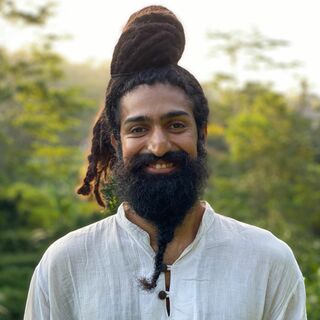
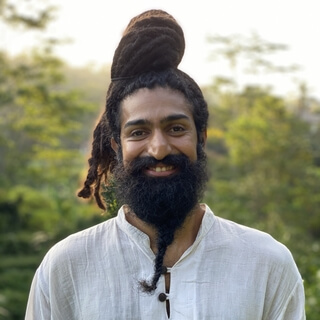
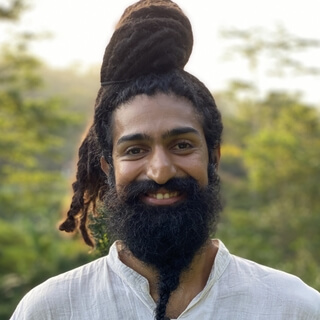
Namaste and welcome to my session today on setting up a mindfulness practice.
Presence is not something we can know by thinking about it,
Learning about it,
Or reading philosophy.
It's like I could learn everything there was to know about swimming,
But never actually enter the water.
I could have perfect knowledge about what it takes to be a world-class swimmer,
But it means nothing until I jump into the water.
The only way to feel the all-encompassing peace of being present is by entering the moment with our entire being.
There are many ways to do this,
But no method has been as effective or widely explored as the practice of meditation.
The brain and nervous system possess a feature known as neuroplasticity.
This is its ability to change its structure and organization over time.
Every time we have a new experience or learn something new,
We create neural pathways within our brains and our bodies.
If this experience or learning is repeated,
That neural pathway gets strengthened and over time gets established as a stable part of the nervous system.
When we are prone to patterns of negative thinking,
It is likely that our nervous system is wired to respond to situations with anger,
Fear,
Or frustration.
However,
If we can actively disengage from these reactions and instead exist in equanimity,
We can disempower certain neural connections.
Moreover,
By focusing on compassion,
Peace,
And gratitude,
We can induce our brain to form new neural pathways that over time become habits.
A study found that in the long-term advanced meditation practitioners,
This ability to alter the structure of their brains was seriously heightened.
They found that advanced meditators have above-average brain activity in the left side of the prefrontal cortex as compared to the right.
This gave them an abnormally large propensity for happiness and a reduced propensity toward negativity.
Thus,
Meditation is not just something that induces relaxation or promotes better moods,
But it fundamentally alters the nature of our brain.
Meditation is an umbrella term that is used for a variety of mental,
Physical,
And spiritual practices that are used to boost health,
Productivity,
Insight,
Wisdom,
Or awareness.
The most commonly practiced form of meditation that yields tremendous benefits is mindfulness meditation.
This involves having an anchor on which to focus on and return back to whenever the mind wanders.
The most common and beginner-friendly type of mindfulness meditation is a Buddhist technique called ānāpāna.
Ānāpāna involves focusing on the area around the nostrils or the abdomen with every inhale and exhale.
Every time the breath wanders,
We gently bring it back to the breath.
We let the thoughts pass through like cars rolling down a street,
Noticing them all but dwelling on none.
This is the heart of the practice of mindfulness.
It is the ability to identify with that which is aware of the sensations and thoughts rather than that which is experiencing the sensations and thoughts.
If I can be perfectly aware of my pain,
I instantly cease to be a person in pain.
To survive,
Humans evolved a stress response to deal with life-threatening situations in the wild.
However,
Many of us in the modern world activate the stress response when faced with situations that are far from life-threatening.
Our stress response gets activated when we are late to work,
When we realize we have bills to pay,
When someone speaks to us rudely,
When things don't go as expected,
And so on.
While some level of stress is good for our minds and bodies,
If this response is regularly activated,
We can fall into chronic patterns of anxiety that lead to grave consequences for our mental and physical health.
During meditation,
We are able to see the direct link between a thought and its activation of the stress response.
While meditating,
We may suddenly think of all the work we have to complete.
This activates the stress response.
Yet,
All we do is acknowledge the thought,
Acknowledge our reaction,
And go back to focusing on the breath.
What's happening here is a rewiring of the nervous system.
We do not add fuel to the stress response of the body,
But instead,
By breathing consciously,
We are able to induce peace,
Happiness,
And compassion.
This is why meditation has been found to be such a potent tool against anxiety,
Depression,
Cardiovascular disease,
Distraction,
And chronic pain.
Let's move on to how to set up this mindful meditation practice.
Setting up a daily,
Dedicated time.
We can only reap the benefits of meditation if we do it regularly over a long period of time.
The duration of time spent in meditation is not as important as doing it consistently.
To start out,
Even practicing 5 minutes a day can be deeply beneficial.
It's useful to set aside a fixed time every day where we can be undisturbed so that our bodies get conditioned to focus at a certain point in the day.
The second is our correct posture for meditation.
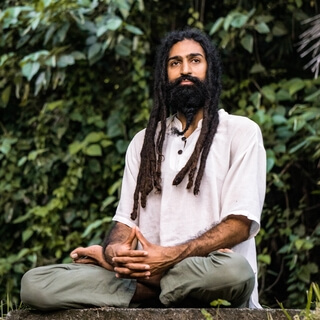
The ideal meditation posture is a cross-legged position on the floor with a straight neck and spine.
However,
If this is not possible,
It is completely alright to use a chair.
The key is to be comfortable enough that we do not fidget or be restless during the practice,
But yet not so comfortable that we fall asleep.
The third aspect of developing our practice is developing a strong awareness of the breath.
The easiest way to begin is to try and focus on every inhale and exhale.
Every time the mind wanders,
We must patiently bring it back to the rise and fall of the breath as it is without trying to manipulate it in any way.
The fourth way to help our meditation practice is through a meditation community.
Traditionally,
Meditation has always been a group activity that is meant to boost the health and unity of the entire community.
It is an effective way to strengthen bonds and bring people together for peace and love.
I know that when I meditate with other people,
I am more focused and able to access deeper states of awareness.
Moreover,
Sharing my experiences with like-minded people helps me to process the many changes that have occurred when I had started meditating.
Let's move on to navigate the common blocks or challenges that we may face in our meditation practice.
There is no doubt that meditation is a useful practice for a variety of reasons,
But it can be quite challenging to set up a meditation practice for the first time.
Now we will explore some commonly experienced challenges and I will speak about how we can overcome them.
The first one,
I can't meditate because I am always distracted.
The first thing to understand if we feel that way is that it is perfectly normal.
The goal of meditation is not to become thoughtless.
This is almost impossible.
All meditators get distracted.
The goal is to become aware that we are distracted and then,
Without getting frustrated,
Bring our attention back to the breath or whatever it is we are using as an anchor.
Over time,
The mind gets trained to focus more deeply and although there are still thoughts,
They exist on the periphery of our consciousness and do not hijack the mind completely.
The second challenge,
I feel worse after meditation.
It's not really working.
This is also completely normal.
Sometimes the mind is so used to distracting itself from unpleasant thoughts and sensations that it can get disturbed to sit in silence for extended periods of time.
However,
This is a necessary aspect of cultivating awareness.
Learning to be equanimous when unpleasant thoughts arise is key to gaining mastery over our minds and experiences.
The third challenge normally spoken about is I have no time to meditate.
I would say as a beginner,
It is enough and even recommended to meditate for just a few minutes in a day.
Even five minutes of silent meditation or silent mindfulness can have a profound influence on the body and mind.
If we try to dive straight into an hour-long meditation practice,
We may not be able to sustain it for long and will end up being counterproductive to us.
Meditation can make us more productive,
Happier and calm in all other aspects of our life and so it is a very valuable investment of our time.
It takes away a little bit of time,
But it gives back many times over during the rest of the day.
Let's explore how we can practice mindfulness beyond our meditation practice.
Every spiritual tradition across time and space has repeated the same piece of wisdom in different ways.
Be present in the moment.
And the reason often cited for this is that being present is the only way to alleviate suffering,
To encounter peace,
To experience divine union and reside in all-encompassing love.
According to Buddhist thought,
All suffering exists when the mind dwells on the future or on the past.
Attachment and aversion,
And therefore all desire,
Are mental constructions that are rooted in thoughts of the past or future.
For instance,
Yesterday I tasted the most incredible gooey double chocolate chip cookie.
Today I don't have one and I crave it.
My attachment is based on my thoughts that dwell in the past.
I have a memory of what it felt like to eat the chocolate chip cookie and now I am attached to that.
I may create all sorts of fantasies for my future when I am reunited with this delicious cookie.
Or conversely,
The last time I stood to talk in front of a large audience,
I panicked and thoroughly disliked the experience.
By dwelling on this past memory,
I am likely to be averse to encountering such a situation again.
I may begin to feel anxious when thinking of my future,
Which might contain such a situation where I have to speak in front of people.
Dwelling on the past or the future leads us into varying degrees of delusion.
We believe we can never be happy until we receive certain things in our future.
We do not allow ourselves to be happy right now because something horrible happened to us in the past.
When we live in the past or future,
We reside solely in the thinking mind.
Being fully present in the moment is the only way to come out of the mind and dwell in our body and our heart.
Being present is the only way to experience lasting peace despite what lies in the past or the future.
While meditation is the most effective way to experience lasting peace,
Meditation is the most effective way to experience lasting peace.
While meditation is the most effective path to becoming present,
Presence does not start or end on the meditation cushion.
Once we can develop our mindfulness,
We can start to find presence in every other aspect of our life.
Here are some useful tips to cultivate presence beyond the meditation cushion.
Number one,
Pay attention to our senses.
Our senses take in information based on stimulus that exclusively exists in the present moment.
It is impossible for our eyes to see what they saw yesterday.
By paying attention to the information coming in through the senses right now,
We are forced to become present.
When I perform mundane activities like brushing my teeth or driving the car,
I like to bring attention to how my body feels at this moment.
What sounds am I hearing right now?
What are my eyes looking at?
The colors,
The shapes and so on.
The second tip is to focus on the breath.
This is the quickest way to enter the present and stay there.
Checking in on the breath at different points in the day can not only help us become present but release any stress or tension we might be holding.
I like to set alarms for random times in the day.
Whenever they go off,
I'm reminded to take a step back from what I'm doing and thinking and taking five conscious breaths.
I'm often surprised to find my mind all over the place and my breath shallow.
After just five breaths,
My body calms down and I go back to my task feeling a little more relaxed.
The third tip to start activities mindfully.
Before starting any new activity in the day,
I like to take a few moments to focus on my breath,
Find silence and set an intention for how I want to approach this activity.
This ensures that I start every activity in a state of calm focus and it makes a world of difference to how I perform the activity.
The next tip is to give gratitude.
Gratitude is the most effective way to release thoughts that revolve around attachment and aversion.
Gratitude brings you directly into the present moment and asks you to see what you can appreciate about it.
At first,
I like to keep a gratitude journal where I noted down three things that I'm grateful for every single day.
Over time,
I became more attuned to what I appreciated in my life and would take a moment several times a day to thank someone around me or to simply close my eyes and thank the universe for a certain experience that I had had.
The next tip is to spend time with loved ones in a mindful way.
I would like to quote here a spiritual teacher Ram Dass when he said that it's interesting how when you give another human being or your family or your business the fullness of your being,
The fullness of your presence at any moment in time,
Just a little bit of your presence is more than enough.
However,
When you give them half of your presence,
You're distracted because you're in your mind,
There is never enough.
You begin to hear the secret that being fully in the present moment is the greatest gift that you can give to each and every situation.
When I personally managed to do this,
I noticed that my relationships shift.
I am less irritable,
More loving,
And more able to be of help to my loved ones.
I noticed that the time we spend together,
However short,
Works to bring us closer to each other,
Closer in love,
Because in that moment,
I'm not wandering as well.
The next tip is to take mindful breaks.
For those of us who study or work for most of the day,
This one is particularly helpful.
If we are engaged in intellectual work,
It becomes important that in our breaks,
We give our brains a proper rest.
This could be by taking a walk in nature,
Listening to music,
Meditating,
And so on.
If we spend our breaks on social media or in a state of distraction,
Our brains do not get a break,
And we come back to our task more drained than before we left it.
The next tip is to have a dedicated fun or creative time.
This is a time in the day when nothing is allowed to exist but leisure,
Fun,
Laughter,
And creativity.
When I began to take my downtime seriously,
I noticed my entire sense of well-being improved.
I use this time to lose myself in the moment through art,
Music,
Or exclusive fun time with family and friends.
Nothing exists apart from the present moment.
If we can't experience joy and peace right now,
Then chances are we never will.
I wish you all the best on developing or setting up your mindfulness practice.
Thank you so much for joining me today.
Namaste.