Hey guys,
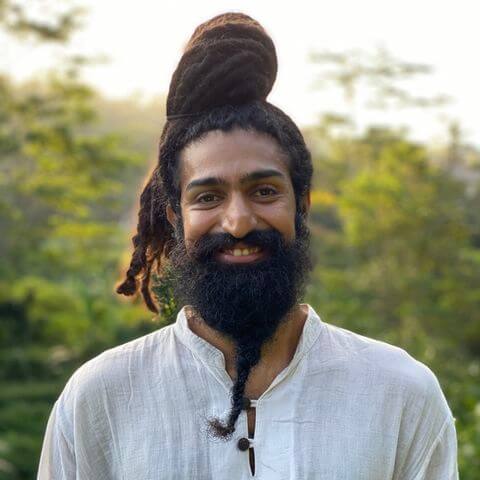
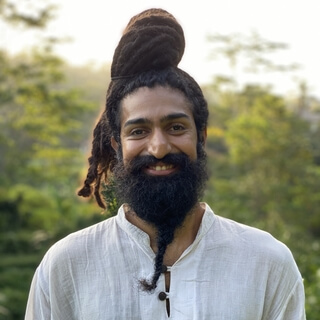
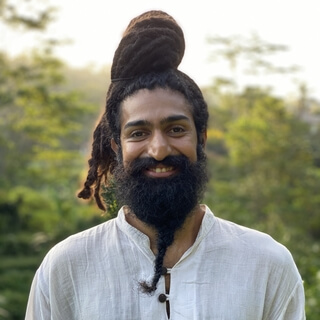
My name is Rohil and today I am going to give you a broad overview of Ayurveda as a system of healing or a system of medicine.
Ayurveda originated in India over 5000 years ago.
We don't have an exact timeline as to when Ayurveda originated and this is due to the fact that we didn't have written records available prior to 5000 years ago.
Ayurveda's system of healing arose synonymously with agriculture.
So around the same time that the Indus valley civilization was being established,
This period when the Indus valley civilization was being established was a period of great growth,
Of great exploration,
Where people were freed from having to only think about sustenance and agriculture,
To then being able to think about poetry,
About yoga,
About spirituality and other aspects of life.
The word Ayurveda literally translates to the science of life.
Ayurveda is a study of the relationships between the self and its surroundings.
I would like to stress on the word relationship because it's really important that we see each self as being slightly different and that interaction between the self and its environment creates a wholly different relationship.
So each relationship is very different and Ayurveda is really a study about those relationships.
One of the foundations of this is that each human being has a different body constitution.
This body constitution is created by the relationships that this individual has with their surroundings.
The relationships in terms of the kinds of foods that this individual eats,
The kind of exercise routines that they do,
The kind of climatic conditions that they live in,
The kind of genetics that they have,
What their ancestors did,
Their ancestral patterns of movement,
Their ancestral patterns of nutrition.
All of this affects our body constitution.
Next up,
I am going to bring your notice to some scientific research that has been coming out in the last couple of decades that bolsters or supports the Ayurvedic concept of body constitutions.
One of the factors that we must take into account when we think of body constitution is the bacteria in the gut.
Human beings have approximately 30 trillion bacterial life or bacterial cells in the body which is more bacteria in the body than we have human cells.
Some estimates claim that we have twice as much bacteria as we have human cells though some other estimates are more conservative and say that we have maybe 20-30% more bacteria than we have human cells.
A lot of this bacteria resides in the belly,
So it resides in the gut and I am calling the gut the stomach,
The small intestine,
The large intestine and the colon.
You could also include the bladder etc.
In this sense,
The human is more a human ecosystem than a human being.
We actually help a lot of life to thrive within us and actually we have a symbiotic relationship with the life that resides within us especially within our gut.
The basis of this symbiotic relationship is that if we are able to take good care of the bacteria that resides within us,
It will provide us with good health.
If we are unable to take good care of the bacteria that resides within us,
We are going to have ill health and disease,
A lot of other issues and problems.
So what is interesting about the gut bacteria,
There are many different strains of bacteria that are normally found in human beings but this gut bacteria is affected and the composition,
The kinds of bacteria that exist within the stomach,
This composition changes based on a number of factors.
For instance,
The kind of foods that we eat produces different bacteria within our gut and the reason that this happens is because we require different bacteria to break down different kinds of food.
So for instance,
If somebody has never consumed dairy in their life and they start to consume dairy,
They will not be able to digest dairy at first and will have to really take a progressive slow way in which they introduce dairy into their diet.
They would do this by maybe drinking a little bit of milk,
A few spoons of milk and then a small cup and then a little bit larger cup and in this way over weeks of time really integrating milk or dairy into their diet.
This might not work for a lot of people but for those that it does work,
It's because your bacteria in the gut is changing to accommodate more of the bacteria that are required to be able to digest milk and other dairy products.
For some people,
This bacteria might not exist or might not be created and those people are going to be lactose intolerant.
Now that lactose intolerance is also because of again genetic factors.
So the bacteria that exist within our gut is determined by the genetics that we possess,
The kind of DNA that we possess.
For instance,
It has been found that people living in Europe,
People living in the Indian subcontinent are much more capable of digesting dairy and this is because there has been many many generations of people that have come before them,
Their ancestors that have consumed dairy and so this bacteria,
It exists in the gut and they can produce this bacteria if and when they start to increase their uptake of dairy or they reintroduce dairy into their diet.
On the other hand,
People who don't have cows traditionally on their landmass,
Their ancestors have not consumed milk,
Find it a lot harder to consume dairy and you also find the prevalence of lactose intolerance higher amongst those populations.
So for instance,
In Asian countries,
In Africa,
You have much more lactose intolerance.
Not only is the gut affected by the genetics,
Affected by the kinds of foods we eat,
But the gut is also affected by our circadian rhythms.
What time we wake up in the morning and what time we sleep at night,
Even though it might seem inconsequential to the gut bacteria,
It greatly impacts the kind of bacteria that is there in the gut and these findings really show that everything that we do in our lifestyle,
Whether it's what we eat,
How we sleep,
Whether we're getting good sleep,
How much of exercise we do,
Exercise has been shown to also change the profile of the gut bacteria in the stomach.
If we exercise too much,
Again the bacteria in the stomach goes out of balance.
If we are sedentary and hardly exercise,
We will also find that this gut microbiota is becoming imbalanced.
So to maintain a well-balanced gut,
We need to think of all of these various different factors.
In this sense,
Ayurveda is a holistic system of healing or medicine such that we cannot just aim or look at one particular thing to heal our gut or to heal any illness that we have.
We can't look only towards nutrition or only towards exercise or only towards the climatic conditions that are around us,
But we must take an approach that meets us where we are at as individuals,
Meets us based upon our lifestyle goals,
What are the energy commitments that are required of us in our life,
In our jobs,
Etc.
Not only is the gut affected by our sleep,
By our nutrition,
By our exercise,
By our genetics,
But the gut has also been shown to be affected by levels of stress or anxiety.
There is a nerve called the vagus nerve which travels from the gut,
From the intestines to the brain and this nerve is often times spoken about as the gut-brain connection.
That based on the kinds of foods we eat,
Based on the bacteria that is present in our gut,
This affects our cognitive capabilities,
It affects our brain,
The production of hormones within the brain,
Etc.
At the same time also when we are stressed,
When we are in the sympathetic mode of functioning,
Where our nervous system is on high alert,
Where we don't have a moment of rest,
Of relaxation,
Stress,
Anxiety also leads to issues in our gut,
In our digestion,
In our metabolism.
In this sense,
Each and every one of us has a different profile of gut microbiota and our health depends on feeding this gut microbiota in the right way and changing and making this system a lot more robust.
In this sense,
If I take three people from different parts of the world and I feed them with a banana,
That mixture which is created in the stomach after consuming the banana,
So the mixture of the banana with the digestive enzymes,
With the digestive juices,
The stomach acid and the gut microbiota,
That mixture is completely different for different individuals.
In Ayurveda,
This mixture of the food with the digestive enzymes,
With the stomach acid,
With the gut bacteria is known as RASA.
RASA is often times also referred to as simply as juice in Sanskrit.
So this RASA,
This mixture of all of this is different for each and every person.
This is why in Ayurveda you would not give one particular medicine for a particular symptom across the board to every single person.
This is because that any one compound,
Whether it's a plant based compound,
Whether it's a chemical based compound,
Is going to have a very different interaction with each person that it is given to because of the bacteria that resides in the gut,
Because of the kind of stomach acid that they have,
The digestive enzymes.
Thus Ayurveda takes a stance where it is not symptomatic,
Where it is not treating symptoms,
Such that you have an Ayurvedic herb or a plant based medicine for a particular symptom.
For instance,
Somebody that suffers from cold or cough would not be given a particular medicine that helps with cold or cough.
Of course there are some herbs and some plants that are said to be good and that help with respiratory function when one has a cold or a cough.
But again,
One would not take that out of context and say that this is a medicine that is good for cold and cough for each and every person on the planet.
This is not the way Ayurveda functions,
Though you will find nowadays that a lot of people approach Ayurveda in this way and it has become more a medical system in which we are just simply treating symptoms.
So one of the foundations of Ayurveda or the three pillars of Ayurveda is to divide people into different body constitutions and to treat them based on their body constitution rather than simply looking at their symptoms.
So you would have a slightly different medicine for different kinds of constitutions and you have different herbs,
Many different herbs that could help with respiratory function,
That could help with colds and coughs.
But based on what your particular body constitution or in Ayurveda term is,
Dosha,
Is,
You would have a different herb that would be prescribed for you based on your dosha.
I will come to the dosha's in a future session.
In this session I am just giving you the broad overview or background introduction to Ayurveda as a system of healing.
So these stambhas and stambha means pillars,
The three pillars of Ayurveda are the three body constitutions.
These three body constitutions are present in each and every person.
We all have these three body constitutions.
What differs is the proportion in which each of these body constitutions is active or is predominant.
Ayurveda also has the concept of the supporting pillars.
The supporting pillars are known as the Upasthambas.
The supporting pillars in Ayurveda are food which is ahar,
Nidra which is sleep and brahmacharya which can be translated to the management of our sexual energies.
There is an ancient Ayurvedic quote that says that somebody who is truly healthy will have a big appetite,
Will feel hungry,
Will be able to sleep very easily and will be able to sleep for long if they don't put an alarm.
So they are easy to sleep,
Have a big appetite and also are horny.
So they have a strong sexual urge.
These are three signs that somebody's metabolism or somebody's system of health is in order and that they are healthy,
Robust and fine.
Now I just want to give you a brief overview of the herb categories in Ayurveda before ending this session.
So there are three main categories of herbs in Ayurveda.
The first is detoxification herbs.
These are also based on the root cause of certain problems or illnesses,
Diseases that we have.
There are three root causes of all illnesses according to Ayurveda.
These root causes are very broad and we'll have to explore them specifically and they all have subtypes.
But just to mention them briefly,
These three root causes,
The first one is toxins.
These toxins can be toxins in the environment.
They can be toxins from the food that you eat.
They can be undigested food.
The term in Ayurveda for this is Ama,
A-M-A.
And this is basically undigested food,
Undigested tissue,
Undigested chemicals.
Anything that our body cannot readily absorb becomes a toxin.
We have the second root cause of illness,
Which is nutritional deficiencies.
Because of some reason,
Somebody is not able or not capable of absorbing nutrients into their body or they have been depleted of nutrients,
Maybe malnourished,
Not getting the right amounts of nutrients that they require.
And this is causing nutritional depletions.
The third root cause of illness according to Ayurveda is more emotional and mental and they term it as spiritual emptiness.
So this is where somebody has lost that connection with their life-pose,
Where they have lost the meaning in life,
The purpose,
Passion of life.
And this is also a root cause of many illnesses.
So according to Ayurveda,
A great way to remain healthy is to look for all the toxins in our environment,
In our food and to eliminate these toxins.
To have a diet that is well balanced,
That is giving us all the different nutritional elements that we require.
And the third is to find some purpose or passion within the work we do,
Within the life we live,
So that we are fulfilled on a daily,
Regular basis,
Driving us to do activities that we love to do.
Before I finish this podcast,
I'll just speak about the three kinds of herb categories.
And what I just spoke about is really important because the difference between having a problem because of a toxin and because of a nutritional deficiency is really salient and very important to note because the kind of strategy we would take to heal ourselves would completely differ based on this root cause.
So there is one category of herbs which are for detoxification.
Not only a category of herbs but also a category of practices.
You must have heard of these practices like fasting,
Intermittent fasting,
Calorie restriction,
Macro restrictions etc.
And these are all processes of trying to detoxify the body and trying to remove some toxins from the body.
Now there is also another category of practices of herbs which are for rejuvenation,
Which is to bring in energy into the body.
And this is really important to understand this demarcation or this difference because a lot of time people who approach natural medical systems,
Plant based medical systems,
These kind of folk medicinal systems,
Often times get confused between this difference.
So you will find a lot of people talking about how they are detoxifying to increase their energy levels.
According to Ayurveda this is not true.
It is a fallacy.
Any form of detoxification when we are removing a toxin from the body is actually taking away energy from the body.
So any detoxification process will take energy from the body.
It will strip the body of its energy.
So after a detoxification regimen,
A detoxification strategy,
It is very important to follow up with a rejuvenation strategy so that we bring back more energy into the body.
Also depending on the kind of person,
If somebody is frail,
If somebody is already elderly,
Even if they might have a toxin within their body,
It doesn't make sense for them to do detoxification because the energy that they would have to expend to detoxify something from their body might be fatal for them,
Might actually decrease their overall health.
So for these people you want to focus much more on rejuvenation,
On rejuvenating their system,
On bringing their system into a state of balance by actually giving it more energy rather than taking away energy from their system.
So there are a whole host of practices which are rejuvenative in nature and again I will cover these in future episodes.
The third kind of category of herbs or category of practices are slightly away from this detoxification rejuvenation polarity and they are of awareness inducing.
So these are herbs or practices that induce awareness,
That increase our state of awareness,
That make our awareness more subtle,
More calm and they are all based on the nervous system,
Trying to calm,
Relax the nervous system,
Trying to take away stress and trying to really reduce anxiety and other mental and emotional issues.
So this strategy of awareness inducing or stress reduction is also really important when we think about health because a foundation of Ayurveda lies in the fact that Ayurveda sees or recognizes that every illness,
Every issue,
Every problem that exists within a person cannot be healed if the person is in a state of survival.
If the person is in a state of constantly running and constantly trying to cope with the different challenges that they have in their life.
Only once somebody has come into a state of relaxation where they are no longer fighting with life,
No longer fighting with challenges that life is bringing to them,
That they are capable now of actually embracing and walking the journey of healing.
That's all for today's episode.
Please stay tuned for further episodes like this and do drop comments,
Write to me if you feel that there is something in particular that you would like to hear about or if you have any particular questions based on what I just asked,
I would be more than happy to answer your questions and to help you through the process of healing.
See you very soon.
Have a nice day.
Namaste.