Welcome to the Shifting with Marley podcast.
I'm Marley.
Thank you for joining me wherever you are.
All that I ask of you,
The listener,
Is to have an open mind and an open heart.
And in return,
I offer you myself.
Today we're going to talk about one of my favorite topics and one of the themes of the Shifting with Marley podcast,
The intersection of science and spirituality and the role that both science and spirituality will play in our future.
This is a topic really close to my heart.
And for those of you that have been listening to this podcast since the beginning,
You may remember back in episode number one,
Changing the world released two and a half years ago now,
If you can believe it,
I began this podcast talking about the connection between science and spirituality and how my views had changed throughout the course of my life and my education.
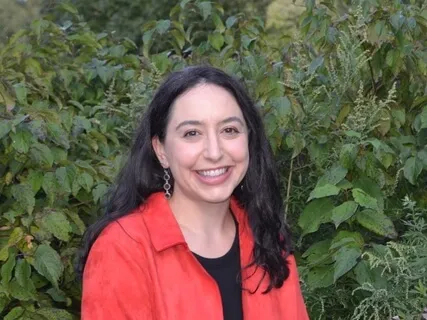
We're going to revisit this important topic today to pick the brain of someone who is also an environmental scientist like me.
She's also a certified life coach,
Certified meditation teacher and is currently studying to become a social worker.
Welcome to the podcast,
Kim Mearsma.
Thank you so much,
Marley.
Thanks for inviting me to be a part of your podcast.
Yes,
I'm so excited to chat with you today and to gain your perspective.
Thank you so much for being here.
Thank you.
I'm always excited to talk to a fellow environmental scientist.
Kim,
Before we dive in,
Can you please let people know where they can connect with you?
Yeah,
Definitely.
So I have an Instagram and my Instagram is Kim and A-N-E and coaching.
Awesome.
So to start off today,
Kim,
Can you please share with us your story,
Your journey to where you are today?
Yeah,
Definitely.
So as you were saying,
I'm currently in my first semester of a Masters of Social Work program,
And then I'm also working part time as an environmental scientist.
And then on the side,
I've been working as a life and career coach and meditation teacher.
And so it's a bit of a winding story of how I got here,
But I'll attempt to kind of summarize some of that.
So,
Yeah,
From a young age,
I was really interested in the environment.
And my interest in the environment,
I think,
Was part due to influence from my dad,
Who's an environmental engineer.
And then I was also really fortunate to get to spend a lot of time outdoors growing up.
And I often went exploring in the woods or to a lake and looked for crawfish under rocks and things like that.
So through those experiences,
I developed a love for the outdoors and really a desire to preserve it.
And I remember when I was about 10 years old,
I saw a lot of trees being cleared down in my community and remember having a conversation with my family about that.
And through seeing that I decided to get involved in my town's Open Space Preservation Alliance.
And then many of the people on the Open Space Preservation Alliance were members of a bicycle and pedestrian alliance in the community.
So I got more involved in the bicycle and pedestrian alliance and started learning more about the environment and what was happening to the environment and climate change and all these environmental issues,
Getting more concerned about it,
But also getting more involved.
And then at the same time,
The community that I grew up in was pretty academically rigorous and also stressed the importance of career.
And so I got those messages a lot growing up.
And I think because of the influences of my upbringing,
Working towards a career that felt meaningful and impactful was really central to me.
When I got to picking a major for college,
I just felt that environmental science was a very natural choice.
No pun intended,
But yeah.
And also kind of all that was going on when I was growing up,
I was a pretty active and also kind of anxious person.
And thankfully I found yoga as an outlet for some of that.
And I found yoga to be a really helpful tool in tempering some of that pressure and anxiety that I kind of placed upon myself and some that I felt placed upon me.
In high school or around that time,
I began to practice yoga on a regular basis.
And through yoga,
I was introduced to the idea of mindfulness and meditation.
And then I continued to practice yoga through college and I still practice it to some extent today.
I mean,
I run more often now than I do yoga,
But it's played a big part in my life overall.
And shortly after I graduated from college,
I decided to go to my first ever and so far only yoga retreat.
It was up in Massachusetts at a place called Kupalu.
And yeah,
Have you heard of it?
Yes,
Yes,
I've actually never been,
But it's on my bucket list.
Oh,
Cool.
Yeah.
I think I got a fly or something like that.
Someone told me about it.
And when I learned about the retreat,
I just got a very like,
Hell yes,
Kind of feeling in my body.
Like it was just like,
Yes,
Like I,
This is something I really want to do.
Like it didn't make a lot of sense sort of it was in January.
Like I wasn't living in Massachusetts,
But I was like,
I feel strongly for some reason that I want to go to this retreat.
And the retreat was called quarter life calling.
And it was for people in their twenties who were interested in cultivating an authentic life,
Like a meaningful life,
All of those things,
Life's full of purpose.
And at the time I was somewhat involved in spiritual communities,
But this was really the first time I took a deep dive into spirituality.
Yeah.
So I remember coming back from the retreat,
Feeling really inspired and really excited by the connections that I made at the retreat and the facilitator of the retreat.
Her name is Koby Kozowski and she is a life coach actually.
And I think that was the first time I remember ever hearing about life coaching and coaching shortly after the yoga retreat,
I started my first full-time job as an environmental scientist and planner.
And then I also started working with a coach at that time.
I was working for a while at that job.
And then when the pandemic started,
I began working remotely and then really felt like I had some extra time on my hands without commuting and just with being at home a lot and all of that.
And so I decided to kind of pursue some additional interest of mine,
Which I ended up thinking about wanting to transition maybe to coaching or something like that because of my good experiences working with a coach myself.
And so I decided to enroll in a life and career coaching certification program at that time.
And the program was a part of a clinical mental health counseling master's program.
So I was able to try out taking graduate classes in the social sciences before kind of fully committing to a master's program,
Which worked out really nicely for me,
I think.
Yeah.
So that was kind of some of how that came together.
And after I got my coaching certification,
I decided to pursue a meditation teacher training.
And then after that decided to continue my education.
And now,
Like I said,
I'm pursuing a master's in social work.
So that's kind of how it started coming together.
And I think my work in environmental science has been a lot about environmental justice.
And so I'm interested in learning more about environmental justice and systemic issues and how social workers can support people in working through climate emotion,
Like emotions around climate change.
And yeah,
I think there's a lot of cool intersections.
So that's kind of what I'm doing now.
Thank you so much for sharing your story with us.
I personally resonate deeply with your story.
And there's a lot of similarities between us,
Which is kind of why I asked you here today.
And it was kind of the same for me in terms of what what drew me to environmental science as well.
I personally just really wanted to help the earth.
And I was so worried about climate change.
And when I was younger,
I thought becoming an environmental scientist was the way I could do the most good and have the most beneficial impact.
I thought science was the answer back then.
And even though in my day job,
I'm still an environmental scientist like you,
My views on this concept of science and technology as our savior have really evolved immensely over the years.
I can relate to that too.
Yeah,
Right.
And I'm really curious,
Kim,
Since your resume is so impressive and diverse and multifaceted,
What do you feel is the connection between environmental science,
Meditation,
Life coaching and now social work?
How do you feel all of these things mesh together in your world?
You touched on it briefly,
But I'd love you to elaborate more on that.
Definitely.
So I'll say I'm very much in the process of figuring that out,
I think.
And that is one piece of it.
But for me,
I think a big connection is my interest in human health and environmental health,
And then the intersection between both of them.
And then,
As for environmental science and social work,
Both have a focus on systems and systemic issues.
And so I think there's a cool overlap there.
But I'm still kind of figuring it out.
I feel like they all go together really nicely.
And I'm excited about how they might fit together into my life.
But it's a continuous process of figuring that out,
I think.
Yes,
I feel you.
And in my mind,
All of those things are so connected.
You're like the perfect blend of science and spirituality.
It really all falls under helping the world and helping humanity and helping people reach their highest potential.
And through that,
Creating a better world.
Mm hmm.
Yeah,
I guess that is that is a good way to frame it.
So Kim,
As a scientist,
Originally,
What then drew you to life coaching and becoming a meditation teacher?
That's a great question.
I think a lot of it was through my own personal experiences with both meditation through my yoga practice and learning more about the benefits of meditation as I experienced some of that and learning about the transformational power of coaching as I experienced that.
And so I really was hoping and have been hoping to continue to bring the support that I've gained from those things out into the world.
And that's really been part of it.
I think also for me,
My science brain gets me really in my head.
And I love that part of of my work and all of that.
But sometimes I feel like I need a break from that.
And I really just enjoy working with people and getting out from behind the computer screen and away from the spreadsheets and just being a bit more embodied and working less with only my brain.
So I think part of it is that to trying to find a balance of working with all the science and not burning out from that.
And so finding something that to me feels like it complements it and it's still something that puts out support and benefits into the world,
I hope but doesn't directly look like environmental science.
Yes,
I feel you on that.
It's like with me,
My day job is an environmental scientist,
But I have a spirituality podcast.
It's the mix of the head and the heart,
Right?
Yes.
So you mentioned that you had a lot of anxiety when you were growing up.
And you kind of alluded to that you've dabbled in a lot of different kind of modalities.
So where are you today with your anxiety?
Yeah,
So today,
I feel a lot in a lot better place with anxiety overall in my current life.
I think definitely meditation practice has been a help with that.
And being in community with maybe others that are experiencing climate anxiety,
For example,
Like I've been fortunate enough to be able to go on zooms or things like that with people from across the world who are having different experiences of anxiety,
For example.
And so I think that has been a really helpful thing for me.
Kim,
Your passion for helping others is really inspiring.
Thank you.
I'd love to talk about meditation for a little bit.
Because it's funny,
The importance of meditation comes up in almost every one of my podcast episodes just naturally.
And I like to joke that meditation is the answer to almost everything.
So I'd love your perspective as a certified meditation teacher.
What are some of the benefits of meditation?
Yeah,
I am certified as a meditation teacher.
But I'm also learning a lot about this as I go along.
And so this is my understanding of it today.
But to me,
Meditation is about connecting with ourselves and the world around us.
And that's kind of how I define meditation.
I think there are a lot of ways to look at it.
But that's what resonates with me.
And I was trained in a meditation style called instinctive meditation,
Which was crafted by Lauren Roche and Camille Maureen.
And I never heard of this approach before.
But actually,
The teacher that was leading the yoga retreat that I went to,
Lauren and Camille were her meditation teachers.
So that's kind of how I came to learn about instinctive meditation.
And the instinctive meditation approach to meditation is about connection and intimacy with life.
And so in instinctive meditation,
It's not really about detachment from things.
It's about welcoming what arises in the meditation.
So for example,
In an instinctive meditation,
The student is welcome to connect with their whole selves.
So desires,
Their questions,
Their curiosities,
Their wonders,
Their instincts,
All the various parts and feelings and senses.
And Dr.
Lauren Roche really likes to think of it as an inner theatrical experience,
Which I like thinking of it like that.
So the instinctive meditation approach is about trusting the wisdom of nature and our innate natures and letting that lead the way in meditation.
So I think because of my environmental background,
It especially resonated with me because it is all about being natural with ourselves,
The rhythms of nature,
All that kind of lovely stuff that I really get excited about.
Yeah.
So for me,
Meditation doesn't always look like sitting quietly and crossing my legs and trying to quiet my mind.
For me,
I oftentimes lie down during meditation,
Actually.
And my mom,
On the other hand,
She loves to walk around and she doesn't like to be sedentary for a long time.
So she prefers to do walking meditations.
And so I don't really think there's one right way to do meditation per se.
But as far as benefits,
Personally,
I found kind of three primary benefits of meditation.
When I meditate,
I find it helps me process through stressors and fears.
So for example,
I'll lie down and I'll find myself thinking about what I need to do that day or rehearsing a conversation that I'm going to have later on.
And then that excitement will pass and I'll feel kind of soothe for a few moments.
And then the cycle repeats.
And by remembering the stressors and meditation,
We're kind of tuning up our body and system to better prepare for life outside of meditation.
So I think a lot of the benefits of meditation are actually not within meditation itself,
But kind of experience after meditation.
And sometimes I just click on NPR from time to time.
And I was reading an article on NPR the other day about a study that showed that daily meditation seems to work as well as Lexapro to calm anxiety and with far fewer side effects.
So I think meditation is definitely seeming to become more mainstream and they're doing all kinds of scientific studies on it.
And yes,
Connecting the scientific and the spiritual.
Another thing that meditation has helped me with is tuning into my body and sensations and being able to tune into my body in a deeper way.
I would say it enables me to better perceive my body's needs.
And in that way I can kind of make healthier choices and more skillful choices for myself and my body.
So that's another thing.
And meditation has helped me to appreciate joys and beauties in life in new ways.
For example,
On walks I often just notice the colors of leaves more vibrantly.
I'll go up to a tree and just look really closely at the bark and see all the little mushrooms and things that I never would have seen if I weren't paying attention to all the details really closely.
I love looking at flowers on walks and the sounds and smells and taking all that in.
And I feel more fully alive in those moments.
So ultimately I believe that meditation practices can support people,
And this is what I see for myself,
In showing up more healthfully for their lives,
Their communities,
Their commitments,
And their relationships.
Oh my god,
Yes.
So many benefits!
And I also just want to add,
Meditation really helps us connect in with ourselves,
Our emotions,
Our intuition,
And our bodies.
And it helps us slow down and find that presence.
Absolutely.
And Kim,
As you mentioned,
There is no right or wrong way to meditate,
But there is also an overwhelming amount of different types of meditation.
I mean,
I had never even heard of instinctive meditation before you informed us today.
There's so much out there.
But no matter what,
No matter how you do it,
The benefits come from consistency,
Right?
So what do you recommend for those that want to build a daily meditation practice?
I'd recommend letting your practice be something fun and something that feels more like a vacation and less like a chore to be done.
I know I have a friend,
I was leaving a meditation when I was practicing becoming a certified meditation teacher,
And she was saying how she just often finds meditation to feel tiring and like a chore and just a burden more than a fun thing to do.
And so I think if it can feel less like a chore and more like something that you look forward to doing,
That can help make it a daily practice.
And yeah,
So I suggest experimenting with different styles of meditation.
Like you said,
There's so many different styles and just experimenting,
Playing with what feels natural to you.
And for example,
That you could play with sound or movement or being outside or being inside or walking,
Laying down,
All these different things.
Experiment,
Try to find what you enjoy.
So for me,
I really enjoy walking and then I find incorporating walking meditations into my daily practice.
Is it very enjoyable for me?
For other people,
It may look totally different and I think that's awesome.
I also like to say if you feel more connected to yourself and to the world after you meditate,
Then you're doing great.
There's no one way to do it right.
For me,
I find also picking a time of day to meditate sometimes helps me to integrate it into a daily rhythm.
So lately I've been meditating in the mornings and I also think that helps me prioritize meditation in my day.
So I do it in the morning.
It's there as a priority for me during the day.
Thank you.
I think that's really,
Really helpful.
And I'll share for me personally,
I actually wanted to meditate every day for years before I finally like committed and started doing that.
And what helped me was setting a timer for just four minutes a day to start out and I incorporated it into my morning routine.
And I would just simply to start out,
Sit there and breathe and listen to all the sounds around me.
And I did that every morning for only four minutes.
And once I built that habit,
I started increasing the time.
But I started with just four minutes and I mean,
Here I am today years later and I still do it without fail every morning.
That's awesome.
So Kim,
Can you please recommend some tips and tools for those that might struggle with meditation and have a racing mind or intrusive thoughts and kind of almost push away meditation like they know they want to do it,
But right,
But they struggle when they actually do it.
So what tips and tools do you have for that?
Yeah,
I hear that a lot.
So first,
I want to normalize that experience.
A lot of people I've heard of don't meditate because they feel that they're not good at quieting their minds and they get frustrated.
And they like my friend who I was talking about kind of describe meditation as being hard and not something that's enjoyable.
So I believe it is natural and healthy to have thoughts of meditation.
In meditation,
I try to welcome the ebbs and flows of my emotions and the ebbs and flows of my thoughts.
And for me,
It's less about concentrating and more about welcoming what's coming up.
So sometimes a meditation,
I'll cry and then a few minutes later,
Maybe I'll be laughing or I just welcome this as part of the process and try to let myself feel what needs to be felt in each moment.
But also that being said,
I think it's important to say if you're finding intrusive thoughts or emotions to be overwhelming,
And you're getting frustrated with yourself,
Then it might be time to kind of step back and away from meditation for the time being.
And then take a step back when you're feeling less frustrated by the process.
And I think also there are times when it's just not safe or constructive to feel our all our emotions.
And so it's important to keep that in mind as well.
Yes,
You're right.
And those are amazing tips.
Thank you for sharing.
And everyone listening now has no more excuses,
Though,
Am I right?
We're we've given you the recipe for success.
It's time to start meditating.
Yes,
I am actually really thankful.
I'll share a little story because I actually grew up around meditation,
It was something that was talked about regularly in my household,
Both my mom and my dad separately would regularly say,
I'm going to meditate right now.
And they would take a pause on the couch or in their room.
And I knew to let them be during that time and like,
Let them rest.
And even though in retrospect,
I think they were actually just snapping.
I'm thankful I was exposed to it so early.
And it was really normalized for me.
And even though it took me until I was 30 years old to develop my own daily practice,
I am thankful for that beginning foundation.
That's very cool that they would say,
Oh,
I'm going to meditate and that you wouldn't recognize what that meant and respect that.
Very cool.
But again,
Didn't start meditating every day till I was 30.
That's totally okay.
So Kim,
What role do you think meditation has in humanity's future?
I love that question.
I don't see meditation as being an end all be all for sure.
But as one of the tools that we can harness for more skillfully navigating these tumultuous times,
I like this quote by my teacher,
Dr.
Lauren Roche.
He says,
Meditation is a universal human inheritance,
Part of our survival instincts.
We all have access to the blessings of meditation,
Just by following our natural inclinations to love the power of life's energy flowing in our bodies and all around.
There are 1000 ways,
Something for everyone.
I believe meditation can help us balance and heal from the stressors of life.
And there seems to be a lot of stressors these days.
Meditation can support us in responding from a well resourced creative headspace rather than reacting.
And I find this true for myself.
Yes,
I love that answer.
And we are human beings,
Right?
Not human doings.
And meditation can help us remember that.
And I truly believe that meditation will play a crucial role in humanity's evolution.
That's a good point.
Especially as we face so much uncertainty going into the future with everything going on in the world.
Yes,
I hear that.
Like I mentioned in the beginning,
Kim,
I am really excited to have you on today because I'm just so interested in your perspective.
So can you please share with us in your opinion?
How are science and spirituality connected?
That's a really cool question.
And I haven't thought so much about it in those terms in in some ways,
But I,
I think in other ways,
It's something that I grapple with a lot.
So some people think that science and spirituality are in opposition to one another,
Which makes sense like,
And I think they can be in cases where spirituality is used maybe to bypass scientific knowledge,
Things of that nature.
But personally,
I think science and spirituality can complement each other nicely.
For example,
I was reading an article the other day from Stanford University,
That was talking about how creative experiences with science,
For example,
Meditating on nature sounds and creating music based on natural phenomena can create and foster a deep connection on deep levels.
And in some ways,
Both science and spirituality are really about interconnectedness,
At least that's my opinion on it.
For instance,
Ecology,
You probably know more about this than I do.
But ecology and the web of life are scientific concepts that also relate to spiritual ideas such as oneness.
For me,
I find that science and spirituality can coexist in a nice balancing way.
So like during the day,
I can deep dive into spreadsheets and then go to a full moon meditation circle that night.
And with science,
And science related things,
I tend to be in my head.
Whereas with spirituality,
I feel I can be more attuned to my body.
And like you said,
The being part of human being that I find that to be really important for me.
And spirituality has also helped me find meaning and solace and all those important things.
And yeah,
I think both science and spirituality are very much needed.
Yeah,
I love that answer.
And I actually think that spirituality is ahead of science in many ways.
And one day as humanity evolves,
And expands our thinking,
I do feel that science will kind of catch up with spirituality,
In a sense.
And I think,
Though,
That quantum physics is a good example of that.
Very cutting edge.
There's so much overlap with with spirituality and quantum physics.
But right now,
I think science similar to humanity is also really based in ego and a limited mindset and worldview.
But quantum physics does make me super excited for humanity's future.
Very interesting.
And Kim,
I don't know if you've heard about the book series,
The Celestine prophecy by James Redfield.
But even though it's a fictional story,
It actually blends science and spirituality like so beautifully,
I definitely highly recommend it.
Oh,
Cool.
I haven't heard of it.
But I love reading.
So I'll definitely check that out.
So Kim,
Let's talk about climate change now,
Right to environmental scientists.
We got to talk about it.
Yes.
And I have a big question for you.
When it comes to climate change,
What role do you think spirituality has as part of the solution?
Such an interesting question.
Yeah,
And something that I'm certainly continuing to learn more about,
As with a lot of things,
I think that's a theme.
I'm just continuing to learn trying to learn and yeah,
But in in talking about science and spirituality,
Dr.
Nikkari from the University of Utah said that the critical issues that we're facing today require every tool.
And I really agree with that.
So,
For example,
I think science and technology play a critical role as part of the solution for some of the issues we're facing like climate change.
But technology on its own,
For me,
Isn't going to improve the way we relate to ourselves,
Relate to each other and to the earth.
So that's where I see spirituality coming into play.
I was reading an NPR article that talked about climate change and climate change impacts in Nepal.
And the article was saying that religious leaders will be the ones that local people turn to as they try to make sense of their changing environment and decisions to protect local forests,
For example,
Or adapt to flood risks will likely include consultations with religious authorities in the heavily Buddhist area.
And so I think that's another cool example of how religious and spiritual ideas are really blending with climate change impacts.
Overall,
I think spirituality does have an important part to play in part of the solution when it comes to climate change.
I'm curious to hear what your thoughts are on it.
Yeah,
This really gets me fired up.
I'm so passionate about this topic.
And as you mentioned,
Science and technology alone will not save us.
And I think spirituality is kind of the missing piece of the puzzle.
It's like both and not either or.
Yeah,
I agree.
Let me break down what I mean,
Like when I say spirituality and like spiritual solutions to climate change,
Because obviously that's a really broad and very subjective,
Right?
And you brought up some really good points.
And I kind of brainstormed on this as well to share to share my perspective.
So on an individual level,
I mean,
Meditation,
Respecting and loving the earth,
Stepping into our power and purpose,
Loving ourselves,
Accepting that we are each divine,
Really,
Truly embodying the knowing that we are all connected.
Not everything is connected,
Coming into alignment with our higher selves and inner child,
Living from our intuition and hearts over our mind and ego,
Finding the union between masculine and feminine within each of us,
Embracing our shadows,
Letting go of our past,
Forgiving ourselves and each other and coming into presence in the now moment.
I love that list.
It excites me to hear all those things.
I'm like,
Yes.
Right,
Exactly.
But then on a collective level,
I'm talking about reevaluating our relationship to money,
Putting people over profits,
Giving the earth a seat at the table,
Redefining our priorities as a society,
Prioritizing community and community support and connection and creating new systems,
Structures and cultures that are based in love and respect for all humans,
All beings and the planet.
And I could go on.
I could keep going,
But I'll stop.
That's awesome.
I love that list.
That's great.
I get so excited hearing about other people that are also fired up about this and see different ways to reimagine society and on a personal and collective level.
And yeah,
I think that's great.
Yeah.
Hopefully everyone understands,
Like gets the picture on what we mean now.
It's just so much more than just science and technology.
It's just so much more.
Yeah.
So,
Kim,
I really loved this conversation today,
And I just want to thank you so much for being here and sharing your perspective.
And I have one final question for you.
What is your vision for the future of humanity and the earth?
Well,
That's a big question.
I'll speak to the US specifically,
Since that's what I'm most familiar with.
I see a lot of stress and disconnection.
And my vision is more people feeling connected to themselves,
To communities.
I think you brought that up.
And I think community feels really important and crucial to me.
And to relate to the more than human world in a more nourishing way.
As a whole,
I think we have a lot to learn from indigenous wisdom.
And I think there's a lot more to be said with that.
But I'd love to see progress on the systemic issues facing our society,
The many interweaving issues that are at play right now.
My vision also includes people reconnecting and reprioritizing what truly matters.
I think maybe you were hitting on that with some of the reevaluating relationships with money and all of that.
And I hope we can work together to protect what is still here,
And also to grieve what we have lost and what we are losing.
I wish for myself and for others to be able to slow down,
To find awe and beauty in the mundane,
And to be able to hold the complexity that comes with living in these times.
I hope we can give one another some grace as we navigate these unprecedented times.
I could say more,
But that seems some of the things that are top of mind for me right now.
I promise you this.
Humanity has a bright future.
And this future will not be born strictly from our logical minds.
It's the fusion of our minds and our hearts,
The fusion of science and spirituality that awaits us.
I,
For one,
Am grateful to be alive here now on this planet to witness the evolution of humanity.
And even though I don't mention climate change or talk about the future in every single podcast episode,
It is my intention that every episode of this podcast plant a seed for a better future.
I'll end today with a quote by Ernesto Cardinal.
The whole of nature touches and intertwines in one great embrace.
The wind that brushes against my skin,
The sun that kisses my face,
The air that I breathe,
The fish swimming in the water,
The far-off star,
And the gaze in which I hold it are all in contact always.