So I was thinking about subtitling this talk,
Siddhartha Hears a Lute.
And I just want to kind of keep it simple today.
Remembering that Anapanasadi practice at its heart is a breath practice.
And rooted in the breath,
Present in the body,
We use mindfulness and the reality of interdependence and the learned ability to approach things from a position of non-attachment.
We become aware of our feelings,
The deeper elements of our mind.
We let them rise and fall,
Rise and fall.
In a meditation practice that's designed to lessen our self-created suffering.
And the root of our practice is simply the breath itself,
The inhalations and the exhalations with sati,
With that bare receptive attention,
It opens us to a full engagement in our own experience.
A teacher of mine said that sati is an expression of how we meet the request of practice,
Which is to look at our lives,
To see what helps us to nurture awareness,
And what makes that nurturing more difficult.
So,
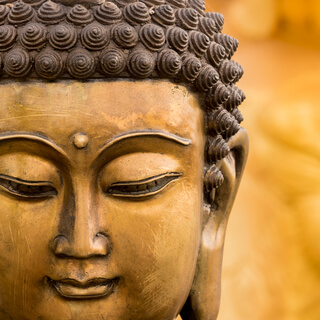
Siddhartha Gautama of the Sakya clan,
Born about 2600 years ago,
In royal birth,
Destined to a life of opulent wealth.
You all may know this story.
A great seer came right after the birth to visit the palace.
And the king said,
What will become of my son?
Who will he be?
And the seer said,
Well,
He's either going to be a great ruler and king or a great spiritual teacher.
Siddhartha's father wanted to prevent the latter.
He needed his son to grow to be a ruler.
And so he kept Siddhartha restrained there in the palace until he was a teenager.
Kept him in this life of wealth and food and everything that the senses could desire.
Until finally,
I don't know what age,
17,
20,
Siddhartha said,
I have got to go beyond these palace walls.
I have got to see what's out there.
So he goes and there's a great parade and the prince is coming and he feels pretty good about it all.
And what does he see when he's out there?
He sees someone who is sick.
He sees someone who is old.
He sees someone who has died and is being cremated.
He never seen such things before.
And he knew suddenly there was something else happening in life.
And that this life within the confines of the palace,
He just couldn't exist in that any longer.
So he gets his attendant,
Chana,
To saddle his horse and in the middle of the night,
He makes an escape.
And he winds up practicing for six years in the forest with a group of aesthetics who practice very austere practices.
Forgoing the needs of the body in order to free the mind,
To free the spirit.
And after six years,
Just a skeletal self,
Unbathed,
Unwashed.
He knew this wasn't working.
And Siddhartha was near the point of death and he left his friends and he wandered until he collapsed near Riverside.
A young girl from a nearby village,
Sujata,
Found Siddhartha there,
Brought him milk,
Brought him rice,
Brought him back from the brink of death.
And soon he was strong enough to bathe.
And as Siddhartha went down into the water,
There was a boat passing by.
And there was a young boy in the boat with a lute stringed instrument and an old man who was evidently teaching him to play the instrument.
And Siddhartha heard the man say to the child,
If the strings are too tight,
They'll break.
And if the strings are too loose,
The music will not play.
And Siddhartha suddenly realized there must be a middle way,
There must be a middle path between just simply relishing in the senses and practicing these more extreme practices.
So he sat beneath the Bodhi tree.
He determined not to rise until he achieved liberation and at the dawn of the seventh day,
He looked up,
Saw the morning star and said,
Wondrous,
Wondrous,
All beings have the seed of enlightenment within them.
I and all beings awaken together.
Middle path.
So how do we apply that to our practice of Anapanasati contemplations?
Anapanasati,
The word literally means remembrance of the breath and awareness of the breath.
And I keep saying that because in many ways it's that simple.
The key element is in the meaning of the word sati,
Simple presence with the breath,
A sense of oneness with the breath,
Not being separate,
But rather being of the breath.
Part and parcel.
Having spent so much time in the last five weeks,
Six weeks talking about precepts,
What I'd like to do this evening,
Rather than go through the steps that we normally do,
Is simply to work with breath and body.
You know,
There is much that's new in the air these days.
There's a sense of returning to foundation.
And in Anapanasati meditation,
The foundation itself is found in the simple act of breathing.
So what I'd like you to do is just really consider the basics this evening.
Really think about your posture.
Sitting in a way where your breath is unobstructed.
Up right,
But not rigid.
Head straight,
Shoulders relaxed and rounded.
Eyes cast gently downward.
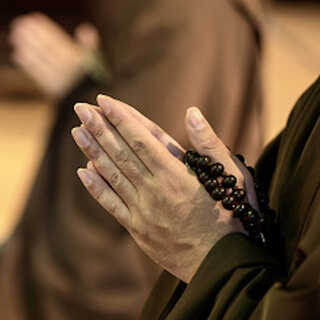
And what I'd like you to do is just spend a few minutes establishing a field of mindfulness,
Simple mindfulness of breath and body.
I heard these words of the Buddha one time when he was staying in Savatthi.
The senior practitioners in the community were instructing those who were new to the practice,
Some instructing 10,
Some 20,
Some 30.
And in this way,
Those new to the practice gradually made great progress.
That night,
The moon was full.
The Buddha,
The awakened one,
Was sitting in the open air and his disciples were gathered around him.
After looking over the assembly,
He began to speak.
Friends,
Our community is pure and good.
Such a community is rare.
And any pilgrim who seeks it,
No matter how far she must travel,
Will find it worthy.
Friends,
The full awareness of breathing,
If developed and practiced continuously,
Will be rewarding and bring great advantage.
And what is the way to develop and practice continuously the method of full awareness of breathing?
It is like this.
The practitioner goes into the forest or to the foot of a tree or to any quiet place,
Sits stably,
Holding his or her body straight and practices like this.
Breathing in,
I know that I am breathing in.
Breathing out,
I know that I am breathing out.
Simple awareness of the breath.
A union of breath and body.
I invite you to consider your diaphragm just below your lungs.
So important in deep and quiet breathing to practice with the diaphragm.
As you inhale,
Feel your diaphragm expand.
When your diaphragm doesn't expand,
Your lungs are not breathing fully,
Not inhaling to their capacity.
So as you inhale for a few moments,
Concentrate on feeling your diaphragm expanding.
This need isn't simply for patensible.
.
.
.
.
.
.
.
.
.
Don't try too hard.
If the strings are too tight,
They'll break.
And if they're too loose,
The music won't play.
.
See if you can find the middle path,
Just here in your breathing.
Your effort,
Your concentration,
Neither too weak nor too strong.
Sati.
Bear awareness.
.
.
.
.
.
.
.
.
.
.
.
.
.
.
.
.
.
.
.
.
.
.
.
.
.
.
.
.
.
.
.
.
.
.
.
.
.
.
.
.
.
.
.
.
.
.
.
.
.