Well,
Grief growers,
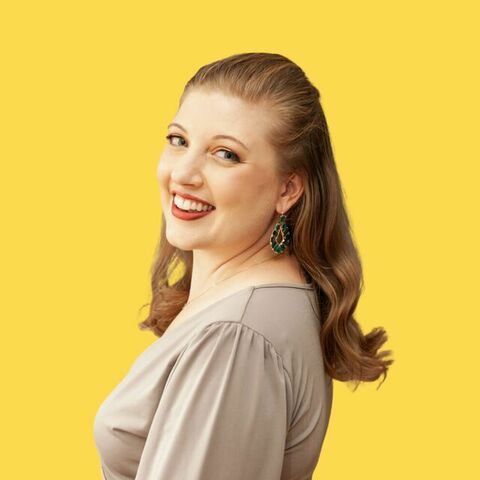
I am so excited to introduce you to Kat Bonner,
Who off the mic,
We have just recently discovered is from North Carolina,
Which if you've listened to the show long enough,
You know that I am from North Carolina as well.
So we've had some fun sharing our accents for a little bit.
And Kat has a very similar story to my own,
Where she lost her mom and she also has her own podcast about life after losing mom.
So I'm excited to explore the ways in which we're similar today,
But also the ways in which we're different.
So,
Kat,
Welcome to the show.
And if you could please share your lost story with us.
Yes,
Thank you for having me.
I will try to be as brief as I can.
I haven't talked about it in a while.
I guess it started when I was 14,
My parents divorced.
So they both still lived in Greenville,
Which is where I was raised,
But I lived with my mom,
Because my dad traveled for work a lot.
So when my mom passed,
I was living with her.
And I was 18 at the time.
We had just like downsized and sold the house that I grew up in.
So it was our very first night in our new townhouse.
And one of her friends came and knocked on my door one night with some police officers.
And I was like,
What in the world is going on?
I'm dreaming.
And they all came inside and sat me down and basically told me that your mom has been killed in a car accident.
So the rest of the day was pretty much,
I don't really remember much,
But a little bit of background.
My mom was an alcoholic.
So she was drinking and driving and she was killed on impact.
And I ended up,
Since I was home alone,
I ended up actually calling my dad because he was the first person that I could think of to basically break the news to everyone.
And after that,
My mom's mom was still alive.
So I went to go live with my mom's mom.
And this was in April 2013.
And then I went off to college about an hour away in August of 2013.
So I basically had like another mom.
And before I turned 21,
It was October of 2015.
So about two and a half years after my mom passed,
I was actually home for fall break visiting my grandma that I lived with.
And she got really sick and I ended up losing her,
Surprisingly.
And yeah,
So it was a matter of losing two moms in a matter of two and a half years.
She just got really sick really fast.
And then,
Yeah,
That's kind of where it,
I guess,
Ends.
I haven't really had any other immediate deaths since then.
The first word that spring to my mind and something that happened in my own lost story,
Losing my mom kind of around the time I was in college is this word security.
And literally feeling like,
Especially because you describe your grandmother's like my second mom,
Like I had this mom,
There's this figure,
And then she was gone.
And then here's this other one.
And here's this figure.
And now she's gone.
So it's like,
I keep getting this visual of like the ground falling out from underneath you.
That's a very good description,
Pretty much.
And I know that people probably would hate,
Be like,
Oh,
It's your grandma.
But after my mom died,
It wasn't just my grandma.
So I was like,
Okay,
This is,
I know what it's like to lose one mom,
But to lose basically what is two in a matter of that short amount of time.
I didn't know how to handle it.
Yeah.
Can we can we explore the role of your grandmother for a little bit?
Because that is something that the world society at large likes to do is tell us that certain losses based on their proximity to us should be ranked as more severe than others,
Even though people on the outside have no idea what their roles and what their stories are in our lives.
Yes,
Absolutely.
We can definitely discover that.
I guess a little bit about my grandma.
I don't know my dad's side of the family.
So it was literally just me and my grandma.
Her husband died when I was six.
And she lived in the hometown that I grew up in.
So we were always pretty close.
And then when she normally obviously played the grandma role until my mom passed.
And then my mom passed,
Everything happened so quickly.
So I was like,
Okay,
I'm gonna move in with grandma.
I don't really have a choice.
I'm about to graduate from high school,
That sort of thing.
And it wasn't so much a role.
She was still my grandma.
But because I lived with her,
I think it made it seem like she was my mom and she still took care of me.
Even after losing her own daughter.
So we never really talked about my mom or had that sort of conversation.
But we both just kind of took care of each other.
And I think that's where our relationship just really manifested into a mother-daughter type of relationship.
I live with you.
So when I go home,
I'm going home to you like most people would go home to their parents.
So her home just became my home and that's kind of how that happened.
I know there's probably so many people listening who are like,
Well,
Maybe my parents were not a part of my life or maybe one parent died and so I was raised by somebody else.
So to have this parental figure,
Regardless of what their quote unquote label is in life,
I think makes a lot of sense.
Absolutely.
And it was the closest thing that I had to my mom.
Yeah.
Yeah.
And that proximity too of like,
She was my mom's mom.
So that same side of the family and knowing she was as a person and how she died,
Like not having to explain the story,
It sounds like was part of it too.
Very much so.
We like,
We all knew what happened.
We were all in this together.
So since I don't have my mom,
My mom's mom is the next best thing.
I'm interested because I did not know this element of your story that your mom was an alcoholic and then died in a car accident.
I'm wondering like what your feelings are towards her death,
Towards how it happened.
Well,
I actually didn't know that she was an alcoholic either until the day before I moved in for college.
So originally when she passed,
They were just like,
Oh,
Like it was a car accident.
Alcohol is suspected,
You know,
The news.
They're all like,
Alcohol is always suspected.
Well,
Yeah.
So I found out when the toxicology results came back,
Like a few weeks later,
That her blood alcohol content was well above the legal limit.
So originally,
I guess my feelings were just very angry.
Like I know that sounds cliche,
But I was angry at myself for not knowing that she had a problem.
I was angry at her at first for drinking and driving.
But then when I started to think about it,
I was also relieved because she did not suffer.
I mean,
She died on impact.
So that's the way that she wanted to go regardless of if she were drinking and driving.
Who's to say that if she wasn't,
She would still be here?
I can't think like that because we don't know if that's the case and the situation is what it is.
But regarding her having that disease,
Once I talked to my dad and some other people,
They were like,
You know,
We tried to get her to get help for years,
And she didn't want help.
So in some ways,
I do think that she made selfish decisions,
But she cannot control the fact that she was sick.
So her decisions ultimately led up to her becoming an alcoholic.
And I think that she knew it was selfish to drink and drive,
And she knew that it was wrong.
But that was just the way that alcoholics think.
So I guess my feelings now toward it.
I have a lot more compassion,
Knowing that it was definitely not something that she could like the sickness itself was not something that she could control.
And there was nothing that I could have done differently,
Regardless if I had tried to help her,
If I knew she had a problem or not.
She didn't know she had a problem.
So she was not going to get help.
Wow.
I'm literally getting chills as you're talking because I don't know how to put words to this,
But I see you having this,
I'm going to try.
I see you having this like zoomed out perspective from everything that happened.
But at the same time,
You and I had this conversation before we got on the mic of like,
You're 24 years old,
I'm 26 years old.
And all the time,
I think,
Especially in a podcasting space,
When people don't really know like,
The stats of who's on the other side of the mic.
You sound like somebody who could be in their 30s or 40s with the amount of like,
Wisdom and compassion about this that you've developed.
And this is a big deal,
Like finding out I literally wrote down discovering her mom was an alcoholic,
Like that's not an easy thing to contend with.
After someone we love has died,
Like dealing with grief is one thing,
But the discovery of secrets or additional information or like a betrayal or sickness in this way is like,
That's some real heavy shit.
Yeah,
Absolutely.
It is.
And it definitely it's not that it didn't make it harder,
Because I guess things are only as hard as you make them.
But finding everything out after the fact,
It just completely right before I moved to college,
I was like,
Okay,
What is this nonsense?
Like,
What the fuck am I going to do?
How am I just now finding this out?
And I was angry because I thought like,
My parents were almost sheltering me.
Like my brother knew all of this stuff.
But he was the kind of person where he was into drinking and that sort of thing.
I wasn't.
So I thought that because I was like not caving into peer pressure or you know,
Whatever you want to call it,
Like,
Why did I not know until now?
Like I was 18.
That's not,
That's old enough to know these things.
So it definitely,
Yeah,
It was definitely a lot thrown at me.
But it was almost nice to like see it on paper and to read it because then you can't really deny it,
Even though it wasn't obviously a fun thing to read or to hear.
But it was there and that was the truth and I just had to deal with it essentially.
But thank you for complimenting and saying that I don't want to feel old by any means,
But I definitely want to feel mature.
So I guess we'll just call it that.
Well,
And I think that some aspect of grief if we lean into it,
Forces us to grow up.
And I'm curious how you took this experience to college with you because this is not something that every 18,
19 year old has to face and contend with.
So I'm wondering if and how it was possible for you to make connections with other people who were your age and like the atmosphere of college?
Yeah,
That's a great question.
Originally,
Obviously,
When my mom first passed,
I went to a really small high school.
So I was the only person in my friend group or literally the only person at my school that had lost a parent.
So that definitely wasn't easy.
But when I got to college,
I was very open about my story.
I also went to a small school.
So it was all women's.
So I was very comfortable with sharing that.
It felt like a safe space.
And I ended up having a ton of resources.
And it's crazy now,
I can count on two hands,
How many girls in my class or that I know from college have lost their mom or their parent.
And I think I was definitely the first,
But just talking about it and sharing that with them,
I mean,
It was crazy,
You know,
The connections that I made.
So I was comfortable talking about it.
And I definitely think the community helped.
The president of the school actually lost her dad when she was in college and the dean of students.
And they both reached out to me,
Which is crazy,
After my mom passed and,
You know,
Hey,
If you need anything,
Let us know.
So it was definitely just everybody needs,
You know,
That safe space to where they can share their story and know that it's not going anywhere.
And to be able to meet all these other women who had been through something very similar at also a young age was not reassuring,
But definitely very comforting.
Can you describe the difference between the two?
Because that's interesting that you said that.
You're like not reassuring,
Definitely comforting.
I feel like I use those words interchangeably all the time.
But comforting,
I think I just use more in a sense of,
Okay,
I'm not alone.
I'm comfortable talking about this and sharing this and comfortable knowing that,
You know,
This is my life and it's okay.
And that brings me comfort almost.
It's more,
I guess,
Emotional.
And I think reassuring is more of a mental thing.
And what I mean by reassuring is being mental is somebody,
Just me talking to somebody about how I feel regarding,
You know,
The situation or whatever.
And they're like,
Oh,
Like,
It would be normal,
Or I hate that word.
But feeling that way would be expected.
So I can get comfort really from only these groups of people,
But I can get reassurance from multiple people.
So I think that's what the difference is.
That's really cool.
I've never heard it phrased that way and I like that.
Okay.
Does that answer your question?
Yeah.
Well,
I mean,
You know,
You can answer,
This is a podcast,
You can answer however you want to.
This is graded by any stretch of the imagination.
But it's always interesting because I think all the time,
Especially in grief,
We're always kind of struggling with words because so much of it is an emotional experience.
You're like,
There just isn't vocabulary for this.
And so much of the work that I try to do here on the show and from listening to feedback from listeners is like,
Okay,
What are the words that we're using to describe this and what does it mean for us?
Because some people hear the word comfort and they're like,
Don't even try.
Like don't even try to comfort me because that's BS,
Frankly.
And some people are like,
Frankly,
I am looking for comfort.
And some people have never even thought about what it means to them.
So I think that's really cool to have heard your perspective on both comfort and reassurance.
I really like that.
I think the next place I want to go is to the medium of podcasting itself,
Because I know your show Life After Losing Mom is relatively new,
But I want to know like what sparked that for you?
That piece of inspiration for you?
Like what does it look like?
Yeah.
How does it exist in the world?
Yeah,
That's a great question.
So a girl I actually went to undergrad with,
She is a business coach for service based entrepreneurs and clients.
And I had seen her business Instagram and I was like,
Okay,
Like ready to explore the idea of entrepreneurship.
So I just hopped on a call with her and I was like,
You know,
I'm really struggling because I have these X,
Y,
And Z passions.
So how do I know,
You know,
What to pursue?
And she was like,
Okay,
Well,
Where did these passions manifest from?
And once I started thinking about it,
I was like,
Wow,
All of these passions manifested from losing my mom.
And she said,
Okay,
Have you thought about grief coaching?
And I was like,
No,
I haven't,
But maybe that's a good idea.
Like let me do my research.
And I realized like,
From what I could find,
I'm not going to assume that there isn't,
But I did not find anyone out there who worked solely with women who had lost a mother.
And I was like,
Okay,
You know,
This is a great idea.
Like let's give it a shot.
And that's just kind of how everything happened.
And I had recently,
I don't know when I started becoming like a user of podcasts,
But once I started listening,
I was hooked because like we said earlier.
It's almost mindless.
You can do it when you're listening or whatever,
Not listening,
Sorry,
Driving,
Basically anything.
And it doesn't take a whole lot of brainpower rather than sitting down and reading.
And I think even if people don't really know what podcasts are,
They would appreciate that facet of it.
Not bashing blogs or anything,
But this day and age.
That's just kind of like our time is so precious.
So that's just why I decided on a podcast.
I love that too,
Because it is like you said that to sit down and read something,
Especially when we're grieving is like,
I don't know if I have the energy for this,
But I can let somebody talk at me.
Exactly.
And you can stop and go and,
You know,
Listen to it as you please.
And not have to really worry about where you left off.
And I don't know what it is about the listening.
It's just less work,
Almost emotionally,
I feel like.
I feel like I can literally just sit there and cry when I read a blog post.
But if I listen to like a podcast episode of yours,
Not saying that they're not emotional,
But I just don't find myself really getting emotional or upset.
And I don't really know why,
But that's just what I've noticed.
That's really interesting.
I don't know that I've ever thought of the emotional reaction of podcasts before because there are ones where I have definitely started crying in the shower when I'm like getting ready in the morning listening to other people's podcasts.
I'm like,
I am crying right now.
But also I'm not also sitting still and reading a blog post or reading a book and just like sobbing in my bed.
Somehow those are two different pictures.
That's interesting.
I think it's because when you're reading,
You have to be doing nothing but reading and you're like,
Okay,
I don't really have anything to distract me.
So this is where my focus is.
So I'm focusing on my emotions from reading this whatever.
Yeah.
Whereas with podcasts,
You could be driving or doing the dish or whatever else results.
Something that's coming up for me now is speaking of voices and the way people sound.
I wonder if there was anything unique or special about the way that your mom spoke,
Or maybe even your grandmother spoke if they had things like catchphrases or things that come up when you think of hearing their voice.
What does that sound like to you?
Well,
My grandma's just like a typical grandma voice.
I mean,
I don't really know how to describe that.
She was very religious.
So it's definitely just like,
Calm and,
You know,
Like,
It's okay.
Just a very like,
Everybody like,
Oh,
Yeah,
Like,
I love my grandma.
She's so cute.
So I know that's not really very helpful way to distinguish her.
But when I think of it,
I just think of like a literally an angelic voice.
And I think it's fitting,
Because she was religious,
And she's an angel and,
You know,
X,
Y and Z.
But when I hear my mom's voice,
Oh,
Man,
One of her favorite phrases is actually,
It's all good,
Which is so funny,
Because that's like,
My life mantra now.
So I love how I didn't really realize the importance of the phrase,
Obviously,
Until I lost her,
But it's definitely a good way I try to live my life by.
Oh,
I want to dig into that a little bit more because you and I think we're resonating closely on this is that my mom's favorite song to sing around the house was the religious song it is well.
I know kind of like a fancier way of saying.
And so I'm wondering how that's true for you and your grief because I wouldn't normally connect.
It's all good with I'm grieving because my mom's dead.
Yeah,
Absolutely.
I'm not saying that it's good that my mom is dead or it's good that I'm grieving.
But when I realized the significance of the phrase,
I really noticed my shift in mindset and how,
Okay,
The more I tell myself,
It's all good.
It was almost a way for me to ride out the bad days and the hard times that came with grief and to really embrace the good days and the good parts that came with it because they're both going to happen.
That's just kind of how grief is.
So it really just helped me to notice and to shift my mindset and realize that at the end of the day,
Things are as good or as bad as we make them.
And it really helped me,
I guess,
In my coming back journey,
But it really helped me to realize that things are a choice and happiness,
Especially.
If I'm choosing to think that it's all good,
I'm choosing to be happy.
And it is a choice.
And once I realized that,
It was so empowering.
And that was like a turning point.
How do you choose to be happy?
Oh,
Man,
I should have known that question was coming.
Let me see.
I hadn't really thought about it.
I guess it would be just really realizing that.
What really helped me was obviously faced with the death at such a young age.
I kind of got numb to it at first and I realized,
Hey,
Death is a part of life.
And I faced it head on.
So really just taking life day by day,
And sounds cliche,
But living life to the fullest.
And really,
It's like,
Okay,
I don't want to be happy,
But you like,
No,
You deserve to be happy.
And it's almost just like choosing and acting on what you deserve.
Like,
Okay,
If you deserve a better dude,
Then go break up with the dude and go whatever.
I mean,
Just really realizing what it was that I deserved to be,
What my mom would want me to be.
My mom is happy.
So I think it's just choosing in the sense of you can choose to be happier,
You can choose to be unhappy.
But I mean,
It's definitely more of a mindset thing.
So just kind of realizing,
Just thinking about the positive aspect of grief and really looking at the transformation.
And it sounds silly,
But I told myself,
I am going to be happy.
I'm going to be happy.
Today is a good day.
And eventually,
It just happens.
And it seems like less of a choice,
Even though it kind of is.
Because you can have a bad day,
And you can choose to let that bad day or that part of grief overwhelm you,
And you can choose to wallow in it,
Or you can ride it out.
And let your grief guide you and then realize,
Hey,
It's okay.
Tomorrow's a new day.
There's just one phrase,
Every day might not be good,
But there's something good in every day.
And really resonating in those little things.
I think that's how you can choose to be happy.
I think this speaks to a lot of,
There was another guest that came on the podcast named Megan Devine,
Who wrote the book It's Okay That You're Not Okay.
And she talks about creating neural pathways in our brain.
And so many other grief researchers talk about this too.
But if we can train ourselves to notice red cars when we go outside,
We'll start training our brain to see a lot of red cars.
And there's usually not more red cars on the road than there were before.
But now that we've trained ourselves to see them,
We start seeing them more.
And so it looks like the prevalence has increased when it really has not.
We're just noticing differently.
And so we've created these new connections in our brain where they're used to not be.
And it sounds like this practice of it's all good,
Or I can choose to be happy,
Or even if the day was total garbage,
What about the day,
Maybe one thing that was good.
And so if you start training yourself to look for good things,
It's not a discounting of the bad or the sad.
It's just like,
How can I also include the good in this?
And I think that speaks to the element of like power and control as well,
Because grief is such an out of control experience that I think we struggle to feel like I don't have a grip on anything that's happening right now.
So to start playing this like,
I spy,
But with emotions,
Can help us on the road to coming back because you don't flip 180 from awful to really happy overnight.
It's definitely a practice.
Yeah,
I very much so agree.
I love how you use the little red truck thing.
It's the little things and you don't think that they're big things,
But they really make a difference.
So just that when I realized,
You're right,
That is very much taking control when I realized that by saying these little things to myself is 100% taking control of my grief.
And you're like,
What in the world?
How is this possible?
And when you look at,
Like when I go back and look on how much of a transformation I had just from those little things that I implemented in my life,
I realized,
Oh my goodness,
For the rest of my life now I'll be able to hopefully take control of my grief just by constantly implementing these little things that made a huge difference in my grief transformation.
Now I'm wondering,
We're coming up on Mother's Day.
This episode is going to be released after Mother's Day happens.
But our conversation is happening on May 6th,
Which is less than a week out from Mother's Day in the United States.
So I'm wondering how you're celebrating or not celebrating or what you do with this day that is inescapable.
I love this question.
I'm actually going on a Facebook Live in some Facebook groups and just giving my two cents and tips.
I'm going to be doing a Mother's Day survival guide because that's honestly what it is.
What I have noticed with Mother's Day is,
With other holidays and other days,
It can be family oriented,
That sort of thing.
But Mother's Day is literally just for moms.
So I think that's why it's much harder.
But I try to go somewhere new.
This weekend I'm going to Greenville,
South Carolina.
I've never been before and I always wanted to go.
So I was like,
Okay,
There's a balance between,
I think,
Isolating yourself and just putting yourself out in public.
In general,
I try to avoid public places leading up to Mother's Day because it's just a god-awful reminder at that point.
But the day of,
I definitely don't have any traditions.
My mom was cremated,
So it's not like I can just go to her grave and visit her.
Even if I did,
I would not want to go there because I cannot stay in my hometown.
That would just be very bad for me personally.
Not a good way for me to cope.
Since she is cremated,
I definitely feel like she's literally everywhere.
So if I want to have a conversation with her,
Like,
Let me go sit outside and watch the sunset and go talk to her,
That sort of thing.
But in regards to what I do on Mother's Day,
I kind of just do,
Like,
I let my grief guide me.
And I know that that's probably a very vague answer.
But since it's a very non-traditional holiday for me,
Each one is different.
But it normally consists of eating a lot of chocolate and or drunk food and watching Netflix.
So definitely,
I do not get on social media.
I mean,
I will obviously this Sunday just for business purposes,
But I don't really find myself talking to people.
And they understand that.
So just very,
As long as disconnecting rather than isolating.
That's the way that I like to think of it.
And sometimes I'm not gonna lie,
I throw myself a pity party.
And that's not a thing that I usually do.
But if I decide I want to have pitch a fit and I want to scream,
Then so be it.
That's what I'm gonna do because this is one day where I feel like it is 100% appropriate for me to do that.
I mean,
I don't really care what other people think.
But I just find myself only really feeling that way on Mother's Day.
But definitely letting my grief guide me is what I can recommend for other folks.
Literally just do whatever you have to do to get through the day.
So like I said,
If that's pitching a fit,
Go pitch a fit.
Don't feel bad about eating your way in chocolate or junk food.
It doesn't matter.
It's one day and the next day,
You can get back on your diet or whatever.
So I'm smiling as you're saying that because that's kind of how I do Mother's Day also.
Like I give myself permission to go have a pizza or like go buy flowers,
Even though no one's gonna receive them except for me or like things like that.
And letting grief guide you is really important too,
Because sometimes something that I tell people when grief-aversaries or like hard days are coming up is like,
Make a plan,
Get as close as you possibly can to the plan.
But like if you don't,
If you just want to stay inside and eat chocolate and watch Netflix,
You had a plan and it's fine that it fell through.
But for people who are like,
I don't know what to do on the day,
I'm like,
Maybe some structure is helpful.
But I love this distinguishing.
You're playing a lot with vocabulary in this conversation with Ira between disconnection and isolation.
Because one,
At least from my perception,
Disconnection seems conscious.
Like I am consciously deciding not to touch social media today.
And isolation is just this,
I get this image of like a suffocating blanket of loneliness.
Yeah,
That's very much so correct.
I never really used those two words.
I guess it just kind of came out.
But it's a very good way to distinguish because you're both kind of like by yourself,
Whether you're isolating yourself or whether you're disconnecting yourself.
But it's definitely important to be conscious of what you're doing,
Especially when it comes to grief.
So that's why it's like going back to choice.
Disconnection is a choice.
So you're choosing to basically just not be present with whatever you're disconnecting from and you're choosing to be present with yourself or with whoever you're with.
In my case,
It would be present with myself.
And that's very riveting.
Maybe that's not the right word.
But it's just like,
Okay,
I'm making this choice and I'm choosing to let my grief guide me.
So I know I keep going back to making choices,
But that's very much so what I believe it is.
And I think that's a great reminder through this conversation today.
It's so much like it was not our choice to have our loved ones die.
Like we did not choose to lose our moms or your grandmother or like any of the other things that we've lost.
And listeners of this show in a million years would never have signed up to have faced the losses that they're facing.
But the thing that we can choose or the thing that we do have power over is how we respond in the aftermath.
And that's not to say that we should take up all responsibility 100% immediately afterwards,
Because it's not 100% to 100%.
But this gradual growth,
Because even through grief we are growing,
This gradual growth of,
Okay,
I feel like I could be in charge of this,
Or I feel like I could choose this,
Or I feel like I could try this on even for five minutes and see how that feels and then maybe put it down and try something else tomorrow.
That coming back to consciousness and starting to build back that foundational power or ground underneath our feet,
That stability,
Security,
The thing we were talking about at the beginning of the conversation,
Is a really,
Really big byproduct of grief.
And frankly,
From a lot of the reading that I've done from Sheryl Sandberg,
From Barbara Hopkinson who did A Butterfly's Journey,
Came on,
I think in season three or four of Coming Back,
Is the practice of resilience is how much do you believe you can choose after the thing you really did not choose at all?
Wow,
I like that.
That's yeah,
It's,
Grief is 100% about being resilient.
I don't really consider the first like phases of grief or you know,
Whatever a choice because that's just a whole other story.
But gradually,
Like you said,
You know,
When you realize that it's these little things that I mean,
If you don't make the choice to take control,
Let me,
Okay,
Back up.
Taking control of your grief and getting help is a choice.
And that comes from realization,
That comes from noticing that,
Hey,
My grief is consuming me and I have a problem and I need help.
And I'm choosing to get help because I don't want to live this way forever.
I don't want to be miserable.
Like who on earth would want their grief to consume them for the rest of their life?
Like that just sounds absolutely god awful.
So once you realize the transformation and how far you've come,
It's like,
Okay,
I was able to take control of my grief.
So I was able to choose to let myself have this transformation.
Yeah.
These are the moments when I want to encourage people wherever you are in your grief journey to like,
Look back,
Like reflect,
Like,
Where were you a month ago?
Or where were you six months ago?
Or where were you a year ago?
Or where were you like right after your loss happened?
Because this is really like the heart of the message that I'm getting to and coming back is that even through grief,
We are growing whether we realize it or not.
It's wonderful when we have a conscious decision making ability about how we're coping with grief and we can take control of it and we can really make decisions about letting our grief guide us and all that jazz.
Even when we don't recognize it,
It's still happening just because we're living differently now with different information,
With different perspective,
With different coping mechanisms that we lived six months ago,
A year ago,
10 years ago.
However you'd like to see that iron out.
So I just love that you've brought this all up today because this belief of power and control and harnessing these choices and that they do belong to us,
Like taking back what belongs to us,
Which is the choice to be alive and the choice of what to do with our lives is really,
Really powerful.
And there's like some pride in that.
Yeah,
There very much so is.
I see so many people that struggle in their grief journey and I mean it starts with being vulnerable obviously.
Nobody wants to admit they have a problem.
But even knowing that you're not alone,
It takes a lot of strength to A,
Realize that you need help and it takes a lot of self-discipline to get the help and then to transform.
But it's all about self-reflection and celebrating the small victories.
I think that's how I was really able to make that choice.
But realizing that you have come a long way and even when you just look,
You can look a month from where you are now and realizing that you've grown just in the short amount of time.
So that's almost an encouragement or a catalyst to just keep growing and to keep getting through your grief and to keep working through it so you can fully see the transformation that is ahead of you.
It takes,
I mean it definitely does take self-discipline like I said,
But it takes celebration.
It seems scary and daunting I think to go back and look on how far we've come,
But it will most of the time yield a positive outcome.
And we need to find that for ourselves when we're grieving.
We need to see that we're doing okay.
And when we see that we've grown even just a little bit,
That it's not a struggle to get out of bed in the morning.
You're like,
Okay,
If I can do this,
I can take control of my grief and I can witness the transformation that lies ahead of me.