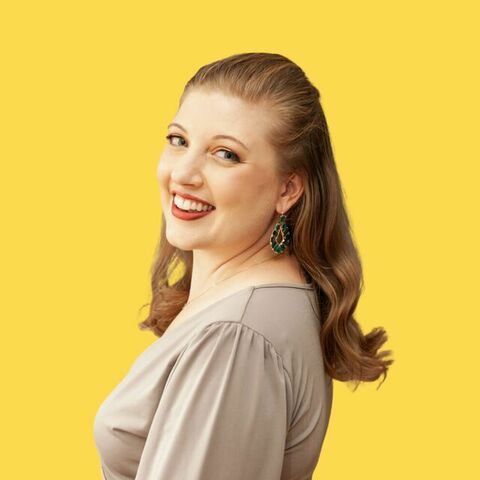
I am really delighted and stoked even to introduce you to Christina Cipriano who came to us through the avenue of Lindsay Whistle-Fenton who we interviewed last season for Speaking Grief,
The documentary on how to talk to people,
Friends and family,
And even perfect strangers about grief.
And Christina's work is really vital in that she runs kind of a division of a grief center called Bo's Place in Texas for Spanish programming and this struck me because in grief,
Especially in America in the westernized world,
I think we think of grief support as only in English but when we can put grief support into a language that we know or first language or primary language we get to take our brains out of the equation of trying to translate what we're feeling and just say what's on our hearts.
So Christina,
Welcome to the show and if you could start us off with your lost story or your experience with grief as you know it.
Yeah absolutely.
So I actually in my life experience the death of a number of close family members starting at the age of seven.
My cousin died at the,
While he was five years old and we were very close to one another.
It was a very traumatic death.
My first encounter with death itself following that about four months later my aunt and godmother died so very subsequent loss and death all before second grade.
So it was quite a pivotal time in my life and I've been able to through the support of my family but also I think relying on mentors throughout my life been able to process their both of those deaths but really what has been monumental in that regard is how many times throughout my life I've continued to go back to that year and those couple of months and how time stands still even now I think we're at maybe 26 years later just about and on both of their death anniversaries it feels as though time stands still like nothing else really matters on those days and it continues to tie me to this work too to know that time there's a saying you know time heals all wounds but in some regards you grieve to the extent that you love and as a seven-year-old it can tell you that the seven-year-old it can tell you at this point it was some deep love because it's I can still feel it there's still days specifically on their death anniversaries and big milestones that I go back to that time and wonder what their life would be and and still what would my life be with them yeah and I think that never ends and I'm glad that you spoke to that because there is this sense that time stands still when our loved ones still aren't here because I mean we continue to mark time going forward like we what other choice do we have but to continue to live after somebody we love dies and these dates come up or these moments come up or these milestones come up and they're like it's like somebody hits that sound on the record player and it's like time is standing still once again and I like this thing that you spoke to too about the year that changed your life and I think this is common for so many grievers is there was a span of six months a year for me it was four years of just like loss loss loss loss loss loss loss and it's still the thing that like almost butterfly effect it's like if this hadn't happened my life would have taken a totally different direction and I wonder how you continue continue to honor that as you get older of like if this hadn't happened my life wouldn't look like it does right now I wonder if there's um resentment there or even a kind of gratitude or a mix of both um I think more than anything it showed me what resiliency looks like it showed me what my own capacity for love is and it has shown me um really what I think um adversity brings forth in someone and so I think in in that regard it has brought me to the work that I do now and I firmly believe that it's the reason why I'm so passionate about working with our Spanish-speaking families and that's not just because my own family speaks Spanish and it's my first language but because I know firsthand what that looks like and at least for my family and our own experience and I wonder what would our lives have been like had there been a Bose place that offered Spanish language groups in 1996 in Houston as opposed to relying on our family which we did but each one of us was screaming there wasn't a part of our family that wasn't and what that meant for us and so um I think if anything it's it's more so it is the field of my fire for the work that I do it's uh seeing my cousins walk their brief journey of experiencing the death of a sibling and a mother and and they are primarily the reason why I do this work because I I've seen what happens when you don't get the support that you need and trying to help navigate in and at the same time eradicate uh solo grievers in that regard um so I I'll say it it not that I'm grateful that they died uh but more so the experiences and the lessons learned and what I learned about myself and the fire that it feels the passion for the work that I do is all-encompassing and so it's it's really hard to imagine my life without the singular event um or this these months to the same extent right because life would look completely different and I I sit back and I guess now as you're talking I wonder would I even be in the mental health field would I be an accountant and doing you know number not to say anything about the accountants um which is really different worlds and so it I guess in that regard just yeah how different my life would be would I be this I I doubt I would be this in tune with grief in and of itself yeah and I think that's really appropriate um to say and in some ways it's like I would have known myself as a different person too if I had not experienced grief um myself like my self-perception of who I am and how I show up in the world and the relationships that I form the languages that I speak and all the other things um that are associated would have come to me differently as well if you had been an accountant if I had been an ad executive like all these kind of like alternative things that I would have done if I had not been an accountant or an ad executive or an ad executive or an ad executive or an ad executive or an ad executive or an ad executive or an alternative parallel um universes that we could have gone down and so there's not necessarily a gratitude for grief um but our ability to imagine any other way yeah it's it's hard to do um I definitely want to get into this uh kind of how you got where you are and what you what you want to come with and how you bring in you will recognize it and because you support somebody basically um you know just instantly knowing of yourself and that it's your employer's fault to see yourself in that environment like that's where it needs to become that manipulated to lonely of someone else wants someone to be what is that in their household right in the midst of what I'm thinking about,
Um involved,
But it's like we're all trying to mend ourselves by leaning on things that are also broken.
And so it's how like,
How do we lean out into systems that can support us and trust fall,
Like back into these things that we know have a little bit more structure or sturdiness about them when we ourselves feel very broken.
And so to have something like that to lean out on is really powerful.
It is and I will credit quite a bit.
I remember in second grade,
My cousin's death was highly publicized,
Like it was all over the media.
And remember in that,
Just as I know now that kids do and you just randomly tell people at the grocery store and whatnot.
I remember telling my teacher and saying,
Oh,
You heard about the child that died that that was my cousin and her face was just like,
Okay,
Let's what do you want to do?
How can I help you?
How can I and it wasn't this pity.
It was like very action oriented.
And her response to what what do you tell a seven year old.
And to that,
I guess I leaned out towards my teachers,
Right?
And towards the other grown ups in my life that were part of my nuclear family,
Who were trying to put the pieces together of what had just occurred.
But in the same regard,
Family is for my family,
And I've seen it quite a bit for our culture is a very strong,
Strong part of who we are.
And I'm just talking about my parents,
It's my parents,
Siblings,
And all of my cousins,
I when I say that we spent every holiday every weekend,
Every day off from school together,
We did it was ruckus everywhere.
I mean,
We're all very close in age.
So in another way,
It was also relying on support for one another,
And to hearing the things that I know now aren't helpful when people are being adults in my life saying,
You need to be strong for your younger cousins,
Because you're you're one of the oldest.
And in the same time,
Seeing my grandmother who had just experienced the death of her grandchild,
Who she who she helped raise,
Never cry,
Not once.
Why?
Because she was trying to be strong as a matriarch for everyone else.
And just this this concept of we are being strong,
Like,
In the same regard,
We are being strong for one another,
We are leaning on our one leg.
And everyone's trying to show up for each other like at no point was it did it feel like even my aunt who had experienced the death of her child,
As she is broken down and going through the world's unimaginable pain,
Is still showing up for our birthdays and still being there with the birthday cake and still putting her face forward.
And she's shared this with me now of being strong for her child.
So there's this concept of like,
I need to be strong for everybody else in my life.
And everyone's just trying to be strong for one another.
However,
Healthier and healthy that is there.
That's what we did.
And at that time,
And looking back on it now,
Like I do I wish there was a time for me to be able to process and,
And actually explore those emotions.
Absolutely.
Especially given what I know now.
But I think in the same regard,
It was,
It's when those moments come up in my life,
Or when previously when I was much older,
And reprocessing the death and exploring it through a new lens that I was able to understand what it was like to be able to understand,
I guess,
The emotional range that I had at that point,
Because what would have then been mad,
Sad,
Or glad became frustrated,
Numb,
Annoyed,
Broken,
You know,
Whatever it is in that regard.
And I think that just that lends itself to it in one way or another.
But I think that in 96,
Had we had an ability to have external support where each one of us would be able to process our own grief journey and not have to be strong for whatever that time period was.
I mean,
In one way or another,
I think it would have been helpful.
And but I also think that this event,
The death of my cousin made our family stronger,
Or stronger in the sense of the closeness that occurred,
That it bore out and that and that every family is fortunate in that regard,
Either is,
You know,
Death can either bring you apart,
Or sorry,
Bring you apart or bring you together.
And so for us,
It just really solidified the bonds of the family.
In that sense.
That's really powerful.
And a neat insight because I think in my own world,
I saw the crumbling of a family when a grief event came through.
And it's so different to hear about a shared grief event being like,
This is more glue for as shitty as it is that this is the glue that we're all using to stick together in this.
It's like,
Ah,
This is something that continues to ground us and bind us and keep us together.
Yeah.
And it's kind of like what we were speaking about earlier,
Where it's hard to imagine anything different.
And so you're like,
Yeah,
You know,
These resources to have in 1996 to be able to lean out into community resources or something like what you do at Bo's Place.
And also because we only had the grief coping mechanisms that we did,
This is how we turned out,
For better for worse.
Yeah.
Yeah,
Really seeing some some parallels there.
So how did you get from that grief experience in 1996 and kind of seeing what you did with your family to trying on all these new lenses and then eventually landing at Bo's Place and serving people in the Spanish community?
Yeah,
I will say,
I found recently,
So I by training,
I'm a clinical social worker now.
And recently,
I was taking,
Of course,
On trauma,
And I was essentially working with people who have experienced some sort of trauma.
And we were discussing trauma responses,
And one of them being over achievement.
And that just hit the nail on the head for me,
I like my response to my grief,
My response to this,
My cousin,
My cousin and my aunt's death was over achievement and just really devoting myself to studies.
So my entire,
I guess,
Academic career,
It was very much focused on,
I need to be any take cell in this format.
And it came naturally.
So that that helped for most of the part.
And then when I may went to college,
I was so determined to be a pediatrician,
Because I was going to help people as I think the majority of folks are like,
Yeah,
I'm going to be a doctor.
And then I took organic chemistry.
And I was like,
No,
I'm not gonna be a doctor.
That's not fun.
Bye bye.
No.
And at the same time,
I was taking an elective on family relationships.
And I was like,
This is fascinating.
Organic chemistry is not.
So I started exploring what human development and family sciences was and fell in love with the profession itself.
And within one of my courses,
This is,
It's such a weird way how things come full circle,
Right?
There was a speaker that came to talk to us about potential jobs after college.
And they flat out said,
If you want to be guaranteed a job,
Become a social worker.
And I was like,
Oh,
Okay,
That sounds reasonable.
I want a job,
As most 20 year olds do when they're in college.
And so I started looking at graduate programs,
And came back home to Houston for grad school.
And in grad school,
I was on this whole,
I'm going to be a medical social worker,
I'm going to work in the medical center here,
I'm going to help people in that regard.
So kind of tying back to my dreams of being a doctor.
So I need to get comfortable with grief,
Because that's part of what happens when you go to the hospital,
People die sometimes.
And so I took a grief and bereavement class with an incredible professor of mine who became my mentor.
And it as part of her class requirements,
We had to go to Bo's place.
So as a as a graduate student,
And what's the most place I learned about children's grief,
And I was like,
This is an awesome place that's completely free of charge.
That's incredible.
So I kept it in my bank as a social worker.
Following grad school,
I started working in one of the hospitals in the medical center.
And it was great.
I was working in the neuro ICU and neurosurgery floor,
I was doing many end of life discussions.
And I realized that I was craving more of figuring out what happened once people discharge or once the families left that I had spent weeks,
Months working with to get to this point of saying goodbye to their person,
And then they died,
And then they would leave.
And so just trying to figure out what did that mean.
And my very good friend had started working at Bo's place and sent me a job description of what seemed to be the perfect fit.
And by what I consider a miracle in one way or another,
Those places,
Absolutely,
We want you.
And that's kind of how that came full circle in that regard.
And so I joined Bo's place in 2015.
Starting the Spanish programs were starting off and we,
Together with my different those places at the time did not know that we were really good friends and just great creative energy worked.
We were able to exponentially grow the program.
And in five years,
I believe it's like our program grew by now have to fact check this,
But I think it's like 425%.
And in five years,
It grew and it just,
I marvel now at the growth of our programs.
But really knowing that there's a need that's present and I've always believed if we offer it with intentionality,
People will come because that's always a fear in when creating new programming is,
Is this what the community needs and will they access what we're offering?
And I always went back to,
If we're offering it with intentionality and it is a need that we've identified,
The puzzle will fit and people will start to come and we have to get buy-in from the community.
So much outreach occurred over the last couple of years,
Trying to get the communities buy-in to also show that we're consistent and we're present and we are committed to this.
And so,
I mean,
COVID has kind of also brought to light a number of just facets of what this work brings.
Because our entire model is based off peer support,
Right?
And we're used to doing this in person.
And so having to quickly transition to online and what that brings and learning how to lead groups online has been a challenge,
But also it's this ever working,
Evolving creation,
I guess,
For lack of a better word in that regard of trying to meet the needs of our community.
When what we know that helps or assists and supports the grief journey itself is being able to be supported by people,
When we have implementations,
Which we so need,
Of physical distancing and not being able to see people,
It's bringing to light a different element of grief in and of itself.
And what I'm hearing,
What we've heard quite a bit is folks who were further along in our grief journey are calling us and saying,
I thought I was okay,
But COVID has made me realize how not okay I am.
And just trying to learn about that and navigate that and see how we can continue to support and through the virtual world,
Which brings its own challenges.
Yeah,
Totally,
Because there is a grief in not being able to grieve physically together.
And that's something that COVID is definitely bringing to light.
And it's been interesting for the work that I do,
Because much of it already exists online.
And so for me,
It's a lot of business as usual,
But I can't tell you how many people I'm hearing in my communities,
Podcast listeners,
Emailing,
Anything like my grief support group had to shut down,
Or is discontinued because the space is no longer safe,
Or we can't meet in person,
Or I have to travel to the next county over and they're doing social distancing,
And I don't know if it's worth it.
And so to restructure all of that around COVID has been incredibly hard for people too.
I want to touch on something.
You were saying that we kind of test in the community,
Or if we listen well enough,
People will tell us the kind of support that we need to be able to help them with their grief support.
And so that's the kind of support that they need.
And so Spanish speaking programming for grief support kind of bloomed out of that to a huge increase.
And I guess my biggest question,
Especially with your story earlier about like,
You know,
The storytelling of having to be strong for your younger relatives or so that the family will know you're okay.
How do you reconcile this familial story of be strong with this place is available to you storytelling looking like one is strong and one is weak,
And there's a false choice between the two?
Yeah.
I'll say one of my what I will consider profound moments is when we tell people,
When you come to group,
Right,
Our groups,
Like actual group that you will be in the setting,
In the sitting,
Being able to share your story or support others is about an hour and 15 minutes.
And so what I will tell the grownups that I'm talking to the usually the parents are the legal guardians of the kids is this is your hour and 15 minutes.
But you don't have to be you don't have to be Superman or Superwoman,
Right?
Because you have had to take on everything around you and be everything and anything to your to your child,
Or in the same regard to your spouse.
And here's your hour and 15 minutes that you don't have to do that.
We are taking we have your kids we're doing their they're doing their grief work,
Your spouse is doing every work if that's the case,
But here's your time where it's to focus on you.
And when I have phrased it in that way,
When we have to focus on you,
Talked about it in a way that this is your individual grief journey,
Though grief is universal.
And we all like as a collective family are experiencing this grief.
Each and every single person of the family had a unique relationship with the person who died and brings their own style of coping brings their own personality to this journey.
So we take we take all that to say,
You have a space for you yourself,
To be with others who understand to some degree what it is that you're that you're experiencing.
So we'll try to put moms who've all experienced the death of a child in a group together,
And women who've all experienced the death of their spouse in a group together.
And we if we're lucky,
We can split out our men's group.
If not,
If the numbers don't run it,
Then we'll have the men together.
Because there's also a gender expectation for how grief is managed,
Especially when they can speak to the Latino and Latinx community.
Because it's it's who I work with and what I see.
But there's a gender norm of how you're supposed to be grieving.
And so being able to put the men together,
It will be one of the most powerful groups because it's this is the one time I don't have to be quote unquote,
Strong.
It's the one time I don't have to I can show my emotion and not be judged about my manly hood or how much I'm able to provide for my family by being able to be here and do that.
So that's usually that's the take that we've taken with the community and trying to get their buy in of like,
This isn't a weak or strong,
This is a time for you to be able to process what you're going through.
What's also been helpful.
And one of the other areas is that we serve the entire family,
Right?
To some degree,
Are they in this age that we work with is five.
So most often than not,
We'll get the parents in by serving their children.
So parents will 99% of the time say I'm here because of my child of my children.
So while your kids are here,
We also have support for you.
And when it's a couple who have experienced the death of a child and they're coming with children,
We'll have mom who will say,
And coming here to support my children because of my kids,
And then we'll have dad or the spouse say I'm here to support my spouse.
So everyone's there to support somebody else.
And then the kids will enter and say we're here because our parents,
They need it.
So it's every in the same way where everyone's trying to take care of one another,
Because we're able to serve the entire family as is.
Everyone's getting the support that they need.
And in turn supporting their other families by being there.
So it's this like loop almost of how how we're being able to support the family individually and as a unit.
And everyone's doing it for each other while still processing.
Yeah,
It's almost like a trickery of symbiosis.
It's like if I can make you think that you're here to support somebody else,
But then you're actually getting help for yourself,
But then that looks like supporting somebody,
Kind of this whole thing of like,
If I can tell you that story will secretly actually help you work on your own grief too.
And there's no malice or deception or anything behind it.
But it's funny.
It's like I'm coming with this intention,
And then you're actually getting your intention and another result as well.
Yes.
And so it's almost like self self care or self maintenance in the grief space is like the bonus in addition to taking care of somebody else.
And I'm wondering too,
Like how,
How closely tied to the Latino community is that sense of I'm not allowed to be selfish,
But if I'm doing something in service of taking care of other people,
Namely my family,
Then I'll totally sign up.
Absolutely.
One of the cultural values,
One of the cultural values,
As is present throughout other cultures as well,
But what we see within the Latino community is this value of pride,
Right,
And this pride,
I can take care of my family.
That's also met with humility that says,
If this will help my family,
We'll do it.
Whatever it takes to be able to help my family will do it because I and my pride and responsible for taking care of my family.
So it's this paradigm of what we tend to associate as complete opposites work within itself to be able to lean into the support that's being given or offered in one way or another.
So,
But it's very much at the core,
If I if I can do something for someone else,
Almost as a servant leadership,
Right,
If I can,
I will sacrifice my time to take my kids to be able to receive the support that I can,
I too am being the leader of the family,
Like this is what we need in that regard.
So as you were talking about that piece,
I just hit the nail on the head for me of how so many interactions I've had of family saying like,
We are doing this for everyone here.
And it turns into everyone trying to help each other.
Like,
I'll have five year olds that will be like,
My mommy cries all the time.
So we're here because my mom is crying all the time,
Or my brother's not doing okay.
So that's why we're here.
So everything is for someone else in the family.
But the bonus is that they get to process their own grief journey and learn coping skills that will help when their grief resurfaces.
Or I won't say resurfaces,
When children are able to process their grief at a different developmental stage.
There's,
The grief is there,
It's just processed through a new lens,
Because they have a new way of seeing the world at that time.
Yeah.
And I wonder,
This is very different from the kind of grief support that's touted in like the white westernized space of like,
You can individually get grief support for yourself.
And doesn't really,
I mean,
There are spaces that take into account like grief as a family,
Especially children's grief centers.
But for the most part,
It's like you pull yourself up by your own bootstraps,
Get your own grief support,
Find grief work that resonates with you,
Like very like this kind of messaging.
So it's,
It's fascinating.
And it's really,
The word I want to use is like heartwarming too,
Is to see like,
This is the way you found the doorway in with the Latino community too,
Is I'm going to phrase it in a way where if I'm doing something for someone else,
I'm totally signing up because this aligns with my values,
My culture,
How I see myself and my family.
And this kind of larger picture of what it means to be a leader in a family.
I'm wondering if there's any stereotypes or misconceptions about the ways that Latino people grieve that you'd like to dispel,
Because I think,
Especially in the United States,
We tend to put Latino people into a box.
And so what we know about grief is like Day of the Dead,
And then nothing else.
And,
And in some respects,
It's like,
Okay,
We know something,
But in other respects,
It's like,
Oh,
My gosh,
There's so much more to know.
There's so much depth and ancestry and culture here that gets missed in between the orange flowers and the music.
Yeah.
Well,
I will say,
Though,
Coco,
I feel like Pixar heard my pleas and cries of how do we at least get the concept of via los muertos out to the world.
And then Pixar came out with Coco,
Which is it's such a beautiful story of this holiday that ties so well in with grief work.
And,
But to that extent,
What's been really interesting has been trying to kind of push the envelope or not push the envelope,
But further the conversation that Day of the Dead or Dia los Muertos,
As it's as it's portrayed in Coco,
Is only celebrated in that way in a very small region,
A very small town of Mexico.
If you go anywhere else throughout Latin America,
November 1,
Which is Day of the Dead or Dia los Muertos,
Or All Saints Day or I think All Saints Day might be the,
It looks completely different throughout Latin America.
And generally there is this remembering of the people who have died,
Of your family,
But what,
Without the orange flowers and the mariachis and the papel picado or the altars and the ofrendas,
Each culture honors their person in a different way.
But to that extent,
I will say too,
I mean,
I am the first to say I absolutely love Dia los Muertos personally,
But that has to be with my work.
One of the misconceptions,
I believe,
And I've heard this often,
Where I'm told,
You know,
Latinos are very passionate you,
There's grief.
And I've talked about this in some of my previous talks of just the pride for our country,
The pride for where you're from is really felt within the culture,
But in the same regard,
The feeling of not being able to express or there being a time limit of not being able to express or there being a time limit within at least some of the countries and their cultures of Latin America will see there's an expected time frame of how long you're allowed to grieve,
How long you're allowed to be sad.
And it's usually one year,
Anything further than a year,
You've lost it,
You have,
For lack of a better term,
You've gone crazy,
You've lost your mind.
How can you still be sad?
It's been a year.
There are these grief expectations that exist that are currently we're trying to dismantle by saying,
Yeah,
It's a year,
But did you only know them for a year?
And that you grieve to the extent that you loved and is your love measured in that time.
And so to some extent,
Dismantling these expectations for reactions,
Right?
Not all Latinos are going to cry passionately,
Not all Latinos are going to well.
And I think there's those expectations that Latinos are very explosive or expressive in their emotions and that doesn't always occur.
But then within Latinos,
For us,
It's this expectation of time and what's considered acceptable by society for how long you can wear black to show to the world that you are still mourning and how long it's okay for you not to go to parties,
If that's the case,
Or to hear music or to celebrate in one way or another.
There are some cultures that within Latin America that get that specific words like,
It's been six months.
Sure,
You can go to a birthday party,
But before that you're disrespecting the person who died.
And so dismantling time expectations on one hand within Latinos and then I think within to your original question of the US and just the perception.
Latino brief goes beyond just Dia de los Muertos,
Although great holiday,
Totally encourage everyone to watch Coco if you haven't already.
But within that,
The expressiveness of emotions isn't always the case with everyone.
And it is this misconception that that's what you're going to give.
I'll say one of the things we at Bose Place have been,
I think,
Privileged to witness is this immense gratitude that our Spanish speaking families have for the services that we provide.
And so it's not just like,
Oh,
Thank you so much because this is free.
It's,
I think you hit the nail on the head.
I think in the Western world,
Right,
We can absolutely,
I know this is being born in the US too.
Like,
I just go on Google and say find therapists near me or find anything near me,
Right?
Like Yelp exists for a reason we can find,
We can review.
And we know that that's a service that exists.
And oftentimes with our Spanish speaking communities,
There isn't this awareness or assumption that that's available,
And that it's going to be available in the language that I speak.
And so being able to offer services in the language of their that that is common and comfortable,
But ultimately the language of their heart that transcends emotion in that regard.
We encapsulate,
Or really their opportunity,
I won't say their opportunity,
But we encapsulate this this movement of just gratitude.
And so we've talked about it quite a bit at Bose Place because my colleagues who aren't Latino or Latinx will,
Mark,
Like,
Do you want to read some of the most beautiful quotes about our services,
Go to our Spanish speaking families,
Because they will write poems and dissertations about just what this means to them in ways that our English speaking families just don't.
And it's not,
And I think part of it is language.
Like,
There's a benefit of your language being a romance language.
English is not sexy.
No,
But being able to just put that into words,
It like,
Absolutely.
It's,
It always makes me chuckle when our grants manager is,
Will ask like,
Hey,
Do you have any good quotes that I can,
That I can use for for some of our grant requests?
And I'll say,
Yeah,
Let me pull some up.
And they're like,
Parrot.
And I'm like,
I'm like,
I'm like,
I'm like,
I'm like,
Like paragraphs.
I mean,
Like,
Legitimately three to four sentence paragraphs.
And they're all about,
Like,
What grief support and what we've been able to offer has meant to them in their life.
And we usually stay back and we're like,
Wow,
It's just,
It's beautiful.
And I could never,
I guess,
It never gets old to read in the words of gratitude,
Which I will gladly sit there and read for hours,
But just to see what it means to someone to be able to offer something in the language that they understand and they speak and to do it in with great intentionality,
But it doesn't just utilize Google Translate to translate our materials and then say,
Here you go,
Here's,
Here's what we got off of Google.
Because I know that I know that that happens in some areas because of funding,
Right?
It's hard to get services funded sometimes.
But there has to be this commitment and this intentionality to working with this community and to do it thoughtfully,
I think.
It's felt,
And we all know that,
Right?
If you intentionally go work on a project,
It's going to,
You're going to have a better product and outcome than if you just very quickly try to do something on the whim with limited resources.
Yeah,
I literally just wrote down,
This is how much we care about the state of your heart.
And so when you speak about intentionality,
And at first it's like,
Ah,
Intention can be a dicey word of like,
What did you mean to do when you set out when to do this and how the people who are receiving it actually absorb it and process it.
But I think as I'm understanding,
And it's like,
We did this on purpose because it matters because we've seen the results and because we've heard the cry of how great of a need that this is.
And so the converse of that is like,
You get these enormously grateful,
Like,
Thank you notes and like,
Holy cow,
I didn't realize how much this was needed or how it was going to change my life.
And,
And I think you're right,
That it would absolutely come through in a different way than people who speak English,
Because there's English grief support everywhere.
And the internet is full of it.
And there are grief support centers who,
You know,
Put all their things through Google Translate.
And it's like,
Here you go,
It's something in Spanish,
But to do it on purpose and to do it well and to have it,
You know,
Funded and resourced and large enough to take care of the family as a unit.
It's like,
We,
We need it.
And that,
That can be felt.
I think that is something that translates very highly across languages is like,
We did this and we mean it.