Grief Growers,
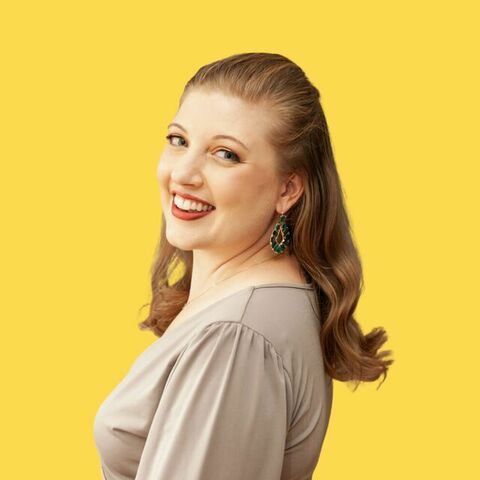
I am so excited to introduce you to Joanne Fink,
Who is an artist that incorporates grief in her work.
It's one of those things where I never associated with the art with the name until now.
And receiving her words in my inbox,
I was like,
Oh my goodness,
This is the person that's been creating things related to grief that I've been looking at since the death of my mom,
If not before,
And really,
Really resonating with.
So I'm so excited to have her here to tell her story of art and artwork,
Which is similar to heart work.
And Joanne,
If you could please share your lost story with us.
My lost story started August 3 of 2011,
When my husband had a heart attack and died two days before our son turned 12,
Nine days before our daughter turned 17.
The life that I knew ended the day Andy died,
Because in addition to being my husband,
He was also my business partner,
My IT director,
Finance officer,
And I used to travel a lot for work,
And he was primary kid care.
He was my best friend,
And most importantly,
Our children's father.
And life as I knew it stopped,
And I had to figure out how to move forward without him.
And I remember in those early days,
I was so dysfunctional.
It was a good thing I had to get up to get the kids off to school,
Or I don't think I would have gotten out of bed.
But as the weeks and months went on,
You assimilate the loss,
And you learn how to live without the person.
The love is still there,
And the grief is sometimes overwhelming.
And what I used to do every morning is wake up,
And I would write in a little Moleskine journal when you lose someone you love,
And then I would write how I felt about it that day.
When you lose someone you love,
There's a hole in your heart that nothing can fill.
When you lose someone you love,
You are forever changed.
When you lose someone you love,
Some days just surviving is all you can do.
And I did this for about 10 months,
And it was a great way to heal.
And I am a greeting card designer by profession,
And I wound up incorporating pages from my personal grief journals into the book I wrote,
When You Lose Someone You Love,
Which I think is a gift of comfort for other people who are grieving the loss of a loved one.
And it's been more than eight years since Andy died,
And now the day goes by that I don't think about him and miss him.
And I try to live my best life as a tribute to him.
Thank you so much for sharing your story with us.
And I think the first place that I want to go,
I'm taking notes as I listen to you,
But Andy's role in your life,
As with so many other people who lose spouses,
Is so much more than,
This is the person that I was married to.
There's also these roles of business partner,
Child caregiver,
IT director that work on just with the snap of your fingers.
And so I'm wondering kind of how you navigated,
Well,
Crap,
I've got to outsource all these things all of a sudden and or take them on all by myself.
It's a huge thing on top of grief.
You know,
It didn't occur to me to outsource any of them,
Except I just knew I needed help.
Andy and I were married for 29 years,
And I never wrote a check before he died.
We had a very traditional division of labor in our household meeting.
He did all the finance stuff and I did all the meal prep.
But we both worked in our business together and developed products for the stationary gift and craft industries.
And I would travel to trade shows and meet with clients and he would man the home forts.
And we had at one point in time,
Four graphic designers,
An illustrator,
A full time crafter,
And an office manager in addition to the two of us.
And I am so blessed because I totally love what I do and love to wake up and put pen to paper.
But I don't have his gift for organization or tracking things.
And we're not even going after the finance stuff.
But the real surprise to me is that I was forced to learn a lot about technology.
And while I'm not innately technical the way he was,
I can now handle my own at least in terms of Macworlds and Apple stuff.
Eventually as I became more functional,
I realized there were a lot of things that I didn't know how to do and some things that physically or emotionally I was not capable of doing on my own.
And I have been blessed to be part of a really strong community and got so much support from people in my synagogue and people that I share the love of lettering with.
I'm a calligrapher.
Everybody cared.
A lot of people didn't know how to show their support.
And that's something that I am working on trying to change because knowing firsthand how devastating it is to lose someone you love and how people don't know what to say to us,
I want to give the rest of the world tools to support those of us who are grieving.
That's kind of the direction that I want to go into next because the first tool that you leaned on for 10 months was writing in your moleskin,
When you lose someone you love,
Fill in the blank.
There's a hole in your heart.
You are forever changed.
Just surviving is all you can do.
I kind of wonder,
I'm getting chills as I ask this question,
But I'm wondering where that initial desire came from because I know so many grave growers who are listening to this episode.
They're like,
Just give me somewhere to start and having this prompt of when you lose someone you love,
Fill in the blank,
In a time when your mind is going everywhere,
It kind of narrows your focus into,
Okay,
What's the one thing I want to convey today about losing someone you love?
So I'm wondering where that idea came from and then the idea to turn it into the book when you lose someone you love.
That's a wonderful question that I'm not sure I have an answer to.
I process things by putting pen to paper as both a calligrapher and a greeting card writer and designer.
I've spent 30 years writing text that calls to the soul,
I guess.
I don't do humor myself,
I just do inspirational work.
It was so important for me to be able to process how I was feeling.
I didn't realize that I was writing a book at first,
I was just surviving and getting my own feelings out onto paper.
I didn't really journal before Andy died,
But I always wrote and lettered and doodled.
It was really second nature for me to go back to my roots of ink on paper.
I will share that after he died,
I did not pick up a pen for two months,
Which is the longest time that I have not picked up a pen,
I think ever since I first held crayons when I was a kid.
I think it's a sign of how totally shocked and dysfunctional I was.
Journaling is a great tool for everybody to use to process how they feel.
I think writing down when you lose someone you love or even,
Today I am grateful for or my heart is breaking because and using the same prompt over and over and over allows you to grow on your journey and see how you have changed.
In the book,
It starts out black and white.
I added a little bit of color at the end.
I tried to make it a little bit more hopeful because after 10 months,
I was a little bit more hopeful.
I was not happy,
But I was hopeful that the kids and I would be able to survive without Andy.
My ears down the road,
I am pleased to report my children are amazing.
My daughter just got her master's in speech and language pathology and has a job and my son is in college and they are great kids.
We are doing really well and we were not doing well at all for the first few years after Andy died.
I celebrate the fact that we have been able to grow through grief and make that transition back towards living meaningful lives.
I wonder being in the grading card craft industry,
If there is anything about sympathy cards that are not yours that you like or dislike because they are very divisive in the grief community.
Sympathy cards are.
Some people are like,
Yes,
Send me all of them that you can because I love hearing from my people.
Other people say,
Don't send me a single sympathy card because those quotes are fake,
The inspirational messages just don't resonate with me.
Or they are like this wrong societal message so early and loss of one day this will not be this way or God never gives you more than you can handle or things like that.
So I wonder what your perspective is as someone in the field of other sympathy cards.
Well I think that there are some beautiful sympathy cards available and I think there are some very mundane sympathy cards available.
And the problem with sympathy cards in my mind is more related to how people use them meaning when you know somebody has lost a loved one,
You send them a sympathy card and then you forget about them.
And that's the part that is not okay with me.
I got hundreds of cards after Andy died and I couldn't tell you what a single one of them said.
But about six weeks after he died I got a card and a letter from a dear friend who lives out of state and she said I waited to send this because I knew you would be inundated with love and support for the first few weeks and now that things have quieted down I want you to know I'm here and I care.
And that card meant the world to me because at that point almost everybody else had gone back to their life and I didn't have a life to go back to.
I couldn't work without Andy.
I was having trouble parenting well without Andy.
I was having trouble sleeping without Andy.
My life was not functional and the fact that somebody knew that and cared enough to send me a card,
It wasn't even a sympathy card,
Really meant so much.
And I had another friend who sent me just to cheer me up every month for the first six or seven months.
And every time I saw her postmark I knew there was at least one person who knew that my life was not functioning well and who cared.
And I have taken that experience plus my years as a greeting card designer and writer and I have come up with a line of what I call care emojis.
They are emoji stickers available in the App Store,
25 for 99 cents.
And you can use them to reach out to somebody who's having a hard time.
And the care emoji collection has things like checking in on you,
Holding you in my heart,
I'm here and I care.
Please take care of yourself,
Thinking of you and sending love.
You are not alone because I think the most important thing for people who are grieving and who really feel alone to know is that somebody cares.
And that's why I call this collection Care Emoji.
But there are other,
There's greet emojis and get well wishes.
And I recently introduced a new collection called Remembrance Emojis so that on the anniversary of loss I can text my friends and say holding you in my heart as you remember your son,
Your mother,
Your daughter,
Your husband.
And I use them sadly almost every day because I know a lot of people who are grieving the loss of a loved one.
And I think acknowledgement makes a big difference.
So sympathy cards are fine,
But I think what we need is something ongoing that will allow people to show support in the weeks,
Months and years after the loss.
I love that notion because it's supporting the supporters of people surrounding somebody who's grieving.
There's so much out there that's grief support for the person who's grieving.
But to have something out there for the supporters of someone who's grieving like these little care emojis you can put on your phone or remembrance emojis that you can send on a death-a-versary or another hard day is really important.
And also just for you earlier in our interview to say I had to learn how to be a techie person and now for you to be developing emojis related to grief and remembrance,
I'm like,
Props to you.
Because just that significant amount of growth in eight years of I've never written a check all the way up to now I'm developing things you can get in the App Store for 99 cents that you can send to people who are grieving.
It's that growth through technology.
I'm humored by that.
I think that's really clever.
And every time I do something super technical,
I feel so proud and I feel that Andy is looking down and beaming because I would never have had the opportunity to grow technically if he was still here because he always did that stuff for me.
And it's one of those things I think that a lot of grievers will resonate with.
I'm grateful that this is happening and that this is real and that I've learned the skill,
But also I would 1000% give it all back if he was alive.
Absolutely.
Yeah.
So just honoring that both of those things can be equally true at the same time.
I want to segue into your creativity and your creative process because you get the privilege of doing work that you love.
And then you mentioned a little bit earlier that you're like,
I didn't pick up a pen for two months after he died.
And so I wonder how grief,
If grief,
Changed your creative process or how you thought about the art that you were putting out into the world.
I think a lot of things changed my creative process.
One of them was embracing technology.
I used to do everything by hand and I would stand behind my designers and point and say,
Move that here,
Make that blue or make that bigger.
And after Andy died and I had to learn Photoshop and other programs to do what I needed to do,
It changed how I work.
I now do a hybrid of I draw and I scan.
I clean it up in Photoshop,
I'll print it out on watercolor paper,
Paint it,
Scan it again,
Clean it up.
And then I reformat a lot of my designs so that if I need a square version or rectangular version,
I license my art for different products.
And so when I have a design that touches hearts,
It might be released as a mug,
As a shirt,
As a greeting card,
As a print.
And the way I've worked without Andy is very different because I'm hands on and I actually love it.
He used to take all the production responsibilities for anything that left the studio,
Not just my stuff,
But the designers work as well.
And I greatly enjoy the hybrid creative process.
I got an iPad Pro a couple of years ago and have been doing a lot of work in my iPad,
Which is also really meaningful.
But I think the other answer to your question is what I do,
Which is different because when you've had a life shattering loss,
You look at the world differently.
And I feel compelled to write and draw and talk about the loss.
And part of it is I want to keep Andy's legacy alive.
One of the many pieces that I've written,
I think says time and distance cannot keep us apart.
You've been etched into my soul and forever written onto the pages of my heart.
And I did it with a book graphic and a winged heart.
And I did not know before Andy died that love is a force so powerful that it transcends death.
I never lost anybody I was really close to before.
And I am not the same person that I was.
I think that's really fitting.
Of course,
You would not be the same person that you were before you died.
And I don't know that any of us is after loss.
And again,
It's like those two things being equally true at the same time.
On one hand,
It's absolutely devastating that we're not who we used to be.
And on the other hand,
We really have no choice but to be and become different people in the aftermath of loss.
I wonder with the work that you do in creating art that revolves around grief,
You kind of also inadvertently create a container for other people to share their grief with you.
So I wonder how that has not really influenced your work per se,
Not that you would create separate things for different people's stories,
But what it's been like to be the recipient of other people's grief stories as a result of the work that you do.
I lead a local widows group.
And I mentioned earlier how important community was after Andy died.
And I have wonderful friends and family and local community.
But they didn't really get what I was going through.
And they couldn't get what I was going through because it's not explainable.
Grief is not something you can understand.
You have to live through it.
My daughter at one point in time was trying to explain to her boyfriend how she felt on her dad's birthday.
And she came home and she said,
She just doesn't get it.
I so wish he could understand how I felt.
And then in the next breath,
She said,
But I would never want him to feel that way.
So glad he has both his parents.
And this went back and forth because you want the people you're closest to to understand the depth of your loss and the pain of your grief.
But I believe that only somebody who is on their own grief journey can really understand on a visceral level.
I like to encourage people who are grieving to find somebody who speaks their own loss language.
As a widow,
I mentor a lot of other widows.
I also mentor people who have lost parents and children and friends and so forth.
But at some point,
My understanding of that loss is limited.
I don't know what my children have and continue to go through having lost their father because I am blessed to still have both of my parents.
And one of the things that I wrote in the book was when you lose someone you love,
You become more fearful because you're scared of losing other people that you love.
And I feel that way about my parents and my children.
You know that I cannot imagine life without them,
Even though my parents are in their 80s.
And I'm fond of saying,
Nobody gets out of life alive.
Death is a natural part of life.
And grief is a natural part.
It's a natural reaction to loss.
So I like to connect with people who need to be with somebody who understands how devastated they are,
Especially in the first year or two when they're still shellshocked.
That's such a perfect way of phrasing it because I know that Grief Growers,
Some of you know that in a lot of the work I do,
I convey this community,
Especially the community that meets regularly for grief support on Patreon is just,
Come to the group of people who just gets it.
And it's this notion of,
Yeah,
We're all speaking the same language because we're all just this,
I can't claim it to be an equal level of devastation,
But grief is 100% for every single person that feels it.
And so there's not really a comparison there,
But yeah,
To have people who can sit in the circle with you or have the phone call with you or even interact online with you and be like,
Yeah,
This is the language that I need to speak.
And this is the language that feels like,
For lack of better phrasing,
This feels like home right now.
And that's really,
Really intensely powerful to be able to find your people in that sense.
So thank you for sharing that with us.
I wonder,
You mentioned earlier that you've never really been in the humor space in terms of greeting cards at all,
But I wonder if there's ever been anything funny with regard to your grief story or Andy's loss or creating all of these works when you lose someone you love in your other books and even the care emojis that struck you as really,
Really funny and grief.
Andy had either the best or worst punster brain that I know.
And you have to be able to laugh at yourself.
When grief hits us,
Grief impacts every part of our lives.
It's not just emotional.
It hits us intellectually,
Spiritually,
Socially,
Physically.
There's nothing,
There's no part of us that is not impacted by grief.
And the fourth time in 10 minutes that you put your keys down and you can't find them,
You have to laugh and say grief brain,
We call it widow's brain.
Widow's brain is a very real thing.
There is a total lack of ability to concentrate,
To remember.
Part of that is because so many people struggle with sleep after loss and the less you sleep,
The harder it is to remember things,
Especially when you get to be in your 50s,
60s and 80s and around upwards.
Sleep is a really restorative piece.
But Andy was the humorous in the family and so I don't really have any funny stories to share.
I do like that pointing to grief brain though,
Because Lord knows I've done that too.
I vividly remember when Megan Devine came on coming back all the way back in season two,
She told a story about putting her keys in the freezer.
It just is one of those things that like,
This wouldn't be happening if I weren't grieving,
But because it is and because I am,
There is some level of humor in it.
So I love that pointing to grief brain and a lot of people do,
Yes,
Call it widow's brain or widow fog as well.
So just honoring that that is true in grief,
Absolutely.
I think the direction I want to go next is related to others being creative in the aftermath of loss,
Because I think things like journaling or drawing or painting or doodling are conveyed as really wonderful ways to process grief because for the most part,
Aside from journaling,
They're not really verbal,
So you don't have to use that left hemisphere.
You can use that right brain,
Which is a lot more emotional and feeling and sensing.
But what do you have to say to grievers who are like,
I wasn't any good at this before my person died.
How am I possibly going to be any good at this now that they've died?
So the point of journaling and coloring and putting pen to paper has nothing to do with the end results.
It has to do with the mindfulness practice that comes from focusing on the tiny little area of your paper and a prompt of some kind.
I teach a workshop called Color,
Creativity,
Grief and Gratitude because I think grief is a journey.
And I've given this workshop quite a number of times,
Including at Camp Widow,
Which is a wonderful resource for newly widowed people and further along widowed people that is run by the Soaring Spirits Loss Foundation.
And it's a way of connecting with other people who speak your loss language.
But one of the things that you can do when you put pen to paper after loss,
You know,
Grief is a catalyst for growth and gives you the opportunity to explore things you might never have done before this life shattering loss.
And it also gives you the opportunity to express how you feel.
You don't need to show it to anybody.
It does not matter.
You're not trying to create a masterpiece.
Although I do like to think that most people are capable of drawing a lot better than they think they are.
And I have a lot of videos on YouTube under Zenspirations where I teach people how to draw and how to pattern.
And I love the letters I get that say,
Thank you for teaching me how to draw something I'm proud of.
They really touched my heart.
But I have a special passion for helping the bereaved find a spark of creative satisfaction after loss.
And we all have different forms of creativity.
And I think seeking beauty of whatever,
You know,
For some of us,
It comes through music,
For some it comes through dance,
For some it comes through art.
But whatever your form of creative expression is,
Making time and space to allow yourself to grow creatively,
To give yourself permission,
Not just to play and experiment,
But also to fail.
We learn as much from our failures as we do from our successes.
And you know,
Brene Brown talks about imperfection.
Nobody is perfect and nobody has a perfect life.
And being accepting of where you are in your journey and what you're capable of doing.
No,
I only started drawing Zenspirations 10 years ago.
And I invented this art form,
If you will,
Because I didn't know how to draw.
I was a really good lettering artist,
And I knew how to letter,
Do calligraphy.
But I couldn't draw anything.
And after drawing almost every day for the past 10 years,
I can draw.
It's quite astonishing and quite enriching.
And so I think being willing to explore your own innate creative gifts is something I encourage everybody to do.
That's so important to me as somebody who's held an identity of a creative person for her whole life to be able to explore my creative gifts now that I'm grieving.
And I just want to send a message to other grief growers out there that part of exploring your creative gifts is acknowledging that you even have them in the first place.
And I think so much of that is just realizing that all humans are creative in their own ways.
It just doesn't all look the same,
Which I'm frankly grateful for because then we'd all be dressed the same and we'd have the same art in our house and all architecture would look the same.
I mean,
All of these things.
And I love that you touched on this notion of being good at it's not the point.
And I think especially for grief growers who've read my book,
Permission to Grief will know that grief is an entity that's alive that wants to work with us,
But it doesn't really pass judgment on what it makes about what it puts out into the world.
And that's not really what it wants.
That's like a world thing to put the gold medal or the gold star or the prestigious award on top of it.
But I think grief just wants to show up and make stuff.
And that's so important.
And then to your point too,
That it's a skill.
It's all of a sudden after 10 years of doing this,
It's not all of a sudden I can draw,
But I've been doing it for 10 years.
But just like grief,
That practice of creativity is a skill that comes with repetition and focus and the word that's coming to me right now is devotion for you.
Yes.
Yeah.
When people tell me that they are not creative,
I gently correct them because like you,
I believe everybody is creative.
We are born to create.
What they usually mean is they're not artistic and their form of creativity.
Randy used to tell me he was a very creative programmer.
I have no way of judging since,
Although I'm more technical these days,
I don't program.
But I believe that he was a very creative computer programmer.
He was a software engineer by training and he loved it.
And my next book,
Which is called My Spiritual Journey,
Is a guided journal to help people discover who they are,
What their innate gifts are,
What they're passionate about,
What they value,
And use that information to discover their unique purpose in the world and then set intentions to fulfill their purpose.
It's something that I wrote in part for my grief communities,
Especially my widows,
Because one of the things that happens is you need to rediscover who you are after loss.
Because I used to be part of Joanne and Andy,
All one syllable.
I used to be part of Joanne and Andy,
All one phrase,
And trying to figure out who Joanne is without Andy continuing to be here in a physical part of my life has been quite a journey.
When Andy and I go down,
In the distance with Wanda,
In the distance with the BYHHHH