Have you ever entered a week feeling so down,
So angry,
Or just feel as if you have a lot going on?
But somehow,
You just can't pinpoint these problems to any exact reason.
Maybe it's because we're not consuming enough positive content,
Or we're not spending enough time with our friends.
Maybe it's because we're not getting enough time alone,
Or perhaps we're just not being fulfilled with whatever work we're currently doing.
On the other hand,
Have you ever noticed someone else going through a rough day and not knowing how to help?
Sometimes,
When I try to console a friend or a family member,
Whatever I say to them ends up getting twisted into something worse.
This problem is often seen in international aid organizations that mainly follow a charity-based formula to solve complex challenges like poverty with good intentions,
But they fail to integrate well within a community's existing culture.
Having noticed this problem,
My interviewee spent years bouncing between North America,
Europe,
Asia,
And Africa,
Working as a consultant for economic development projects.
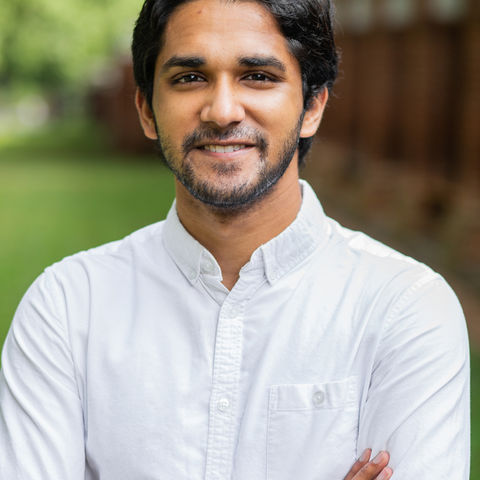
His name is Darya Pujara,
And he is the founder and chief executive officer of Y-Center.
Y-Center is a global design thinking enterprise.
We are based out of Philadelphia,
And we do a lot of work globally,
Specifically in Africa,
In India.
What we do is we basically create design thinking-led innovation,
Entrepreneurship,
And impact-driven programs and workshops and consulting solutions.
We work with everything from a university to an incubator to a coworking space to large-scale corporate organization and even a small NGO working in Africa.
I begin the interview looking at Darya's experiences studying engineering in the United States as an international student.
I then dig into inquiring about different ways people can embrace design thinking to tackle real-world problems effectively.
So without further ado,
Here's Darya.
You do a lot of workshops centered around economic empowerment and UN sustainable development goals,
Right?
So how did you get involved with Y-Center?
Sure.
So 2015,
As we know,
Was when the UN Sustainable Development Goals were launched.
And for someone who doesn't know,
They're also called SDGs or Global Goals.
They're basically a charter of 17 goals,
Which the world needs to accomplish by 2030,
Leading the world towards a more sustainable future,
A more equitable future.
And that's when in 2015,
We found out about it.
And we realized that Y-Center's work is anyway tightly aligned with the Sustainable Development Goals.
We just weren't doing it formally back then.
In 2016,
UN actually had their first ever partnership exchange event at the UN headquarters in New York City.
And Y-Center got an opportunity and invitation to join that first ever partnership event where we got a chance to learn about what it means to build that sustainable and equitable future for all of us.
And we realized this is something we care about.
Our work is aligned with this.
So we definitely became a UN SDG commitment partner.
Anyone can be a UN SDG commitment partner.
It's quite simple.
You can go on their open platforms,
Learn about it and sign up what commitments you as an organization or as an individual would want to work towards.
So Y-Center is working towards multiple Sustainable Development Goals.
As I mentioned,
There are 17 of those.
And we do it through building those workshops with universities and organizations.
For example,
Very soon we are coming up with a very specific SDG3,
Which is focused on health and wellbeing.
And we are doing a workshop with a bunch of 30 students in Washington,
DC,
Where the students would be spending a day working on problems focused purely on healthcare and improving the wellbeing of everyone around the world.
But it would start at a micro level.
It would start at working on the neighborhood issues in Washington,
DC.
And then we would of course build solutions that can be scaled globally because most of these issues are issues that the humanity collectively faces around the world.
It's not exclusive to Africa or India or US.
That shows you why this work is important.
And that's exactly the kind of work that we do at Y-Center.
So you talk about how,
I think last time I actually attended your workshop a couple months ago.
And you said that you were actually an engineer by profession and you got into this realm of design thinking and economic development and working with the World Bank and working with the UN.
How did that transition come about?
What kind of inspired you to move from that engineering discipline into doing global design thinking?
Of course,
My answers have changed.
If you had asked me this question seven years ago when I first started out,
I would have given you something completely different.
And I would have been embarrassed of that answer,
Just like we are,
What we do when we are in college.
But today it has really evolved and I really don't think I have moved away from being an engineer to being this global design thinking consultant.
And I'll tell you why.
So I got my master's in engineering.
Of course,
I did my bachelor's as well in engineering.
So six years of engineering,
I was also doing research in cancer therapy areas around medical imaging,
A lot of high level math,
Physics,
And I love those stuff.
And when I graduated from my university,
I realized I want to use my engineering to solve real world problems.
So that took me to Africa,
Mozambique,
A small,
Tiny coastal,
Beautiful country,
Southern,
South,
Eastern coast of Africa.
And while I was there,
I realized that only engineering skills are not going to be helpful for me to solve this problem.
There's something more going on here.
These problems are not that straightforward.
For example,
My first experience of working in this tiny village in Mozambique in the Sub-Saharan African country was they have medical devices worth 80,
100,
000 US dollars,
And they have no idea how to use it.
Typically,
Engineers are taught to think linearly.
So if I think linearly,
I would believe that,
Oh,
Yeah,
You don't know how to use this equipment.
Let's just teach you how to use it.
But then there were other issues that came out,
Like what happens when some of this equipment breaks?
Who is going to fix it then?
And I realized,
With typical engineering mindset,
It's very algorithmic thinking.
If yes,
Do this.
If no,
Do that.
And that's great.
That prepares you to be a problem solver,
Analytical thinker.
But the real world is a lot more complex than just using plain old A to B logic.
In fact,
Even computers are not that linear anymore with the advent of machine learning,
Artificial intelligence.
We know that even machines are not linear anymore.
So why should we be linear?
In fact,
Human beings have this extraordinary capacity to actually have a huge aspect of emotion while they're solving the problem and not just analytical thinking.
We require emotional intelligence as well.
In fact,
I believe that's one thing that's going to separate us from machines.
Many people talk about being scared of artificial intelligence.
And I'm like,
We are going to have that edge over this machine's intelligence by having an emotional intelligence quotient to our credit.
So going back to your question about how did that shift happen for me,
When I was working on the ground,
I realized I need a lot more skills than just engineering.
And that's where I started practicing design thinking.
I had taken a course in my university,
Just three credit,
One course.
But I realized that turned out to be the most useful course I'd ever taken in my university.
And it happens to a lot of students.
You go to study one thing and then that one single course that you took changes your life.
And design thinking was one such course that really came very handy in Africa when I was working on solutions.
And at that point,
I just had such a big high working with the people.
I'm like,
You don't solve problems for the people.
You solve it with the people.
That is all design thinking is about.
Unlike engineering,
Where you have a problem,
You create solution and you ship it out to your potential customers.
This is working with your customers,
Working with your beneficiaries.
And that just made me realize I want to do this.
I want to combine my engineering analytical thinking abilities with this nonlinear,
Iterative,
Empathetic and emotional approach to problem solving.
And I think the marriage of engineering and design thinking is just such a powerful combination as a problem solver.
And that's what has led me to do what I do today.
So while I have a background in engineering,
Which really helps me today to build more tech based solutions with people,
But also my design thinking skills,
What allows me to understand these problems beyond what I just read on statistical papers or research papers.
And I can really apply my emotional intelligence and I can apply my empathy with this community to solve it in a more holistic manner.
When you stepped on Grounds at Africa,
I'm sure that before you went there,
You probably heard about all these kinds of problems that the people in Africa are dealing with,
Whether that's poverty,
Famine,
Whatever it might be,
All these different problems.
But then,
You know,
Design thinking,
Like,
How did you actually get involved with that?
And also,
How did it kind of reverse your thinking and shape your thinking in realizing that there's a different way of approaching problems and looking at problems,
Not necessarily as a way to solve something or impose a savior complex?
How did Africa kind of change your experience as to what defines and what constitutes a problem for you?
Yeah,
Great question.
Especially,
I'm going to pick up on that savior complex theory.
I didn't know,
Kurian,
You know,
Something like this existed considering I come from India.
And the whole savior complex theory is very reserved for Western problem solvers or Western organizations going to a more impoverished country or a developing country and then going and teaching them their skills.
So I learned about it when I came to US and when I was in Mozambique,
That a lot of foreign organizations,
Not for profits,
Would go to these countries and impose their ideas and their solutions on these communities,
Even though they're done with good intentions.
That's not the question here.
But the much deep rooted question is,
Why did you show up unannounced in this community,
Trying to help them when no one asked for help?
That's number one.
Number two,
Why would the community trust you to solve their problems when you clearly do not have enough experience about the culture,
The traditions,
And just the socio economic fabric of that particular country?
And if I really have to boil it down that particular village or that particular community,
Those are the things I learned.
And I think design thinking is one of the most absolute,
Absolute would be a little extreme,
But I think one of the most tested,
Tested processes or a mindset,
I would say a tested mindset that really works to help us get around this savior complex problem.
So the first thing you do is you do not solve problems with the ego that you would generally have as a problem solver that,
Hey,
Here I am the superhero that the world needs,
But the world didn't ask for.
So you don't want to go with that mindset.
And design thinking allows you to understand that your role as a problem solver is really a role of a facilitator,
A role of a conduit or a medium that allows people to solve the problems in a more sustainable way.
And when I say sustainable,
I don't mean in terms of economics.
I mean,
Let's say an XYZ person from America goes to this ABC community in Africa and goes and solves the problems for them.
All good,
Great intentions.
Let's say the problem was even solved while he was there or she was there.
What happens when this person comes back to US?
What happens to that community ABC in Africa?
So the way you design thinking comes into picture is that first you do not create solutions without people's engagement.
You work with them.
And the point of sustainability is really functionally sustainable,
Which means even if the creator of the solution in this case being the XYZ person from America is now back to US,
The solution would still continue to function and continue to provide benefits to the community,
Even though the original solution co-creator is no more living in the same community.
So that makes it functionally sustainable,
Not just economically.
And design thinking allows you to have this lens of looking at problems from a very empathetic perspective,
Which means from the community's perspective.
So the first thing you think about poverty or homelessness or food insecurity when you go to some of these communities is not that,
Hey,
How can I give home to someone and not have them be homeless anymore?
That seems like such a linear solution.
Homelessness is not just about not having a home.
It's a lot more than that.
When you really apply design thinking's first mindset,
Which is divergent thinking,
And you open up homelessness,
The box of homelessness as a problem,
You see it deals with insecurities.
It deals with financial instability.
It deals with just being invisible to the community.
You know,
We pass,
If you live in a city like New York,
San Francisco,
Philadelphia,
Or some of the big metropolitan cities,
Most of the cities I talked about have a problem of homelessness.
You can walk past every single day in your life without having to notice,
You just passed a person who has none of these resources that you enjoy in your daily life.
And that's very easy.
You get conditioned.
But design thinking now allows you to look at this person in its entirety,
Give them first,
Give them the visibility that they deserve,
Give them the respect and the dignity that every human being deserves.
And then now we start looking at all the problems.
It's not linear about just putting them into a home because even if they get into a home,
How are they going to earn money?
How are they going to sustain?
What about the mental health conditions?
A lot of homelessness people also deal with drug crisis on the street.
They also deal with access to good fresh food.
So it's not just a homelessness problem.
By calling it homelessness,
Sometimes we trivialize or we make it sound linear,
But it's a lot more complex than that.
There is this whole tradition.
There are also countries where people are homeless by choice.
Now this would really raise a lot of red flags,
I understand,
With people who are listening to this.
But I don't mean people go to streets by choice,
But sometimes you have a lot of options,
But you have no choice.
And I think what if you have an apartment,
But you have no means to live in that apartment,
You have no means to survive,
Have a good living,
Why would you live there?
You would rather rent it out,
Go on the streets,
Use that money to buy whatever food,
Drugs,
Don't care.
But the point is that there are parts of the world where people do this kind of things.
So if you are solving the problem of homelessness,
You have to solve all these other problems that surround it.
And design thinking allows you to have that bigger lens of breaking this complex problem like homelessness or poverty into multiple smaller parts,
And then solve for each of those parts with your customer.
It raises eyebrows when people immediately hear that poverty isn't a problem or homelessness isn't a problem,
But it's a problem,
But it has stemmed with other kinds of issues.
And surrounding circumstances that need to be solved in order for you to attack the core issue at hand.
Yeah,
Absolutely.
In fact,
This was the first example that opened up my eyes to the whole world of charity done wrong.
Malaria is one of the biggest healthcare crises grappling Africa,
Sub-Saharan Africa to be more specific.
And for specifically kids under the age of five,
It's been 16 minutes,
Almost 17 minutes of us talking on this podcast.
If you go to UWHO and look up the research,
17 people may have died of malaria in some part of Africa in the last 17 minutes.
The question you would want to ask,
Hey,
It sounds like this disease must not be curable,
Or maybe there's no way to prevent it,
Or maybe there is no way to diagnose this problem,
This disease.
Shocker,
Guess what?
You can diagnose,
You can prevent,
And you can cure malaria.
But people still die of it.
One of the most potential benefiting,
Widely benefited interventions to stop malaria,
Like in America or other European countries was sleeping under a mosquito net,
A net that is insecticide treated.
So it's called insecticide treated mosquito net.
WHO wrote papers about it.
A lot of organizations talked about the importance of having these communities buy into this nets and sleep into it.
And a lot of American organizations and other Western countries actually would raise this $100,
000,
Million by a bunch of mosquito nets and just ship it out for free in Africa so that a person,
Economically challenged person or a community member can actually now get free access to this mosquito net.
But here is what they found out in the studies,
That if this person also doesn't have means to get their daily food or have two meals a day,
They're going to use the same mosquito net to actually go out in the sea and fish.
And that really breaks my heart to think about the fact that someone had good intentions when they sent out this mosquito net,
But the problem is they didn't think through the whole scenario of the person who is going to be using this mosquito net.
If you are going to be dying or maybe infected by a mosquito bite for malaria,
And you are definitely hungry today,
I think you're going to solve the more definite problem today and not wait and sleep under a mosquito net for a month and wait until the mosquito comes and bites you and then you can claim,
Oh,
This worked for me.
You are immediately going to use that net to solve your problem today,
Which is hunger,
Which is a much bigger problem for someone who faces all of these issues.
And I was really shocked to learn about this case study that how many of these community members do this daily,
Use mosquito nets for fishing.
So that was my first foray into realizing that we need better systems to solving these problems.
And what I call solution like this,
A bandaid solution,
Which means what you try to do here was you identified the problem,
Nothing wrong in that,
You even identified a solution,
But unfortunately the solution is only solving the symptom of the problem,
Number one.
And it's not even solving the cause,
The reason why this problem exists.
That's how you want to eventually get rid of the problems.
You want to focus on the reason and the cause.
But most of the solutions are so bandaid,
They're just surface level skin.
If you really scratched something on your skin and it's bleeding,
You can put a bandaid and that's fine,
But these problems are not a scratch on the surface.
They go a lot deeper and most of the solutions do not think of people or think of these problems as a system problem.
They think of it as a standalone elementary problem.
So I think that case study really was a very powerful case study for me to learn about some of these communities.
There's this whole distinguishing between causes and effects.
The lens that you use in solving a problem is just as important as the problem that you're attempting to solve.
Right?
Could you elaborate just a little bit further?
Yeah,
Sure.
Mostly the way people solve problems is they look at their own ability of how they can solve it.
So the lens typically used by most problem solvers,
For example,
An engineer would look at a problem and think about a technical solution.
My favorite example,
Which I think we had discussed last time we met was a bunch of engineers going to a remote village in Africa and helping out women who have to carry water on their head and walk miles and miles.
And these women do this every single day,
Sometimes more than once a day for the rest of their lives.
So the way engineers look at this problem is let's bring out an engineering solution,
Civil engineering solution.
Let's plumb,
Let's do plumbing,
Let's bring out taps and all of that.
And what they found out,
Despite giving them the taps and all of that,
No women was ready to use this solution.
The tap water or use the plumbing system,
They still were walking miles.
And it really puzzled these engineers.
Why are they doing this?
You know,
This is a solution that works.
I mean,
We all use taps every single day to get our water.
We don't go to a river to fetch our water.
But these women in this community chose to continue to do that despite this engineering solution.
And then they found out that they continued to do that because they didn't have any problem with taps.
But using taps would actually take away from their social life.
When they go out to fetch water,
They go along with their friends.
And this was their safe space to talk about women's health,
To talk about their kids and just to have a friendship.
This was their safe community along with their other friends.
And when they would be isolated to use the solutions at their home,
The taps,
It would actually take them away from their social life.
The only social life they had,
They were not using Facebook,
Instagram and Snapchat to stay connected with their friends.
So that was really a powerful lesson to understand that typically the lens people use is the lens that they are comfortable with,
Which is they would go back to their own background,
Their educational background,
Their own capacity of what they can do.
And then they try to solve the problem.
Classic scenario is,
You know,
I have done now workshops this year around roughly 10 universities across America.
My team has done workshops in different countries this year,
Egypt,
India,
Kenya.
And everywhere when we meet a student or a young innovator and they say,
I'm going to make an app to help someone do this.
And my first question would be,
Why are you making an app?
And they said,
I'm a computer engineer.
I know how to code,
So I'm going to make an app.
That's the wrong lens.
You know,
Right there is a huge problem.
You don't build solutions because it's easy and because you know how to do it.
In fact,
Quite the contrary.
You do it because it's hard.
And not,
You don't build an app because that's what you know.
I mean,
That seems valid,
Of course,
You know,
As an engineer,
As a linear thinker,
That's the most valid thing to do.
But you want to first understand the problem to the core that,
Do these people even know how to use a smartphone?
Are they using other apps?
If not,
Then your solution is going to miserably fail.
So the lens you would want to use solving these problems is not from a solving perspective,
But from the customer perspective,
From the person who's facing the problem,
Use their perspective.
What does their day to day life look like?
You know,
What do they use?
What do they do when they wake up in the morning?
That's going to give you insights about what kind of a solution you want to build.
And maybe it will still be an app,
But at least it won't be,
You are not designing it because you know how to do it.
You're doing it because that's what they're used to doing it,
You know,
And that's the shift of the lens.
It's not,
Your why should be not because of something,
I'm comfortable to do this.
Your why is because they are comfortable to use it.
And that's the difference in the lens that I really have started to appreciate using design thinking.
You know,
The fact that we shouldn't throw solutions and throw these products at people.
That's one thing.
You talk about how these people have routines,
They have these norms,
Right?
But some of these norms are causing them to feel like they're in this cycle of impoverished conditions.
I think last time we talked,
We had this conversation in the workshop.
You mentioned this quote,
If Henry Ford asked in a survey what kind of vehicle people wanted,
People would just say that they wanted a faster horse.
So how do we approach innovation and solving problems in our lives with design thinking with the intentions of kind of moving people away from their current norms,
Yet still allow them to be comfortable and allow us to be conscious about what their routines and what their daily lifestyle is like.
Exactly.
I think the Henry Ford line actually is very important because after listening to everything that we've been talking for the last 25 minutes,
People start thinking,
Oh,
So you are telling me I should just go to people and ask what they want?
No,
Because human centered design thinking is about creating solutions with the people,
But it doesn't mean people know or people are going to tell you what they want.
You go to a poor person and ask them,
Hey,
How about $100,
000 for next five years of your life?
They might likely,
In most likelihood,
They might say yes.
A person who doesn't have enough means and resources,
You go and tell them,
I have a solution.
I'm just going to give you free cash.
Now it sounds like,
Oh,
Wow,
This definitely works for me.
From a person who doesn't have money,
They might just say yes.
And then that leads you to believe,
Oh yeah,
This is the solution that definitely worked.
But if you all know that after five years,
It's very well possible,
Not even five years,
This person might just end up being back on the streets in a couple of months.
They don't have any knowledge of how to use this money.
They don't know what they're going to do with it.
They still don't have an education.
They don't have a college degree.
They don't have a job,
Apartment,
Any of that.
They don't have a social status.
They're not part of,
They're not regularly contributing to the society the way you are.
And that takes them away from a lot of things.
So the big thing to understand is you don't go and ask the person who's facing the problem about how you want it to be solved,
Because if they knew it,
Maybe they would have done it themselves.
So how do you really do it?
One of the ways to do is,
In design thinking is,
I talked about empathy.
So the way you practice empathy is by most easiest way,
Observing.
Observe someone in their daily life,
See what they're used to,
See what you can sell them that doesn't seem too odd or very extraordinary from their routine.
You just will have to figure out how does it fit that,
Because the biggest problem of creating solutions that look very alien object or an alien product or service is that your customer might benefit from it,
But they might still not accept it.
And if they don't accept it,
They're not going to use it.
Then what's the point of you creating any solution?
Goes back to that whole metaphysical statement about if a tree falls in the forest and no one heard it,
Did the tree really fall?
You create a solution,
No one wants it,
No one uses it,
Did you really solve the problem?
I think that's the key to understand is that you don't go and ask people,
You don't conduct survey.
You observe them,
You interview them,
You want to get a story out of them.
You really want to understand what it means to live this life.
And that's exactly what design thinking allows you to do.
Design thinking is not a solution to everything,
By the way.
I have to really warn people listening to this is that I don't mean that everything can be solved using design thinking,
But complex problems like this would require approach like this where you observe people,
An empathetic approach.
And it's by no means the fastest way to solve problems.
This requires a lot of patience.
It requires a lot of practice.
To get a story out of someone,
Maybe you'll have to interview them three times,
Four times.
They might not even open up the first two times.
So there is a lot of things that goes into practicing design thinking.
But the whole part is if you do it rigorously and you go by the books,
It gives you so many insights and so many powerful stories about someone that you might not end up making those assumptions,
Those dangerous assumptions while creating your solution.
So it's very important that you don't think of human-centered design and creating solutions for people as surveying people.
It's not about survey.
It's about storytelling.
It's about finding that powerful story,
That powerful emotion.
And that's what's going to help you to build solutions.
We have to make sure that we're not making the wound deeper than it actually is.
We need to make sure that it's healed and taken care of before we actually go about doing anything else.
So you mentioned using empathetic processes and empathetic solutions and this whole aspect of storytelling.
And we're talking about problems like poverty and homelessness.
And from a Western light and from the immediate eye,
You think that these are problems that are facing people that aren't like us.
So these problems,
In your perspective,
From your experiences,
Are they a problem of equity or efficiency?
The first approach that I really encourage every problem solver out there is you have to embrace these problems as yourself.
So here is what I mean by that.
When UN Sustainable Development Goals came out,
The 17 goals,
Zero poverty,
No hunger,
Gender inequality,
A lot of people thought that,
Oh,
Wow,
These goals are for people in Africa or for people in India or for other developing countries,
Bangladesh.
That's not true.
Look around you.
Look in your own community.
I challenge,
Even if you are in the world's most what's considered the developed metropolitan city,
You will still find at least,
If not more,
But at least 10 of these issues around you.
So everything from lack of quality of health care or lack of quality of education or accessibility issues around education for women of color,
You will find these issues every single place on earth.
And that's what interestingly binds all of us together,
Despite all our differences.
So the question you asked about equity or efficiency,
I'm just going to bring it back to lack of empathy.
While the problem is lack of equity and lack of inequality and lack of efficiency,
I think it's also lack of empathy.
One of the biggest case studies,
Or if I may refer to not really a case study,
But an incident of most recent times is the refugee crisis in Syria.
When we started reading about it in Western countries,
Not many people were able to really understand what it means.
In fact,
We called it refugee crisis.
And I remember going to this amazing conference around that was talking about this problem and they said,
The first thing we need to do is stop calling it a refugee crisis.
It's a humanitarian crisis.
These are real people with families just like yourself,
Having their kids wanting to go to school,
Just like you would want your family to thrive.
But by calling them refugees,
You almost give them a very special status and distant yourself from that problem.
So I think we have to stop distancing ourselves from some of the problems.
Climate action,
Climate change.
A lot of people have said,
Oh,
1.
5 degree hotter in the next 10 years.
I don't know what it means for me.
This morning it was 50s and now it's in the 70s.
And I'm able to handle 20 degree difference Fahrenheit in a daytime.
So 1.
5 doesn't seem much.
I mean,
Yeah,
That's one of the most stupid arguments I've heard of.
But it's real.
People almost start putting their own perspectives on this lens and believe that it doesn't affect them and it's not their problem.
And I think that's what shows lack of empathy.
Let's say this doesn't affect you in a way.
But if you for a second imagine what 10 years from now is going to look like,
This humanitarian crisis,
What we were talking about,
It affects you.
Because this community needs a home and they're going to be all part of our community next few years.
That's how I think this country was built.
It's filled with immigrants who left their countries either because they didn't have many opportunities or because of fleeing a warlike situation or any of that,
Multiple reasons.
Of course,
Many came by choice.
But also that choice was governed by something that wasn't working for them back in their country.
In my case,
I came here because I thought the US gave me an excellent opportunity to study advanced engineering fields.
And I found I didn't have enough options back in my home country.
So India has a huge problem of brain drain right now.
A lot of young people,
I'm one of them who just left the country for better opportunities.
And that affects back home in India as well.
So I think we have to start understanding that these are not the problems that only affect someone in America or in India or Bangladesh.
It affects every single human being.
If you are,
And not just human being,
It affects every living being.
It affects the trees around us.
Anything that's living around us is now affected by these problems.
And I think one of the biggest issues I can think of is lack of empathy.
We just need to be more empathetic.
And you know what?
We all are by default wired to be empathetic.
It's just that we have stopped exercising that or stop expressing it.
So you don't really have to go to college to learn how to be empathetic.
If you are born on this planet,
I don't know about other planets,
Maybe that's a different podcast.
It would really be a great podcast to think,
Would aliens be empathetic like humans?
But I think human beings have a default and natural capacity to be empathy.
And all we need to do is just explore that and express that.
That's exactly right.
We're all fellow travelers on this Spaceship Earth,
As they say.
That's very highly philosophical and I love a great way to close the segment.
I think the biggest takeaway from this interview was that people need to explore and listen,
Either to our own voice or to others,
To understand our society's biggest challenges and see where our efforts are most needed.
This allows you to gain perspective and build empathy for others in order for you to better assist them.
As we're going about our lives,
We also shouldn't keep a solution at the forefront of our minds when we're trying to find out and frame our problems.
We shouldn't say that we need this job to be happy or be in this relationship to find peace.
We need to be encouraged to focus on the bigger systems rather than just solving problems at the elemental level.
Thank you for listening.