There's a force out there that attracts us to certain things.
But what happens when we can't get what we're attracted to?
When we have an urge to fix things in our lives and grab what we want?
Whether that's chasing after the school or job we desire,
Trying to save the relationships that are falling apart,
Not being able to have the life we've wanted for so long.
All of this makes us ask ourselves,
Why does this happen to me,
And what more can I do to change the things that are wrong in my life?
Korean Thomas here,
And welcome to another Epidose of Seratunin.
My guest today has spent years as a pastor leading an organization called Church on Grounds.
Sunday mornings at 11 a.
M.
Is our main connection point in Urn Commons on the UVA grounds,
Where we have our regular worship service where we sing a few songs and then I give a message,
And then we have discussion groups after that,
Followed by a free meal for anyone who wants to stay.
Doing things like sharing meals together,
I think,
Are a really important part to building community.
So the Sunday morning is definitely the core of what we do.
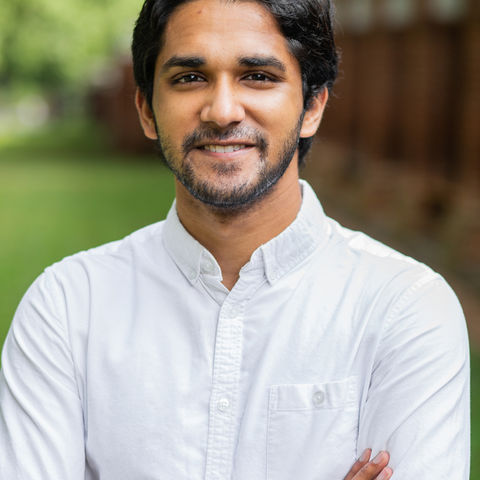
We call him Pastor Michael Lusk.
He and his wife are both graduates of the University of Virginia,
And they both lead conversations every Sunday with a handful of members from the university and Charlottesville community.
We begin the show looking at Pastor Michael's experiences as a student at UVA and later as a pastor.
We then learn more about worldviews,
The usefulness of believing in something,
And how faith can be a productive means of receiving the things we so deeply desire in our lives.
Without further ado,
Here's Pastor Michael.
All right.
Hi,
Pastor Michael.
It's really great having you on the show.
So you're a pastor for Church on Grounds.
Do you mind telling me a little bit more about Church on Grounds,
A little bit more about yourself and your background?
Sure.
Yeah.
So like you said,
I'm the pastor of Church on Grounds.
I grew up in a Christian home and went to church and things growing up,
But it was in college that my faith became very real to me and very important.
So when I graduated,
I decided to go into ministry,
Especially reaching out to college students and helping them navigate through the big questions that we all have about life and about God.
And so I worked for a church as a campus pastor for a time,
Basically like a youth pastor,
But for college students.
And then a few years ago,
The church I was working for,
I decided to restructure and become a multi-site church and wanted to plant one of their sites at UVA.
And so to make a long story short,
I became the pastor of that worship site,
Which we call Church on Grounds.
And it's geared towards reaching out to university students,
But also faculty members.
So yeah,
It just revolves around the UVA community.
I go to Church on Grounds too,
Try to go every Sunday.
And it's really great seeing the community.
And it's a very intimate setting.
And I think we have the opportunity to really get close to you as a pastor,
Especially since you've been a student at UVA.
Could you tell me a little bit more about your worldview and how your experiences at UVA helped you understand this whole aspect of faith and how that really integrated into your life?
Yeah,
Sure.
So like most students at UVA,
I did well in high school.
I'm from a rural town,
Martinsville,
Virginia.
And I was a big fish in a little pond there.
And I did well and came here.
And all of a sudden,
I wasn't doing as well as I had done in high school.
And so it really caused me to ask big questions to myself.
Yeah,
Who am I?
What's my purpose?
Am I worth anything if I can't make good grades?
Because I really found my I did those grades.
And that's kind of what I the metric I used to determine whether I was good or not.
And so I was struggling with those first semester didn't do as well as I had done in high school.
And so came back second semester,
Just deciding,
All right,
Well,
I'm just going to work hard.
And I felt through my just efforts and my intelligence that,
You know,
Eventually I'll be able to get back to the top like I was in high school.
And I found that journey to just be tormenting,
To say the least.
So you know,
I was having trouble sleeping at night and just constantly stressed and just was not feeling fulfilled.
And to make a long story short,
The church that I now pastor reached out to me.
I started going there and then started doing a Bible study with a couple of the men from there.
And I was kind of sharing with one of them how I was struggling and anxious and all these kinds of things.
And he really started to bring up what you mentioned,
Like some worldview issues,
You know,
Asking those big questions.
Well,
What makes you special?
What's the purpose of your life?
And one passage in particular he took me to was Matthew chapter six.
It talks about how God is a father that cares for the birds of the air and the flowers of the field.
And if we seek him first,
That as a good father,
He'll care for us.
And so I started to rethink who it was I was really trusting for ultimate control of my life where I had felt like,
Well,
I can control everything.
I can do everything and basically be God.
I found that that that path was just tormenting because I'm not big enough to be God.
And when I finally started to realize,
OK,
There is a God in heaven that does care for me.
And if I put him first in my life and I can trust him to take care of things,
I know I still have to be responsible and study and things like that,
But that God ultimately would care for me.
And when I made the decision to really believe and trust in that,
It brought a lot of peace into my life.
It actually then enabled me to do a lot better in my schoolwork.
But also just there was so much more peace I could think clearly.
And when I was on the test,
Instead of freaking out while I took the test,
Just being able to focus,
OK,
What is this asking?
And then being able to remember what I had studied.
And so the peace I received there from kind of having that change in mindset,
Change in worldview just helped me to decide I'm going to pursue the Christian faith much more seriously and see what all these things mean for my life.
That's actually a really interesting point.
You mentioned you felt that that burden was lifted off of you,
Especially as we're living in a do-it-yourself kind of culture.
It seems like you are personally responsible for the things that enter your life and the things that you produce in your life.
If you had any experiences about when you thought that you had everything in control,
I'll kind of prove to you that maybe it's not really in your control.
There really wasn't any way that you could have made a situation possible.
It's sort of just out of whether you're a Christian or not,
Out of fate or out of something out of a higher power.
So like I said,
I'd grown up in a Christian home,
So I always had some part of a Christian worldview in my background.
But as I began to think of it more seriously,
I began to put myself in perspective,
For one thing,
And realizing I'm just a little blip in this gigantic universe with a bunch of people here on earth,
That I'm not nearly as powerful as I think I am.
And at first,
It can seem kind of demeaning.
But for me,
It was very peace-giving.
I realized,
Okay,
I'm not in charge of tons of things,
And that's okay.
I think a lot of times our culture,
Especially today,
Is focused on being great.
Like I want to pursue greatness and be excellent.
And I think it's good to have goals and want to improve on yourself and things like that.
I think what I learned is more important to just try to be a good person,
To be a moral person.
And I really found if I follow God and I'm a moral person,
Then I can find contentment.
And I think that was a real key for me,
To learn to be content with where I was in my life and to say,
Hey,
I want to get better.
But if I'm not a CEO or I don't make straight A's,
That's fine.
That's not what determines whether or not I have worth or not.
And as you've grown as a person,
You said that you've learned that being a moral person is a huge aspect in how you see the world doing the right things for the right reasons.
How has that actually shaped your life?
What kinds of results has that brought into your life?
And could you just explain a little bit more about finding worth?
Like that,
So kind of the worldview,
Even going back to that Matthew 6 passage I referenced,
In another place in the scripture that always refers to God.
A lot of places refer to God as a father.
And I really understood this when I became a father,
Because when my first child was born,
That first day,
He accomplished nothing that was a benefit to me.
He mostly just screamed and used the bathroom on himself and then had to eat and all these kinds of things.
But from that first day,
He had really infinite worth to me.
I would do anything for him,
Because his worth wasn't based in his accomplishments or what he did.
It was based in the fact that he was my child and I loved him because of that.
So he had just that worth based in who he was.
And so me being a father helped me especially understand God being a father,
Understanding,
Okay,
My worth doesn't come from my accomplishments,
But it comes from me being a child of God.
And I can rest in that.
So I don't have to do something like insanely incredible to have worth.
I can just rest in the fact that I'm a child of God.
And that as a child,
I should want to mature.
If my first son is now 12,
If he was still doing the things that he was doing as a newborn at 12,
Then obviously I'd be concerned.
I want him to mature.
I want him to grow.
Right?
Yeah,
If he's still just screaming all the time.
Yeah,
That wouldn't be a good healthy thing.
So I want him to grow.
I want him to mature.
But my love for him isn't dependent on those things and his worth isn't dependent on those things.
And I found that to really be true in my life.
Well,
Hey,
I want to grow and mature.
I want to become more wise.
I want to come as a pastor.
I want to be able to develop my skills of preaching or to care for people.
But ultimately those aren't the things that define me.
What defines me is that I'm a child of God and I can rest in that.
And once again,
When I have rest on the inside,
Peace on the inside,
It makes things on the outside of me go a lot more peacefully.
Right.
And I totally understand that.
And I think I started to do that as well,
Like within my own life,
Being able to delegate or not necessarily delegate,
But just taking all of your burdens and all of your whatever's on your mind and just giving it to this external figure really just helped me clear my own mind and understand where the right things and the right people fit in the path of my life.
And you mentioned finding your wife and you and your wife are really,
Really essential members of the church.
And your story,
I think you told me about it before,
But it's really amazing.
And how that really kind of was also an act of putting your faith into something else or kind of just letting an external figure,
An external force really just help you find the person that was really important to you in your life.
Could you talk a little bit more about that?
I mean,
I think it's such a cool story.
Yeah,
Yeah.
We have a pretty unique,
Maybe even radical story.
So I'm about five and a half years older than my wife.
And I met her during her first year at UVA and I was already pastoring with the church.
And so I met her through the church.
And when I met her,
I was attracted to her,
But I could tell that she was kind of asking those big questions and the same way that I'd been asking the big questions my first year at UVA.
And I've seen sometimes when people are kind of asking those questions,
If they start a romantic relationship,
It kind of takes them away from working on themselves and working through those big questions.
And so I just felt a conviction in my heart that even though I was attracted to her,
That at the time,
I just needed to be a friend.
And then once again,
This real sense of trusting that God was ultimately in control,
That I could trust him,
That if she was the one for me,
That he would keep her from me.
And so for the next four years,
We were just friends while she was working through school.
And she was doing a five-year program here through the Curry School.
But as she was getting ready to enter her last year at UVA,
I felt,
OK,
Well,
Now's maybe a time where she's clearly matured and more ready.
But I know like when the romantic relationships,
You can have blinders on and not see red flags.
And so I talked to my pastor and asked,
Hey,
Well,
I just said,
I think God wants me to marry Katie.
Does that sound crazy?
Do you have any red flags you see?
And I hadn't said anything about this to her or even anything romantic to her.
And then the week after I said that to him,
She went to the pastor's wife and said the same thing about me that,
Hey,
I think God wants me to marry Michael.
And is there any red flags?
And so the pastor,
Pastor Mark,
He came and kind of told me,
Hey,
Well,
She's actually come to my wife also.
And we don't see any red flags.
So I think,
You know,
I think this is what God wants to happen.
And so I was obviously excited to hear that.
And so I was trying to think of how I was going to reveal that I even had feelings for her,
Much less that I wanted to marry her.
And so we were at a wedding of some mutual friends.
And afterwards I asked her,
Hey,
Can we go somewhere and talk?
And so she said she had to go drop some things off first,
But then she'd meet me at UVA and then we'd go to a park.
And so I got to the place we're meeting first.
And I was kind of anxiously waiting for her.
And I had this whole plan to kind of slow and reveal everything.
But just emotions running high.
And so when she steps out of the car,
I just say,
I love you and I want to marry you.
I had never said anything romantic to her before.
And she just says,
Me too.
So then,
Yeah,
That could have ended in both ways.
I know,
Right?
Yeah.
So thankfully she and I was like I said,
I had known that she had talked to the pastor's wife.
So yeah,
I felt pretty good about it.
But yeah,
You still don't know.
Is there going to be a last minute change of heart or change of mind?
And so then we went to talk to each other and talked about how we felt each other.
And yeah,
Within the next year,
Then we were married.
And you really didn't have to focus on whether or not she was going to say yes or no.
You were trying to convince her or do anything.
You just really had to focus on what you were feeling and what you were thinking at the time and really emphasizing that point.
And the rest is up to her or whoever it might be to influence her decision.
Right.
Yeah.
Yeah.
I can't manipulate her.
I can't manipulate anyone.
Right.
And so that goes back to where I was.
You know,
When I was a single guy,
I was really just focused on becoming a good man and really believing that,
Hey,
If I'm a good man,
Then that's going to attract a good woman to me,
Which obviously it did.
You know,
It's really important for me to marry someone who shared my values.
But I think Christians in particular can go to the other extreme sometimes and think that I shouldn't take care of myself at all,
That it should all be focused on others.
But the reality,
I think,
Is that if I do focus on myself,
That that will help me better love others and care for others.
And one of the great commandments Jesus tells us is to love your neighbor as yourself.
Well,
If I don't love myself very well,
That means I'm not going to love my neighbor very well.
And so I have to love myself.
And then as I'm secure,
For instance,
If I feel secure in who I am,
Then I'm not going to be threatened by others.
I'm not going to envy others.
And so I'm going to be more free to love them better.
And so I've seen that happen in my life.
Right.
There's two extremes.
One,
There's one extreme where you can be too self-obsessed.
And there's another extreme where you're too selfless and you're not caring about yourself.
And you're kind of blindly following just this giving and being charitable without really any intention of what's actually going on.
What do you say?
I've touched on this before,
But what's the process of distinguishing?
Sometimes is it too naive to just say that it's up to God?
Is it too optimistic to say that there's someone else that's going to be taking care of this?
Like I don't have any control over this?
Yeah.
That's a challenging question.
It takes a lot of discernment.
Obviously any of these things we're never going to do perfectly will go from one side of the balance to the other.
But I think some things that are important to me is to ask myself once again,
Are the moral principles there?
So like when it comes to my being,
So God calls me to be diligent,
For instance,
And to work hard.
So am I being,
If I'm looking at myself and I'm,
Oh,
I'm just being slothful or lazy,
Then I realize at that point that I'm just quote unquote,
Trusting God too much,
That I'm not actually being a responsible person.
I'm actually not following God even in that moment.
Now the other extreme is if I'm a workaholic.
And so once again,
I kind of think that I'm in control of my own destiny fully.
And I think some ways that I've been able to tell when I've kind of gravitated onto that workaholic extreme is when certain things in my life that are important aren't getting the attention they need.
And so now that would be things like,
Oh,
Not spending time with my wife or my children.
I'm not spending time with God.
Or also that if I'm just feeling really anxious about things,
If I'm feeling anxious,
I think that's also a sign that I'm not trusting in God fully to take care of things.
So I focus on being a hard worker,
Being diligent,
And then the results are up to God.
And that doesn't always mean that even everything will go the way that I hope it will go.
The Bible says that God works together all things to the good for those who love Him.
But as a father,
He knows what's good for me,
Even when I don't always do that.
And so one of the ways I always think about this,
Last week was Halloween.
So my kids went trick or treating.
And of course,
The good thing for them is to,
Oh,
Let's eat all the candy right now.
But as a father,
I say no to that.
No,
You can't eat it all.
You can have some.
And to them,
That might seem,
Oh,
That's no good.
But I have a higher perspective.
So also just trusting,
OK,
God knows what's good for me,
Even though I don't.
And so I can have goals.
But if I don't hit those goals,
If I'm working hard,
I can just say,
OK,
Well,
God knows something else is better for me.
And I just have to trust that.
Right.
Right.
And you're bringing up trust.
And that itself is a huge,
Huge aspect in life that's very hard to grapple around,
Especially.
We both talked about having anxious thoughts or having anxieties in our lives.
And when you're having anxiety,
Especially,
It's hard to feel like you can actually trust that the process will work out or trust that everything will work out in the end,
Whether or not you believe in Christianity or something else or whatever it is,
Just going back to the whole concept of faith and how that can help us.
And especially as we're living in a time and age where productivity is measured on a lot of our platforms.
Why do you think having faith in something or believing in something is a productive thing to do?
Sure.
Well,
I think a number of things.
First of all,
I think having faith for me gives me a lot of purpose.
Like if there isn't a God or anything like that,
Then all that means is that I'm just random carbon atoms that have just kind of been brought together over time.
And to me,
That was led to a lot of nihilism in our culture and just feel like things are meaningless.
There's no purpose.
Why even do anything?
But having faith means that I believe there's a God that exists that does love me.
That's cared for me.
But I have a responsibility because of that.
And so I want to show my gratitude toward what God has done for me,
Both in creating me and as a Christian,
Of course,
I believe that Christ came into the world to die on the cross and resurrect for my sins.
And so I want to express gratitude for that by being a productive person,
Whether that's being productive in my career or being productive as a friend or as a father and a husband.
I have that sense of purpose that comes from having a creator.
Sometimes I don't have,
When I'm just in the flow of things,
I'm in the zone.
I sometimes don't recognize that sometimes not doing anything at all or not necessarily not doing anything at all,
But allowing someone else to do the work for me,
Whoever it might be,
Whether it's fate,
Whether it's destiny,
Whether it's God,
Allowing someone else to take on that mental burden can do so much for you.
And delegating is a productive measure of work and of getting through life.
Yeah,
I agree.
There's all kinds of benefits.
I mean,
Obviously,
I believe that you're connecting to God when you're praying and that he's working through that.
But beyond even the supernatural aspect of it,
What's going to help you put things in perspective,
It is part of prayer,
I think does involve,
Again,
What I mentioned about Thanksgiving and you just realize,
Oh,
OK,
Yeah,
Things are OK.
And it just helps with Thanksgiving and contentment.
I mentioned that a minute ago,
But that's been a huge part for me,
Being able to say OK,
I'm working hard,
I'm loving people and I can be content with that.
Because if you're not,
Yeah,
We should set goals and want to improve.
But there's always more money I could be making,
Always a higher position in a company I could have.
And if I can't be content with where I am,
Then I'm going to be tormented.
And so prayer is a big part of helping to build contentment for me.
And then I mean,
There's lots of things.
So the final thing I'll say is going back to love,
Because a lot of my unhealthy drivenness is really an attempt,
I think,
To earn love.
Like I want to do these incredible things because then everybody will look at me and be like,
Oh,
Wow,
Michael's awesome.
Then I'll feel good about myself.
But when I have people around me that love me like God does,
Not because of my accomplishments,
But because of who I am,
That I'm just their brother in Christ,
Then it frees me from having to try to prove myself and earn love.