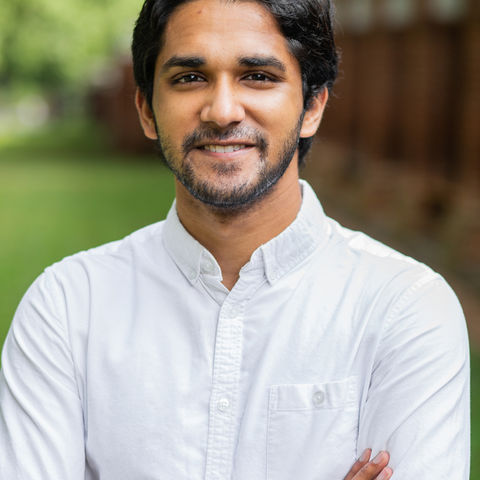
People love certainty.
It's human nature to like having control over our own lives,
Choosing what we're gonna wear,
Where we're gonna eat,
When we're going to bed.
But sometimes in our busy lives,
This certainty gets faded and the plans we make for the future start getting more and more blurry.
When I was younger,
I would worry a lot about the future.
When I was in elementary school,
I would ask myself questions like,
Who am I gonna play with tomorrow?
Will I have to run the mile again?
What if my math teacher hates me?
I think around the age of nine,
My mom even recalls me stressing out about not knowing how to drive a car to get my future wife to the hospital when it was time for the baby to be delivered.
I know,
It was strange.
As I grew up,
However,
And went on to high school,
My concerns for the future followed and I began to ask more relevant questions like,
What do I want to be when I grow up?
What do I want to study?
Where do I want to study?
What kind of job do I want?
I was in this predicament trying to mix emotion and logic to derive this map of where I wanted to be in the future.
The thing is,
I know I'm not the only one.
People face uncertainty all the time.
The question is,
How do we deal with it?
Korean Tom is here and welcome to another Epidose of Seratunin.
My guest today has spent years living in Silicon Valley,
Bouncing from tech company to tech company,
Working on cross-cultural content marketing,
And has spent time working as a mental health coach for a nonprofit based in DC called MindRight.
The company that matches mental health coaches,
Volunteer coaches like myself,
They train you.
And with minority students,
Most of the high school students go through trauma.
And these volunteer coaches,
They tech students,
They check in with them on a shift basis.
So checking with them,
I text them and if they have anything that's on their mind they'd like to share,
This is just one of the things they've made anonymous and they could share with us.
Her name is Ruika Lin.
She's a graduate of the University of Virginia and she's an author of a book of collected essays titled Frequently Asked Questions,
Where she explores diverse themes spanning microeconomics,
Psychology,
The professional world,
Music,
Human connection.
UVA sent from UVA.
A bunch of internationals got on the bus,
Got on the dorms after 1am,
Completely just detached.
I have no idea where I am,
What's going on.
Leaving family for the first time,
Single child,
Single daughter.
They sent a single daughter abroad on the other side of the planet.
It's really brave of my parents,
But I'm sure they struggled a lot with that decision.
And I had no idea.
I wasn't the one deciding to go abroad.
It's very hard for a teenage Chinese student in China,
Given what's going on in China,
To decide on her own,
I want to go abroad.
But I came here anyway.
The first day,
You know,
Waking up,
Nobody was around.
I was in my dorm and dragging with four pieces of luggage and looking around.
I was woken up by ROTC.
People were yelling out by the O dorm.
I got selected in the O dorm.
Because I knew nobody.
So I was like,
Oh,
What is this yelling noise?
It's like,
It's a clock in the morning.
Maybe I'm jet lagged.
But I was so I at the time I thought,
Hey,
Before coming to the US,
I set myself a goal.
I want to learn.
I want to learn about what people do here,
How things work here,
You know,
In aspiration.
I want to contribute.
I want to establish myself in a new country of very Taipei personality.
My first impression of the US is nothing like that.
I was no establishing myself no contributing,
No learning.
It was just exhaustion and hunger.
I didn't know.
I didn't know where to go.
There's nobody around.
And I don't I did not speak very good English at all.
There's no one around and I walked and walked and walked a half an hour to a jogger.
Some grad student probably not think about it in the summer came by.
Oh my god,
Lifesaver.
I need to ask you a question with my broken English.
Where do I get food?
He pointed me to the corner,
Leaving family for the first time single child,
Single daughter.
They sent a single daughter abroad on the other side of the planet.
It's really brave of my parents,
But I'm sure they struggled a lot with that decision.
And I had no idea I wasn't the one deciding to go abroad.
It's very hard for a teenage Chinese student in China given what's going on in China,
To decide on her own.
I want to go abroad,
But I came here anyway.
The first day,
You know,
Waking up,
Nobody was around.
I was in my dorm and dragging with four pieces of luggage and looking around.
I was woken up by ROTC.
People were yelling out by the old dorm.
I got selected in the old dorm.
I knew nobody.
So I was like,
Oh,
What is this yelling noise?
It's like six o'clock in the morning.
Maybe I'm jet lagged.
At the time I thought,
Hey,
Before coming to the US,
I set myself a goal.
I want to learn.
I want to learn about what people do here,
How things work here,
You know,
In aspiration.
I want to contribute.
I want to establish myself in a new country with a very kind of Taipei personality.
My first impression of the US is nothing like that.
I was always acknowledging myself,
No contributing,
No learning.
It was just exhaustion and hunger.
I didn't know where to go.
There's nobody around.
And I did not speak very good English at all.
There was no one around and I walked and walked and walked a half an hour to a jogger.
Some grad student probably not think about it in the summer came by and was like,
Oh my God,
Life saver.
I need to ask you a question with my broken English.
Where do I get food?
He pointed me to the corner.
I didn't know it was the corner.
He pointed me to that.
And I was like,
It was a good like a sandwich or something.
Pointing at the food and grabbed it and then paid.
And I had to calculate,
Oh my God,
The amount in Chinese yuan.
It's time seven,
Right?
Everything times seven.
It was just such a,
There was very complex and unique challenges and stressors at the time that stressed me out.
And no one else really had some more kind of stress.
And I think that applies to a lot of international students,
Chinese students,
Especially as I can speak for other international students,
But aside from adjusting just to college in general,
There's many more layers of adjusting to a new culture that was not even a little bit similar to their native culture.
So that's a small,
Small example.
Like I can't,
I can think of so many,
But my first year living with an American roommate,
She and I never talked up beyond passive greetings.
The way,
The way I thought,
Uh,
How she perceived me,
The way I interacted with men,
Opposite sex,
Right.
On campus,
The way I saw how gender dynamics play out.
These things are never,
Are never even talked about in China.
I come from a much more conservative,
Like sexual way,
At least conservative Eastern culture where it's a taboo to talk about stuff like this,
Especially for college.
And,
And a lot of these trends,
I would say transformation and changes bring a lot more stress to somebody who's just like 18 from a different country to a college campus.
And you know,
At the time I remember my fourth year,
I was able to talk to a professor.
I told him,
I said,
You know,
When I first came here,
I thought UVA is America.
I thought this was what America is like.
And he told me that,
Well,
If you want to know about America,
Go to Walmart.
I was like,
Oh,
I don't know.
I don't know about that.
I mean,
That's just an incredible story about how,
Like,
I mean,
I have a couple of international friends myself and even if they do grow up in like a very modern,
Like very urban place,
Like in,
Uh,
In Mumbai or China,
I mean,
You're just expecting them to like come into America thinking that,
You know,
Everything's the same,
But really there's still a lot of differences that are apparent.
Yeah,
Absolutely.
Yeah.
And that's why it helps.
I think at least for me,
It helps to get out of UVA and going to the workplace and seeing different places.
You see,
You see different things.
You see how people's lives are so different and they carry out different lifestyles.
The West Coast,
Especially.
So I remember on the East Coast,
A mentor of me told me the first year working,
Like you have to be at work for two years.
Otherwise it looks bad on your resume and just stuck it out.
You know,
I was working at Earth,
Being out at the time I hated the job and on the West Coast,
People jumped ship all the time.
You know,
It has something to do with the industry and the research balance and the developers.
They don't care.
And they,
For the most part,
They don't care about,
You know,
If I work at this company for four months and for whatever reason,
I don't like it.
I'm going to go somewhere else.
It's super common.
There's no such thing as you can stick it out for two years.
Otherwise it looks bad on your resume.
That's just a small picture of it.
You know,
Like,
Well,
It's sort of just like trying to visualize the ladder of success and how to like hack your way into getting into a consulting position is really like some of the conversations that I hear.
There's definitely a strategy,
A plan,
Right?
Yeah.
Whereas,
Uh,
This is my personal experience.
I had a plan coming out of college.
I took GMAT.
I wanted to go to grad school.
I wanted to go to strategy consulting because the consulting I was doing was not really strategy consulting.
I,
Everything changed after moving out here.
Everything changed.
It was just not,
You know,
It's not according to the plan.
It's a plan.
It's a discovery on this journey of pursuing something different.
And that's actually so interesting.
I mean,
I wanted to ask you,
I mean,
Like when you said that your professor just told you to just like really just step out and like work,
How do you think,
Like,
How do you think individuals in college,
Like how do they,
How can they embrace college life without hurting themselves mentally and how can they embrace uncertainty and still like make this transition process a lot more simple?
I would say,
I guess I had to embrace uncertainty.
Really not knowing,
You know,
Especially first year,
Second year,
Really not.
I didn't know what to expect coming to the U S that's why everything was shocking,
Right?
Every single,
Every single thing,
Water fountain,
Never seen that in China.
I believe when I was there,
People would,
You know,
Bending over and drinking water.
It's such a weird,
I thought it was such a weird look.
It's so normal.
I think embracing uncertainty is challenging for a lot of students,
For the majority of students,
Everything,
Everybody wants to say,
You know,
College prepared me to go,
To go find something to go,
You know,
According to this plan.
I think first step is being aware that might not be true.
I heard from,
From somebody at the international studies office,
We were all looking for jobs at the time,
Right?
It's even more challenging because the H1B at the time in 2011,
H1Bs were not plentiful because we just came out of financial crisis,
But it was not,
It was not as stringent and challenging as now.
But I remember talking with a person at international studies office,
He said,
You know what,
It's okay.
You know,
This is stress you out,
But it's okay.
It's difficult to find a job and that's okay.
Enjoy your college life.
This is probably going to be the best years of your life.
I heard that and I was thinking,
No,
I hope not.
My college life wasn't the most enjoyable time and it's very stressful and challenging.
I hope there's more,
I hope life brings me more.
I'm only 22,
You know,
And I'm so,
So young,
You know,
Other times,
Uh,
We,
Young adults develop their brain fully.
They don't do that until age 25,
Three years after college.
And we got thrown into the workforce at age 22,
If you choose to work.
Well,
We're bringing our still,
Our brains are still highly,
Badly developing and shaping.
And as a result,
We see things,
You know,
We,
We get influenced easily.
We make changes and we have the time to do that.
Um,
So,
So,
So see,
If you see that coming,
There's nothing,
There's no need to panic because think about that brain development,
Right?
You're still developing as a person,
But there's still,
You keep that,
You keep that momentum going in a way,
A manifesting constant curiosity,
Right?
After your brain is potentially fully developed,
But you just to seek,
Seek new information.
You learn about new industries.
You think you think new ways,
Traveling new places,
You know,
These,
These things doesn't have to stop.
They can keep going.
It can't be uncertain after,
After college,
But you,
You,
You,
Your life will be an upward trajectory.
It doesn't,
It doesn't,
It doesn't have to go downhill from here.
The other part of your story is also to kind of,
Uh,
To not let the stress overwhelm people.
I think,
I think the stress,
A lot of it is coming from a place of,
Oh,
What if I don't choose this major?
I won't get into certain industry or catastrophizing.
I think,
I think that US offers a benefit of,
You know,
You could,
You could choose,
You could choose a lot of different majors and pursue the things that you're interested in.
There's so many ways to explore,
Even after college,
You know,
You can choose to come out to the bay and learn English major and do a programming bootcamp and become a developer.
It's extremely common.
The uncertainty is there,
But it's going to be uncertain for,
You know,
For most of our lives and,
And knowing that,
Knowing that you can get through it,
You will figure it out.
It may take time,
Pace yourself,
It's a process,
Then,
You know,
Things,
Things will work it out.
I guess sometimes you just got to like go free fall and just see what happens,
Right?
Because there's no right answer.
Yeah.
Yeah.
One thing I regret is not talking to more professors,
Getting to know them,
You know,
Ask them questions.
How do you get into this field?
What made you choose academia?
I'm becoming a professor.
Where did you go before?
And what was your story?
I want to know,
Right?
I,
I wasn't,
I was too afraid.
I had a lot of fear in college from many different angles and academics was one of them.
Getting to know them on a one-on-one level,
I would love if I could go back to college,
I would love to redo that.
You might not get that anywhere else,
You know,
Your peers,
Everybody's struggling.
Everybody's on the same boat trying to figure it out,
You know,
And we can talk about it,
You know,
It's good to converse,
Exchange ideas about it,
Brainstorming ideas,
Thoughts and all that.
Getting guidance,
You know,
Getting,
Getting,
Getting even,
Be proactive and talk to your academic advisor,
Whoever,
Whoever that might be.
Tell them what you need,
You know,
Tell them,
I need information on this one.
I want to talk to a professor in that department.
Do you know anybody?
Can you connect me?
So the,
The good,
The good connection,
The one good connection that I have from UVA is actually,
Uh,
One professor,
I made a connection with one professor and I still talked to him after five,
Six years coming out of college and we still keep in touch,
You know,
We could change emails,
Really long emails,
Getting,
You know,
What's his life like?
Where is he traveling to?
I didn't even take a class.
I auditioned him in my fourth year.
I really liked it and we kept in touch with all the peers and he's coming to the Bay and meeting him next month.
Really excited to see him again.
And all these connections can last.
They really can.
The relationships they have right now,
They can change after college.
I,
My friends that I thought I was close with in college,
We don't talk anymore.
You know,
People go into different routes,
Their lives have start splitting.
Many of my friends who are still in Virginia,
They're married and have babies now.
Um,
They're changed.
Doesn't mean that we can't keep in touch,
But they've changed and they,
They change even more after maybe a couple of years out of college.
And it's,
It's,
It's very natural and perfectly normal for people to just grow apart.
You know,
Our,
Our way of seeing life can be changed,
Can be,
Can be,
Can defer.
You're coming out at age 22.
Maybe you're only 20 right now.
Your 20s is a top of their lifetime of opportunity to do self-discovery,
To,
To understand your parents more,
To be more self-aware,
To reckon with your upbringing,
With your experience,
With your small and big trauma in your life.
And to establish yourself.
I looked back when I was 21,
22,
23,
The way I,
You know,
The way I interacted with my parents and I was like,
Whoa,
Was I thinking,
But I surely had a legitimate reason for that kind of interaction that I look back now.
I regret there's a process we've developed with grow.
It's in the process.
As long as we have that mindset of I am growing,
I seek to grow,
Right?
You don't know where your growth might take you.
And it's a wonderful surprise.
That's a certainty uncertainty,
Right?
And that's a good certainty to kind of catch you out of nowhere.
You don't know.
I looked back 10 years ago,
No one told me about taking care of yourself.
You know,
Really don't burn out.
If you are feeling stressed or over overly overwhelmed,
Talk to friends,
You know,
Seek help.
No one ever told me to seek help.
Nobody asked me,
There's resources to help there that you can use to help yourself.
I didn't know.
I didn't know.
And I reached out to a mentee of mine who's a Chinese student right now.
I asked him,
I said,
So I'm thinking about writing this letter to share my experience at UVA 10 years ago and offer some resources people can use when they feel overwhelmed,
Just to let people know and be aware that there are resources out there on campus.
There are student counseling,
Your RA,
Your advisor,
Your peers,
You know,
You're not alone in this and you might think you are,
But you're not.
I asked him,
So are people talking about this kind of stuff right now?
I'm on the Chinese students,
Maybe hosting events,
Talking about stress management,
Anything like that.
No,
In China,
Resources are public.
There are no,
You know,
People here in the US talk about,
I go to my gym to exercise.
My accountant told me to do taxes this year.
My doctor gave me this prescription,
Right?
Everything is mine.
Resources are centered around individuals.
Again,
We're talking about American culture being individualistic.
And I was surprised by that type of way,
Type of thinking.
These resources are mine.
If I have,
You know,
Half the money,
I can seek them out.
They can be mine.
However,
In China,
You don't talk about my doctor.
Doctors are everybody.
Doctors sit in your hospital and hospital is everybody.
You go to the hospital,
You see a doctor and you leave.
You don't have a my doctor.
There's no my accountant,
Right?
You go to an accounting firm.
They do your taxes or help you out.
Resources are shared.
They're not tailored towards individual needs.
So when I have an issue,
Where do I go?
I go to everybody's doctor.
I don't think,
Oh,
The resources can be rearranged to fit my needs.
And you're in the US.
You have that.
You don't have to think of it that way,
But know that there are resources for you.
I wrote that letter to share my personal experience,
Letting them know you're not alone.
You're not alone.
There's somebody who graduated 10 years ago that experienced very similar things.
So you're not alone in this,
But at the same time,
Here are some resources.
Seek them.
Be courageous.
Seek them out.
It's very challenging to ask for help.
It's a difficult thing to do,
But you can and you will feel a lot better that you did.
After hearing more about Ruika's story,
I learned that things never really quite work out how you might expect them to.
For Ruika,
Things went quite well for her in embracing her uncertainty.
While enjoying controlling knowing what's ahead is inhuman nature,
So is exploring the unknown.