Hello,
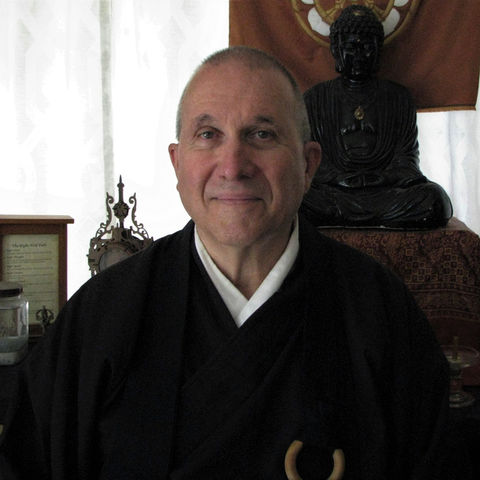
I'm Sensei Morris Sullivan,
And this is the third and final talk in my series on Buddhist practices you can apply to your daily life.
This is not to say that these are the only such Buddhist practices,
But I hope that you'll come away from these talks with a better idea how your experience of life can be deepened by your spiritual practice.
In the first talk,
I explained that we would consider the topic of contemplative practice as it is found in Buddhism and look at it from three different perspectives.
Some people come to Buddhism looking for peace of mind,
To reduce stress.
Others want increased happiness,
An experience of joy and gladness in life.
And finally,
People seek a connection with the sacred,
With a greater sense of meaning and purpose in life and a connection to something that may even transcend this body,
This lifetime.
I want to start this off with a passage by Chinese Chan master,
Xing Yun.
He begins with the question,
Where is Buddha?
Where within the vast emptiness does Buddha not exist,
He answers.
When you prostrate to a painting,
You are doing so not to a piece of paper,
But to a Buddha.
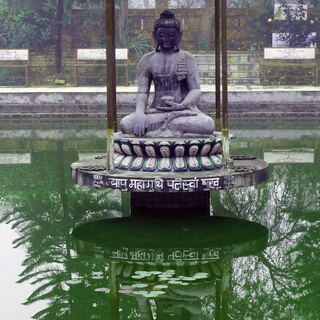
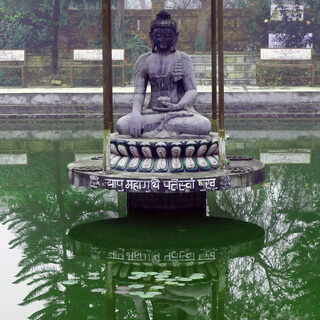
When you prostrate to a Buddha statue,
You are not revering some substance of gold,
Silver,
Bronze,
Steel,
Concrete,
Or timber.
Your respect is fully directed at the Buddha.
In the same way,
We can regard anything in the world as Buddha.
Mountains and rivers,
The moon and stars,
Which of them is not a manifestation of Buddha?
It can be said that the entire vast emptiness and dharma realms are the Buddha's true body.
Well,
It's easy enough to say something like that,
But to say it or hear it or even understand it intellectually is not the same as experiencing the presence of the divine.
So I'm a Buddhist,
Like Xing Yun.
When I experience the divine,
I experience it as the presence of the Buddha.
You might experience the divine in other ways,
And that's fine.
I think we can talk about the sacred as a universal phenomenon.
Before we go any farther,
There's something that I would like for you to do.
I'm going to ask you to stand up and turn around to face your chair in a minute.
Don't do it just yet.
If you're not where you can stand,
You can do the same thing in your seat.
You'll just have to internalize it.
Stand in spirit,
You might say.
So let me explain why we're doing this.
The first time I went to a Zen center for a meditation retreat,
They did something I'd never seen before.
At the end of 25 minutes of sitting meditation,
Someone rang a bell and everyone stood up.
And then they all turned around,
Put their hands together in front of their hearts.
We call that gassho in Japanese.
And then they all bowed to their meditation cushions.
I thought that was a little strange,
But after I thought about it,
Well,
Sure,
Your cushion has been supporting you all this time in something kind of like comfort.
And so you might acknowledge that.
It made some sense,
Although it still seemed a little disquieting to bow to an inanimate object.
But then I thought a little deeper about it.
Where did the cushion come from?
I first encountered it on that particular day in that particular zendo,
But it didn't just appear there.
Someone probably donated it,
Or maybe people donated money to the temple and cushions came out of that budget.
It's not easy to get money,
So that really is pretty special that people do that.
But even that's not where things like chairs and cushions originate.
With the cushion,
Someone grew the buckwheat or kapok that it was stuffed with,
And the cotton that it was woven from.
All kinds of effort and labor went into turning those raw materials into a cushion.
And the cushions are not there just for their own sake.
They're there to support a practice.
In the same way,
You and other people donate to Insight Timer.
So there can be this platform to support your spiritual practice and the practice of your community here.
And that's all pretty special too.
Think about the things that had to happen before you could listen to this talk at this time,
Wherever you are,
And where you can practice together with other people from all over the world.
It's pretty miraculous,
But even that is only half the story.
What had to happen to get you here?
You had to go through some steps to do this,
But you also had to be born,
Right?
Without birth,
There's no you to be here.
Without your parents and their parents and the universe and whatever came before this universe all the way back to beginningless time,
You couldn't be here now doing this.
So with that in mind,
Now I'd like you to stand.
Turn around and face your chair cushion.
Think about what a miracle it is that you are here and the chair is here to support you.
Gassho to the chair.
And as you do so,
Let your bow be an expression of your awareness of this miracle.
Thank you for doing that.
So our task today is to consider how contemplative practice might help us awaken to the sacred.
And it would help if we knew what we meant.
So I will try to define sacred as I'm going to use the word.
The dictionary says something is sacred if it is dedicated or set apart for the service or worship of a deity worthy of religious veneration,
So holy,
Or entitled to reverence and respect.
That's okay.
I think it might be useful to say something is sacred,
Like a sacred text or a sacred place,
If it provides us a pathway to or a connection to the divine.
So now what do I mean by divine?
If we look at the dictionary,
Again,
We see that something is divine if it relates to or proceeds from God.
I think that's a little limiting.
We're not all going to agree on what we mean by God or whether the concept of God is useful or realistic or whatever.
But I think we all probably experience some awareness that we are each part of something that transcends ourself.
We might call it God.
We might call it emptiness.
We might call it oneness.
We might call it the ground of beings.
There are many things we could call it.
But ultimately we are probably seeking an awareness of and a connection to that which existed before us that will continue to exist after this body has ceased to be.
And that lends purpose and meaning to our lives beyond just the necessity for survival and things that give us short-term pleasure.
We usually think of things like sacred and divine in terms of being special in some way.
Humans have built massive churches and elaborate temples to express their vision of what is divine and create sacred spaces worthy of that vision.
Buddhist temples tend to have elaborate altars that try to create an image that reflects the congregation's love and respect for the Buddha and his teachings.
A big part of the practice involves seeing the Buddha image with reverence.
A few minutes ago I asked you to bow to a chair.
That's an exercise in seeing the sacred in everyday life,
Even in mundane objects,
Seeing the Buddha in a chair.
This is a useful skill to develop,
But there are ways to use sacred spaces and objects to make it easier to feel this reverence.
For years I led services at a monastery in Florida called White Sands Buddhist Center.
I would always get there early so I could sit in the garden amid the massive granite statues of the Buddha and Bodhisattva Avalokiteshvara and just be fully present.
I would allow myself to appreciate the statues,
The flowers and foliage,
The blue sky overhead,
The sound of the massive brass bell that a monk would ring a half hour before services,
And every single time it would give me a feeling of awe.
Psychologists define awe as the emotional response to coming across something so dramatically beautiful,
Grand or complex that it transforms our view of the world.
Awe is one of the ways we encounter the sacred.
It's the sense that we are part of a wonderful reality that transcends the mundane concerns of this life and this ego.
When I was a university chaplain,
One time we invited a scientist to come and give a talk about awe.
She runs a lab where they study it.
To evoke that mental state,
They put people into a simulator where they can experience something much like astronauts experience when they're in orbit.
They see the sun rise over the earth from outer space.
The scientist said that every astronaut comes back from that experience transformed in some way.
Many say that when they saw that,
They saw God and that it had changed their life.
While the test subjects are in the simulator seeing the earth from space,
They are hooked up to machines that measure what's going on in their brains and stuff like that.
It turns out that experiencing awe is very healthy.
It improves our overall sense of well-being and it can make us happier people.
So it's worth taking the time to encounter awe.
You don't have to go to outer space or even to a monastery to encounter awe.
You can go down to the beach early in the morning,
Experience the world as it wakes up or just go into your backyard or look really deeply into wherever you are.
At the end of this talk,
I'll give you some ideas on an exercise you can try later if you'd like to work more with awe.
Sacred texts can also help us connect with the sacred by connecting us to universal wisdom.
We're going to try an experiential process called Lectio Divina,
Which is Latin for divine reading.
This is a contemplative approach to scripture that originated with Benedictine monks.
I encountered the term while researching contemplative practice applied to education.
A Benedictine nun who is also a professor of literature had adapted it for classroom use to help students grapple with emotionally difficult topics.
When I read about what she was doing in the classroom,
I realized it was very similar to how I approach a Buddhist scripture when I unpack it.
So I started working with that in some study groups.
This is a way to use sacred writings to discover spiritual themes in our daily lives.
When we open up to the wisdom contained in a sacred text,
We often find that our concerns,
Relationships,
And hopes are reflected in those words.
Essentially,
Lectio Divina is a four-part process,
Reading,
Meditation,
Prayer,
And contemplation.
So the process starts with Lectio,
Reading.
This is done slowly with great mindfulness.
And that's followed by meditatio,
In this case,
Considering the meaning of a passage.
This is less a matter of dissecting it than one of opening up to what it says.
In Buddhism,
We learn by hearing or reading what has been said and then making sure we understand it,
Meaning not just that we understand the meaning,
That it's clear,
But we understand what a passage means to us in the context of our own life and our own practice.
This is not an academic study.
It's an awareness of how a scripture is heard by your heart.
You don't analyze it with your head so much as you let it resonate with you.
The third part,
Oratorio,
Is prayer,
Which is understood in the Christian tradition as a dialogue with God.
You could think of it as a heartfelt response to what you have heard from reading the spiritual teaching.
In Buddhist practice,
You might take what you have experienced so far and awaken to what we call a turning word,
A phrase or word that seems to encapsulate the teaching and communicate it back to you in a deep way.
And finally,
Contemplatio is silent prayer,
Stillness that incorporates the teaching as the realization of its truth.
Again,
In Buddhism,
You hear a teaching,
You make sure you understand it deeply regarding how you can put it into practice,
You practice it,
And you realize the results of the practice.
So the silence is a way of sitting with the result of a teaching.
So let's try it.
I have a passage we can work with.
You could try it later with any sacred text that is meaningful to you.
This one comes from Shinran,
The founder of the Jodo Shinshu School of Buddhism in Japan.
It was written in the 13th century.
We're going to spiritually unpack this scripture together.
So I understand that the idea of doing this as a group exercise came about in third world churches where books are scarce.
So meditating together on scripture and praying as a group became common.
If we were doing it as a group,
We'd read together,
But we'll modify it for this format.
I'll read the passage.
And as you listen,
See if a word or phrase has particular relevance or resonance for you.
And then sit in silence,
Reciting and reflecting on that word or phrase for yourself,
Just for a minute.
If you wish,
Write down the word or phrase that touched your heart or share it with someone later.
Here's the passage.
The land of happiness is pure and immaculate.
There the undefiled wheel of Dharma is turned constantly.
There transformed Buddhas and Bodhisattvas are bright as suns and firm as mountains.
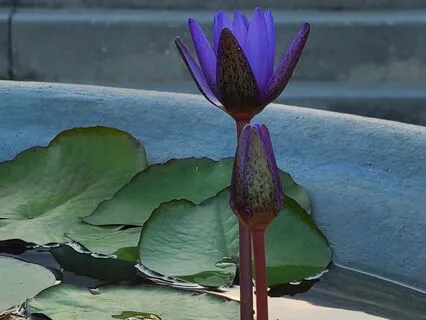
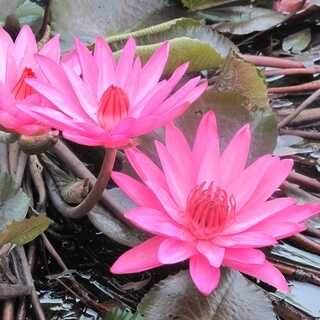
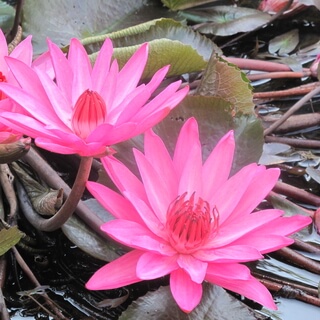
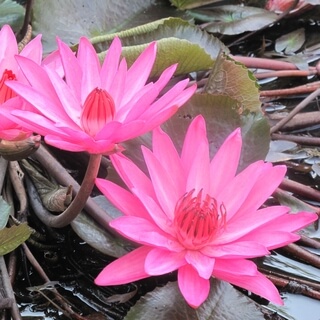
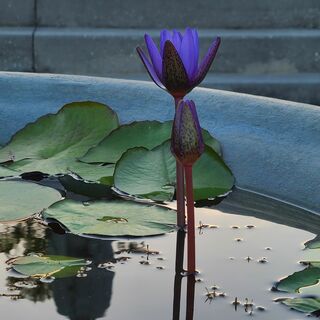
Thus lotus blossoms unfold from the muddy ponds of sentient beings.
The lotus does not grow in the solid ground of lofty plateaus,
But in the muddy ponds of the lowland marshes.
This analogy means that ordinary people like us live in the mud of blind passions.
But awakened and guided by Bodhisattvas,
We are able to put forth the blossoms of the Buddha's perfect enlightenment.
Now I'll read the passage again.
This time,
As we sit in silence,
Ponder the word that touched your heart and ask where that word or phrase touches your life today.
And then if you wish,
Write it down or share what you heard or saw.
Here's the passage again.
The land of happiness is pure and immaculate.
There the undefiled wheel of Dharma is turned constantly.
There transformed Buddhas and Bodhisattvas are bright as suns and firm as mountains.
Thus lotus blossoms unfold from the muddy ponds of sentient beings.
The lotus does not grow in the solid ground of lofty plateaus,
But in the muddy ponds of the lowland marshes.
This analogy means that ordinary people like us live in the mud of blind passions.
But awakened and guided by Bodhisattvas,
We are able to put forth the blossoms of the Buddha's perfect enlightenment.
I'll read the passage one last time.
In the silence that follows,
Ask yourself what this text is calling you to do today.
If you wish,
Share what you experienced.
The land of happiness is pure and immaculate.
There the undefiled wheel of Dharma is turned constantly.
There transformed Buddhas and Bodhisattvas are bright as suns and firm as mountains.
Thus lotus blossoms unfold from the muddy ponds of sentient beings.
The lotus does not grow in the solid ground of lofty plateaus,
But in the muddy ponds of the lowland marshes.
This analogy means that ordinary people like us live in the mud of blind passions.
But awakened and guided by Bodhisattvas,
We are able to put forth the blossoms of the Buddha's perfect enlightenment.
And now one last step.
I'll give you a moment of silence and during that time pray for the person closest to you.
Closest to you physically right now,
If possible,
Or someone close to you in your life.
If you don't pray to a deity,
You can use the Metta verses.
May they be happy and well.
May they be free from suffering.
Before I close,
I want to suggest something that you can work on in the coming days.
Try doing an awe walk.
Walking with awe.
We are most likely to feel awe in a place that has some sense of vastness,
Like orbiting the earth,
For example.
It helps too if you're seeing something new.
So you're probably not in a position to go into orbit,
But maybe going to the beach or a wooded trail or the top of a tall building,
Something like that.
But vastness can also include the vastness of time.
I like to go to historic places where I can feel the presence of people who lived long ago.
And you can find something new in things that you have around you all the time if you just look at them closely enough.
Once you've decided where to go in your walk,
Keep this in mind.
Turn off your phone or leave it behind so you can keep your attention in the present time and space.
And as you walk,
See if you can tap into a childlike sense of wonder.
Try to see everything as if you've never seen it before.
Even if you're walking down a street that you walk down every day,
You can find things that you've never noticed before.
If you can,
Try going someplace new somewhat regularly and walking with awe there.
You're more likely to feel awe in a place where you encounter the unexpected.
I hope this series of talks gave you some ideas about how to explore contemplative practices and how a few Buddhist practices can help you have a greater meaning and purpose in life.
And I hope that you'll continue to explore and to walk in awe more and more as you go through life.
Thank you for your attention.