Hello and welcome.
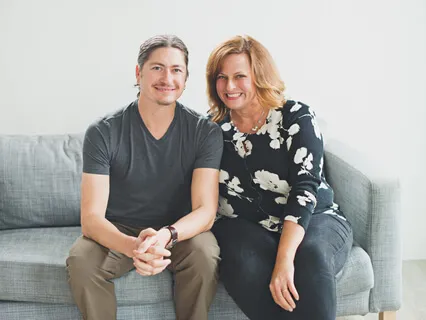
This is Scott Moore and Nan Seymour.
And today we're going to give you a small example of something that we call Dream and Write.
And it's born of two of our favorite things,
Yoga nidra and river writing.
And we're going to explain a little bit about what yoga nidra is and what river writing is.
And today's purpose for this practice is just to give an opportunity to practice and to experience a little bit of expansion through our soul,
Both through this mindful practice of yoga nidra,
As well as an opportunity to write a little bit.
And this is meant just to be fun and casual,
But who knows what can come from it.
So anything you want to say about that?
Just welcome to the river writing studio.
We're actually recording this at the table where several times a week we do river writing with eight people.
And this table is kind of a sacred table.
A lot of stories have passed over it in the last couple of years.
And it's nice to be here with my friend Scott sharing this practice.
It's really cool.
I'm really happy to be here.
I think I'll start to explain just a little bit about what yoga nidra is.
What is yoga nidra?
It's a really good question.
I'm still trying to ask myself that question.
I've been doing this for about 10 years.
I think the best way to describe yoga nidra is simply a way of practicing paying attention.
It's a form of mindfulness,
A form of awareness in a way that helps you identify as awareness itself.
And the methodology is unique in that it helps you.
.
.
It's like a guided meditation that helps you feel extremely relaxed,
Knowing that the gateway to experience our bigger selves is through the realm of relaxation.
But through expanding our awareness,
We become extremely in tune.
And I believe that that quality of paying attention will improve all kinds of things in our lives,
Including and especially writing.
And as somebody who writes,
I've used yoga nidra extensively to help me with my writing.
And I really love what you offer,
Nan.
And I've learned so much about writing and learning how to write myself through what you've offered.
So that's a little bit about yoga nidra,
But what is river writing?
Can I say something about yoga nidra?
Oh,
For sure.
I guess I want to put in my little plug.
As you know,
I'm a fan.
And so when I talk to people about it,
I kind of want to check this with you.
I tell people a few things about it if they don't know what the practice is.
I tell them that it's the easiest yoga ever,
Right?
And that you generally do it laying on your back.
And the invitation is to be totally comfortable.
And when you guide me in a minute,
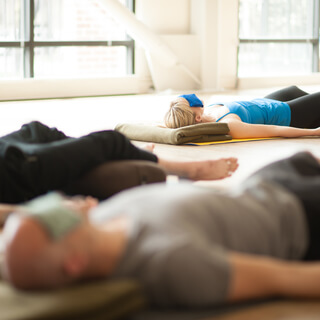
I'm absolutely laying down on the floor right there.
Fantastic.
But there's something I think more important that I try to get to.
There's so much I could say about it,
But I feel like it's a way,
The kind of guidance you give invites this connection with really the biggest possible self,
Almost a self beyond imagining.
I think every time I've done yoga nidra with you,
I leave knowing something more of my true capacity.
And I mean my capacity for compassion,
For imagination,
For creation.
I feel like I really get some access to that through nidra.
And I wonder if that kind of rings true with you if I'm describing it well when I tell people about it that way.
I think that's a perfect way of saying it.
I think that's excellent.
One of the things that you said that really resonated with me was just tuning into that bigger,
Biggest part of yourself.
But to understand your own capacity through experiences that we've both had,
I remember one of the ways that we experienced that capacious quality is to hold these things that sometimes are very challenging,
But paradoxically hold that with other things that are feeling really maybe incredible.
And that's one of the techniques of yoga nidra is to use that sort of expansive view to see both heavy and light so that you can experience that which is larger than either.
Yeah,
Exactly.
So sometimes I describe it as like training to hold paradox,
Which is very useful every day,
The ability to hold paradox.
And I think particularly to people who are writing,
Going around the world as writers,
Observing,
Taking in their experience and wanting to give it back again on the page.
But if we're like seeing things in a non-binary way,
If we're seeing that whole range of possibility that nidra invites,
Then we have a lot more to write about for one thing and a lot more ability to do so.
So that's how I see the relationship.
And for me,
I feel like writing is just another extension of that mindfulness.
That's what I really appreciate about what you do and how you invite people into that frame of mindfulness with a pen and a piece of paper.
And so I think it's a beautiful pairing,
This dream and write thing that we've come up with.
And for those people who aren't familiar with river writing,
What is that about?
How does that invite awareness?
So it's a structured writing practice and a shared writing practice.
And then the word practice is really important.
So at the table here,
Like what we'll do this in a minute,
We're invited to start writing with a prompt.
The first thing I usually do,
And nidra will accomplish this for us today,
Is I do some kind of work towards grounding,
Becoming present and a little bit of encouragement to lay down the perfectionist tendencies.
I like to break free of the tyranny,
Basically,
Of perfectionism,
To leave the inner critic at the door for this practice,
Because what we're doing is we're just writing to discover.
We're writing in the freest possible way with a hand,
Pen,
Paper,
Something about that physicality helps us find more freedom than we would if we were at the computer.
So,
You know,
Conditioned to cut and paste and edit,
Delete.
And you don't do that when you're writing by hand.
So that's why we write by hand,
Because we're not trying to make it good.
We're just trying to go into the wild mind and find out what's there and really just generate,
Create,
Find,
Discover.
And we're doing that with pen and paper and a lot of freedom.
And then we'll share it with each other and we'll share it in a particular way,
Which is we're not offering any critique or praise.
And because both critique and praise bring back comparison,
Ego comes flooding in,
Right?
So we're just going to say thank you when we share.
And we'll also read without apology.
We won't preface,
We won't explain what to read.
So it's just really simple.
Yeah,
It's just really a simple exchange.
It's a non-judgmental witness opportunity to use our voices to be heard without judgment.
And yeah,
That's what it is.
I love it.
I do too.
Well,
I'm glad you're doing this today.
This is so cool.
Yeah,
I'm excited to do it with you,
Both things.
So we'll start off with yoga and a drift.
Awesome.
And I'm going to invite you to assume the position,
Which is like getting as comfortable as possible.
I'm all about it.
And so if you were here with us,
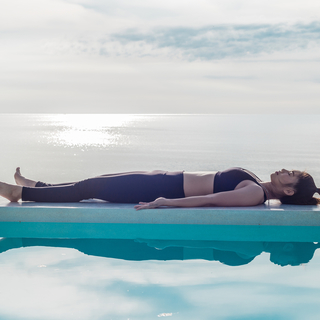
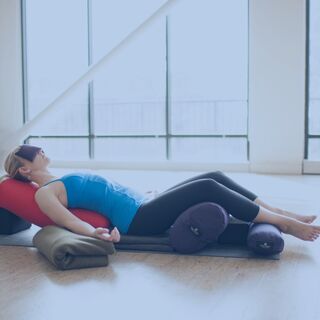
You'd see that Nana is getting comfortable on the floor.
I welcome you to do likewise,
Either sit back in the chair or if you can lie down on the floor.
And I'm going to spend the next several moments leading us through this yoga and a direct exercise that will incorporate getting very relaxed with a little visualization that we'll be able to incorporate into our writing practice.
So once you get settled,
I invite you to take a slow breath in through your nostrils and a gentle sigh out your mouth.
And do that a time or two in through the nostrils and out your mouth.
Like Nan alluded to,
Let's let go of the critic right here and now.
For the next several moments,
Nothing is good and nothing is bad.
For the next several moments,
It's just information.
We have a three-part mission.
It's simple.
It's number one,
Welcome anything and everything into your awareness,
Whatever comes in.
If it's a thought or it's an emotion or a sound,
Let go of judgment or valuing of that thing and just let it be.
Number two,
Just recognize it for what it is.
Okay,
That's a thought and that's a sound or that's an emotion.
And lastly,
Just be the witness.
So let's practice this.
I invite you,
As your eyes are closed,
Let go of all kind of effort and just experience everything in this moment that feels external.
Like the sound of my voice in your ears,
As well as the temperature in the room,
The smells,
Anything that feels external,
Welcome,
Recognize and witness.
Just kind of have a curiosity about everything.
And now switch and bring your attention to everything that feels inside.
And by inside,
I'm thinking inside like thoughts or emotions,
Internal sensations,
And just be curious about that as well.
Now go back to outside,
Then back to inside.
And in this moment,
I invite you to feel both simultaneously.
As if suddenly you could simply be universally aware.
And imagine letting go of something that feels like solidly you and open up to the bigger version of you that includes your body but isn't limited to,
Includes also the sounds you're experiencing and the thoughts and emotions you're experiencing.
Be the temperature in the room.
Be awareness itself in this moment.
And let's spend the next couple moments using all the things that we can be aware of as a way of practicing experiencing ourselves as awareness.
And what I mean by that is,
Let's simply feel the sensation of our mouth without the need to do anything about it,
Other than simply being aware of sensation.
As you do this,
Allow yourself to become increasingly more relaxed.
Feel your eyes,
Just aware of their presence.
Your ears.
Feel the plane of your face.
Your head,
Your entire head.
Feel both of your arms.
Remember,
Nothing to do about them.
Just welcoming them.
Welcome their sensation and recognize that as sensation.
And just being the witness of sensation of your arms.
Likewise,
Your chest and belly,
Your back,
Your pelvis and your legs.
Now feel the sensation of your entire body simply as sensation.
And recognize that while in one moment you're feeling this thing and the next moment you're feeling that thing,
Really all that we're doing is watching how these changing sensations reveal an unchanging awareness.
Be that awareness in this moment.
And as I invite you to remember some happy memory or happy thought.
Remember or even imagine a time when you felt happy.
Invite those feelings to rise to the surface and welcome those,
Recognize them,
Simply be the witness.
And as if placing yourself there in this moment,
As if seeing in this moment through your eyes and hearing with your ears,
I invite you to bring to this moment those things you see in that memory,
The shapes,
The colors,
Maybe they're objects or people.
As if experiencing these with your own senses,
What does it smell like in this scenario,
This memory?
What are the sounds you hear?
What is the temperature?
Are there any tastes associated with this moment,
This event?
What are the emotions you are left with?
I invite you to welcome,
Recognize and witness all things that you're experiencing in this moment.
And events like this will come and will go and as will memories and experiences.
And everything points us to practicing greater and greater awareness to the point where we can begin to identify as such rather than all these beautiful but fundamentally lesser parts of our being.
So this moment,
I want you to come back to the feeling in your body,
The soles of your feet,
The palms of your hands.
Come back to the sound of my voice in your ears.
As we practice paying attention,
We'll be able to take this awareness and pay it forward into our next exercise.
I'm going to count to five and that will signal the end of our practice,
After which you will hear a ding.
54321.
Our yoga nidra is over.
How was that for you?
I love it.
It's good.
It's relaxing.
I'm always surprised how quickly I become very relaxed and notably in a state that's not awake but not asleep.
Like a state that is something good in between those things.
Indeed.
That's what nidra refers to actually is that state of being between waking and dreaming consciousness.
Yeah.
Akin to maybe the daydream state.
That's the nidra state.
Oh,
Okay.
Yeah.
So mission accomplished.
Excellent.
But we're done here.
Our work here is done.
That was a practice that was less than 10 minutes long.
It's incredible what can happen in under 10 minutes.
Yeah.
It's surprising to me because most I've done it with you longer.
I think that might've been the shortest.
Yeah.
Does that ever have that it was quality.
Thank you.
Nice.
Thank you.
All right.
Would you like to do some river writing?
Let's do it.
My pen's ready.
Okay.
I see your pen's ready.
So all you'll need anyone listening along,
You might take a moment if you need to press pause to make sure you have blank paper.
I usually recommend not a pretty journal.
So we're writing in just kind of these 15 cent,
You know,
Wide rule notebooks that I buy on sale every at the beginning of every school year.
And the point of that is that the paper isn't precious because this is practice.
It's not performance.
So,
Um,
And then a pen that is comfortable to you and that has good ink flow and maybe a backup pen because the idea here is,
Um,
To keep your hand moving.
That's one of the fundamentals.
And I'm just pulling up a poem.
This is an excerpt,
Um,
From a writer.
Uh,
The book is called I Remember and the poet's name is Joe Bernard.
B-R-A-I-N-A-R-D.
Um,
There's a whole book that goes along like the excerpt I'm going to read.
Um,
And the point of reading poetry as an invitation to begin is not big.
It's not because we're going to write poetry in response.
In fact,
We're sometimes I say this,
I hope it's okay to say on a recording,
But the invitation is actually to go ahead and feel free to write the worst shit in America because really you just need that kind of freedom.
So we're not trying to write poetry in response to poetry,
But we do listen to poems for invitations.
And so you could just kind of listen,
Um,
In an open,
Gentle way,
Not worrying about meaning,
But you're listening for,
Uh,
An invitation,
A door you can open and walk through to begin writing.
Right.
All right.
Ready for a poem?
I remember shower curtains with angel fish on them.
I remember very old people when I was very young.
Their houses smelled funny.
I remember daydreams of being a singer all alone on a big stage with no scenery,
Just one spotlight on me singing my heart out and moving my audience to total tears of love and affection.
I remember waking up somewhere once and there was a horse staring me in the face.
I remember saying thank you in reply to thank you.
And then the other person doesn't know what to say.
I remember how embarrassed I was when other children cried.
I remember one very hot summer day.
I put ice cubes in my aquarium and all the fish died.
I remember not understanding why people on the other side of the world didn't fall off.
So that's Joe Brainard from,
Uh,
I remember.
And,
Um,
You heard the refrain,
So simple.
And also the way that he used it,
It's just,
I remember and there's a memory and they're not necessarily chronological,
Just grabbing one thing,
Grabbing another.
Uh,
It can be very open like that,
Or if you'd like to revisit your nidra and the memory from the nidra,
You can locate yourself in one memory for instance,
And kind of look around a room and just give detail after detail from one specific scene if that's enjoyable to you.
Or you can move from scene to scene total and totally in a random way.
And we're just going to,
Um,
Write for five minutes,
Which is a short time,
But we'll keep our hands moving.
Right?
Right.
Any questions,
Um,
So I'm just writing without any sort of editing and just the idea is just to keep going.
Absolutely.
Uh,
I like to say this,
If you,
Um,
Run out of things to say,
Uh,
You can throw the refrain down again,
Right?
I remember again,
Or you could use this line.
Sometimes it's really helpful just to write this.
Um,
What I'm really trying to tell you is,
And then see what comes.
It's a way of kind of going underneath.
Main thing is,
Uh,
Just keep going and we'll see you in five minutes on the other side.
We're shitting America.
Here it comes.
We're shitting America.
You have permission.
Definitely have permission.
And should we pause while we write?
Yeah.
All right.
We'll see you on the other side.
See you on the other side.
Okay.
Here we are on the other side of five minutes.
I hope you've been writing at home.
Um,
Maybe your hand is tired.
Sometimes we're not used to this muscular activity.
Um,
Scott,
Did you keep your hand moving?
I did.
Awesome.
And,
Um,
This is the part very simple.
All we do now is read to each other.
And,
Um,
The only rules are the ones I mentioned before and they're,
But they're important.
We read without apology or preface.
It's assumed that what's on the page might just be a mess and it's fine if it is.
And,
Um,
Then when someone finishes reading,
Everyone who's listening,
Uh,
Only says one thing.
Do you know what it is?
Scott?
Thank you.
Yeah.
Very good.
So it's so simple.
We just say thank you and then we move on and that's the whole practice.
Really.
Uh,
All right.
Would you like to read first?
I'd love to.
Thank you.
Thank you.
I remember stepping into my grandpa's house,
Greeted with an overwhelming scent of popcorn and fried,
Fried hamburger.
I remember looking at the sloppy spinach on my plate,
Overboiled to the point that it was almost black and wondering how Popeye could stomach this crap.
I remember it asking,
I remember asking my grandpa if he would take us to 7-Eleven and he quietly walking into the other room to grab quarters from his change jar.
I remember the phone call I got from my cousin telling me that grandpa had had a stroke.
I remember trying to teach my grandpa to walk again,
His determined spirit,
Despite the impossibility of getting his left side to work again.
I remember the dream I had after he had died,
Eight years trapped in his paralyzed body where I saw him walk down the hall on his own legs,
Out the door,
Never to return.
Thank you.
Thank you.
All right.
Here's another.
I remember my little sister in pigtails tied with thick orange yarn.
I remember my brother Todd's orange and yellow vertically striped pants.
I remember Bert and Ernie on Sesame Street and how Bert collected paperclips and loved pigeons.
I remember moving to Utah from California and being amazed by snow.
I remember also being amazed by stairs because no one we knew had them in Stockton.
I remember that our stairs on Wallace Lane were carpeted with deep red shag.
I remember sliding down them in a cardboard box.
I remember filling the basement with refrigerator boxes we got from a neighbor and connecting them together to make a castle of cardboard tunnels.
I remember that this required lots of tape and the use of a serrated knife.
I remember the sound of the serrated knife sawing through the cardboard.
I remember weird foods my brother used to make.
For instance,
A snack made from uncooked spaghetti noodles and water.
He worked them into a log of sorts under a running faucet.
Thank you.
So there it is.
It's just,
Well,
That was fun for me.
Did you have fun?
Yeah,
I want to say it's practice for the sake of practice.
It's a lot like playing scales on a piano so you know you end up knowing your instrument.
It's a good analogy.
Yeah,
I like that.
I like to remember that that's what it is.
This particular prompt is one if you enjoyed doing it and could have gone longer for five minutes,
You might when we're done here,
Just set the timer again,
Set your own timer for another five or 10 and keep going.
So I'm going to leave you with that invitation and say thank you so much for joining us.
I hope some pens were moving just now.
And thank you for just a great opportunity to practice,
Simply practicing both paying attention and both for the writing.
It was really wonderful.
Thanks.
It was fun doing this with you.
Look forward to our next time.
Great.
Thanks,
Dan.