Hello and welcome to this talk and short mindfulness meditation practice focusing around the idea of distraction.
I think for many beginning practitioners of mindfulness they have this image of mindful meditation being like that of Buddha sitting under the Bodhi tree,
Sitting for hours and days on end and finishing with a revolutionary idea about the nature of life,
The universe and everything,
This Nirvana state.
The reality for most of us practicing mindfulness is not a perfectly uninterrupted silent appreciation of the here and now.
Most of us are faced with distractions.
Sometimes we will sit for 10-20 minutes mindfully aware of our breathing and find that thoughts,
Feelings,
Emotions hijack our attention and we notice that that has happened and we come back to our breathing and it might repeat time and time again throughout the meditation practice and we might finish feeling that that mindfulness exercise was a failure,
Was uncomfortable,
Didn't really work and I'd like to reframe that.
I'd like to look again at this notion of distraction and try to reframe it in a more positive light.
We can imagine our life as something like a river and we could be the boat on the river free-flowing downstream,
The river taking us wherever it will and us being carried along.
That's what our thoughts and feelings can do to us if we're not aware of them.
What we often do in mindfulness practice is that we find an anchor.
We find an anchor that we can put down in the free-flowing river of thoughts and emotions to hold us fast to the here and now.
That anchor is often the breath,
Focusing on the breath that is always with us and when we realize that we've lost that focus and we've started following a train of thoughts we come back to our breath,
We come back to our anchor that keeps us still and the river doesn't stop flowing but we're no longer obliged to follow it.
If we consider mindfulness in this way,
Then a 20-minute mindfulness session where you're distracted 10,
20,
Perhaps 40 times,
And you're aware each time when you notice the distraction that you can bring yourself back to your breathing and to your anchor,
Then you've practiced using the mindfulness muscle.
You've practiced refocusing your attention to the here and now.
And it's this practice,
This awareness of attention moving and this conscious bringing back our attention to the here and now that strengthens our ability to engage in mindfulness.
So in many respects what we might be looking at as a perfect mindfulness practice where we're not disturbed,
We're focused,
We're following our breathing for the entire time,
Whilst the mind is still in the right place,
We're not in the right place,
We're not in the right place,
We're not in the right place,
We're not in the right place,
We're not in the right place,
Whilst that can be very rewarding it's not practicing the muscle of recognizing when attention has been taken away and bringing our attention back,
Of spotting thoughts as they arrive,
Merely noting that they've arrived and consciously bringing our attention back to the present moment.
And it's that kind of mindfulness that we can incorporate into our daily life,
Be it through mindful washing up,
Mindful eating,
Mindful walking,
Being mindful while listening to music.
These kinds of mindfulness can be carried with us all day every day and they rely upon that muscle of recognizing when attention has been swayed and bringing attention back to the here and now.
So with this in mind,
With this reframing of distraction,
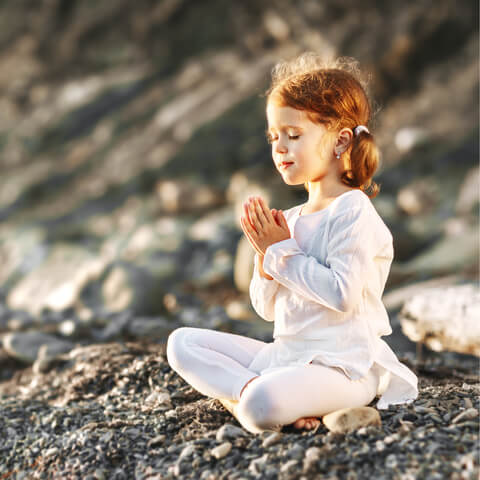
I'd like us to take up a mindfulness practice position that might be sitting or lying or even standing for a short moment.
The aim is to be comfortable,
To be grounded,
To feel contact with the surfaces that we're touching,
And also to find the anchor that we want to use.
And for the purposes of the next minute or so,
I'd suggest that we use breathing.
So once you're in a comfortable position,
I like to use the idea of sitting or standing with dignity.
Then you could take a couple of deep breaths in through the nose,
And out through the mouth.
And then you can gently allow your eyes to close,
Allow your breathing to return to its normal rhythm.
And then begin to focus on your breathing,
Whether you feel this mostly at your nostrils,
And as a change in temperature,
Or whether you feel it in the rising of your chest or the swelling of your belly.
Focus each time on what the breath feels like as it enters your body,
And as it leaves your body,
Allow yourself to relax.
So and each time you notice that you've become distracted,
Simply note the distraction,
And come back to your breathing with a sense of kindness,
And even gratitude for the opportunity that that distraction has offered you to exercise your mindfulness muscle and bring your attention back to the here and now.
I'd like to thank you for sharing this talk and short mindfulness practice with me,
And when you're ready you can open your eyes.