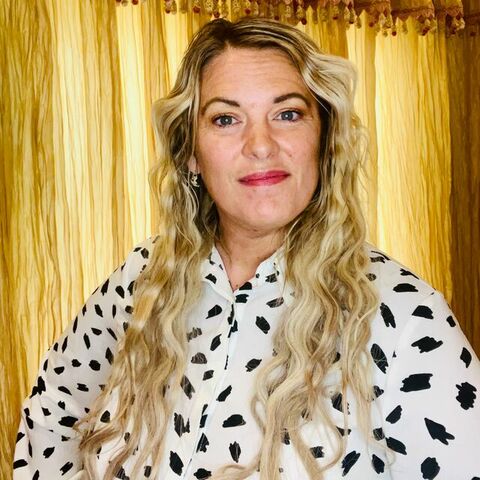
Welcome to part two of Intuitive Eating Principles with Sarah Nielsen.
I am a licensed practicing counselor.
I have been in the disordered eating,
Eating disorder field for many,
Many years.
I kind of conjugate that both ways because you can have disordered eating and not have an actual diagnosable eating disorder,
And it is to counter any kind of issues you may have with food,
Your relationship with food.
So it aids people who have mindless eating,
Emotional eating,
Overeating,
Binge eating,
Restricting purging,
Any of the type.
So intuitive eating is very important principles.
It comes from the work of Trabol and Raich,
And there are 10 principles that guide you.
I've discussed the first four in part one,
So please listen to those,
And then come back to part two.
Principle number five is discover satisfaction.
So diet culture teaches us to ignore the most basic gift of existence,
Which is pleasure and satisfaction found in eating.
Now,
You find that in many countries beyond the States,
There's lots of pleasure and satisfaction in eating,
And in the States,
We often don't have those same levels.
We're eating on the go.
We're fast eaters.
It is a just quick process without really enjoying it.
So we want to enjoy it.
We want to create an environment that is inviting.
We want pleasure present.
We want to give ourselves permission to have the pleasure in eating.
We want to figure out what we really want to eat,
But we also want to balance that with how will my body feel when I eat this?
How will it feel when I'm done with it?
Will it be satisfied?
Will it be full?
Too full?
Uncomfortable?
Stomachache?
Where will my blood sugars be at?
Again,
Just because we give ourselves unconditional permission in principle number four,
And we're discovering satisfaction in five,
It does not mean that we do not balance our eating with gentle nutrition.
At the end of the day,
The idea is moderation,
Balance,
Eating foods that make our bodies feel good.
And our bodies do not feel good when we're eating what we call an intuitive eating,
Play food all the time,
Which is AKA junk food.
So to discover satisfaction,
We do want to stop and think,
What does my body really want and how is it going to feel afterwards?
And let me just reinforce,
There's nothing perfect about this.
Okay.
Nothing perfect.
We want to make our eating environment enjoyable.
We want to eat when we're gently hungry rather than overly hungry.
We want to make time to appreciate our food,
Create a nice environment,
Sit down,
Take a few breaths,
Savor,
Savor,
Savor,
Savor,
Pay attention,
Taste,
Check in with hunger,
Full levels.
Here's something to remember.
If you don't love it,
Don't eat it.
And if you love it,
Savor it.
Again,
Doesn't have to be perfect.
It's not always within our control.
Let's go to principle number six,
Feel your fullness.
Trust that you will give yourself the foods you desire,
You need,
And your body needs.
Listen to your body signals.
Now,
Many people who have disordered eating often have blunted signals.
So they have a really hard time gauging their hunger and full levels,
Even as well as identifying their emotions.
The more you do this,
It will come.
It will return.
You will learn the signals.
Trust yourself.
Observe signs that you are comfortably full.
We want to eat with unconditional permission so we can honor food security.
We do not have to finish our plate.
We want to eat without distraction.
We want to pause and take a timeout in the middle.
It's not a commitment to stop nor a commitment to continue.
And that's really important because our brains really have a moment there when we pause.
And if we have in our brain,
I'm not eating anymore.
We can almost go into this kind of freak out mode in our brain of food deprivation.
Therefore,
We want to just say,
I'm taking a pause and I'll make up my mind.
We want to identify the last few bites threshold.
Many of us have that where we could have three to four bites on our plate left.
And if we take them,
Oh,
It puts us over the meter,
Right?
This will come with time.
And let's go to principle number seven.
Cope with your emotions with kindness.
So first,
There's a cycle we need to recognize so we can cope with our emotions with kindness.
That food restriction triggers a loss of control over an emotional eating.
And when we engage in emotional eating,
We also need to recognize that we were just finding a way for comfort,
Nurture,
Distraction,
And we were trying to resolve our issues.
We were doing the best we could with what we had.
Now we have something more.
We can do something different.
But it's important to give yourself that kindness and that compassion.
And knowing that in that moment,
Many of us were just trying to counter anxiety,
Loneliness,
Boredom,
Anger.
Those are the high triggers of emotional eating.
We must remember food doesn't fix it or change it.
It's only a short term comfort.
It does not solve it.
And we will still have to deal with the emotion plus.
So how do you cope with your emotions with kindness?
Check in on your feelings.
Again,
Many people with disordered eating or eating disorders have a hard time.
So it comes with time.
Check in on your feelings.
Rate them.
Journal them.
And if you don't know,
Write,
I don't know.
I highly recommend you write them down.
And again,
If you're not sure,
You can just put,
I'm not sure.
But you'll come to learn them.
Focus on your needs.
What are your needs?
What needs are not being met?
How can you nurture yourself,
Soothe yourself?
How can you deal with your emotions in a kind and compassionate way?
Remind yourself that if you are using food to cope,
That it's nothing but a signal that there's something going on with your life that needs attention.
No need to beat yourself up.
It just promotes the cycle.
Principle number eight,
Respect your body.
Remember,
We all have this genetic blueprint.
We have what we have.
Our height is our height.
Our shoe size is our shoe size.
Our body structure is our body structure.
Here again,
We want to reject that diet culture as it's riddled with unrealistic and critical body talk expectations.
Your body deserves respect.
Say it with me.
My body deserves respect.
Appreciate the functions of your body.
Do things to take care of your body.
Dress in ways that make you feel comfortable and good.
Get rid of the things that are too small or too big because either way,
They are not making you feel good and they're not respecting your body.
Stop comparing yourself.
It leads to dissatisfaction.
Also,
Counter the big event diet culture stuff.
What is that?
There's a wedding coming up you're going to.
Many people get on a bandwagon and they have this big event diet.
Stay away from that.
Just keep doing what you're doing.
Stop the body bashing.
Replace it with something nice.
Stop weighing yourself.
Respect body diversity.
Be realistic of your genetic makeup and be understanding of yourself.
Okay,
Let's get to number nine.
Move your body.
Get active.
Feel the difference.
Move your body,
Not for calorie burning,
Not for calorie deficit,
Not for punishment.
Do it because it feels good.
Because it gives you more energy.
Because you're empowered.
Because you sleep well.
Because it lowers anxiety,
Depression,
Stress.
Because it improves your health.
Because it fights health problems.
Those are the reasons why we move our bodies.
Be mindful of the it's not worth it.
I'm too busy.
I don't have time.
It's not worth it.
That is when somebody thinks that they don't have enough time to work out.
Five minutes is better than no minutes.
And being busy is the person who has a busy life and uses it as a substitution for active body movement.
There is no substitution for active body movement except for active body movement.
No matter how busy you are in your daily life,
No matter how much you're moving in your life,
It is not intentional body movement.
Make time.
Create time.
Prioritize you.
Integrate it in your daily living.
Make it fun.
Okay,
Last one.
Gentle nutrition.
Make food choices that honor your health,
Your taste buds,
And make you feel good.
It doesn't have to be perfect.
Under gentle nutrition,
We remember that one meal one day does not destroy everything.
It's progress,
Not perfection.
Use a concept called food wisdom,
Which is variety in our diet,
Moderation,
And balance.
Eat enough.
Eat enough to get that metabolism going.
Eat your whole grains,
Your fruits,
Your veggies,
Your beans.
Those are great for digestion and they're nutritionally dense.
Eat your protein.
Cellular repair,
Production of hormones,
Enzymes,
Hair,
Nail health,
And so on.
Carbs.
It's our body's preferred fueling source.
Get your water in.
Digestion,
Constipation,
Blood volume,
And it cleanses your kidneys.
Last,
Adequate fat.
It gives us satiety.
It builds our cellular walls,
Including brain cells and neurotransmitters.
It absorbs our fat-soluble vitamins and it creates hormone production.
Integrate play foods.
You remember that concept?
A.
K.
A.
Junk food.
It's okay to have sometimes.
Everything's okay to have sometimes,
Okay?
Please remember,
Let's go over them really quick just so you can hang on to them.
Let's go through them fast.
Reject the diet mentality.
Honor your hunger.
Make peace with food.
Challenge the food police.
Discover that satisfaction.
Feel your fullness.
Cope with emotions with kindness.
Respect your body.
Move your body and eat the gentle nutrition.
Thank you so much for listening.
Thank you for being here on Insight Timer.