Sat Chit Ananda.
Being happy for no reason.
Most human beings seek happiness,
But only few ask the question,
What is happiness?
There is no single answer to this question.
Each one of us will have a unique experience of happiness.
Through this talk,
I will share mine.
You can take what resonates with you and discard what doesn't.
The general problem with the notion of happiness is that it is based on culture and tradition.
A society forms perception of happiness based on what its influencers portray.
For example,
A society that values financial success as one of its prime contributors to a good life will equate affluence with happiness.
Whereas a society that gives prime importance to religious values will equate piety with happiness.
Why is this a problem?
The answer is more straightforward than it might seem.
Each person is unique.
One of the most mystical yet obvious aspects of existence is that no two living beings are precisely the same.
At least one thing differs in every being,
Whether it is our physical or mental characteristics.
Every person has unique cells in their body and a distinctive pattern of thinking.
So,
How can the notion of happiness be the same for two individuals?
Hence,
Instead of imitating society,
Every individual needs to answer this question for themselves.
What is happiness for me?
Based on my own reflection and life experience,
I will categorize happiness into three categories – physical,
Mental,
And spiritual.
Physical happiness involves pleasing bodily sensations.
This is the most superficial level of happiness.
Why is it superficial?
Pleasing bodily sensations are the most short-lived experiences.
They are associated with the release of hormones like serotonin,
Oxytocin,
Dopamine,
And endorphins.
Physical intimacy,
Eating,
Massage,
And other activities that primarily stimulate bodily sensations are factors in physical happiness.
Once the activity is over,
Physical happiness diminishes.
Mental happiness is of two types – emotional and intellectual.
Emotional happiness is associated with perception.
If one perceives a relationship,
Work,
Or any other aspect of their life as good,
That perception brings joy to that person.
This type of happiness is less superficial than physical happiness because it can be sustained for a longer duration.
For example,
If someone has a romantic encounter with another person,
And if they have a good time together,
That one event can become a source of joy for many months to come.
Intellectual happiness,
On the other hand,
Is generally less talked about,
But it is a common phenomenon.
It arises with mental satisfaction.
This form of happiness is associated with understanding.
When the mind understands something,
As in an aha moment,
It experiences joy.
For example,
You are reading a self-help book,
And you come across a line in that book that makes you realize how you can move forward in life.
That realization brings the joy of understanding,
And it can stay with you for days or even months.
Finally,
We come to spiritual happiness.
This term does not imply that you have to practice spirituality in some form to attain a state of joy.
On the contrary,
Spiritual happiness is not dependent on any activity,
Circumstance,
Person,
Object,
Realization,
Or anything else for that matter.
It just is.
That is the very nature of spiritual happiness,
That it is not dependent on anything.
Because if it were to be dependent on something,
Its very dependency would make it a limited and impermanent experience.
That is why spiritual happiness is permanent,
And hence it is the highest form of happiness.
The realization that we can be happy for no reason is tricky for some,
As we human beings have been conditioned to believe that happiness is always due to something.
We usually say,
I am happy because,
Followed by a number of reasons that we can give.
But just being happy without any reason is something we are not used to.
People generally find it weird if someone smiles or laughs for no reason.
But the most normal thing to do is to be happy for no reason.
Because happiness is our true nature.
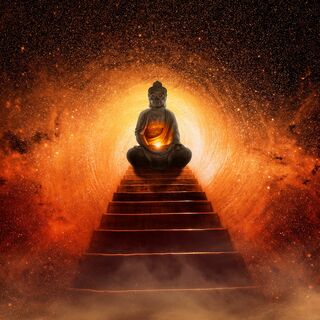
That happiness is our true nature is evident in deep meditation when we realize it.
Bliss arises in a state of deep self-connection.
This self is beyond the limited ego.
It is our true nature.
And this is what the Sanskrit phrase,
Sat-Chit-Ananda from the Upanishads means.
When absolute reality,
Sat,
Is realized through pure consciousness,
Chit,
Bliss arises,
Ananda.
So,
I would like to conclude this talk by asking you to reflect on this question.
Can I allow myself to be happy for no reason?
Thank you for listening.
Sat-Chit-Ananda.