Hello,
Welcome.
So for those of you who haven't met me,
Don't know me,
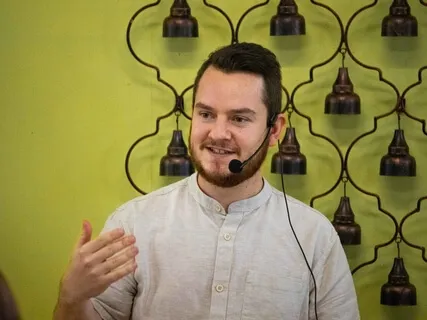
My name is David.
I'm a Buddhist contemplative meditation teacher.
I'm the co-founder of Samadhi,
Which is a UK-based organization.
We're all about introducing people to meditation,
Mindfulness,
Buddhist teachings that help them sort of reduce anxiety,
Reduce stress,
And yoga as well.
We do that as well.
Hello,
Katharina,
Michelle,
Marissa,
Wendy,
Lisa,
Grace,
Dijana,
I think is how I say your name.
And so just very briefly before we go into today's topic,
Which is working with difficult emotions,
I wanted to let you know that if you do offer dana,
If you do donate to us today,
Just to let you know where it goes.
So if you use that donate button,
Anything that you offer goes directly to fundraising for the Samadhi Eco Retreat Centre,
Which is a retreat centre we want to set up in South Wales,
People to come engage in short,
Long-term retreat,
Living community.
We're going to support ourselves from the land with solar power,
Permaculture,
And so on.
So anything you donate,
It all goes to the fund.
Myself and Manu as the founders,
We don't take anything.
It all goes to that.
So yes,
Hello,
Aidan,
Camilla,
Wendy.
Okay,
So I would like to start,
Let's just do a very brief meditation practice designed to settle everything in a state of ease,
State of comfort,
Calm,
Relaxed mind,
And then we'll start to look at difficult emotions.
So right where you are,
Please just get comfortable,
Get your back straight,
Shoulders level,
Head tilted ever so slightly forward,
And just bring your awareness into the body.
So for the time being,
Just letting any thoughts about the future,
About the past,
Just setting that aside.
There's nothing that needs your attention right here,
Right now,
But you can simply become aware of the space of the body,
The various sensations that arise and fall in the body.
And just setting the body at ease,
So noticing any areas that feel tense or tight,
And just releasing that tension with the out breath,
Softening the body,
Perhaps letting the shoulders drop,
Making sure that the face feels relaxed,
You're not frowning in any way,
Eye soft,
Eyebrows soft,
Mouth soft.
And then for a few moments,
Just become aware of those various sensations in the body that are related to the in and the out breath.
So it's not only the rise and fall of the belly and the chest,
But the whole body is breathing.
There are sensations,
Fluctuations of energy,
Prana,
In the arms,
In the legs,
Even into the head.
It's just becoming aware of those.
And then just take a moment to connect with your intention,
Your motivation for listening to this workshop,
For your practice as a whole.
That most meaningful aspiration,
Let your practice be of benefit not only for yourself,
But for others as well.
And then we can end this very short practice.
Working with difficult emotions,
That's what we're looking at this morning.
So we're looking at emotional balance,
Being able to manage,
Regulate our emotions in a healthy way.
I think that's so important.
You know,
Emotions is how we experience our world.
And for many of us,
Our emotions can be like a bit of a roller coaster.
You know,
Even in one single day,
We're up,
Down,
Up,
Down,
And it can be exhausting.
You might wake up with some anxiety about work,
Some deadlines you've got,
You're sort of identifying with that.
And then perhaps you try and suppress it,
Perhaps you try and distract yourself from it,
You know,
Loud music or do whatever you need to do.
Then you get a text from a friend about your plans on the weekend.
So we're up,
We're excited,
We're,
You know,
Can't wait for that.
And then you get to work and you know,
More deadlines,
More,
Not sure about that.
Then you get for lunch and you've got something you really wanted.
So you're really happy,
You're really excited.
And then you get back to work and then you're stressed and there's more deadlines and there's that meeting that you didn't want to do.
So we can be really up and down just in one sort of day and ordinarily for the difficult emotions,
We don't really know how to handle them.
The energy either comes out as sort of slamming the door,
Harsh words,
Being upset with others,
Or we try to push it down.
Don't we?
Some of us try to suppress it,
Deny that I'm even feeling an emotion.
You know,
There's a very good example of when somebody says,
I'm not angry.
You might say to them,
You know,
Calm down,
You know,
You're getting yourself worked up.
I'm not worked up.
I'm not angry.
We think,
You know,
They might actually really believe in that moment.
I'm not angry.
So we just try and deny,
We try and suppress.
So we distract ourselves entirely,
Clean the whole house top to bottom,
Loud music,
Glass of wine,
Whatever it is to get away from that feeling that we have inside that we don't really know how to be with.
We don't know what to do with it.
And so this morning's session,
I wanted to briefly talk a bit more about what an emotion is,
First of all,
Because self-awareness,
Awareness of how our emotions work is going to be the key to unlocking our ability to work with our emotions,
Regulate our emotional experience.
And then at the end of the session,
I want to give you some quick tools and one tool in particular,
Which will help you work with difficult emotions when they arise.
So the first point,
If we go into emotions,
What is an emotion?
This word emotion is a placeholder.
It's a placeholder for an entire experience,
A sort of process.
We think an emotion is just sort of a one thing,
You know,
Anger is just one thing that happens,
But emotion is a placeholder for a process.
And so if I just very briefly give you an idea of that process,
First of all,
It's pre-episode,
Then it's the trigger.
I don't know which way the camera is for you guys,
But hopefully we're going in the right way.
So it's pre-episode before your emotional experience,
You know,
How you were feeling before,
Your intentions,
Your motivations,
The trigger,
The thing that created that emotional experience,
The experience of that emotion,
Which is the physical sensations,
Psychological changes,
Then behavior,
Which is,
You know,
The slam door,
The shouting,
Whatever it is,
However it comes out.
And then there's the post-episode after the emotional experience.
So trigger,
Experience,
Behavior.
So if we look at that pre-episode,
First of all,
That's about how we're feeling before we have an emotional experience.
And this is really important because it influences how our emotion is going to play out.
If we're already quite irritable,
If we're hungry,
If we're tired,
You know,
If we're already kind of like tense and on our last legs,
You know,
If there's a physical condition we have that's affecting our mental state,
It's going to influence things,
Right?
Also our motivations and our intentions.
If we're holding really positive intentions for our life,
For our behavior,
The kind of person we want to be,
Then that's going to positively influence the experience.
If we don't really have any motivations or intentions,
We're tired,
We don't really care,
Then the emotion is just going to come out however it does.
We're going to slam that door,
We're going to shout at that person,
We're going to kick the dog,
Scream in traffic because we have no awareness and we have no motivation to do anything different.
So motivation and intention are really important to have that,
You know,
To have that influence our whole life.
So then there's the trigger,
Trigger stage.
And triggers,
The vast majority of the time,
They're automatic.
So we're unconsciously on the lookout in our environment for things that are going to influence our well-being.
This is called,
It's a process called automatic appraisal.
So we don't need to worry too much about the words but the important point is that there's an automatic unconscious process going on,
Constantly scanning our environment for something that's going to affect us,
Either in a good way or a bad way.
And so these triggers,
We generally have two types.
The universal type which is normal for our species,
Everybody sort of has these universal triggers,
And then there's personal triggers.
So a universal example could be,
You know,
The fear that arises when you have a fast moving object coming towards you,
Right?
So it's the thing that makes you jump out of the way of a moving car.
It needs to be automatic because it needs to be fast.
If we have to think about it and we have to consider it,
Is it coming fast enough?
Do I have time?
It's not going to work very well.
So it's automatic but it's also universal.
It's something that as a species that it's going to affect all of us.
Fear of rejection is another one.
So in our history,
If we,
You know,
We look way back when,
If you were rejected by your people,
By your tribe,
Your chances of survival just went,
You know,
Way down.
So as a universal trigger,
We're unconsciously on the lookout for signs of rejection in the way somebody talks,
In the way they behave,
In the way they look at you or don't look at you.
You're almost detecting,
Is that rejection?
And nowadays rejection doesn't mean that your survival is going to hang in the balance,
Right?
It doesn't mean that you're probably going to not survive.
But it still hurts a lot.
And that's because it's a universal trigger that we have learned.
This learned behavior is part of our being a human being.
And even though we know that perhaps this rejection from somebody is not a big deal,
It still really hurts.
So you could be talking to someone and they seem distracted.
They seem like they're on their phone or they seem like,
You know,
They're not really listening to you and some annoyance can arise.
And quite often that's because there's a fear of rejection hidden underneath that annoyance.
So those are these sort of universal triggers that we all have.
And then the other type of trigger is personal triggers.
And these are triggers that we learn in our childhood,
Triggers that we're learning since our childhood,
We're always adding to this this list.
And so you might think about your personal experience,
You might identify there are certain things,
Certain experiences in your life that trigger an emotional reaction in you,
But they don't really trigger in others.
So an example for myself that I often give,
My mum,
She was always quite stressed when you were going to be late,
She would get really quite agitated and quite stressed and quite tense if she thought she was going to be late for something.
And so that's a learned behavior for me.
That's a trigger that I often sort of still now,
You know,
It comes up and it's one of those ones that I,
The last ones that even you kind of need to deal with.
So,
You know,
We all have these sort of personal triggers.
And so in the long term for our emotional health,
It's important for us to become aware of what our triggers are.
The more aware that we are of our triggers,
The better we're going to be able to prepare ourselves and the easier we can learn alternative sort of responses to those triggers.
So I would recommend,
I'll talk more about this shortly,
But I would recommend starting some sort of emotional diary.
And if you want a template,
I can get you one where we start to,
You know,
Observe our emotional experience and note down afterwards,
What was the trigger for that?
The more we can identify those,
The better chance we're going to have to do something about them.
So there's trigger.
Automatically,
We've detected a trigger that's going to be a trigger.
Automatically,
We've detected some sort of threat to our wellbeing in our environment.
We've perceived a threat.
It could be real,
Could be imaginary.
Then comes experience,
The second part of the phase.
And this is where all of these physiological and psychological changes start to happen.
So you might notice there's some tightness in the chest.
There's some tension in the stomach.
Your face feels flushed.
Your heart rate's increasing.
You're sweating.
Your hands might be moving into fists.
Your jaw is tightening.
All of these kinds of things that can happen.
And they're individualized.
So it's worth becoming aware of what those changes are for you.
But alongside those physiological changes come psychological changes.
So you might start narrowing your thinking.
You might start to say things like,
Oh,
He always does this.
He always does that.
I never get what I need.
I never get what I want.
It's not fair.
We sort of like,
Our thinking gets quite narrow.
Rumination,
Rapid thinking,
Perhaps it gets faster.
It gets very rigid.
Perhaps certain memories,
Certain thought patterns start to arise with particular emotions.
And so another important part,
It's really important that we become aware of those changes,
What they are for us,
Just like with our triggers.
And so in this diary,
We might reflect on our emotional experience and reflect on what were the trigger,
What were the three sensations that I noticed in the body?
What did I notice in my mind?
And noting those down.
And this is important for our emotional regulation,
Because the earlier we recognize that we've become triggered,
The earlier we recognize that our pace of breathing is changing,
That we're starting to sweat,
That we're starting,
The emotion is bubbling,
The better chance we're going to have at managing the emotional experience.
Once it's gone too far,
Once we've sort of,
The red mist has descended and we've gone too far,
It's going to be very difficult to regulate our emotional experience.
So the earlier we notice,
The better.
So that's my first tip to you really,
Is try to become as self-aware as you can.
Really take note of what happens with our emotions.
So we've experienced trigger,
We've perceived something to be a threat,
Changes in our body and our mind have started to occur.
Then what happens?
Then comes behavior.
And so behavior comes in two ways as well.
It can either be the automatic reaction or it can be a considered response.
So automatic reaction,
Sort of a,
You know,
Program gets run and whatever comes out is what we've learned over the course of our life seems to be an effective way of dealing with that particular emotion.
So we might have learned that when you get angry,
When sort of those sensations happen in the body,
That outward aggression works,
Slamming doors,
Shouting,
Throwing things,
You know,
All this sort of outward aggression,
You might have learned or experienced that that was the appropriate way to deal with it.
So that might be the behavior that you do.
It could be in internal,
You might have been taught that to express your anger was a bad thing.
So instead,
You go through self-hate,
You criticize yourself,
You shame yourself,
You go over painful sort of ruminating thoughts,
That might be how you deal with it.
It could be passive aggression,
It could be ignoring people,
Being rude,
Being sarcastic,
Sort of,
You know,
Going about that kind of behavior,
Because you've learned that that's effective.
So whatever it is for you,
It's learned behavior.
And if it results in harming yourself or others,
Then it's leading to a regrettable experience.
And that's what we call a destructive emotion.
If it hurt yourself or others,
It's a destructive emotion.
But it doesn't have to be.
It doesn't have to be destructive.
We can instead have a considered response.
And so a good way of looking at this is an analogy of a road.
And really,
It's similar to the neural pathways that we create.
And that is when we have anger arise,
And we sort of maybe we slam doors and we shout,
That's a behavior that the very first time we did it,
We were learning,
It was a small road.
And the more we did it,
It became into,
You know,
This motorway now,
Which is why every time we become angry,
That's where we go,
We go to that behavior again and again.
But it doesn't mean that we can't consciously create a new road,
And then start to strengthen that road until we build a new habit of a different response.
That's all about taking back control.
But how do we do that?
How do we create a new response?
How do we take back control?
Because quite often it feels like,
You know,
Something happened and I got angry and I shouted and it just happened all in the blink of an eye.
So now I want to give some practical tips for in the moment what we can do.
And then I'm going to introduce you to a mindfulness tool which we'll practice together,
Which is really very helpful for working with difficult emotions directly.
And so we'll start with this quote from Victor Frankl,
Who's a Holocaust survivor.
And his quote,
He says,
I'm not going to tell you what I'm talking about.
I'm just going to tell you what I'm talking about.
And he says,
Between stimulus and response,
There is a space.
And in that space is our power to choose our response.
And in our response lies our growth and our freedom.
So ordinarily,
Emotions do just happen like that.
But with awareness,
We're able to look out for early warning signs,
We're able to see that between that stimulus or the trigger and the response,
There is a space as the psychological,
Physical,
Physiological changes happen,
As the thinking starts,
There is a space there.
And in that space,
We can choose to pause.
And in being able to pause,
We'll be able to choose our response.
So you might notice,
My breathing is getting quicker,
My heart's beating faster,
My thoughts are starting to change.
In that moment,
If you catch it early,
This is the moment to pause.
Shanti Deva says in his Bodhisattva Charya text,
He says,
When you're in the grips of strong emotion,
Be like a piece of wood.
And what that means is not suppress it,
Or hide it,
But just,
You know,
Piece of wood,
What's a piece of wood doing?
Nothing.
So the idea is that you just quarantine yourself like we do when we're physically ill.
We quarantine ourselves.
So we try to just remain still,
Pause in that moment.
You might just say the word pause or stop.
You might try to count to 10.
If you're with people,
You might want to excuse yourself however you need to.
You might,
You know,
Want to get out for a walk.
The main thing is that we can identify that space,
We can pause.
I see Sandy there,
You've said it's easier said than done.
And you're absolutely right.
It is easier said than done with the bigger things.
And so it's a training.
We start with the small things,
The smaller things that go wrong.
And we find that we are able to pause,
We are able to stop,
Especially if we meditate daily,
If we have familiarity with a calm,
Quiet type of mind,
Then when we are thrown off balance,
We're very aware that we're thrown off balance.
So we start with smaller things,
Start with the smaller things that we're able to pause and stop.
But then once we've paused,
What do we do?
And depending on the situation,
Different things are going to be appropriate,
Right?
So first of all,
We might choose to breathe deeply and fully.
So when we're tense,
When we're angry,
When we're stressed,
We,
You know,
We might recognize adrenaline is moving through the body.
We're going into fight or flight mode.
Your body now feels that you're in under threat and you need to either fight the threat or run away from the threat.
But of course,
Most of the time when we get stressed,
Tense,
Agitated,
We're not sort of survival hanging in the balance.
We don't need to fight or flight.
So the body is feeling unsafe.
We're ready to fight someone,
Ready to get out of there,
Whichever response it is.
So we need to reset that.
We need to change to the parasympathetic nervous system instead,
Or what we call the rest and digest mode.
And that mode is where we feel calm,
When we feel,
You know,
Feelings of safety,
Feelings of ease,
Feelings of comfort.
And so we can induce that,
That parasympathetic nervous system.
And we do that by extending our exhales.
So perhaps you begin by breathing in for five,
Breathing out for seven,
Breathing in for six,
Then breathing out for eight,
In for seven,
Out for nine.
You sort of keep extending that exhale as long as you can.
And I'd like for us now actually,
Just very briefly,
Wherever you are,
No need to change your posture,
Just practice that with me.
So counting yourself,
I'm not going to count your breaths for you,
But just breathe in for five and then out for seven.
Breathe fully and deeply.
And breathe in for six,
Out for eight.
So just with that short experiment,
I'm sure probably most of us here are not feeling very agitated already.
But I think you can start to get a sense for that,
That changes stuff,
That starts to bring about feelings of calm,
Feelings of safety,
Just that small experiment.
So we can do that at any time.
We can be at the computer desk and somebody's just said something,
We can be in the car,
We can be,
You know,
In the line at the supermarket,
We can be anywhere and we can just start,
Take control of my breathing and extend those exhales,
Extend those exhales.
What happens is that fight or flight starts to reduce,
It starts to relax,
It starts to subside,
The sense of ease and calm is restored,
Rest and digest starts to come in.
This is powerful,
This is really useful and we can use it anytime.
If it's appropriate,
And it might not always be,
But it might be later on,
We might want to try this mindfulness tool which I'd like to introduce to you now,
Which is a tool,
It's called RAIN,
It's an acronym.
And so RAIN entails,
Instead of running away from the emotion,
Suppressing the difficult emotion,
Instead it's about looking at them,
Being with them,
And allowing them to heal.
So quite often,
You know,
The way that we do run away or fight our emotions actually exacerbates them,
Doesn't it?
We either bottle it up and just keep bottling up these emotions again and again until we explode when,
You know,
Maybe just the cat vomits or something small or we break a glass,
But suddenly we explode.
And it wasn't about the glass,
It was about the fact that we've been suppressing emotions,
Isn't it?
It's about the fact that our mind is so tense,
So stressed.
So we either bottle it up until we explode or the more you try and fight it,
The more you try and deny it,
The worse it can get,
Right?
You know that phrase,
What you resist,
Persists.
So instead,
RAIN is a radically different approach to our emotions than what we normally do.
And instead it allows you to work with your emotion,
Sit down with it,
In a safe and a healthy way,
And allow you to release that emotional energy.
So as I said,
It's an acronym.
I'm just going to now explain what the four R,
R,
A,
I,
N,
And then we'll have a chance to practice it.
So first of all,
The R.
R stands for recognize.
So the very first part of the process is to simply recognize what it is that's going on.
And so we might just,
You know,
Close our eyes and ask ourselves,
What is it that is going on inside of me right now?
And we listen,
We don't need to lead the conversation.
The RAIN process is about loving kindness.
And I like the analogy of like,
As if you had a grieving friend or upset friend who had the same emotion come to you and they were crying and they were upset,
You wouldn't lead the conversation,
You wouldn't make them feel bad for feeling what they're feeling,
But instead you would be present and you would be kind and you would listen.
So we asked that question,
What is going on inside of me right now?
You might notice perhaps some tension in the stomach.
You might notice whatever the feelings are.
A word might come up.
It might be anger,
Fear,
Jealousy.
It might be a certain emotion that comes up.
You might recognize it straight away.
So that's the first step.
Recognize what is it that's going on.
Once we've recognized,
We move into the A,
And the A is allow or accept.
And so very simply,
This part of the process is about getting out of the fighting ring.
It's about stopping,
Sort of rejecting,
Pushing,
Wanting it to go away,
And instead just say,
Okay,
I accept that this is a part of my life right now.
I don't have to love it,
Don't want it,
But I accept it is here right now.
It is a part of my experience in this very moment and I allow you to be here.
Now already,
Quite often,
Just the recognize and allow helps us to soften the edge on that emotion,
Helps us to sort of have a different relationship with it.
Instead of being so closely identified with it,
We've recognized it,
We've looked at it,
And we said,
Okay,
I'm putting down the boxing gloves.
I accept that you're here.
And so quite often that can be very powerful in itself.
That can really help.
If we want to investigate it further,
If we want to work with it further,
Then we move into the I,
Which is investigate,
And it's investigate with kindness.
So again,
Here,
The approach is kindness,
The approach is compassion.
So we're not guilting ourselves for feeling the way we do,
Not saying,
Oh,
I should be better than this,
I shouldn't feel this.
But instead we start to ask the question,
Okay,
What is hiding underneath this emotion?
What does this emotion really want from me?
What is the story I'm believing?
And so perhaps there was this emotion of anger,
But as you listen to your body,
To your mind,
You don't lead the conversation,
But you listen to what comes up.
You might sense,
Okay,
There's a fear here,
I have a fear of failure.
I am feeling embarrassed.
I have a fear of failing.
I have a fear of,
You know,
We might notice what comes up.
And again,
We're not leading the conversation,
Just listening.
What is coming up as I start to attend to this sensation,
To this emotion?
And naturally,
All sorts of things will start to come up,
Insights that you didn't really realize were there.
You thought,
I'm just an angry person,
I keep getting angry all the time.
And when you get quiet,
And when you start observing and asking the question,
You realize there was something under there that needs to be listened to.
I often say this with thoughts.
Thoughts can be very pesky.
Thoughts cannot be trusted sometimes.
Sometimes thoughts are just,
You know,
Like a thought can come up saying,
You know,
Oh,
I,
That person doesn't like you.
And that's not useful.
It's not helpful.
It's not wise.
It's not meaningful.
It's just a thought that bubbles up,
Not to be trusted.
But emotions are different.
Emotions are trying to tell you something.
There's something deeper.
There is a reason why you're feeling those sensations.
And as we sit quietly with it,
Some things start,
May start to emerge.
The main thing is just like when we're listening to a grieving friend,
What happens here is as they let it all out,
As they cry,
As they say what it is they needed to say,
They start to feel a little bit better.
They start to feel heard.
And this is the same thing that's happening with us here,
Is we're opening up to it.
We're allowing what needs to be heard to be heard.
And naturally,
It just starts to feel a bit easier.
It starts to soften.
And then what,
And then there's no end to this process.
There's no particular one place it should go.
It really just depends on what happens with you and what comes up.
But eventually,
You'll start to come to a sort of,
Perhaps a resolution comes,
Perhaps say,
Okay,
There's something I need to do about this in my life,
I can take this action,
I can take that action.
Perhaps there is no resolution to it.
Perhaps it just wants to be heard.
But it will naturally come to a point where there's no more to be said.
Everything's been said.
There's nothing more to listen to.
And so you go naturally into the end of RAIN,
And that is natural awareness and non-identification.
And non-identification is that just a last recognition,
I am not this emotion,
I am not this thought.
It is separate.
And so it's non-identification.
And then we just rest in a natural awareness of what is left.
Is it sensations?
Is it emotions?
Is it certain thoughts?
Just an open awareness of whatever is left without judging,
Without criticizing,
Just a natural awareness.
And so this RAIN process,
We're going to give it a go shortly,
In a moment here.
Every time I introduce it,
People always who take it away and practice it,
Say that it's so beneficial and so helpful.
So I would encourage you to keep an open mind,
Try it.
Buddhism is all about just experimenting,
Seeing,
Does it work for you?
Does it help?
If it does,
Great,
Use it.
If it doesn't,
Maybe it was meant for someone else,
That's fine.
But we test it out.
So I'd encourage you all now to practice that with me.
I see,
Miss,
I'm not sure what the rest of your name is,
It just says Miss,
You say,
What if you can't find a reason?
I would encourage you to just listen and see what happens.
Experiment,
See what happens.
You might find there isn't a reason,
You might find there is,
But just listening,
We'll see what comes up,
Experiment.
And yeah,
Aidan talking about your tummy upsets were physical,
They're emotional,
They're emotional.
Every emotion has a physical counterpart somewhere in the body.
And the more we can be aware of that,
The better.
That's how we get to sort of change,
You know,
How the response comes out.
And Lydia,
It's N,
Rain,
As in rainfall,
And it's non-identification or natural awareness,
Depending on who you ask.
The model has evolved over time,
But it incorporates sort of both of those parts.
So rain,
Let's give that a practice now.
So the point of rain is we try,
First of all,
We need to practice it in a safe environment so that we're familiar with it,
So that when we are in the grip of an emotion,
We have some,
We can draw upon it.
So what I'm going to ask you to do in this process is think about an emotional trigger,
A certain emotional experience in your life that you want to bring attention to.
And I ask you,
Please don't choose anything that's too traumatic,
That's too difficult for you to work with right now.
Choose something that you feel,
You know,
Something you want to bring attention to,
Something is safe for you to bring attention to right now.
Don't push yourself too hard.
And what we're going to do is we're going to try and bring about that emotion,
Recall that emotional experience.
We're going to pause,
And then we're going to engage in that brain process.
So please find a comfortable posture for this practice.
You can be either seated or you can be lying down as you prefer.
And then we'll begin.
So we begin by just settling our body,
Speech and mind once again.
So bringing your awareness to the body.
And then we begin by just settling our body,
Speech and mind once again.
So bringing your awareness to the body.
Observing the many sensations that arise in the body,
How does it feel to have this body from the inside out?
And setting the body at ease,
Relaxing the muscles of the shoulders,
The face.
And allowing yourself to set aside any concerns about the past or the future.
The past is in the past and the future is unknown.
So just allow yourself to come and rest right here in the present moment.
Observing the gentle rise and fall in the body as you breathe in and breathe out.
And take every out breath as an opportunity to relax more and more in the body.
Quite often relaxation is an overlooked part of meditation,
But it's so important to really release any tension you've got right now.
Relax like you've never relaxed before.
And while keeping some part of your awareness on the rise and fall of the breathing,
Start now to scan your life.
Think about a particular emotional trigger,
Emotional experience you want to bring attention to this morning.
As I said,
Try not to choose anything that is traumatic,
Something you feel comfortable working with.
No rush to choose,
Just see what comes up.
And then once you're ready,
Please make your selection or emotional trigger you want to bring attention to.
It is important that you make a firm decision now.
And then first of all,
We're going to now visualize in our mind,
Start to picture ourselves in that scenario in which we became triggered,
Stuck in an emotional experience.
So if there was other people,
We might visualize their face,
What they said,
Their behavior.
If we're alone,
We might just bring to mind the types of behavior,
Thoughts that we had at the time.
And so like watching a movie in your head,
Allow this scenario to play out right up until the point where you can feel yourself getting a bit stuck.
You can feel that emotion starting to arise.
And when you do,
We want to pause that movie right there.
Then we move into the R of RAIN,
Which is recognize.
So we start by asking that question,
What is going on inside of me right now?
Try noting the physical sensations that seem to be associated with this experience.
It can help to label the particular emotion if you can identify it.
And immediately,
Once you have recognized what this emotional experience is,
We move over to A,
Which is to allow or to accept.
So very simply just set that intention to allow this experience to happen right now.
To allow what is.
And there will be some natural aversion here.
Of course,
We want to remove this experience.
We don't want to experience this.
Try as best you can.
You might want to say out loud or in your head,
I accept.
Get out of the fighting ring with the boxing cards.
Get out of the fighting ring,
Put the boxing gloves down.
I accept.
I allow this experience to be here right now.
And then we move over to the I.
Investigate with kindness.
And so very naturally,
You might already just begin to investigate this experience,
Go down whatever rabbit hole feels right.
But you might start by just investigating the physical sensations.
Where do I feel it?
How does it feel?
And does there seem to be a particular belief or emotion connected with that sensation?
What do you notice in your mind?
What thoughts?
What beliefs?
Ask yourself,
What is hiding underneath this emotion that you've recognised?
What's the story underneath?
What wants the most attention right now?
And again,
We're not leading this conversation,
But like listening to a grieving friend,
Just drop the question in there and see what comes up from a deeper part of you.
Is there some hidden fear?
An identification with a limited self?
Do you feel not listened to?
And keep listening,
See if there are other layers beneath that.
Perhaps you can ask yourself,
Okay,
Well,
Why does that hurt?
And now if there is more to be investigated,
This might be where in your own time you would pause this practice,
You would carry on.
As we're practicing together,
We naturally move into the end by first of all recognising that you are not this experience,
You are not those beliefs,
Those thoughts,
This emotion.
And simply resting with whatever is left,
Whatever thoughts,
Sensations,
Even sounds,
Visual impressions,
Just an open awareness of whatever is arising in the present moment.
And just to round off this process,
Let go of any excess tension.
Allow yourself three very long exhales,
Very deep.
And extending that exhale as long as possible,
Relaxing.
And then take a moment to just thank yourself for bringing attention to this particular emotion or difficulty.
And we can bring the practice to a close.
And so as I said in that practice,
Quite often the I,
The investigate,
It might be very short,
It might be very long,
It depends,
Depends on the emotion,
Depends on us,
Our experience.
So I would encourage you to do that part as long as it needs to naturally move into the end.
So if you do happen to go over to our bio,
There's the link to our website there.
We do have a guided meditation on RAIN.
I'll also upload one here to Insight Timer and so you can practice it when you want to and you can pause when you need to if you need a bit more time on any part.
But I hope this has been really useful for you.
As I said at the very start,
If you do feel like offering down,
If you do feel like donating to us,
It all goes to our vision for an eco retreat center in South Wales,
For helping people practice this kind of thing together,
Bringing people together to do this.
So yeah,
Any donations you make,
It all goes there.
So thank you all for your time this morning.
As I said,
Please do follow.
I'll be uploading plenty more meditations and practices and yeah,
I might do more lives.
We've got one next week and I'll do some more lives.
And yeah,
Thank you so much everyone.
It's been really lovely to have this session and yeah,
Look forward to seeing you again soon.
Thank you.