Good afternoon.
Welcome everybody to this remarkable event that we're so honored to host here at the Stanford Graduate School of Business.
When I was asked by my colleagues,
Amit Saroo and Anat Edmati to consider hosting and welcoming this event here to the GSB.
It was one of these wonderful times when I can say yes and this is absolutely something that we want to do here and that we're honored to have here at the Stanford Graduate School of Business.
Increasingly,
Our students and our alums are concerned with and wanting more material,
More programming around compassionate capitalism,
Around purpose,
And around principled leadership.
And so this event is one of many,
I hope,
That we will be able to bring some of these topics to our community.
I don't need to do long,
Long introductions to our speakers today.
All of you,
I think,
Know both of the speakers,
But let me just say a few words.
As you know,
We have with us today on the spirituality side,
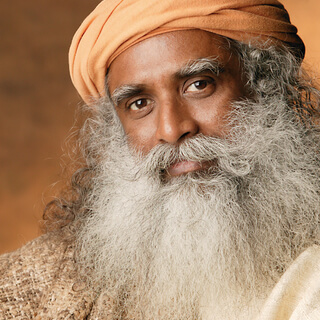
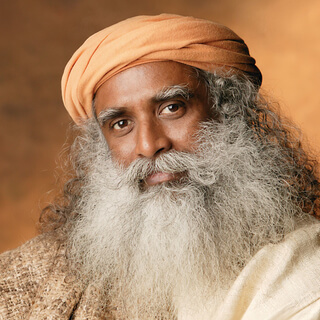
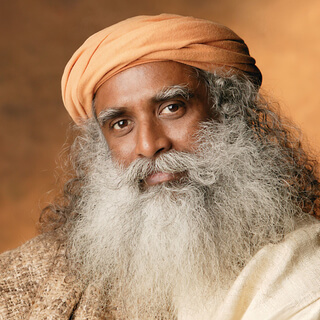
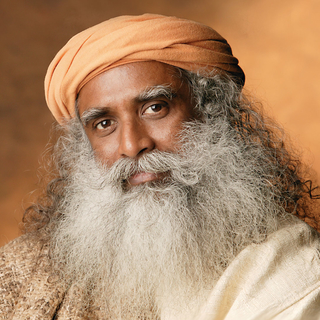
Sadguru,
Who is the founder of Isha Foundation and has taught millions of people about spirituality,
Intentionality,
Compassion,
And bringing these topics to environmentalism,
Education,
And of course,
To business.
On the capitalist side,
We have another remarkable human being,
Jonathan Coslet,
Who's the CIO of TPG.
Was a Baker Scholar at Harvard Business School,
Which is a remarkable honor as well.
And serves on many boards of many purposeful organizations,
Including the Stanford Children's Hospital.
He's somebody who was touched by the learnings of Sadguru and somebody who is bringing some of those learnings to a business perspective in a very impactful and purposeful way.
So without further ado,
Please join me in giving a hearty Stanford GSB welcome to our speakers and our panel today.
Thank you.
Thank you very much.
Good afternoon.
Good afternoon.
Just a couple more minutes on the end of that introduction for Sadguru.
So I ran into Sadguru,
It's probably been about five years or so now,
Through somewhat of a happenstance type of situation.
But getting to know him,
I learned that there was a whole other world of teaching and philosophy that I could bring to bear to my life and to my work and to my children.
And it's been quite amazing.
And Sadguru has been a leader for change,
Change in the world,
Change in people's lives now for 35,
Almost 40 years.
And he's traveled around the world quite a lot.
There are nearly 10 million volunteers that work for Sadguru's organization,
Isha Group.
And at any particular time,
Isha Group is focusing on tens and tens of different of causes.
So for example,
Just recently,
Sadguru was able to empower and mobilize a few people in India,
We'll talk about that in a minute,
A few people in India to try to help save the rivers that are slowly but surely going away because of deforestation.
So he thought this was a real issue and a real problem that needed to be addressed.
So he organized a rally for the rivers where they went from the south of India to the very northern part of India,
About 6,
000 miles plus or minus,
In a motorcade and with motorcycles and cars stopping along the way.
And they had a few people join them.
He had 160 million people join him.
And in that 160 million people was a force that ultimately led to a discussion with the government of India with Prime Minister Modi.
And within a very short period of time,
The government of India has already enacted most of the presentation and the purpose and the plans that Sadguru had laid out for trying to save the rivers.
So that's just an example of what he has been doing around the world.
He's a remarkable man and a great philosopher,
A great teacher,
A yogi,
And also a great friend.
So on my journey in business,
I'm now 27 years out of business school.
So my 27 year career from school to college,
My 25 year career from 25 to 50,
I think it's really interesting as we all know,
As we get older that we start to see that what you thought as a 25 year old,
Maybe when you're 50,
It can literally be 180 degrees different from your perspective when you're 25.
It's,
We're going from competition,
Sense of competition,
To a sense of collaboration,
From speaking to listening,
From answering to questioning,
From the destination to the journey,
From achievement to purpose,
And from leadership,
Even from leadership to something else called inspiration.
And those are the types of things we're going to talk about today.
We're going to try to weave them into a business context and more of a real world context because we're here at the GSB,
The Stanford Business School.
And with that,
Maybe we'll kick it off with our first discussion item,
And we have about 50 minutes,
And we'll allow for a few questions at the end,
But we have about 50 minutes,
And we'll just hit a couple different topics and themes along the way that we think might be relevant.
We did collect a bunch of questions from the students,
So most of these are designed to hit questions we've already received.
So Sadhguru,
I love quotes because quotes,
I think,
Are ways to distill profound wisdom.
And sometimes the quotes are spot on,
And sometimes the quotes are actually totally off base.
So Descartes said,
I think and therefore I am.
And we're here in the midst of the incredible brain power of Stanford University and Stanford students that have incredible thinking power.
When you think about that and you think about I think and therefore I am,
How does that strike you?
Good morning to everyone.
I think this fascination with human thought happened in pre-Renaissance era because that population or that society had seen very dogmatic religious imposition that nobody could think by themselves.
Everything was already thought and ready in a book.
So for the first time,
They could think for themselves,
Breaking loose from the dogmatic oppression.
So they felt liberated that they could think for themselves.
Since then,
I think this European influence has been big and we've made too much of our thought.
But what our thought is,
Is essentially,
It's the data that we have already collected.
Something that we already know,
We bring it out in permutations and combinations of various formats.
But essentially,
All our thought is coming from the data that we already have.
That means no new possibility exists there.
This is,
You know,
Very.
So we are thinking intellect is the only intelligence we have,
Unfortunately.
Let's look at it this way.
Essentially,
What you're referring to as mind is a certain combination of memory and intelligence,
Isn't it?
Now,
What you remember,
What you have studied,
What you have acquired,
You remember all those things.
Human beings have a vivid sense of memory.
That's one of our greatest faculties.
But every cell in your body remembers much more than your entire brain remembers.
Ten generations ago,
How your grandmother,
Great-grandmother,
Great-grandfather looked like,
You don't remember.
But your body remembers their nose is sitting on your face.
Your body remembers a million years ago how your forefathers were,
So keenly that it has not even forgotten the skin tone,
Yes?
So what the amount of volume of memory that you have in a single cell in your body is way bigger than what you could carry in your brain.
If it comes to intelligence,
We know today that a single molecule of DNA is performing more functions than your entire brain,
Actually.
So you're not managing it,
There's an intelligence functioning.
But only problem is you have no access to it.
People keep asking me,
Sadhguru,
How is this that you're constantly doing so many things at the same time?
I say,
I think with my body,
Not with my brain.
That's why my brain never works and it's silent and quiet.
I think with my entire body because there is a way to employ other dimensions of intelligence.
Right now,
Because we are thinking intellectually,
This is the consequence of a certain type of education that all of us have gone through.
Today,
Modern education means it's purely intellectual.
So whatever you're doing intellectually has to be logically correct.
This is why even the science is losing traction and spinning in the same place now because we are trying to fit everything into our logic.
Logic is just a small aspect of our life.
It is anything that makes,
That means a world to you.
You put it through the test of logic,
Suddenly it makes you feel stupid.
Suppose you fell in love with somebody and you logically look at it,
What is this love affair?
You will see it'll make you feel stupid.
Yes,
But it's those stupid things which are making your life.
So we have given too much margin for our intellect and not employing other dimensions of intelligence which exist within us.
It is because of that we have produced a certain kind of world,
Certain kind of economic system,
Certain kind of political reforms that have happened simply because everything has to be logically correct.
Otherwise it'll be dismissed as nothing.
So your love affairs are nothing,
Your compassion is nothing,
Your mother cared for you,
It is nothing because logically all that doesn't make sense.
But it is those things which have really made our lives.
So this about whoever.
This one.
The Italian person saying.
French,
French.
French,
Is it?
Okay,
I'm sorry.
Saying I think so I exist.
I'm asking you a simple question.
Is it because you are,
You may think,
Or is it because you think you are?
Right now because you think you exist,
What has happened is,
See today in the cosmos,
Hundred billion galaxies,
There's not been a single accident,
All right?
Everything is going great.
The sun came up on time,
Planets spinning on time,
Everything fantastic.
But one nasty little thought in your mind and it's a bad day.
And those are the types of things that I think we all here in the west can learn from the yogis in the east and maybe continuing that discussion.
I'm a capitalist and I think that Adam Smith is a great philosopher.
There's a quote behind us from Churchill that says,
The main vice of capitalism is the uneven distribution of prosperity.
You have a lot of inequality in the world.
The main vice of socialism is the even distribution of misery.
I'm curious as to how you think about capitalism as a spiritual yogi.
Being a yogi is individual enterprise.
It is not a mass produced product.
It is something that one has to do within themselves,
So it's very individual.
So in a way you can say it's capitalist because you build your own capital within yourself.
But capitalism as a system is kind of not.
.
.
Is not.
.
.
Is obsolete now because there was a time,
Let's say hundred years ago,
In whole of United States maybe,
Maybe twenty-five or fifty families held the capital.
So they decided everything.
So that was called capitalism.
Now it's the market which decides everything.
So this is a market economy.
So this is a far more democratic way of functioning because anybody who has a good idea and is capable of executing that idea,
For him there is no dearth for capital.
.
.
Capital anymore.
So capital is available for everybody,
So there is no capitalism.
It is market economy.
But market economy needs to evolve further.
Right now,
Wherever I go,
People keep referring to India as emerging market.
I said,
Please don't refer to us as marketplace.
We're people.
So I'm looking at you as a market.
I think this is a very rudimentary thought that we're looking at people as markets.
If you look at them as people,
You would see how to enhance their life.
In that,
There would be a proper economy,
A more inclusive economy where everybody is a partner in the economy.
Somewhere we think that the customer is market and I am the economy.
I am producing and supplying,
So I am the economy.
You are just a victim.
Definitely a victim.
So there is another way.
I think the future is coming there that the customer of even a small product can be a participant or a partner in the company.
See if you have 10,
000 partners in this town,
Your business just cannot fail.
This is the firmest way to stand.
Suppose you have a billion partners across the planet,
Your business just cannot fail.
It's perpetual.
Right now you have victims.
When they realize they've been victimized,
You're going to get it.
I'm curious as you travel and let's compare the economic and maybe political systems as a whole between two of the largest,
The largest countries in the world,
India and China.
India is the largest democracy in the world.
China is the largest communist system in the world.
When you travel between India,
China and even comparing it to the West,
How can we think about what's working and not working in that relative comparison of those two largest democracies and communist systems in the world?
So democracy as a political system is one thing.
As you… as Churchill said maybe,
In democracies misery is equally distributed.
When things have to be done,
It gets slowed down inordinately simply because you have to convince everybody involved and not everybody gets the point.
By the time they get the point,
The time has passed many times.
So this problem is there.
But the most beautiful aspect of democracy is not always is it right,
Most of the time it's… it gets itself wrong.
In spite of that,
The best thing about democracy is,
This is the first time in the history of humanity that we can change power without bloodshed.
That's the most important thing.
We should never forget this.
Otherwise even within a family,
If power had to change,
There was bloodletting.
Nations… major nations are changing power without a drop of blood.
That is the first time in the last hundred… I mean in the last 10,
000 years.
It is only in the last fifty,
Sixty years this is happening across the world.
So we should not underestimate the value of that.
Though there are unnecessary impediments in democracy,
Which goes on,
What can be settled in ten minutes goes on for ten years of debate.
Yes.
Like you're talking about what to say,
Economies,
Which are at different stages of development.
If you say United States,
It's at a certain stage of development.
If you say Republic of China,
It is at a certain stage of development.
If you say India,
It's another stage of development.
I don't think you can handle all the three with the same norms and rules because they are in different age groups.
You can't handle a five-year-old kid and a fifteen-year-old youth and a twenty-five-year-old adult the same way.
So they are in different stages.
They need to be nurtured and handled in different ways.
China is a great example where in a forceful manner,
In a very forceful manner,
Almost in a brutal manner,
They have taken out a billion people out of poverty in a matter of forty years.
That's not a small thing.
People focus on brutality,
But the most brutal thing is to keep a whole population,
A lifetime of poverty is the most brutal thing.
Putting somebody is not so brutal compared to keeping them in poverty for a whole lifetime or generations of people.
Generations of people were in extreme poverty,
So to move them out forcefully,
It was taken out of that.
I think now they're making the necessary changes.
Maybe the world expects faster changes,
But they're making the necessary changes of shifting from a communist and forceful way of handling things to a more market-oriented way of handling – I think it's a very wise thing to do.
There is no perfect way to do these things.
Nobody knows what is the perfect way when a billion people are involved in the economy.
India is doing it the hard way,
But in a more stable way,
I would say,
Because when it happens forcefully,
It is easy to use force on people when they're very poor.
When people are poor,
Stick works.
When they become affluent,
The stick won't work,
They will turn around and bite.
That time will come for China.
Before that,
They must change themselves.
I think they're moving in that direction.
Are they moving rapidly enough or not is only something we have to see how it happens.
But India is going the hard way in a democratic way.
Democratic way means we are constantly confused about everything.
Yes,
That's what democracy means.
Because for everything a hundred people are involved,
What can be done by one man can just take a decision,
But hundred people are involved,
It looks like a confusion.
It is a confusion,
But it's a more stable way of growing because people are involved in this.
Like in China,
There may be one leader or maybe five people ruling the country.
In India,
There are one billion people ruling the country.
In everything,
Everybody is on.
This leads to lot of impediments and confusion.
At the same time,
It creates a very solid base.
It creates such a solid base,
It doesn't matter what happens to world's economy,
You will see India is always going at its own pace,
Simply because everybody is involved at some level.
So,
These are two very drastically different ways of developing an economy.
I don't think you can do what China has done in India.
Indians are… if there are three people,
There will be five opinions.
So you can't manage us like that.
We are little… So people were asking me,
Sadhguru,
What do you think about India's trajectory?
We are like… You know,
I was very closely involved with wild bees at one time when I was young.
So I said,
We are like a swarm of bees.
We are buzzing and seem to be going in all kinds of directions,
But the whole swarm is heading in one direction.
But each one of them is doing their own thing.
Dr.
Jayaprakash Narayanan-Mahadeva – Progress,
There's a lot of progress.
It feels like the change,
The pace of change in the world is so fast,
There's incredible progress.
We are here in the heart of part of the world that prides itself on change and disruption and progress and innovation.
What are some of the things that we are not thinking about as… or we are not talking about with all this progress in terms of some of the implications?
See,
We are getting too carried away with economy,
Economy.
Today,
Anywhere you go,
Even if you go to your grandmother's place,
You discuss economy.
Hello?
Even your grandmother is talking about economy.
Economy we must understand is just an organized way of handling our survival.
We should not raise it to heavens.
That's not how it is.
But the entire world has taken to this today.
Everybody… there are WhatsApp economists in India who are… Oh,
You don't use that platform much here,
Whatever.
I mean there are social media economists who are advising on a daily basis what should happen to the world,
All this stuff.
Leaving that aside,
You know,
First time when I went to the World Economic Forum,
A computer manufacturing company,
That was the second largest company at that time.
So people were almost resentful as to why I am there.
What is a mystic doing in an economic forum?
So this person came up to me and asked something like this.
So I said,
See,
What's your business?
He said,
Away with computers,
We are the second largest.
Well,
Three months later,
The Chinese bought them over.
I said,
See,
Whether you're making a computer or a safety pin or a spacecraft,
It doesn't matter what you're making.
Essentially,
You have forgotten this is all about human well-being.
All business is about human well-being and that's my business.
And it should be everybody's business.
So in all this economic jargon,
I think we are forgetting somewhere this is about human well-being.
People who are running the economy are getting destroyed,
Destroying themselves and the planet.
And the economies of the world have become like this.
When in 2008,
When I was at the economic forum,
There was a little bit of a trend of recession beginning to happen.
Maybe all the American billionaires who came there,
They were carrying an extra long face because they were a few billions less than what they were three months ago.
So they asked me to handle a session called recession and depression.
So I said,
Recession is bad enough,
You don't have to,
You know,
Compound it with depression.
But anyway,
Right now the way we are driving our economic engine is such that if we fail,
We will be depressed.
But if we succeed,
We will be damned for good.
I said,
Better you're depressed.
Because this is like,
You know,
In India there's a proverbial story about a man sitting on the wrong side of the branch and cutting it.
When he succeeds,
He will fall.
That's something that all of us as business leaders need to.
.
.
We are.
.
.
We are going in that way.
When we succeed,
We will fall.
That's not good.
Our success should raise us,
But our success will bring us down.
Once in a way,
Recession is helping us to slow down.
Otherwise,
Business as usually,
If all economies on the planet or the global economy is fully thriving and on,
I think in twenty-five years' time there'll be a serious ecological crisis.
Serious stuff,
Not simple stuff.
This Rally for Rivers you were talking about.
This.
.
.
Since twenty-five years when I was very actively engaged with South Indian rivers,
You know,
I floated down rivers,
I lived along in the forests and rivers because I didn't go to any university.
All I did was spend time in the jungles.
So I have a very intimate relationship with them.
In twenty-five years,
On an average across the country,
Forty-four percent depletion of water levels has happened.
Forty-four percent in twenty-five years.
Twenty-five years is not a long time for a subcontinent,
But in twenty-five years,
Forty-four percent depletion has happened.
Some rivers have depleted over seventy percent.
Hundreds of tributary small rivers have completely gone dry.
This is our way of handling economy.
Ripping off our fundamental source of life and handling economy,
What does it mean?
So in India it is very stark because of the population and land pressure that we have,
But it is so everywhere.
It may not be so visible,
But it is so everywhere.
So we need to devise or bring down our pitch of economy in our own minds.
I think we're talking too much economy and less of life.
It's time when you meet people,
You talk something about life,
How are you doing?
No,
No,
How is your company doing?
What's your stock?
This is the talk.
It's time you ask how people are doing.
Because all this economic aspirations that we have is essentially towards human well-being.
In pursuit of well-being,
We have done all these things.
In last hundred years,
We have come to a place where in the entire history of humanity,
We are the most comfortable generation ever physically,
I'm saying.
Never before any generation had these kind of comforts and conveniences as we are enjoying right now,
Yes?
Never before anybody could have thought of these kind of comforts and conveniences.
But are we bursting with well-being or joy or love because of this?
No,
We are seriously neurotic these days.
And we are cribbing like nobody.
Because earlier we used to just crib in the neighborhood,
Today we are on the Facebook.
And global cribbing is happening for smallest things.
So it's very important that our economy is just another tool,
One more tool for the well-being of life on this planet.
If we forget that,
Our success will be our failure,
Unfortunately.
Speaking about neurotic,
I want to do a little.
.
.
A little tangent on just one question about politics,
About some of the leaders in the world.
And sort of generally,
We have a handful of very powerful people in a handful of large countries.
.
.
I'm just trying to walk me into your minefield.
So it seems strange and odd to me that we have leaders in places like Russia and Syria and North Korea and Iran and many other places that have a little bit different sense.
So I'm curious as to a mystic's perspective on where we are today with the leadership around the world.
There's a quote up behind us from Gandhi that says,
When I despair,
I remember that all through history,
The way of truth and love has always won.
There have been murderers and tyrants and for time they can seem invincible,
But in the end they always fall.
Always.
Should we take solace in that?
No.
One falls and the next one is bred.
So I have highest regard for Madhma Gandhi.
This is his.
.
.
The coming year is the hundred-and-fiftieth birth anniversary for him.
I'm very much a part of that.
But is he right on this one?
No.
Hitler fell to an assassin's bullet.
Well you have a Martin Luther King shot down dead and there've been so many others who were nowhere near any kind of tyranny who've fallen to bullets.
Well,
Miss Lini you hung,
But Hitler had the freedom to shoot himself.
I'm saying not all of them fell.
And one thing we need to understand is,
There are lot of tyrants all over the place,
In every society.
In homes there are many tyrants.
Fortunately,
They're not as potent as an Adolf Hitler or a Mussolini or somebody else or whatever.
Fortunately they're not as capable.
So essentially,
We are trying to celebrate incapability,
Incompetence.
So tyranny,
Is it there?
It's everywhere.
Prejudice is there means tyranny is there,
Right?
What is the scale and what is the competency of the tyranny is the only question.
We have not strived to craft an education system where we don't produce tyrants.
We are producing tyrants,
Maybe they're running companies,
Maybe they just have three people in the family and they're doing their tyranny right there or maybe they're school teachers.
They could be anything,
But tyranny is all over the place.
Only a few fortunately are super competent.
They organize themselves into large scale suffering.
Others are not able to organize themselves.
I would say we should be able to celebrate competence because that's the only thing ultimately.
If we want to celebrate competence,
We need a more inclusive human being.
My competence should not work against you.
When is this possible?
Only when in some way in my experience you're a part of myself.
So we need to bring this into every structure.
When we say… when I initially said,
Unfortunately our education is too intellect oriented,
We must understand what is the nature of the intellect.
Intellect if I ask you,
Would you like to have a sharp intellect or a dull one,
Blunt one?
You must choose sharp.
You must choose,
I'm going to bless you.
Sharp one or blunt?
Sharp.
So essentially it's a cutting instrument.
It's like a knife.
So you have a knife in your hand,
Whatever you give it to this knife,
It will cut it open and see.
This is the nature of the intellect.
Dissection is the only way intellect can know anything.
So suppose you want to sew something,
For that also you use your knife.
You'll have everything in tatters.
That's all that's happening.
That's all that's happening to the world.
People are using their intellect even to put things together.
It doesn't work like that.
You should know where your intellect is relevant,
Where it is not.
Our education system is kind of celebrating this intellect for everything.
So whatever you give,
People are putting into their dissection mode.
This is why relationships are breaking down.
The people don't know the value of human interactions.
People do not know what it means to get together.
Because if you put it through the intellect,
What is the problem?
It's better to have friends on the Facebook.
They're safe.
You can.
.
.
You can delete them whenever you don't want.
But a real friend,
He nags you,
He sits right next to you.
But inclusion is not there in our experience because we are becoming more and more intellectual.
As intellect develops,
As the significance of intellect becomes paramount in the world,
Nobody can be with anybody because you will dissect everybody in your mind and actually nobody is okay.
Sincerely look at this and see,
Nobody is actually okay except you.
If you ask any.
.
.
I think this is a business school,
But if you.
.
.
Last time I was in medical school.
So if you ask any psychiatrist,
He will tell you,
If you think nobody is okay,
This means you're getting sick.
Yes,
It is.
If you think nobody is okay except me,
You're going towards megalomania.
And this is happening to every human being,
Large scale.
Our very education systems and every other system,
As they become more and more intellect-based,
This is inevitable because this is the nature of the intellect.
It will not only slice everything,
It will cut you into pieces.
It will cut you into pieces and you should not be surprised.
In another hundred years,
If you have thirty to forty percent of the people on this planet being schizophrenic,
Yes,
You should not be surprised at all because it is very much like that unless a lot of children don't go to school.
Yes.
If everybody goes to school,
If hundred percent population goes to school for next hundred years,
You will have minimum thirty to forty percent schizophrenic because you are making intellect paramount.
It will cut everything into pieces.
When it's done with the world,
It will do this to myself – dissection.
So with dissection,
You can know certain things.
But you can't know everything.
You can't know this life by dissection.
And your economy,
Your leadership,
Everything is about enhancing life,
Isn't it?
Hello?
It's about enhancing life,
Not just playing some game which is against life.
Right now it's become like this,
People have started this like a game that they cannot stop,
It's an addiction game that you start doing this,
Doing this.
In the stock market,
You have all that.
But where is it?
The wealth on the planet has remained the same in the last billion years.
It's not changed.
We can make products out of it,
Things out of it,
But it's essentially the same material,
Isn't it?
See it's like,
Suppose you stand in front of the mirror,
There is only one person.
One person becomes two in the mirror.
If you put one more mirror,
This can become hundreds of people.
Now you think there are hundreds of people.
No,
There are no hundreds of people,
There's only one person.
Yes?
Similarly with wealth,
Similarly with everything,
There is only that much.
We should see how to use it in a sensible manner.
Of course we want to live well,
There's no question about that.
But life on this planet is for all life.
This idea that's gone into human mind,
Certain religious dogmas have put this idea,
Everything in this world was made to serve the human being.
If you pay,
You know,
I've spent a lot of time in the jungles.
If you just observe a lizard there,
A reptile,
A crawly creature,
He has a complete life of his own.
You observe the ants,
They have a complete life of their own.
Especially other mammals in the wild,
They have a total life of their own,
Their own emotions,
Their own families,
Their own politics and their own fights and wars and everything.
They got the whole thing going.
So but somewhere human mind has been trained to think all life is here to serve us.
No,
No,
We must understand this,
There is… today there's a study which says,
If all the worms on the planet disappear today,
In about twelve to eighteen months,
All life on the planet will disappear.
Worms believe me,
Those lowly worms.
You call somebody a worm,
That's the worst thing,
Right?
If all the insects disappear,
In somewhere between three-and-a-half to five years,
All life on the planet will disappear.
But if all human beings disappear,
The planet will flourish.
Let's relate that to ambition,
We're here at a business school where we've got really talented students about to start their career.
So relate that to ambition and relate that to the struggle that many people find to define success.
Ambition is a constipated expression of human longing.
Human longing,
If you look at yourself,
Wherever you are,
You want to be something more,
Isn't it so?
Hello?
Are we in talking terms?
Wherever you are,
You want to be something more or no?
Yes.
What more?
It depends what you're exposed to.
If you know money,
You're thinking more money.
If you know wealth,
More wealth.
Knowledge,
More knowledge.
Love,
More love.
Pleasure,
More pleasure.
Whatever you know,
Whatever may be your currency,
But you would like to be something more.
If that more happens right now,
You want something more.
If that happens,
You want something more.
So what is it that you're looking for?
You're looking for a limitless expansion.
If you're looking for limitless expansion,
What is your means?
See,
It's like this.
You want to go to India.
You think your Tesla will take it?
No,
I have nothing against the electric car.
But I'm saying,
You won't even reach Los Angeles,
Your battery will run out.
Now if you want to go to India,
If not an airplane,
At least you must have a craft which is capable of navigating the oceans,
Isn't it?
So similarly,
If you're looking for infinite expansion,
What is the means?
The means that you have right now is all physical in nature,
In the sense,
Everything that you know as life is only by seeing,
Hearing,
Smelling,
Tasting and touching,
The five sense organs.
You cannot see,
Hear,
Smell,
Touch or taste anything that's not physical.
So in your entire perception of life,
You're only seeing,
Hearing,
Smelling,
Tasting and touching physical dimensions of existence.
When we say physical,
Physical exists always because of a defined boundary.
Without a defined boundary,
There is no physical nature.
But now you want a boundless expansion.
Through physical nature,
If you try to become boundless,
It's like you're trying to drive Tesla to India.
No,
You cannot.
You need an appropriate vehicle for that.
So that vehicle is now the most corrupted word on the planet called spirituality.
Spirituality does not mean religion,
Spirituality does not mean looking up or looking down.
Spirituality means you want to touch a dimension beyond your physical nature,
Because if you have little awareness,
You know that physical about you was accumulated over a period of time.
Yes?
Hello?
You're not born like this,
Right?
It is accumulated.
What you accumulate can be yours.
It can never ever be you.
You can pick up as much as you want if you have the ability to carry.
But when time comes,
You'll have to shed it.
This is just a piece of the planet,
What you're carrying.
Before you and me came,
Countless number of people have walked this planet.
Where are they?
They are all topsoil.
This will also become topsoil,
Unless your friends choose to bury you real deep,
Fearing you may raise from the dead.
So essentially,
Ambition is just the same thing.
You want to expand,
But how much expansion?
You want to expand limitlessly.
Can you do that physically?
Never.
So,
Ambition is just a constipated version of this innate longing which is there in every human being to expand limitlessly.
If you become conscious,
You would expand limitlessly,
Finding the right vehicle for that.
Otherwise,
It finds this kind of destructive,
Constipated,
Destructive expansion,
Which we call individual ambition,
Which is very destructive.
And my ambition and your ambition always is bound to be conflicting.
It cannot be another way.
As long as you're incapable and I'm incapable,
We're doing a small pool,
Each other,
Fine.
But I'm big.
I want to expand.
You're also big.
You want to expand.
Incompetence,
I'm saying big.
Now there's going to be a clash.
So that is when you call somebody a tyrant,
He tries to conquer the world.
So this tyrant exists in every ambitious person,
But fortunately incompetent.
And how unfortunate that we think incompetence is fortunate.
Isn't it?
The greatest thing is human being should function at its fullest possibility.
But now we are hoping they function at less than.
.
.
As limited as possible,
Otherwise they don't know where to stop.
It's like somebody starts eating and he doesn't know where to stop eating.
When to stop eating?
It is a problem with lots of people.
This is the same thing.
Unfortunately,
We give it all kinds of decorative names,
But essentially it's the same thing.
So one can move from this personal ambition to a larger vision.
What is the difference?
Essentially the difference is just this ambition is about me,
Vision is inclusive.
And if your ambition or if your longing is for something more than your own comfort and fulfillment,
Then you will find success every moment of your life.
If you're ambitious,
You'll find success only once in a way,
You know?
Constipation is like that.
Dr.
Mark S.
S.
S.
There's a.
.
.
The quote behind us is,
Success does not lead to happiness,
But rather happiness leads to success.
And maybe in the context of a coin.
.
.
A term you've coined,
Inner engineering,
You can talk about that.
Happiness leads to success.
It's not that success leads to happiness.
I think till now what I've been saying in a way is happiness is success.
Because it's human well-being that we're working for.
If I'm already well,
Is that not success?
When.
.
.
When people are working so hard for their well-being,
If I sit here simply breathing and I'm very well,
Is that not success,
I'm asking?
So just because I'm happy,
Does it mean to say I won't do anything?
You tell me,
In your lives,
All of you,
When are you willing to do more?
When you're very joyful,
Are you willing to do more?
Or when you're miserable,
You're willing to do more?
When you're joyful,
You're willing to bend backwards and do whatever is needed,
Isn't it?
When you're miserable,
Can we get you going?
Oh,
Very difficult.
Miserable and depressed people,
You can't get them going for smallest things,
Isn't it?
But when you're joyful,
You will not just bend forward,
You will bend backwards and do whatever is needed.
I was.
.
.
It's only after coming to United States I got this term,
You know,
TGIF,
It sounds like your company but it's.
.
.
TGIF,
Okay?
Thank God it's Friday.
This means five days of the week you're suffering.
Two days you're going to enjoy.
No,
Life never will work like that.
We.
.
.
We've made sure in our organization,
In Isha,
Even in our school,
It's seven days.
Because if you.
.
.
If you're really joyful about what you're doing,
Where is the question of thank God we have an opportunity to do something that we want to do,
Isn't it?
Not like thank God I have.
.
.
I got a break.
Not just me,
Hundreds of people around me are today,
Twenty hours a day,
Seven days of the week,
Three-hundred-sixty-five days,
On,
On,
On and on.
And this is because we are first joyful and then we are doing our work.
We are not doing our work in pursuit of our happiness.
This is an expression of our joy.
So the more opportunity you get,
The better it is.
This needs to happen to the world.
If you were joyful,
You would do only what is needed.
But if you're trying to milk joy out of this world,
You will do all kinds of desperate things,
Isn't it?
Why is my well-being against your well-being?
Because I think for me to be happy,
I must do this,
This and this.
No,
I'm joyful by my own nature because human experience essentially comes from within.
Is that so?
Hello?
Your joy or misery both happens from within you,
Is that so?
What happens from within you,
At least what happens from within you,
Must happen the way you want it,
Isn't it?
See,
This is all human beings are seeking.
They want pleasantness in their life.
They want everything to be pleasant.
If your body becomes pleasant,
We call this health.
If it becomes very pleasant,
We call it pleasure.
If your mind becomes pleasant,
We call this peace.
If it becomes very pleasant,
We call it joy.
If your emotion becomes pleasant,
We call this love.
If it becomes very pleasant,
We call it compassion.
If your very life energies become pleasant,
We call this blissfulness.
If it becomes very pleasant,
We call it ecstasy.
If the surroundings become pleasant,
We call this success.
It is only for making the surroundings pleasant,
You need the cooperation of people around you.
For all the other levels of pleasantness,
Of body,
Mind,
Emotion and energy is entirely your business.
Hello?
Yes.
Some people say,
No,
I'm not interested in all this,
I want to go to heaven.
Why?
Because the advertisements have always said heaven is a very pleasant place.
If we told you right from your childhood,
God lives in heaven,
But it's a horrendous place.
Do you want to go there?
No,
You will pray from here only.
So essentially you're looking for pleasantness,
Highest possible pleasantness for yourself,
Isn't it so?
What you want for your neighbor may be debatable,
But what you want for yourself is always highest level of pleasantness.
To achieve this pleasantness,
We are doing so much circus on the planet.
To create pleasant surroundings,
We need some work.
But the rest is all internal,
Isn't it?
So keeping body,
Mind,
Emotion,
Energy pleasant is completely internal.
So you need to engineer this in such a way that it is naturally pleasant.
There are many ways to look at it.
One simple way to look at it is,
All human experience has a chemical basis to it.
Or in other words,
This is a chemical soup.
Are you a great soup or a lousy soup?
That's all the question is.
If you become a great soup,
This feels wonderful.
If everybody cooperates,
We'll create something very wonderful around us.
If everybody does not cooperate,
You are the pleasant part of the lousy soup.
That's my choice you always have,
Isn't it?
So we've probably got one more.
.
.
One more theme I want to end with and then we'll actually open it up for a few questions,
A couple questions.
We've got about probably 10 minutes after this.
So behind us is what could be my favorite quote of all because it talks about what we're all here for,
Which is relationships.
It's by Maya Angelou.
It says,
People will forget what you said and what you did,
But they will never forget how you make them feel.
And we're on this earth together for a very short period of time.
So happiness and satisfaction comes a large part,
In large part from the relationships we have and what we do in those relationships.
How can we implement those thoughts both in our lives and in the context of our careers?
With all due respect,
What I'm saying is far more revolutionary than you be nice to me,
I'll be nice to you business because a whole lot of relationships start off with this intent,
But most of the time they don't succeed.
People who had the most pleasant early interactions could get into horrible states of conflict later on,
All right?
Individual people,
Groups of people,
Nations,
All levels it's happening.
This is because I expect you to make me happy,
You expect me to make you happy.
This is always a time bomb.
It'll tick for some time and it'll explode unless it just peeters out.
So I'm telling you this,
Why should how I feel depend on you?
Because how I feel is coming from within me.
This must be determined by me,
Isn't it?
Hello?
The moment I think I'm feeling miserable because of you,
There's a conflict.
Yes or no?
So it's… it's very important that human beings have to mature into this possibility that you feel joyful,
You feel miserable,
You feel horrible or you feel wonderful.
This is essentially you're doing.
Somebody else,
What are they doing?
What they know best they're doing.
What they know best may be a lousy option,
But they're doing what they know best.
Right now they're abusive because that's… that's what they know.
They don't know any better.
But why should that determine how I am?
If the moment there is this fear of what will… how will I feel,
Maybe I will suffer,
Once there is fear of suffering,
Your entire life becomes half strides.
It'll never be a full stride because the fear of suffering cripples human beings.
Right now,
This is what has crippled humanity,
The fear of suffering,
What will happen to me is always a big issue.
What will happen to me should be determined by me.
What happens around me,
Of course everybody has a stake,
But what happens within me,
Why is it that somebody else can decide this?
Whether I am blissful or miserable must be determined entirely by me because this is in my hands,
Because the experience is coming from within.
Somebody can stimulate something or somebody can stimulate something positive or negative,
But essentially whatever the input,
What I make of it is always me,
Isn't it?
The moment you have fear of suffering,
You will not do what you could do.
In our lives,
If we do not do what we cannot do,
There's no problem.
If we do not do what we can do,
We are a disastrous life.
And this will happen to us and this has happened to us in a big way to humanity.
A whole lot of human beings will not do what they can do simply because of the fear of suffering,
What will happen,
What will happen.
This must go and this will only go if you engineer your interiority in such a way that what happens within you is entirely decided by you.
What happens around you,
We will collaborate.
What happens within me,
There is no collaboration.
This is dictatorship.
So,
We probably have time for just a couple of questions because there's a classroom coming in here in about 20 minutes.
So,
Why don't we open it up for a couple of questions?
Is there a microphone?
I don't know if there's a microphone,
If there is one there.
Okay.
Here we go,
Where the mic is.
Guruji,
What is your ambition?
Did you just come in?
No,
No ambition,
I'm just fooling around,
That's all.
Guruji,
I got a question for you.
Can you comment about your laughter?
I've seen a lot of people laugh,
But nobody laughs like you.
You have such a joyful laugh.
It comes from you.
Of course,
Everybody laughs differently,
So what's the problem with that?
See these days,
These kind of things are going on.
Some pathetic,
A pathetic kind of yoga is going on.
People call this laughing yoga.
Both of us stand in front of each other and say,
You say hee hee hee,
I say hee hee hee.
This is crazy.
See,
This is like you understand there must be flowers in the garden.
If you want flowers in the garden,
You don't buy plastic flowers and fix it there.
You have to do something which doesn't look like flowers.
You have to handle the soil,
You have to handle the manure,
Water,
Sunlight.
None of them look like flowers,
None of them feel like flowers,
None of them smell like flowers.
But if you handle these things right,
Flowers will come.
So laughter will come,
Not because you have taken a stand,
Every day I must laugh or you know,
Because just recently I was reading somewhere,
Somebody is advising one American to-do teachers,
You know,
What are the things you must do.
Every day,
Ten minutes a day,
You must laugh.
You will be in the psychiatry department soon.
If you are in a certain state of pleasantness within you,
Without knowing why,
A smile will spread on your face.
With very little tickle,
You will laugh.
So laughter is a consequence.
Don't try to create the consequence.
You work the process,
The source.
This is the… okay,
This ambition can be handled like this.
The young man is asking about ambition.
See ambition means you are resulted… you are interested in the result.
Recently when we did this business event in India,
So they all came to our yoga center,
Which is spread over four-hundred acres and four-thousand plus people are living there and lot of things happening,
Variety of activity,
All are volunteers,
Nobody is paid for,
Nobody is trained for the job and you can't fire anybody because they are volunteers.
Look at my troubles.
So they looked at this and said,
These are all top companies in India and they said,
How do you run this place with such efficiency?
We take the best people from management schools,
We cannot run it like this.
What is… what is the secret of this management?
I said,
See this is all.
We are devotees,
Not devotees of some god,
We are devotees of the process that we have taken on.
We are devoted to the process,
Not to the result.
Because we are so devoted to the simple process that we are doing,
Everything looks phenomenal and there are results.
Result is a consequence.
You are only interested in the flower,
Not in the root.
You think you're going to have a flower?
So whether it is joy or success is a consequence.
We are too focused on the consequence.
You need to be devoted to the process.
I think the most important question,
Our last question will come from this young lady.
Hey,
Don't ask me difficult question.
I don't mean to be rude,
But what's like everybody has a limited amount on this life,
But if you are trying to teach everyone something,
Then everyone is going to pass away soon,
So what's the point?
Existentialism.
Uh oh.
That's another hour.
Oh.
And this is from the youngest.
This is from the youngest.
All right,
That's a tough one,
Mr.
Guru.
So if we are trying to teach something,
It's going to take a long time.
Let's say I want to teach you something which will take a thousand years,
Then your question is relevant.
I'm talking about not teaching you something,
Just opening up a dimension within you,
Which is naturally in a certain way.
Is it true,
What did you have for breakfast?
What's your name?
Aruna.
Aruna?
Aruna.
Aruna.
Okay.
What did you have for breakfast?
Bagel.
So you eat a bagel.
Does a bagel look like you?
Yeah.
So you eat this bagel,
Right now this work is going on,
The bagel is becoming a little girl.
Yes or no?
So is there an intelligence within you which is capable of turning bagel into a human being?
You have.
Suppose I could take a bagel in my hand and make it into a human being,
Who would you think I am?
Must be the source of creation,
Isn't it?
But you are doing it.
You're making a bagel into a human being,
You're really fantastic.
When you're such a fantastic human being that you can turn a bagel into a human being,
You're not a small possibility,
You're a tremendous possibility.
Because in two,
Three,
Four hours you can make a bagel into a human being,
Is it a small phenomenon?
When you're able to do such a thing,
You becoming joyful,
How many thousand years should it take?
If you allow me,
We can make it happen in a few minutes.
But if you become an adult,
It'll take a few hours.
Thank you.
Thank you guys very much.
Thank you very much.
Maybe again next year.
Thank you.
Thank you.
Thank you.
Thank you.
Thank you.
Thank you.
Thank you.
Thank you.
Thank you.
Thank you.
Thank you.
Said Amen,
Amen soft hit