Tonight,
I'd like to talk about a concept that is more and more troubling in our times.
It's a Buddhist concept that we talk about as delusive certainty,
Because it's a classic exchange between a teacher and a young monk that touches on this problem.
So this is a koan from 13th century China.
And the koan reads,
Master Jizo,
The teacher,
Asked Hogen,
The monk,
Where have you come from?
I pilgrimage aimlessly,
Replied Hogen.
What's the matter of your pilgrimage,
Asked the teacher.
I don't know,
Replied Hogen.
Not knowing is most intimate,
Said the teacher.
Now koans are meant to shake us out of our usual modes of thinking.
And of course,
To have the teacher look at this wandering little monk who says,
I don't know,
And say,
Ah,
That's most intimate.
What could the teacher mean?
How is it that the teacher is taking this monk so seriously when he says,
I don't know.
What does the I don't know mean?
The Zen way talks a lot about not knowing.
And it's not the not knowing of getting the wrong answer of two plus two is five.
It's not the not knowing of,
I don't know how to bake a chocolate cake.
It's quite different.
It's the not knowing that asks us to step outside of the conceptual maps that we make of the world that we have made of the world since before we can remember.
Conceptual maps that put labels on everything.
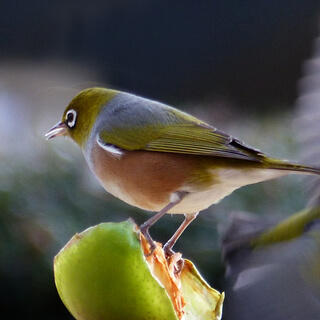
That's a bird.
That's a chair.
Very helpful,
Actually,
For operating in the world.
But think about the infinite variety of objects that we call chair.
Think about the infinite variety of beings that we call birds,
Or for that matter,
That we call people.
And so what Zen invites us to do is simply notice the difference between our concepts and the vividness of life just as it is.
So in our reading tonight,
One of the phrases was knowing for yourself whether the water is warm or cold,
That we can think of a cup of water,
And that's a concept.
That's the map.
But the terrain itself,
The terrain of life is really experiencing just this,
Whether it's the feel of the water as it goes down my throat,
Or the feel of the cushion that I'm sitting on,
Just this,
Before concepts,
Before words.
And so as we sit in meditation,
We investigate this more and more deeply.
And so we begin to ask,
Who is this person sitting on this cushion?
Who is this person I call Bob?
And when I look,
I can't find Bob.
I certainly can't find a Bob who persists through time,
A Bob who was the two-year-old that I have a picture of on a mantelpiece somewhere,
And a Bob who's this old man now.
Just a collection of thoughts and feelings and body cells infinitely changing all the time.
And then when we sit and we look at the concept of time,
When we look at this moment,
Where is this moment?
How do I know when it begins?
How do I know when it ends?
How do I know how long a moment is?
And yet all we have is this moment.
Dogen,
Who was one of the great Zen masters in ninth century Japan,
Wrote about this.
He wrote,
Nothing can be attained,
Nothing can be comprehended.
On this basis,
It would be inappropriate to hold with unquestioning certainty any view.
Such holding is a kind of grasping that prevents attainment of the way.
What Dogen wrote about quite vividly was our inability to fully comprehend with our minds reality,
Just this,
That we can experience it.
And that's what practice is about.
That's why meditation is at the core of our practice.
That's why intensive practice periods are so powerful,
Because we can sink deeper and deeper into the experience,
The vividness of the experience of life.
And yet we as human beings prioritize knowing,
Particularly in our culture,
And particularly in more educated bubbles like the one I live in.
So in my field,
Medicine,
Knowing is everything.
Knowing the right answers.
And yet,
Much of what we're so sure of,
Certainly in medicine,
Breaks down over time.
When the first day of medical school,
The dean spoke to my class,
And he said,
Over the next four years,
Half of what we teach you will be wrong.
The problem is we don't know which half.
And so he was naming exactly this problem,
That much of what we insist we have to be able to know falls apart over time,
With inspection,
On the cushion.
Buddhism talks about the three poisons that cause so much suffering in our lives,
And you know what they are,
Greed and hatred.
And the third is sometimes called ignorance and sometimes delusion,
Or delusive certainty.
And think about all the delusive certainty that swirls around us now,
In our world.
Think about the people who insist that reality is one way,
And people who insist that reality is exactly the opposite.
Everyone holding so tightly to certainties that cause so much death and destruction and suffering in the world.
But what we know is that there's a real seductiveness to certainty.
A real seductiveness to being right.
The mind loves the feeling of certainty.
And actually,
Uncertainty is a whole lot of work.
So when Jizo was talking to that young monk and saying not knowing is most intimate,
He knew that not knowing,
Letting yourself truly not fall into false certainties,
But keeping the mind open and curious and receptive,
That's so much more work than nestling comfortably into knowing.
Uncertainty requires a kind of energy of wondering,
Of awe.
And being certain,
Even if we're wrong,
Is often accompanied by a sense of relief and more ease.
Ah,
I know this.
I can relax.
And so there's a strong push in our minds,
In all of our minds,
To reduce things to black and white.
When of course what Zen keeps asking us to notice everywhere we look is that life is full of nuance.
Life is full of shades of gray.
Jonathan Haidt is a psychologist who did some wonderful experiments in this domain,
Psychological experiments,
In which he carefully teased apart which comes first,
The feeling or the rationale for why people believe what they believe.
And what he found was that feeling comes first.
The gut drives us.
In his analogy,
The horse of emotion is what's really carrying us along.
And the rider is our intellect that just finds reasons for what we do and what we believe slightly after the fact.
So we are very much emotion-driven,
Not driven by the brains that we think are guiding our lives.
You might notice this.
You might notice that there are certainties that you cling to.
Things you are so sure of.
Certainly I am righteously sure all too often.
When I read the paper in the morning,
I can feel that righteousness arise as I get angry about things happening in the world.
I can feel the need to be certain.
And of course,
It is anger and blame and resentment that fuel the sense of righteousness.
But what goes with that is a real sense of safety.
I know who I am.
I know who you are.
And I'm not that.
And that there is something we can rest in that is this claim to righteous knowing.
And as I said before,
If we sit long enough on the cushion and ask who is hearing this sound,
Who is breathing this breath,
Knowing who we are softens and sometimes falls apart completely.
There's just the flow of experience moment to moment,
Which can be exhilarating and is often terrifying.
And many of us go to great lengths to avoid inklings of that sense of the fluidity of a self that has no fixed separate existence.
And this,
I think,
Is at the core of a lot of the hatred and the self-righteousness that is tearing us apart.
So we might see this not knowing,
This moving beyond and questioning our certainties as the urgent work,
Not just for us as people,
But for our country,
For our planet,
To cut through that sense of separateness that leads to hatred and violence and so much suffering.
But it starts with being willing to face our own clinging to certainties.
To really asking,
Am I sure?
Am I so righteously sure about this?
And is there not another point of view?
Are there not shades of gray?
Now one question is where does that leave us?
Because we could get lost in the sense that,
Well,
Everything is unknowable.
Nothing matters.
We can get lost in emptiness,
As we sometimes say in Zen,
Where we abandon all claim to caring because nothing can be fixed,
Nothing can be held on to.
And that's where we need the precepts.
Those 16 Bodhisattva precepts that act as moral compasses,
That act as North Stars.
So we keep pointing ourselves toward reducing suffering wherever we can.
To not killing,
Not stealing,
Not lying,
That those precepts are the rudders that will keep us on track when we can get lost in the swirl of not knowing.
But practice invites us to step out of those bubbles we're living in.
To see beyond those bubbles and be curious about what's beyond them.
To the immensity,
The diversity,
The confusion,
And of course the richness of just this,
Of life as it actually is,
To be lived.
So Dogen says there is great virtue in this not knowing.
He says to have great enlightenment about illusion is to be a Buddha,
To know how little we really know,
To hold our certainties lightly.
That's the Buddha's practice.
Thank you.