The Buddha,
2,
500 years ago,
Often described the world as burning.
And of course there's so many ways that we look around and it's always been burning,
But for me these recent weeks it has seemed so completely on fire,
So completely destroying itself,
That I find myself not knowing how to practice,
Not knowing what practice holds for us in the face of everything that's happening.
And of course what touches me,
The things that have pushed me close to some edge,
They're not everybody else's points of heartache.
And so for each of us it may be different.
For me,
Gun violence,
Taking away women's right to get the care they need,
To make the choices in their lives that they need to make,
These are the things that touch nerves in me.
But for each of us it may be different.
But what I find is that what arises is this swirl of aversion,
Wanting to pull away,
Not read the news,
Not know what's happening,
Tremendous anger,
And greed,
Wanting to gather around all the people who think like me and revel in all the ideas that are like mine.
And so the three poisons are right there when I practice.
Yesterday in our zazenkai someone sat with me in Doksan and said that they were starting not to care anymore.
And it reminded me of a story that the Dalai Lama told.
He spent some time in a Chinese prison and when he had been through many trials and when he was asked of all the trials you went through during your imprisonment what was the hardest.
And he said,
I was afraid that I would lose my compassion for my captors.
And that struck me as so fitting for my experience because I find myself doing what so many of us do which is distancing myself,
Deciding that I know who these other people are who have these wrong views.
I know how they think,
I know what they want,
I become an expert in these people who I make my enemies.
And I watched the human heart mind,
My human heart mind,
Do this thing that I am so frightened by as I see it happening in the culture for all of us.
So how do we practice with this?
And as I was reveling in my despair a friend told me about a little essay in the New York Times titled,
How Animals See Themselves.
That was this little wake-up for me and I'll just read you an excerpt from it.
The writer is saying,
What if we try to view animals through their own eyes?
In 1909 the biologist Jacob von Euchel noted that every animal exists in its own unique perceptual world,
A smorgasbord of sights,
Smells,
Sounds,
And textures that it can sense but that other species might not.
A ticks world is limited to the touch of hair,
The odor that emanates from skin.
A human's world is far wider but doesn't include the electric fields that sharks,
Sharks,
And platypuses are privy to.
The infrared radiation that rattlesnakes and vampire bats track,
Or the ultraviolet light that most sighted animals can see.
This concept is one of the most profound and beautiful in biology,
He writes.
It tells us that the all-encompassing nature of our subjective experience is an illusion and that we sense just a small fraction of what there is to sense.
By thinking about our surroundings through other world views,
We gain fresh appreciation not just for our fellow creatures but also for the world we share with them.
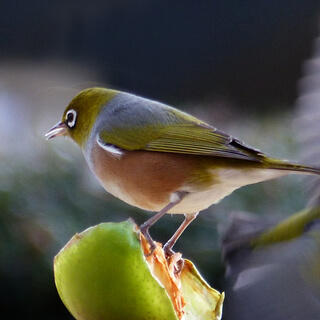
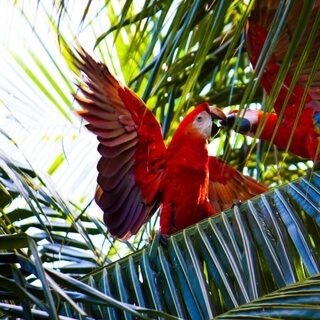
And it helped me look again at the birds sitting at my bird feeder and the insects crawling along on my kitchen counter.
But it also reminded me that this fresh perspective in 1909 was a perspective that Dogen had centuries ago.
And that's why I chose the reading I did tonight.
Dogen wrote,
When the dharma does not fill your whole body and mind,
You think it is already sufficient.
You think you know it all.
When the dharma fills your body and mind,
You understand that something is missing.
For example,
When you sail out in a boat to the midst of an ocean where no land is in sight and view the four directions,
It simply looks like a circle.
But the ocean is not round and not square.
Its features are infinite in variety.
It is like a palace.
It is like a jewel.
All things are like this.
There are many,
Though there are many features in the dusty world and the world beyond conditions,
You see and understand only what your eye of practice can reach.
So Dogen was telling us in ancient China that our view of this burning world,
Of anything in this world,
Is never complete.
But what then?
What do we do with that?
I mean,
The danger is that it can make everything seem so relative that we do nothing.
That,
Well,
These are just our views.
Nothing to be done.
Nothing to be done.
Dogen was not teaching that.
But what he was teaching was allowing our imaginations to leap and allowing ourselves to be curious,
To be curious about the things we are so sure we know,
About the things we're so sure we are expert in.
I'm an expert in what those people on the other side of the debate think.
I'm an expert in who they are and what they want.
And this,
Of course,
Reminds us that I'm not at all an expert.
It's a call to be as curious as we can,
To really look,
To really listen,
To ask,
And to do our best to be in conversation with people who do not see the world the way we see it.
And is that enough?
Absolutely not.
That,
Yes,
That curiosity can help us cultivate compassion,
Can help us enact our bodhisattva vow in that way.
Compassion for people who see the world as such a different thing.
And that's what I'm talking about.
Compassion for people who see the world as such a different place than we see.
But compassion is not an excuse for inaction.
And so there is another famous koan that talks about taking a single step off of a hundred foot pole,
That we have to step forward into the world as we see it.
That we have to take action in the ways that we feel called to enact our vows.
So it's not all relative.
Every point of view isn't equally valid.
And that's where we can come back to rest on the precepts.
And of course,
Even there,
It's complicated.
What about the issue of abortion and the precept not to take life?
Who's life?
And so none of these things is absolute.
And yet we are not called to take life.
It's absolute.
And yet we are called to use our own discerning minds to see the path that helps relieve suffering,
To enact our bodhisattva vows as we can,
And to walk some middle ground that includes action,
To further what we see as the greatest good and compassion and the seeking out of understanding of the people who do the things that we feel are harmful.
That if Zen asks us to do anything,
It is to hold complexity,
To hold mystery,
Yet not be paralyzed by it.
And so,
When I can rouse myself from moments of despair,
I find that I'm called both to curiosity and to action,
And that both are equally urgent right now.
In Dogen's words,
In order to learn the nature of the myriad things,
You must know that although they may look round or square,
The other features of oceans and mountains are infinite in variety.
Whole worlds are there.
It is not only around you,
But also directly beneath your feet,
Or in a drop of water,
Or in a Supreme Court ruling.
Thank you.