So tonight,
I thought it would be timely to talk about the bodhisattva precepts,
Which as many of you know are the foundation of Buddhist practice.
And it comes up for me in two ways.
One is that some people are thinking about working toward adopting the precepts,
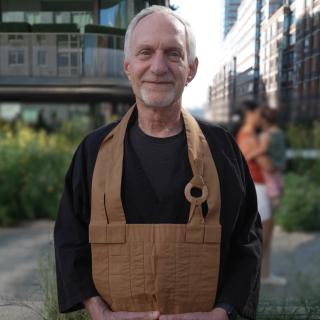
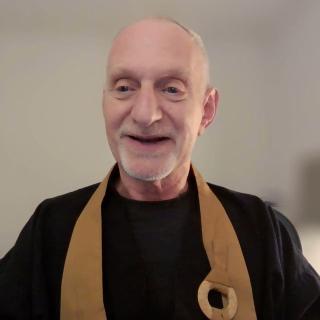
Which as you know involves sewing these wonderful raksus,
These abbreviated versions of the Buddha's robes,
Which some of us are wearing,
And reading and studying about the precepts.
And the other reason is that there is so much talk now about the absence of any moral compass in the culture that's swirling around us.
And it raises the question of what is a moral compass and why have one?
So we have a ceremony called Jukai in Zen and those of you who have the raksu have been through this ceremony and it's a lovely ceremony.
And the first time I attended one,
My first teacher,
James Ford,
Was conducting this ceremony.
It involves lighting incense and during the ceremony he accidentally lit his hair on fire and everybody just sort of ran up and helped him put it out and he was just fine.
But then he just lightly remarked,
Sometimes we get a little singed when we tend to what matters most.
And that was James's understanding of what he was doing,
Giving us the precepts.
But when I first encountered these precepts,
I was pretty resistant to the idea of adopting any kind of moral code.
I mean my thought was,
I'm a decent person,
I don't need these.
You know,
I had had a religious upbringing and I learned the Ten Commandments by heart these commandments that came from on high.
And as we read the bodhisattva precepts tonight in our sutra service,
You may have noticed that they can sound a lot like the Ten Commandments.
And,
You know,
We value autonomy in the West.
We don't like being told what to do.
But of course,
What we see when we look at what happens when there is no moral compass,
When we see the cruelty,
When we see hatred,
The delusive certainty,
The three poisons that the Buddha talked about,
We see that there needs to be some remedy to these,
And that we need moral guidelines because it's really difficult to do what's right.
And certainly as I read the news,
As I listen to it,
It's easy to feel that there's no end to the suffering,
To the dishonesty,
To the violence.
And there's a quote from the Vipassana teacher Jack Kornfield that I find so helpful.
He says,
We are nuclear giants and ethical infants.
And of course what we know is that all of our technological advances have not done anything to solve our ethical immaturity as a culture.
And so in Buddhism,
When we take the Bodhisattva precepts,
We make three pretty basic commitments to cease from doing harm,
To practice doing good,
And to honor our wholeness and our interconnectedness.
Sounds pretty simple,
But of course we know it's not.
But these 16 Bodhisattva precepts that we read,
They are not religious rules.
They are pragmatic,
Time-tested principles.
The Buddha developed these in his early communities because he saw what practices worked and what practices didn't work.
And really what the precepts offer us is a way not to have to reinvent morality from scratch.
That this is really experience distilled over centuries.
And we don't talk about the precepts nearly as much as we talk about awakening,
As we talk about other things in Zen,
Even though ethics are absolutely the foundation to waking up.
They have to be.
Because if we simply sit here and cultivate the skill of mindfulness without any ethical foundation,
Then we have the capacity to make ourselves into very mindful pickpockets.
Very mindful,
Skillful manipulators for evil causes.
Because mindfulness is just that.
A skill.
The precepts are a compass for how we use those skills.
And of course this isn't about blind obedience.
In fact,
It can't be.
If you think about thou shalt not kill,
It's impossible for us to live.
It's impossible for us to sustain ourselves with food if we don't kill living beings.
Sometimes it's impossible to refrain from speaking falsely if it means we save a life in doing so.
And so what we understand is that these are not commandments.
These are more like koans that we work with that have no simple answers.
That yes,
We can take them as clear boundaries.
Don't steal.
Don't kill.
We can take the compassionate lens and looking at the precepts,
Which is that sometimes we have to bend the rules to refrain from doing harm.
And we can take the lens of emptiness,
Of interconnectedness,
Understanding that we abide by these precepts because we are not separate from those we might harm or heal.
So for example,
We take these precepts literally as a way to help us make decisions in our lives.
I am often faced each day with,
Do I choose this or that?
Do I take this path or that path?
And I often find myself coming back to these precepts as a way to make complicated judgments.
So for example,
The precept of refraining from taking what is not freely given.
I mean,
It's an amazingly subtle precept because it's not just about stealing.
It's about emotional coercion.
It's about manipulation.
It's about taking attention away from others or taking credit for things that are not ours to take credit for.
And so each precept becomes an area of inquiry.
And sometimes people have taken one precept at a time and practiced with it for months or even years.
But what the precepts ask us to do is be curious.
How am I showing up in this situation?
What impact am I having?
Am I contributing to harm in the world or am I contributing to healing?
And of course,
There are no simple answers much of the time.
And as we know from our own minds and from looking at the world around us,
Human beings are so good at rationalizing anything they want to believe to be true.
And for this reason,
We don't just practice the Bodhisattva precepts by ourselves.
We practice them in community because a moral compass is a team sport.
We can't see our own ethical blind spots.
And so we need others.
We need good Dharma friends who will tell us what they see and tell us when we are blind to doing harm or when we are blind to ways in which we need to step up to do good.
And committing to these publicly,
Which many of us have done in the Jukai ceremony,
Is committing to using these as a North Star,
Saying,
I'm going to use these as my navigational aids when I'm disoriented,
When I'm not sure what to do.
Robert Aitken put it simply.
He said,
These Bodhisattva precepts describe how enlightened beings live.
And so what we do is we use these as skillful guides to cultivate wisdom,
But also we use these to keep cultivating compassion for other people.
When we look at harm being done,
And there are so many places to look,
Everywhere we look,
There's harm being done,
That what arises in us is empathy and love and a sense of connection that prompts us to get up,
To get off the chair,
Off the cushion,
And act skillfully.
Imagine if the whole world consisted of people who committed to these precepts to not causing harm,
To speaking truthfully,
To taking only what was freely given,
To using sexuality with care,
To keeping clarity of mind,
To avoiding blame or a sense of superiority or harboring resentment.
What could the world look like if each of us lived according to these precepts?
And of course,
They're ongoing practices.
Receiving ethical principles isn't declaring mastery at all.
It's just saying,
I intend to live this way,
And I am going to fail.
But that's part of the practice.
The key is returning again and again,
Noticing our mistakes,
Noticing where we fall short of our own aspirations,
And returning with humility and some sense of humor.
And so,
I would invite you all to ask yourselves,
What principles are you using to guide your life?
Now more than ever,
This is an urgent question.
And what principles might you want to adopt?
What kind of person do you want to be,
Particularly when nobody's watching?
Of course,
We take the Bodhisattva precepts publicly because it helps us be more accountable,
But we can do that regardless by just telling someone,
By writing them down.
Because these Bodhisattva precepts are not a burden that we take on,
They're a real gift.
They allow us to do what Bernie Glassman writes about in our reading so beautifully.
Once we listen with our entire body and mind,
Loving action arises.
Loving action is right action.
It's as simple as giving a hand to someone who stumbles,
Or picking up a child who has fallen on the floor.
We take such direct,
Natural actions every day of our lives,
Without considering them special.
And they're not special.
Each is simply the best possible response to that situation in that moment.
And so,
My hope is that all of us revisit again these Bodhisattva precepts and consider how we might practice with them on our own,
And of course,
Together in community.
Thank you.